

Thinkific vs Kajabi: What’s the Difference and Which Should You Choose?
Choosing between Thinkific vs Kajabi? Compare strengths, limitations, pricing, and ideal use cases for educators and creators ready to scale.


Build high quality courses that actually sell
When choosing between Thinkific and Kajabi, many creators face the same dilemma: focus on teaching quality or focus on selling and scaling? Both platforms handle course creation and payments, but they take very different approaches to marketing, automation, and student engagement.
From my experience working with creators, the right platform usually comes down to your goals. If you want structured, education-first courses, Thinkific excels. If your priority is growth, automation, and business efficiency, Kajabi shines. Let’s break down where each platform stands.
What is Thinkific?
Thinkific is ideal for educators, training providers, and teams focused on creating high-quality courses without getting buried in marketing features.
The clean, intuitive interface helps you structure lessons, quizzes, exams, surveys, and assignments. Lessons unlock step by step, so students progress naturally.
Assessments are a strong point. Quizzes can be randomized, uploaded in bulk, and finely controlled. Other perks include certificates and multiple course formats, like self-paced programs, memberships, or bundled offers.
Sales tools aren’t complex. Landing pages, checkout, and basic coupons exist, but for advanced funnels or email marketing, you’ll need external tools. This works well for creators who already use software like Mailchimp or ConvertKit.
Thinkific’s pricing is accessible, making it ideal for solo creators or smaller teams who want teaching-focused features without paying for extras they don’t need.
What is Kajabi?
Kajabi is designed to help creators sell and scale knowledge products fast. Everything, from courses and coaching programs to websites, emails, funnels, and communities, is managed in one platform.
Templates and drag-and-drop builders make course creation quick, though testing features remain basic compared to Thinkific. Where Kajabi really stands out is marketing: email campaigns, automations, sales funnels, upsells, and affiliates all live inside the dashboard. You can move a lead to a paying student without touching any outside software.
Community features, live sessions, and coaching tools help keep students engaged long-term. Pricing is higher, but many creators find the all-in-one model replaces multiple subscriptions and reduces tech headaches. Kajabi is best suited for entrepreneurs, coaches, and creators focused on growth and automation.
Thinkific vs Kajabi: 5 Key Differences Explained
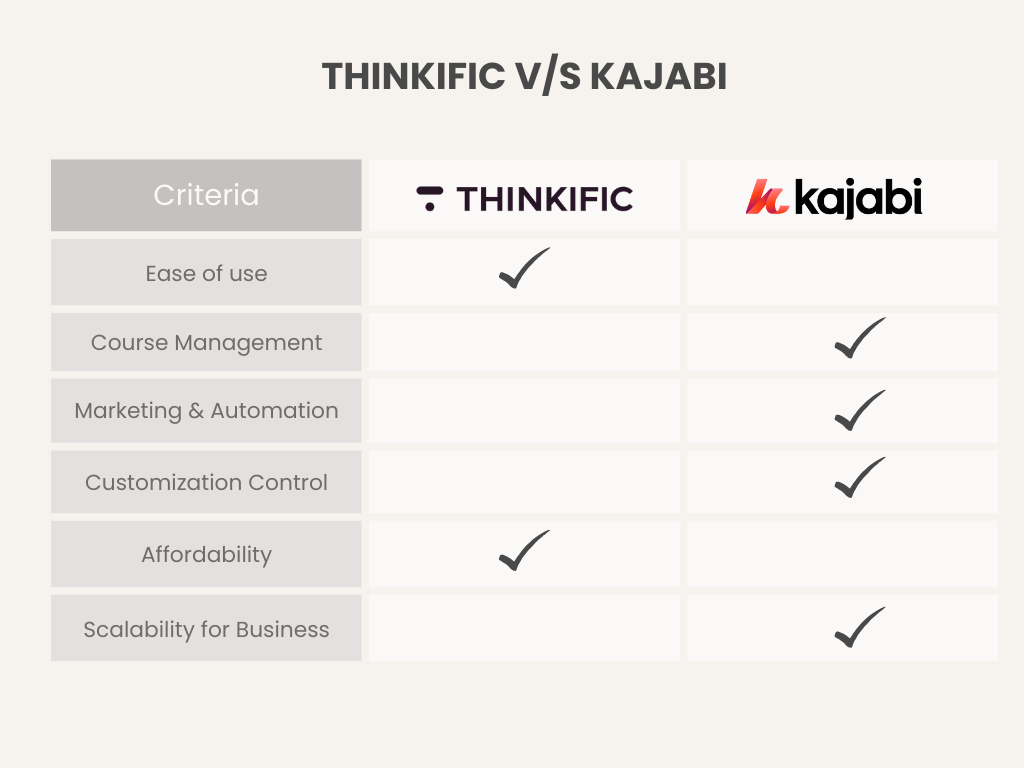
Here’s a quick look at the key differences between the two platforms:
1. Ease of Use & Interface
Daily workflows matter more than long feature lists. Clear menus, calm layouts, and predictable navigation reduce friction and save time.
Thinkific Experience
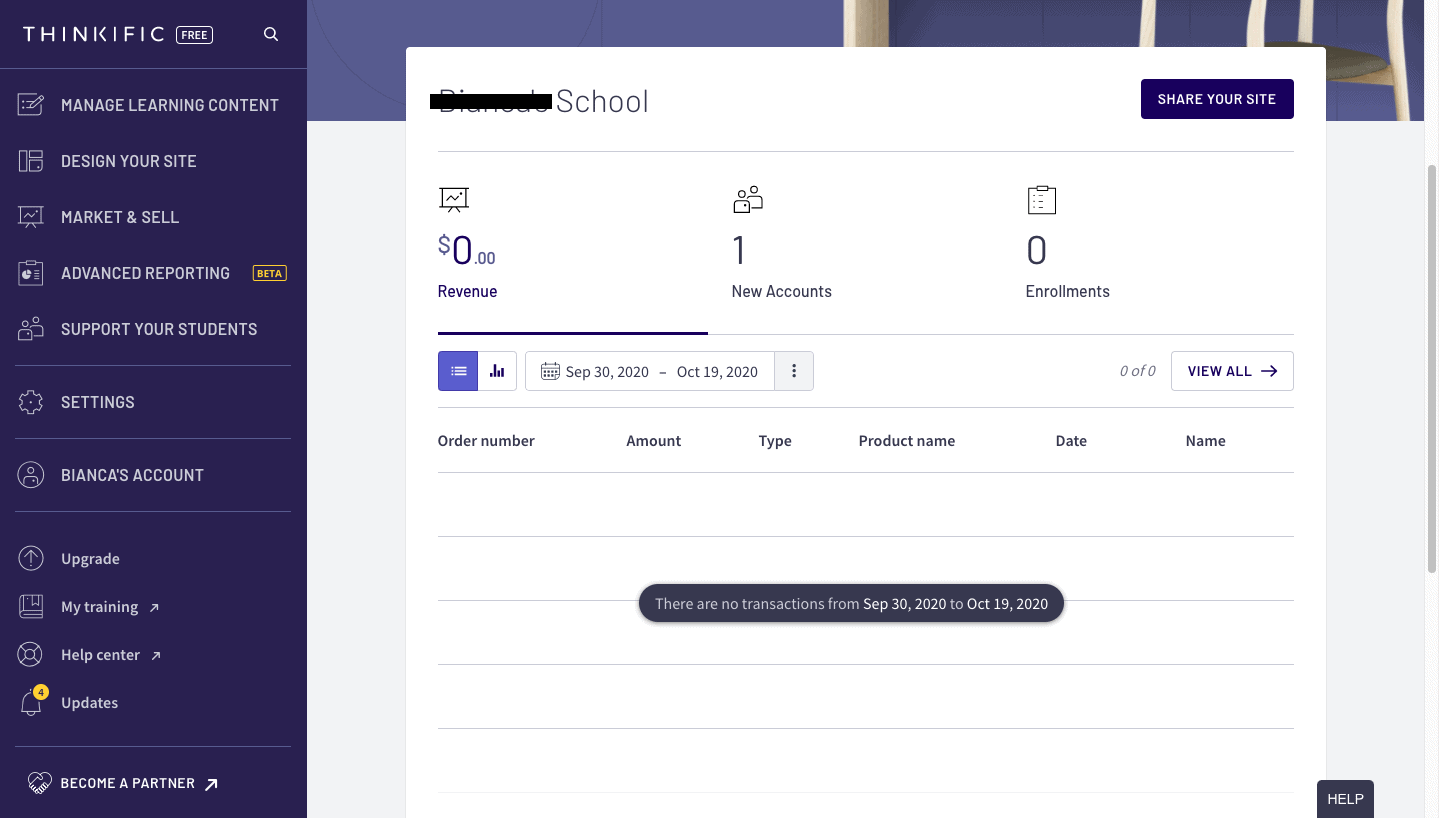
Thinkific keeps the interface calm and teaching-focused. Course setup follows a logical flow, with minimal visual clutter. Most creators feel comfortable after a short walkthrough, especially when building traditional learning programs.
Kajabi Experience
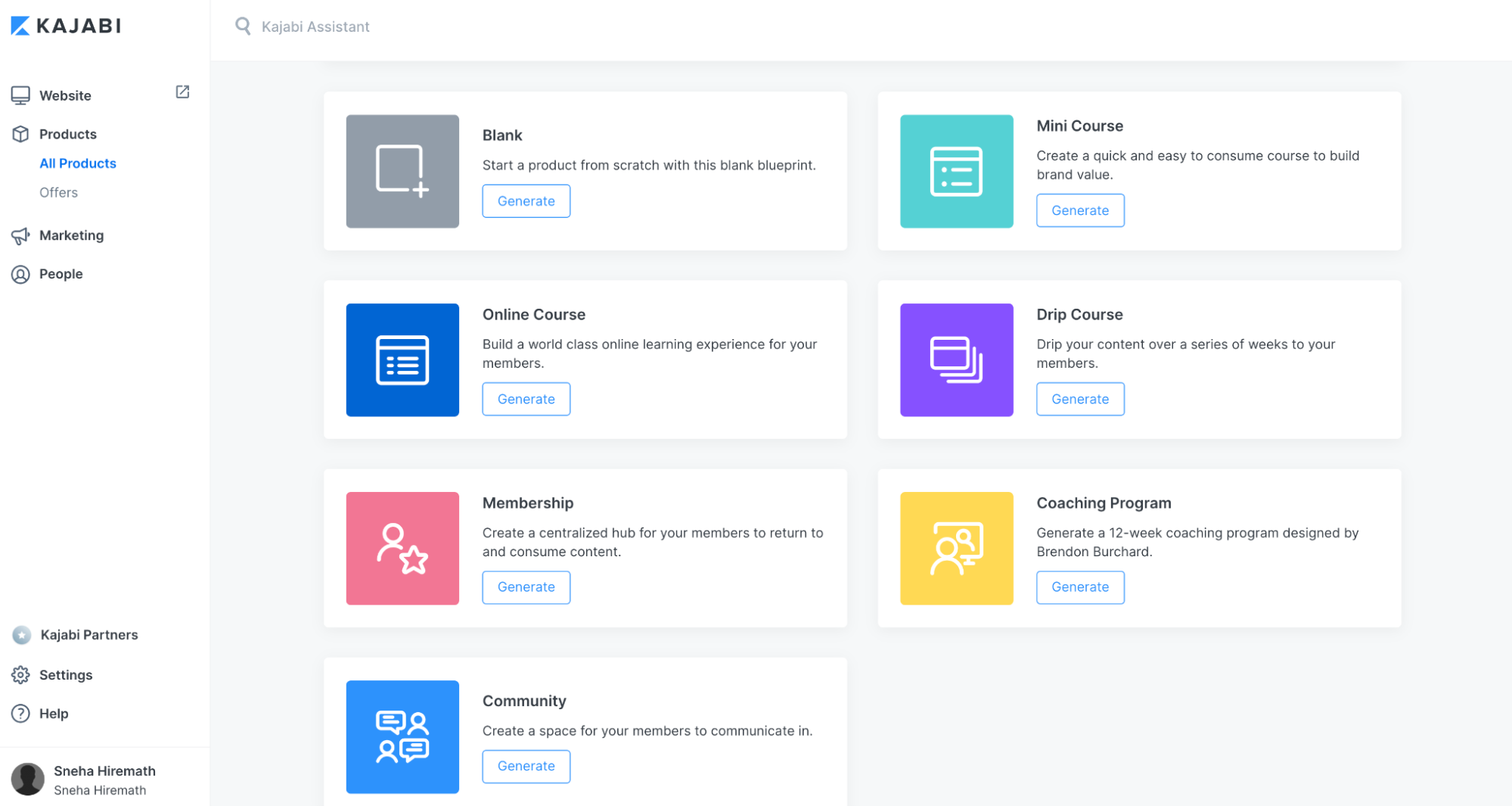
Kajabi delivers a powerful first impression. Dashboards display products, emails, funnels, and analytics in one place. Experienced creators appreciate the control, though beginners may feel overwhelmed by the number of visible tools.
UI comparison:
Thinkific prioritizes a clean layout with education-first screens, ensuring a low learning curve for new users. In contrast, Kajabi presents a polished design where many tools are immediately visible, often resulting in a steeper learning curve.
2. Course Creation & Management
Strong courses rely on structure, pacing, and assessment depth.
Thinkific Course Building
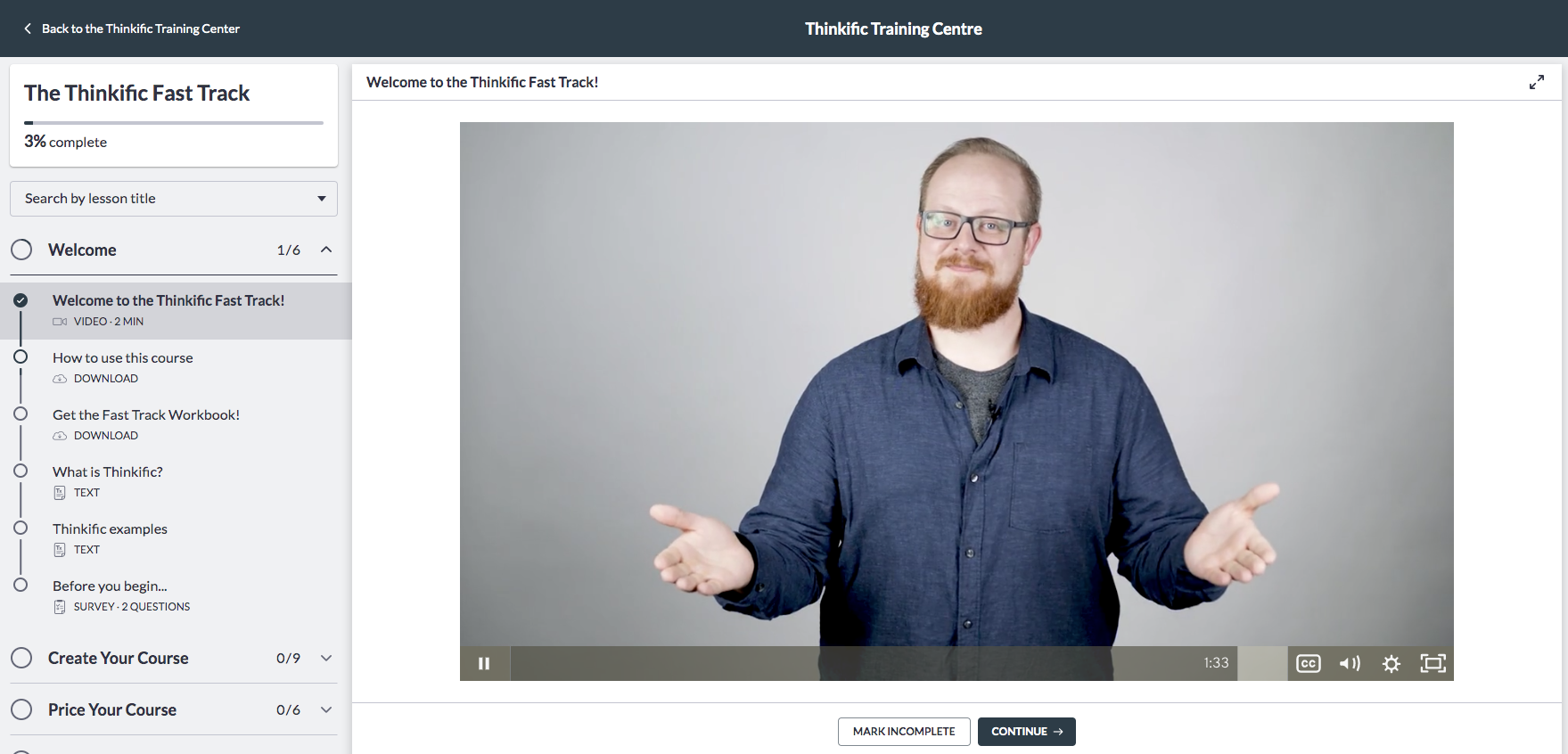
Thinkific supports lessons, chapters, drip schedules, quizzes, exams, surveys, and assignments. Creators design clear learning paths that guide students step by step. This structure works especially well for professional training, certifications, and academic-style programs.
Kajabi Course Building
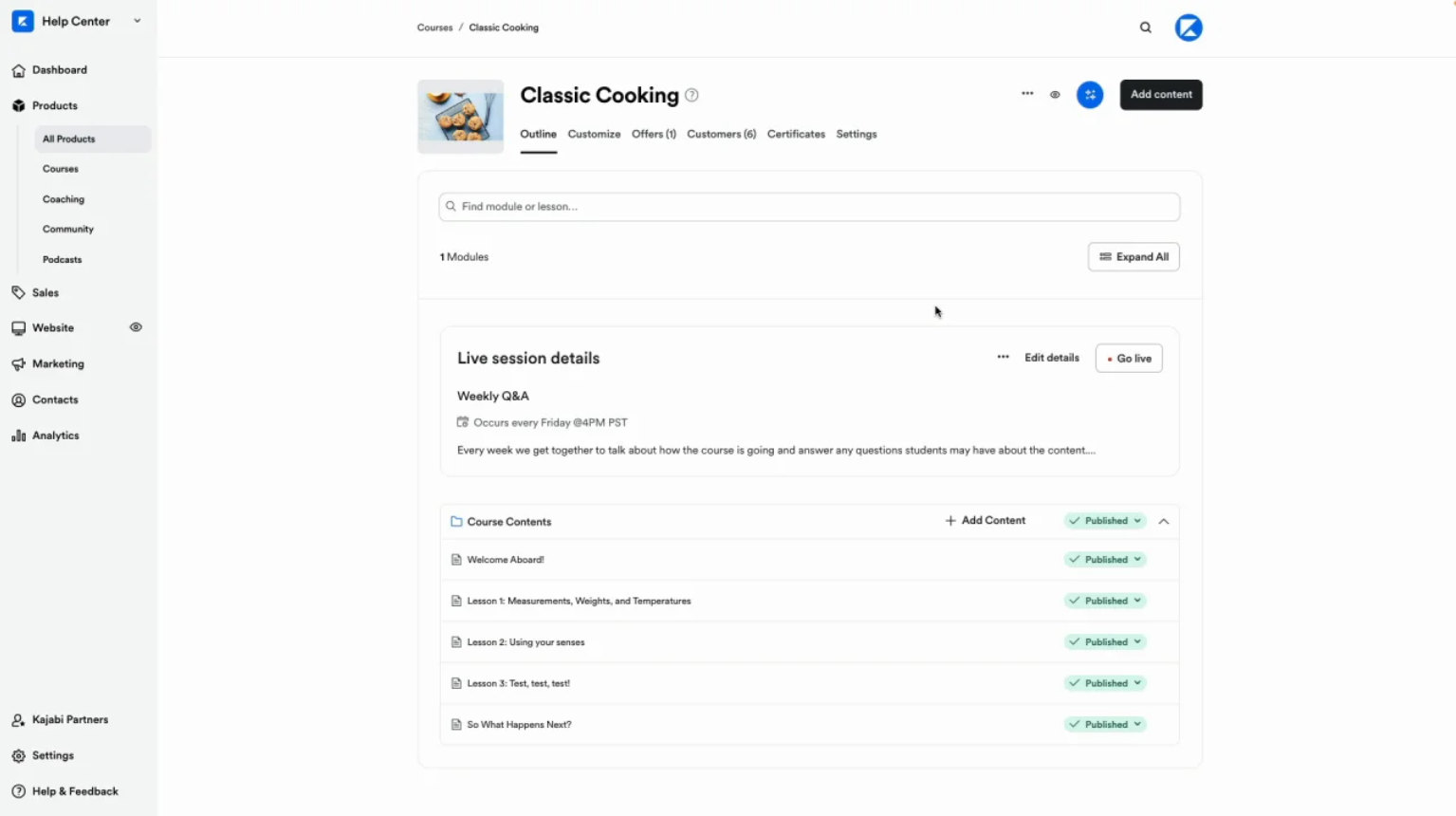
Kajabi emphasizes speed. Creators launch courses, coaching programs, and memberships quickly using templates. Lesson creation feels smooth, though assessment options stay basic and focus less on formal learning outcomes.
Assessments:
Thinkific excels in assessment depth, offering advanced quizzes with randomized questions and detailed controls. Conversely, Kajabi provides simpler quiz functionality with more limited grading flexibility.
3. Marketing & Sales Tools
This difference often determines which platform fits a creator’s business model.
Thinkific Sales Tools
Thinkific includes landing pages, checkout, coupons, and basic sales features. Most creators connect external tools for email marketing, automation, and advanced funnels, which adds flexibility but increases tech stack complexity.
Kajabi Sales Tools
Kajabi bundles email campaigns, tagging, funnels, upsells, affiliates, and automations inside one system. Visitors can move from lead to paying customer without leaving the platform, which simplifies scaling and reduces tool overload.
Sales comparison:
Thinkific provides clean selling basics but often requires external tools for advanced marketing. In contrast, Kajabi features a full sales engine built directly into the platform.
4. Community & Engagement
Engagement drives completion rates and long-term retention.
Thinkific Engagement
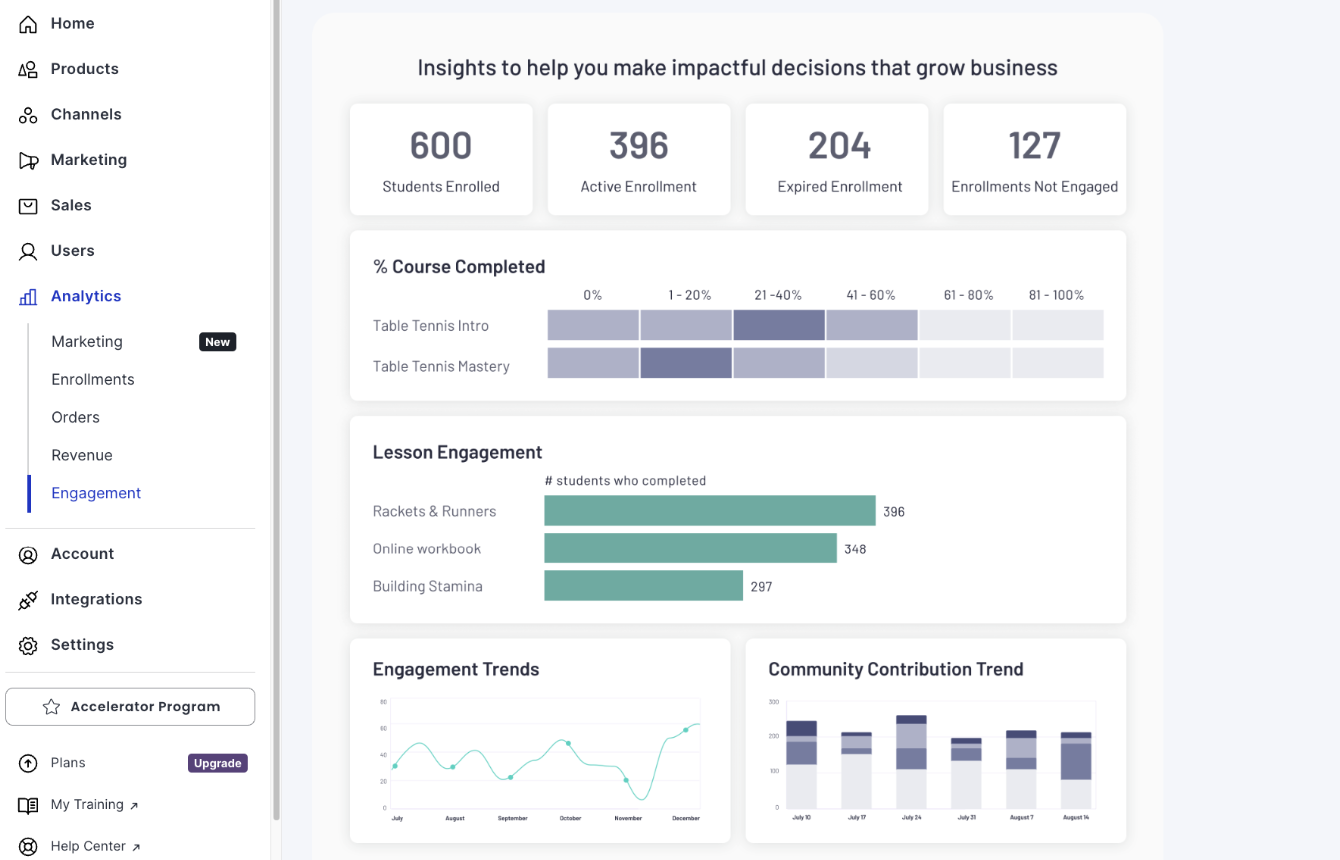
Thinkific supports discussions and comments inside courses. These tools work well for structured programs but remain secondary to content delivery. Community interaction stays limited compared to social-first platforms.
Kajabi Engagement
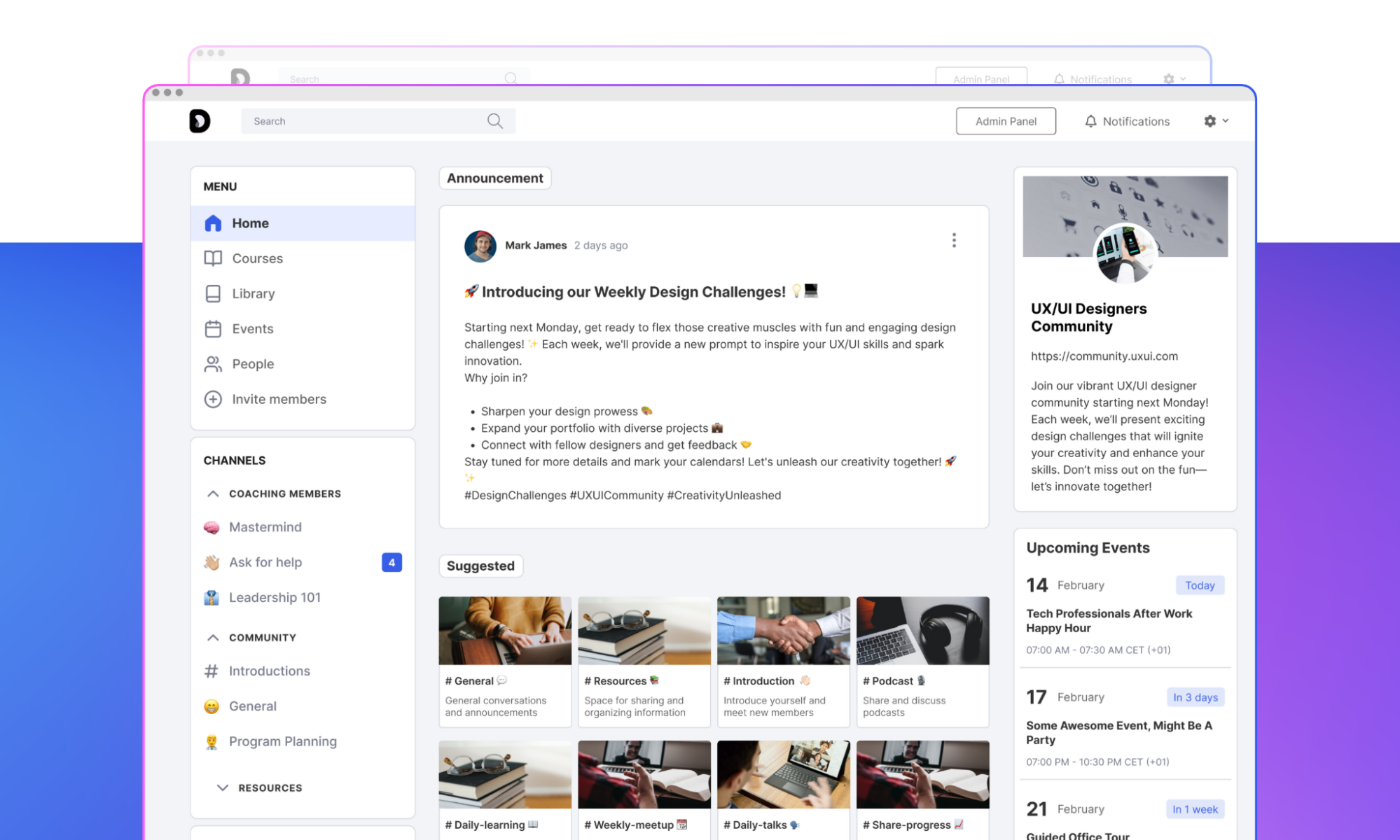
Kajabi treats community as a core feature. Groups, posts, live events, challenges, and direct messages live in one connected space. Creators build ongoing engagement that extends beyond individual courses and supports long-term membership models.
Engagement comparison:
- Thinkific: Learning-focused interaction
- Kajabi: Social, event-driven engagement
5. Pricing & Value
Monthly cost matters, but long-term value matters more.
Thinkific Pricing
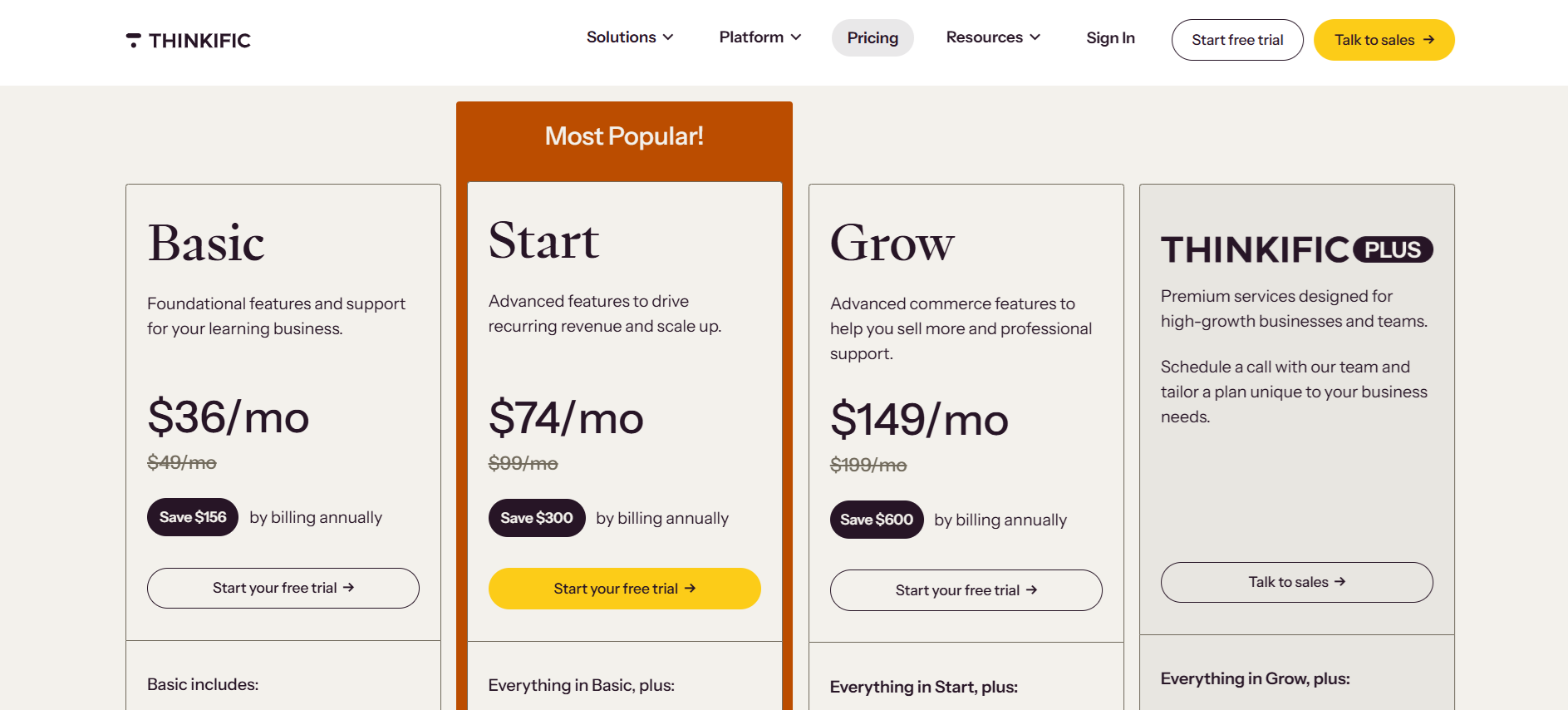
Thinkific keeps pricing accessible, especially for educators and trainers who already use external marketing tools. Plans scale based on features rather than aggressive automation or sales limits, which suits teaching-first businesses.
Kajabi Pricing
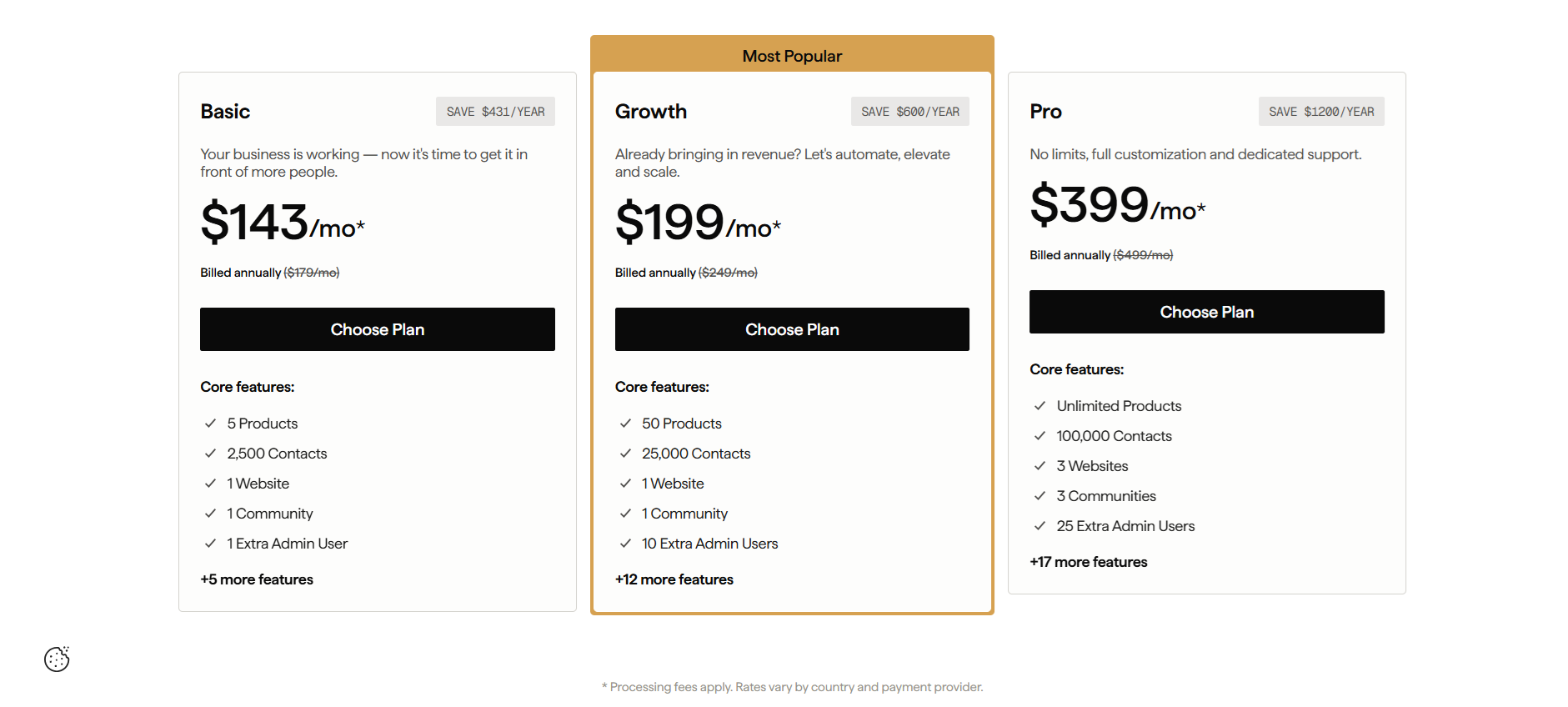
Kajabi charges more, though many creators replace multiple tools with one platform. As revenue grows, the all-in-one model often justifies the higher cost, especially for creators focused on monetization and scale.
Pricing snapshot:
Thinkific stands out as a budget-friendly solution with a primary focus on teaching tools. Kajabi, commanding a higher cost, differentiates itself as a comprehensive, business-in-one platform.
Thinkific vs Kajabi: Which is Better?
Here’s a quick comparison of the features of both platforms:
| Feature | Thinkific | Kajabi |
|---|---|---|
| Best For | Educators, trainers & budget-conscious creators | Entrepreneurs, coaches & digital businesses focused on growth |
| Ease of Use | Simple, clear interface; low learning curve | Polished, tool-rich interface; steeper learning curve |
| Setup Time | Fast for courses, integrations may take extra time | Fast with templates; full business setup is slightly more involved |
| Customization | Flexible course structure, lessons, and assessments | Flexible sales and marketing workflows, limited testing/custom learning paths |
| Maintenance | Low; mostly handled by Thinkific, external tools may need updates | Low; platform fully managed, updates and automations built-in |
| Pricing | Affordable plans starting at $49/month | Higher starting at $89/month, but replaces multiple tools |
Choose Thinkific if you value structured courses, strong assessments, and affordable pricing without heavy marketing needs. Choose Kajabi if you want a comprehensive business system, built-in marketing, communities, and smooth automation for scaling revenue.
How Thinkific vs Kajabi Score on G2 and Capterra
Overall Ratings:
Thinkific: Highly rated (~4.5/5) for course tools and teaching focus.
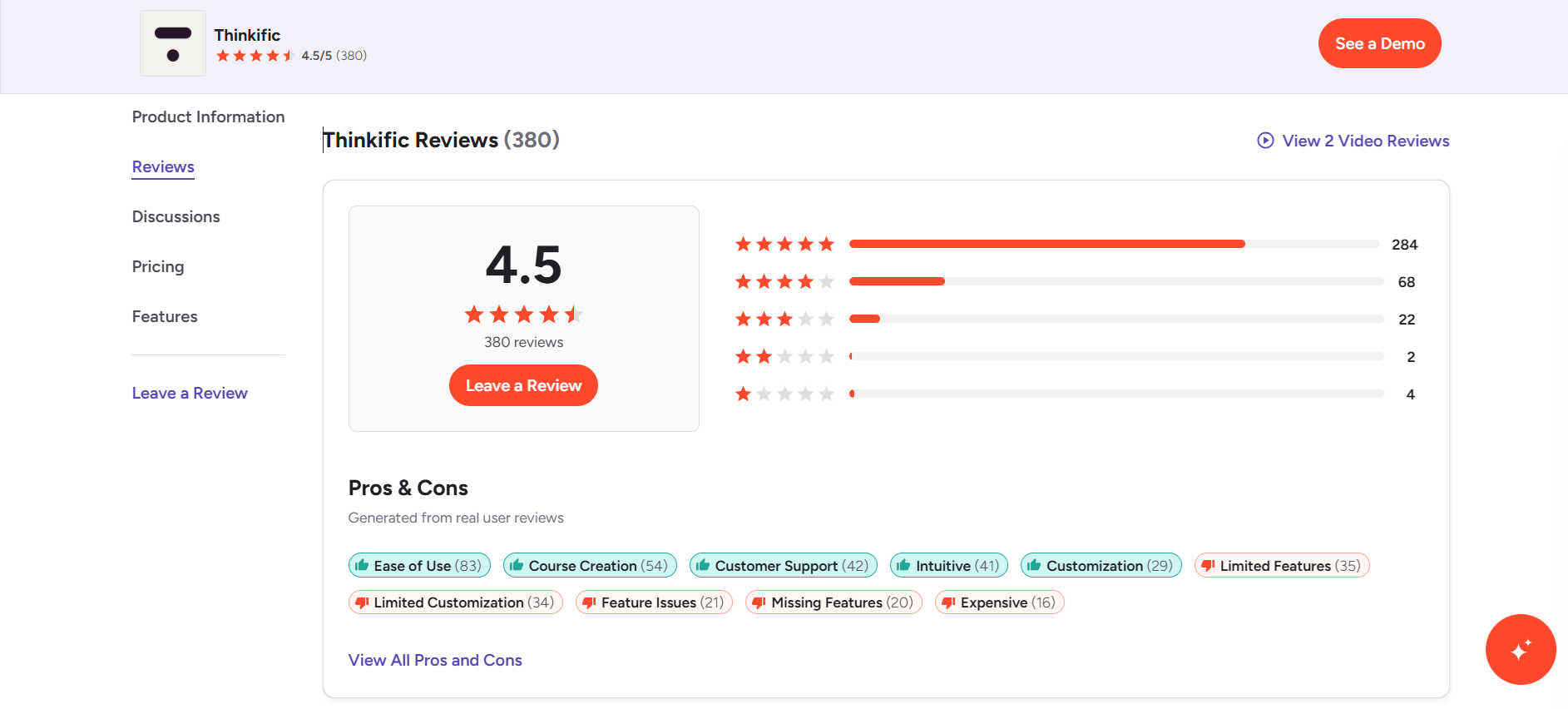
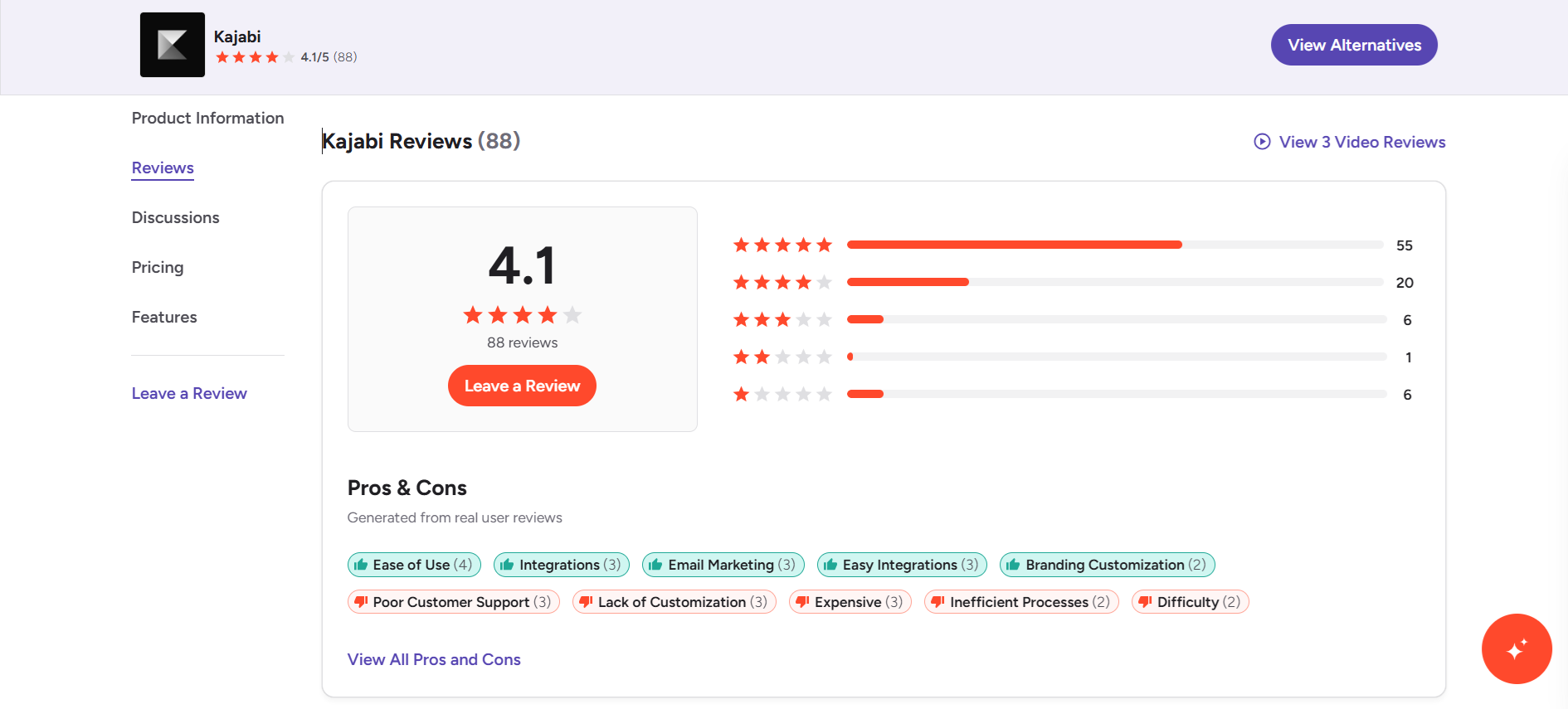
Kajabi: Strong scores (~4.1–4.5/5) for all-in-one business features.
What People Like About Thinkific:
- Structured course builder with quizzes and drip schedules.
- No transaction fees on paid plans.
- Strong onboarding and documentation.
What People Dislike About Thinkific:
- Limited built-in marketing automation.
- Fewer community features than competitors.
What People Like About Kajabi:
- Built-in email, funnels, memberships, and automation.
- Polished dashboards for scaling digital businesses.
What People Dislike About Kajabi:
- Higher monthly pricing.
- Learning-first tools feel limited.
Coursebox AI Makes Everything Easier
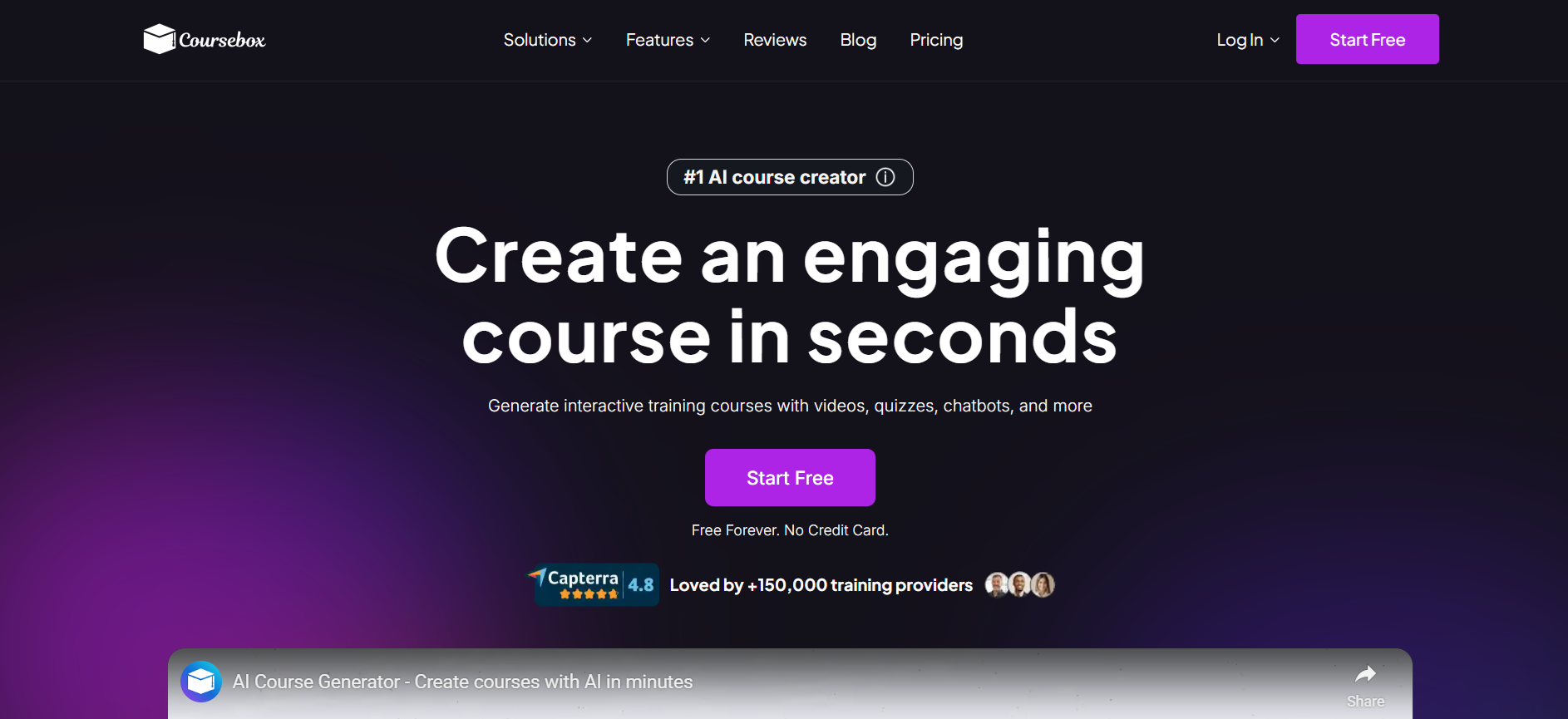
Both Thinkific and Kajabi solve specific problems, but they leave gaps. Coursebox AI combines the best of both worlds with:
- Quick, intuitive course creation
- AI-assisted content and assessments
- Engagement tracking and reporting
- Seamless integrations
- Automation to save time and much more!
The best part? Coursebox AI has a free forever plan, no credit card required, so you can start building immediately.
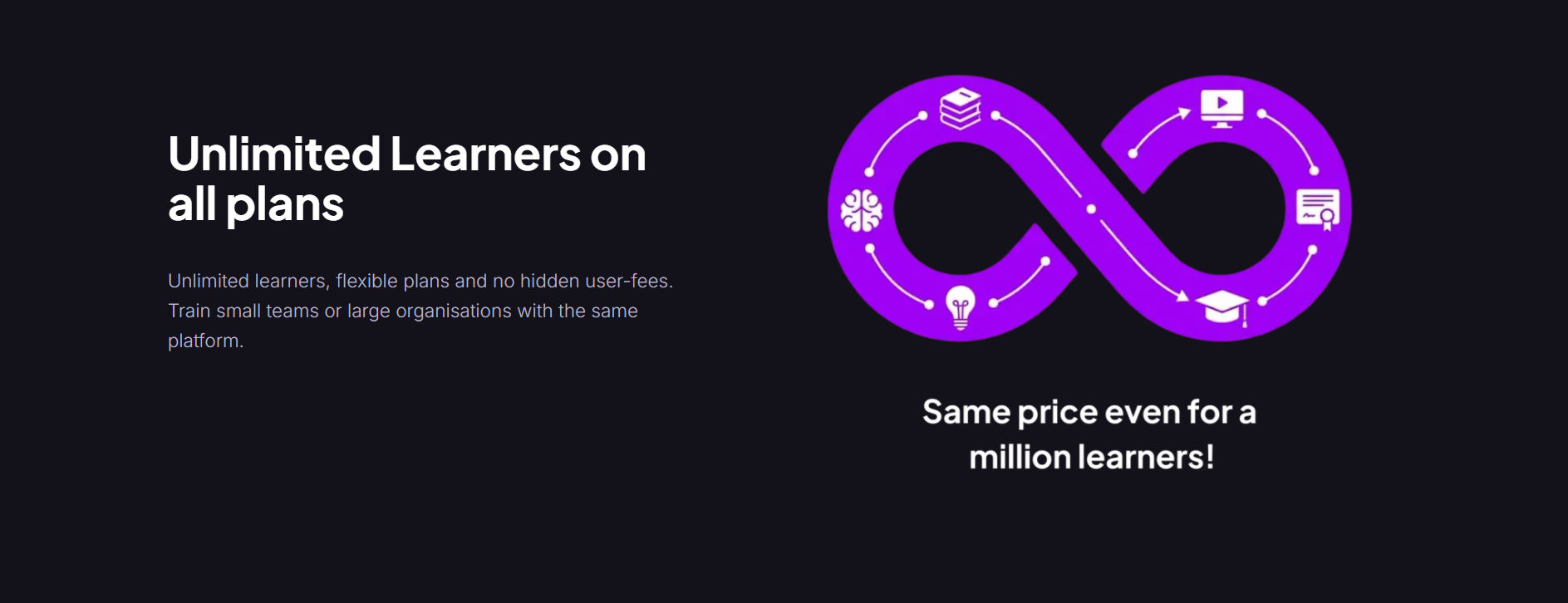
Paid plans scale with your needs:
- Basic (~$16.58/month): 50 branded AI courses, private publishing, unlimited learners, chat & assessments, certificates, LMS reporting.
- Expert (~$33.25/month): Everything in Basic plus 200 courses, learner groups, subscription selling, newsletters, Zapier integrations, and 2GB storage.
- Fully Branded LMS (~$99/month): Custom domain, advanced permissions, super admin controls, SCORM uploads, marketplace tools.
- Enterprise/Custom: Tailored solutions for large organizations or specialized needs.
Coursebox AI blends Thinkific’s teaching depth with Kajabi’s usability while adding AI, automation, accessibility, and enterprise support. Start creating engaging, efficient courses today and see how Coursebox AI transforms your online learning.
FAQs
Is Kajabi or Thinkific better?
Kajabi suits creators who want marketing, funnels, email, and automation all in one place. Thinkific works better for those focused on course depth, assessments, and flexible learning paths. Choose based on your primary goal: selling growth or teaching quality.
What is better than Kajabi?
Platforms like Coursebox AI, Teachable, or Podia may fit better if you want strong course creation, simple automation, lower pricing, or more flexible engagement tools without Kajabi’s higher cost and complexity.
What are the disadvantages of Thinkific?
Built-in marketing tools stay basic. Email automation offers limited logic. Live video and coaching features depend on third-party tools. Advanced community engagement tools are minimal. Some higher-level features require upgrades.
Do people make money on Thinkific?
Yes. Many creators sell courses, memberships, and digital products on Thinkific using direct checkout pages, bundles, and affiliate programs. Earnings vary based on pricing, audience size, and promotion efforts.
How much is Thinkific per month?
Plans start around $49/month for entry, with higher tiers at $99 and $199/month. Advanced or enterprise plans are available with customized pricing. Annual billing typically reduces the monthly cost.
Alex Hey
Digital marketing manager and growth expert

