

What Are Self-Paced Courses? Pros, Cons and Examples
What self paced courses are, the formats they use, their benefits and challenges, who they suit, and how to design a self paced course that people actually finish.

Self paced courses let learners progress through course materials at their own speed and on their own schedule, using formats such as short video lessons, quizzes, recorded webinars and downloadable resources.
- Flexibility and control of pace are the main benefits; procrastination, limited real-time interaction and isolation are the main challenges.
- In a memory experiment, learners who controlled their own study time remembered more, but only when they spent the extra time on harder items.
- Short modules with one objective, a check after each and suggested target dates keep self paced learners moving.
- Self paced modules suit shift workers, distributed teams and new starters who join at different times.

Build, launch and sell quality courses in minutes
Plenty of people start an online course and never finish it. The usual reasons are practical: the schedule does not fit around work, the pace is wrong for them, or there is nothing in the course to keep them going.
Self paced courses deal with the first two problems. They let learners decide when and how fast they move through the content, which suits busy professionals, shift workers and anyone fitting learning around other commitments. The third problem, keeping people going without a live class, is a design job, and this guide covers it.
Below: what self paced courses are, the formats they use, their benefits and challenges, who they suit, and how to design a course that people actually complete. The design steps apply whether you write the course by hand or draft it on an AI course creation platform.
What Are Self Paced Courses?
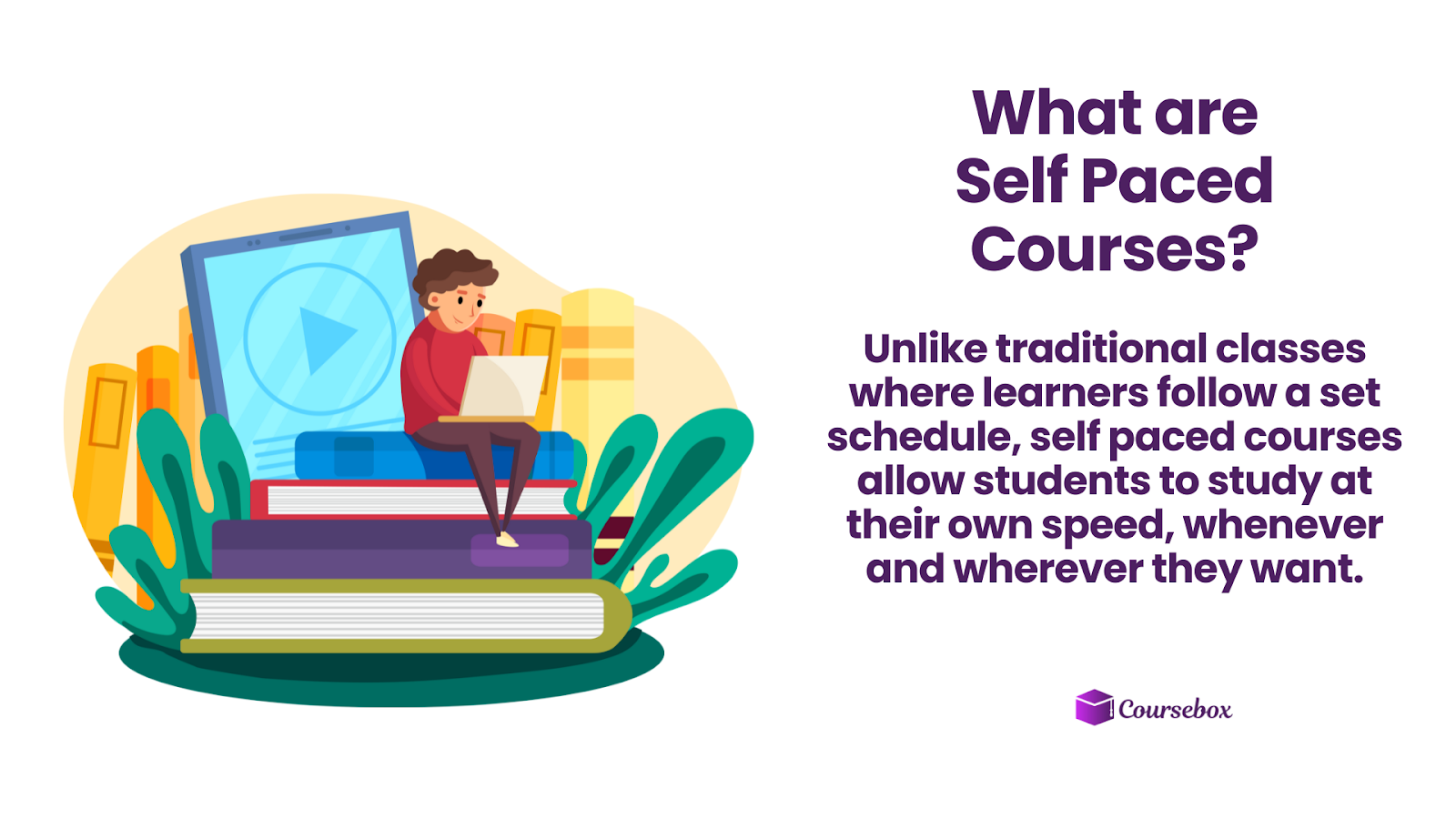
Self paced courses give learners full control over their study timeline and progression rate. Unlike scheduled classes where everyone follows the same timetable, self paced courses let learners study at their own speed, whenever and wherever they want.
As a learner, you can access pre-recorded videos, interactive exercises, quizzes, downloadable materials, and discussion forums at any time without having to follow a fixed timetable or wait for live sessions.
Self paced learning suits people who need to fit learning around work and life. A working parent can complete lessons late at night; a field technician can do a ten-minute module between jobs; a new starter in another time zone does not have to wait for the next scheduled session.
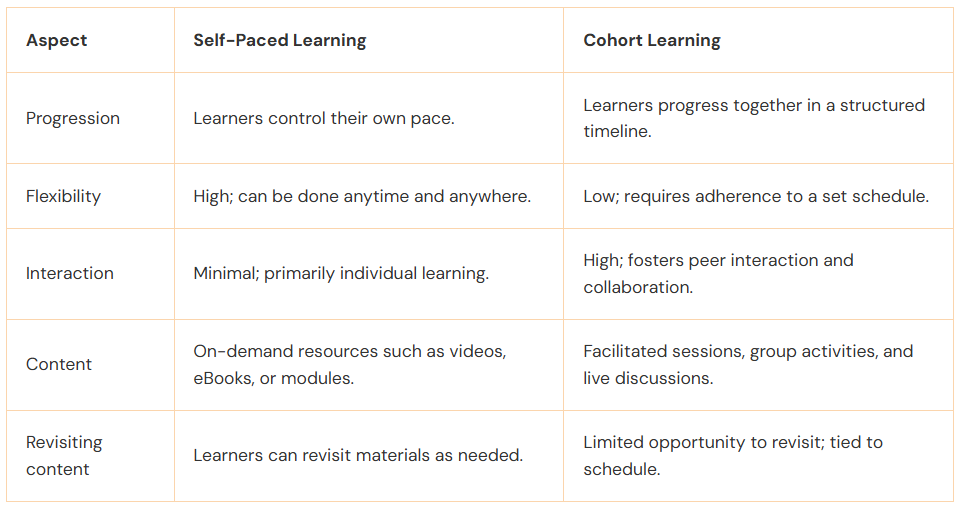
How Self Paced Learning Works?
Self paced learning comes in several formats, and most good courses combine them. Some topics need a demonstration, others need practice and a check of understanding.
So, what are self paced courses formats? Here are four essential ones:
1. Interactive Video-based Lessons
Most self paced courses are built around video lessons. Short videos that demonstrate a task, with a question or exercise after each one, keep learners doing something rather than only watching.
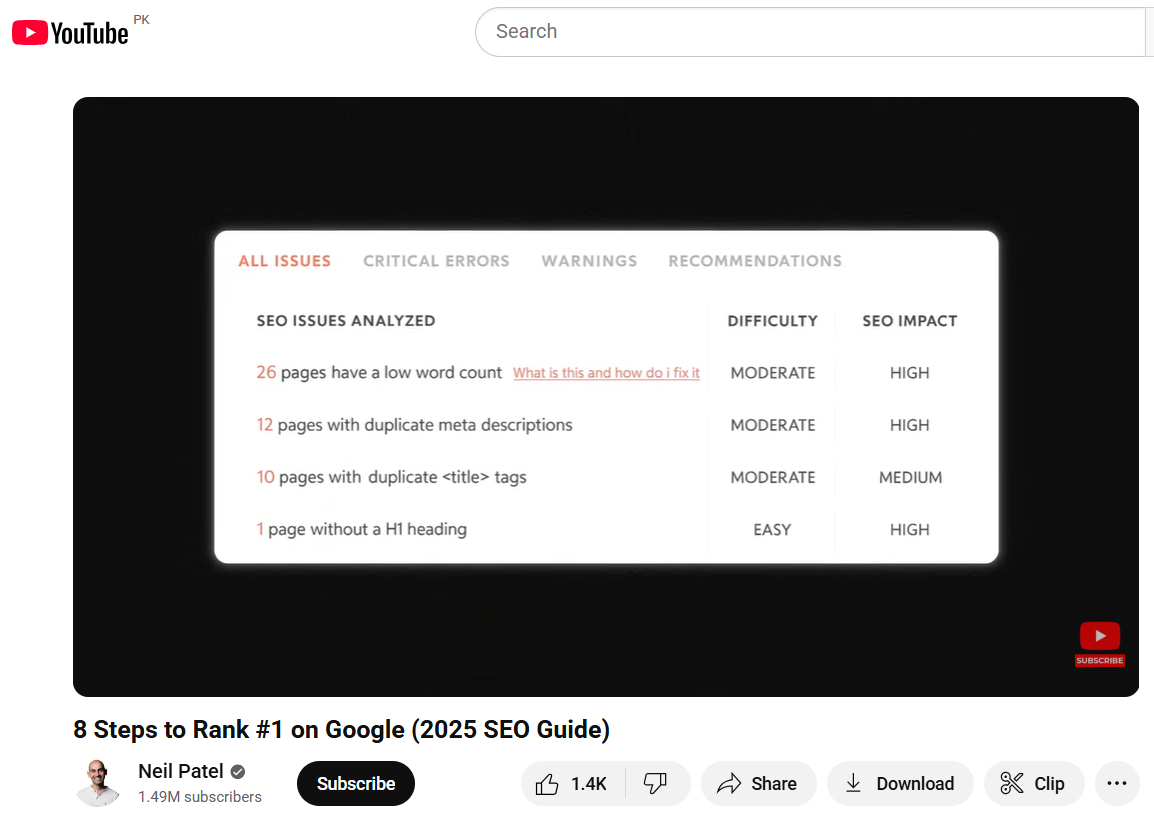
For example, Neil Patel posts SEO tutorials on YouTube with screen walkthroughs and on-screen visual aids, so viewers can follow each step at their own speed.
2. Assessments & Quizzes
Quizzes, tests and assignments do two jobs in a self paced course: they show learners whether they have understood, and they give the course a structure of checkpoints to work towards.
Instant feedback is what makes them useful without an instructor. A learner who sees why an answer is wrong can fix the misunderstanding straight away instead of waiting for a marked assignment.
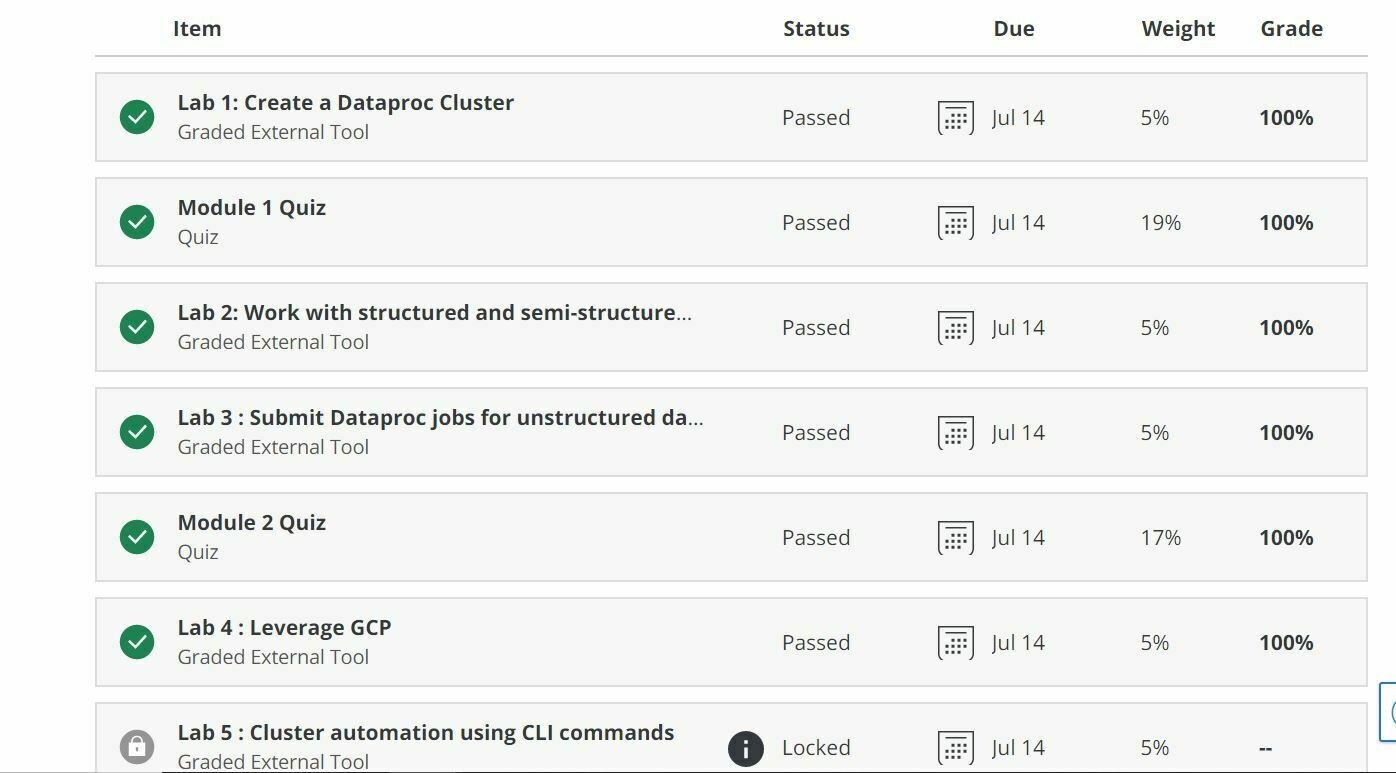
Here is an overview of how Coursera integrates quizzes and assignments in its self paced courses:
3. Recorded Webinars
A live webinar is not self paced, but the recording is. Once a webinar is available on demand, learners can watch the presentation and the Q&A whenever it suits them.
Recorded webinars extend the value of a live event to everyone who could not attend, and work best when trimmed into shorter clips by topic.
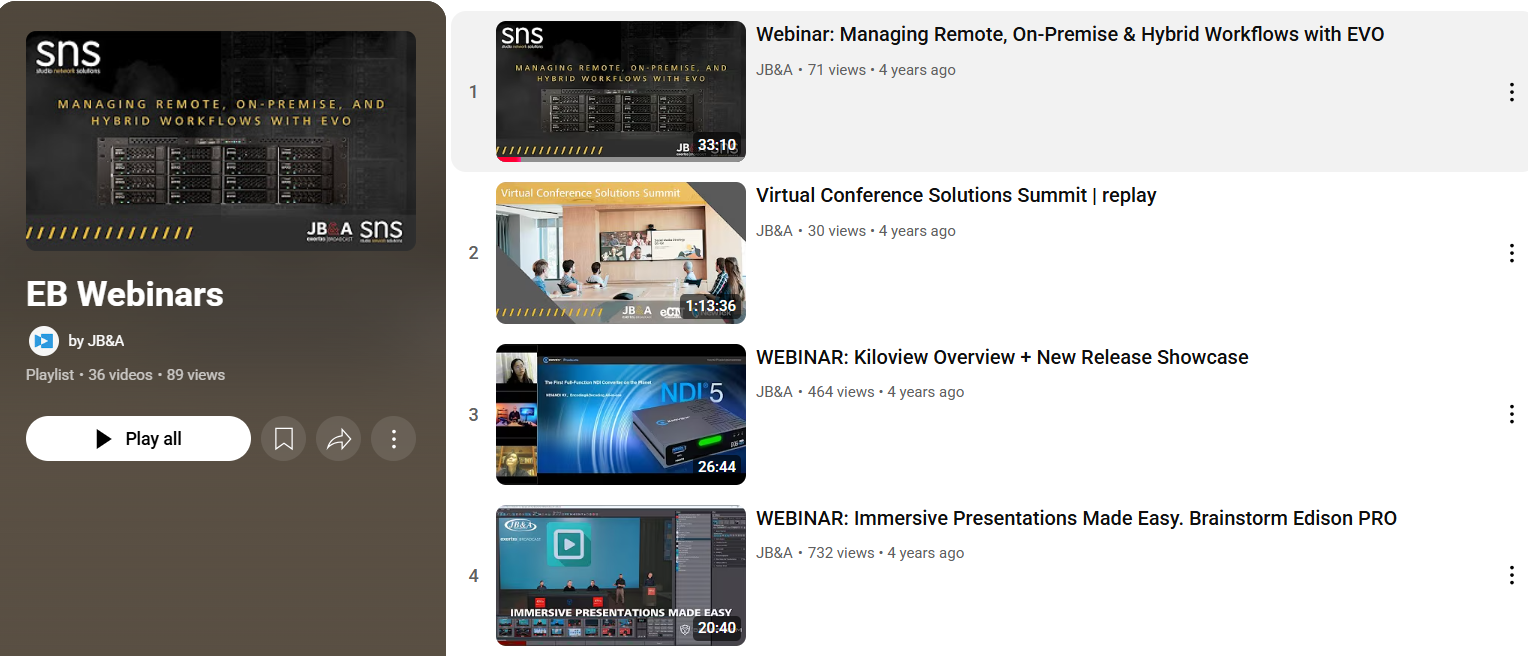
Many companies publish a library of on-demand webinars that learners can explore at their own pace. For example, JB&A, a distributor of audiovisual solutions for video, broadcast, production and Pro AV, has a playlist of recorded webinars on its YouTube channel.
4. Downloadable Resources
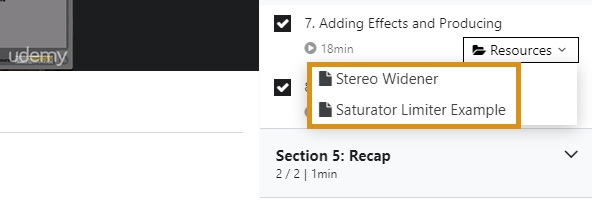
Many self paced courses provide downloadable materials, such as PDFs, worksheets, templates, and case studies, which learners can use offline. These resources enable continued practice and review beyond the course platform.
For instance, Udemy lets instructors attach downloadable resources to video lessons so learners can practise and review offline.
What are some benefits of Self-Paced Courses?
Learners choose self paced courses for different reasons. Some want the flexibility, some want to control the pace, and some want a lower cost than a scheduled class.
Here are the main advantages:
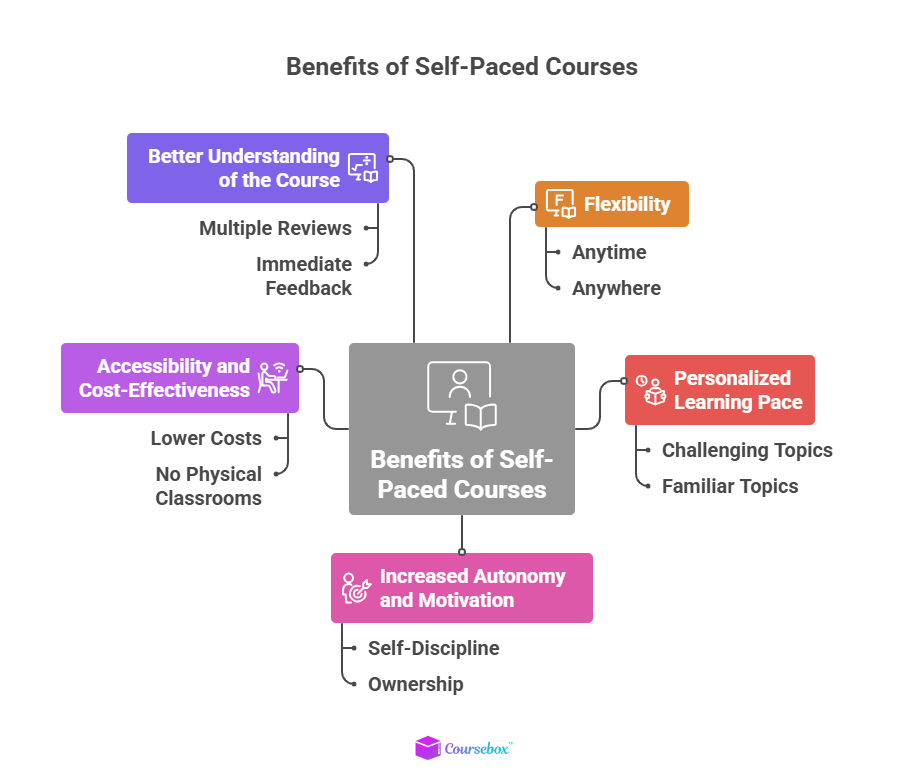
- Flexibility. Learners can study whenever and wherever suits their schedule, so they can balance learning with work, family or other obligations.
- Personalised Learning Pace. Learners can spend more time on topics they find hard and move faster through what they already know. In a memory experiment by Tullis and Benjamin, learners who controlled their own study time remembered significantly more than learners with no control, even with the same total study time, but only when they spent the extra time on the harder items.
- Increased Autonomy. Learners can choose the order of optional modules, skip what they already know after passing a check, and revisit sections before an assessment. That control helps motivation when it comes with visible progress and target dates; without them, autonomy turns into procrastination (see below).
- Accessibility and Cost-Effectiveness. Self paced courses can be taken anywhere with an internet connection. They remove the need for rooms and scheduled instructor hours, which lowers the cost of each extra learner.
- Better Understanding of the Course. Learners can review material as many times as they need, and immediate feedback on quizzes shows them where the gaps are.
Common Challenges of Self Paced Courses and How to Overcome Them
Self paced courses have many benefits, but they also come with a fair share of challenges. Here are some common ones, along with some tips to overcome them:
Procrastination
Flexibility is a strength of self paced learning, but with no fixed deadlines it also invites procrastination. Without the structure of cohort-based courses, many learners delay or abandon their studies.
To overcome this, set target dates for each module even if they are not enforced, send reminders when someone falls behind, and give learners a visible progress bar.
Limited Real-Time Interaction
Another challenge is the lack of immediate instructor support or peer interaction, which can leave learners stuck on a question with no one to ask.
Fix this with a place to ask: an AI chatbot trained on the course content for quick answers, a discussion forum checked by the instructor, or a scheduled live Q&A session every week or fortnight.
Feelings of Isolation
Self paced learners often miss the social side of a class, which can affect their motivation and sense of community. Peer discussion boards, small group projects or a channel in the tools your team already uses help build connections.
Who Should Choose Self Paced Courses?
Self paced courses are ideal for anyone who needs flexibility due to work, family, or time zone differences. It could be:
Busy Professionals
Professionals with demanding jobs can upskill or study for a certification in short sessions, for example two 20-minute modules a week, without taking a day out for a workshop.
Many companies also use self paced training for onboarding and compliance, because new starters arrive at different times and each person can complete the modules when they need them.
Shift Workers and Distributed Teams
Teams that work shifts or span several time zones cannot all attend the same session. Self paced modules let everyone train during their own working hours, with the same content for every site.
It also suits people studying alongside a job or other commitments, who need to fit learning into irregular gaps.
Lifelong and Personal Enrichment Learners
People learning for their own interest, such as a language refresher, a hobby skill or preparation for a certification, often have no deadline and no employer checking progress. Self paced courses fit them well, as long as the course gives them a clear end point and a way to see progress, because nobody else will.
These learners are often the most self-motivated, so they need less structure and more freedom to choose what to study next.
How to Design a Self Paced Course People Finish
The challenges above all have the same fix: build the structure into the course instead of relying on a timetable.
1. Break content into short modules. Give each module one learning objective and keep it short enough to finish in one sitting.
2. Put a check after every module. A short quiz or task with instant feedback shows learners whether to move on or go back. Course builders such as Coursebox generate quizzes from your material and grade them automatically, which keeps this manageable for a small team.
3. Add prompts to reflect. The US Department of Education meta-analysis (Means et al., 2010) found that online learning can be enhanced by giving learners control of their interactions with media and prompting learner reflection. A question such as 'Where would you use this in your job this week?' at the end of a module does this.
4. Set target dates and reminders. Self paced does not have to mean open-ended. A suggested completion date and an automatic reminder deal with most procrastination.
5. Give learners somewhere to ask. A monitored forum, a course chatbot or a regular live Q&A session.
6. Watch the data. Check where learners stop and which quiz questions most people get wrong, then fix those modules first.
Conclusion
Self paced courses let learners decide when and how fast they move through the content, which suits busy professionals, shift workers and new starters who join at different times. They work when the structure lives in the course instead of a timetable: short modules, a check after each one, target dates and somewhere to ask. Pick the course with your lowest completion rate, add a short quiz and a suggested completion date to each module, and check where learners stop after the first month.
Frequently Asked Questions
Self paced courses let learners progress through course materials at their own speed and on their own schedule. They suit busy professionals, shift workers and distributed teams, new starters who join at different times, and lifelong learners seeking flexibility.
Self paced courses use interactive quizzes, progress tracking and target dates to keep learners engaged. Discussion forums, peer communities and course chatbots give learners somewhere to ask questions when no instructor is online.
They can be. A US Department of Education meta-analysis found that students who took all or part of a course online performed modestly better on average than those taught face to face, and that blended courses showed the larger advantage. The authors caution that the online conditions often included extra learning time and materials. For practical skills, combining self paced modules with instructor-led practice is usually the safer choice.
Start from the material you already have (slides, manuals, recordings) rather than writing from scratch, split it into short modules with one objective each, and use a course builder that can generate quizzes and grade them automatically, so you spend your time checking accuracy instead of formatting.
Effective self paced courses combine formats: short video lessons, interactive quizzes, downloadable resources such as PDFs and checklists, and recorded webinars. Videos demonstrate, quizzes check understanding, downloadables support offline practice, and recorded webinars add expert discussion that learners can watch on demand.
Alex Hey
Alex Hey is a technical marketer with 10 years of hands-on growth and digital marketing experience. He cofounded Coursebox together with Travis Clapp who he met online when looking for a cofounder to build a globally impactful software product. He works in the Perth, Western Australia office as the COO. He built the world's first automated funnel for patient recruitment before building Coursebox. After launching Coursebox in mid 2023, he drove +400k organic sign ups for Coursebox. Alex leads the marketing and digital growth of Coursebox and works with the product development team bringing a passion for data-driven product decision and exceptional user experience. Alex is determined to build the world's easiest way to build the perfect course.

