

25 Classic & Modern Learning Strategies That Actually Improve Retention
Discover effective learning strategies to boost focus, retention, and skill growth in classrooms, workplaces, and digital programs.


Learn faster with AI powered courses, quizzes, and flashcards
People learn in different ways, so support must match each person’s pace, skills, and goals. Learning strategies bring that structure, helping learners focus better, remember more, and approach new ideas with confidence.
With the right methods, any lesson becomes clearer and more effective. This article shows how learning strategies work, why they matter, and how to use them for steady growth.
What are Learning Strategies?
Learning strategies give people clear steps for taking in new content in school, at work, or in any digital space. Each strategy guides attention, supports memory, and keeps progress steady. Learning styles shape how someone learns best, while learning strategies turn that style into action.
Three core learning styles come up often:
- Auditory learning uses sound, talk, and rhythm.
- Visual learning uses images, color, and structure.
- Kinesthetic learning uses movement, touch, and direct practice.
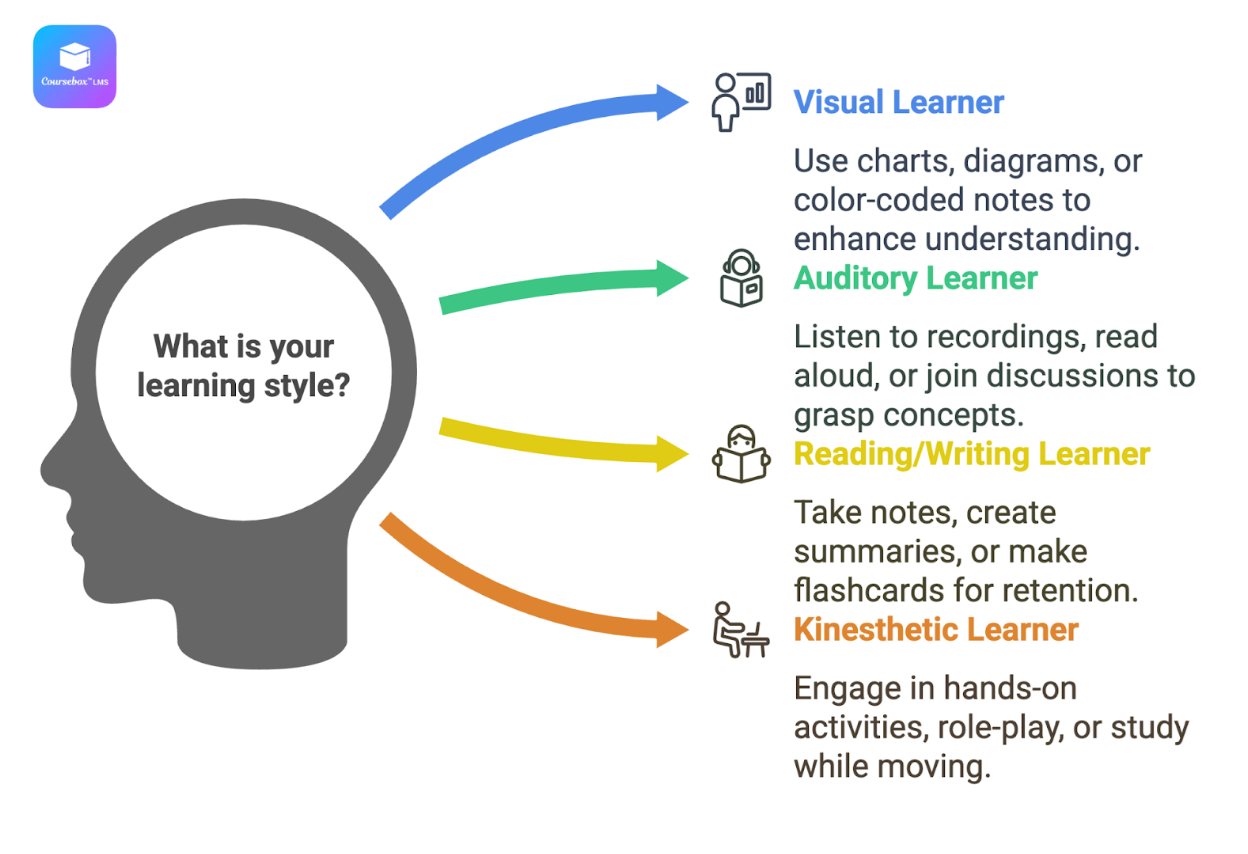
When a strategy blends these styles with clear goals, learners move through new material with more ease and confidence.
Types of Learning Strategies
Learning works best with clear steps that guide focus, memory, plus steady progress. Each person learns differently, so a mix of delivery methods helps every mind move forward with more ease.
Classic Learning Strategies
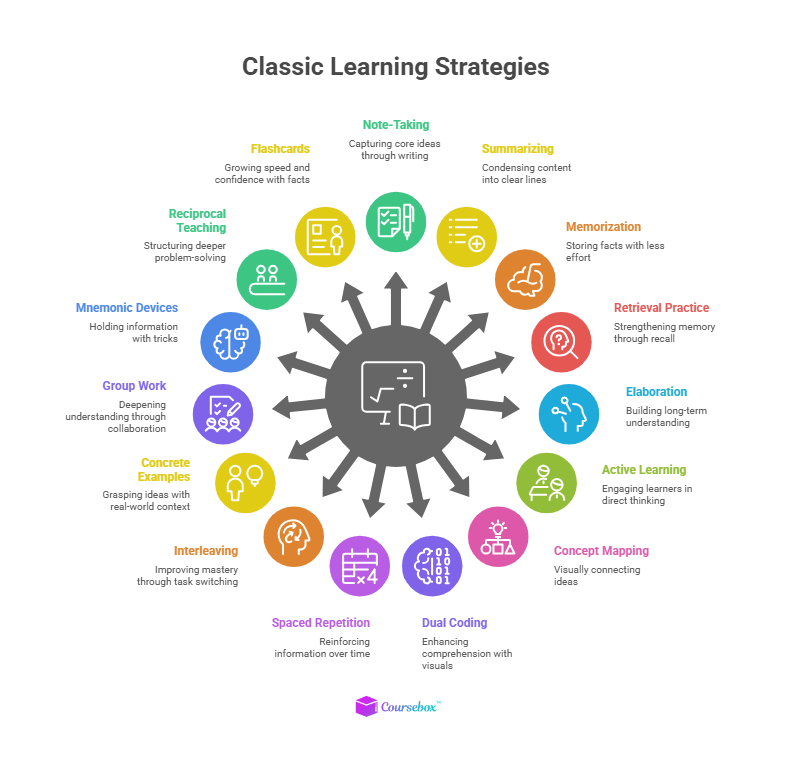
1. Note-Taking
Writing key points by hand or on screen helps capture core ideas. Short lists, quick sketches, or guided prompts keep attention sharp. This cuts noise during online lessons and keeps learners grounded in the moment.
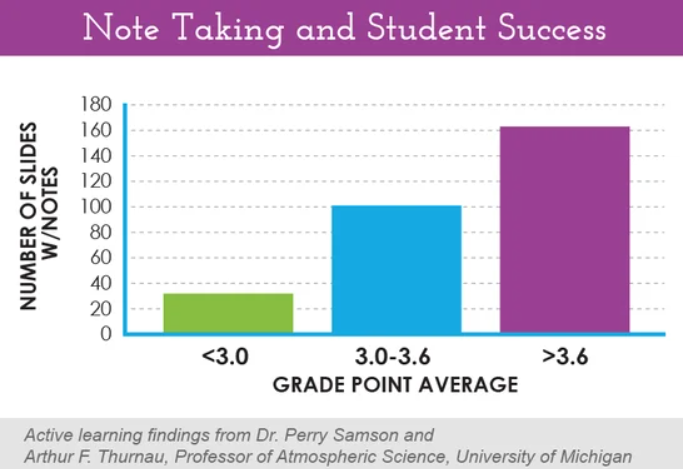
2. Summarizing
Learners put content into short, clear lines using their own words. This trims confusion, builds clarity, plus helps instructors check progress without guesswork.
3. Memorization
Short cues, tiny lists, simple charts, or mnemonic tricks help learners store facts with less effort. Chunking big info into small bits lifts recall without stress.
4. Retrieval Practice
Learners pull info from memory without prompts. Short quizzes, quick checks, or flashcards push the brain to strengthen each link.
5. Elaboration
Learners explain concepts in depth, connect ideas, explore links, plus test real-life uses. This builds long-term understanding, not just surface recall.
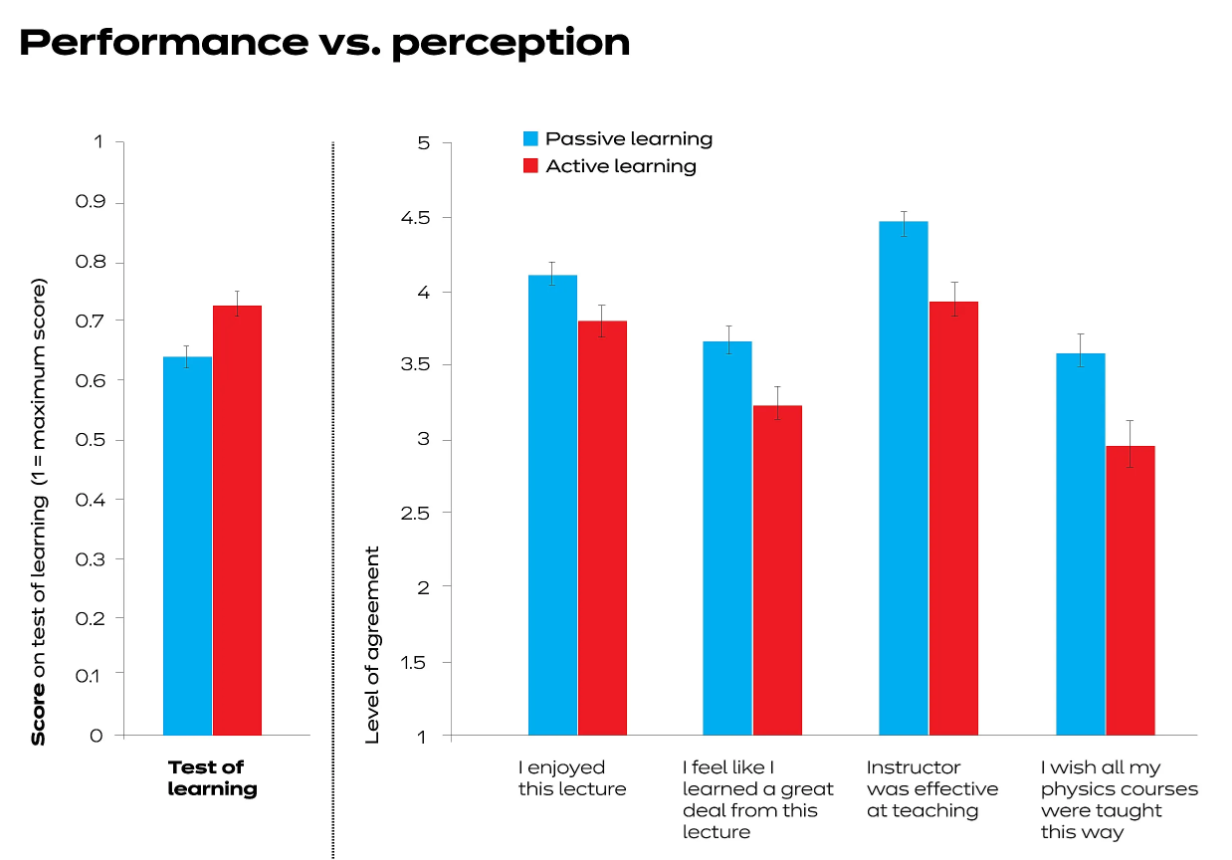
6. Active Learning
Active learning pushes learners to speak, write, solve, or build something with new content. Each task demands direct thinking, not passive listening. Short discussions, quick problem steps, or hands-on mini tasks help learners test ideas, fix confusion early, plus hold information with more strength.
7. Concept Mapping
Charts, flow lines, tree maps, or Venn layouts show how ideas connect. This supports learners who think visually and gives them a clear map for review later.
8. Dual Coding
Words pair with visuals: diagrams, icons, timelines, or simple sketches. This splits the load across two channels, giving the mind more grip on complex topics.
9. Spaced Repetition
Short review sessions spread over days give the mind time to sink new info deep. Tiny refresh cycles work better than long overnight cramming.
10. Interleaving
Learners switch between related tasks, not one long block of the same thing. This forces the mind to pick the right method each time, leading to long-term mastery.
11. Concrete Examples
Learners use simple, real-world examples to grasp complex or abstract ideas. This gives context that sticks with more strength.
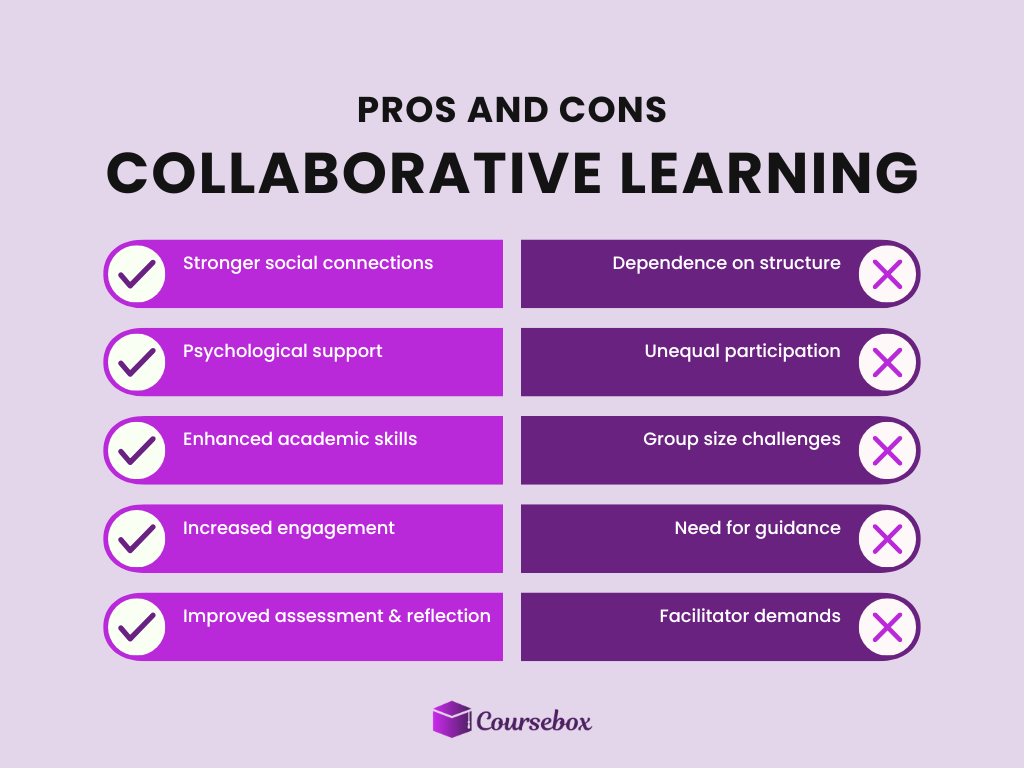
12. Group Work
Small teams split roles, talk through steps, compare thinking, plus build solutions together. Each person touches content differently, giving more depth. This is also known as collaborative learning.
13. Mnemonic Devices
Short phrases, word tricks, or visual cues help learners hold long lists or tricky sequences.
14. Reciprocal Teaching
Learners cycle through predicting, clarifying, solving, and then summarizing. This gives structure for deeper problem-solving in subjects like math or science.
15. Flashcards
Quick flips, constant review, plus short practice cycles help learners grow speed and confidence with key facts.
Modern Learning Strategies
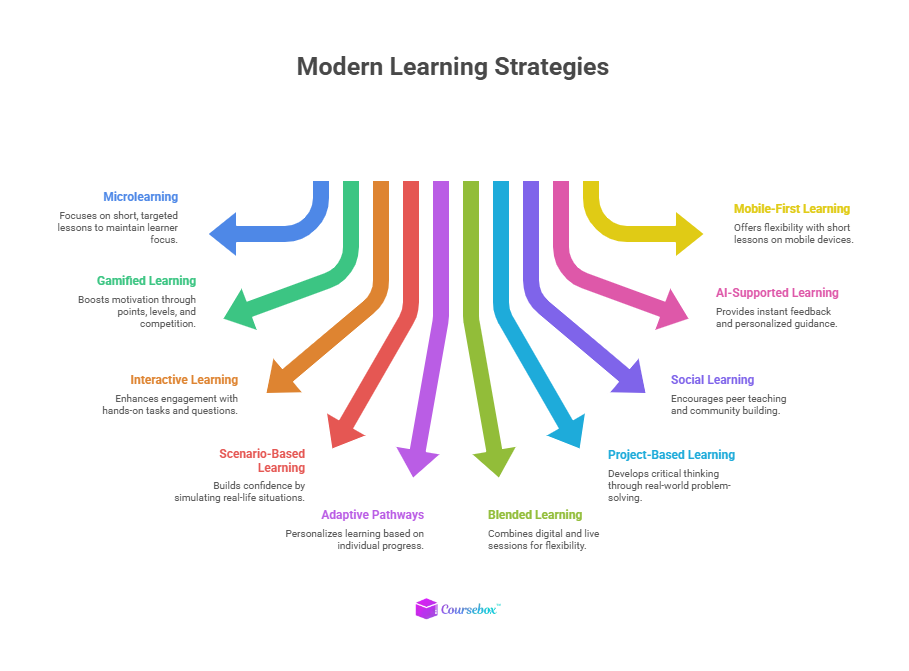
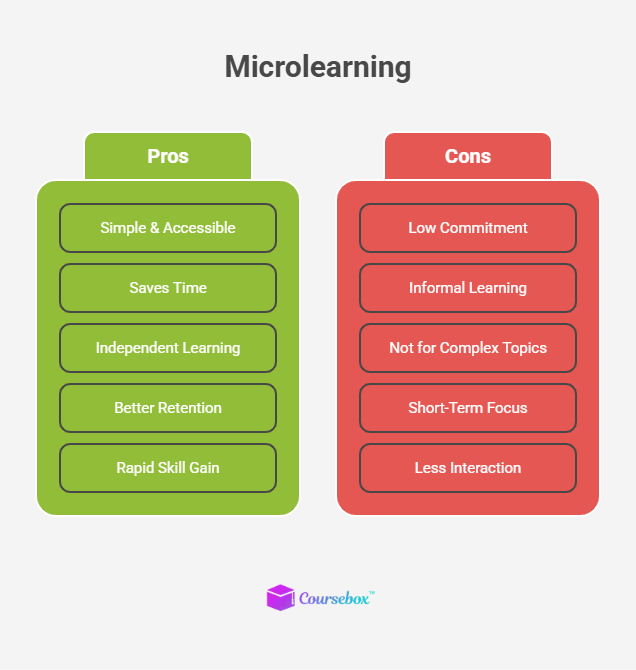
1. Microlearning
Short lessons delivered in tiny bursts help learners stay focused without overload. Each lesson targets one skill or idea. Tools like Coursebox AI help build these tiny modules fast from slides, docs, or video clips.
2. Gamified Learning
Points, levels, badges, and progress bars boost motivation. Light competition or playful tasks pull learners back into the lesson with more energy.
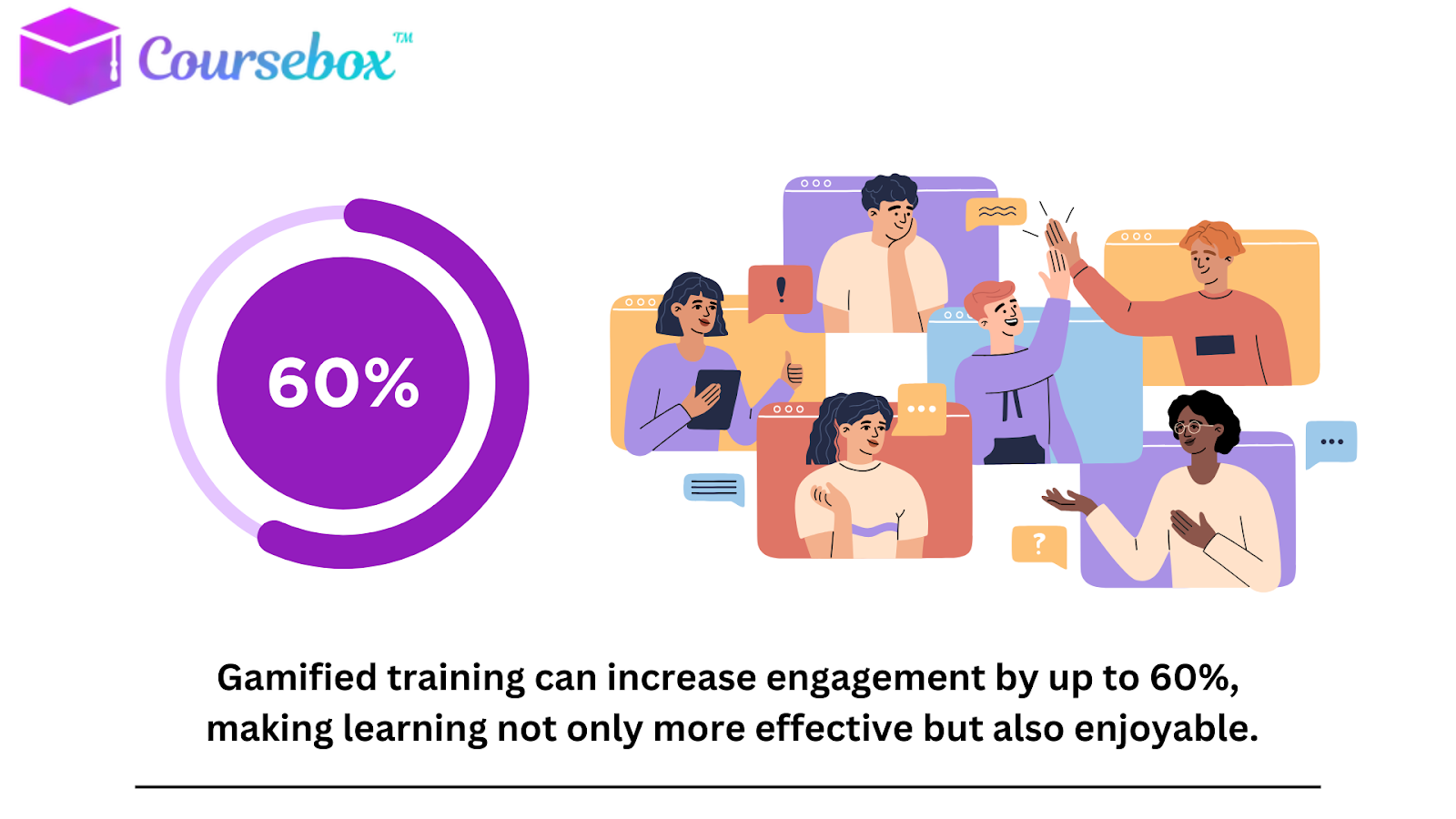
Pro Tip: Gamified learning platforms make training interactive with small wins. This keeps learners engaged and motivated to return.
3. Interactive Learning
Hands-on tasks, branching questions, drag-and-drop steps, or quick scenario checks lift engagement.
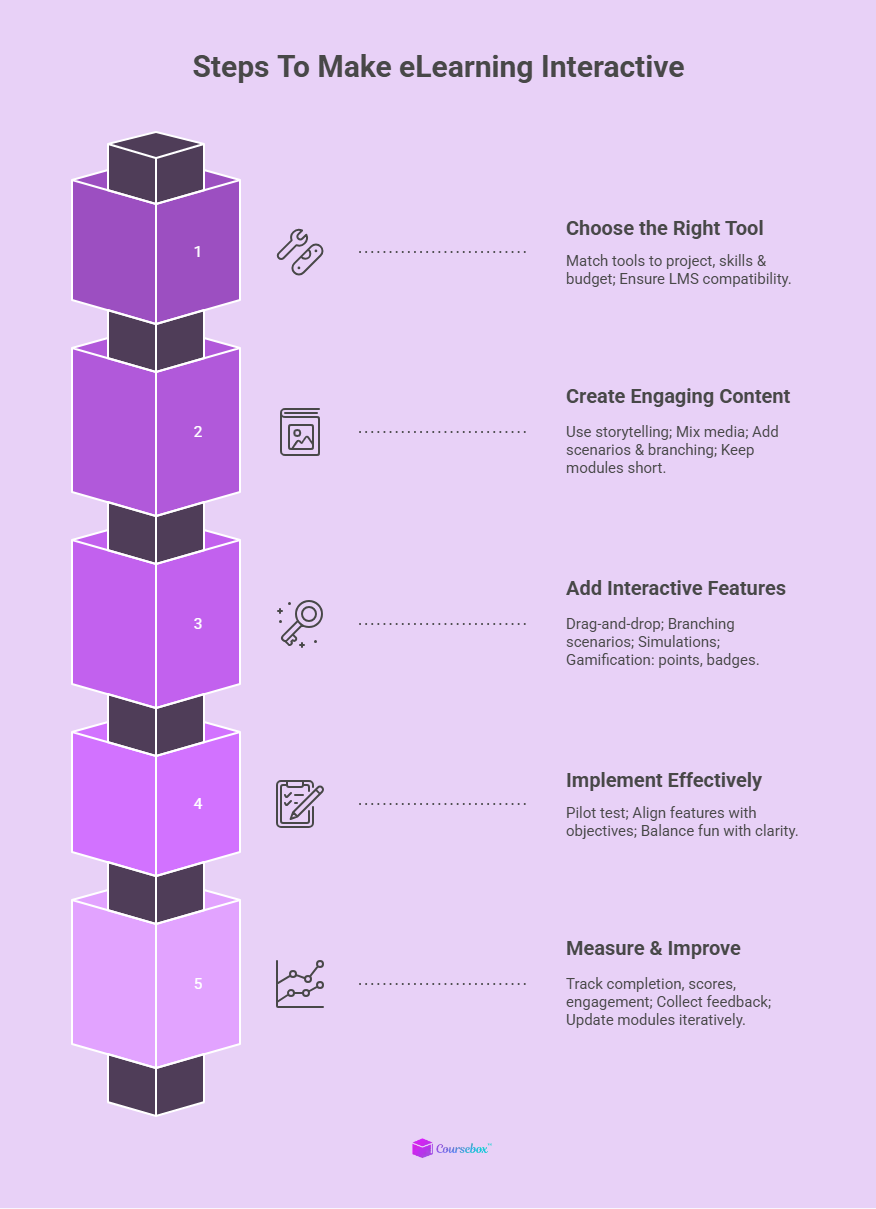
A Friendly Reminder: Coursebox AI supports this with quizzes, flashcards, plus simple interactive blocks created from existing content.
4. Scenario-Based Learning
Learners work through short situations that reflect real life. This builds confidence for tasks they will face later. Digital tools help create rich story paths with flexible outcomes.
5. Adaptive Pathways
Learners move through content based on speed, progress, or struggle points. This gives each person a path that fits their skill level without guesswork.
6. Blended Learning
Mix of digital lessons, live sessions, workshops, plus self-paced work. Online modules lighten prep for teachers or trainers while keeping learning flexible.
Pro Tip: Consider using a blended learning tool for better results.
7. Project-Based Learning
Learners solve real problems, build outputs, test ideas, study results, and then share outcomes. This lifts critical thinking, plus long-term skill growth.
8. Social Learning in Digital Spaces
Shared boards, group chats, comments, or short peer tips push learners to teach each other. This builds community plus steady practice.
9. AI-Supported Learning Flow
AI tutors, instant feedback, or automated checks help learners fix gaps fast. Short suggestions, guided steps, or tailored practice tasks support steady progress without waiting for instructor time.
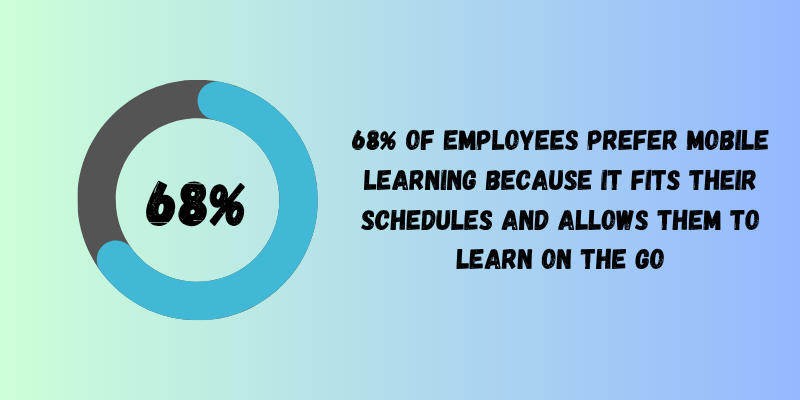
10. Mobile-First Learning
Short lessons designed for phones give learners freedom to learn in short windows throughout the day. Flexible access boosts consistency.
How to Choose the Right Learning Strategy
Choosing the right learning strategy helps learners grasp content faster, remember more, and apply skills effectively.
1. Create a Learner Persona
Map out skills, preferences, pace, and goals for each learner or group. In other words, create learner personas for your students. This makes it easier to match strategies to real needs.
2. Define the Goal
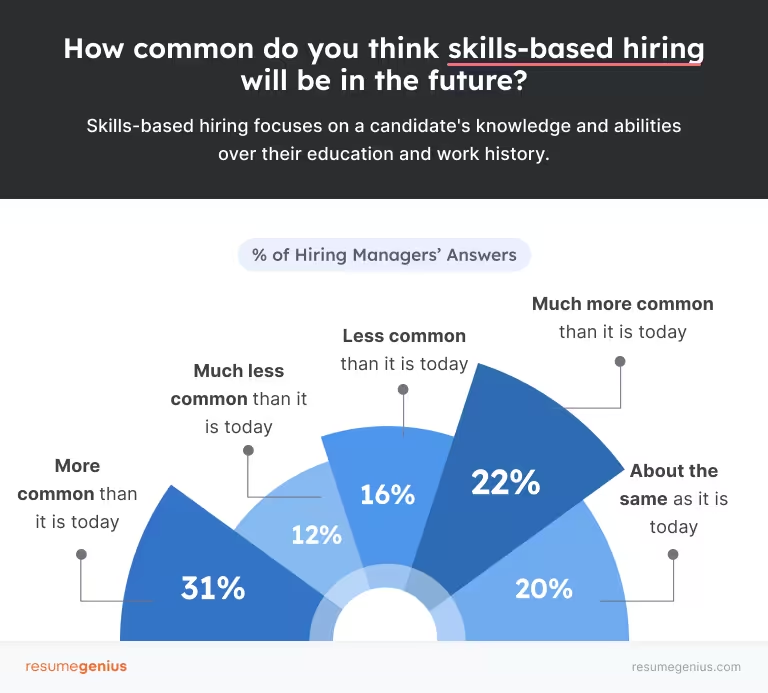
Clarify what the learner must do: memorize facts, solve problems, apply skills, or think critically.
3. Match Strategy to Task
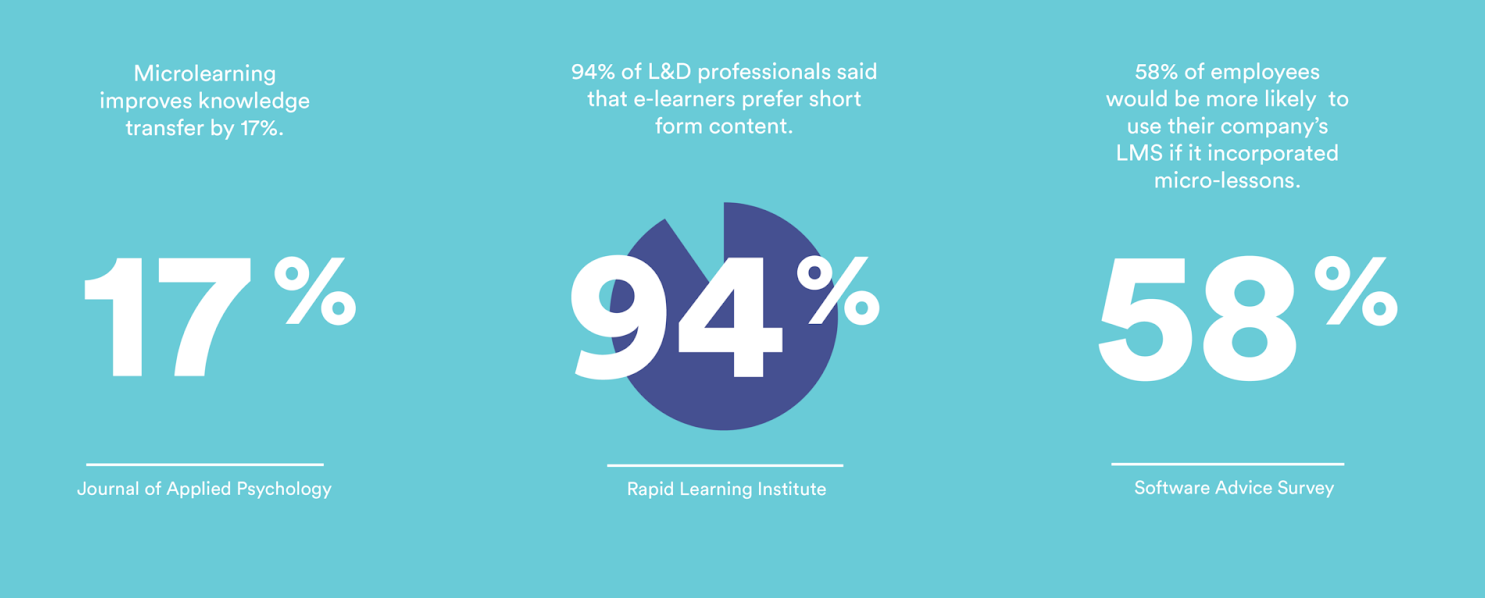
Pick training methods that fit the goal. For example, retrieval for recall, concept mapping for connections, and microlearning for quick skill bursts.
4. Test and Adjust
Try the strategy on a small scale. Track engagement, understanding, and knowledge retention. Swap methods if results lag.
5. Blend Methods
Combine strategies for stronger results. Mixing active learning, visuals, spaced repetition, and interactive tasks often lifts performance the most.
How to Implement Learning Strategies
Implementing learning strategies helps learners retain, apply, and engage with content more effectively in any environment.
1. Teach Learning Skills First
Show learners how to use learning strategies, like spaced repetition, concept mapping, and mnemonic devices, not only to teach content. Offer simple how-to guides, workbooks, or mini‑sessions demonstrating those techniques. That builds a foundation for effective learning.
2. Use a Flexible, Feature-Rich LMS
Make sure your learning management system (LMS) lets you deliver content in different formats (text, video, quiz, interactive tasks), supports multiple learning styles, and tracks progress. For digital training, that makes a big difference.
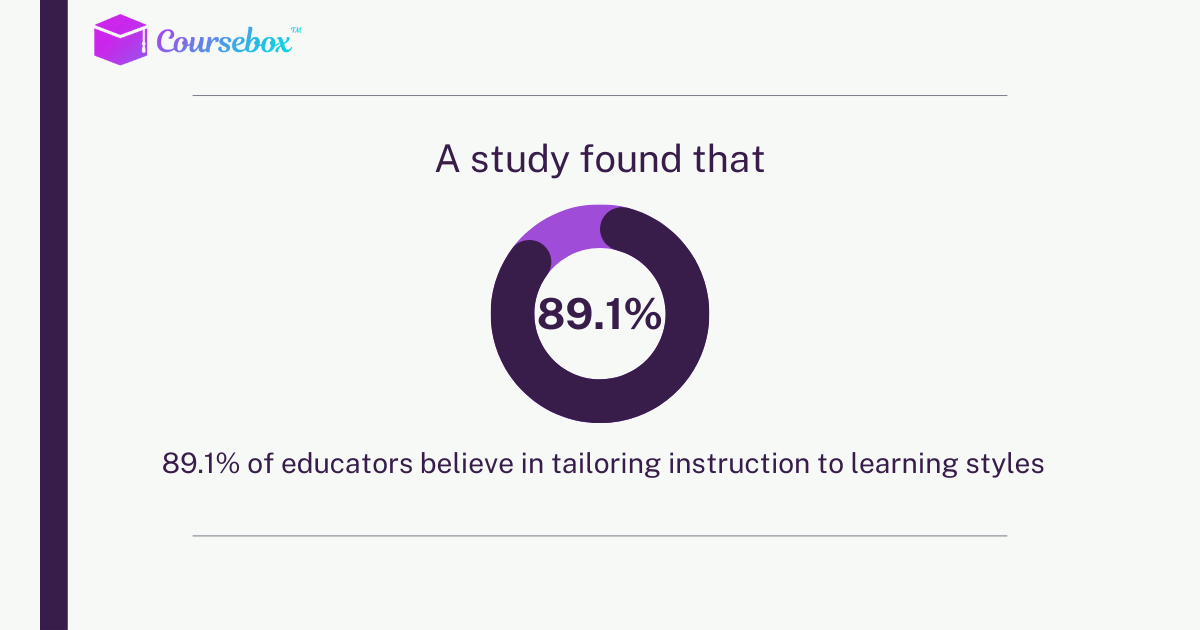
Pro Tip: Tools like Coursebox AI can quickly turn existing documents, slides, or videos into full courses with lessons, quizzes, and interactive elements, making it easier to implement strategies like retrieval practice, spaced repetition, or microlearning paths.
3. Build a Safe, Open Learning Environment
Encourage learners to ask questions, share thoughts, and choose strategies that suit them. Accept different preferences (visual, auditory, active, etc.). Peer discussion, group tasks, and feedback will reinforce understanding.
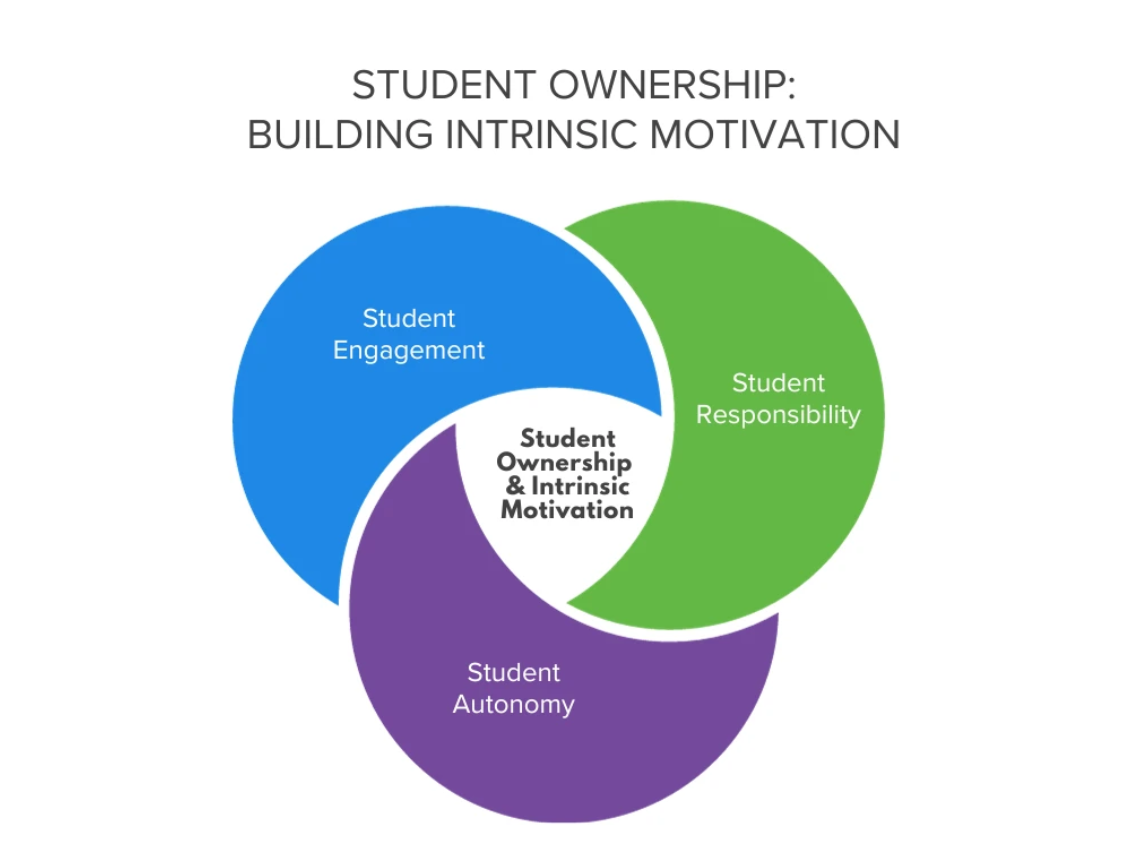
4. Encourage Learner Ownership
Invite learners to set their own pace, self-monitor progress, revisit materials, redo tasks, or explore further on their own. Motivation rises when learners feel in charge of their own learning journey.
5. Monitor, Test, Adapt
Track learner performance, quiz results, engagement, and feedback. If a strategy or format doesn’t produce results, change it. Sometimes mixing a few strategies works better than sticking to one.
Teach Smarter, Not Harder with Coursebox AI
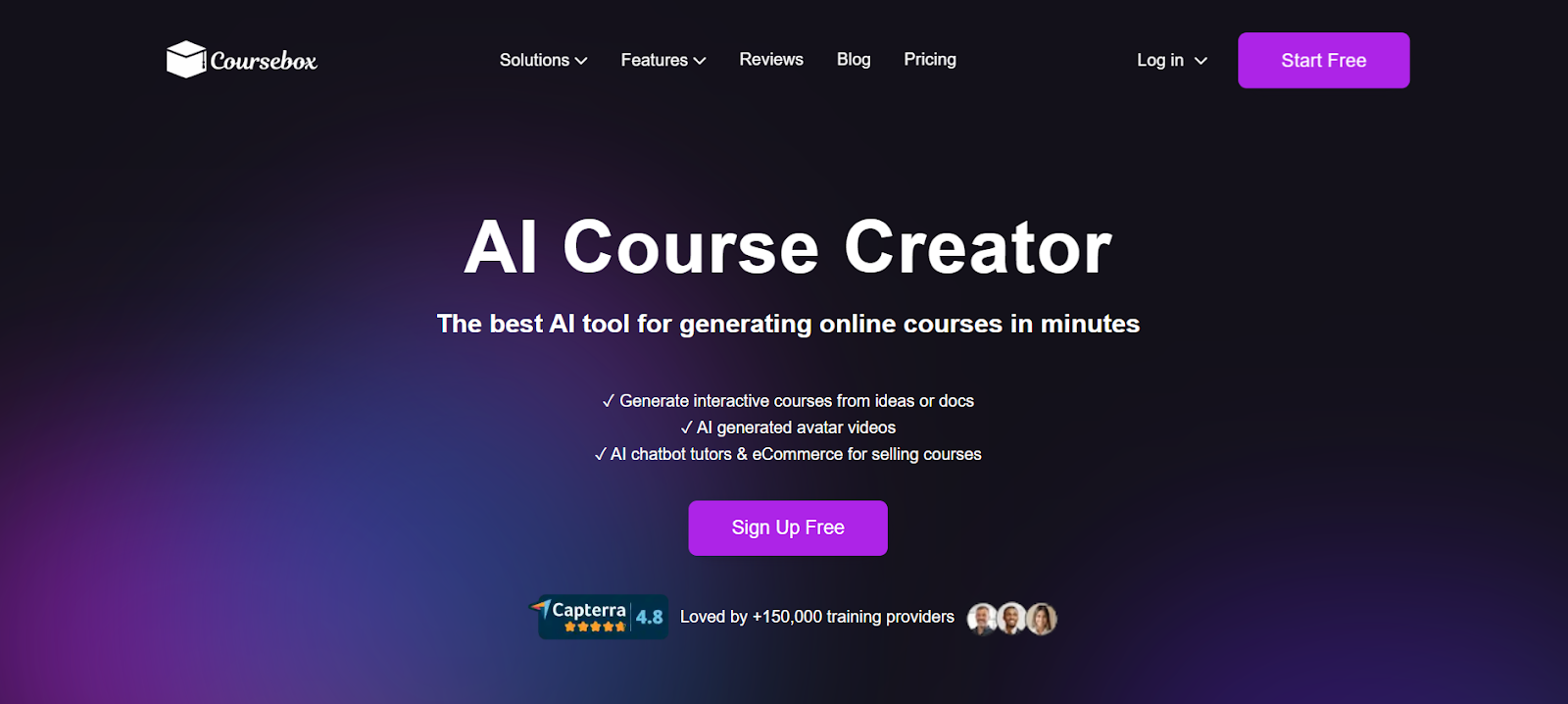
Choosing the right learning strategies and implementing them thoughtfully creates a more engaging, productive learning experience.
Tools like Coursebox AI make this process seamless by turning existing content into structured courses, interactive quizzes, and microlearning modules in minutes.
Start building smarter, faster, and more effective learning programs that truly stick with Coursebox AI today.
FAQs
What are the 4 learning strategies?
Four key learning strategies include: note-taking, summarizing, retrieval practice, and elaboration. These methods help learners absorb, retain, and apply knowledge by organizing information, testing recall, and connecting ideas to real-world contexts.
What are the six most effective learning strategies?
The six most effective strategies include active learning, spaced repetition, dual coding, concept mapping, mnemonic devices, and self-testing. These techniques boost retention, understanding, and engagement across academic, workplace, and personal learning environments.
What are the 4 C's of learning skills?
The 4 C’s of learning skills are Critical thinking, Creativity, Collaboration, and Communication. These core skills empower learners to analyze information, generate ideas, work effectively with others, and clearly express understanding in diverse learning contexts.
What are the top 3 learning methods?
The top three learning methods include visual learning (using images or diagrams), auditory learning (listening and discussion), and kinesthetic learning (hands-on practice). Combining these approaches improves comprehension, memory, and skill application.
What are the big 8 teaching strategies?
The big 8 teaching strategies include direct instruction, collaborative learning, problem-based learning, differentiated instruction, flipped classroom, cooperative learning, inquiry-based learning, and active learning. These strategies enhance engagement, understanding, and long-term retention.
Travis Clapp
Educational technologist and instructional designer

