

10 Best Gamified Learning Platforms in 2026, Through an L&D Lens
Gamified learning platforms keep learners engaged and motivated throughout the whole experience. Explore free and paid gamified platforms to choose the right one for your needs.

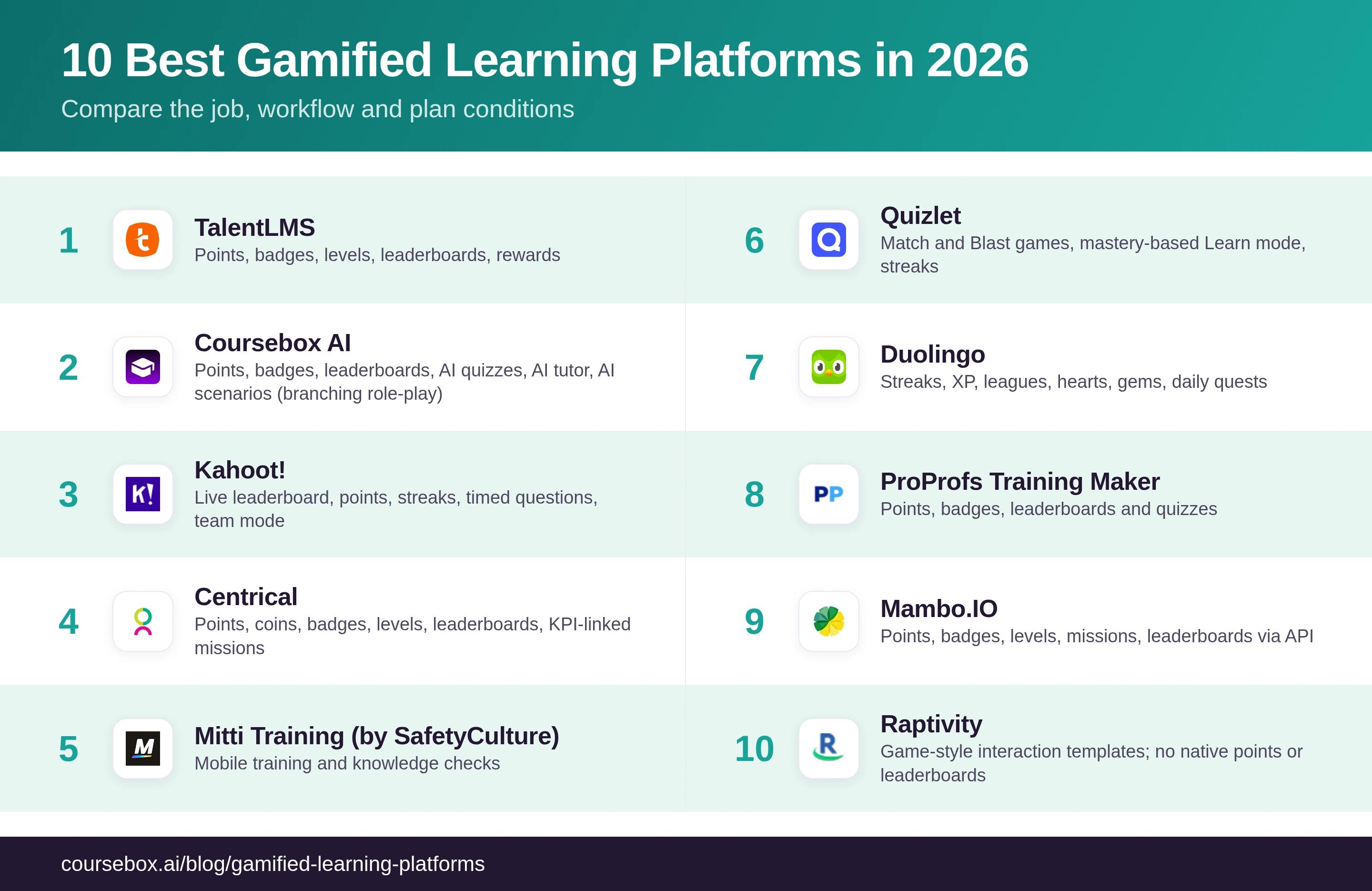
The best gamified learning platforms in 2026 include TalentLMS for LMS administration, Coursebox for creating and delivering interactive training, Kahoot! for sessions and challenges, and Centrical for performance-linked frontline programmes.
- Compare the learning action behind the points: recalling a fact, making a decision or applying a skill. A completion badge alone does not demonstrate proficiency.
- EdApp retired in March 2026, but training continues in SafetyCulture. Stars and prizing were discontinued; use the current app and plan.
- Quizlet and Duolingo are focused practice supplements. Mambo.IO is an integration engine and Raptivity an interaction authoring tool, rather than complete employee LMS products.
- Check learner billing, reward rules and the reporting workflow on the package you will buy. ProProfs includes native points, badges and leaderboards, not just puzzle games.
Compare four starting options in three steps. These are preferences, not a check of required features. Use the entries to confirm access, pricing and your essential requirements.

Turn boring content into gamified learning instantly
I started my career in Adelaide building e-learning for SA Government agencies and training organisations that had almost no budget for anything interactive. This was deep in the SCORM era, when "engaging learning" usually meant a progress bar that forced you to wait before clicking Next, and adding a leaderboard to a compliance module required a developer, a feature request, and about three weeks of patience nobody had.
I cared about learning quality. Flat information delivery was easy to produce but gave people little chance to practise. Adding a game was not enough if it rewarded clicking through rather than making a good decision.
That gap between what I wanted to build and what the tools actually allowed is why this list looks the way it does. I'm not going to tell you which platforms have a gamification checkbox. I'm going to tell you which ones let you build something that changes learner behaviour, and at what cost and complexity level.
This is for L&D teams comparing workplace training tools and useful supplements. Kahoot!, Quizlet and Duolingo cover narrower activities; Mambo.IO adds mechanics to an existing application and Raptivity authors interactions. I have kept those differences visible rather than calling every product a complete LMS.
EdApp retired in March 2026. Training continues in the operations platform now branded Mitti by SafetyCulture. Stars and prizing were discontinued; check current plans and reward mechanics for a new rollout.
Comparison at a glance
| Tool | Gamification mechanics | Best for | Watch out for |
|---|---|---|---|
| TalentLMS | Points, badges, levels, leaderboards, rewards | Mid-market wanting full LMS with gamification at transparent price | Check reward rules, user bands and programme reporting |
| Coursebox AI | Points, badges, leaderboards, AI quizzes, AI tutor, AI scenarios (branching role-play) | L&D teams building gamified courses without long production runway | AI content needs a human accuracy review pass |
| Kahoot! | Live leaderboard, points, streaks, timed questions, team mode | Live event engagement and knowledge checks at session close | Fatigue: single-format live quiz loses novelty over time |
| Centrical | Points, coins, badges, levels, leaderboards, KPI-linked missions | Large enterprise contact centres and frontline teams, 500+ users | No published pricing; significant implementation complexity |
| Mitti Training (by SafetyCulture) | Mobile training and knowledge checks | Frontline learning connected to operations | EdApp retired; stars and prizing discontinued |
| Quizlet | Match and Blast games, mastery-based Learn mode, streaks | Vocabulary-heavy content where competitive spaced repetition is the mechanic | Only memorisation and recall; no branching or learning paths |
| Duolingo | Streaks, XP, leagues, hearts, gems, daily quests | Language skills training for multilingual or international teams | Language only; not compliance, sales, or technical training |
| ProProfs Training Maker | Points, badges, leaderboards and quizzes | Hosted employee training | Confirm plan rules and learner billing |
| Mambo.IO | Points, badges, levels, missions, leaderboards via API | Developers adding gamification to existing apps via API | Not a standalone learning platform; requires developer resource |
| Raptivity | Game-style interaction templates; no native points or leaderboards | Instructional designers adding gamification interactions to SCORM content | Not a standalone LMS or complete learning platform |
How I chose these platforms
- Learning mechanics: Match points, challenges and practice to the action learners should improve. A tool can be useful for one activity without supporting every type of branching scenario.
- Corporate L&D fit: Workplace training is increasingly delivered on mobile for frontline and field teams, so platforms needed to work on mobile without significant degradation.
- Honest pricing: Several platforms in this category advertise "gamification included" on plans that lock it behind an upgrade tier. I've noted where pricing is gated behind a sales call and where free tiers are functional for real use.
- Current product and plan: Check which app, package and reward system a new customer can actually buy. EdApp’s move into SafetyCulture is a useful example of why older plan details can mislead.
I spent the most time on the tools where my evidence was strongest: Coursebox (I built it), Kahoot! (I've run it across dozens of training sessions), Centrical and TalentLMS (researched in detail for this piece). For the rest, and to keep every entry honest, I also went through hands-on demos and independent reviews of each platform's gamification and pulled out what actually happens when you use it. Those observations appear under 'Thoughts after trying it out' in each entry.
1. TalentLMS
Website: talentlms.com
TalentLMS combines course delivery, learner administration and configurable points, badges, levels and leaderboards. A trainer can create a course, assign it to a group and inspect results in the same system. I would shortlist it when the everyday training workflow is as important as the game mechanics.
The relevant trade-off is how rewards and reporting behave in your actual programme. Compare course-level records, learning-path reporting and the rules that award points, particularly when some training is required and other courses are optional.
Best for: SMBs and mid-market organisations wanting a full LMS with gamification at a transparent, published price.
Pricing: Free supports five users and ten courses. Core starts at US$119 per month billed annually for the selected 1-40-user band. User bands, Standard versus Flex billing and content subscriptions change the price.
Not for: Enterprise compliance programmes requiring advanced analytics, or organisations needing deep platform customisation.
Thoughts after trying it out: I tested TalentLMS gamification with a mixed learner group. Turning it on partway meant earlier course completions didn't retroactively earn points. Learners also found ways around it, muting videos or clicking through just to rack up leaderboard position. Rewards need tying to actual KPIs, not just points.
2. Coursebox AI
Website: coursebox.ai
Full disclosure: I built Coursebox. It turns your material into a course you can edit, assess and deliver, with an AI tutor, role-play scenarios and learning game mechanics. The useful combination is practice and feedback inside the training workflow, rather than a leaderboard sitting beside unrelated content.
Its other edge is authoring speed: 88% of creators use the AI generation path, and the median time from first generation to a published course is 23 minutes. That means you can build a gamified, scenario-based module, watch how learners respond, and rebuild it the same afternoon. The honest limitation is that AI content is a starting point, so subject-specific accuracy still needs a human review pass, which is non-negotiable for complex compliance or technical material.
Best for: L&D teams and small-to-mid organisations that want to build gamified courses without a long content production runway. Strong for rapid iteration on gamification mechanics.
Pricing: Free includes three mini-courses of up to five pages each, unlimited learners, defined AI allowances and a Coursebox watermark. Paid capacity, branded LMS, exports and integrations depend on the plan.
What I'd change: The reporting dashboard. Analytics are functional but won't satisfy teams expecting curriculum-level reporting or cohort comparison views out of the box.
Thoughts after trying it out: Pairing a scenario with in-context help gives the learner somewhere to go after an incorrect decision. That is the part I would test first: can they practise again and explain why the better answer works? Fast course drafting leaves more time for that review.
3. Kahoot!
Website: kahoot.com
Kahoot! creates live quiz competition and also offers self-paced assignments and structured courses in its business packages. I would use it for a facilitated knowledge check or recurring practice, then decide whether its learner records fit the wider programme rather than assuming it replaces every LMS function.
Its package limits are consequential: participant counts, courses, certificates and organisation integrations vary by tier. Timed scoring can reward speed as well as understanding, so adjust the session format when accuracy or accessibility is the priority.
Best for: Live event engagement, knowledge checks at session close, onboarding-day activities, and annual kickoffs where the facilitator wants a lively knowledge check.
Pricing: the US annual selector lists Pro Start at $19 per month for 50 participants, Standard at a displayed $25 for 200 and Plus at a displayed $39 for 1,000. Displayed discounts and renewal prices can differ; organisation-wide features use separate packages.
Not for: Teams choosing a full employee LMS solely from the live-quiz experience. Test the self-paced workflow, reporting and required integrations on the proposed package.
Thoughts after trying it out: I tested Kahoot in team settings and found the live leaderboard creates real psychological pressure. Being in the lead means racing to stay ahead with mounting anxiety; participants stuck at the bottom just checked out. Brilliant for initial engagement, but the public ranking can flip into stress if you're not actively reframing it as playful.
4. Centrical
Website: centrical.com
Centrical connects performance data, microlearning, coaching and gamification for frontline teams. A manager can use a work metric to identify a gap and direct relevant practice, rather than rewarding course completion alone. The useful question is how your data becomes an assigned action for the learner.
That workflow requires data mapping, programme design and administration. I would price the implementation and ongoing ownership with the subscription. Team size alone does not establish eligibility or value; a smaller specialist operation should assess the actual scope with the vendor.
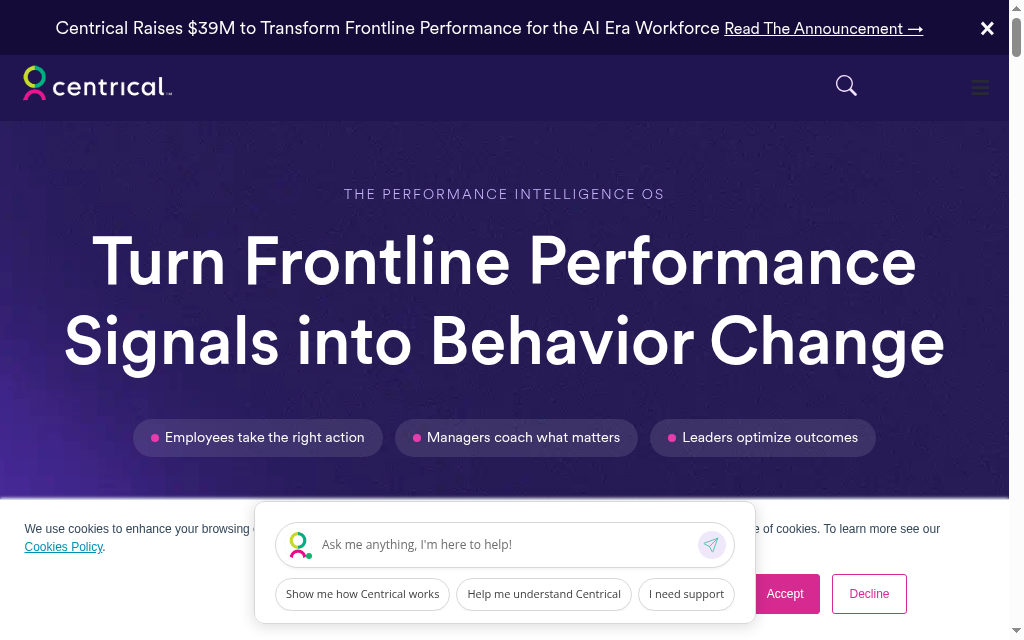
Best for: Large enterprise contact centres, frontline sales teams, and organisations with 500+ users and dedicated L&D implementation resource.
Pricing: Not disclosed. Enterprise contract model. Contact centrical.com/get-pricing.
Not for: SMBs, teams without dedicated implementation support, or organisations evaluating without budget for enterprise-level spend.
Thoughts after trying it out: I found that Centrical's value hinges on using it as designed. Teams initially treating it like a standard LMS, without configuring AI-driven performance matching, struggle to hit proficiency marks. But once you enable data-driven content delivery based on actual performance gaps, the platform becomes useful.
5. Mitti Training (by SafetyCulture, formerly EdApp)
Website: mitti.com/training
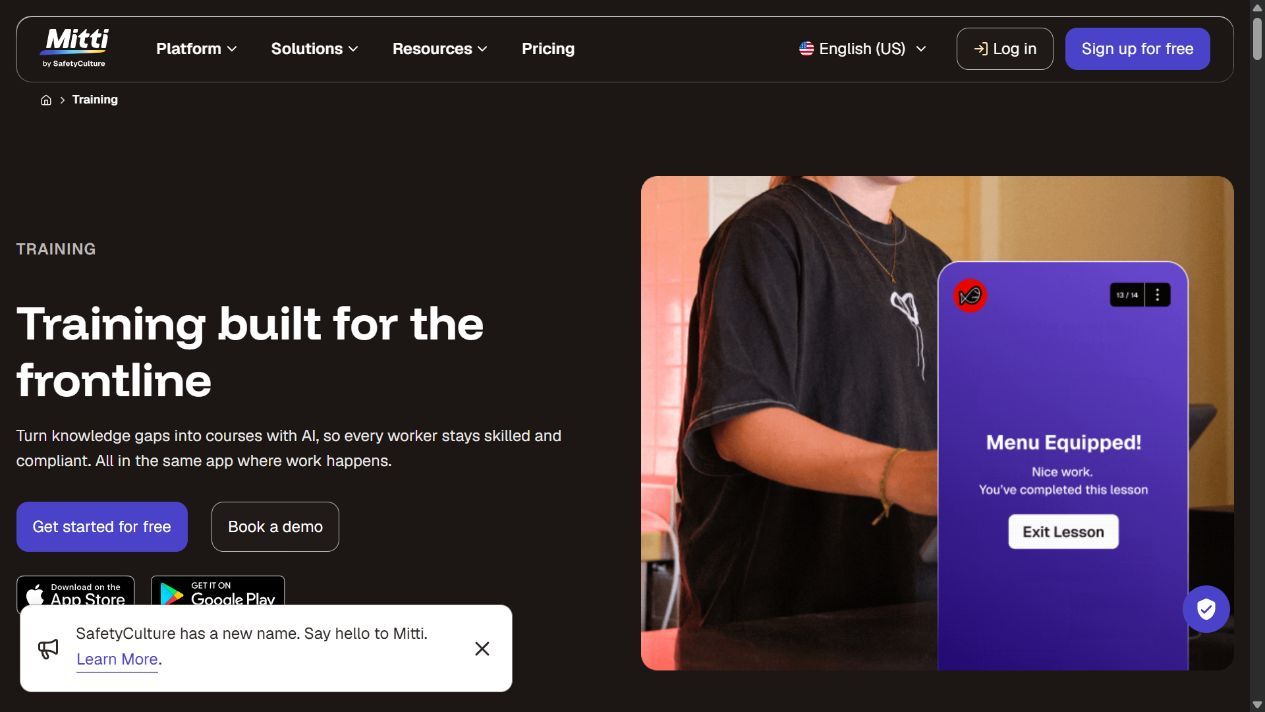
EdApp retired on 31 March 2026 and its training features moved into the broader operations platform, now branded Mitti by SafetyCulture. The current product combines short mobile lessons, AI authoring, assessments, spaced repetition and leaderboards with operational workflows.
The move changes the buying decision: training now sits alongside inspections, issue reporting and operational workflows. SafetyCulture says stars and prizing were discontinued, and seat permissions differ. Check the current game mechanics and learner access before carrying over an EdApp-era design.
Pricing: current access and seat types are set out in Mitti’s plans. The training page advertises free access up to ten users; confirm the learner and administrator permissions you need. Retired EdApp accounts are not current signup options.
Thoughts after trying it out: The older mobile experience showed why device performance affects a leaderboard. For a new rollout, I would repeat that check in the current SafetyCulture app and confirm which rewards still exist before promising them to learners.
6. Quizlet
Website: quizlet.com
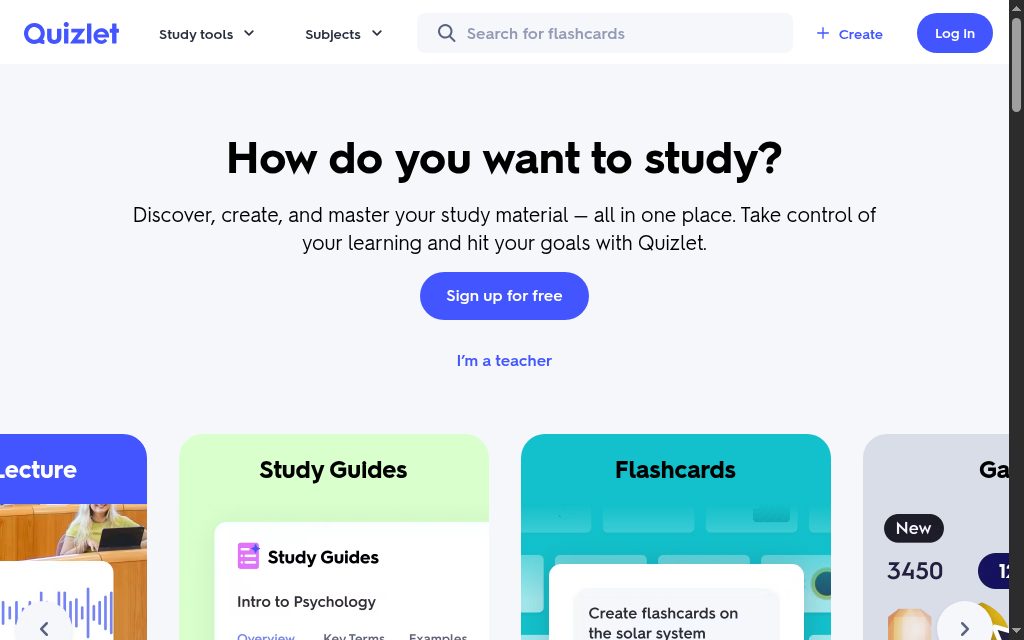
Quizlet is a flashcard and study-set tool from the K-12 and higher-ed world, with a real corporate use for vocabulary-heavy content: product knowledge, compliance terminology, regulatory definitions or language practice for multilingual teams. Its gamification is competitive recall through timed exercises, head-to-head races and matching games, which work well for memorising terms.
It is a supplement for learning facts rather than an employee administration system. Free flashcards and limited study modes let you try the material; paid individual or teacher options raise access. Do not infer enterprise provisioning or compliance reporting from a classroom plan.
Best for: Product training, compliance terminology, vocabulary-heavy content where competitive spaced repetition is the primary mechanic needed.
Pricing: free flashcards and limited study access, with paid study and teacher plans. Check current limits in the account you will use.
Not for: Full L&D programmes, skill-based training, onboarding workflows, or any training requiring mechanics beyond memorisation and recall.
Thoughts after trying it out: I tested the free version on a 20-item training set: Learn mode cut me off after two seven-question rounds, forcing me to stop mid-session even though I had momentum. The paid version has no such limits. For workplace training with larger knowledge sets, those session caps can derail motivation before you've reviewed all the material.
7. Duolingo
Website: duolingo.com
Duolingo is the most recognised gamified learning product in the world, and also a consumer language app rather than a corporate training platform. The gamification design is effective: streaks, XP, badge progressions, adaptive difficulty and social comparison that drive daily habits, the streak in particular producing return behaviour most corporate tools would love to replicate.
Its scope is language practice. A streak and short exercises may help a learner keep a routine, but the consumer account is not evidence of a current enterprise LMS, safeguarding record or company-managed assessment workflow.
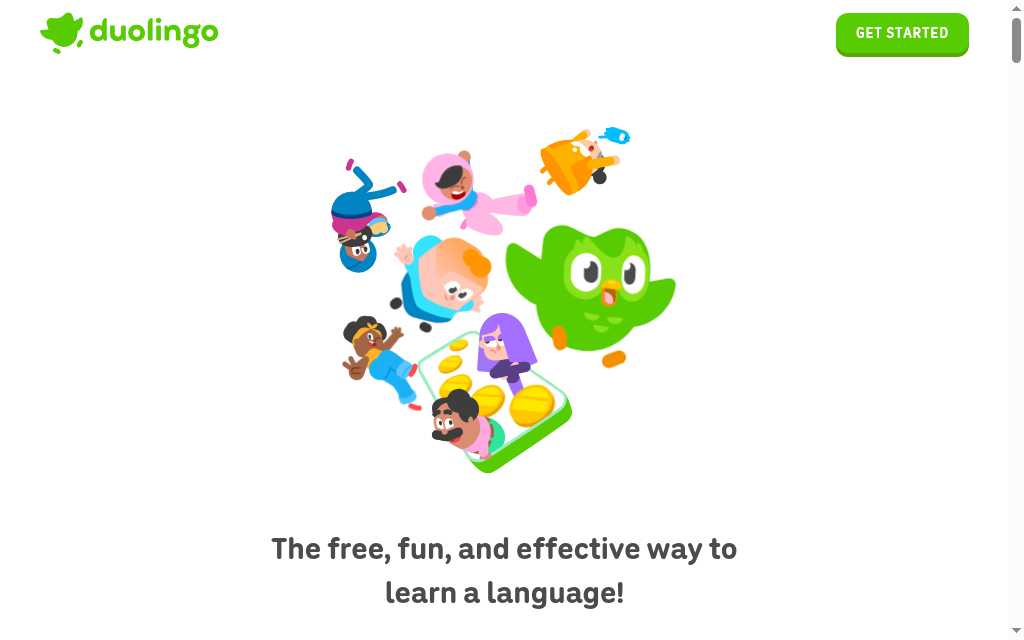
Best for: Language skills training for multilingual or internationally-deployed teams.
Pricing: ongoing free lessons with ads and allowances; paid Super and Max subscriptions vary by region and features. Verify any organisation-wide arrangement separately.
Not for: Non-language corporate training, LMS functionality, or compliance-heavy programmes.
Thoughts after trying it out: I tested Duolingo and found the streak system created a trap. Rather than learning, I was doing the bare minimum each day just to keep my streak alive. The psychological pressure to not lose invested days meant I stopped actually learning the language.
8. ProProfs Training Maker
Website: proprofstraining.com
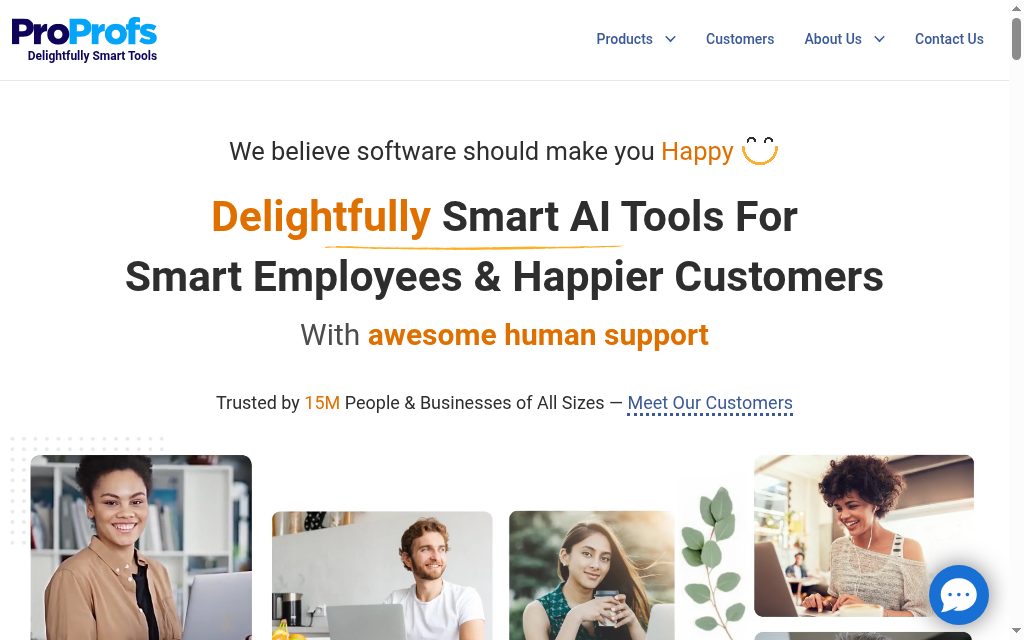
ProProfs Training Maker is a hosted LMS with course creation, quizzes, assignment, completion records and points, badges and leaderboards. A team can upload material, build a scored induction and report on the learner’s progress in the same product. It covers more than embedded puzzle games.
Best for: Small organisations wanting quiz-based training with basic gamification and certificate generation without full LMS overhead.
Not for: A purchase based only on a puzzle demo. Check the permissions, learning paths, records and game rules on the actual proposed plan.
Thoughts after trying it out: The puzzle templates I reviewed are only one part of the current offer. I would also configure the native gamification rules and compare a learner’s points with the completion report, so the game and the required training record stay aligned.
Pricing: ProProfs offers a free ten-learner plan. Its current paid selector lists Essentials at US$1.99 per active learner per month billed annually, with a 100-active-learner limit. Higher packages change the scope.
9. Mambo.IO
Website: mambo.io
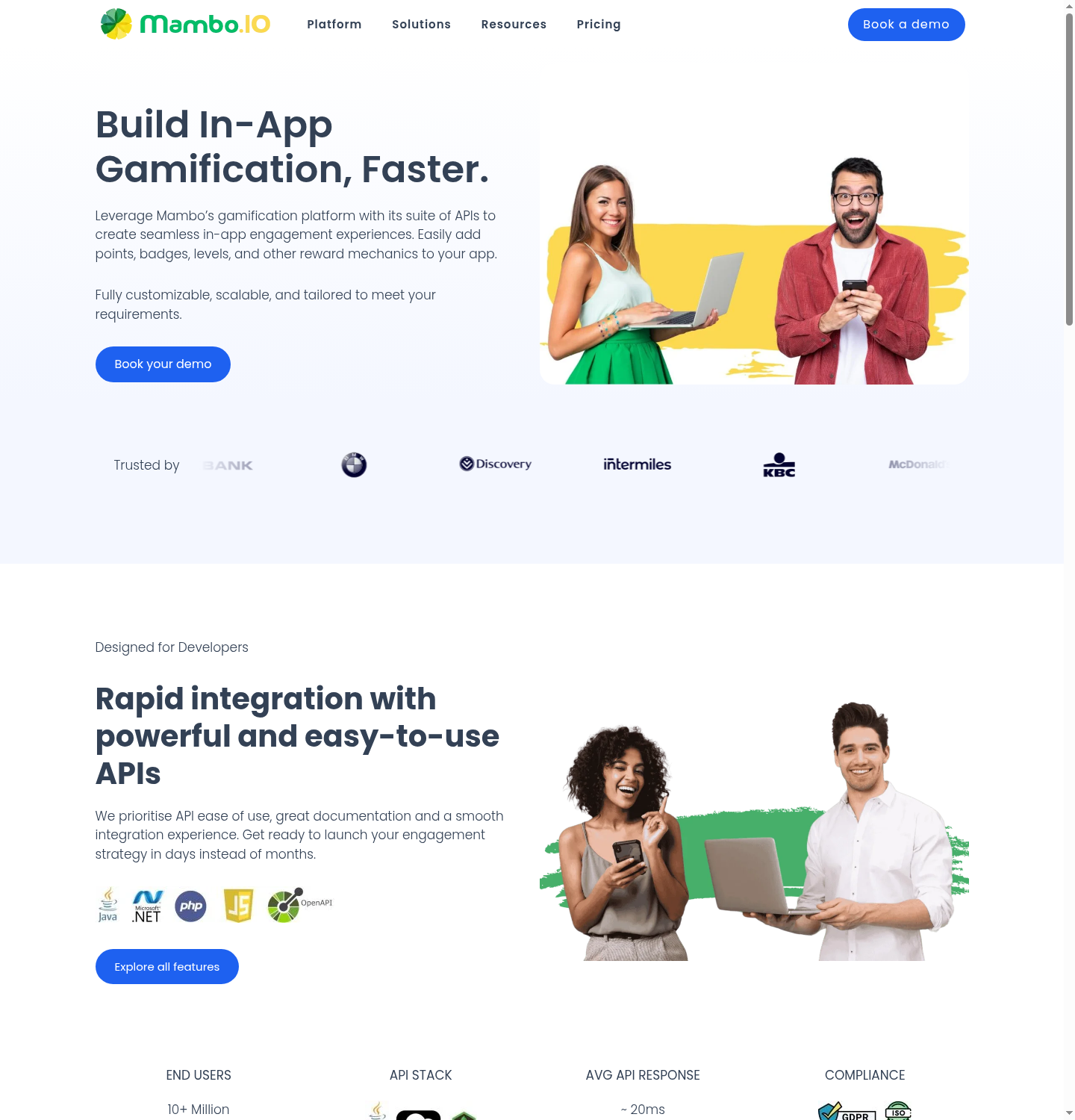
Mambo.IO is not an LMS, which is the key thing to know before comparing it here. It is a gamification API and rules engine that adds points, badges, leaderboards, challenges and levels to an existing app via integration. If you have an LMS or internal system without gamification and want to add it rather than replace the platform, it is one of the few tools built for exactly that.
Implementation needs developer resource, there is no no-code layer, so it suits technical teams injecting mechanics surgically. For most L&D teams evaluating standalone gamified platforms it is the wrong category; for those with a custom system and dev resource, it can save a migration.
Best for: Developers and technical L&D teams adding gamification mechanics to existing applications via API.
Pricing: Mambo.IO’s On-Demand cloud plan starts at US$499 per month with active-user pricing. On-premise and dedicated hosting use separately quoted annual CPU-based licences.
Not for: Organisations wanting a ready-to-use training environment. This is not a standalone learning platform.
10. Raptivity
Website: raptivity.com
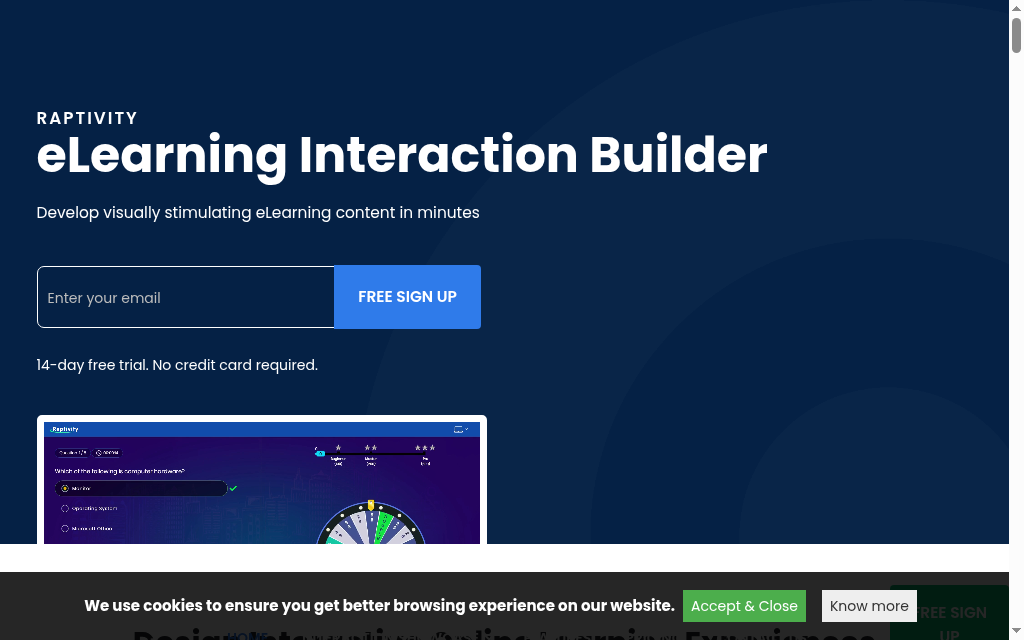
Raptivity is an interactive-content authoring tool, not an LMS. It builds gamified interactions such as branching scenarios, knowledge checks and simulations that export to SCORM and embed in your LMS. The use case is narrow: if your current authoring tool (Storyline, iSpring, Lectora) cannot produce the interaction you need, Raptivity complements it rather than replacing it.
If you have no established authoring workflow, Coursebox and TalentLMS both handle authoring and gamification without adding a second specialist tool. Raptivity is for instructional designers who already have a workflow and need to extend it. Check raptivity.com for current pricing.
Best for: Instructional designers adding gamification interaction types to SCORM-based content deliverables.
Not for: Organisations looking for a standalone LMS, a live engagement tool, or an end-to-end training platform.
Thoughts after trying it out: The game templates are visually different but mechanically identical. Mountain climb, bowling rush, and cheese quest all use the same quiz-answer-progress model under the skin. If you need varied game mechanics beyond multiple choice, you'll hit the template ceiling pretty quickly.
What I would actually pick
For a small or mid-sized organisation (under 200 employees) that wants to build and deliver gamified training without a lengthy implementation runway: Coursebox (honestly). The AI authoring speed changes what's actually achievable with a typical L&D team's available hours. You can iterate on gamification mechanics quickly instead of committing months to a single course build, which is the practical requirement for doing gamified learning properly rather than just checking the box.
For a team that wants course delivery, administration and configurable game mechanics together, TalentLMS is a sensible shortlist candidate. Compare the correct user band and billing model; the entry-level price does not cover every 100-person deployment.
For frontline teams connecting training to operational performance, Centrical deserves a close look. SafetyCulture is also relevant where training follows inspections and reported issues. Compare the data connection and administration burden using one real workflow.
I would use Kahoot! when facilitated sessions or short self-paced challenges are central to the programme. Vary the scoring and give people time to explain answers, rather than relying on a public speed ranking every session.
What gamification actually looks like in the field
Before the platform list, some concrete examples of what works and what doesn't in corporate gamification. I've seen these mechanics deployed across government agencies, training organisations, and corporate L&D programmes, and the patterns are consistent.
In compliance training, a progress indicator can help a learner see what remains. For required safety learning I would check the pass standard and completion record first, then decide whether a public ranking adds anything useful. Learners on different shifts may not have comparable opportunities to climb it.
In onboarding programmes, points competitions for first-week task completion (configuring tools, submitting a first project, attending orientation sessions) work because the tasks are comparable across the cohort and the stakes feel low enough to be playful. New-hire cohorts I've watched complete onboarding tasks faster when there's a visible ranking than when there's just a deadline and a checklist.
In sales enablement, gamification gets both more interesting and harder to do well. Scenario-based scoring, where learners work through a simulated customer call and receive immediate feedback on their choices, ties the reward signal directly to the quality of a decision rather than its completion. This is the difference between surface gamification and the mechanics that actually change behaviour. A badge for finishing a module is surface. A branching scenario where a wrong choice leads to a different path, with a score that reflects decision quality: that changes how someone approaches the real conversation.
Choose the mechanic that fits the learning task. A leaderboard may encourage another attempt, while a scenario lets someone practise a decision. Measure the quality of the answer as well as how often the learner returns.
Frequently Asked Questions
A gamified learning platform adds game mechanics like points, badges, leaderboards, levels and challenges to training, so learners stay engaged and keep coming back. The strongest ones use those mechanics to change behaviour and improve recall, not just to decorate a course.
It can, when the mechanics reward real progress rather than clicks. Points, streaks and leaderboards drive engagement and repeat practice, but if they are tied to activity alone, learners will find ways to game them. The platforms that work tie rewards to demonstrated performance.
For zero cost, Kahoot! and Quizlet have functional free tiers for quiz and recall games, and TalentLMS has a free plan for up to five users. Coursebox has a free tier if you want AI to build the course itself. Check the limits, as several cap sessions or lock gamification behind a paid tier.
TalentLMS, Centrical, SC Training and Coursebox are aimed at workplace L&D. Kahoot!, Quizlet and Duolingo come from the classroom or consumer world and work best for live energy or recall rather than full compliance or role-based training.
It ranges widely. TalentLMS publishes plans from $119 a month, enterprise tools like Centrical quote on request, and Kahoot!, Quizlet and Coursebox have free tiers. Watch for gamification locked behind an upgrade, which is common in this category.
Travis Clapp
Travis Clapp is the original founder and CEO of Coursebox. As an experienced instructional designer, he has lived through the process of building high quality courses. These experiences brought about his idea to upload all your documents and ideas into a virtual box that could convert those magically into a course. Prior to Coursebox, he successfully founded and built a social based LMS. Travis has 15+ years of experience designing courses and EdTech platforms from university MOOCs to enterprise LMS. Travis has built training for reputable companies like Johnson & Johnson, Electrolux, Michael Hill and SA Health. One of his courses reached 20,000+ learners which was a flagship edX course. He is based in the Adelaide, South Australia office and passionately works on customer support, sales and bringing the original product vision to life every day.

