

What Is Spaced Repetition and How to Practice It
Spaced repetition explains how timed review strengthens memory. Learn the idea, the science behind it, and simple ways to practice it in organizational learning.


Go from storyboard to an interactive course in minutes
Why do employees forget training so fast? In many cases, the issue is that the learning program packs too much into a short time. Spaced repetition takes a calmer approach to organizational learning. Each information revisit happens just before recall fades, so the brain has to work a little.
Research shows that of all spaced repetition methods, flashcards are the most popular and associated with better outcomes. Other approaches include self-testing, concept mapping, and retrieval practice.
In this guide, we explain what spaced repetition is and how you can practice it in your organization. Let’s get started.
What Is Spaced Repetition?
Spaced repetition is a scientifically grounded learning strategy that distributes review sessions over time instead of clustering them together in one long period. It draws on the “spacing effect,” which is the finding that spreading learning across intervals leads to stronger long-term memory than cramming sessions done all at once.
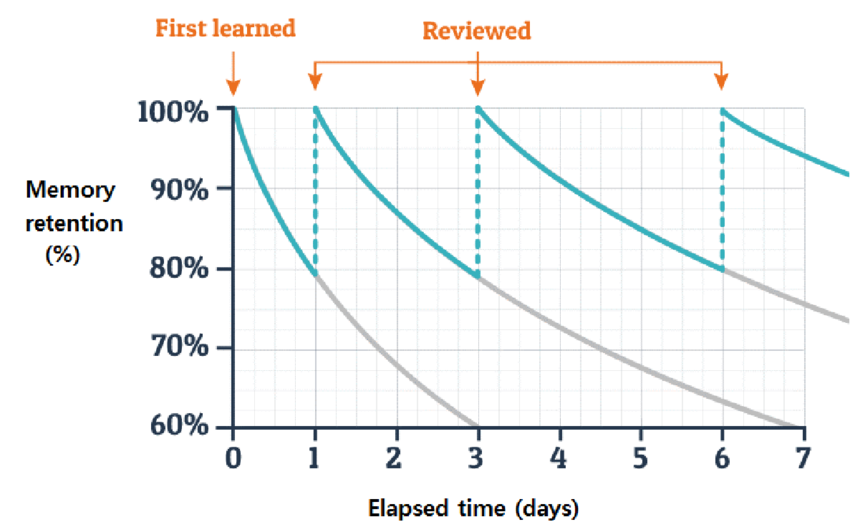
This effect was first identified through systematic memory research in the late nineteenth century when Hermann Ebbinghaus studied how quickly people forget new material without review. His work showed that recall declines sharply after initial learning. He also found that each purposeful review resets that decline for longer retention.
Spaced repetition schedules arrange reviews at increasing gaps, such as after one day, then several days later, then weeks later, depending on how well the material is retained. This arrangement takes advantage of how memory consolidates over time and through repeated retrieval.
Spaced systems often use flashcards or questions that recur at calculated times. Many digital flashcard tools automate these intervals. Meanwhile, simpler schedules can also be followed manually.
The Science Behind Spaced Repetition
So, where did the idea behind spaced repetition come from in the first place? In the late nineteenth century, Hermann Ebbinghaus decided to study memory in a very direct way. He memorized long lists of made-up syllables and tested himself after different amounts of time.
He wanted to see how memory changed after learning stopped. What he noticed was striking. Recall dropped fast soon after learning, then continued to fade at a slower pace over the following hours and days.
This pattern later became known as the forgetting curve. It showed that one exposure to information rarely lasts for long, even when the learner feels confident at first.
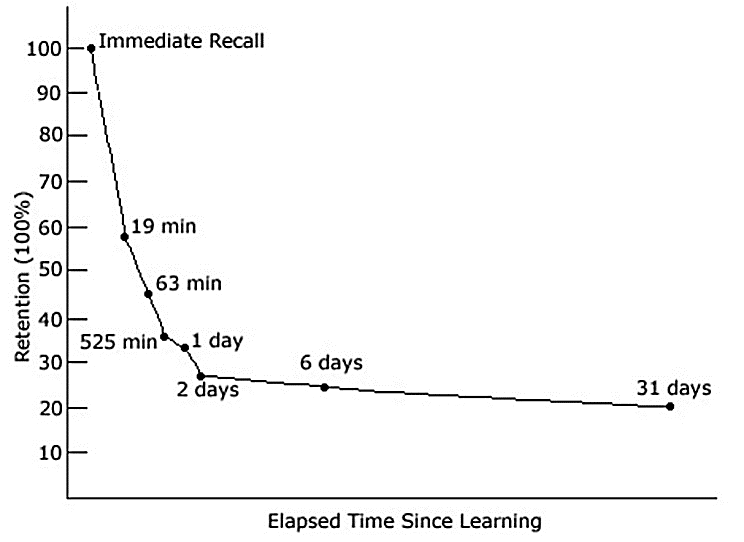
Ebbinghaus also noticed something hopeful. When he reviewed the material again before it fully slipped away, recall improved and lasted longer the next time. Every return made forgetting slower.
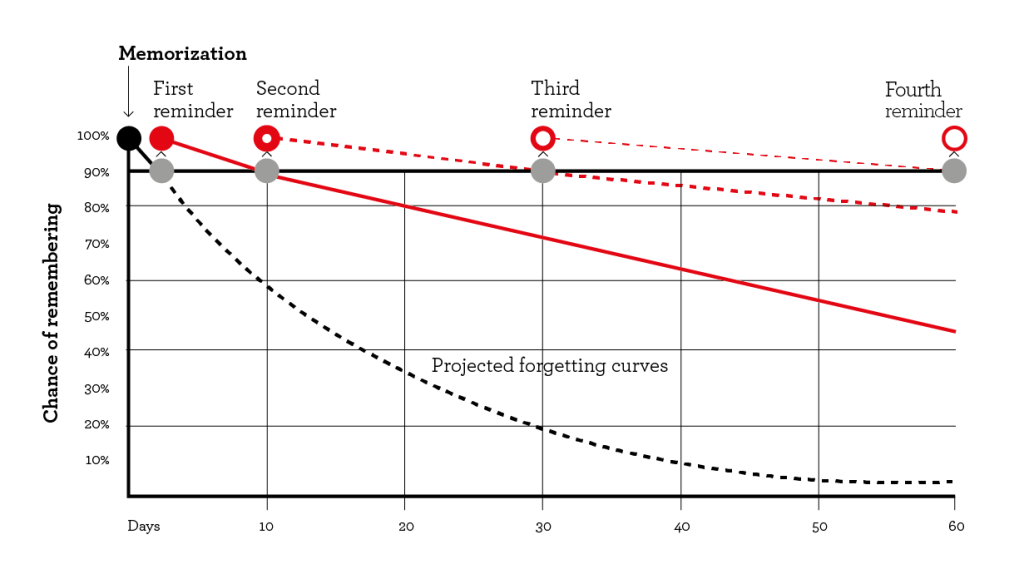
Spaced repetition grew out of this insight. Timed reviews interrupt the memory decline and make knowledge easier to retrieve later. This idea explains why refresher sessions and repeated exposure work better than single training events.
What Is the 2357 Method?
The 2357 method is a simple spaced repetition routine built around reviewing material at specific intervals before a test. It asks learners to plan study or review sessions based on the numbers 2, 3, 5, and 7, usually counting backward from a target date.
For example, if you know a quiz is coming, you set the last review the day before. Then you schedule another two days earlier, one three days before that, then five days earlier, and finally seven days before the first session. This pattern creates a series of review points spread out over roughly eighteen days.
The logic behind the method also comes from the spacing effect. Each repeat forces your brain to retrieve information, which strengthens recall.
Does Spaced Repetition Really Work?
Scientific research and anecdotal evidence show that spaced repetition definitely works. Multiple studies in cognitive psychology have found that spreading review out over time improves long-term memory compared with massed practice.
Researchers have also looked at how this technique interacts with active recall. When learners test themselves at planned intervals, retention improves even more over long stretches of time. In one study, learners who used spaced review scored higher on follow-up tests than peers who stuck with traditional study routines.
In another study on medical learners, researchers found that those who learned pediatric material through spaced repetition and flashcards earned notably higher test scores after four weeks than those using conventional lectures and textbooks.
At the same time, success depends on practice. Spaced repetition doesn’t guarantee instant mastery. Learners must commit to regularly timed reviews to reinforce recall over time. Research shows that, when used as intended, the method reliably protects knowledge from quick forgetting and strengthens long-term memory.
How to Use Spaced Repetition in Organizational Learning?
Spaced repetition fits naturally into organizational learning because workplace knowledge develops over time, not in single events. You simply want employees to return to important information at planned intervals so that they recall it under real conditions.
Here’s how to do that.
Break Training Content Into Small Units
Large training modules overwhelm the memory quickly. Split content into focused units (also called microlearning modules) that cover one concept, rule, protocol, or task at a time.
These modules make reviews faster and reduce mental load. The structure also allows learners to revisit weak areas without repeating everything else.
Use Flashcards and Recall Prompts
Flashcards work well in professional settings, especially for definitions and workflow steps. Digital cards allow scheduled reviews, while printed cards work during team sessions. There are plenty of flashcard generation tools that you can use for this. Many of them use spaced repetition principles to show questions that employees need to recall the most.
Schedule Reviews Around Work Milestones
Training reviews do not need separate sessions, so you should tie them to onboarding checkpoints, team meetings, audits, and project launches. A short review after two days, another after one week, and later follow-ups keep knowledge active.
Mix Review Formats Over Time
Repeating the same format can reduce attention. Rotate between quizzes, short discussions, scenario questions, and quick demonstrations. Managers can ask recall questions during meetings, while trainers can use brief simulations. This variety helps keep learners engaged.
How Coursebox Improves Spaced Repetition in Organizational Learning
As we’ve mentioned earlier, there are several tools you can use to improve spaced repetition among learners in your organization. One of these tools is Coursebox, which supports spaced repetition by making review material easy to create and reuse over time.
In many organizations, training content already exists in slides, documents, videos, and internal pages. Coursebox turns that material into flashcards and quizzes that work well for repeated recall. Trainers can upload documents, slide decks, recorded sessions, or web links, and then generate flashcards from that content. This saves time and keeps reviews aligned with actual training materials.
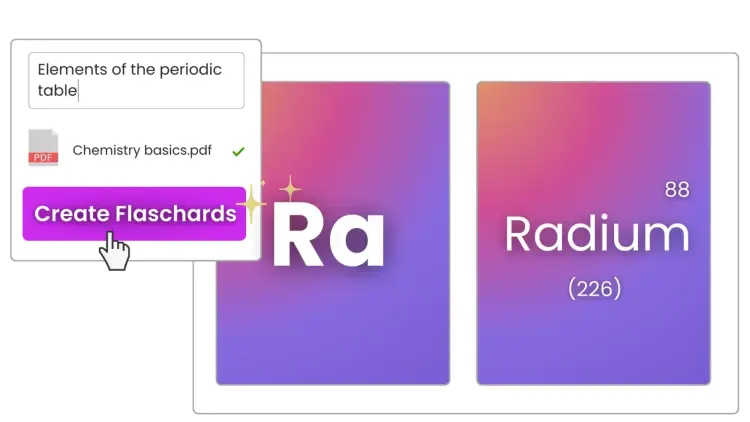
Coursebox fits spaced repetition schedules by supporting ongoing access to flashcards inside learning workflows. Learners can revisit cards days or weeks after training without scheduling extra sessions.
Since cards can be edited, teams can update content as policies or products change without starting over. Coursebox’s flashcards can include images, branding, and consistent formatting, which helps recognition across programs.
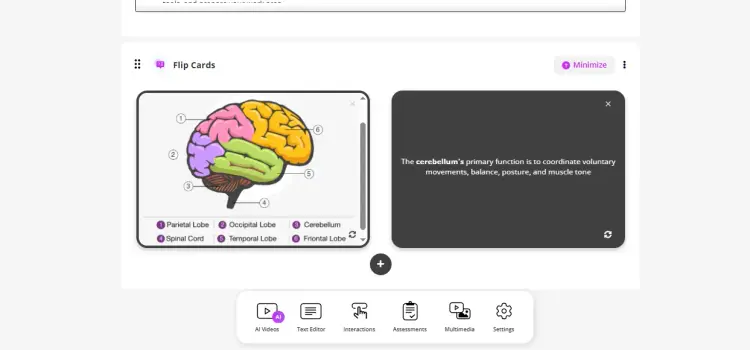
Multilingual support allows global teams to review the same concepts in their preferred language. Coursebox also connects flashcards with other learning tools, such as quizzes and assessments. Together, these elements encourage regular recall rather than one-time exposure.
Try Coursebox AI now to see its spaced repetition features in action.
FAQs About Spaced Repetition
How does spaced repetition help you remember better?
Spaced repetition works by spacing out review sessions, so the brain revisits information before it fades. This repeated retrieval strengthens memory over time and makes knowledge more accessible when you need it for something.
What types of content work best for spaced repetition?
Short pieces of information like definitions, procedures, tools, product details, or safety rules work best. It’s best if you break complex topics into smaller sections to make review sessions more manageable.
How can Coursebox make spaced repetition easier for teams?
Coursebox converts documents, PPTs, PDFs, slides, websites, videos, and links into flashcards, which lets employees review key points regularly. Automated scheduling and accessible flashcards reduce the effort needed to maintain effective spaced repetition cycles. You can also generate quizzes and have an AI grader check them based on a provided rubric to see how well your spaced repetition efforts are working.
What are some ways to practice spaced repetition?
Flashcards, scenarios, quizzes, discussion prompts, and short exercises are some of the best ways to practice spaced repetition. All of these formats help you revisit the same information repeatedly and test recall.
How often should employees review information in a spaced repetition program?
The timing depends on content difficulty and importance. Common practice is to review after one or two days, again in a week, and then at longer intervals. You should gradually extend the gaps as recall improves.
How does Coursebox integrate flashcards with other learning tools?
Coursebox connects flashcards with quizzes, assessments, and courses in its LMS. This helps create a continuous learning loop, where review and application strengthen each other over time. Trainers can also see which topics need more focus, which allows them to adjust content for better retention.
Alex Hey
Digital marketing manager and growth expert

