

Docebo vs Cornerstone: What’s the Difference and Which One Should You Choose?
Docebo and Cornerstone are powerful platforms for managing online training and learning. Here is a detailed Docebo vs Cornerstone review to help you choose one.


Run your own branded LMS with unlimited learners
Organizations look for modern training platforms when their standard tools become outdated. They need something that gives them clearer insight into whether their training efforts are effective. That’s what Docebo and Cornerstone do.
Both LMS platforms are built for serious, enterprise-level training, but they approach structure, flexibility, and workforce development in very different ways. Training teams also use AI-powered tools to map learning paths, build modules, and generate training content before uploading them to Docebo or Cornerstone.
Let’s take a practical look at Docebo vs Cornerstone to understand how each platform works in real learning environments and which AI LMS makes more sense depending on your training goals.
What is Docebo?
Docebo is a cloud-based LMS designed for corporate learning, customer education, and partner training programs. It focuses on flexibility, automation, and user-friendly administration while supporting enterprise-level scalability. Many organizations choose Docebo because it balances modern design with powerful learning management features.
One of Docebo’s strengths is its modular structure. It helps organizations configure learning paths, automate enrollments, and integrate learning programs into broader employee development strategies. Its interface tends to be more modern than that of some traditional enterprise LMS platforms, which can improve learner engagement and adoption.
Docebo is primarily used for employee onboarding, compliance training, and professional development programs. It is also excellent for extended enterprise training where businesses educate customers or partners alongside internal teams.
What is Cornerstone?
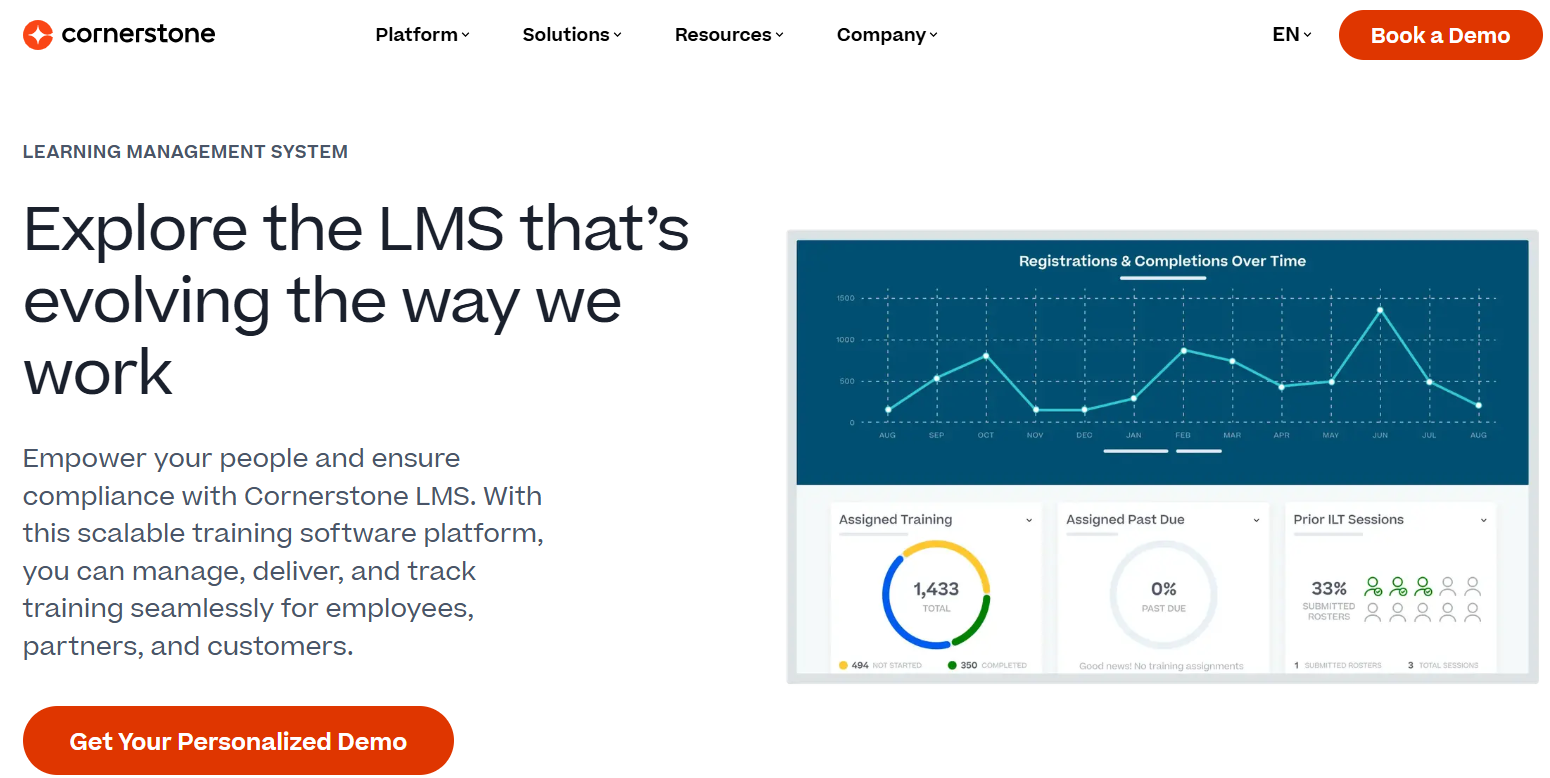
Cornerstone is an enterprise learning and talent management platform that combines training with broader workforce development tools. It is frequently used by large organizations that want learning integrated into performance management, succession planning, and employee development initiatives.
Unlike LMS platforms focused primarily on course delivery, Cornerstone positions learning as part of a larger human capital management ecosystem. Companies can connect training programs to career pathways, competency frameworks, and organizational goals.
Cornerstone is common in highly structured industries such as healthcare, finance, and government, where compliance, reporting, and workforce tracking are essential. Its capabilities make it well-suited for complex organizations that manage large employee populations and regulated training environments.
Docebo vs Cornerstone: 6 Key Differences Explained
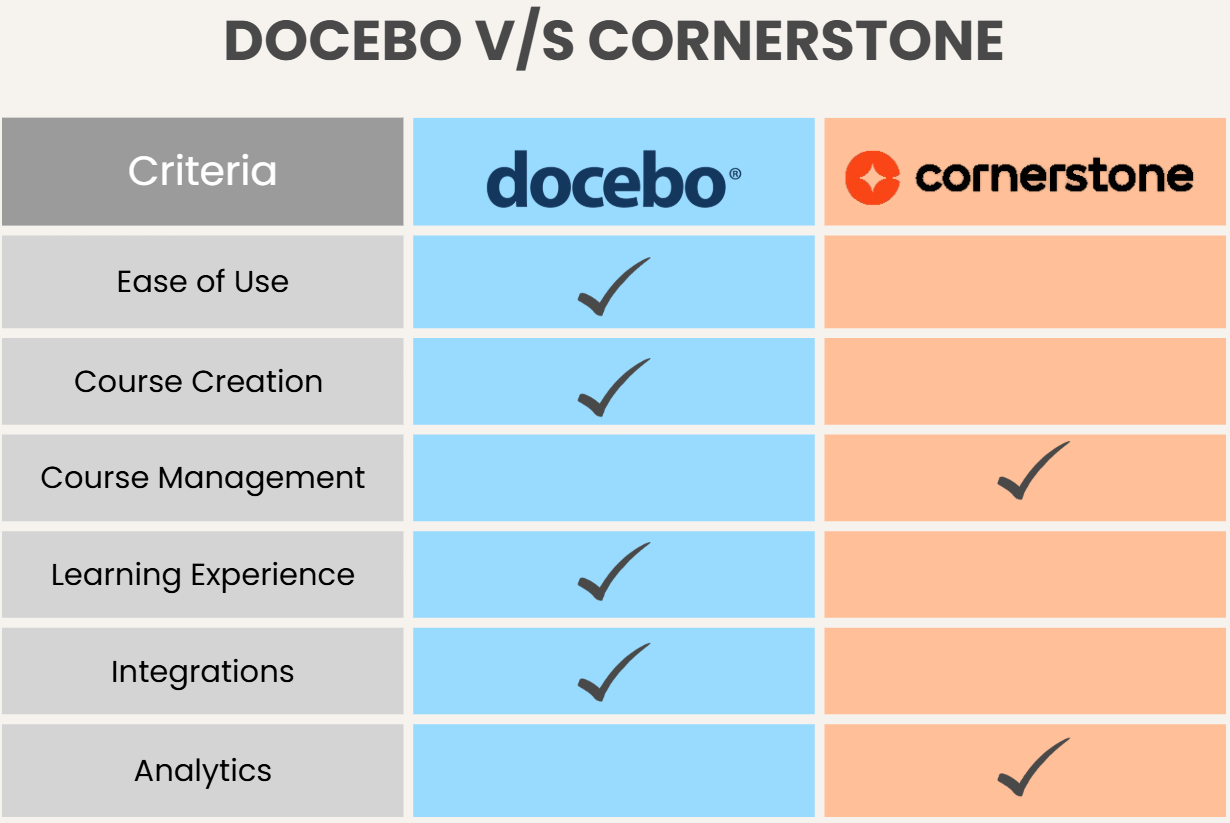
Let’s break down the most important differences between Docebo vs Cornerstone and how they affect real-world learning operations.
1. Ease of Use & Administration
Docebo has a modern and intuitive interface. Administrators can configure courses, automate enrollments, and manage learning paths without extensive technical expertise. The dashboard is designed to simplify navigation for both learners and training managers, which can improve adoption rates and reduce onboarding time for new users.
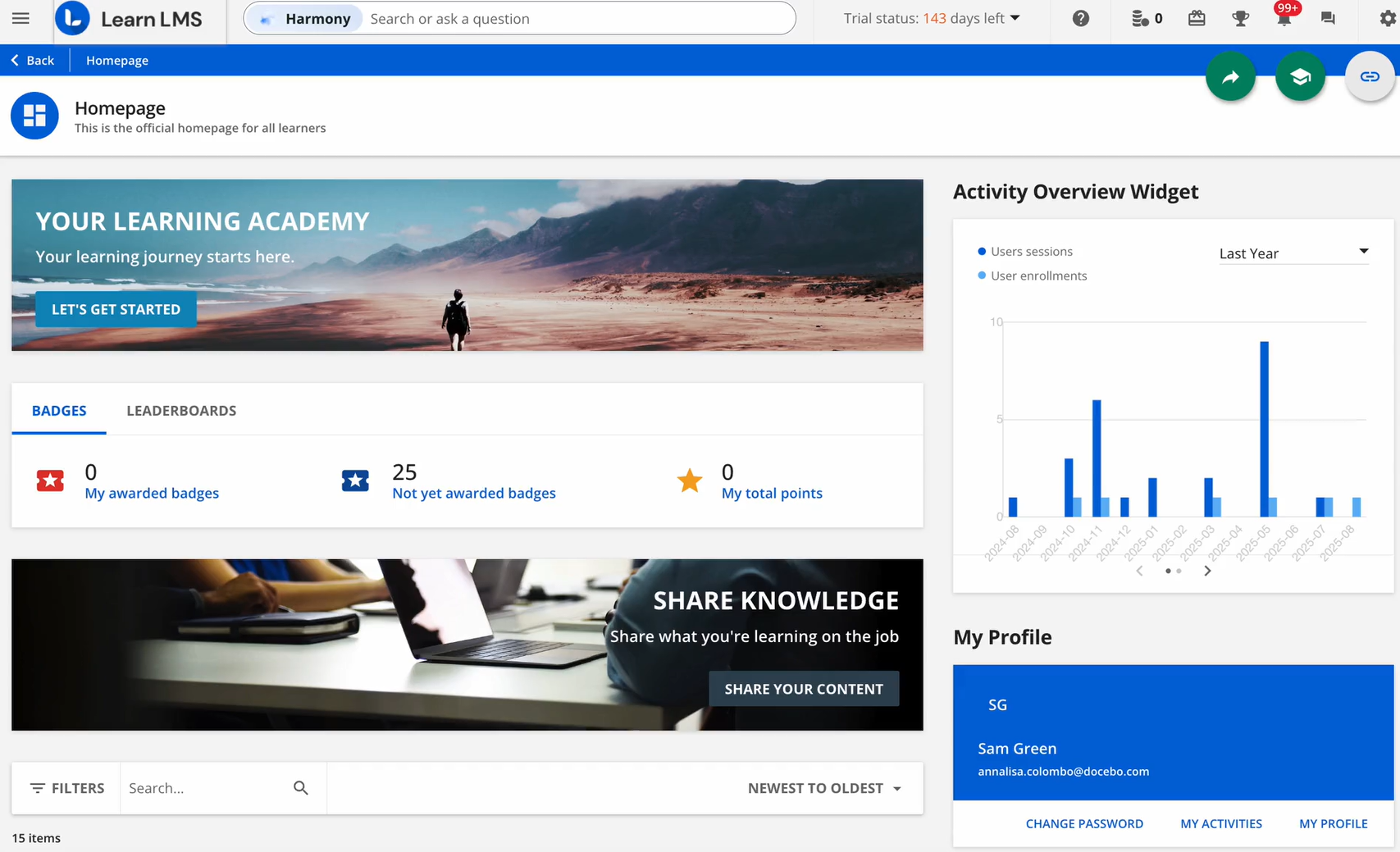
Source: Docebo help
Cornerstone offers powerful administrative tools, but it often comes with a steeper learning curve. Its extensive configuration options are valuable for large enterprises but may require dedicated administrators or implementation support.
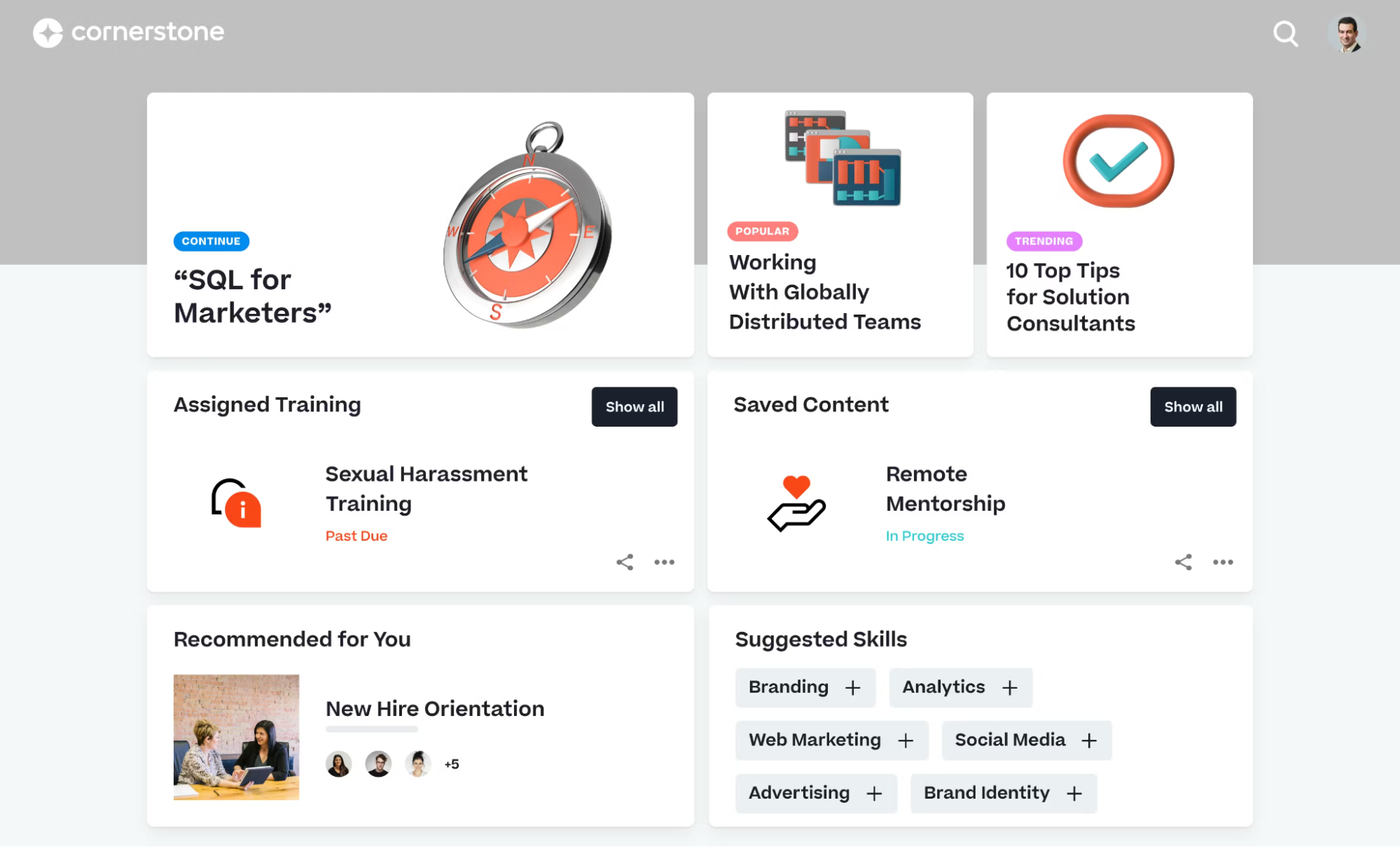
Source: Software Advice
Organizations with complex reporting structures and compliance requirements may appreciate Cornerstone’s level of control. Meanwhile, smaller teams might find it more complex to manage initially.
2. Course Creation & Content Management
Docebo Course Creation
Docebo supports structured course creation and delivery with flexible learning paths, content libraries, and automated workflows. Training teams can organize courses into role-based programs, track learner progress, and manage certifications.
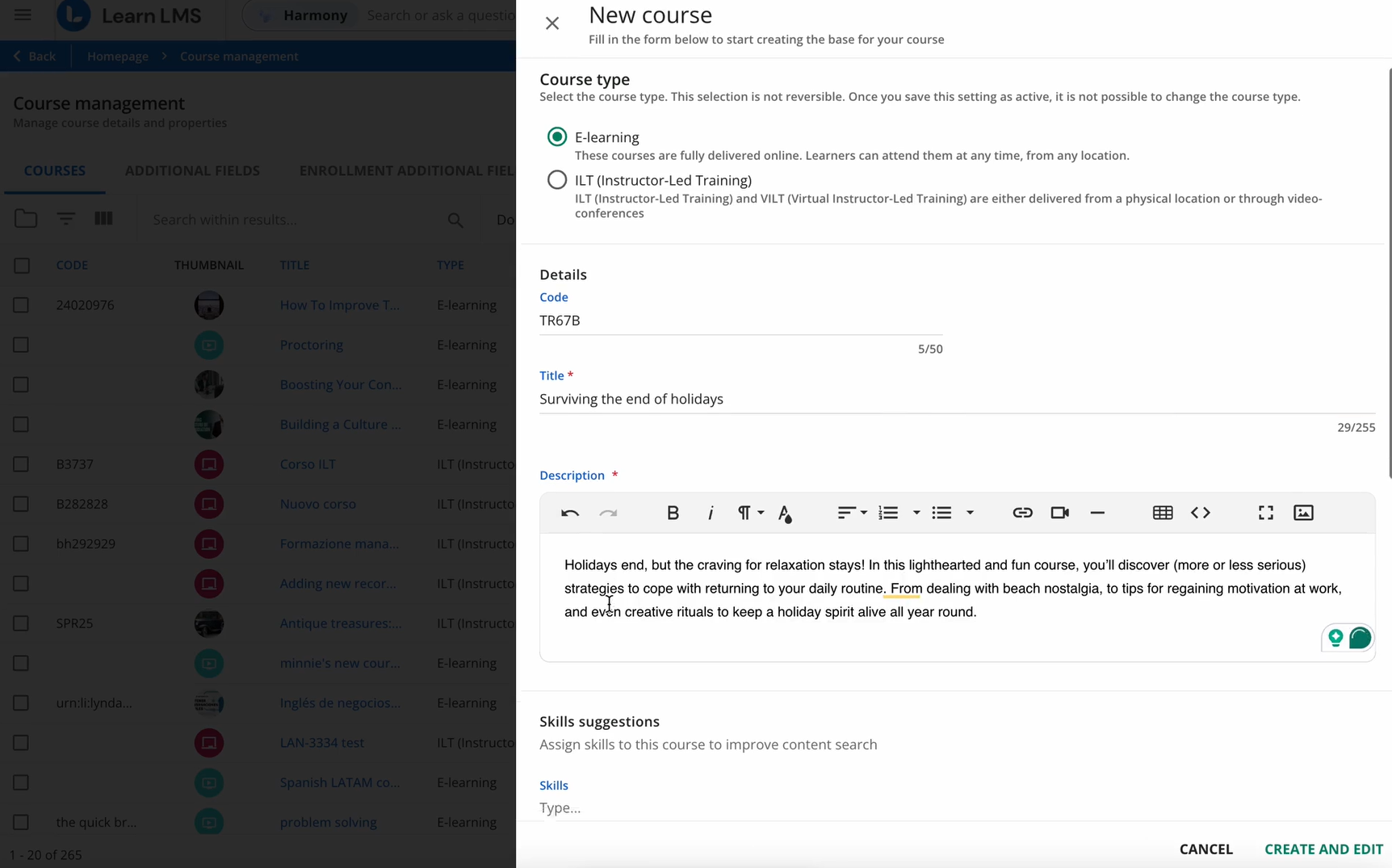
Source: Docebo help
Docebo primarily focuses on course delivery and management, which is why many organizations use external authoring tools or AI-powered platforms to create course content before uploading it into the LMS.
Cornerstone Course Management
Cornerstone emphasizes structured workforce learning tied to employee development plans. Courses can be connected to competencies, performance goals, and certification requirements. This makes it especially useful for organizations that need formalized learning structures aligned with HR strategies.
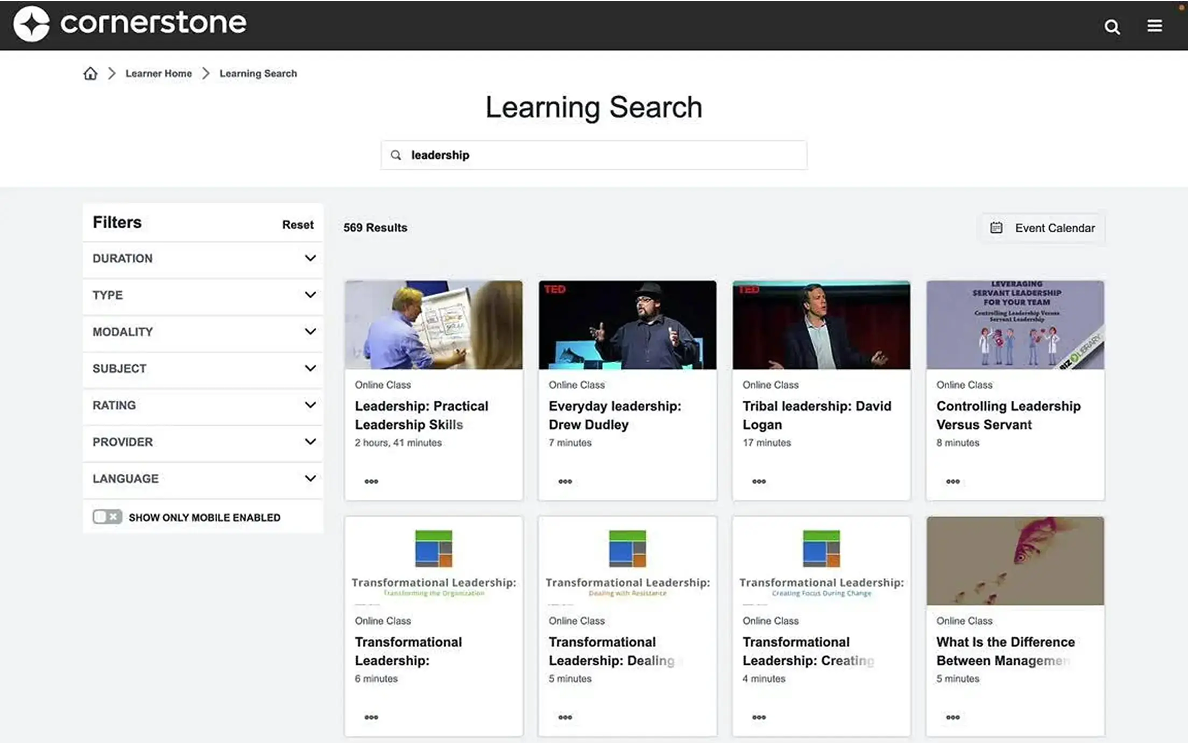
Source: iSpring Solutions
In both systems, content creation is often supported by external tools. That’s where an AI course creation platform can accelerate content production before publishing into the LMS environment.
3. Learning Experience & Engagement
Docebo focuses on modern learning experiences, including personalized learning paths and user-friendly navigation. Organizations can build flexible programs that adapt to different learner roles and training needs. The platform’s design aims to encourage ongoing learning rather than one-time course completion.
Cornerstone takes a more structured approach, emphasizing compliance tracking and formal development programs. Its learning environment is powerful but may feel more traditional compared to newer LMS platforms. However, for organizations that require detailed certification tracking and standardized training workflows, this structure can be a major advantage.
Both platforms support blended learning experiences, including instructor-led training, self-paced courses, and certification programs.
4. Integrations & Ecosystem
Docebo offers a broad range of integrations that allow organizations to connect learning with HR systems, collaboration tools, and business applications. Its flexibility makes it appealing for companies building modern digital learning ecosystems that integrate with multiple platforms.
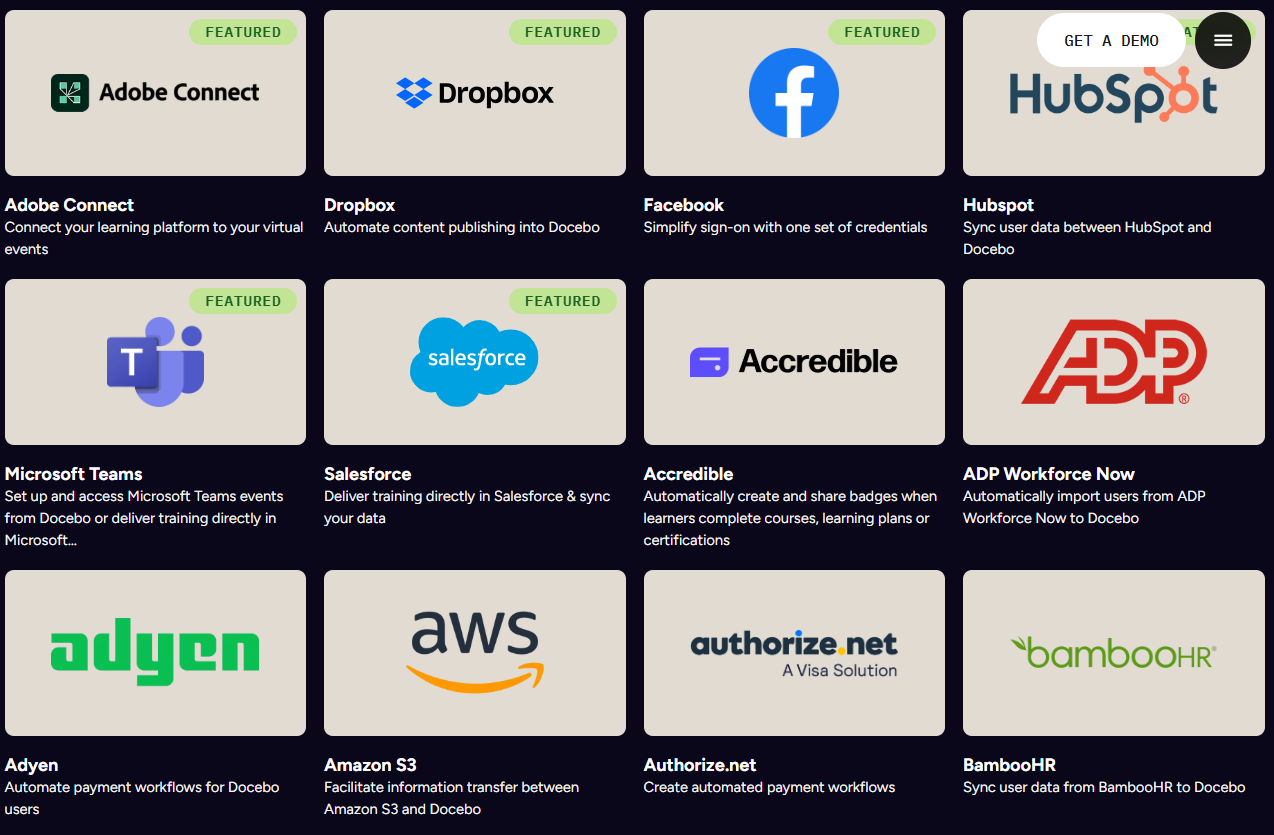
Cornerstone integrates deeply with enterprise HR and talent management systems. Organizations using Cornerstone often adopt it as part of a larger workforce development strategy rather than as a standalone LMS. These integrations allow companies to connect training directly to performance reviews, promotions, and employee skill development initiatives.
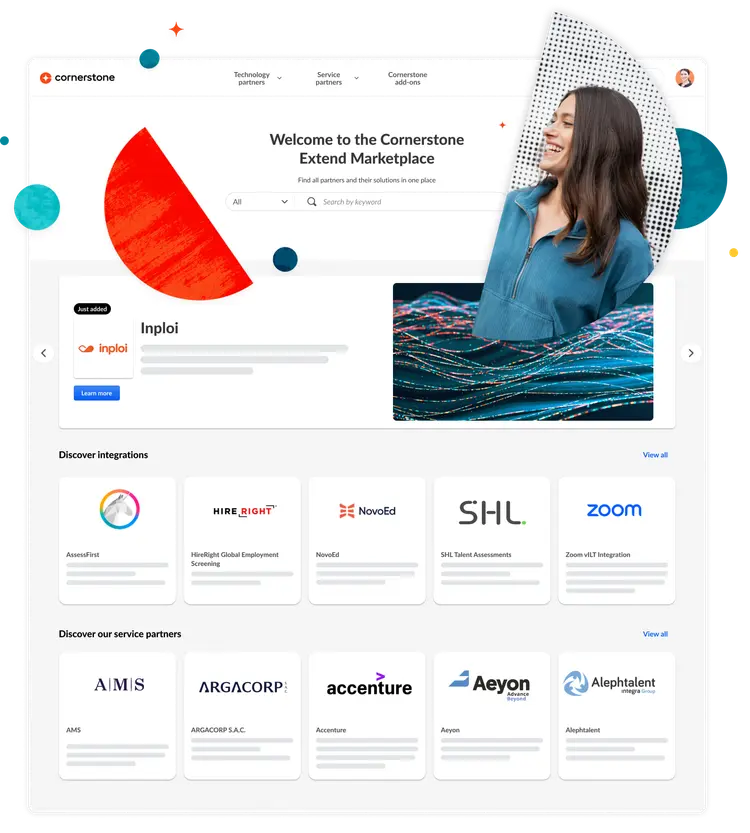
Source: Cornerstone Extend Marketplace
The choice here often depends on whether organizations want an LMS that fits into a broader HR ecosystem or one that focuses primarily on flexible learning management.
5. Reporting, Analytics & Compliance
Docebo provides analytics that help administrators monitor learner progress, engagement trends, and course performance. Reporting features support business-driven learning strategies by offering insights into how training impacts employee development and organizational goals.
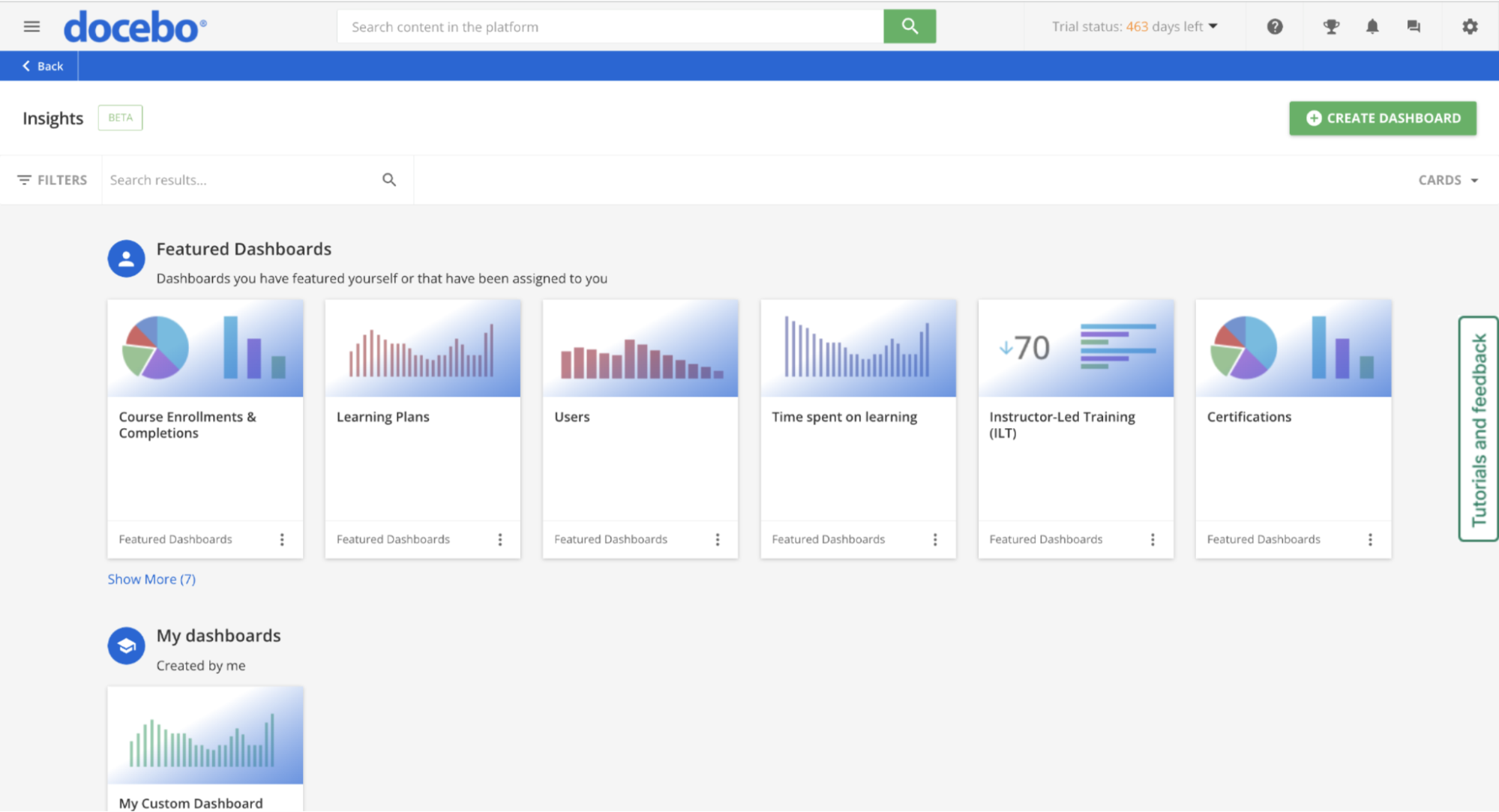
Source: AWS
Cornerstone excels in compliance reporting and enterprise-level analytics. Organizations can track certifications, manage regulatory training requirements, and generate detailed reports for audits or performance evaluations. This level of reporting is particularly valuable for regulated industries where training documentation is mandatory.
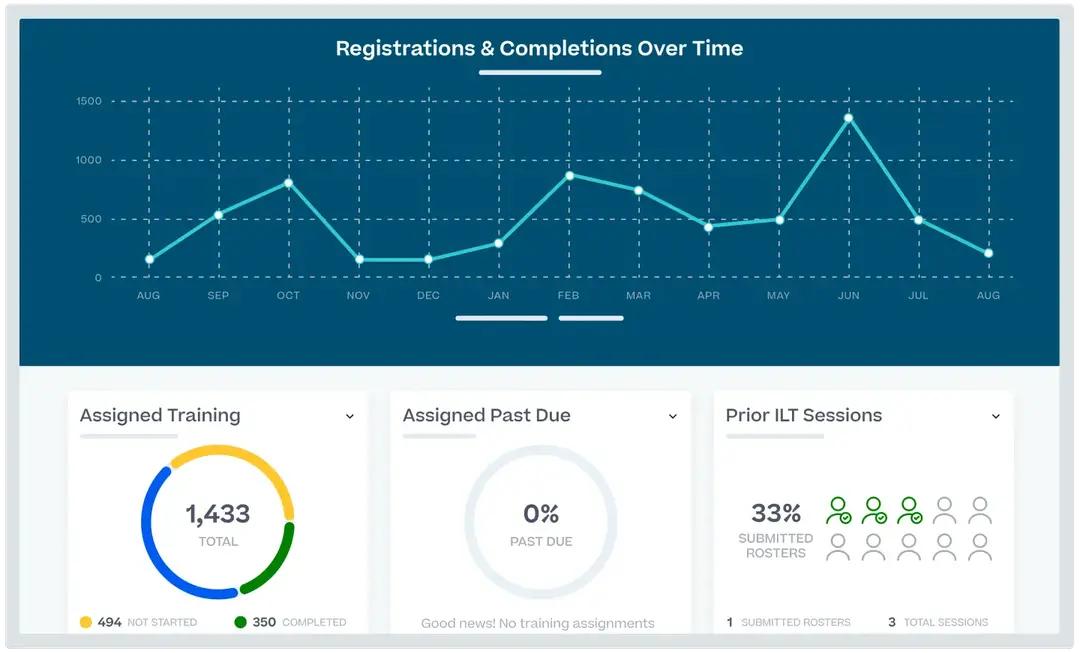
Source: Cornerstone LMS
While both platforms offer analytics, Cornerstone typically provides deeper workforce-level reporting, whereas Docebo emphasizes actionable insights that support ongoing learning and development.
6. Pricing
Both Docebo and Cornerstone use enterprise-level pricing models that vary depending on organization size, required features, and implementation complexity. Pricing is typically customized through sales consultations rather than fixed public plans.
Docebo implementations are perceived as faster due to their modern interface and modular design. Cornerstone implementations may take longer because of the platform’s extensive customization and integration capabilities, especially for organizations connecting it to broader HR systems.
When evaluating pricing, you should consider the total cost of ownership. It includes setup time, administrative resources, training needs, and long-term scalability.
Docebo vs Cornerstone: Which Is Better?
Here is a quick overview of Docebo vs Cornerstone’s features:
| Feature | Docebo | Cornerstone |
|---|---|---|
| Best For | Modern corporate learning & flexible programs | Enterprise workforce development & compliance |
| Ease of Use | More intuitive interface | More complex but highly configurable |
| Setup Time | Generally faster | Longer enterprise implementation |
| Customization | Flexible learning workflows | Deep workforce-level configuration |
| Maintenance | Easier for smaller teams | Often requires dedicated admins |
| Pricing | Enterprise subscription | Enterprise licensing |
- Choose Docebo if you want a modern LMS focused on user experience, flexible learning paths, and scalable corporate training programs.
- Choose Cornerstone if you need a highly structured enterprise learning platform integrated with performance management and workforce development systems.
Where an AI LMS Like Coursebox Fits In
Platforms like Docebo and Cornerstone are designed to manage learners, track training progress, and deliver courses at scale. However, many organizations struggle with one key challenge before courses ever reach the LMS: creating structured learning content efficiently.
An AI LMS like Coursebox helps training teams generate course outlines, learning modules, quizzes, and structured content much faster than traditional manual workflows. Instead of spending weeks planning course structures, you can use AI-powered tools to accelerate content creation and improve instructional design consistency.
Once courses are built, they can be delivered through enterprise LMS platforms like Docebo or Cornerstone. This approach allows organizations to combine the strengths of AI-powered course creation with the scalability and reporting capabilities of enterprise LMS systems.
By pairing an AI LMS with a traditional enterprise LMS, your learning team can reduce development time, improve engagement through smarter course design, and maintain centralized learner management across large organizations. Book a free Coursebox demo today to get started!
FAQs About Docebo vs Cornerstone
Which platform is better for large enterprises, Docebo vs Cornerstone?
Both Docebo and Cornerstone are designed for enterprise use, but Cornerstone is preferred by organizations that need deep integration with performance management and workforce development systems. Docebo is also highly scalable and well-suited for companies that prioritize flexible learning experiences and modern user interfaces.
Is Docebo easier to use than Cornerstone?
Many teams find Docebo easier to learn because of its modern interface and streamlined workflows. Cornerstone provides powerful administrative features but may require more training and setup time to fully configure.
Can Docebo and Cornerstone support compliance training?
Yes. Both Docebo and Cornerstone support compliance tracking, certifications, and structured learning programs. Cornerstone is particularly strong in regulated industries where detailed reporting and workforce tracking are essential.
Do organizations still need course authoring tools with LMS platforms?
Yes. LMS platforms typically manage learners and deliver courses rather than create content from scratch. Many organizations use authoring tools or AI-powered course creation platforms to design learning materials before uploading them to the LMS.
Docebo or Cornerstone, which LMS is better for modern learning experiences?
Docebo is seen as more modern in design and user experience, with features that support ongoing learning and engagement. Cornerstone focuses more on structured workforce development and compliance-driven training programs.
Travis Clapp
Educational technologist and instructional designer

