

I tested 11 LMS Platforms for Corporate Training To Find Which Employees Will Actually Use
The corporate LMS that wins the demo is rarely the one employees still open three months later. Figure out how to pick the right one.


Train teams faster and more effectively with AI
The corporate LMS that wins the demo is rarely the one employees still open three months later.
I have spent more than a decade selling, supporting and demoing learning platforms to corporate buyers. I can tell you the pattern barely changes. Teams choose on feature lists and price bands, then watch completion rates sag once the novelty wears off.
I think the real bottleneck in corporate training is buy-in. I have watched well-resourced L&D teams buy powerful platforms their people swiftly abandon, and I have seen lean teams get strong completion out of something far simpler. I graded every platform here on one question. How well does it get busy employees to actually use it.
I weighted the things that move adoption. I mean nudges and reminders, social and collaborative learning, and a mobile experience that works on a phone in a break room. Our own delivery data at Coursebox makes that last one concrete, with 28% of roughly 179,000 course starts in the past year happening on a mobile device, and I doubt the mix looks much different on any platform here. I also mean gamification that is more than a badge nobody notices, and relevance, because content that is stale by the time it ships gets ignored. I dropped any platform with the longest spec sheet but a learner experience people dodged, however good it looked on my list of the best corporate LMS options.
I built Coursebox, so treat my read on it with the scepticism it deserves. I have placed it at third, which is where I think it belongs, rather than at the top. I leaned on public product information, pricing pages and captured user sentiment for everything else, but the ranking and the opinions are mine. I refresh the year references here rather than the buying advice, since this shortlist of the top corporate LMS platforms changes slowly. Here is how I would rank them for adoption, best first.
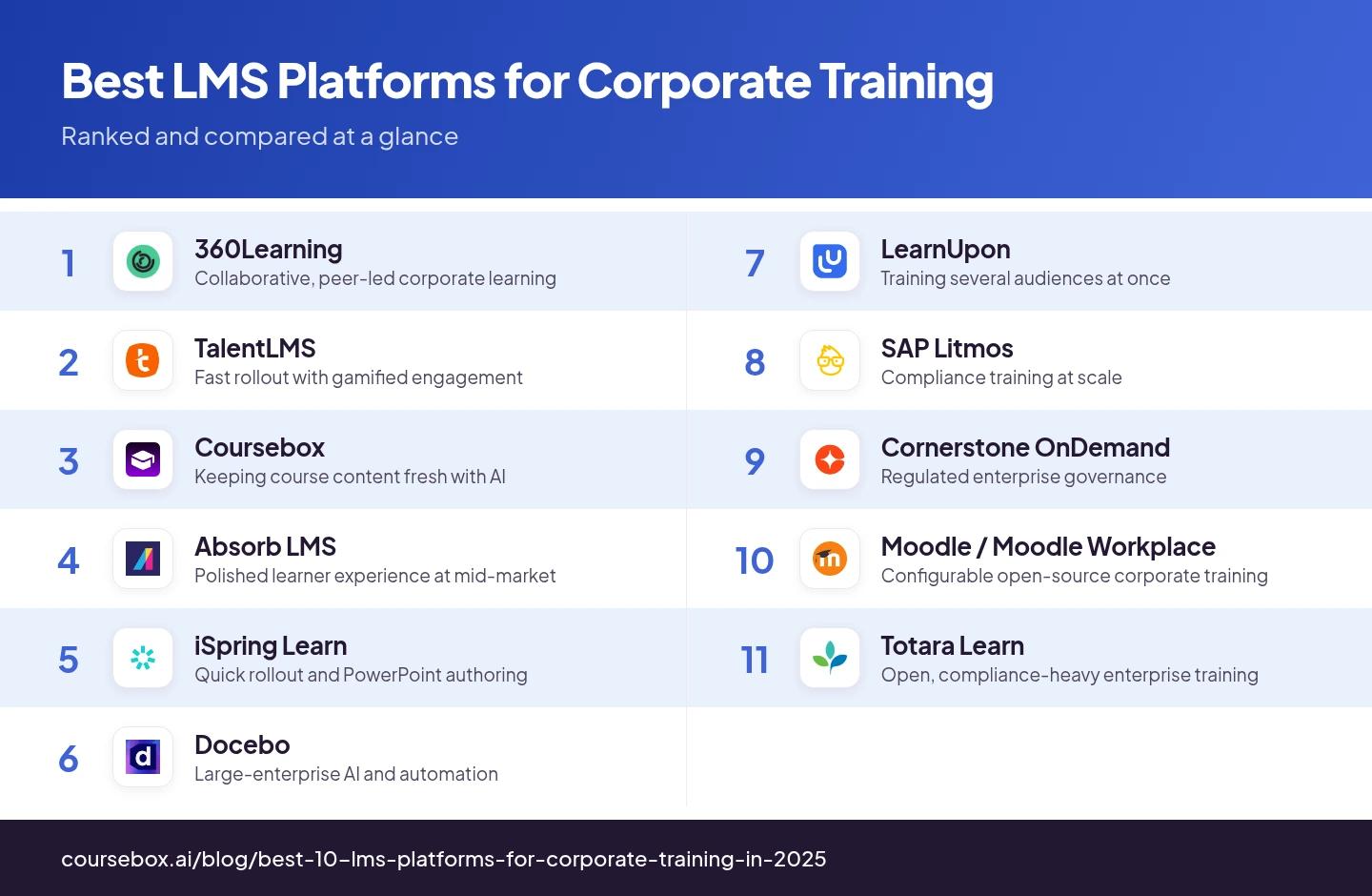
Corporate LMS platforms compared at a glance
| Tool | Best for | Pricing | Watch out for |
|---|---|---|---|
| 360Learning | Collaborative, peer-led corporate learning | From $8/user/month; custom above 100 users | Reporting is clunky and inflexible |
| TalentLMS | Fast rollout with gamified engagement | Free for 5 users; paid from $119/month | Native reporting is basic |
| Coursebox | Keeping course content fresh with AI | Free plan; paid tiers add AI credits | Analytics still maturing |
| Absorb LMS | Polished learner experience at mid-market | Quote-based, banded by learner count | Real reporting needs paid Absorb Analyze |
| iSpring Learn | Quick rollout and PowerPoint authoring | Pay per active user; 30-day free trial | Reporting lacks department filtering |
| Docebo | Large-enterprise AI and automation | Custom; roughly 250-learner minimum | Support thin below Enterprise tier |
| LearnUpon | Training several audiences at once | Quote-based, mid-market | Limited branding and customisation |
| SAP Litmos | Compliance training at scale | Quote-based; 14-day free trial | Reporting and pass/fail scoring quirks |
| Cornerstone OnDemand | Regulated enterprise governance | Custom enterprise quote | Dated learner interface, slow support |
| Moodle / Moodle Workplace | Configurable open-source corporate training | Free self-hosted; Workplace via partners | Setup and admin overhead |
| Totara Learn | Open, compliance-heavy enterprise training | Partner quote-based | No public pricing, needs a partner |
1. 360Learning
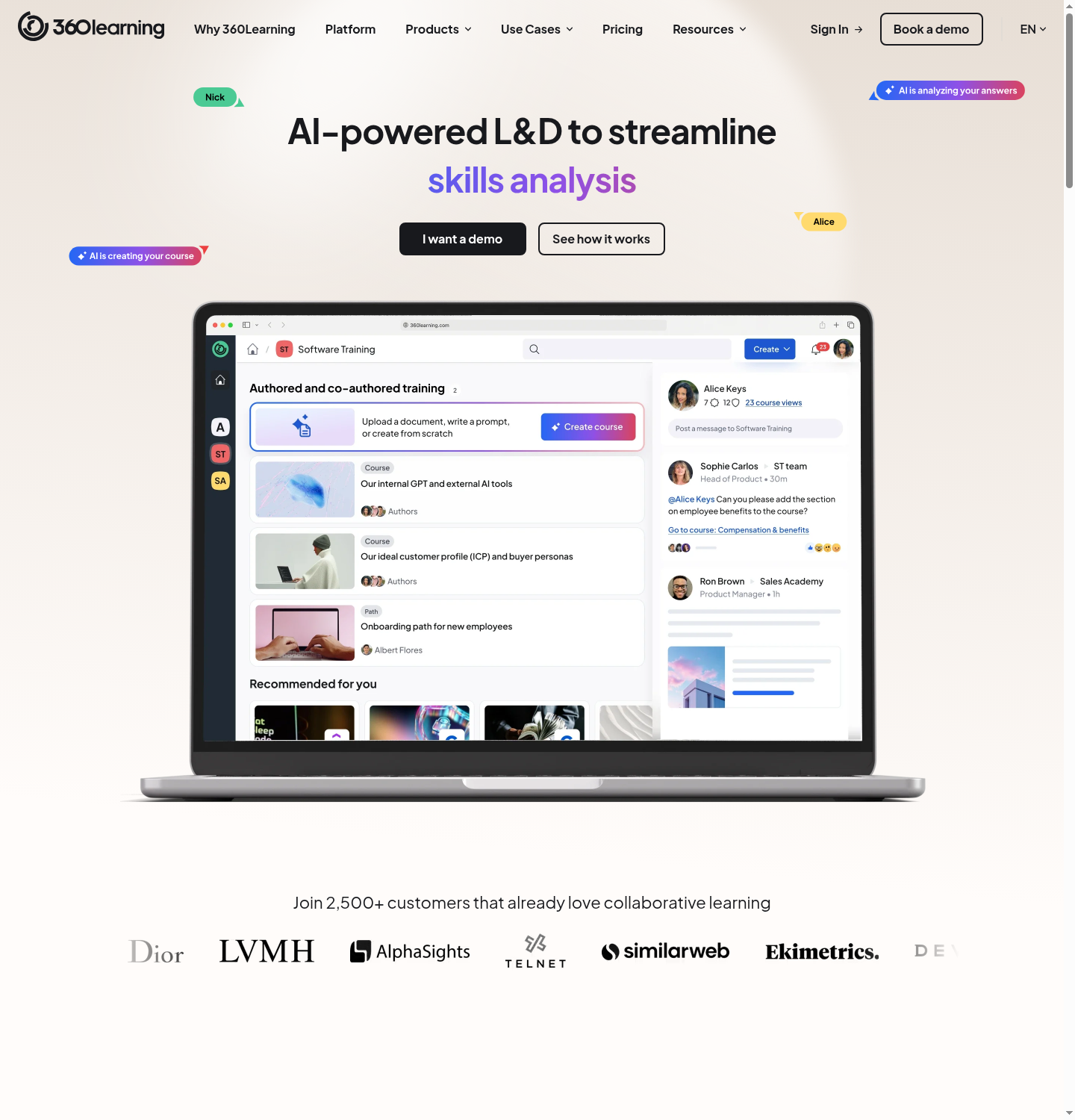
I agree with the bet 360Learning is built on, that the people who know the work should be the ones teaching it. I like its collaborative model, which lets subject matter experts author courses, learners ask questions inline and peers answer, so training feels less like a broadcast and more like a conversation. I have seen that social layer do more for engagement than any gamification gimmick ever did. I also rate its AI Companion, which adds natural-language search across course content plus a mode that lets L&D query completion and engagement data by typing a plain question and getting source links back. Course authoring is quick enough that a subject expert with no instructional design background can build something usable in an afternoon.
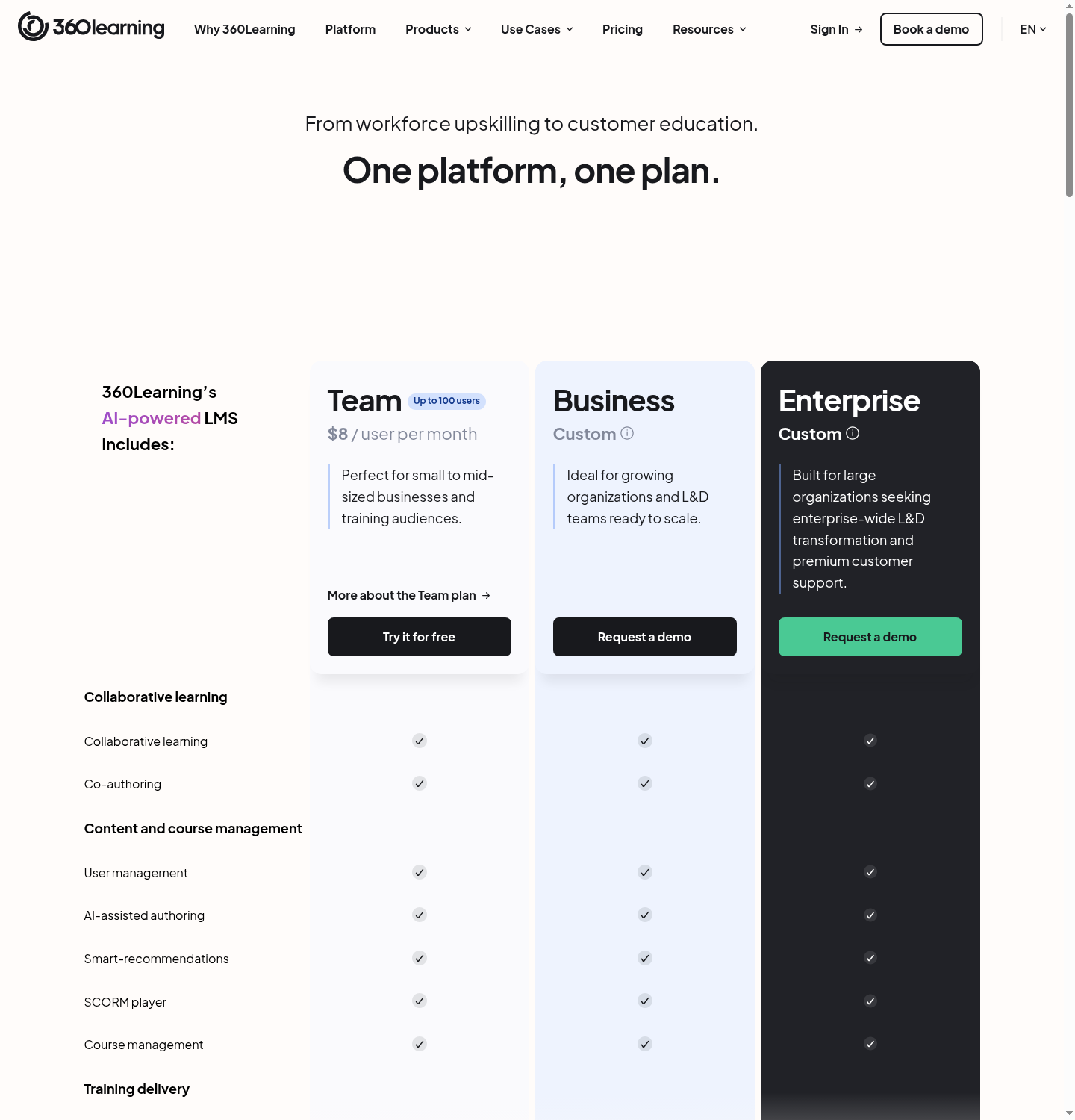
Pricing is refreshingly legible for this category. The Team plan runs at 8 dollars per active user per month for up to 100 users, with a 30-day trial and no credit card, and Business and Enterprise move to custom quotes.
I would temper the enthusiasm in two places. I find the reporting inflexible and awkward to export, and several teams echo that. The Android app also trails the iOS one on ratings and reliability. 360Learning suits mid-market teams where experts drive content and peer learning is a genuine strategy, and it is a poor match for compliance-heavy shops that need airtight audit trails.
2. TalentLMS
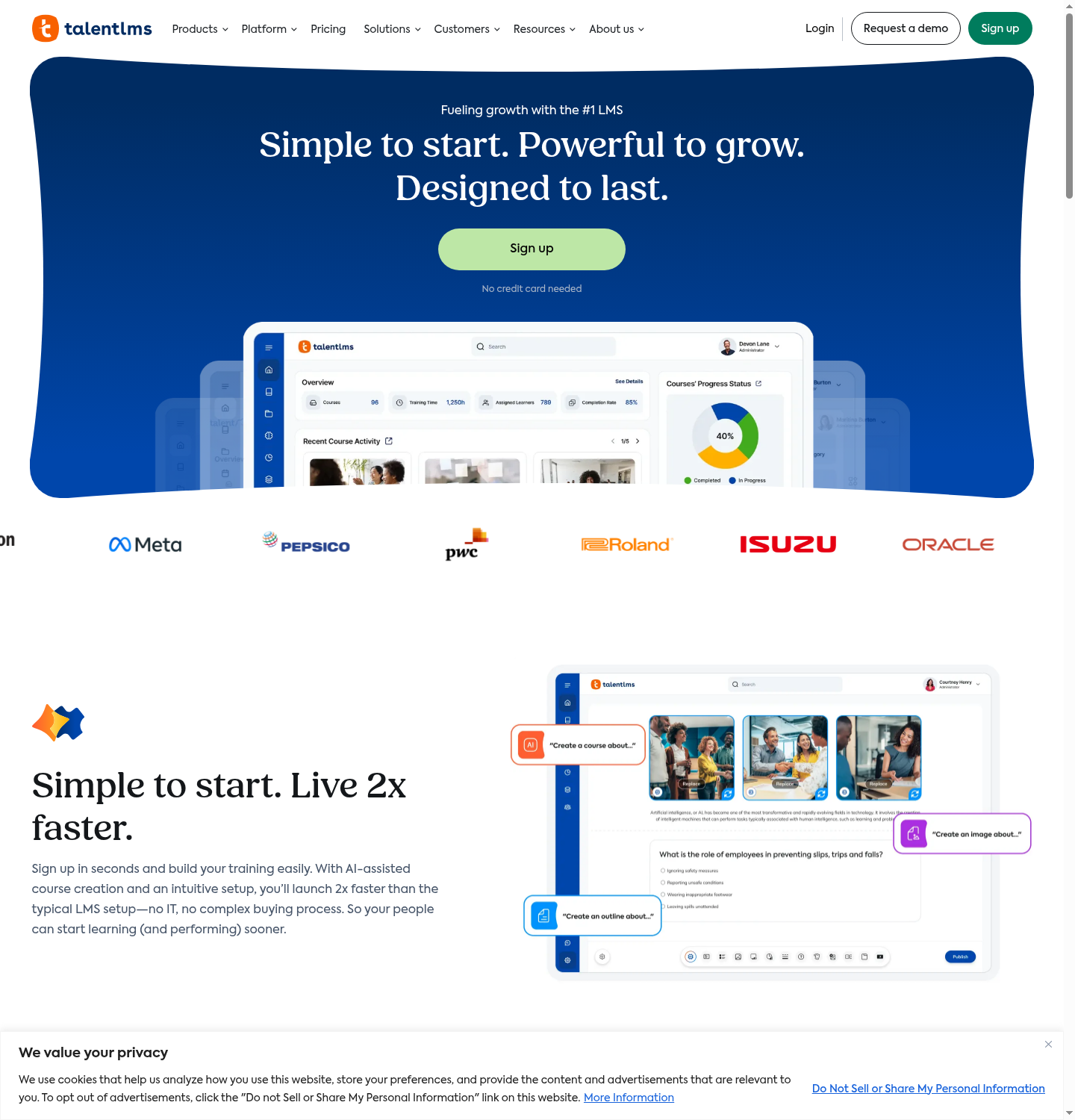
TalentLMS is the one I point smaller teams toward first when the priority is getting a program live in days without a consultant. I rate it highly on adoption for two reasons. I like that its gamification, with points, badges and leaderboards, is built into the core, and it drives the repeat logins that compliance training usually struggles to get. I also like that non-technical admins go live fast, and that TalentCraft, its AI course builder, now imports PDFs, Word and PowerPoint into structured drafts.
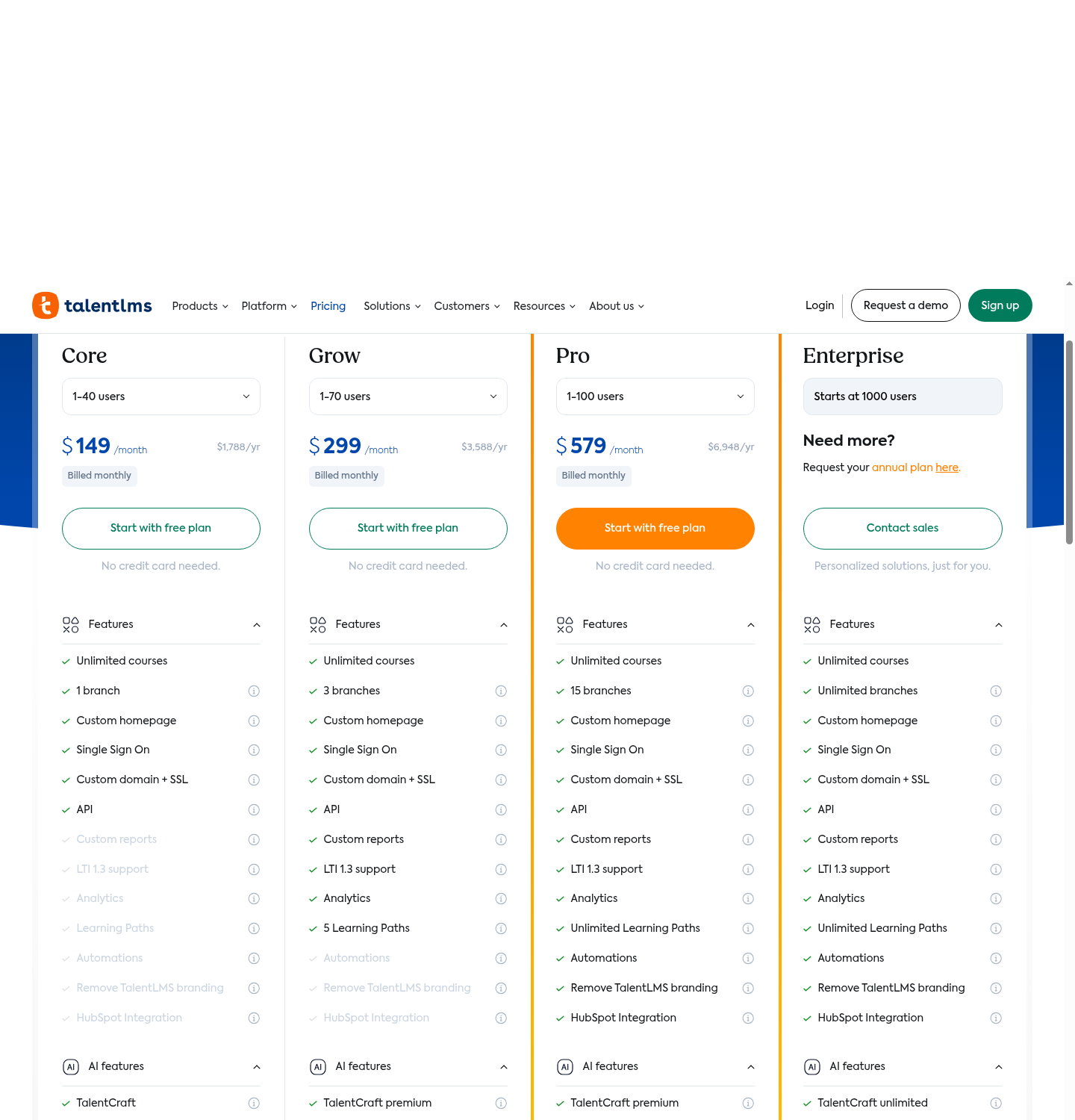
Pricing is actually published, which in this category is rare enough to reward. There is a permanent free plan for up to 5 users, then Core at 119 dollars a month (95.20 on annual billing), Grow at 229 and Pro at 449, with Enterprise on request.
I would flag reporting as the real limitation. It is basic, and you will end up exporting to a spreadsheet for anything advanced. For a growing team or a small business that wants engagement features without an enterprise contract, I would call the monthly cost the easiest yes on this list.
3. Coursebox
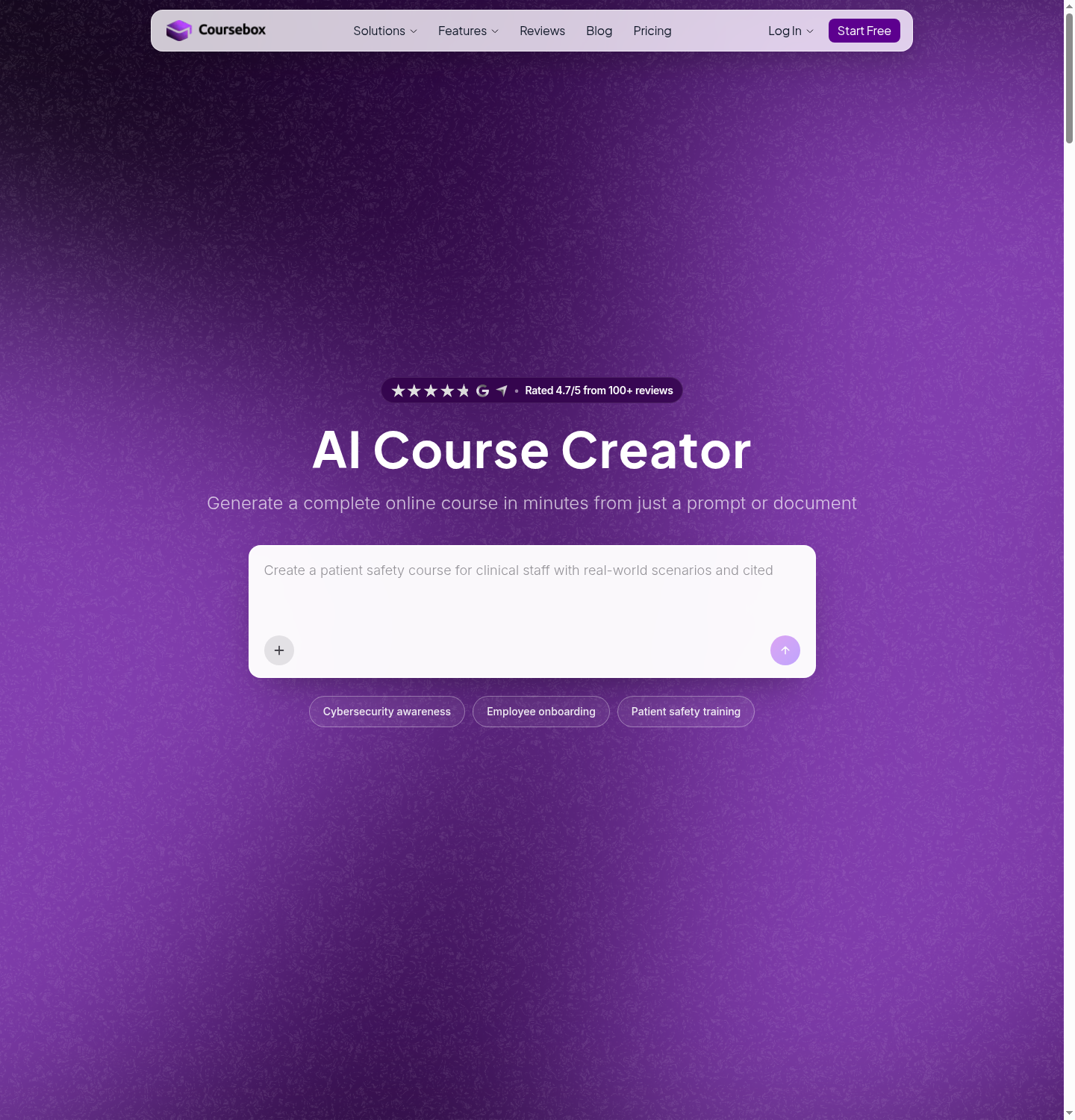
This is my company, so weigh what follows accordingly. I put Coursebox at third because of one adoption lever it does better than anything else here, which is keeping content relevant. I know corporate training dies when it goes stale, and Coursebox generates a structured course, quizzes and even AI presenter videos from a document, a video or a URL in minutes, which turns refreshing a module into a small job. I built it to run its own AI LMS for delivery, export SCORM and LTI into an existing stack, and translate content into over 100 languages, which helps for distributed workforces.
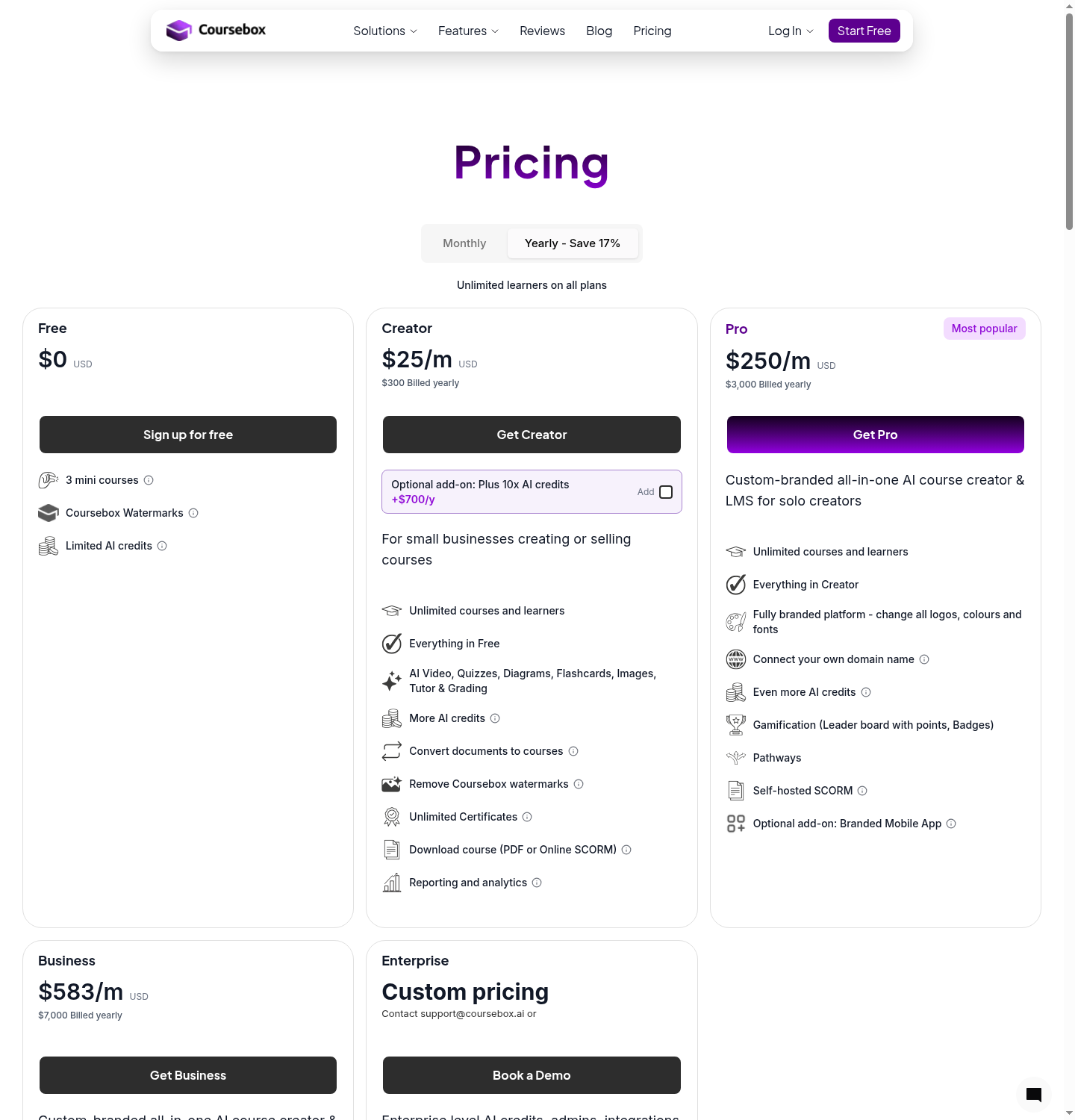
The free plan includes 3 courses and unlimited learners with no credit card, and paid tiers add AI credits, branded certificates and private publishing.
I will own the one limitation, which is analytics. Learner tracking is functional but not yet as deep as an enterprise L&D team measuring engagement will eventually want, and that is the gap. I would start on the free plan and watch whether AI generation actually changes how often content gets refreshed before paying for anything. Because I am confident that it will wow the user!
4. Absorb LMS
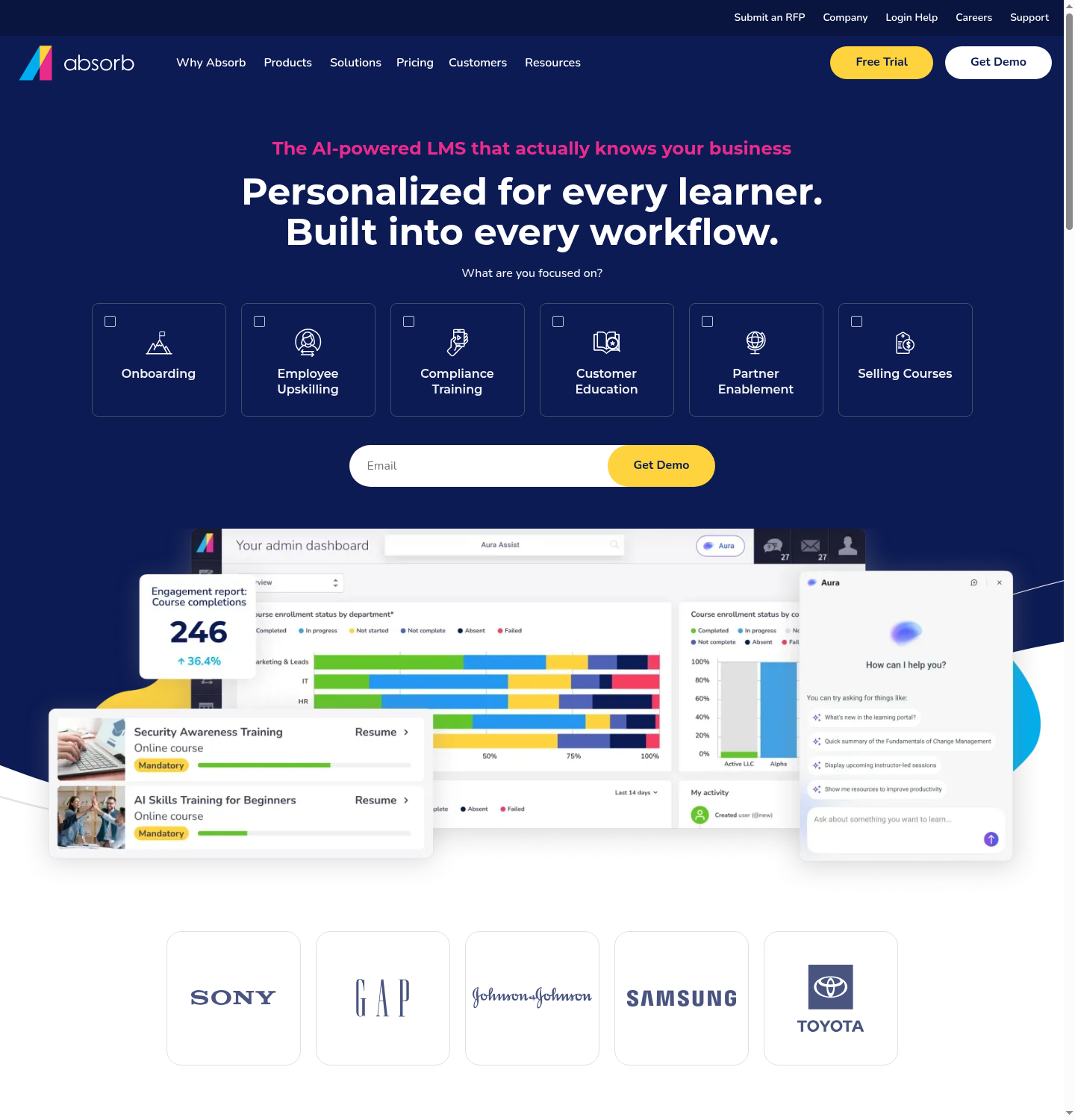
Absorb LMS has the most polished learner-facing experience of the mid-market platforms I have demoed, and I weight that more heavily than most buyers do. I find that a modern, low-friction interface means people do not need a training session to sit through their training. I also rate Absorb's support team, which shows up during rollout, and its AI tool, Aura Create, which drafts courses from documents. There is a mobile app for on-the-go learning too.
Pricing is quote-based, banded by learner count, so you submit a number and get a figure back.
I would temper it in two places. I have watched native reporting come up short, and most teams end up buying the Absorb Analyze add-on for usable dashboards, a cost you should price in from the start. And if you are migrating a large library, video and PowerPoint imports can distort images or strip playable files, a documented headache that has cost teams hundreds of hours.
5. iSpring Learn
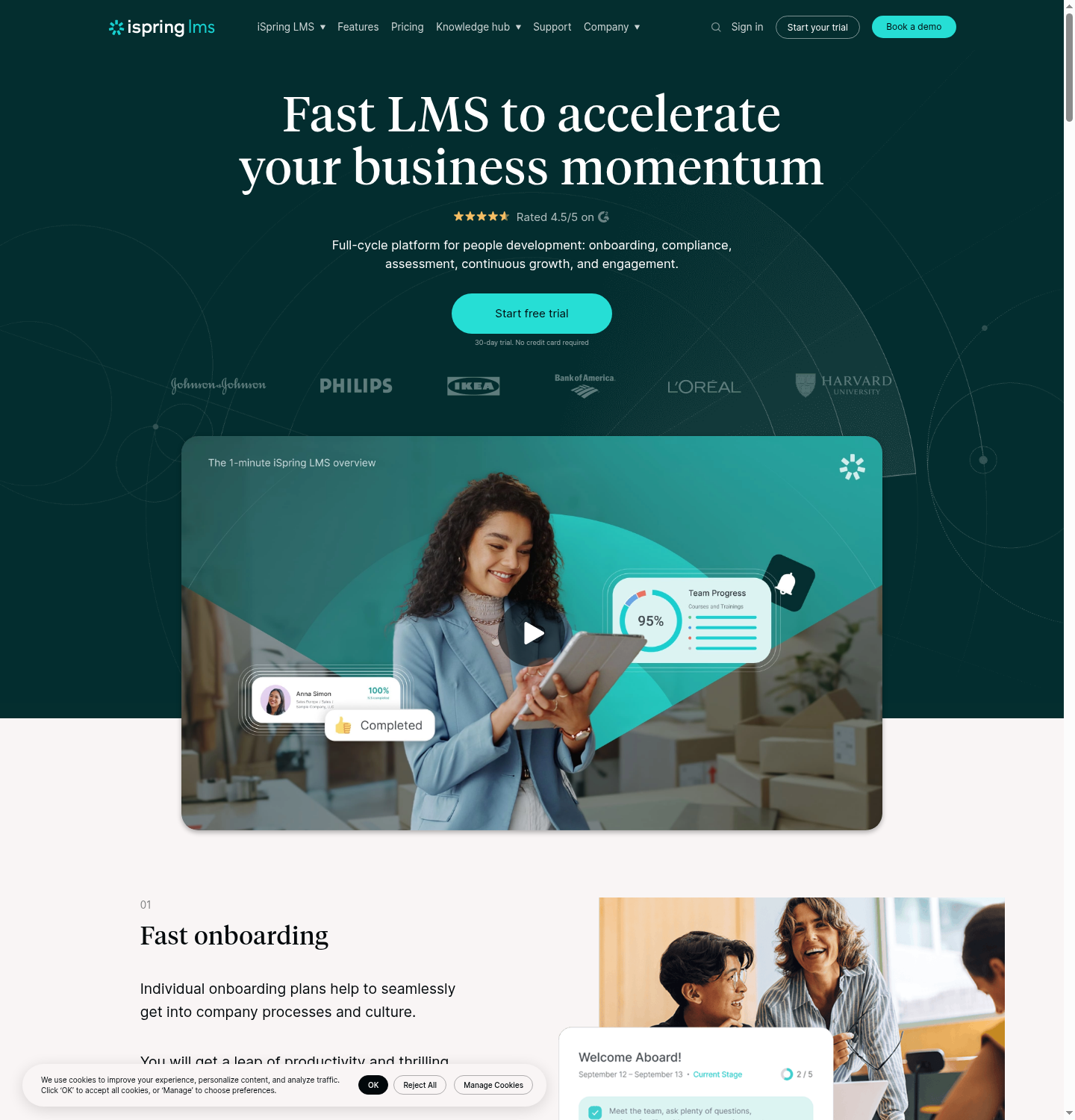
iSpring Learn wins on the two things that decide adoption, speed to launch and support that answers. I have read every credible account describing its support replies in hours, sometimes minutes, and that reliability is why teams stick with it. I like that the platform is quick to roll out, and that its intelligent reenrollment nudges people back for certificate renewals before they lapse, exactly the kind of automated prompt that keeps a compliance program from falling over. It pairs tightly with iSpring Suite for PowerPoint-based authoring, and it added an AI Course Generator in May 2026.
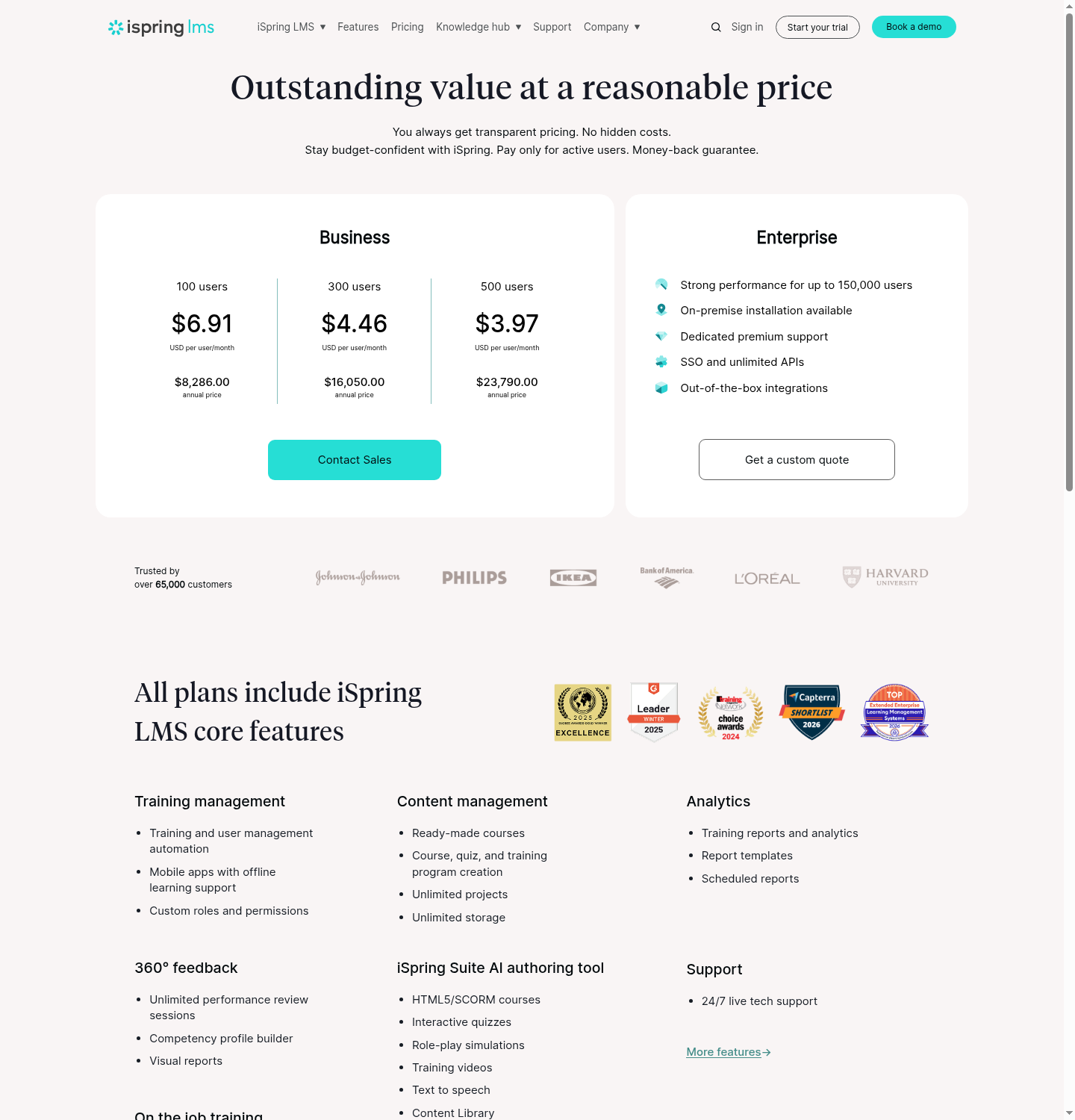
Pricing runs on a pay-per-active-user model, billed only on people who log in, with a 30-day trial and no card required. Published rates run from $6.91 per user per month at 100 users down to $3.97 at 500 users on annual billing.
I found the weak point to be reporting, which lacks department-level filtering and a customisable org chart. For a training team that values a fast rollout and responsive support over deep analytics, I would shortlist it early.
6. Docebo
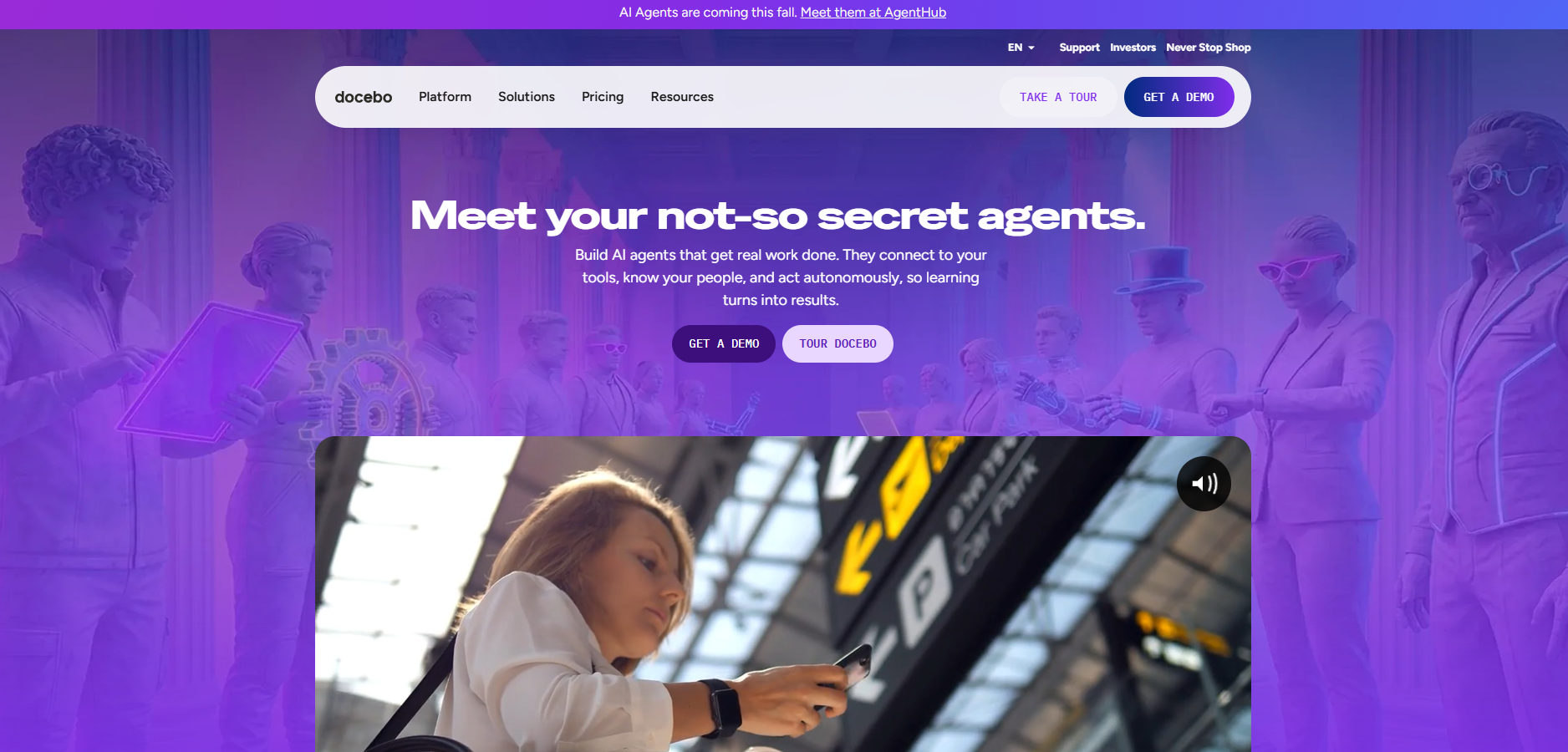
Docebo is the most ambitious AI platform on this list, and I will grant that for a large enterprise which can staff it, the automation holds up. I am impressed by AgentHub, which lets admins build no-code AI agents that connect to SharePoint, Confluence, Google Drive and Slack and act inside the learning flow, and it plugs into 25-plus knowledge sources plus a marketplace of tens of thousands of off-the-shelf courses. I see that integration depth as a legitimate adoption strategy, because it pulls learning into the tools people already live in.
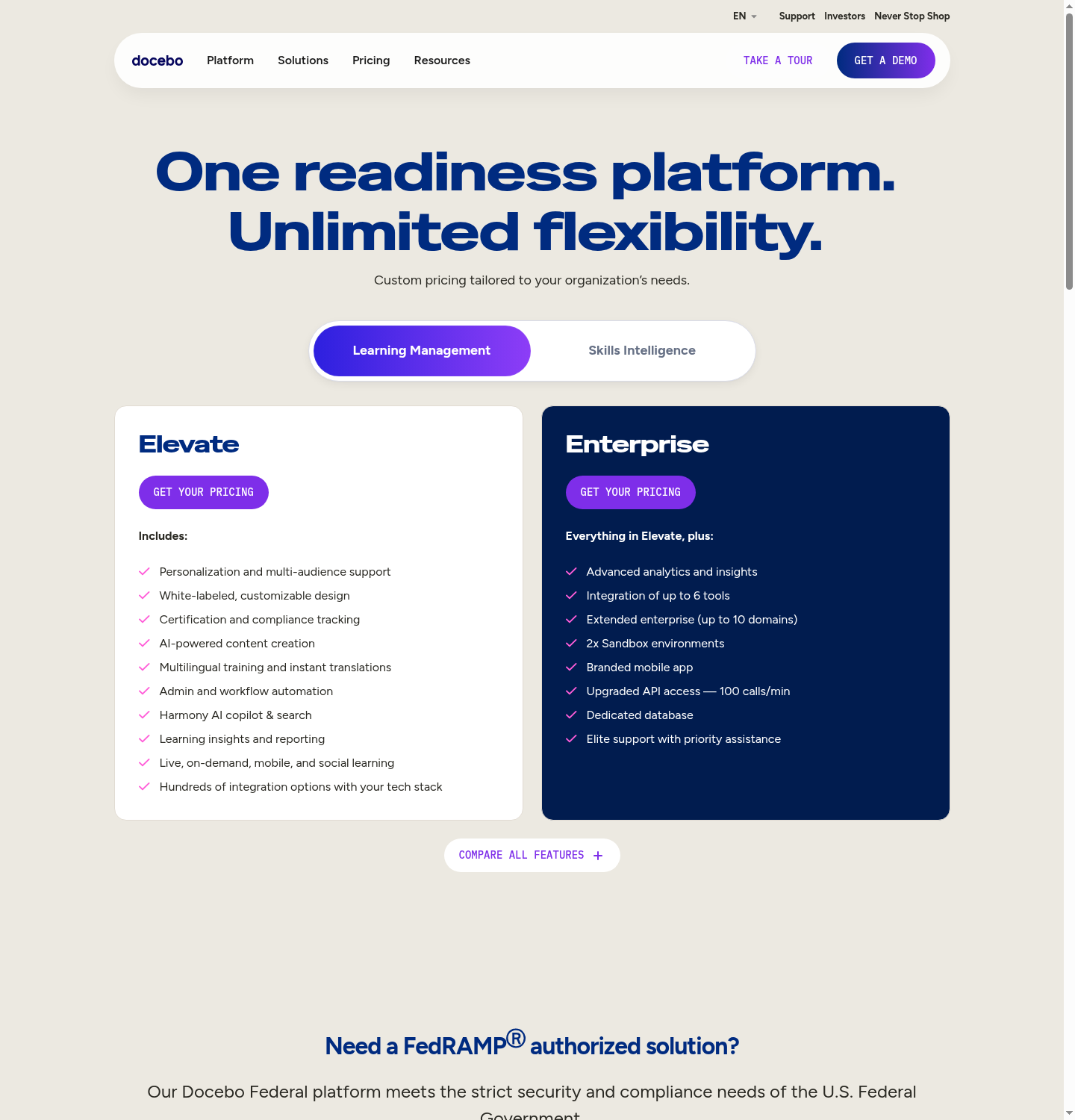
I have two persistent reservations. First, the model assumes scale, with a rough 250-learner minimum, no free trial and a custom quote, so this is not a platform you grow into cheaply. Second, and I hear this one most often, support below the Enterprise tier is threadbare, with reports of two-week waits on simple tickets, and the admin interface rewards a dedicated LMS administrator, so a generalist will struggle. If you do not have that person on staff, I would expect Docebo to feel far heavier than its demo suggested.
7. LearnUpon
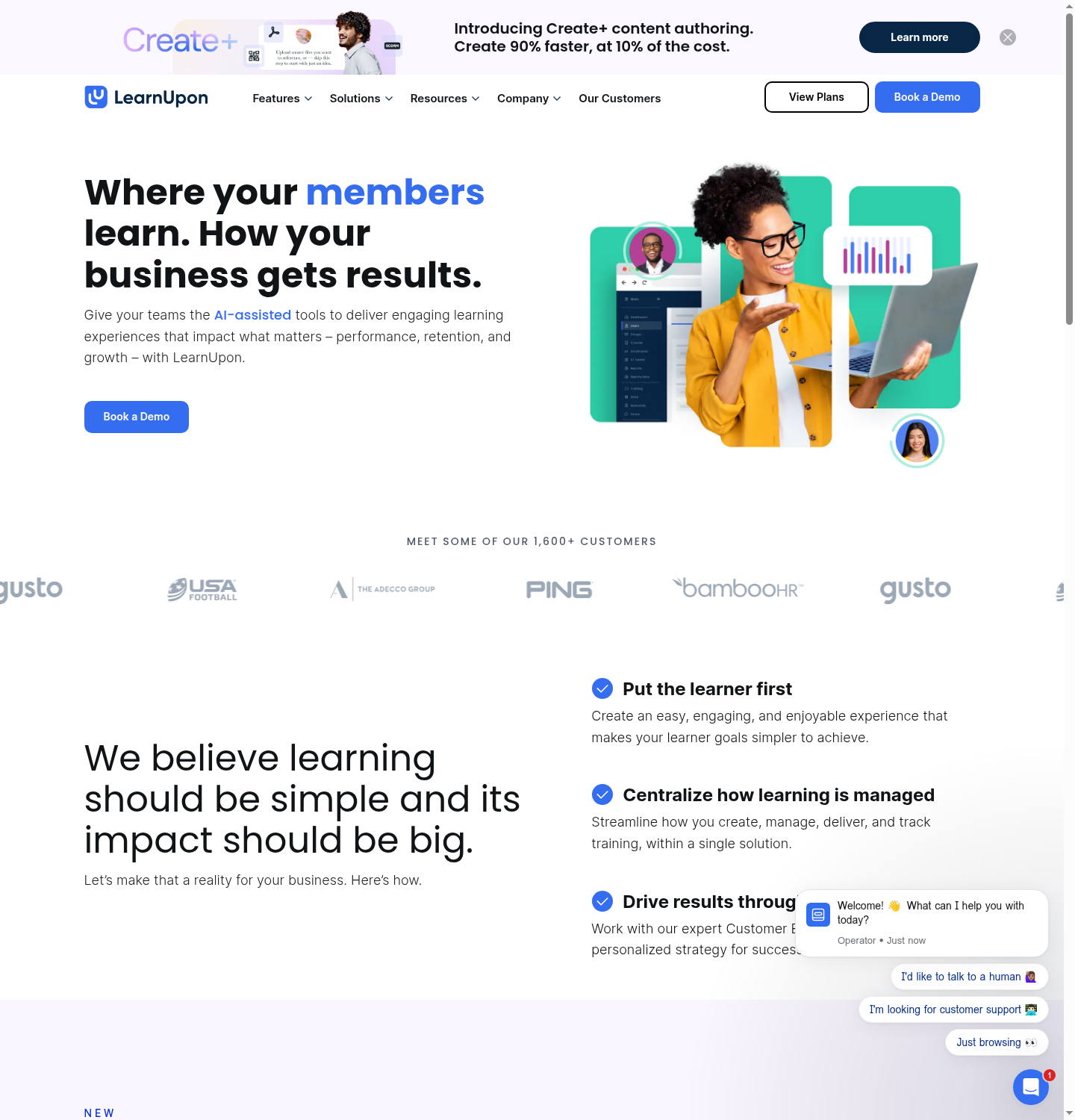
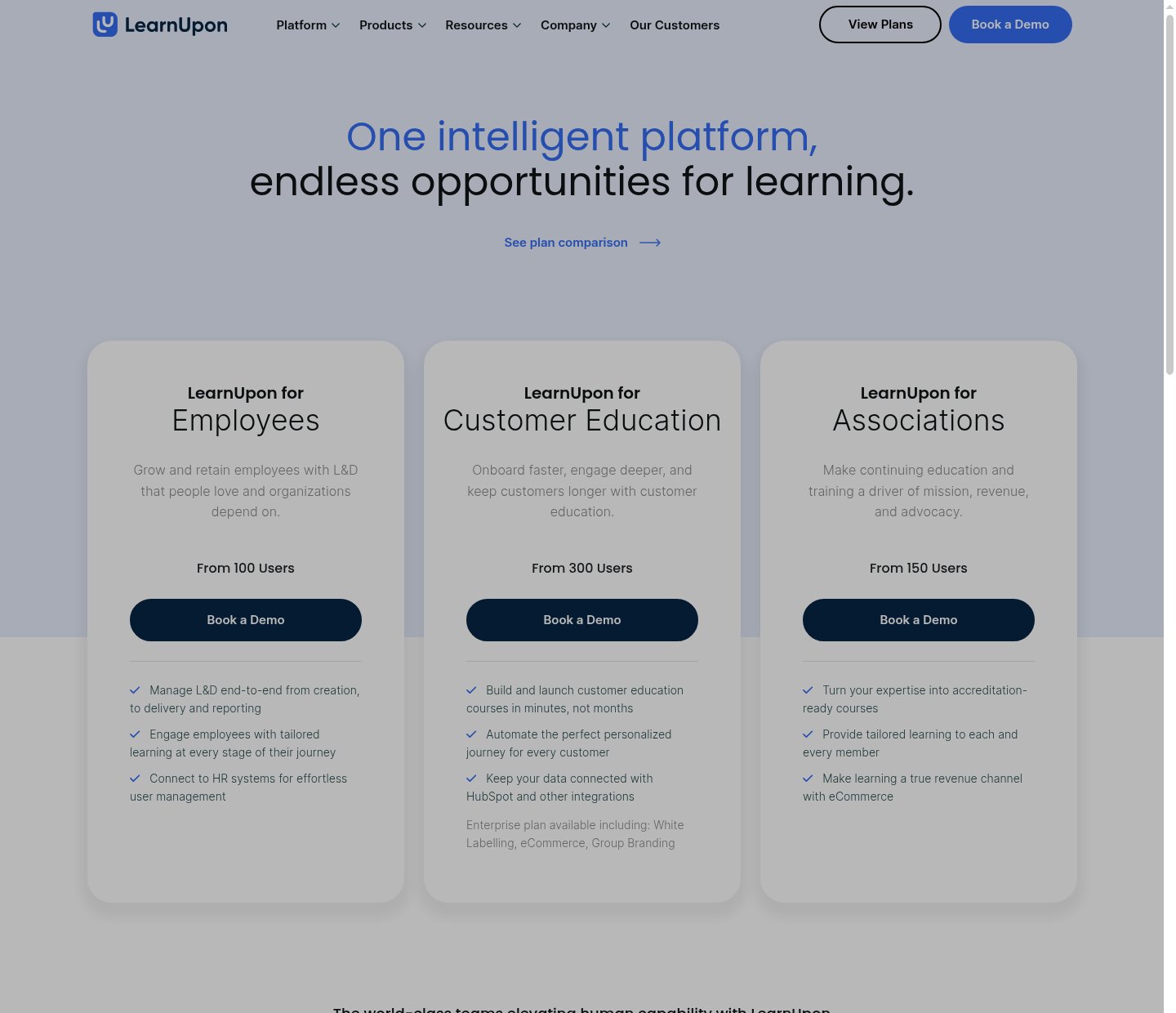
LearnUpon solves a specific corporate problem, and I think it solves it well. I like that it trains several distinct audiences, employees, customers and partners, from one system without them bleeding into each other. I rate its multi-portal architecture, which gives each group its own branding and rules, and the gamification that runs across all of them. I hear most consistently that the support and onboarding are excellent, which is a real adoption asset, because a smooth launch sets the tone for everything after it.
The trade-offs are customisation and depth. Branding controls are limited beyond the standard content types, some teams hit missing bulk actions, and a few report features shipping before they were fully baked. Pricing is quote-based and lands in mid-market territory.
LearnUpon fits an organisation that trains multiple audiences including customers and prizes responsive support over granular control, and I would steer a team that wants to reshape every pixel elsewhere.
8. SAP Litmos
Litmos, now SAP Litmos, has been an enterprise LMS workhorse for years, and I rate its active-user model, where the bill follows the people who actually train, so a big dormant roster does not cost you. I like that it deploys fast, ships with native SCORM authoring and a large off-the-shelf content library, and offers an AI assistant and AI Playlists on its top tier that let learners curate their own paths.
Pricing is gated behind sales across the Foundation, Platinum and Platinum AI tiers, with a 14-day trial.
I would slow down here, though. I found reporting to be the single most-cited weakness across every source, described as hard to pull and worse since the SAP transition. The interface feels dated to a lot of admins. And I would flag a documented pass/fail scoring quirk, where courses set to pass-or-fail can log a 0 percent score regardless of how the learner actually did, which will confuse people and skew your completion data if it lands on you.
9. Cornerstone OnDemand
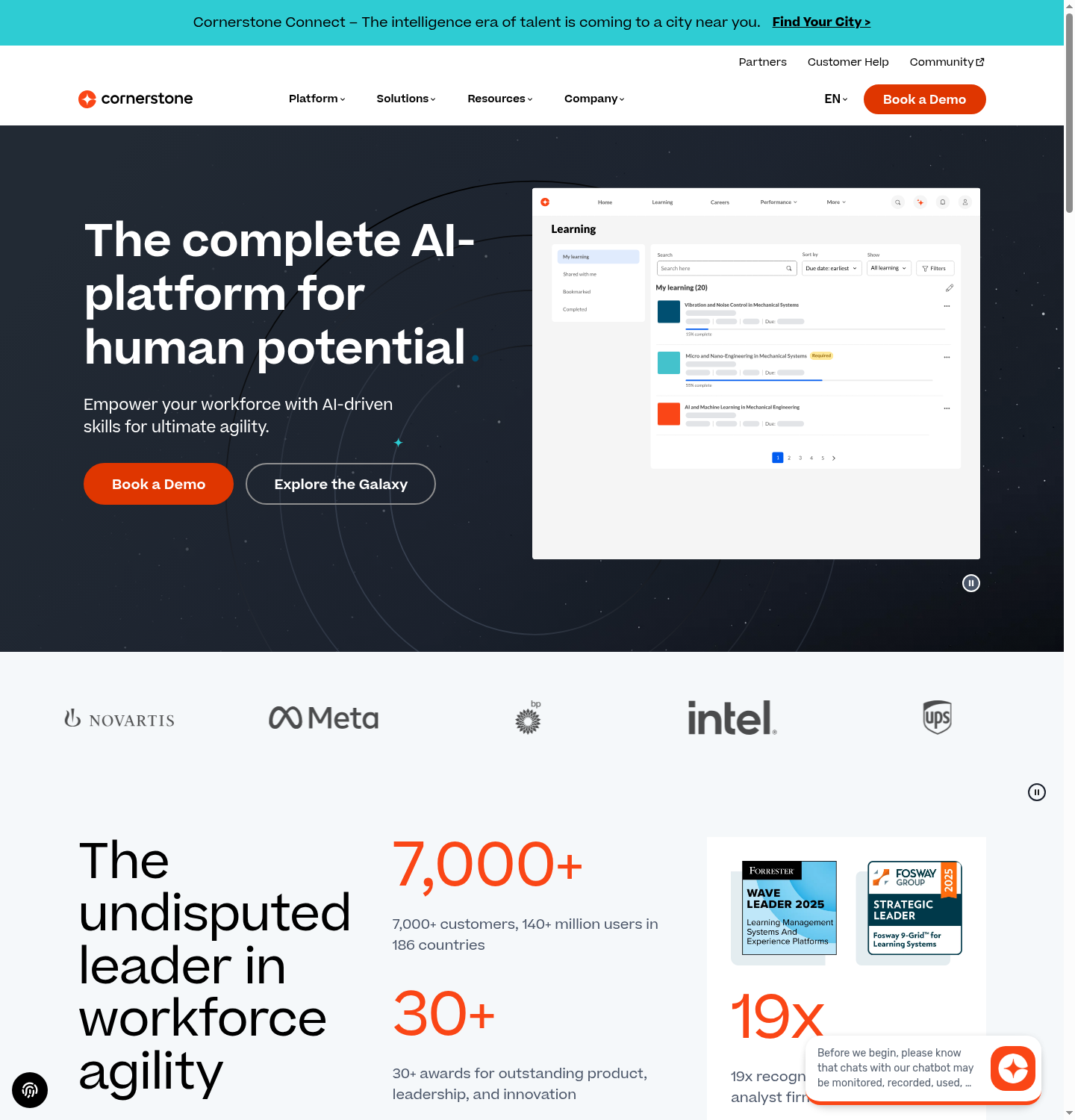
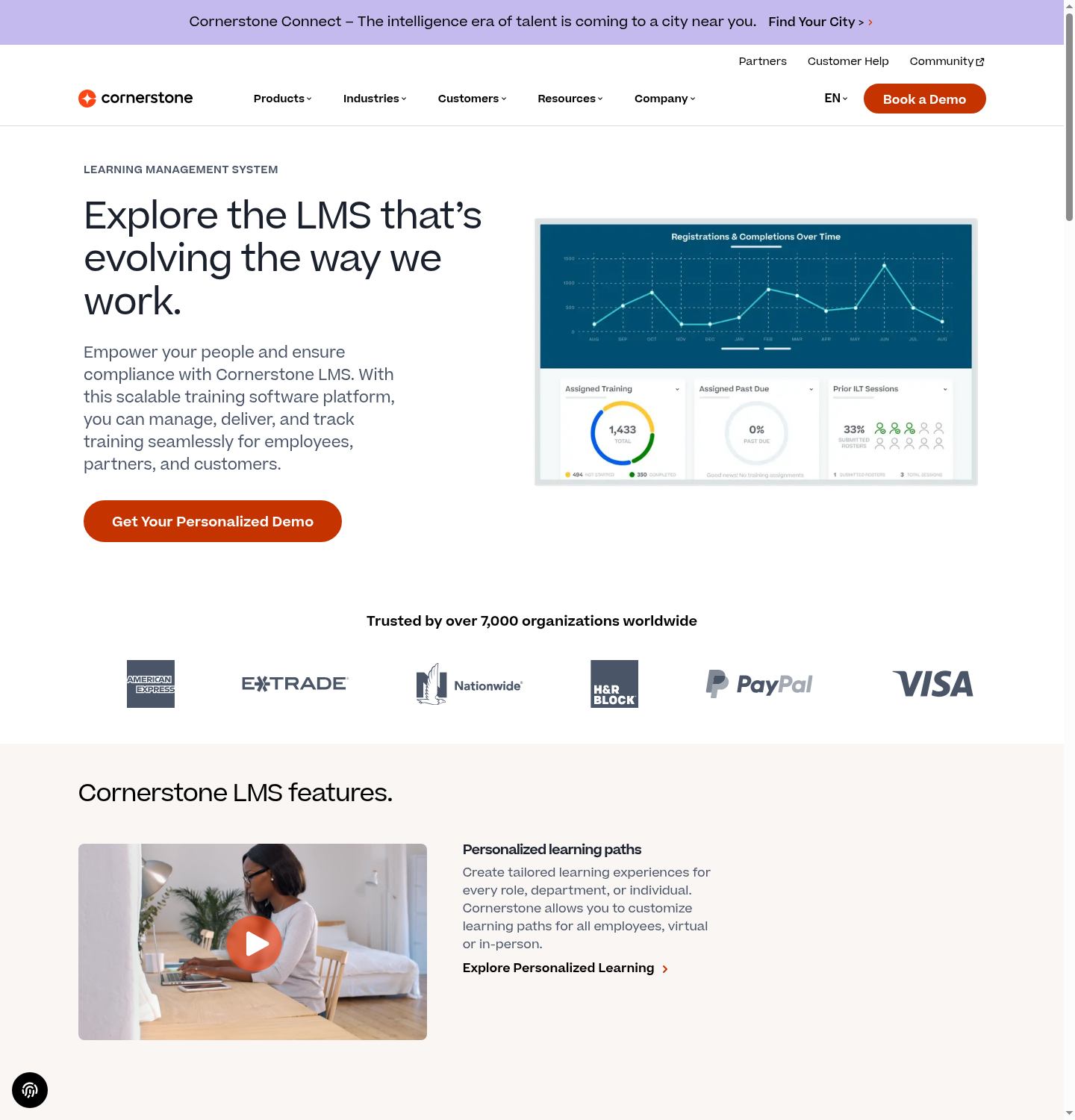
Cornerstone OnDemand sits at the deep enterprise end, aimed at large, regulated organisations that need governance, compliance and workforce development at serious scale. I rate its customisation and reporting as genuine strengths, and I include it because on raw capability it belongs here. I also rank it low on the axis of 'whether people actually use it'. I keep hearing the same criticism of the learner experience, an interface that feels dated and layouts that are hard to navigate, alongside slow support turnaround. I see a powerful back end behind a confusing front end as a hard combination to overcome.
Pricing is a fully custom enterprise quote through a demo-led sales process, so budget for a lengthy implementation and a dedicated internal owner before a single course goes live.
10. Moodle
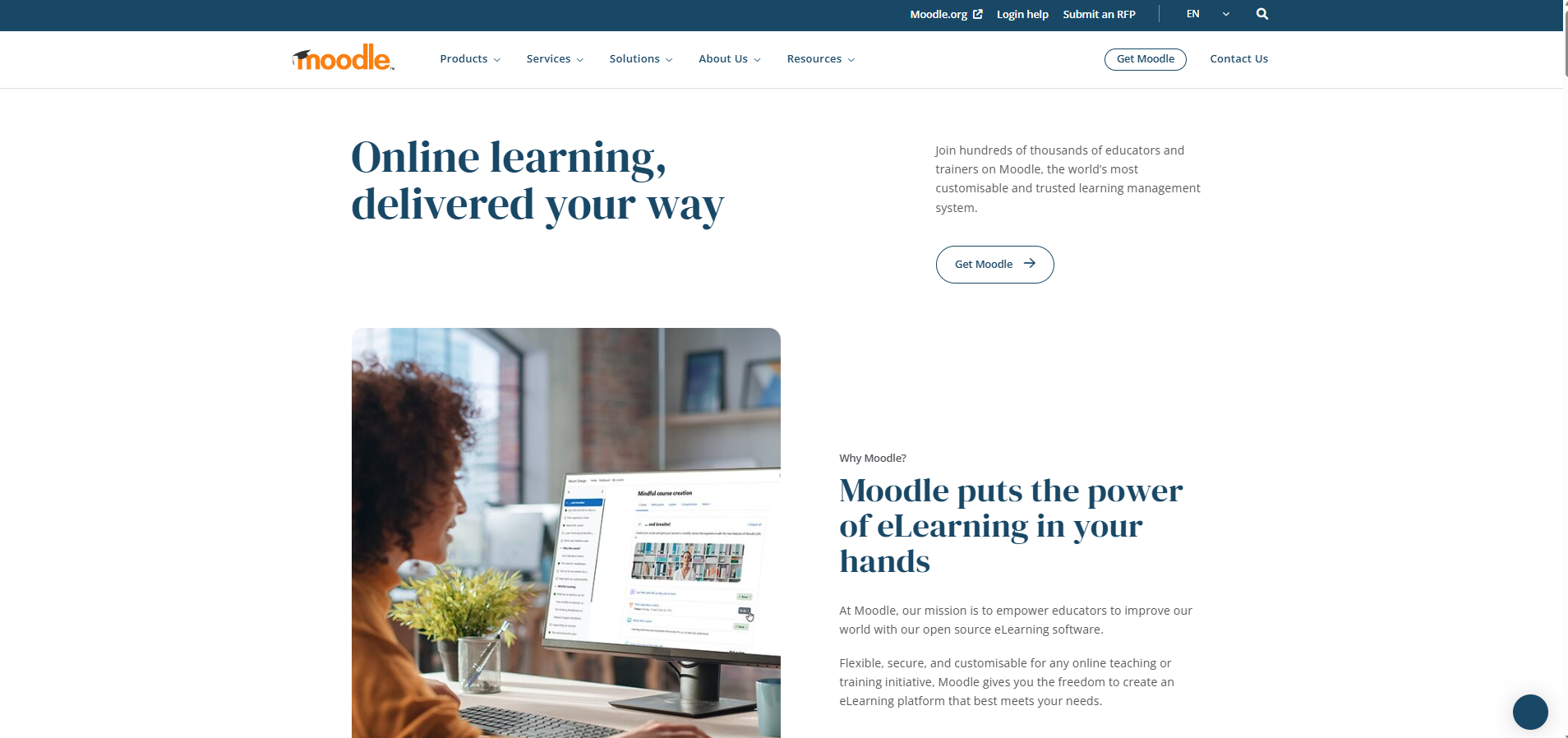
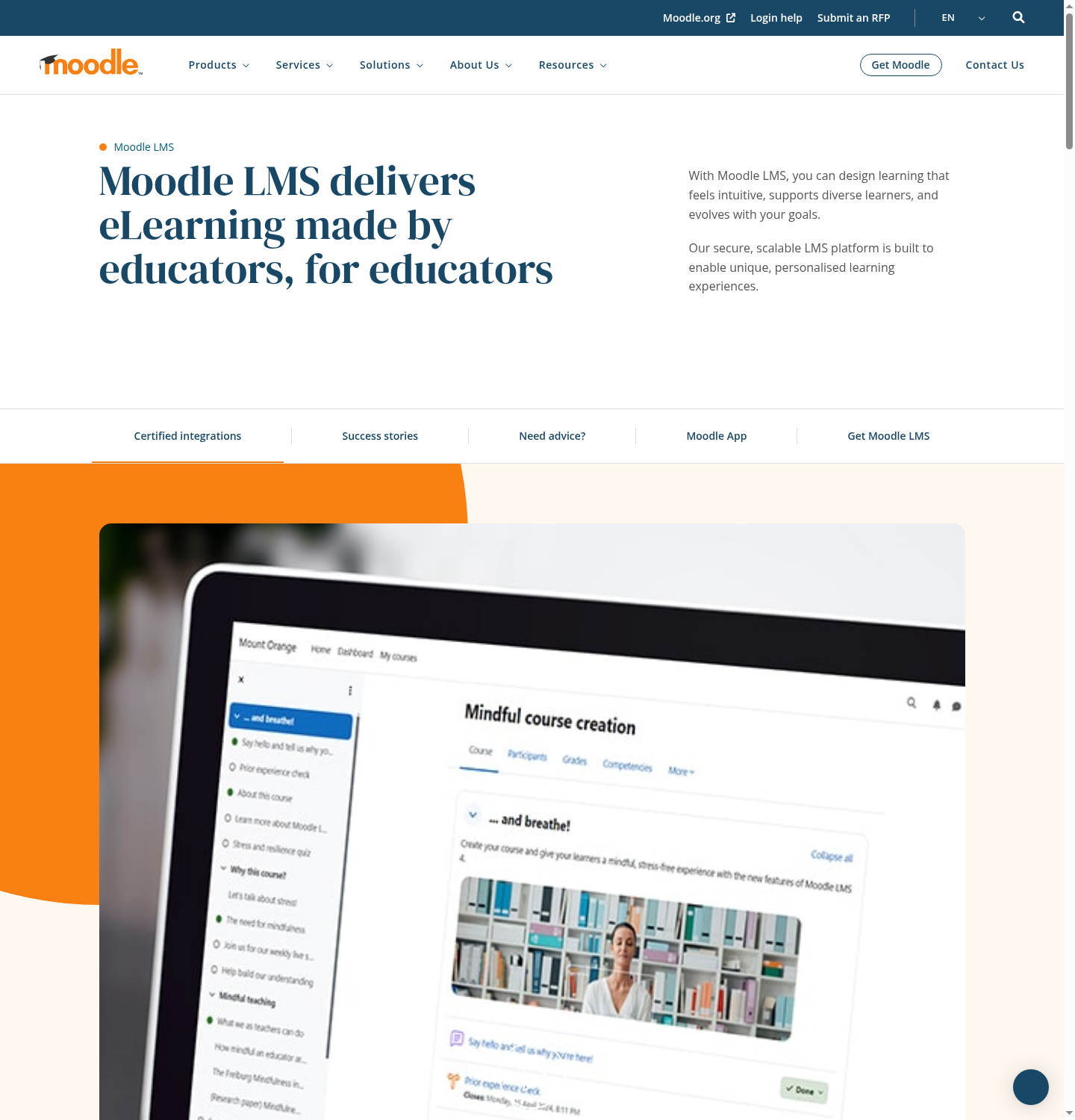
Moodle in its open-source form remains the most-deployed LMS in the world, and the corporate-tuned commercial edition, Moodle Workplace, layers multi-tenancy, automated workflows and organisational hierarchies on top of that core, delivered through certified partners rather than a public checkout. I still respect the pitch. It is free to self-host, endlessly customisable and free of vendor lock-in, and the plugin ecosystem and built-in gamification can be shaped into strong engagement if someone invests the time. I noticed the recent 5.2 release even tidied how locked content shows learners exactly what they need to unlock it.
That clause about investing the time is the whole catch, and it is where the adoption story turns. I keep reading the interface is dated and click-heavy and the learning curve steep, whether on the community edition or an underconfigured Workplace instance. With a competent partner and real configuration work, I have seen it shaped into something modern; left alone, it inherits every one of those complaints. I think adoption with Moodle is a direct function of how much design work goes in before launch. If a team has a Moodle administrator or partner budget and wants control and ownership above all, I would take it on flexibility and cost; if it wants polish out of the box, a managed vendor will get people learning far sooner.
11. Totara Learn
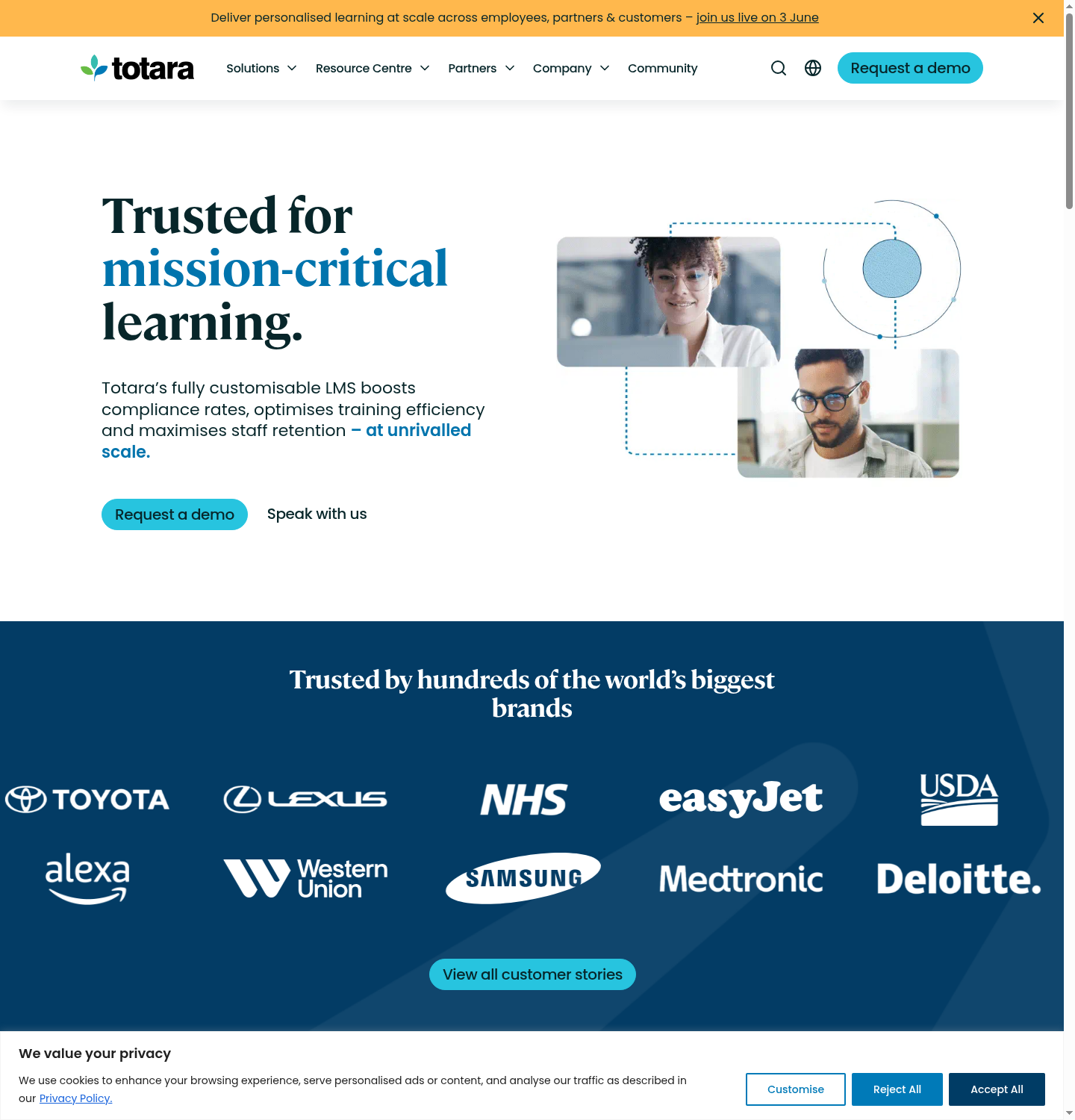
Totara Learn targets regulated, compliance-heavy industries, with recurring-compliance tracking, audience-segmented learning paths and multi-tenancy. I think it has more engagement to offer than its reputation suggests, including a mobile app for bite-sized learning and collaborative, employee-generated content. The catch is access. I could not find pricing on the site, because delivery runs entirely through partners, so evaluating it means booking a call. If you already work with a Totara partner and need deep compliance, I would make the call; if you want to trial something this afternoon, iSpring or Coursebox will get you there faster.
The one question I would ask before signing
I will leave you with the question I have asked in nearly every LMS evaluation I have sat in since I started doing this. Before you sign anything in this category, ask the vendor for the completion and active-usage rates across their existing customers. Ask for the real production figures, and treat the demo numbers and the ROI slide as marketing. I want to know what share of licensed learners log in in a given month, and what share finish what they start.
I have found that the answer tells you more than any feature comparison in this piece, because it is the one number a vendor cannot easily dress up. I notice the platforms selling genuine adoption answer it quickly and specifically, while the ones selling a spec sheet get vague or pivot to a testimonial. Whichever of these best LMS systems for corporate training you are leaning toward, make them answer that question in writing before the contract goes near legal. I would judge the best corporate training LMS for your team as simply the one your people will still be opening long after the launch email is forgotten.
Disclosure
Disclosure: Coursebox is the AI training platform I cofounded, so I have a direct stake in one of these eleven. I placed it at third rather than first because that is where I believe it honestly sits for corporate training adoption, and I would rather you trust the other ten assessments than doubt all of them. Competitors here were evaluated from public product and pricing information plus captured user sentiment from G2, Capterra, Trustpilot, Product Hunt and eLearning Industry, alongside my own decade of demoing these platforms to corporate buyers.
Frequently Asked Questions
A corporate LMS is a learning management system built to deliver, track and report on employee training instead of academic coursework. I tell buyers it is where onboarding, compliance and upskilling content lives, where people are enrolled and reminded, and where L&D proves completion. I care less about the label than the job it does. If it gets your workforce trained and gives you defensible records, I count it as doing corporate LMS work.
I weight recurring-certification tracking, audit-ready reporting and reliable reminders above almost everything else for compliance. I would look at iSpring Learn and SAP Litmos for recertification, at Cornerstone and Totara for governance in heavily regulated industries, and at Moodle if you have the resource to configure it. I would test the reporting against a real audit scenario before committing, because compliance work lives or dies on the paper trail. The demand for that paper trail is mainstream, not niche. In Coursebox's own data, more than 600 users created just over 2,000 certificate templates in the six months since we started counting, and that is on a platform where certification is not even the headline feature.
I think an AI-powered LMS for corporate training pays off when it removes a genuine bottleneck, and for me that bottleneck is keeping content current and relevant enough that people engage. I have seen AI course generation, like Coursebox's or TalentLMS's TalentCraft, turn a stale-content problem into a quick refresh, while AI search and analytics like Docebo's or 360Learning's cut admin time. The benefits of an AI LMS are genuine, but adoption of the AI features themselves is often low, so I would buy only the ones that solve a problem you actually have.
Yes, and I see two routes. The heavy route is a platform like Moodle, Totara or Docebo that you configure and extend into something bespoke, which needs technical resource or a partner. The lighter route is a white-label platform like Coursebox, LearnUpon or Absorb where you brand the learner experience and shape workflows without touching code. I would be clear with yourself about how much genuine customisation you need, because most teams really want branding and sensible workflows, which costs far less than a truly custom build.
There is. Self-hosted Moodle is free and open source, though you pay in hosting and administration time. I would also start on a real free tier before committing, since TalentLMS is free for up to 5 users and Coursebox has a free plan with unlimited learners and three courses. For a small team testing the water, I would prove the concept on one of those before signing anything longer term.
Travis Clapp
Educational technologist and instructional designer

