

8 Best Free Quizlet Alternatives in 2026 (Sites Like Quizlet I Actually Use)
Quizlet moved Learn mode and practice tests behind a paywall. Here are the 8 best free Quizlet alternatives, tested, including the one that imports your existing sets in seconds.

The closest free replacement for Quizlet is Knowt: it imports your existing Quizlet sets in seconds and gives you Learn mode and practice tests, the features Quizlet moved behind a paywall, for free.
- If you are studying for the long haul, a language, med school or a certification, Anki’s spaced repetition is still unmatched, and it is free everywhere except a one-time $24.99 on iPhone.
- The feature that actually decides which tool sticks is spaced repetition. Knowt, Anki, Brainscape and RemNote have it; Cram mostly does not, and Quizlet keeps its version behind Plus.
- RemNote is the pick if you want notes and flashcards in one place; Vaia (formerly StudySmarter) is the best free all-in-one study app; Memrise wins for languages specifically.
- If you are the one making the study material, a teacher, trainer or creator, Coursebox turns a PDF or prompt into flashcards, quizzes and a full course with AI instead of making you type cards by hand.
Answer one question about what you actually need and I will point you to the closest fit.

Convert anything into flashcards instantly
I take a lot of online courses, and for years the way I actually remembered any of it was Quizlet. Then Quizlet moved Learn mode, unlimited practice tests and a few other things I used every day behind Quizlet Plus, and the free version started to feel like a demo. If you searched “sites like Quizlet” and landed here, you probably hit the same wall.
The good news: the free tools that replaced Quizlet for me are, in most cases, are actually better than Quizlet now!, and several will import your existing Quizlet sets so you are not starting from scratch again.
I have used every tool here as a learner, not a reviewer, so this is ranked by what I actually use IRL, with honest notes on where each one falls down.
One thing to decide before the list: do you need spaced repetition, the feature that decides when to show you a card based on how well you know it, or do you just want to drill a set before a test tomorrow? It changes which tool is right for you, so I have flagged it on every entry.
One disclosure: we build Coursebox, whose AI quiz generator turns your notes or a PDF into quizzes and flashcards, so it sits at the bottom of this list, only for when you are making the study material rather than drilling it.
How I compared these Quizlet alternatives
I judged every tool on the same five things, in the order they actually matter when you are switching:
- What you get for free. Not “is there a free plan,” but whether the free plan is enough to study seriously, or whether the useful parts are paywalled the way Quizlet’s ended up.
- How it makes you study. Spaced repetition, plain flashcards, or game-based. This is the single biggest difference between these tools, so I weighted it heaviest.
- Switching cost. Whether it imports your existing Quizlet sets, because rebuilding hundreds of cards by hand is the main reason people stay somewhere they have outgrown.
- AI. Whether it can turn your notes, a PDF or a lecture into flashcards, instead of making you type every card.
- Who it is for. Students, self-learners, language learners, or the person making the study sets.
Quizlet alternatives at a glance
The whole list in one view. Prices are in USD as of August 2026, verify before you pay.
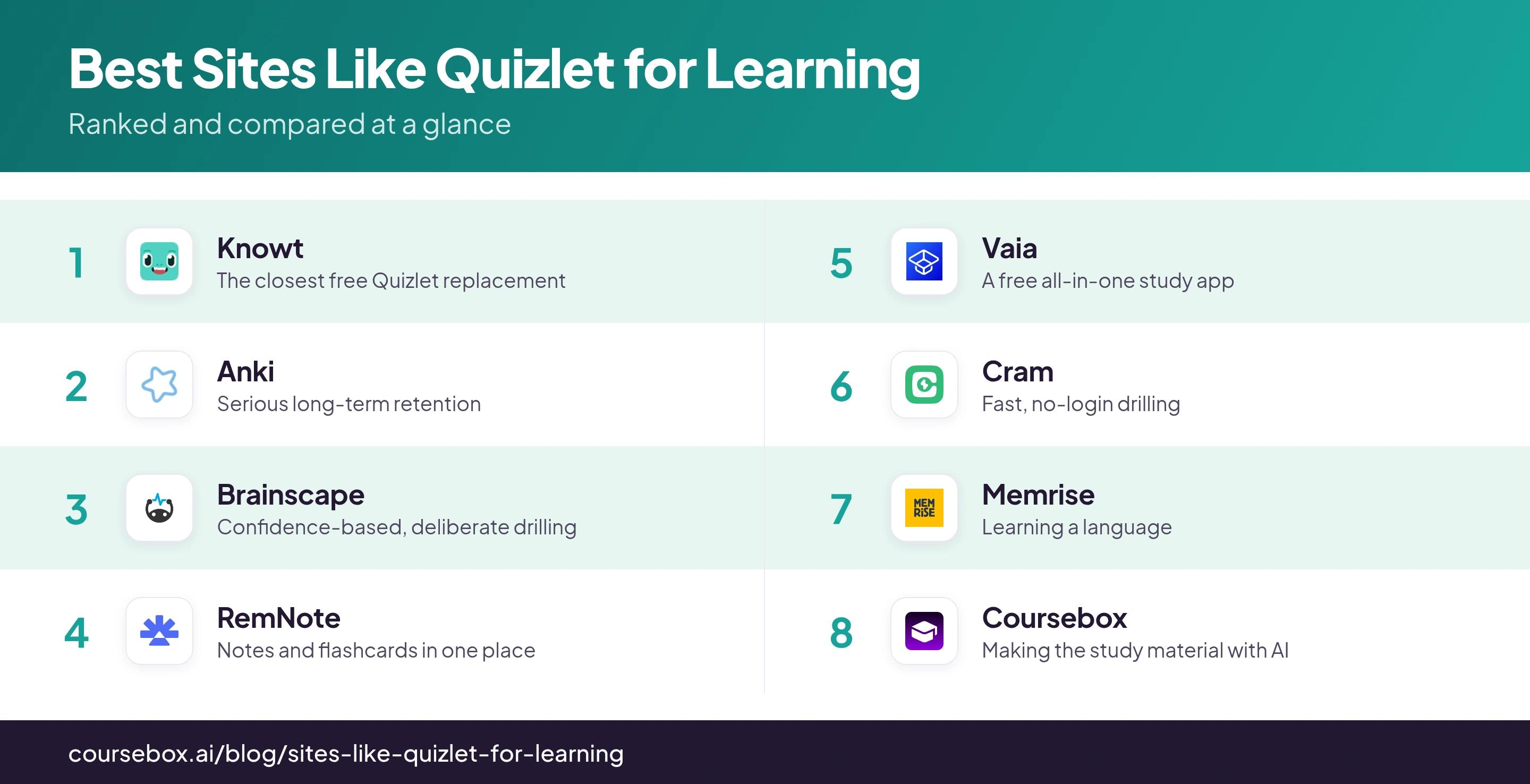
| Tool | Best for | Free tier | Imports Quizlet | Paid price |
|---|---|---|---|---|
| Knowt | The closest free Quizlet replacement | Full: flashcards, Learn mode, tests, AI | Yes, in seconds | Free (student/teacher plans by quote) |
| Anki | Serious long-term retention | Full on every platform except iPhone | Via export, not one click | Free; iOS app $24.99 one-time |
| Brainscape | Confidence-based, deliberate drilling | Study your own content free | Not directly | Pro $7.99/mo (billed yearly) |
| RemNote | Notes and flashcards in one place | Unlimited notes and flashcards | Not directly | Pro $8/mo; Pro with AI $18/mo |
| Vaia | A free all-in-one study app | Free, 40M+ learners | Not directly | Premium (price not public) |
| Cram | Fast, no-login drilling | Free, millions of public sets | Not directly | Premium (price not public) |
| Memrise | Learning a language | Free plan, all languages | Not directly | Pro $24.99/mo, $61.99/yr, $329.99 lifetime |
| Coursebox | Making the study material with AI | Free to start | Build from a PDF instead | $40 to $750/mo (USD, billed yearly) |
Plain flashcards show you every card the same amount. Spaced repetition does not: it shows the cards you keep getting wrong more often, and the ones you already know far less often, so your time goes to what you have not learned yet. That is the whole trick, and it beats normal flashcards when a test is weeks away. Knowt, Anki, Brainscape and RemNote have it. Cram does not, and Quizlet keeps its version behind Quizlet Plus.
The 8 best Quizlet alternatives
1. Knowt
Knowt is the tool built to be the free Quizlet, and it is the one I switched to the day Quizlet put Learn mode behind Plus.
- Free where Quizlet charges. Flashcards, Learn mode, matching games, practice tests and spaced repetition, the exact features behind Quizlet Plus, are all free.
- Brings your sets with you. It imports a Quizlet set in seconds, so you are not rebuilding hundreds of cards by hand. That import alone is why I moved.
- Real spaced repetition. It schedules reviews so you see weak cards more and known ones less, which Quizlet keeps behind Plus.
- AI that builds the set. It turns a recorded lecture or a PDF into notes, flashcards and quizzes, free.
In practice: the day Quizlet moved Learn mode behind Plus, I imported my sets in about a minute and the exact mode I was about to pay for was sitting there, free.
Verdict: the default for most people leaving Quizlet. If you try one tool here, make it this one.
We break the two down directly in Quizlet vs Knowt.
2. Anki
Anki is the serious learner’s flashcard app, free, open-source, and built entirely around spaced repetition. It beats Quizlet on the one thing that decides whether you remember anything: scheduling.
- The best spaced repetition there is. It shows each card the moment you are about to forget it; Quizlet’s free version does not schedule at all.
- Free on almost everything. Windows, Mac, Linux, Android and the web cost nothing. Only the iPhone app is a one-time $24.99, and that single purchase funds the whole project.
- No paywall creep. Unlike Quizlet, the spaced repetition is free and always has been, with no Plus tier waiting to claw it back.
- Where it falls down. The interface is dated, the learning curve is real, and importing a Quizlet set takes a few minutes of exporting and converting, not one click.
In practice: cards I made two years ago still resurface right when I am about to lose them, which no other tool here does as well. The $24.99 on my phone stung once, then I never thought about it again.
Verdict: choose it when retention months from now counts for more than a friendly interface. Ugly to look at, and nothing schedules reviews better.
Full head-to-head in Quizlet vs Anki.
3. Brainscape
Brainscape swaps Quizlet’s right-or-wrong drilling for something more deliberate: after each card you rate how well you knew it from one to five, and the shaky ones come back sooner.
- Smarter than Quizlet’s loop. Confidence-based repetition sends your time to the cards you are unsure of, not the ones you already know cold.
- Study your own cards free. Making and studying your own decks costs nothing.
- AI can build a deck from a source, so you are not typing every card by hand.
- What you pay for. The best pre-made “Certified” decks sit behind Pro, $7.99 a month billed yearly.
In practice: rating my recall from one to five made sessions feel less random, I stopped re-seeing cards I clearly knew and spent the time on the shaky ones.
Verdict: pick it if you want a more thoughtful system than Quizlet and will pay for high-quality decks.
4. RemNote
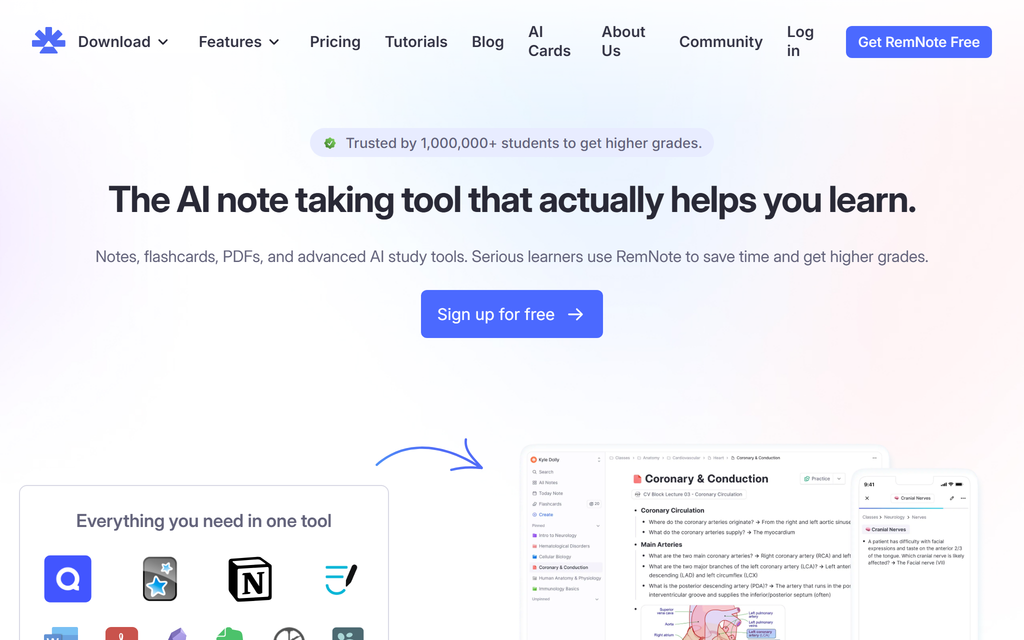
RemNote fixes the thing that always annoyed me about Quizlet: the note and the flashcard are the same action.
- Notes and cards in one place. You turn a line of notes into a spaced-repetition flashcard with a shortcut while you are still writing. With Quizlet you copy your notes in by hand afterward.
- Real spaced repetition, built into your notes rather than living in a separate app.
- Generous free tier. Unlimited notes and flashcards, free.
- AI is the paid part. Pro is $8 a month or $96 a year; Pro with AI is $18 a month or $216 a year.
In practice: I turn a line into a flashcard with a shortcut while I am still writing the note, so the card exists before I close the tab. That habit saved me more time than any other tool here.
Verdict: right for you if your notes and cards should live together instead of two apps you keep syncing by hand.
5. Vaia
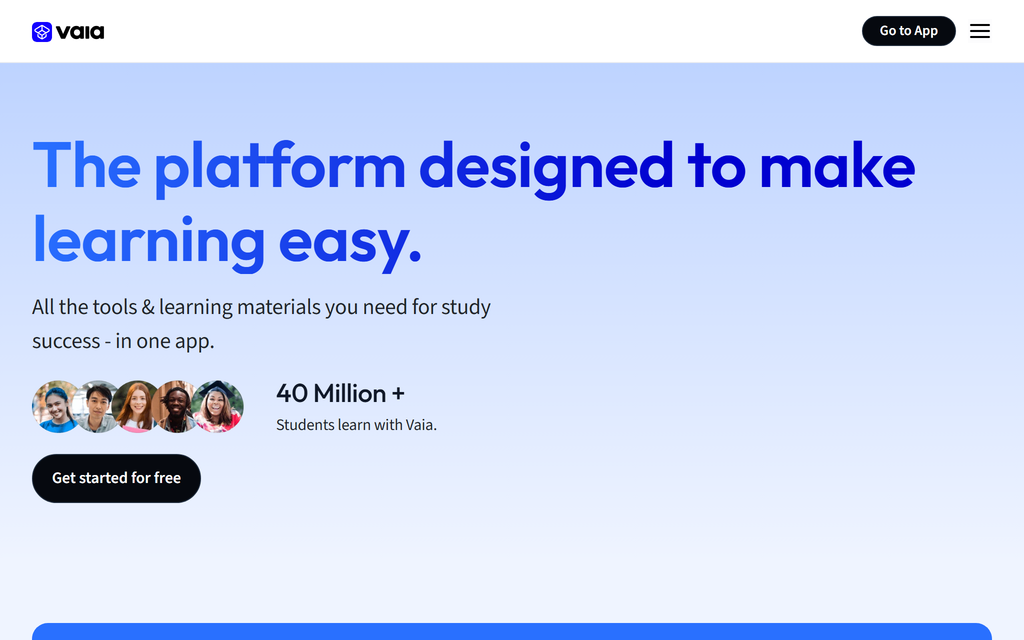
Vaia (formerly StudySmarter) is the free all-in-one many people switch to when they want more than Quizlet’s flashcards: cards, notes, community sets and AI in one app used by more than 40 million learners.
- Broader than Quizlet, and free. Flashcards with adaptive review, plus notes and a huge community library, at no cost.
- You rarely start from scratch. The community sets mean you often just find the deck you need, the way you would on Quizlet, without the paywall.
- AI makes the cards from your uploaded slides, free.
- The one gap. A premium tier exists but its price is not shown publicly, and older reviews use the old StudySmarter name.
In practice: the community sets meant I almost never built a deck from zero, and uploading a slide deck and getting cards back was the fastest no-effort path I found.
Verdict: go here if you want free flashcards plus notes, community sets and AI in one place.
6. Cram
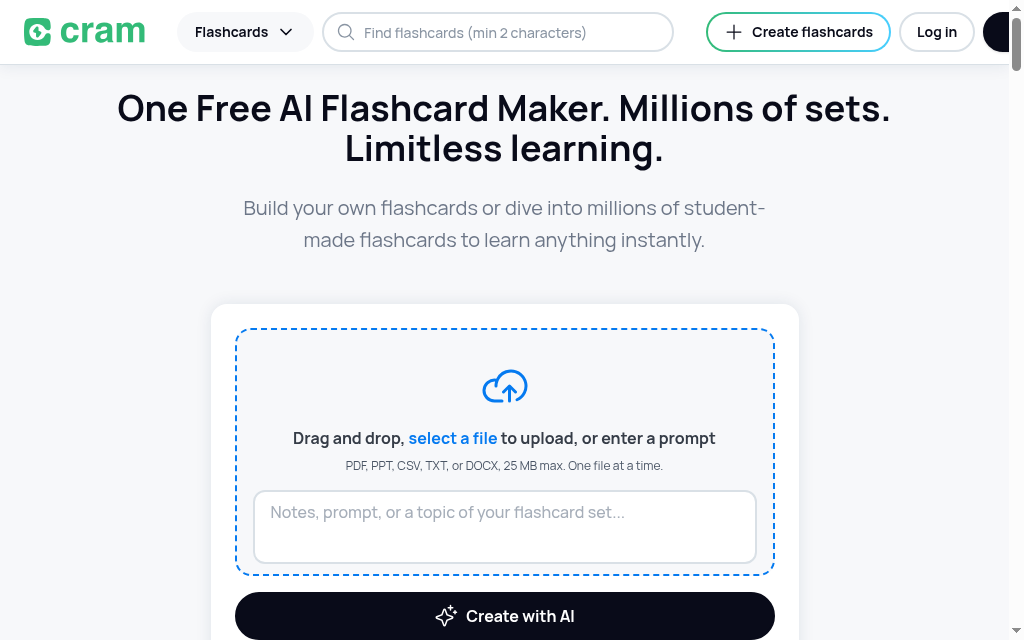
Cram is the least-fussy way to drill a set, no login, millions of public sets, and it beats Quizlet on pure friction: you can be studying in two clicks.
- No account, no paywall. Open a public set and start studying. Quizlet increasingly nudges you to sign in and upgrade first.
- Millions of ready-made sets, so you can usually find the one you need instead of importing anything.
- AI flashcard maker builds a set from an uploaded PDF, slide deck or prompt.
- What it skips. It does not really do spaced repetition, so it is for drilling before tomorrow, not scheduling over weeks.
In practice: when I just want to drill a set before tomorrow without signing up, I open a public set and I am drilling before the page finishes loading. What it will not do is manage reviews over weeks.
Verdict: for quick, disposable drilling, not a study system you will still use next month.
7. Memrise
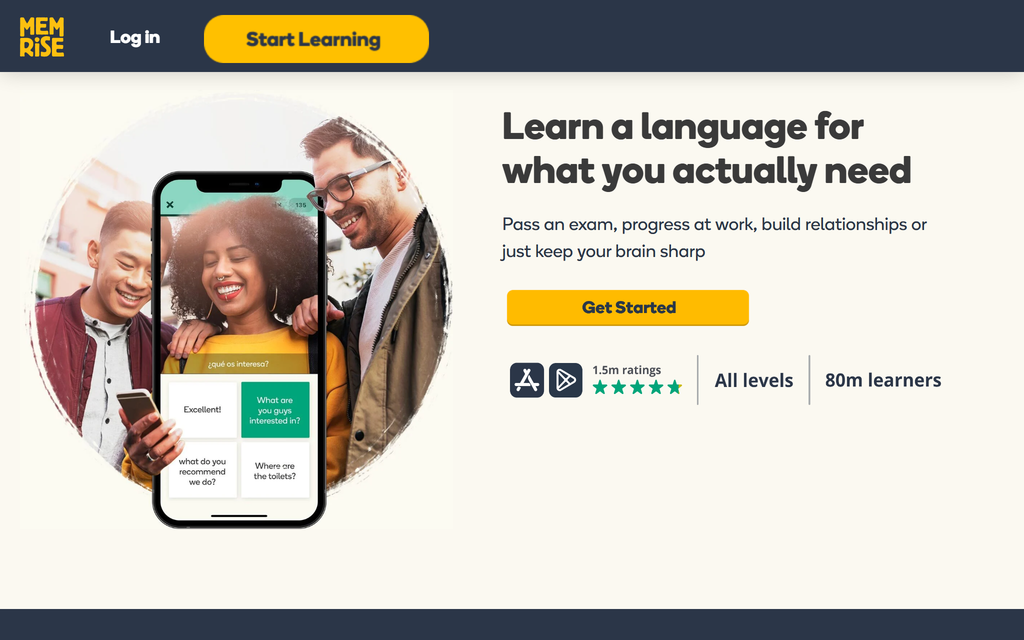
Memrise is the one to pick over Quizlet for one specific job, learning a language, where its clips of real native speakers do something a text flashcard cannot.
- Built for language, not generic cards. Spaced repetition tuned for vocabulary, plus native-speaker video and AI conversation practice.
- Free plan covers all languages and the core lessons.
- Where it beats Quizlet. Pronunciation sticks because you hear real speakers saying the word, not a flat text card.
- The trade-off. It is a closed language course, so it will not import your Quizlet sets and it is the wrong tool for anything but a language. Pro is $24.99 a month, $61.99 a year, or $329.99 lifetime, often discounted.
In practice: hearing the word said aloud by a real speaker, not read off a card, is what made it stick. For anything other than a language, it is the wrong tool.
Verdict: pick it for a language. Outside languages, one of the flashcard tools above will serve you better.
8. Coursebox
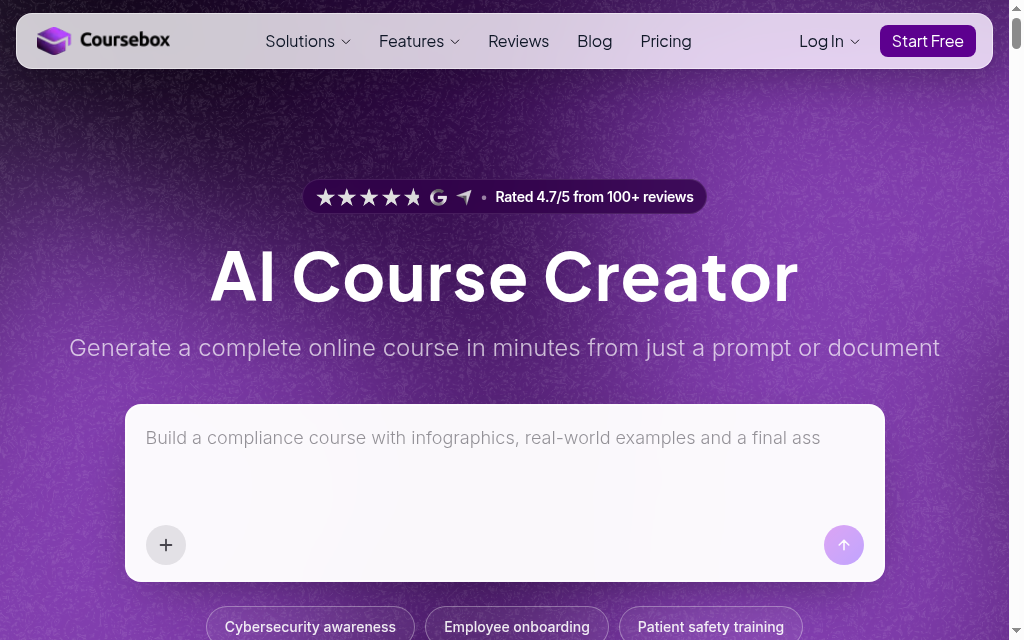
Coursebox, which is ours, so take this with a grain of salt: it is built for the person making the study material rather than the student drilling it.
- A different job from Quizlet. It turns a PDF, a document or a prompt into flashcards, quizzes and a full course with AI, then lets you share or deliver it.
- Skips the card-typing entirely. Instead of importing or building a Quizlet set by hand, you generate it from your material. On Coursebox, people let AI write the quiz questions far more often than they add them by hand.
- Not a personal review app. There is no daily spaced-repetition queue for a single learner here, and I will not pretend there is.
- Free to start, then paid plans run $40 to $750 a month (USD, billed yearly).
In practice: I reach for it when I am on the other side, turning my own notes or a PDF into flashcards and a quiz automatically instead of typing cards one by one.
Verdict: reach for it if you are creating study content for other people, or you want AI to build the set. Not the choice if you just want a free app to drill your own cards.
How to choose a Quizlet alternative
Work backwards from how you actually study.
Decide if you need spaced repetition
This is the real fork. If you are studying for something weeks or months away, you want a tool that schedules reviews for you: Knowt, Anki, Brainscape or RemNote. If you just need to drill a set before tomorrow, Cram or a plain flashcard mode is enough, and spaced repetition is wasted on you.
Check the switching cost first
The reason most people stay on a tool they have outgrown is the hundreds of cards they would have to rebuild. Only Knowt imports your Quizlet sets in one step, which is a big part of why it is my top pick. If your library is large, weight that above almost everything else.
Remember that free rarely means everything is free
Quizlet is on this list by its absence: it has a free plan too, but the parts you want moved behind Quizlet Plus. Check the same thing on any alternative. Knowt and Anki are the two where the useful features stay free.
If you are making sets, not just studying, that is a different tool
If your job is to build the flashcards, quizzes or course for other people, a personal study app is the wrong category. That is where an AI tool like Coursebox fits, turning a document into a set automatically rather than making you type it.
Which Quizlet alternative should you pick?
For most people the honest answer is Knowt: it imports your sets in seconds and gives you the features Quizlet started charging for, for free. If you are in it for the long haul, Anki’s scheduling is still the best there is, ugly interface and all. Pick RemNote if your notes and cards should live together, Vaia if you want an all-in-one free app, and Memrise if you are learning a language. And if you are the one building the study material, that is a different job, and AI can do most of it for you.
Frequently Asked Questions
Knowt. It imports your existing Quizlet sets in seconds and gives you flashcards, Learn mode, practice tests and spaced repetition for free, the features Quizlet moved behind Quizlet Plus. For serious long-term study, Anki is the other free standout, though its interface is much less friendly.
Yes, most easily into Knowt, which brings a Quizlet set over in seconds. Anki can import your sets too, but it takes a few minutes of exporting and converting rather than one click. Most other tools do not import directly, so if you have a large library, Knowt is the low-effort switch.
Quizlet still has a free plan, but it moved several features that used to be free, including Learn mode and unlimited practice tests, behind its paid Quizlet Plus subscription. That is why so many people started looking for alternatives. Tools like Knowt keep those same features free.
Yes. Anki is built entirely around spaced repetition, and Knowt, Brainscape and RemNote all include it. Brainscape uses a confidence-based version where you rate your recall from one to five. Cram is the main tool here that does not really do spaced repetition, so avoid it if long-term retention is your goal.
For most students, Knowt, because it is free, imports Quizlet sets, and has AI that turns a lecture or PDF into a study set. If you are memorizing for the long term, add Anki. For languages specifically, use Memrise instead of a general flashcard app.
Parshad Desai
Driving growth and marketing strategy at Coursebox AI

