

Online Learning Statistics: The Ultimate List for 2026
Looking for the latest online learning statistics for 2026? Explore the most important data on online learning growth, adoption, costs, and much more.


Learn faster with AI powered courses, quizzes, and flashcards
In 2026, online learning has become one of the main ways people gain new skills, earn credentials, and grow their careers. What makes this shift so powerful is how well people actually learn online.
Studies show that learners retain 25 to 60 percent more information with e-learning, compared to just 10 percent in a traditional classroom. This is just one of the online learning statistics that show how convenient digital learning is.
Whether you are an educator, business leader, or simply curious, this guide will give you a clear picture of trending online learning statistics.
Top Online Learning Statistics 2026
- The global online learning industry is expected to exceed $400 billion by 2026. (Statista)
- Only 4.3% of content creators manage to make over $100,000 per year consistently. (Marketing Brew)
- Employees learn up to five times more content with e-learning than with in-person training. (IBM)
- With e-learning being the trend, over 83% of companies now use an LMS to train employees and upskill teams. (Shortlister)
- Companies using online learning reduce training costs by up to 60% compared to classroom-based programs. (eLearning Industry)
- 91% of companies use online platforms partially to conduct mandatory compliance and safety training.
- Digital courses have an impressive completion rate of 12 to 15 percent, as compared to just 9 percent in traditional classes. (Teachfloor)
What Is Online Learning?
Online learning is a way of gaining knowledge and skills through the internet instead of in a physical classroom. It includes everything from short video lessons and quizzes to full university degrees and professional training programs.
People can learn from their laptop, phone, or tablet, anytime and anywhere. Moreover, learners can pause, rewind, and repeat a video as many times as needed until they completely understand the topic.
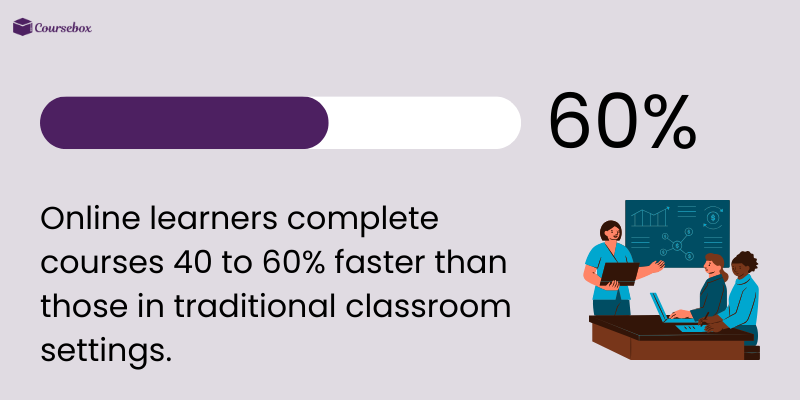
In fact, research shows that online learners complete courses 40 to 60 percent faster than those in traditional classroom settings. That’s one of the biggest reasons why everyone is now using e-learning in some form.
How Fast Is the Online Learning Market Growing (2026)
Here are the online learning statistics related to the growth of this market:
1. The Online Learning Industry Is Set to Reach $400 Billion by 2026 (Market.us)
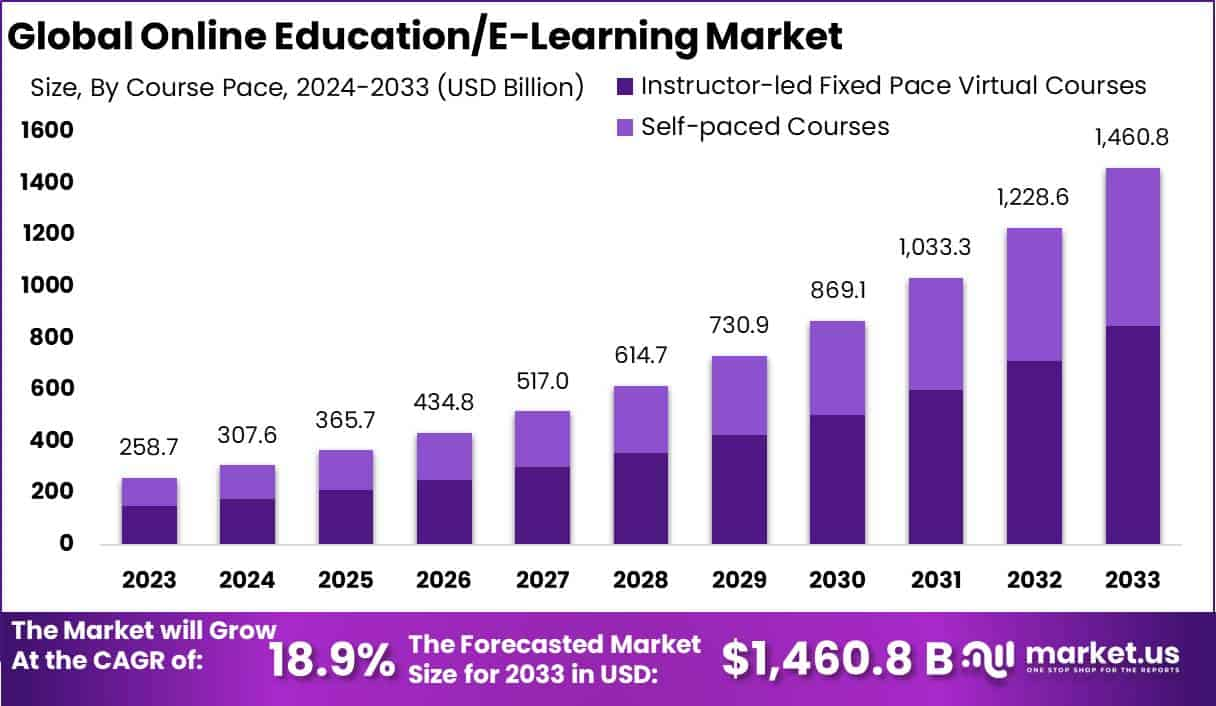
The online learning industry is expected to reach over $400 billion by 2026, which shows how deeply digital education is becoming part of everyday life. This means more people are now preferring digital courses and virtual classes.
2. eLearning Has Grown Over 900% Since 2000
Over the last two and a half decades, e-learning has grown by more than 900 percent. This makes it one of the fastest-growing education formats in history. It comes from better internet access, better platforms, and changing learning habits.
People now expect education to be available instantly. That shift is why digital learning keeps expanding year after year.
3. The US Online Learning Industry Is Expected to Reach $687 Billion by 2030
In the United States alone, online education is expected to generate approximately $687 billion by 2030. This includes universities, corporate training, and private course platforms. Such high spending shows how much people value digital learning.
4. More Than 87 Million Americans Will Use Online Learning
Predictions show that by 2029, almost 87.6 million Americans will be accustomed to using online learning. That is nearly one out of every four people in the country. This includes college students, employees, and people learning new skills on their own.
5. Coursera Has Over 175 Million Users Worldwide (ICEF)
Coursera has become the largest online learning platform in the world, with over 175 million users. This highlights the growing demand for online courses. That’s why it currently has 16,000+ courses for the learners.
6. The COVID-19 Pandemic Created Permanent Digital Habits
During the pandemic, most students were forced to learn online. What is interesting is how many stayed afterward. Millions discovered they learned better with flexibility. And interestingly, that behavior never went away. It pushed online education into long-term growth instead of a temporary solution.
7. Over 80% of Businesses Use Online Training (Devlin Peck)
According to surveys, more than 80% of companies now use online learning to train their employees. It has become quite common because businesses need to find a faster and cheaper way to teach new skills, and digital training allows that.
What Companies Are Doing With Online Training
Now, let’s look at the online learning statistics related to companies using it to train their employees and what outcomes they’re getting.
1. 96% of Large and Mid-Sized Firms Rely on LMS
For corporate training, 96% of large and mid-sized firms rely on LMS platforms. They find them essential for managing, delivering, and tracking training programs. This confirms that online systems are an important infrastructure for businesses.
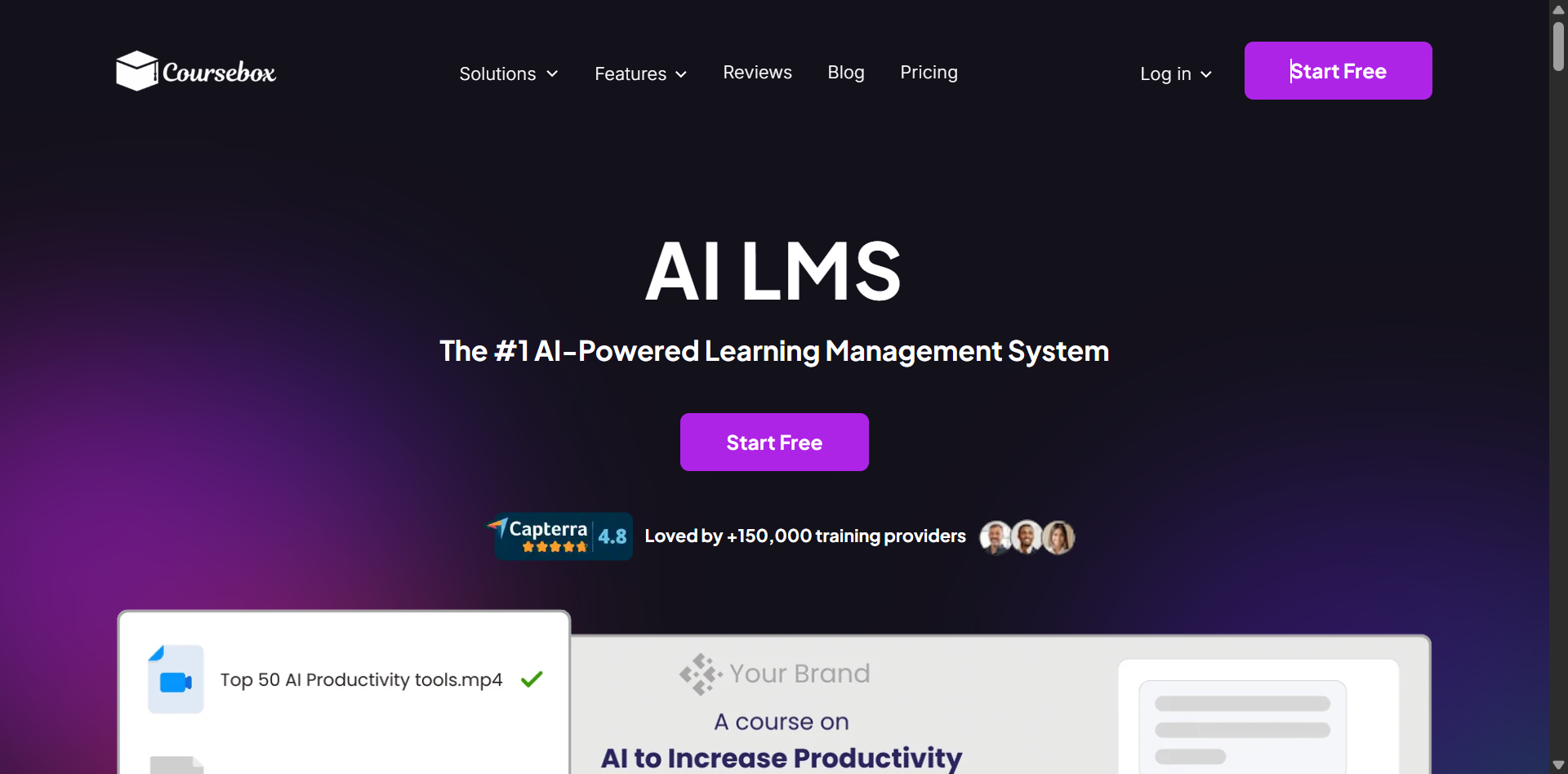
Interestingly, one such platform that has been helping businesses is the AI LMS by Coursebox. It allows you to create courses and quizzes within minutes, auto-grade assessments, offer AI chatbot support, and even has built-in analytics.
2. Digital Training Improves Revenue For 42% of Companies
42% of companies that use online learning to train their employees see a significant increase in their overall revenue. This indicates that online training is linked to the bottom-line performance. That means better-trained employees tend to work more effectively and contribute greater value.
3. eLearning Reduces Training Time by 40% to 60%
According to the latest online learning statistics, e-learning has been shown to reduce training time by 40 to 60 percent. So, if you want your employees to learn new skills at a faster pace, it’s better to use online courses rather than an in-house meeting.
4. Self-Paced eLearning Improves Job Performance 15–25%
One of the features of online learning is that it offers self-paced learning. And interestingly, it has been shown to improve job performance by up to 25%. It only comes from better understanding and application of new skills learned through digital coursework.
5. Online Training Delivers 30 Times More ROI For Companies (IBM)
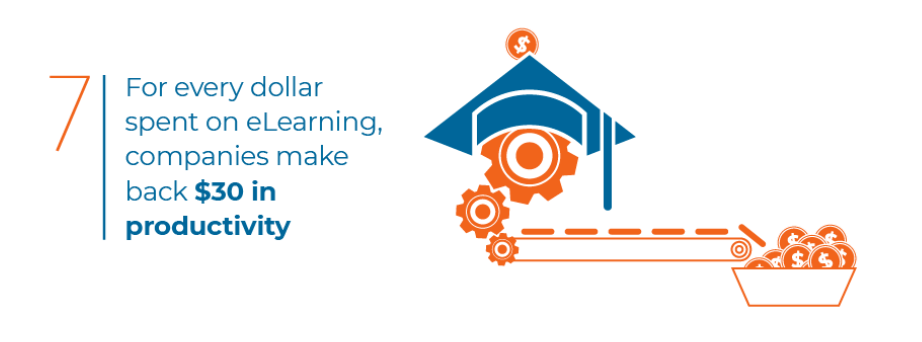
According to an IBM study, every $1 invested in online training returns about $30 in increased employee productivity. That means a company spending $10,000 on digital training could see roughly $300,000 in productivity gains.
6. 91% of Companies Use Online Platforms for Compliance and Safety Training
Yes, you heard that right. Almost 91% of companies use online platforms to provide compliance training to their employees. Online systems make it easy to assign required courses and track who has completed them. Moreover, managers can see reports instantly instead of chasing paperwork.
7. Digital Courses Have Higher Completion Rates Than Classrooms
Traditional classes have a completion rate of only 9 percent, whereas the completion rate for online courses jumps up to 15 percent.
This may not sound huge at first, but in large organizations, it means thousands more people finishing their courses. Online learning fits better into busy schedules, so fewer people drop out and even come back anytime they want to review.
8. Employees Learn Up to Five Times More With eLearning (IBM)
IBM found that employees can learn up to five times more content when training is delivered through eLearning.
One major reason for this is that online learning lets people move at their own pace. There is no pressure to keep up with a group or wait for others. As a result, employees absorb more information and understand it better.
How AI Is Transforming Online Learning
AI has become a major part of our lives now, so it’s no surprise that it has become a part of online learning as well. Here are the stats that you might find interesting in 2026 and beyond.
1. The AI in Education Market is Expected to Reach $29.89 Billion by 2029
As per the Business Research report, the AI in Education market will be worth $29.89 billion by 2029. It means we’ll be seeing much more of AI usage in the online learning industry in the upcoming years. That’s also why institutions and companies are investing heavily in AI tools.
In 2025, it was valued at only $7.52 billion and will grow at a CAGR of over 40% till 2029 and even further.

2. AI Reduces Video Creation Time by 60%
Manually creating courses can be a headache, which is why companies now use AI for it. Surprisingly, it can reap some fruit by decreasing development time by a massive 60% and reducing production costs by 40%.
From here on, the trend for using AI for creating course videos and even by content creators is only going to increase.
However…
3. Only 4.3% of Content Creators Manage to Make $100,000 Per Month (Marketing Brew)
Even though content creation has become one of the most trendy careers, only about 4.3% of them manage to earn over $100,000 annually. The rest of the 96% stay way below this threshold, meaning it takes time and effort to actually make it to the top 4%.
4. AI Adoption in eLearning Grew by About 150% Over Five Years
According to industry reports, in the last five years, the use of AI in online learning has increased by over 150%. But interestingly, it’s only been a few years since AI has become powerful enough, which means in the next 5 years, the growth could be exponentially high.
5. Personalization Improves Learner Outcomes By ~30%
Something that makes online learning more engaging is personalization. When learners feel connected to the topic and feel like it’s made for them, the outcomes increase by as much as 30 percent.
If you want to increase employee retention and completion rates, personalization can help make that happen.
The Biggest Challenges Online Learning Still Faces
Until now, we’ve only covered the positives around online learning statistics. However, it’s important to discuss the challenges as well. These include:
1. 67% of Learners Face Digital Fatigue or Loss of Interest
In one study of online learners, around 67% reported fatigue or a loss of interest when participating in digital classes. It makes one thing clear that long hours on screens can reduce motivation and engagement, which is where microlearning steals the show.
By dividing long courses into small parts, you can increase learner engagement as well as decrease digital fatigue.
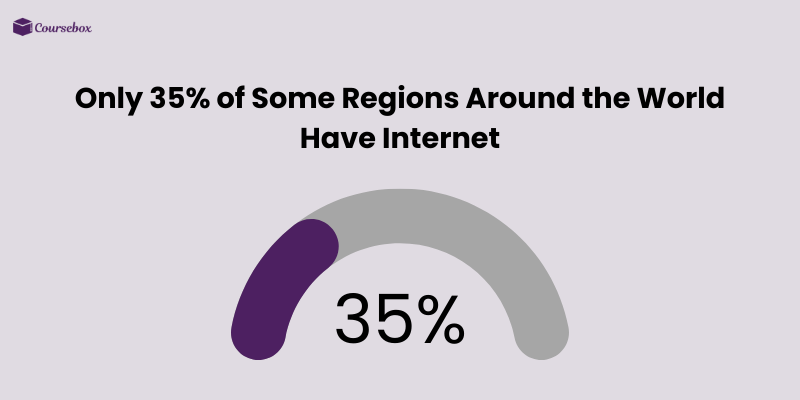
2. Only 35% of Some Regions Around the World Have Internet Access
Digital divide research shows that in some regions, only a small minority (35%) of the population is regularly connected to the internet.
This means, even if someone wants to learn something online, they won’t have access to such resources.
3. Almost 40% of Online Learners Feel Concerned About Online Learning
Studies reveal that nearly 40% of people who use online courses feel concerned about the over-dependence on technology. It’s especially true because of the technical glitches that keep causing problems in live classes, for deadlines, and even online exams.
Online learners who do not feel connected or supported are more likely to drop out or disengage.
Build Online Training with AI That Delivers
By now, you have read online learning statistics that show how digital learning and AI are changing the way people learn.
If you’re also looking to improve your training programs in 2026, Coursebox makes it simple. It is the #1 AI course creator that lets you turn your PDFs, documents, slides, videos, and websites into full interactive training courses in minutes.
You receive everything within a fully white-label LMS featuring your own logo, colors, and branding. Moreover, you can connect with global teams that speak over 100 languages and create engaging lessons using flashcards, discussions, and interactive content.

Sign up for Coursebox for free and see how easy AI-powered learning can be!
FAQs
1. How effective is online learning compared to traditional in-person training?
Online learning is often more effective than traditional classroom training. People learn at their own pace, can repeat lessons, and stay focused without distractions. Studies also show that employees retain more information and learn faster with eLearning.
2. Are online course completion rates improving or still low in 2026?
Completion rates are better than before, but they are still a challenge. Traditional self-paced courses often see low completion rates, while programs that include support, reminders, and interactive content perform much better.
3. How much money do organizations save by switching to online training?
Organizations can save 40 to 60 percent of their training costs by moving online. Digital training removes travel, venue, and instructor expenses. Courses can also be reused and updated without extra cost, which makes online learning much more affordable.
4. Which tools and platforms should L&D teams use for online learning in 2026?
L&D teams should use modern LMS platforms with AI features, video learning tools, and analytics dashboards. These systems help create courses faster, personalize learning, and track results. For instance, Coursebox makes it easier to build, manage, and improve online training in one place.
Alex Hey
Alex Hey is a technical marketer with 10 years of hands-on growth and digital marketing experience. He cofounded Coursebox together with Travis Clapp who he met online when looking for a cofounder to build a globally impactful software product. He works in the Perth, Western Australia office as the COO. He built the world's first automated funnel for patient recruitment before building Coursebox. After launching Coursebox in mid 2023, he drove +400k organic sign ups for Coursebox. Alex leads the marketing and digital growth of Coursebox and works with the product development team bringing a passion for data-driven product decision and exceptional user experience. Alex is determined to build the world's easiest way to build the perfect course.

