

Instructional Analysis: The Steps and a Worked Example
Instructional analysis step by step: clarify and classify the goal, map its steps, find subordinate and entry skills, with a worked example and worksheet.

Instructional analysis is the design step that breaks one instructional goal into the steps a competent person follows, the subordinate skills each step depends on, and the entry skills learners already bring, so teaching focuses on the skills learners need, while keeping useful context and permitted job aids.
- Goal analysis means two different things: Mager's turns a fuzzy goal into performances, and Dick and Carey's classifies a clear goal and maps its steps.
- The four subordinate skills techniques are hierarchical, procedural, cluster and combination, and the kind of step decides which one fits.
- Verify candidate entry skills with representative attempts and relevant records. Bridge missing prerequisites before teaching dependent skills.
- Surgical studies found experts omitted many decisions when describing procedures. Cross-check relevant experts and observations; those studies do not set a universal number of interviewees.
Five questions, about a minute. Answer for one course you are planning or revising, thinking about how it was put together. This check does not verify learner competence; review every weak answer separately. This is an unvalidated planning aid, not a measure of training quality or readiness.

Set up your branded LMS and deliver training with AI
Picture a grain storage and handling company in regional Australia (a hypothetical example) hiring 12 seasonal samplers for one harvest at one receival site. The site manager's brief for their training says samplers should be "quality-minded and fair to growers". The first draft of the course explains how to read a decimal display, which every sampler can already do, and says nothing about what to do when a grower disputes a grade with 14 trucks queued behind them.
Instructional analysis is the design step that catches both problems before anyone writes a lesson. I'm an instructional designer at Coursebox, where we make instructional design software that builds courses from a brief, so I'll mention our product where I tested it. Here I explain what instructional analysis is and where it comes from, then take the samplers' course through every step, from the fuzzy brief to the line between what the course teaches and what learners already know, with two real studies from surgical training and a free worksheet.
What is instructional analysis?
Instructional analysis is the design step that breaks one instructional goal into the steps a competent person follows, the subordinate skills each step depends on, and the entry skills learners already bring, so teaching focuses on the skills learners need, while keeping useful context and permitted job aids.
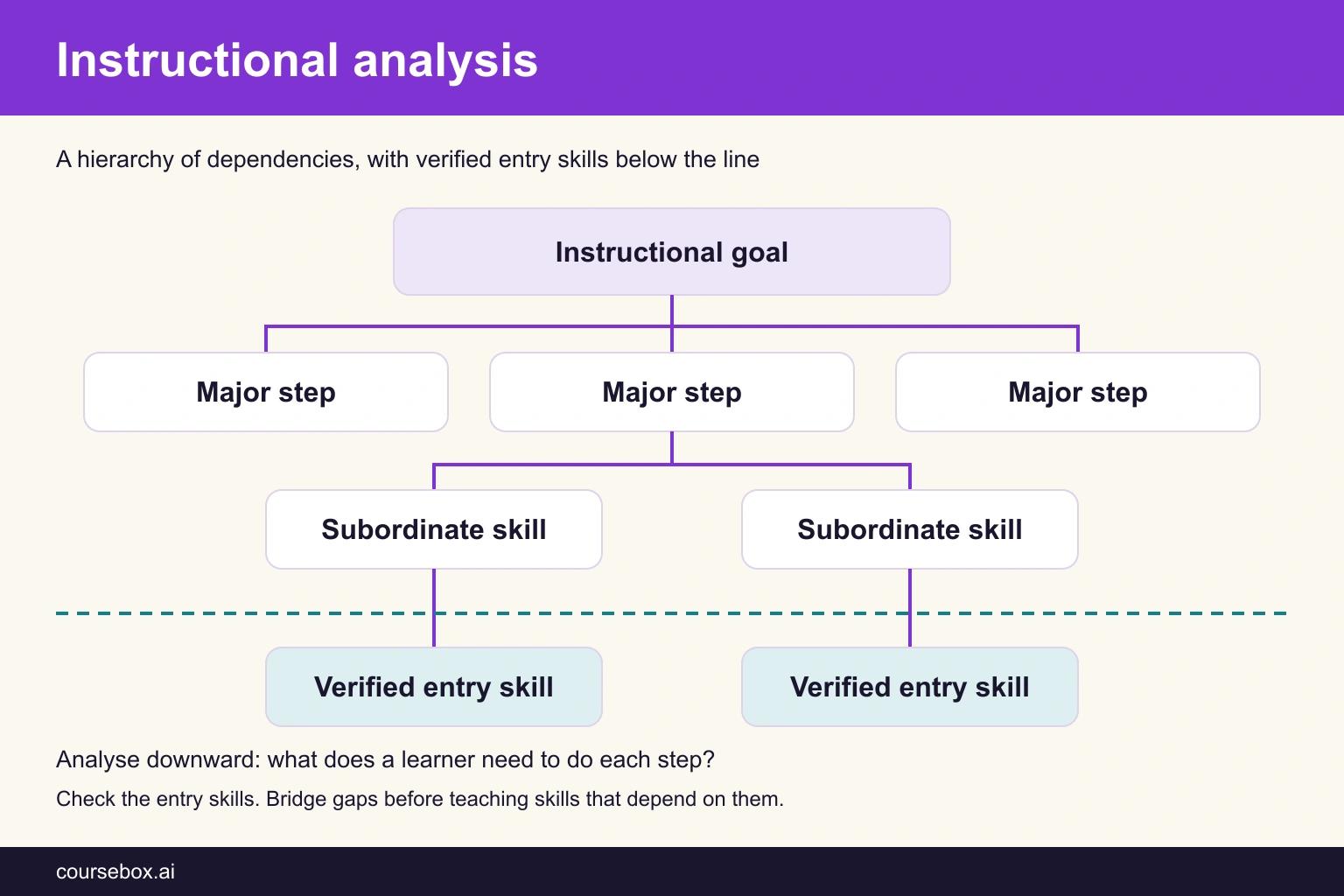
The term is most closely tied to Walter Dick, Lou Carey and James O. Carey's The Systematic Design of Instruction, now in its 9th edition (Pearson, 2021). It is the second of the ten steps in the Dick and Carey model, and it starts once a front-end analysis has decided that training is the right answer to a performance problem. That edition splits it across two chapters, "Conducting a Goal Analysis" and "Identifying Subordinate and Entry Skills", with learners and contexts in the chapter after.
The step has two halves:
- Goal analysis. You classify the goal by the kind of learning it needs, then identify the major steps a competent person follows to reach it and put them in order.
- Subordinate skills analysis. For each step, you work out what a learner must already be able to do in order to learn it, and keep going down until you reach skills the learners already have. Those are the entry skills, and Dick, Carey and Carey draw them under a broken line on the analysis.
The method rests on Robert Gagné's work. From the early 1960s he analysed school tasks into learning hierarchies, sets of skills where each one is needed to learn the next one up. In 1984 he summarised five varieties of learning outcomes: intellectual skills, verbal information, cognitive strategies, motor skills and attitudes. Results, he wrote, "can be generalized within these categories but not between them". That is why instructional analysis classifies the goal first: a fact, a rule and a physical procedure are learned differently, so they are analysed differently. For goals, Dick, Carey and Carey usually work with four of the five (verbal information, intellectual skills, psychomotor skills and attitudes) and treat cognitive strategies separately. Gagné's instructional design model covers the rest of his work.
| Stage | What you do | The question it asks | At a grain receival site |
|---|---|---|---|
| Clarify the goal | Turn a fuzzy aim into performances you could observe | What would people do that shows the goal is met? | Fair to growers becomes using the same limits for every load |
| Classify the goal | Name the kind of learning at its core | Is it mainly facts, rules and decisions, a physical skill or an attitude? | Mainly an intellectual skill: applying grade limits to test results |
| Map the goal steps | List the steps a competent person follows, decisions included | What does someone do, in order, to reach the goal? | Seven steps from the docket check to recording the grade, with one decision |
| Analyse subordinate skills | Break each step into what must be learned first | What must learners be able to do before they can learn this step? | Telling a maximum limit from a minimum limit before comparing results |
| Draw the entry-skills line | Mark the skills learners already have | Where do I stop, and what does the course leave out? | Reading a display to one decimal place stays out of the course |
Instructional analysis is often called a kind of task analysis, and the two overlap. A task analysis describes the job: what a competent person does, in what order and with what tools. An instructional analysis takes one goal from that job and works out what has to be learned to do it, and what learners already bring. Hoffman and Medsker set out the case for treating them as separate but dependent steps in 1983, in a paper titled Instructional analysis: The missing link between task analysis and objectives.
Instructional analysis vs needs, learner and task analysis
Instructional design uses the word analysis for several jobs, and instructional analysis is one of them. Each answers a different question, and they run in a rough order.
| Analysis | The question it answers | When it happens | What it produces |
|---|---|---|---|
| Needs analysis | Is there a performance gap, and will training close it? | First, before any course is planned | A decision to train, and the instructional goal |
| Instructional analysis | What must be learned to reach the goal, and what do learners already bring? | Once the goal is set | Goal steps, subordinate skills and entry skills |
| Learner and context analysis | Who are the learners, and where will they learn and use the skill? | Alongside or straight after instructional analysis | A description of the learners, the learning setting and the work setting |
| Task analysis | What does the job involve, step by step? | Before or during instructional analysis, often as its input | A description of how competent people do the work |
For a needs analysis, a training needs analysis questionnaire is a practical place to start. In ADDIE, these analyses are usually grouped in the analysis phase, while Dick and Carey give learners and contexts a step of their own, straight after instructional analysis.
If the samplers grade loads wrongly because the grain analyser is out of calibration, a perfect analysis of the grading goal produces a good course that fixes nothing. Settle whether training is the answer in the needs analysis, before you analyse the goal.
Which sources to read on instructional analysis
Instructional analysis has one main source and two useful companions.
- Dick, Carey and Carey, The Systematic Design of Instruction (9th edition, 2021). Start here for the method. Chapters 3 and 4 hold the goal analysis, the four subordinate skills techniques and the entry skills. The book first appeared in 1978, and older editions teach the same method, with different page numbers. I could not read the book itself in an open edition, so I describe its method from the publisher's contents and university course summaries, without quoting it.
- Robert Mager, Goal Analysis (3rd edition, 1997; first published 1972). Read it if your goals arrive as qualities. It is the procedure for turning "be safety-conscious" or "be fair" into performances you can analyse.
- Jonassen, Tessmer and Hannum, Task Analysis Methods for Instructional Design (1999). Read it when a step is mostly judgement. It covers job, learning, cognitive, activity-based and content analysis methods, including learning hierarchy analysis and several kinds of cognitive task analysis.
The steps of instructional analysis, worked through one course
To show each step, I'll follow one course from here on. A grain storage and handling company in regional Australia runs harvest receival sites where growers' trucks deliver wheat. At one site it hires 12 seasonal samplers for the harvest: three are returning from last year, four are local farm workers or university students home for summer, three are travellers on working holiday visas and two are retirees with farm backgrounds. All 12 have done the site safety induction and the receival system's login module. None has graded a load on their own this season.
The job is to grade each load before the truck unloads. The site manager's first brief said only that samplers should be "quality-minded and fair to growers". The intended outcome is narrower: by the end of their first week, each new sampler grades loads from test results with no supervisor corrections. Certification, authority to reject a load on their own judgement and advice on any real grain standard are not outcomes of this course.
The site grades against its own receival standard. The figures are illustrative for this example, not any company's or industry body's standard.
| Result | Grade 1 | Grade 2 | Feed |
|---|---|---|---|
| Moisture, maximum | 12.5% | 12.5% | 12.5% |
| Protein, minimum | 11.5% | 10.0% | No minimum |
| Test weight, minimum | 76 kg/hL | 72 kg/hL | 62 kg/hL |
| Sprouted grains, maximum | 0.5% | 2% | 10% |
Any one of these hold triggers means the sampler holds the load and calls the supervisor: moisture over 12.5%, any live insect, any snail, any glass, metal or stone, or a commodity that does not match the docket.
A hold overrides the normal grading sequence as soon as a trigger is found, including a docket mismatch at the first step. Stop the affected work and follow the site procedure; a practice retest does not authorise the learner to release a held load. Sampling instructions in this example are not an operating procedure: the site must supply its approved method and supervised equipment training.
This example suits instructional analysis because one goal mixes all four kinds of learning. Grading is an intellectual skill, probe sampling is a physical procedure, the grade codes are information to look up, and grading the same way under pressure is an attitude. It has a real decision for the flowchart, and a mixed intake makes the entry-skills line a real choice.
1. Clarify the goal if it is fuzzy
A goal like "quality-minded and fair to growers" cannot be analysed yet, because nobody can say what a sampler would do to meet it. Robert Mager's goal analysis is the procedure for this. ERIC's abstract of the 1972 edition describes it as a way to pin down what a goal means, "whether these goals deal with attitudes, appreciations, or understandings". The same abstract notes that statements about attitudes "are always inferred from circumstantial evidence". Dick, Carey and Carey point designers to Mager's work when a goal is fuzzy, so this step comes before their own goal analysis.
In a 1986 review of the book, Jefferson summarises Mager's procedure in five steps: write the goal down, list the performances that would show it, sort out duplicates and abstractions, write a full sentence for each performance, and test the set. The test, as the review quotes Mager, is "If someone achieved or demonstrated each of these performances, would I be willing to say he or she has achieved the goal?"
- What you do: list what someone would do that shows the goal is met, cross out anything still abstract, and run Mager's test on the list.
- In the sampler course: "quality-minded and fair to growers" becomes three performances. The sampler grades every load from its test results, not from what the grower says. The sampler uses the same limits for every grower. The sampler holds the load and calls the supervisor rather than negotiating. The site manager agrees that a sampler who does all three has met the goal, and "fair to growers" becomes the attitude when the goal is classified.
- Watch for: performances that are still qualities, such as "shows integrity". If you cannot picture someone doing it, it is not a performance yet.
With the performances agreed, the goal can be written Dick and Carey style, with the setting and tools in it. Given a truckload of wheat at the sampling stand, the sampler takes a probe sample to the site pattern, tests and inspects it with the site equipment, assigns the grade the site standard gives for those results or holds the load for the supervisor, and records it in the receival system before the truck is sent to unload.
2. Classify the goal by the kind of learning
Classifying the goal tells you which analysis technique will fit each part of it. Dick, Carey and Carey use Gagné's domains for this, and most workplace goals mix more than one.
| Domain | What learners do | In the sampler course |
|---|---|---|
| Verbal information | Recall or look up facts, names and labels | Grade codes, defect names, the hold triggers and who to call |
| Intellectual skills | Use concepts and rules to sort things and solve problems | Applying the grade limits to a set of results and finding the grade |
| Psychomotor skills | Carry out physical actions with tools or equipment | Taking a probe sample from a trailer to the site pattern |
| Attitudes | Choose to act a certain way when it would be easier not to | Applying the same limits to every grower, even with trucks queued |
- What you do: name the domain at the core of the goal, then note the others it draws on.
- In the sampler course: the core is an intellectual skill: applying several limits to several results and finding the highest grade every result meets. Around it sit a psychomotor procedure (probe sampling), verbal information (codes, defects and triggers) and an attitude (grading the same way under pressure).
- Watch for: classifying by the verb in the goal. "Grade" could be a lookup or a judgement; what decides the domain is the thinking the step needs.
3. Map the goal steps as a flowchart
Next, list the steps a competent sampler follows, in order, and draw any decision as a decision with labelled branches. The samplers' goal has seven steps:
- Check the delivery docket against the booking: grower, commodity declared and truck configuration.
- Take the probe sample using the site pattern: 3 probes for a single trailer, 5 for a B-double.
- Mix and divide the sample.
- Measure moisture and protein with the grain analyser, and test weight with the test weight scale.
- Inspect a sub-sample for defects and contaminants against the site's defect chart.
- Decide: if the results meet a grade, assign the highest grade every result meets; if they do not, or a hold trigger is found, hold the load and call the supervisor.
- Record the results and the grade or hold status. Give an unload bay only for a cleared load; a held load stays under the site hold procedure until the authorised supervisor clears it.
- What you do: write each step as something you could watch a person do, then mark the kind of learning each step needs.
- In the sampler course: steps 2 to 4 are mostly psychomotor, steps 1, 5 and 6 are intellectual skills, step 7 is a short routine in the receival system, and step 6 is the main grading decision. Hold triggers can be found earlier, so show a hold branch wherever one can arise.
- Watch for: steps that are topics, such as "grain quality", and decisions hidden inside a step. If experienced staff sometimes do a step differently, there is a decision in it.
4. Analyse the subordinate skills for each step
For each step, ask what a learner must already be able to do in order to learn it. Gagné's 1970 report on learning hierarchies put the question this way (p. 48): "What would the student have to know how to do already in order to learn this task with a minimum of instruction?" Ask it of each step, then ask it again of each answer.
Dick, Carey and Carey describe four techniques for this: hierarchical, procedural, cluster and combination. The kind of step decides which one fits, not the course as a whole. As a University of Central Florida course summarises the 8th edition, they recommend hierarchical analysis for an intellectual skill, a psychomotor skill or an attitude, and cluster analysis for verbal information or an attitude, and they describe combining techniques for complex goals. The table is my summary of when each one usually fits, not a fixed rule.
| Technique | What it breaks down | Usually fits | In the sampler course |
|---|---|---|---|
| Hierarchical | A skill into the skills needed to learn it, level by level | Intellectual skills, and the thinking inside physical steps and attitudes | Step 6, assigning the grade or holding the load |
| Procedural | A step into the smaller actions done in sequence | Any step that is itself a series of actions | Step 2, taking the probe sample |
| Cluster | Information into groups learners can recall or look up | Verbal information, and the information an attitude needs | Grade codes, defect names, hold triggers and who to call |
| Combination | A goal that mixes kinds of learning, using the techniques together | Complex goals, such as an attitude that rests on a skill | Grading the same way when a grower disputes the grade |
Here is how each technique plays out on the samplers' goal:
- Hierarchical, for step 6: at the top sits assigning the grade or holding the load, which is problem solving with several rules. Under it sit comparing each result with each grade's limits (a rule), finding the limiting result that sets the grade (a defined concept) and applying the hold triggers (a rule). Comparing rests on telling a maximum limit from a minimum limit. Step 5 feeds in too: classifying defects as sprouted, weather-stained, insect-damaged or foreign seed, which rests on telling a sprouted kernel from a sound one by sight.
- Procedural, for step 2: position the probe over the trailer, take each probe in the site pattern, empty each one into the sample bucket and return the probe to its rest. Beside the procedure sits one hierarchical prerequisite: knowing which pattern goes with which truck.
- Cluster, for the verbal information: the grade codes, defect names, hold triggers and the supervisor's contact are grouped into one reference card, because samplers need to look them up, not memorise a lecture.
- Combination, for the attitude: here the attitude is a complex goal, so hierarchical and cluster analysis are used together. The behaviour is what the sampler does when a grower disputes a grade: offer the one re-test the site allows, record it and call the supervisor if the grade is still disputed, without changing the grade. It is analysed with the intellectual skill it depends on (step 6, so the sampler knows the grade is right) and the information it needs (the dispute procedure and why every grower gets the same limits).
Put together, the hierarchy for step 6 looks like this, from the top skill down to the skills the course will not teach.
| Level | Skill | Kind of skill | In the course? |
|---|---|---|---|
| Top | Assign the grade, or hold the load and call the supervisor | Problem solving with rules | Taught |
| 2 | Compare each result with each grade's limits | Rule | Taught |
| 2 | Find the limiting result, the one that sets the grade | Defined concept | Taught |
| 2 | Apply the hold triggers | Rule | Taught |
| 2 | Classify defects in the sub-sample (from step 5) | Concrete concepts | Taught |
| 3 | Tell a maximum limit from a minimum limit | Defined concept | Taught |
| 3 | Tell a sprouted kernel from a sound one by sight | Discrimination | Taught |
| Entry | Compare two decimal numbers, such as 12.9 and 12.5 | Entry skill | Checked, not taught |
| Entry | Read a digital display to one decimal place | Entry skill | Checked, not taught |
The hierarchy also tells you what practice to write. Each practice load targets one part of it:
For these numerical items, assume the docket and commodity match, sampling was correct and no contaminant or other hold trigger was found. They assess grading from supplied results. Check the physical sampling procedure, recording and escalation in a separate observed whole-task attempt.
| Practice | Results | Correct answer | What it practises |
|---|---|---|---|
| Load A | Moisture 11.8%, protein 11.9%, test weight 77.0, sprouted 0.2% | Grade 1 | Comparing every result with the Grade 1 limits |
| Load B | Moisture 12.1%, protein 11.8%, test weight 74.5, sprouted 0.3% | Grade 2, because test weight sets the grade | Finding the limiting result |
| Load C | Moisture 12.9% | Hold the load and call the supervisor | Applying a hold trigger |
| Load D | Moisture 11.6%, protein 10.4%, test weight 73.0, sprouted 2.6% | Feed, because sprouted is over the Grade 2 maximum of 2% | Combining the grading rules from supplied results |
| Dispute | The grower of Load B says it should be Grade 1 because a neighbour's load was, with 14 trucks queued | Offer the one re-test, record it, call the supervisor if still disputed, keep the grade | The attitude, under pressure |
- Watch for: stopping one level too early. A learner who confuses maximum and minimum limits may misgrade a load. Check the comparison skill with representative results before relying on it.
5. Draw the entry-skills line
Keep asking Gagné's question until the answer is something every learner can already do, then stop. Those skills are the entry skills, and they go under the line. In the current edition, entry skills sit in the same chapter as subordinate skills rather than in a separate step: drawing the line is the last move of the subordinate skills analysis.
- What you do: for each skill at the bottom of the hierarchy, check whether the learners already have it. Use representative attempts, relevant records or supervised observations. If a skill is missing, arrange bridging instruction or move it into the course before teaching a dependent skill.
- In the sampler course, four candidate entry skills are reading a one-decimal display, comparing decimals, following the sampling-stand safety rules and using the receival tablet system. Check each rather than relying on the "Before you start" confidence statements. Keep the defect chart and current season limits in the teaching plan, including for returning samplers, because both can change.
- Watch for: drawing the line from job titles. "Returning sampler" tells you someone graded loads last year, not that they know this year's limits.
In an October 2026 support search for "prerequisite", about 14 of the 50 most recent matches concerned course or page locks; the rest were unrelated word matches. Across eight searches I found no explicit request about identifying entry skills. These search-selected threads describe the results I inspected, not the frequency of needs across the whole inbox.
A lock decides when a learner may move on, such as finishing module 1 before module 2 opens. An entry skill is something learners can already do when they arrive, so the course checks it instead of teaching it. A course can have strict locks and still teach skills every learner already has.
Clarify a fuzzy goal, classify it, map the goal steps, choose a technique and build the subordinate skills for each step, draw the entry-skills line and run the expert interview, with a quality check. Filled in for the grain sampler course, with blank pages for your own. Editable Word file, no email required.
Once the line is drawn, the analysis tells you what the course must teach and what it can leave out. For the samplers, that is seven taught skills under step 6, a probe procedure, one reference card and one dispute scenario, and nothing about decimals.
Put skills below the entry line only after checking them. Ask learners to compare representative decimals and interpret the actual display, and verify induction and equipment prerequisites from the site record and a supervised demonstration where needed. An "I can" response is confidence, not evidence. If an assumed entry skill is missing, provide a bridge or move it into the teaching plan before relying on it.
Give each skill in the hierarchy at least one practice item that cannot be passed without it, then add one whole-task item at the end. If a skill has no practice item, either it is not needed or the course is not checking it.
For the numerical practice items below, assume the docket and commodity match, the sample was taken correctly and no contaminant or other hold trigger was found. Those items check grading from supplied results; they do not assess the whole physical sampling task. A whole-task check must also observe the procedure, recording and appropriate escalation.
How the parts relate: the hierarchy is a map, not a timetable
A hierarchy says which skills a learner needs before they can learn another one. Gagné tested that claim in schools, and the evidence supports the prerequisites more strongly than the order.
In Gagné's 1970 report, the three control students who solved the task "had no missing prerequisite skills when first tested". In another study in the same report, 20 sixth-grade girls compared the exports of two countries, a task analysed into 21 subordinate skills. Success on the final task was "100% for the experimental subjects, 0% for the controls". Yet evidence for the predicted order of skills was "slight" in one class of skills and "none" in two others. A 1973 review of learning hierarchy research by Richard White examined why results in the field had been inconclusive. These were school studies with 10 to 30 children each, not workplace evidence.
So map the prerequisites carefully, because a missing prerequisite can make the next skill harder to learn, and treat the order you teach them in as a hypothesis. Test it in the one-to-one tryout, the first round of formative evaluation in Dick and Carey's model.
The analysis order is also not the order of the course. You analyse from the goal downwards, but a course can still open with the whole job at a glance before it teaches the parts. The sampler course starts with "Before you start", then a short overview of all seven steps, then the reference card, the probe procedure, defects and the limits, and only then the grading decision, the dispute and a full load.
Running the expert interview: why one expert is not enough
Most subordinate skills come from asking experienced people how they do the job. The problem is that experts no longer notice much of what they do. Sullivan and colleagues put it plainly in their 2014 study in Academic Medicine: "Because of the automated nature of knowledge, experts tend to omit information when describing a task." They videotaped three expert surgeons teaching cricothyrotomy, an emergency airway procedure, and compared what they taught with a full task list built through cognitive task analysis with three more surgeons.
The experts in that study described how to do an action step only 13% of the time, and prompting during the interviews raised the share of steps they described from 44% to 66%. Other studies by the same research group found similar gaps. When a 2012 study of two surgical procedures asked experts to describe two procedures, they left out an average of 34% of the decisions for central venous catheter placement and 77% for cricothyrotomy, and "Three to 4 experts were required to capture the optimal amount of information." In Clark and colleagues' 2012 study, trauma surgeons describing an emergency procedure from unaided recall "omitted nearly 70% of necessary decision steps".
You will see "experts leave out 70% of what they know" quoted as if it applied to every job. The figures come from surgery and vary by procedure and by type of step. In the one study that compared types, decisions were left out most often. That is enough to change how you run an interview, but not a number to apply to grain sampling or anything else.
The same research group also tested a course built from a cognitive task analysis against the way interns usually learned.
Case study: Cognitive task analysis for new surgical interns in Los Angeles
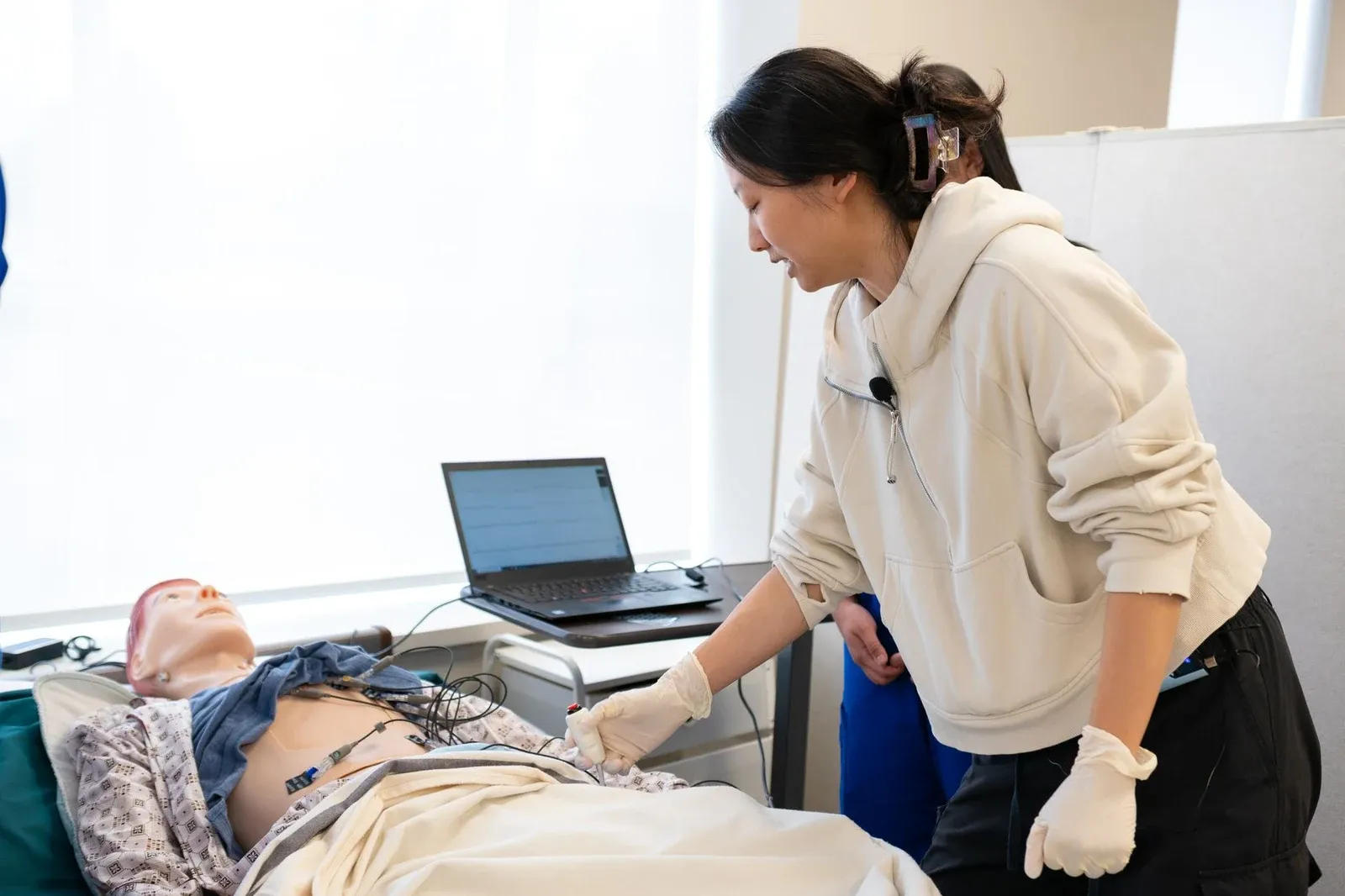
This was a small randomised trial in surgical training at the University of Southern California's Keck School of Medicine. Surgical skills there were taught mostly by the "see one, do one, teach one" method, and new interns had to place central venous catheters in critically ill patients within weeks of arriving.
- What they did: 26 new interns were randomised on arrival. Twelve took a 3-hour skills laboratory course on catheter placement, "taught by the principles of cognitive task analysis" and mostly hands-on with inanimate models, and 14 learned the usual way. Richard Clark, a cognitive task analysis researcher, was one of the authors.
- Evidence and result: Within two and a half months all the interns placed catheters in critically ill patients. In Velmahos and colleagues' 2004 paper, the course group scored higher on a 14-item checklist (12.6 against 7.5, P < 0.001), needed fewer attempts to find the vein (3.3 against 6.4, P = 0.046) and scored higher on a repeat knowledge test (11 against 8.64, P = 0.03). They took less time (15.4 against 20.6 minutes), but the difference was not significant (P = 0.149). A later meta-analysis reports no complications in the course group against two in the usual group, and notes the study may have been too small to detect a difference.
- Limitation: One hospital and 26 interns, and I read the results at abstract level. The comparison was a course against no course, so the content built from the analysis and the extra practice time cannot be separated.
- Lesson: The course content came from what experts actually do and decide during the procedure, not from a manual alone. When a step carries decisions, build its subordinate skills from watching and questioning several experts.
For an instructional analysis, the practical change is in how you question experts. Here is the interview I would run for the subordinate skills of any step with judgement in it:
- Begin with separate interviews across relevant experienced staff, then cross-check their accounts against observation and the current procedure. Three or four captured more information in one surgical study; that is not a universal staffing requirement. Separate interviews show where their accounts differ, and those differences are what you need to check.
- Walk each expert through the goal steps one at a time. For each step, ask what they look at, what they decide, what tells them something is wrong and what new people get wrong.
- Ask about a recent real case, not the job in general. "Tell me about the last load you held" brings out cues that "how do you grade a load?" does not.
- Compare the answers with your step list. Add every decision, cue and common error that one expert named and the list lacks.
- Check the additions with the experts. A decision only one person mentioned may be a habit of theirs rather than part of the job.
In the sampler course, I would interview the site supervisor and two returning samplers separately on steps 5 and 6. The most useful questions there are what they do when a result sits exactly on a limit, and what makes them hold a load that has no listed trigger.
Experts describe what they do more readily than what they decide, and in the one surgical study that compared step types, decisions were left out most often. If your step list has no "if" or "unless" in it, go back and ask each expert what changes their next move.
Instructional analysis vs cognitive task analysis
Cognitive task analysis (CTA) can complement a skills hierarchy when a task depends on expert judgement. It is a family of interview and observation methods for capturing the knowledge, cues and decisions experts use but no longer notice. Jonassen, Tessmer and Hannum's handbook gives cognitive task analysis a part of its own, with methods such as GOMS, PARI and DNA, alongside learning hierarchy and procedural analysis. The 4C/ID model builds its own analysis of cognitive strategies and mental models into its design steps.
The two are not rivals. A hierarchy asks what must be learned first; CTA asks what experts actually know and decide. For many steps you need both: CTA to find the decisions, and a hierarchy to order what must be learned to make them.
| Method | Best for | Weak spot | Use it when |
|---|---|---|---|
| Hierarchical analysis | Rules, concepts and decisions with a written standard | The predicted order of skills is only partly confirmed by research | A step applies known rules, such as grading against limits |
| Procedural analysis | Steps that are a fixed sequence of actions | Misses the judgement between actions | A step is mostly doing things in order, such as taking a probe sample |
| Cognitive task analysis | Decisions, cues and judgement that experts no longer notice | Needs several experts and time to interview and compare | Experts disagree, or cannot explain how they decide |
| Job task analysis | Listing every task in a role | Says little about what must be learned for each task | You need to choose which tasks to train at all |
For the sampler course, step 6 has a written standard, so a hierarchy does most of the work, and an interview with three people adds the cues the standard does not write down. A job made mostly of judgement with no written standard, such as troubleshooting a fault nobody has seen before, needs a fuller cognitive task analysis.
Case study: A cognitive task analysis tool for knee surgery residents in London
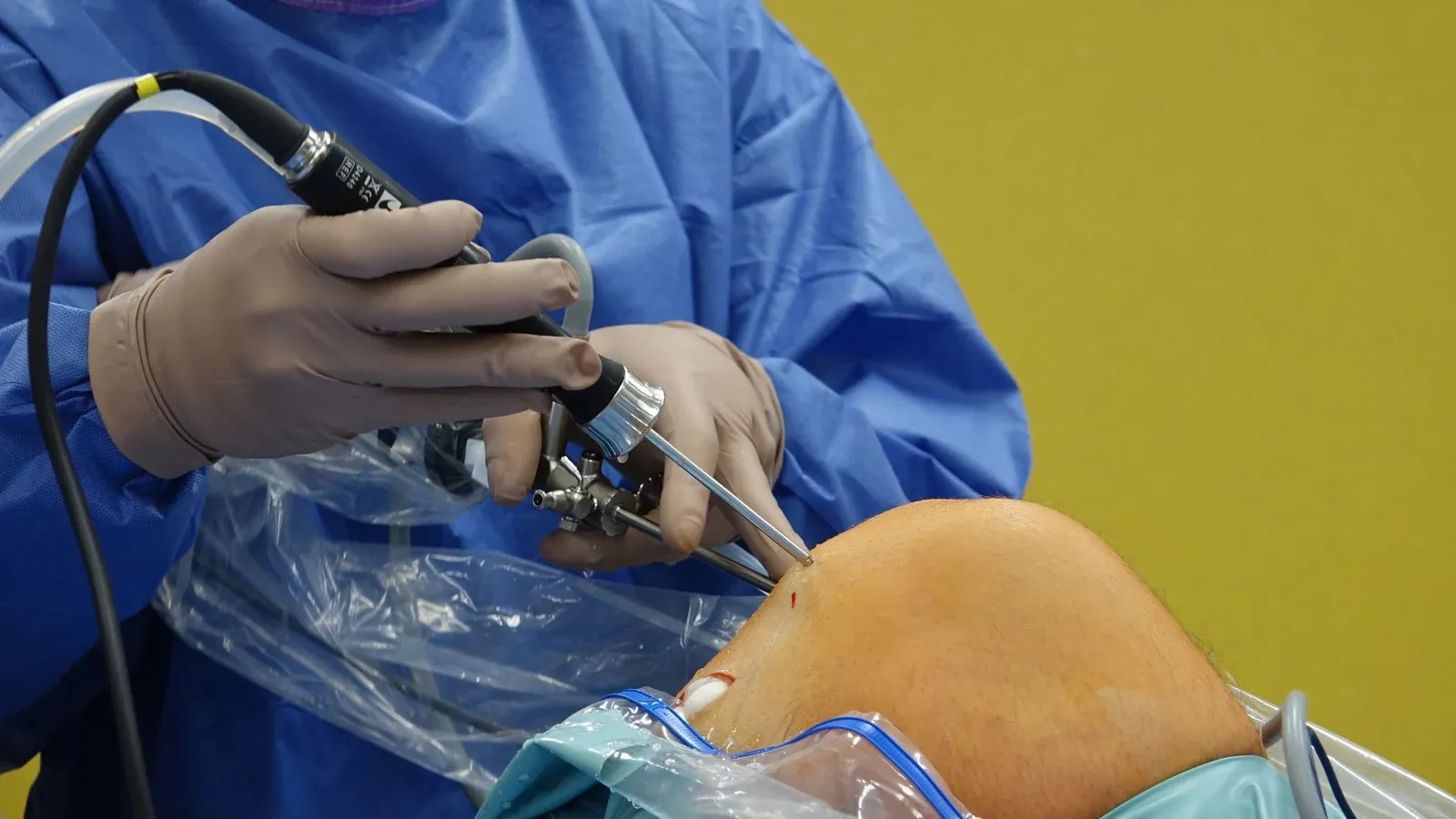
This was a small double-blind randomised trial in surgical training, run by Imperial College London and University College London. All-inside meniscal repair is a common knee procedure, yet the authors note "There are currently no standardized techniques for training residents in this procedure", and working-time limits have cut residents' hands-on time in theatre.
- What they did: Four senior knee surgeons were interviewed separately "to generate a list of technical steps, cognitive decision points, and common errors and solutions", and a modified Delphi process brought them to agreement. The procedure was "divided into 55 steps across 9 phases" and built into a digital tool with video and voice-over.
- Evidence and result: In Karamchandani and colleagues' 2021 trial, 18 junior orthopaedic and surgical residents were randomised: 9 used the tool plus the equipment manual and 9 used the manual alone. Performing the repair on high-fidelity phantom knee models, the tool group scored higher on a validated global rating scale marked by blinded experts (32 against 24, P < .001).
- Limitation: Eighteen residents and phantom knees rather than patients. The authors note "The study also did not assess for transfer validity to the operating room", and they did not measure how long each resident spent with the tool.
- Lesson: The analysis produced steps, the decisions at each step and the errors to avoid, not a list of topics. That is the level of detail a subordinate skills analysis should reach for any step where judgement decides the result.
Outside medicine, Schaafstal, Schraagen and van Berlo (2000) used a cognitive task analysis of how technicians troubleshoot to design a new training method in the Netherlands. Their abstract reports that technicians trained with it "solve twice as many malfunctions, in less time" than those trained the traditional way. I could read only the abstract, which gives no sample size, so treat it as a pointer rather than evidence.
The pooled evidence is surgical. Edwards and colleagues' 2021 meta-analysis found 12 eligible studies of training built from a cognitive task analysis, ten of them randomised trials, but could pool only five. Surgical trainees trained this way had better procedural knowledge (standardised mean difference 1.36) and technical performance (2.06), mostly measured in simulation. The two studies with only medical students did not show better technical performance, and Velmahos and colleagues were the only authors to report outcomes in patient care. A 2026 update by Portes and colleagues, pooling 9 of 15 randomised trials, found the same direction for procedural knowledge among surgical trainees and no significant effect among medical students. None of this is evidence about workplace training outside surgery.
Limitations of instructional analysis
- The order of skills is only partly confirmed. Teaching missing subordinate skills helped in Gagné's school studies, but the predicted order of skills was weakly supported, and White's 1973 review examined why learning hierarchy research had been inconclusive.
- It depends on what experts can tell you. A hierarchy built from one expert's account inherits that expert's blind spots, and in the surgical studies the gaps were largest for decisions.
- Choosing a technique is a judgement, not a rule. Which technique fits depends on the step, and complex goals need techniques combined. A rule of one technique per domain does not match Dick, Carey and Carey's advice as a university course summary reports it.
- Attitudes can only be inferred. The ERIC abstract of Mager's book notes that statements about attitudes "are always inferred from circumstantial evidence". The dispute scenario in the sampler course checks what a sampler does in one situation, not what they believe.
- It takes time and assumes a stable goal. A full analysis is hard to justify for a short course on a procedure that changes every few weeks. The sampler course re-teaches the limits each season because they can change between seasons.
Using an instructional analysis with an AI course builder
On 24 October 2026 I briefed the Coursebox AI course builder with the samplers' analysis. Coursebox is our product, so weigh my account with that in mind. The brief was the analysis itself: the goal, the seven steps with the decision at step 6, the site limits and hold triggers, the four entry skills to leave out, and ten sections in an order that teaches what the grading decision depends on before the decision. The entry skills were to appear once, on "Before you start", and nowhere else, and Wrap-up was to come last.
Before planning, the builder asked one question: how to handle "the probe pattern positions, mixing and dividing, and operating the grain analyser and test-weight scale", which I had not supplied, adding that "inventing site procedures could teach the wrong method". I told it to teach only what I had given it and to send learners to the procedure posted at the stand and the supervisor's demonstration for the rest. The first outline had the 10 sections in the briefed order, with the grading decision after the skills it depends on and Wrap-up last.
On the generated pages, which I checked in the learner view after a reload, the analysis had survived. The four entry skills appeared only on "Before you start", as lines such as "I can read a digital display to one decimal place." and "I can compare two decimal numbers." I searched every page, and no other page taught or quizzed them. Every grade was right: Load A Grade 1 and Load B Grade 2 on "Reading results against the limits", with the line "One weaker result can set the grade for the whole load." Load C was held because moisture was over 12.5%, and Load D was answered in open text, with Feed as the model answer. The builder had also added the docket, commodity and no-contaminant facts to Load D, so that Feed was the only right answer.
One page undid part of the analysis. On "When a grower disputes the grade", the text before the decision scenario gave the answer away before the learner chose. It said "Load B is Grade 2 because its test weight of 74.5 kg/hL is below the Grade 1 minimum of 76 kg/hL" and "Load B remains Grade 2 unless the stated re-test process provides a basis to review it." The learner was told the outcome and then asked to decide it, so the page practised reading, not the dispute decision the analysis had placed after the grading skills.
The generated entry statements were self-report, not demonstrated prerequisites. I would add representative checks and bridging support before relying on the entry line. The stronger prerequisite checks and hold-control wording in this article have not been retested in the generated course.
I fixed it in the page editor by replacing that text with the situation only: "The grower of Load B says it should be Grade 1, because a neighbour's load was Grade 1. Fourteen trucks are queued behind them. You graded Load B a few minutes ago from its results. Decide what you will do, then see what happens after each choice." After reloading the learner view, the new text was there, "Load B is Grade 2 because" and "remains Grade 2 unless" were gone, and the two-turn scenario still followed.
What I checked was the outline and the pages I inspected. I did not run the course with samplers. An outline in the analysed order shows the analysis survived into the course, not that anyone grades loads better, and the builder worked from the analysis I gave it; it did not do the analysis for me.
The worksheet behind the sampler course: goal, goal steps, subordinate skills by technique, entry-skills line, expert interview and quality check, filled in and blank. Write your analysis here before you brief a course builder. Editable Word file, no email required.
Putting instructional analysis to work
Instructional analysis answers one question: what must this course teach, and what can it leave out? It pays off on goals with decisions in them, mixed groups of learners and mistakes that cost money or safety, as grading a load against a standard does. For a short course on a procedure everyone already half knows, a goal-steps list and a clear entry-skills line may be enough.
Before you write your next course, take the step with the most judgement and ask experienced staff separately what they look at, decide and see newcomers get wrong. Cross-check their accounts with observation and the current procedure. Build the hierarchy down to skills your learners can demonstrate, then test the proposed teaching order with the first learners.
Frequently Asked Questions
Instructional analysis is the design step that breaks one instructional goal into the steps a competent person follows, the subordinate skills each step depends on, and the entry skills learners already bring, so teaching focuses on the skills learners need, while keeping useful context and permitted job aids. In the Dick and Carey model it is step 2, after the goal is set and before learners and contexts are analysed.
A task analysis describes the job: what competent people do, in what order and with what tools. An instructional analysis takes one goal from that job and works out what must be learned to do it and what learners already know. Task analysis is often the input to instructional analysis.
Hierarchical, procedural, cluster and combination. Hierarchical analysis breaks a skill into the skills needed to learn it, procedural analysis breaks a step into a sequence of actions, cluster analysis groups information to recall or look up, and combination analysis joins them for complex goals, such as an attitude that rests on a skill and some information. The kind of step decides which one fits.
Entry skills are prerequisites learners already demonstrate when they start, shown below a broken line in the analysis. Check them with representative attempts and relevant records. If a learner lacks one, provide bridging instruction or add it to the teaching plan before relying on it.
Goal analysis has two meanings. Robert Mager's goal analysis turns a fuzzy goal, such as "be safety-conscious", into performances you can observe. Dick and Carey's goal analysis takes a clear goal, classifies it by the kind of learning it needs and maps the steps a competent person follows.
Carolina Martin
Carolina is a highly experienced learning designer with tech start-up experience. She is based in Sydney and previously designed courses alongside Coursebox founder Travis in a previous job. She is passionate about delivering engaging learning experiences and brings the same perspective to customer experience too. She manages our customer support documentation and product testing processes.

