

8 Best Kajabi Alternatives for Courses and Communities in 2026
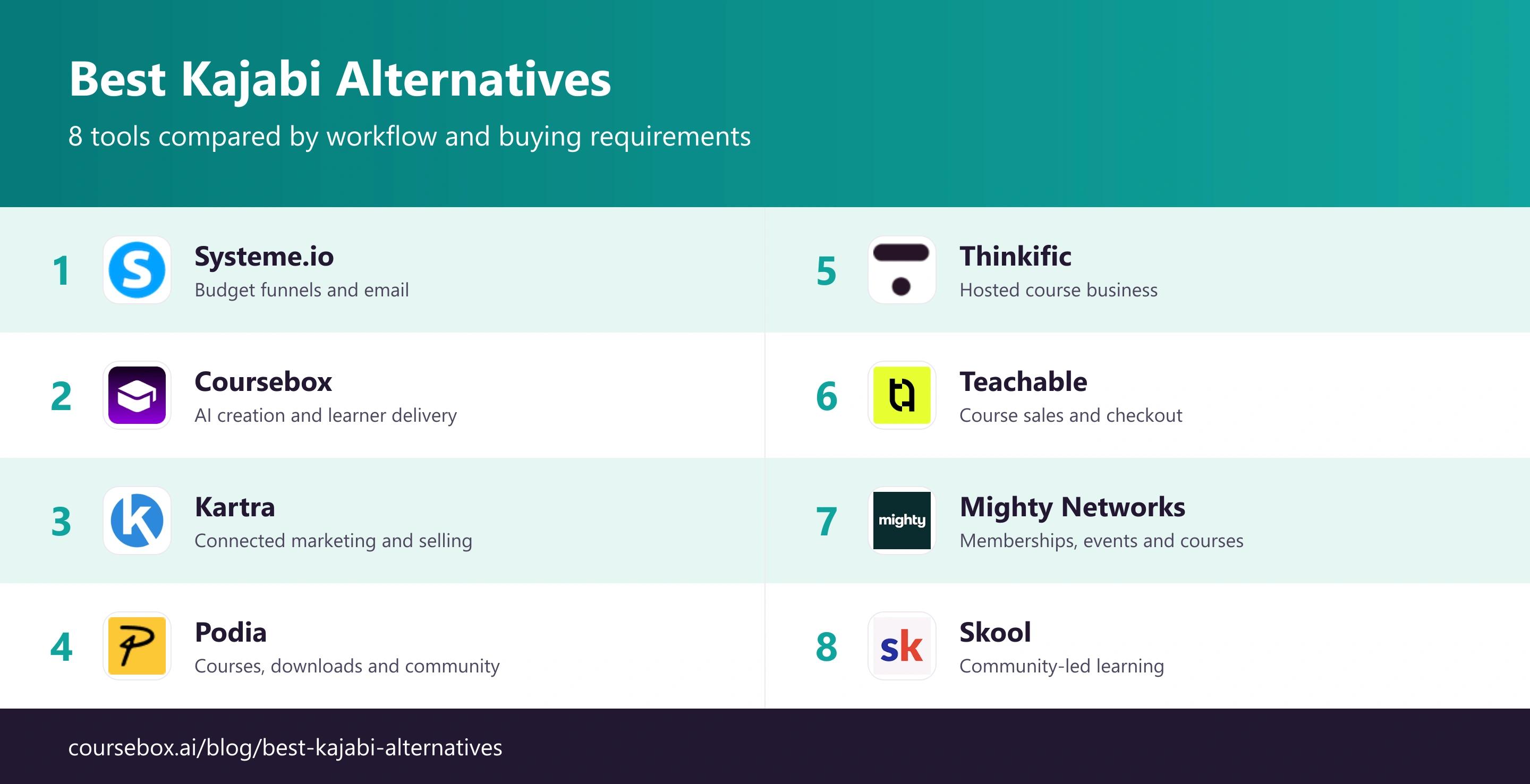
The best Kajabi alternatives in 2026 include Systeme.io, Coursebox, Kartra, Podia, Thinkific, Teachable, Mighty Networks, Skool. Choose by the workflow you need to replace.

The best Kajabi alternatives in 2026 include Systeme.io, Coursebox, Kartra, Podia, Thinkific, Teachable, Mighty Networks, Skool. Choose by the workflow you need to replace.
- Course sales, marketing automation or ongoing community.
- Subscription, transaction fees and contact or product limits.
Answer three questions to compare the four tools below. The result balances your preferences; the entries explain the features, limits and costs to check.

Run your own branded LMS with unlimited learners
Replacing Kajabi starts with the business you need to keep: selling courses, running a community or managing funnels and email. Moving only lessons can leave marketing unfinished; buying another full suite can leave you paying for tools you rarely use.
I run marketing at Coursebox, so I’d follow a prospective customer from the email or landing page through checkout and into the lesson. If moving a course breaks that route, the replacement needs more than a good course builder. Our tools for creating and selling online courses are included alongside marketing suites and community platforms.
How I compared these tools
I used four criteria:
- Business: Course sales, marketing automation or ongoing community.
- Journey: Checkout, access, welcome and returning learners.
- Migration: Content, members, progress and recurring payments.
- Cost: Subscription, transaction fees and contact or product limits.
The alternatives compared
| Tool | Useful starting job | Starting cost |
|---|---|---|
| Systeme.io | Budget funnels and email | Free; $17/mo |
| Coursebox | AI creation and learner delivery | Free; Creator AU$500/year; LMS tier costs more |
| Kartra | Connected marketing and selling | Essentials US$59/mo; 500 contacts and 5% fee |
| Podia | Courses, downloads and community | Mover US$504/year plus 5% fee |
| Thinkific | Hosted course business | From US$54/mo |
| Teachable | Course sales and checkout | From US$39/mo |
| Mighty Networks | Memberships, events and courses | Launch US$950/year plus 2% fee |
| Skool | Community-led learning | From US$9/mo |
Prices checked in October 2026. Billing terms, currencies and included features differ; the entry notes explain restrictions that can change the total.
The 8 alternatives
1. Systeme.io
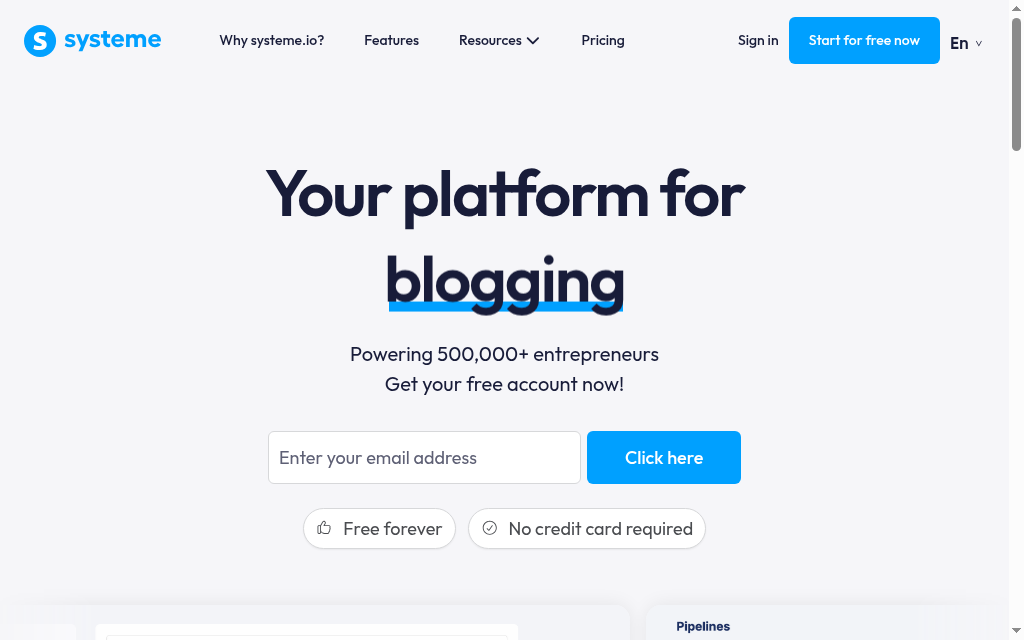
Systeme.io combines funnels, email, course access and affiliates in one account. It is useful when the sales journey is as important as the lessons, especially for a small creator business starting with a modest subscription.
The connected workflow is landing page, checkout, enrolment and follow-up email. Keeping those steps together reduces integration work. The free plan caps contacts, courses and other resources, so upgrades should be priced against the actual audience and catalogue.
My review: In my marketing review, I follow a purchase through to the first lesson. I check which emails fire and how a refunded customer loses access. A cheap funnel builder is useful only if course access and follow-up work too.
My verdict: Choose it for a funnel-and-email-led business with a relatively simple course offer. Compare complex assessments and institutional reports separately.
Pricing: The free tier includes 2,000 contacts and one course. Startup is US$17/month. There is no platform transaction fee; payment processing still costs money.
2. Coursebox
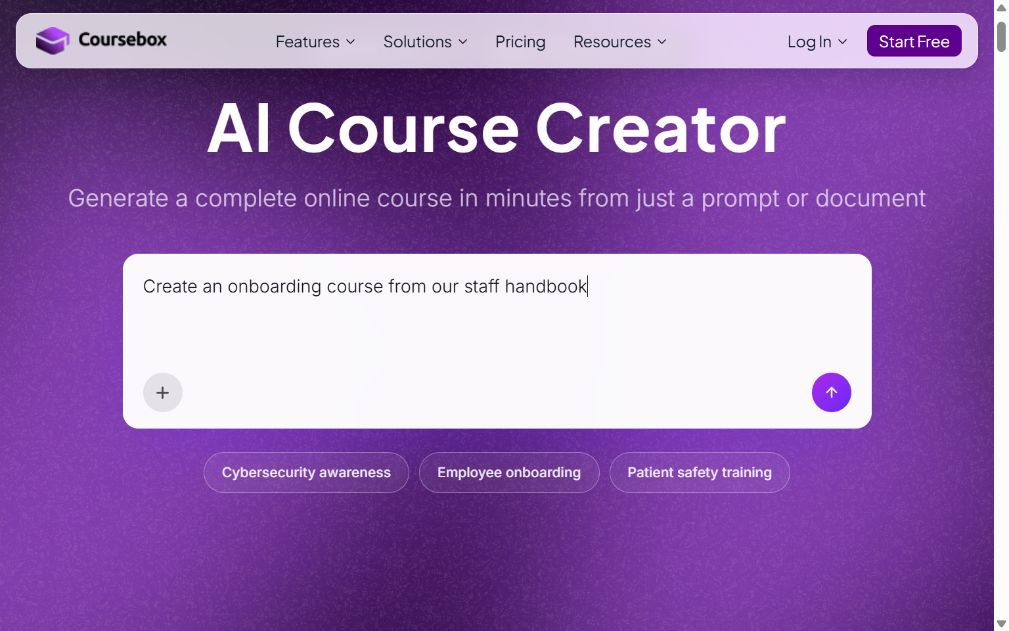
Coursebox combines AI course creation with learner delivery. A topic, document or existing material can become an editable course with quizzes, AI video and assessments. Authors can deliver it through Coursebox or export it for another LMS.
Paid plans add branding, learner groups, pathways and reporting. Enterprise supports multiple portals and an API, with SSO available as an add-on. Learner communities support announcements and questions. LTI 1.3 can return grades and progress to a connected LMS. Compare these capabilities at the required tier rather than assuming everything is in the free account.
What stood out: In my review, the useful test is the complete learning activity: create the lesson, edit the assessment, ask the AI tutor a question and inspect the learner result. That shows whether saved authoring time also produces a course the team can maintain. The subject expert should check the source material and answers.
My verdict: Choose it when creating the learning product is the main job. Communities support announcements and questions, but a full funnel-and-email business should compare its marketing stack separately.
Pricing: A limited free plan includes three mini courses and unlimited learners. In the current Australian price feed, Creator is AU$500/year, Pro AU$1,400/year and Pro + LMS AU$4,200/year. Feature scope and AI allowances differ. Enterprise and its SSO add-on require separate budgeting.
3. Kartra
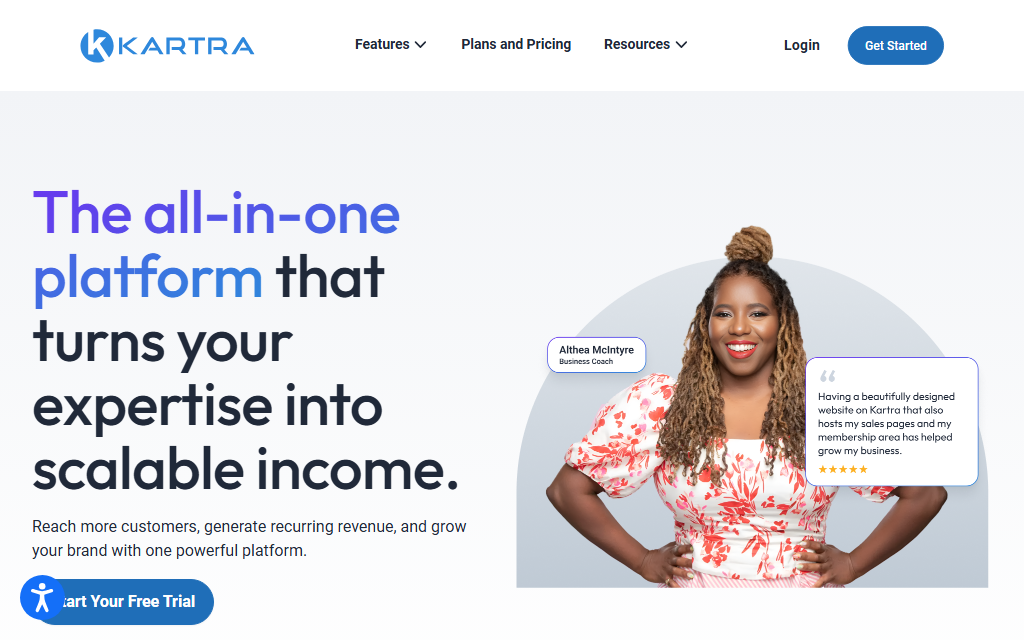
Kartra combines pages, checkout, email automation, memberships and courses. Compare it when the replacement needs to cover the sales operation as well as course delivery.
Essentials permits 500 contacts, one product, one course and five pages, with a 5% transaction fee. Starter raises the allowance to 2,500 contacts and supports unlimited products and courses. Audience growth can therefore change the plan before the catalogue does.
From my comparison: My evaluation follows a new lead, a paying customer and a refund through the automation. The check is whether email and access change correctly, which turns the feature list into a usable business workflow.
My verdict: Shortlist Kartra for connected marketing and selling. Compare contact allowances and required automations; a lower entry price is not necessarily a lower cost at your existing audience size.
Pricing: Essentials is US$59/month or US$52/month billed annually. Starter is US$119 monthly or US$99 on annual billing. Include contact limits, entry-plan transaction fees and payment processing.
4. Podia

Podia combines a website, courses, downloads, community and email. It suits a creator who wants those jobs together without building a more involved funnel operation.
Mover has a 5% platform transaction fee and an email allowance of 100 subscribers before paid expansion. Product and video limits apply too. Evaluate cost against sales, catalogue size and the number receiving marketing emails.
My practical check: What stood out in my comparison was the relatively simple connected workflow. I would move one paid course and its welcome sequence, then check community access and returning-customer login. Do not assume migration assistance transfers every recurring payment or historical record.
My verdict: Choose Podia for a straightforward course-and-download business with community. Map sophisticated campaign sequences before replacing Kajabi’s wider marketing stack.
Pricing: Mover is US$504/year, equivalent to US$42/month on annual billing, plus a 5% platform fee. Annual Shaker and Earthquaker prices are equivalent to US$84 and US$150/month with no Podia transaction fee. Email expansion and processing add costs.
5. Thinkific
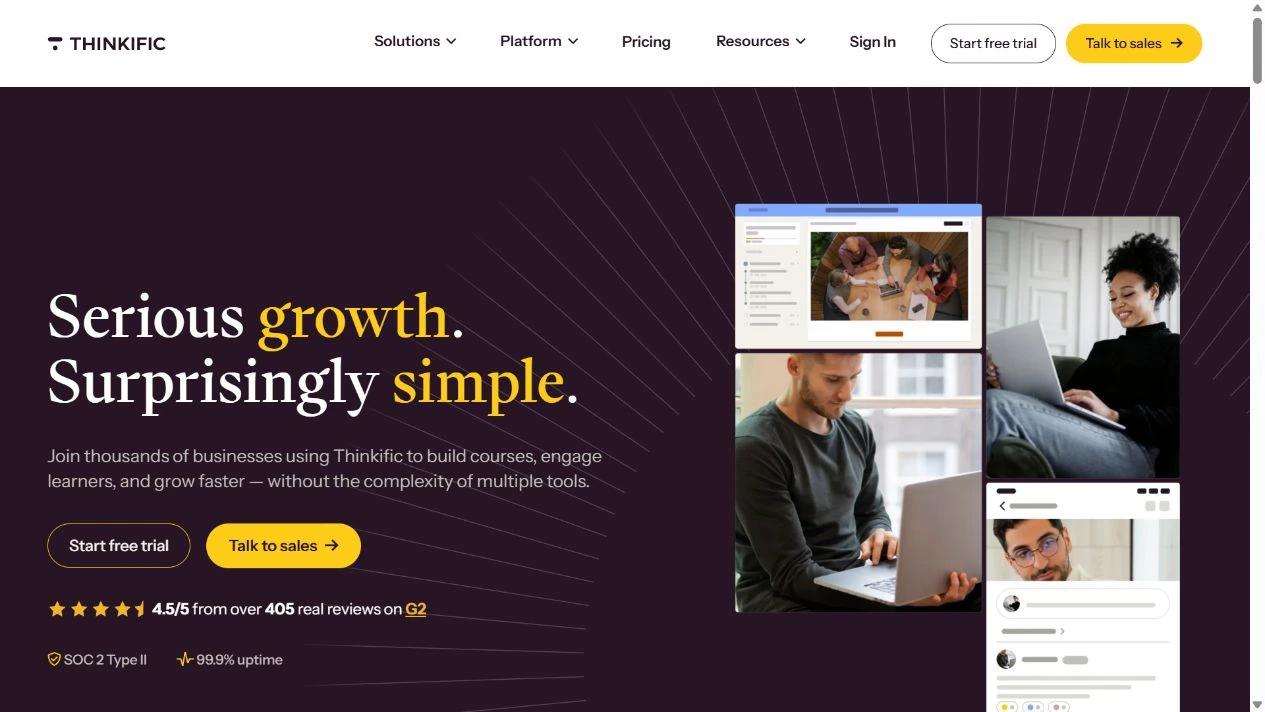
Thinkific suits a course business that wants hosted learning, commerce and a community around the programme. Authors can build courses and use AI-assisted creation, while learners can access lessons and discussion within the platform. It is useful when the replacement needs to support the business around the course as well as its content.
The starting plan is not the whole academy. Basic includes core selling and learning, while removing Thinkific branding requires Grow. A branded mobile app is an additional purchase. Payment costs also depend on country and gateway: using an external gateway can add a platform gateway fee, while Thinkific Payments still has standard processing costs.
My review: My review would follow both a new customer and an existing learner. The first needs clear checkout and access; the second needs to return to the right lesson and find support. I would check migration of accounts, subscriptions and progress separately rather than assume importing the videos recreates the existing programme.
My verdict: Choose Thinkific for a hosted course business with community and commerce. If the main need is internal training, compare employee assignment, reporting and identity requirements at the appropriate tier.
Pricing: Basic is US$54/month or US$40/month billed annually. Higher plans add learning and business features. Include branding, any mobile-app add-on and payment fees in the comparison rather than budgeting only the Basic subscription.
6. Teachable
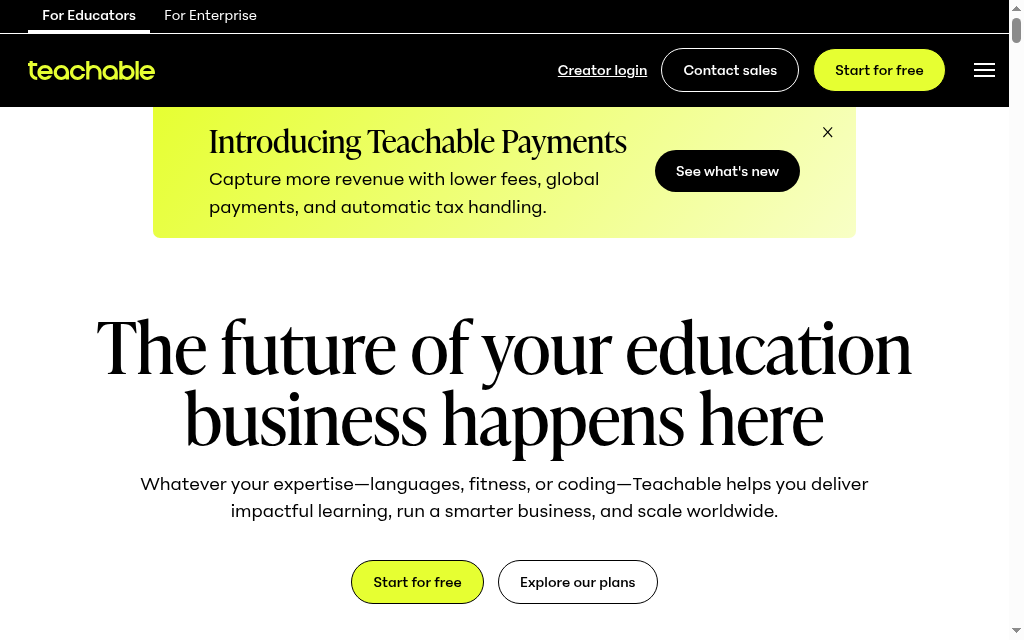
Teachable suits a creator who wants course selling, checkout and learner delivery in a hosted platform. Instead of managing a WordPress theme and LMS plugin, the creator builds the product and sales journey inside the service. Courses, coaching and digital products can share that commercial workflow, subject to the plan’s product limits.
The platform fee changes the budget. Starter charges 7.5% on transactions, while Builder removes that base platform transaction fee. Payment processing and other applicable payment-service or currency fees can still apply. Compare the fee at your expected sales volume, then check whether the course needs assessments, learner administration or branding that requires a higher tier.
What stood out: What stood out in my comparison was the cost after launch. A lower subscription can become more expensive as sales grow. I would model a typical month and a launch month, then check refunds, payment plans and the learner’s access after purchase before moving an existing catalogue.
My verdict: Choose Teachable for a hosted creator sales operation. An organisation with complex employee assignment and manager-reporting requirements should compare the learning administration as carefully as checkout.
Pricing: Starter is US$39/month or US$29/month billed annually, plus a 7.5% platform transaction fee. Builder is US$89 monthly or US$69 annually with no base platform transaction fee. Processing and other applicable fees remain.
7. Mighty Networks
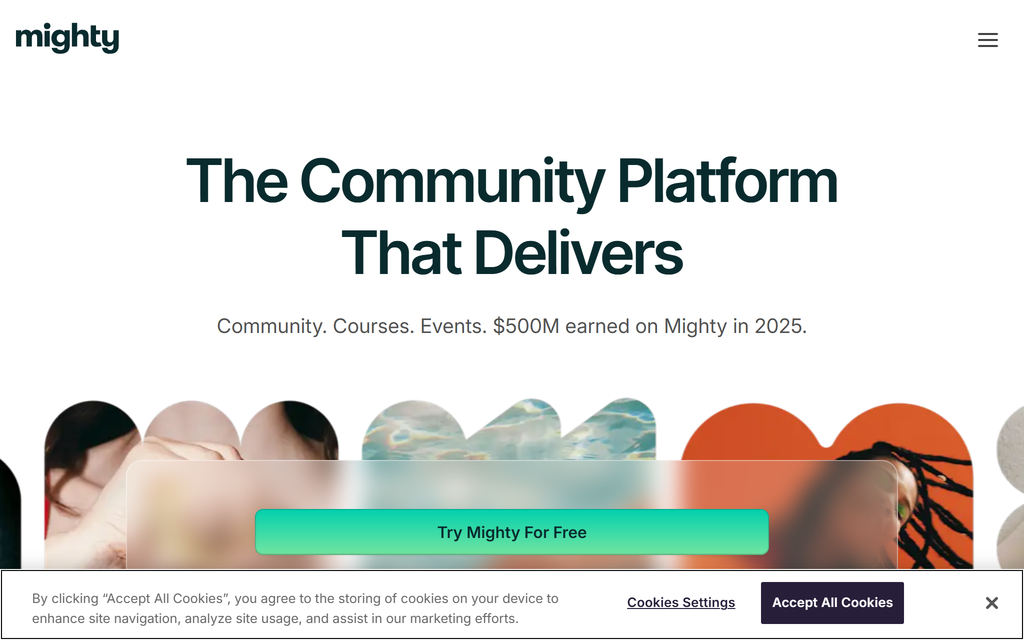
Mighty Networks combines community spaces, events and courses around ongoing membership. It suits an offer where members interact between lessons rather than only buying a standalone course.
Paid offers and access arrangements support different programmes. The operational work includes welcoming members, moderation and events. Own-brand mobile apps belong to the separate Mighty Pro offering; the shared platform app is a different proposition.
From my comparison: My review starts with the member’s first week: join, find the right space, attend an event and continue a lesson. I also check access after membership expires. That journey should be obvious to a new member.
My verdict: Choose it for a membership or cohort where conversation and events form part of the product. Compare the marketing connections required alongside the community.
Pricing: Launch is US$950/year, displayed as approximately US$79/month on annual billing, with a 2% platform transaction fee. Higher tiers change fees and features. Processing and Mighty Pro branding require separate consideration.
8. Skool
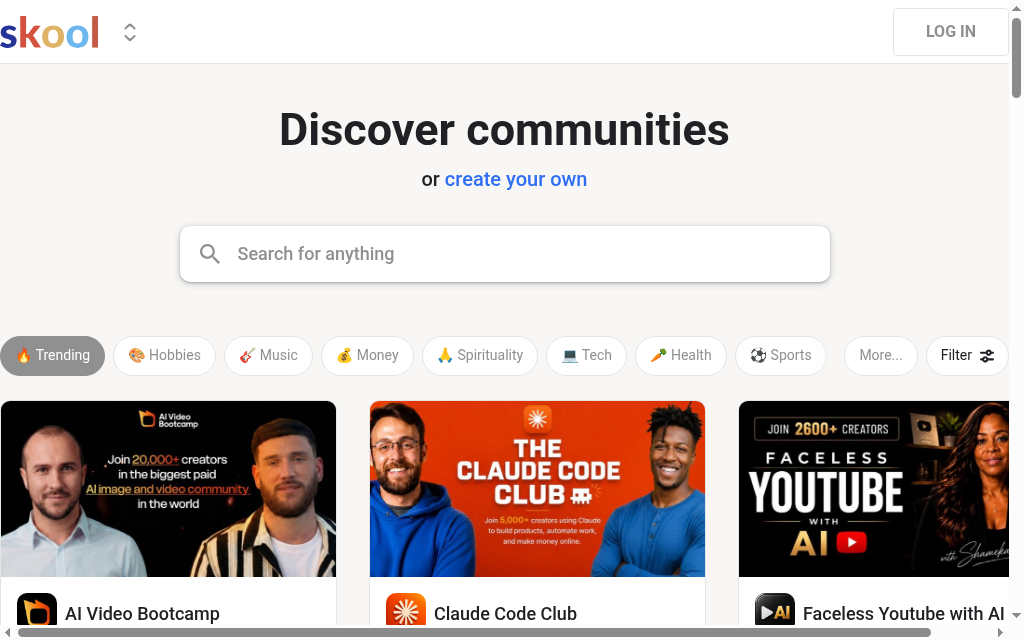
Skool combines a community feed, a Classroom for lessons, events and gamification. It suits an active group with supporting courses rather than a full marketing website and funnel system.
It supports one-time course purchases as well as memberships, so the offer need not be a subscription. Its focused scope means landing pages, email campaigns and other marketing jobs may need tools elsewhere.
My practical check: In my review, I follow a new member from purchase to the first useful discussion and lesson. I also check permissions on a separately sold course. Gamification still needs useful prompts, moderation and a clear learning sequence.
My verdict: Choose Skool for a community-led offer where a focused interface helps. Price external tools and their maintenance if the replacement must also provide Kajabi’s marketing operation.
Pricing: Hobby is US$9/month with a 10% transaction fee; Pro is US$99/month with a 2.9% fee. Compare expected sales volume as well as subscription cost.
Compare the whole customer journey before leaving Kajabi
| Requirement | What to compare | Useful pilot |
|---|---|---|
| Course offer | Lessons, assessments, certificates and access | Rebuild one complete paid product |
| Marketing | Pages, email sequences, consent and affiliates | Follow a new lead through the welcome sequence |
| Payments | Subscriptions, refunds, taxes and transaction fees | Confirm recurring-payment migration with the gateway |
| Community | Member roles, spaces, events and moderation | Test new-member and expired-member access |
| Records | Customer accounts, progress and purchase history | Reconcile a small cohort before closing the old system |
Retain the original course material and records. Verify access, assessments and the required report with a small group before retiring the old workflow.
Test checkout as well as course creation
Baymard’s compilation of 50 ecommerce studies gives an average cart-abandonment rate of 70.22%. That is an ecommerce benchmark, so use it as a reason to test the purchase journey, rather than as a prediction for a course checkout.
Thinkific’s 2026 survey of 1,039 learning professionals found that 44% used AI to create educational content. Compare how the generated lesson is reviewed and maintained, alongside the tools needed to sell it.
| Your main job | Starting shortlist |
|---|---|
| Budget funnels and email | Systeme.io |
| AI creation and learner delivery | Coursebox |
| Connected marketing and selling | Kartra |
| Courses, downloads and community | Podia |
| Hosted course business | Thinkific |
| Course sales and checkout | Teachable |
| Memberships, events and courses | Mighty Networks |
| Community-led learning | Skool |
Start with the required workflow, then compare the tier and migration work. The quiz covers four starting choices; the full comparison is above.
For a closer comparison, see thinkific alternatives.
For a closer comparison, see teachable alternatives.
Frequently Asked Questions
Systeme.io and Kartra are useful starting points for connected marketing and sales. Podia combines simpler selling, courses, community and email. Compare the exact sequences and contact allowances you use today.
Coursebox supports learner communities for announcements and questions alongside AI-created courses, assessments and learner support. Compare a full marketing automation stack separately if that is central to the business.
Yes. Skool supports one-time course purchases as well as memberships. Check the access rules and transaction fee for the offer you intend to sell.
Parshad Desai
Parshad is a full stack technical marketer based in our Perth office. He began his Coursebox career as a marketing intern. After impressing the founders with his incredible work, he later transitioned into a full time position coordinating digital marketing. His focus lies in managing our website, product analytics, and email marketing. Recently he has taken a keen interest in applying AI to digital marketing and growth.

