

What Is Assessment Validation and Why Do You Need It
What assessment validation is, what the 2025 Standards for RTOs require (Standard 1.5), who can validate, and a step-by-step process for your RTO.

Assessment validation is a process in which you confirm the quality and consistency of your assessment tools, methods, practices and judgements; for Australian RTOs it is required under Standard 1.5 of the 2025 Standards.
- Every training product on an RTO's scope must be validated at least once every five years, and more often when risks, changes or feedback arise.
- A pre-use review checks assessment tools before use under Standard 1.3; post-use validation checks completed assessments and judgements under Standard 1.5.
- The validation outcome cannot be decided solely by someone who designed or delivered the training or assessment.
- A risk-based sample should reflect the diversity of cohorts, delivery locations and assessors, and should widen when validation finds problems.

Set up your branded LMS and deliver training with AI
If you're in the Australian Vocational Education and Training (VET) sector, you have to meet set standards when assessing learners' competency. It's not only about your reputation: it's a requirement of the Standards for Registered Training Organisations, which the Australian Skills Quality Authority (ASQA) regulates.
Assessment validation is a core part of those Standards. It has specific requirements that you need to follow as a registered training organisation (RTO). This guide covers what validation involves under the 2025 Standards and how to run it. The steps apply whether you run validation on paper or keep your assessment records in RTO management software.
What Is Assessment Validation?
Assessment validation is a process in which you confirm the quality and consistency of your assessment tools, methods, practices and judgements. The 2025 Standards for RTOs, which came into effect on 1 July 2025, set this out in Standard 1.5 of the Outcome Standards: "The assessment system is quality assured by appropriately skilled and credentialled persons through a regular process of validating assessment practices and judgements."
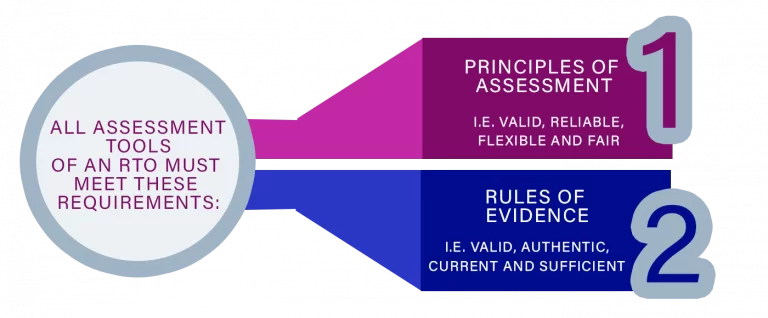
Two neighbouring Standards set what validation checks against. Standard 1.3 requires the assessment system to be fit for purpose and consistent with the requirements of the training product, with assessment tools reviewed before use. Standard 1.4 requires assessment to follow the principles of assessment and assessors' judgements to follow the rules of evidence.
Both sets of criteria are explained below.
Source: VET Advisory Group
Rules of Evidence
The rules of evidence guide each assessor's judgement about whether a VET student is competent. Under Standard 1.4(b) of the 2025 Standards, they are:
- Validity: The assessment evidence is adequate, so the assessor can be reasonably assured the learner has the skills and knowledge described in the training product.
- Sufficiency: The quality, quantity and relevance of the evidence allow an informed judgement of the learner's competency.
- Authenticity: The assessor is assured the evidence is the learner's own original work.
- Currency: The evidence demonstrates the learner's current skills and knowledge.
Principles of Assessment
The principles of assessment in Standard 1.4(a) govern how the assessment system works as a whole. They are fairness (assessment accommodates the learner's needs, including reasonable adjustments and reassessment where necessary), flexibility (assessment suits the context, training product and learner, and recognises skills however they were acquired), validity (assessment includes practical components so learners can show skills in a practical setting) and reliability (evidence is interpreted consistently, so outcomes are comparable whichever assessor conducts the assessment).
What Does Assessment Validation Include?
Under Standard 1.5 of the 2025 Standards, an RTO must be able to show that:
- Validation of assessment practices and judgements confirms that the assessment system produces judgements consistent with the training product
- Every training product on scope is validated at least once every five years, and more often when risks, product changes or feedback from students, trainers, assessors or industry arise
- A risk-based approach decides which parts of the assessment system are validated and how many assessments are sampled
- Validation outcomes are used to inform changes to the assessment system
Pre-Use Review vs Post-Use Validation
The 2025 Standards separate two checks that are often both called validation. A pre-use review (Standard 1.3) looks at assessment tools before they are used, to confirm they can be used in line with the principles of assessment and rules of evidence. Post-use validation (Standard 1.5) looks at completed assessments: the practices assessors followed and the judgements they made. You need both, and the findings of each should feed into changes to your tools.
A stratified random sample is a practical way to select assessments for validation. You group completed assessments into categories, such as on-campus learners, workplace-based trainees, and those undergoing Recognition of Prior Learning (RPL), then randomly select from each group for in-depth review. ASQA's practice guide expects the sample to reflect "the diversity of student cohorts, delivery locations and number of assessors". Over time, all assessors, assessment tools, and methods should be included. When deciding what to sample, consider the following factors:
- Student enrolment figures across different training programs
- Scope of training delivery within the organisation
- Feedback from key stakeholders, including students, trainers, and clients
- Recorded complaints, both formal and informal
- Course completion rates
- Risk assessment associated with a specific training product
- Assessment delivery modes, such as simulated environments, workplace-based assessments, or RPL
- Implementation of new assessment tools or activities
- Introduction of new training programs
- Engagement of new assessors
These aren't the only factors to consider. You can also include criteria specific to your organisation or training programs.
Why Is Assessment Validation Important?
You can think of assessment validation as a quality check for the entire assessment process. It helps make sure that what's being assessed is fair and consistent and actually measures what it's supposed to.
Without validation, there's a real risk that assessments are too easy, too hard, or not aligned with industry expectations, none of which is good for students, employers, or training organisations. Since the goal of VET is to prepare students for work, validation checks that assessments mirror the tasks learners will face in their jobs. For RTOs, it is also a compliance requirement under Standard 1.5. Validation also helps spot weaknesses in assessment tools or processes before they affect learners who have already been deemed competent.
Who Conducts Assessment Validation?
Under Standard 1.5, validation must be done by one or more people who collectively have industry competencies relevant to the training product, a practical understanding of current industry practice, and one of the credentials for validation listed in the Credential Policy published with the 2025 Standards (check it before you assign validators). The outcome cannot be decided solely by someone who designed or delivered the training or assessment. Validators may include:
- Staff members who were not involved in the original assessment process
- Qualified assessors with relevant industry experience
- External subject matter experts or auditors
- Industry representatives
For AQF qualifications and skill sets from the Training and Education Training Package that let people make assessment judgements (such as the Certificate IV in Training and Assessment), there is an extra requirement: the assessment system must be validated once the first cohort completes, by a person who is independent of the RTO.
How to Conduct Effective Assessment Validation?
Here's a step-by-step process for running assessment validation as an RTO.
Step 1: Create a Validation Schedule
First, develop a validation schedule that sets out when and how often each training product will be validated, based on your training and assessment calendar. Every training product on your scope needs validating at least once every five years, but Standard 1.5 also requires more frequent validation where you become aware of risks to training outcomes, changes to the training product, or feedback from students, trainers, assessors and industry. Use those risk signals to bring products forward in the schedule.
Step 2: Create a Validation Plan
In this plan, you need to include the following:
- Scope of Validation: Include the specific assessments or training programs that will be validated, along with the timeframe and any regulatory requirements.
- Team Members Involved: Mention the team members who will be involved in the validation process and their respective roles.
- Validation Methods: Outline the methods that will be used for validation, such as observations, interviews, and reviewing assessment documents.
- Data Collection and Analysis: Specify how data will be collected during the validation.
Step 3: Select a Sample
Use a risk-based approach to set the sample size and choose which components of the assessment system to review. The sample should reflect the diversity of your cohorts, delivery locations and assessors. If validation finds problems, widen the sample.
Step 4: Record the Assessment Validation Evidence
Keep track of the evidence gathered during the validation process, such as observation forms, interview notes, assessment documents, and written feedback from assessors and learners. Make sure the evidence aligns with the Rules of Evidence and the Principles of Assessment.
Step 5: Analyse the Results
After collecting and recording the validation evidence, analyse the results. Compare judgements across assessors for the same task, check whether any rule of evidence was repeatedly missed (for example, authenticity on take-home tasks), and note which tool items produced inconsistent decisions.
Consider the feedback from assessors and learners to identify potential changes that may be needed in the assessment process.
Step 6: Implement Changes
Next, follow the recommendations to make improvements. For example, you may:
- Update the assessment tools or processes
- Provide additional training or support for assessors
- Modify the assessment methods
- Adjust the assessment criteria
- Make changes to the training resources
The way you implement these recommendations will depend on their nature and impact. For example, if validation shows that your assessment tools aren't mapping to the training package requirements, you may need to develop new tools or modify existing ones. AI tools can help with the rework: for example, Coursebox's AI grading gives learners feedback against the marking criteria you set, though assessment judgements for competency remain with your qualified assessors.
Similarly, if the validation results show the need for improvement in assessment criteria, you can tweak your marking rubrics or adjust your assessment methods to align them closely with the learning outcomes.
Conclusion
Assessment validation is a requirement for every RTO in Australia. Under the 2025 Standards, each training product must be validated at least once every five years, and more often when risks, changes or feedback arise. Treat five years as the minimum: if you operate in an industry where practices change quickly, validate more often. Start by listing every training product on your scope with the date it was last validated, then bring forward any product with a new assessor, a training package change or recent complaints.
Frequently Asked Questions
Assessment validation is a process in which you confirm the quality and consistency of your assessment tools, methods, practices and judgements. For Australian RTOs, Standard 1.5 of the 2025 Standards requires the assessment system to be quality assured through a regular process of validating assessment practices and judgements.
Every training product on scope must be validated at least once every five years. Standard 1.5 also requires more frequent validation where you become aware of risks to training outcomes, changes to the training product, or feedback from students, trainers, assessors and industry.
One or more people who collectively have industry competencies relevant to the training product, a practical understanding of current industry practice, and one of the credentials for validation listed in the Credential Policy. The outcome cannot be decided solely by someone who designed or delivered the training or assessment.
A pre-use review (Standard 1.3) looks at assessment tools before they are used, to confirm they can be used in line with the principles of assessment and rules of evidence. Post-use validation (Standard 1.5) looks at completed assessments: the practices assessors followed and the judgements they made. You need both.
Validity appears twice in the 2025 Standards. As a principle of assessment, it means assessment includes practical components so learners can show their skills in a practical setting. As a rule of evidence, it means the evidence is adequate for the assessor to be reasonably assured the learner has the skills and knowledge described in the training product.
Carolina Martin
Carolina is a highly experienced learning designer with tech start-up experience. She is based in Sydney and previously designed courses alongside Coursebox founder Travis in a previous job. She is passionate about delivering engaging learning experiences and brings the same perspective to customer experience too. She manages our customer support documentation and product testing processes.

