

How to onboard a remote employee in a different time zone (and why we hired for one)
Why Coursebox AI turned onboarding into a course, and how it helps a remote teammate 11 hours behind Perth become part of a high-performing team.

When Valentina starts her working day in Montevideo, most of our team in Australia has already gone to sleep, and that is exactly why we hired her.
Valentina Mercatini joined Coursebox AI as our Customer Success Officer, from Uruguay. I designed her onboarding, and after more than 20 years of designing learning, I approached it the way I approach any course: I started with what she needed to be able to do at the end, and worked backwards from there.
Why we hired across time zones
Our customers are spread across the US, Europe and Latin America, and many of their demo and support requests arrive while our team in Australia is asleep. We hired Valentina to cover those hours, so the time difference was the whole point of the role. She leads customer success across the US, Europe and Latin America, in English and Spanish, and she supports customers from their first demo to onboarding and support. She was also happy to take some calls later in her evening, which gives her a daily overlap with the team in Perth and Sydney. We also move our weekly team meeting when we need to, so she can join it live.
That also meant she could not learn the way most new hires do, by sitting next to someone and asking questions as they come up. Her learning had to be designed.
Why we created an onboarding training
Onboarding is the first learning experience anyone has with us, and it sets the standard for everything that follows. In a small, high-performing team, every person carries a real part of the work, so the time it takes a new teammate to feel confident matters to all of us, and so does the cost of training a new employee.
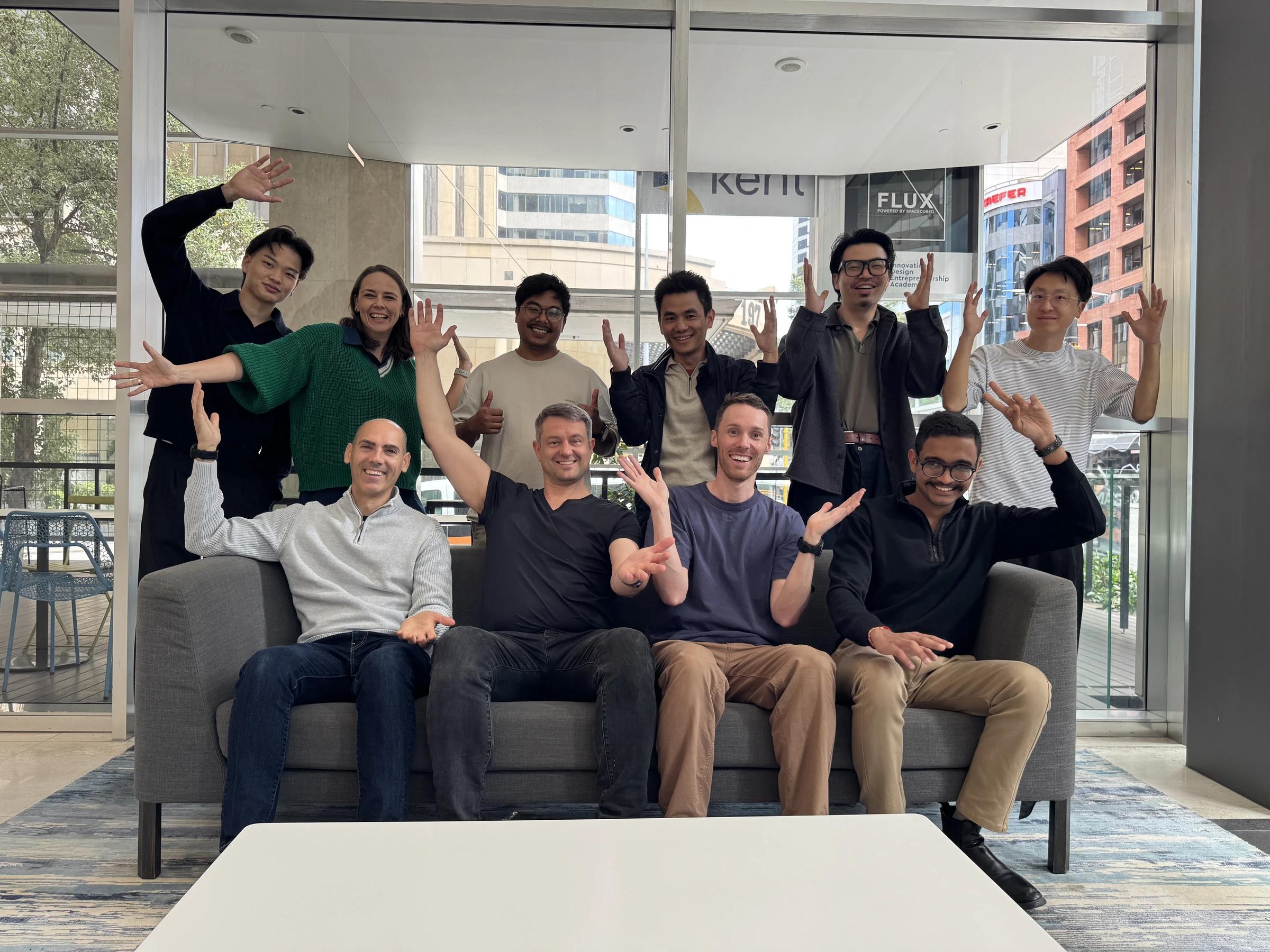
For Alex Hey, our co-founder, onboarding Valentina was mostly about culture, support and making her feel part of the team, and I agree. Good onboarding gives a new hire 3 things early: a clear picture of what good looks like, the confidence to act on it, and the feeling that they belong.
We would not be much of an AI course creator if we had not turned Valentina's onboarding into a course, so of course it lives in Coursebox.
What an onboarding course does for a remote employee
A course gives a remote teammate what a desk in the office cannot.
- It works in any time zone. Valentina learns the role, the tools, customer calls, support and when to escalate at her own pace, whenever her day starts.
- It sets one standard. Every new hire learns the same way of working, so customers get the same experience whoever they speak to.
- It lets her practise before she performs. Each section ends with a quiz, and an AI role-play lets her rehearse a tricky customer question before she meets one on a real call.
- It keeps working after her. The next person who joins starts with an onboarding course that is ready on their first day.
The most important parts of our onboarding training
The course is called Customer Success Onboarding, and its goal is simple: by the end, a new customer success officer can support customers confidently, follow the right process and know when to escalate rather than guess or promise. It runs just under 2 hours across 10 short sections and 21 lessons, about right for how long employee training should be, so it fits into a working day without taking it over:
- Getting started: a welcome, the role and the first weeks, and our systems and access, including keeping passwords safe and respecting access limits.
- Customer conversations: how we prepare for and follow up on meetings, demo practice, and enterprise conversations.
- Support and judgement: our support workflow, from triage to an accurate answer to the right person to escalate to, and the approval boundaries for anything that needs a written yes first.
- How we talk to customers: authentic communication, and a final section on being ready for customers.
If I had to choose the 3 parts that matter most, I would choose these. Approval boundaries and escalation, because a new hire who knows exactly where their decisions stop can act with confidence everywhere else. Demo practice, because rehearsing with an AI role-play before a real call turns knowledge into skill. And authentic communication, because the way we speak to customers, accurately and with care, is how they experience our culture.
Across the 21 lessons, the course builds 7 skills: customer success, demo meetings, support triage, CRM workflows, enterprise scoping, escalation and accurate communication. Each section ends with a short quiz, so Valentina could check her own understanding before moving on, and I could see where a topic needed more practice. In a remote role, a course gives that feedback to both of us without another meeting in the calendar.
What it looked like for Valentina
Within her first week, Valentina handled her first support call on her own.
That same week, a new deal came in from Italy, and the team asked whether anyone could help in Italian. Valentina does not speak Italian, but she understands it, so she offered to join the call and even to script and record the demo in Italian and practise it with her dad, who is Italian.
Today 3 of our team speak Spanish and English, and Valentina runs demos in Spanish for our customers in Latin America.
How onboarding builds a high-performing culture
A course is the foundation, and the habits around it shape the culture. We planned Valentina's first 3 weeks as a ramp-up: in week 1 she watches calls and learns how we work, in week 2 she helps with simpler questions, and in week 3 she takes on harder calls and learns when to escalate. The quiet time between calls is learning time too, with recorded demos to watch and a demo account to practise in.
Short daily check-ins and a weekly review keep questions small and progress visible, so she never waits a day to get unstuck. And because the expectations are clear from the start, she can take ownership early, which is what a high-performing team needs from every person in it.
Onboarding is also where our learning culture starts. The habits Valentina builds in her first weeks, learning a little every day (microlearning, in other words), practising before performing and asking early, are the same habits the whole team uses long after week 3. The onboarding course ends, and the learning keeps going.
Turning onboarding into a course
Valentina's onboarding started with a time zone and turned into a course. We hired her to look after our customers while our team in Australia sleeps, so her learning had to work without anyone sitting next to her. The course gave her the foundation: the role, our systems, customer conversations, support, escalation and the way we talk to customers. The ramp-up and the daily check-ins turned that knowledge into confidence, and the culture around her made her part of the team from her first week.
Building it in Coursebox means the course does not stop with Valentina. The next person who joins us, wherever they are, starts with the same onboarding on their first day, and we keep improving it as we learn. Any team can do the same with onboarding training software: turn the way you work into a course, so every new hire starts from the same foundation, in any time zone.
When Valentina starts her day in Montevideo, our team in Australia is still asleep, and the work keeps moving because she knows how we work, what good looks like and that she belongs here.
Carolina Martin
Carolina is a highly experienced learning designer with tech start-up experience. She is based in Sydney and previously designed courses alongside Coursebox founder Travis in a previous job. She is passionate about delivering engaging learning experiences and brings the same perspective to customer experience too. She manages our customer support documentation and product testing processes.

