

Thinkific vs Udemy: What’s the Difference and Which One Should You Choose?
Looking to make some extra bucks by selling courses online? This Thinkific vs Udemy one-on-one will help you choose a platform that best fits your goals.


Build high quality courses that actually sell
When creators decide to launch an online course, they usually assume the hardest part will be building the content. In reality, one of the most important decisions comes afterward: where should you sell it? That’s essentially what the Thinkific vs Udemy debate comes down to.
Both platforms allow creators to publish and sell courses, but they operate on completely different business models. One gives you ownership and flexibility, while the other gives you reach and visibility. In fact, many creators also use AI course creators to speed up development before choosing where to host or sell their content.
In this guide, we’ll break down the real differences between Thinkific and Udemy, so you can decide which one fits your goals.
What is Thinkific?
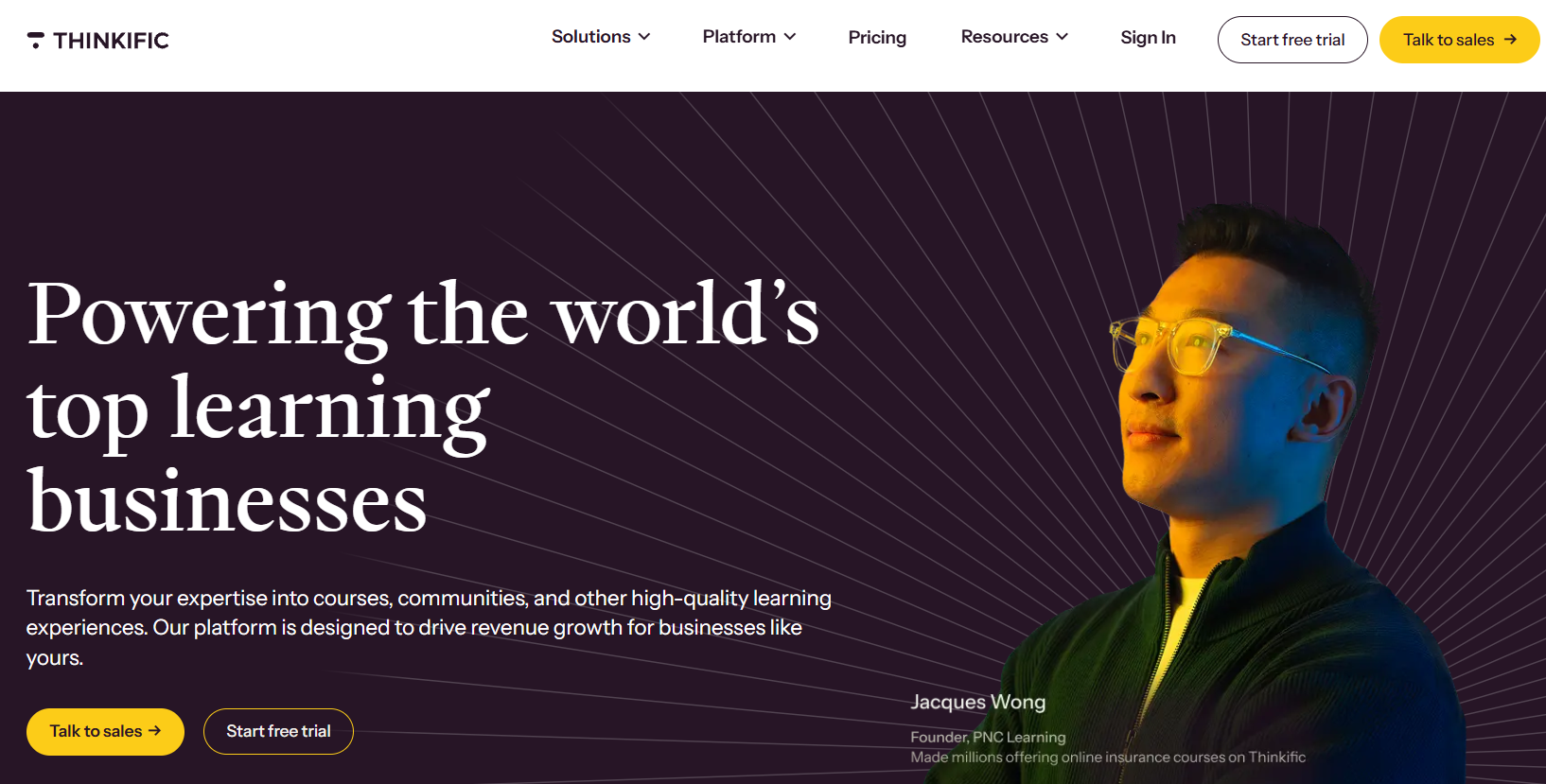
Thinkific is an independent course platform that allows creators to build, market, and sell courses under their own brand. Rather than placing your course in a shared marketplace, Thinkific lets you create a fully customized course website with your own domain, pricing model, and branding elements.
Since Thinkific operates as a standalone platform, creators are responsible for driving traffic to their site through email marketing, SEO, partnerships, or paid advertising. In return, they gain full ownership over their audience and revenue structure. This makes Thinkific particularly attractive to coaches, consultants, educators, and businesses that want to build long-term course brands instead of relying on marketplace exposure.
The platform supports structured learning paths, memberships, certifications, and scalable course programs, making it suitable for both individual entrepreneurs and growing training companies.
What is Udemy?
Alt Text: Udemy homepage
Udemy is a global online learning marketplace where instructors can upload courses and immediately reach an audience of millions of learners. Instead of building your own website, your course is listed alongside thousands of others in Udemy’s catalog.
The advantage of Udemy lies in discoverability. New creators can publish quickly without worrying about payment processing, website setup, or marketing infrastructure. However, Udemy controls key aspects of the sales process, including discount promotions, pricing visibility, and customer relationships.
While instructors benefit from marketplace traffic, they operate within Udemy’s structure. This makes it easier to launch quickly, but more challenging to build a fully independent brand.
Thinkific vs Udemy: 6 Key Differences Explained
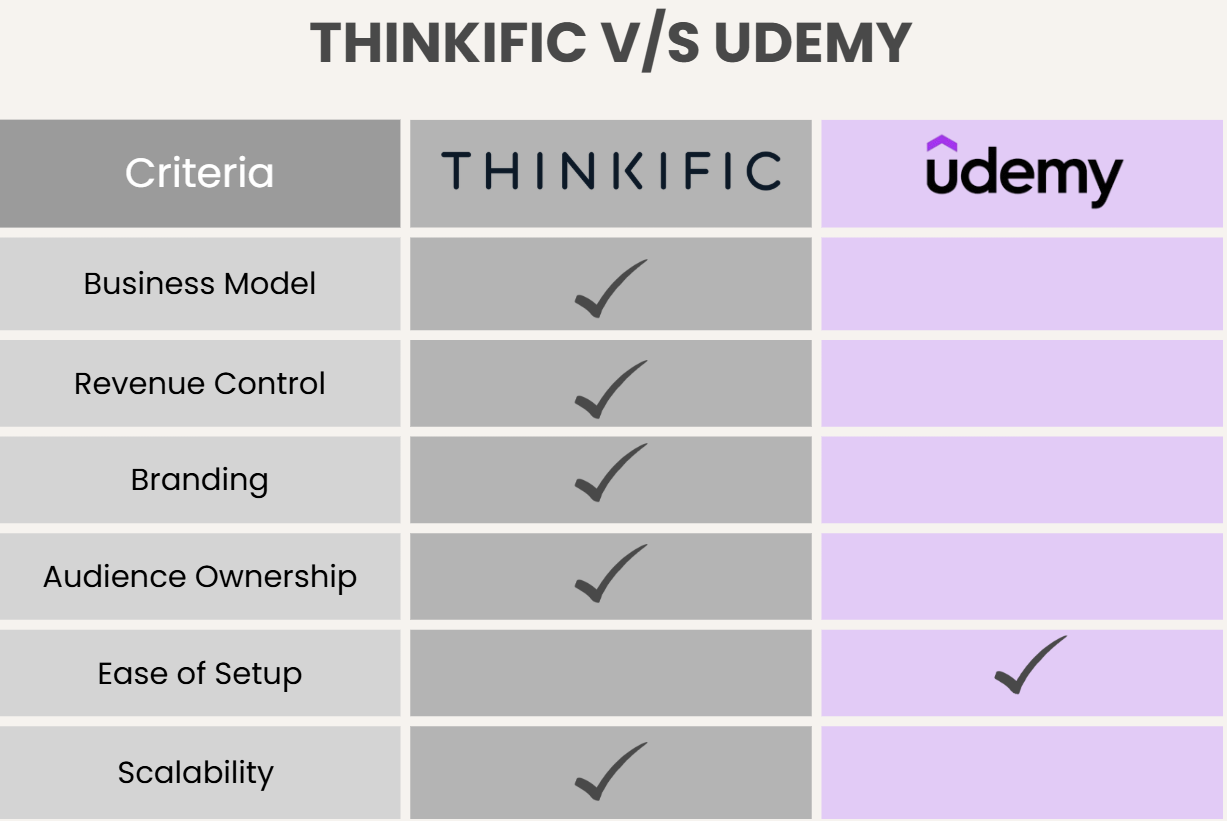
Let’s examine the areas where Thinkific and Udemy truly diverge, especially in ways that impact revenue, control, and scalability.
1. Business Model
The most fundamental difference between Thinkific vs Udemy lies in their business models. Thinkific operates as an independent course hosting platform. When you build a course on Thinkific, you are creating your own education business infrastructure. You control your website, pricing strategy, customer journey, and branding.
The responsibility for generating traffic rests entirely on you, but so does the reward. Every student interaction strengthens your brand, not the platform’s.
Udemy, by contrast, functions as a marketplace. Your course becomes part of Udemy’s broader catalog, and the platform drives traffic through advertising, email promotions, and marketplace search results. While this offers visibility, it also means your course competes directly with similar offerings. Udemy remains the primary brand in the student’s mind, not necessarily the instructor.
If your goal is long-term brand ownership, Thinkific provides more control. If your goal is fast exposure without building infrastructure, Udemy simplifies that process.
2. Revenue Model & Pricing
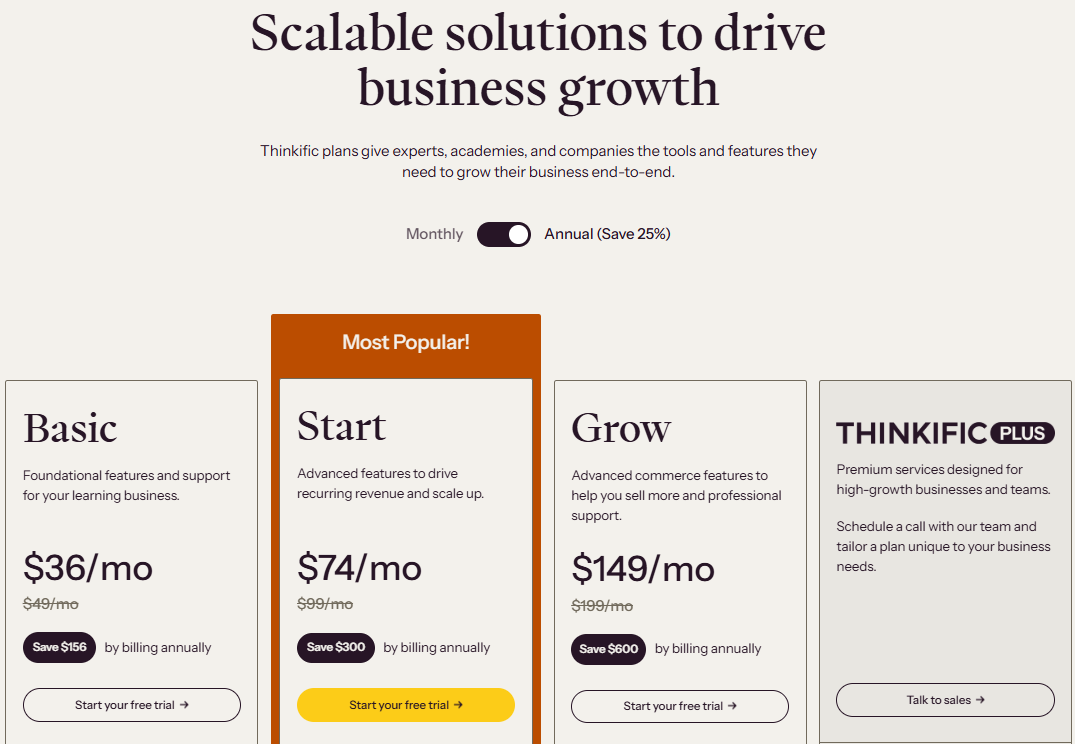
Thinkific uses a subscription-based pricing model. You pay a monthly or annual fee to use the platform, and in exchange, you retain most or all of your course revenue depending on how you configure your payment gateway.
This allows you to set premium pricing, bundle programs, or create high-ticket offers without external constraints. Over time, this model can significantly increase profitability if you build steady traffic.
Udemy allows instructors to publish courses without upfront subscription fees, but revenue is shared. The percentage you receive depends on how the sale was generated. Additionally, Udemy frequently runs site-wide promotions that offer substantial discounts on courses. While these discounts increase sales volume, they can reduce per-course revenue and make premium pricing difficult to sustain.
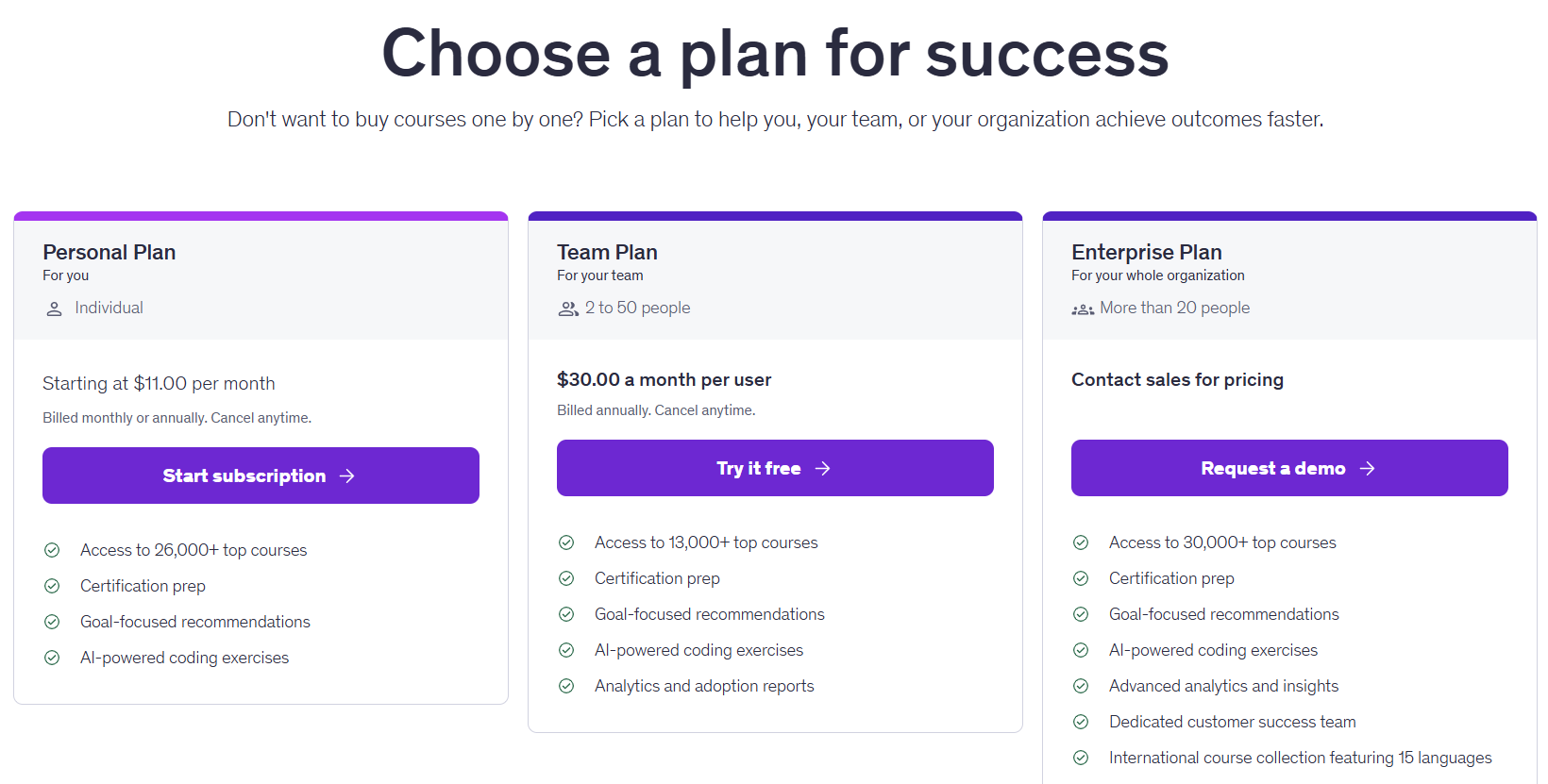
For creators focused on higher-ticket offers or long-term profit margins, Thinkific provides greater pricing flexibility. Udemy offers simplicity, but with less pricing control.
3. Branding and Customization
Brand ownership is overlooked early on, but becomes critical as your course business grows.
Thinkific allows you to customize your course website, use your own domain name, adjust visual branding, and design sales pages that reflect your business identity. The student experience can be tailored to match your broader brand ecosystem, whether that includes coaching, memberships, or consulting services.
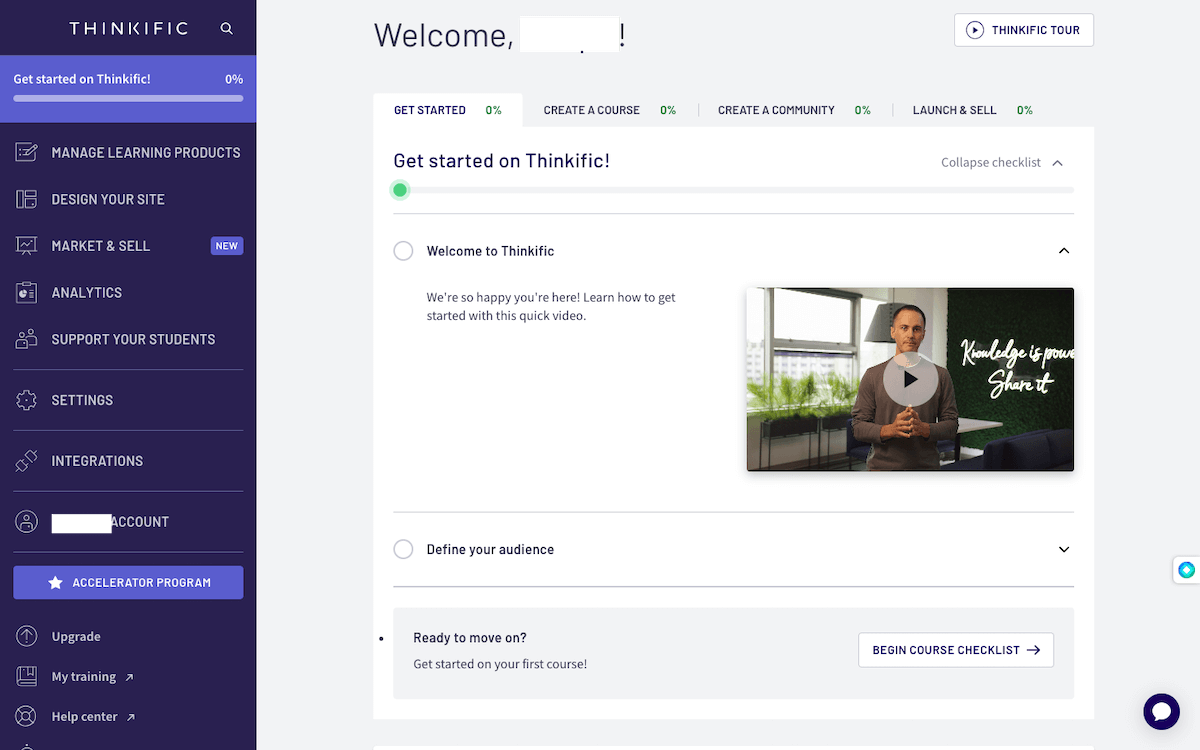
Source: Learning Revolution
Udemy maintains a standardized marketplace layout. While this creates a consistent user experience, it limits how much your course can stand out visually. Students interact primarily with Udemy’s interface, and your branding plays a secondary role within that structure.
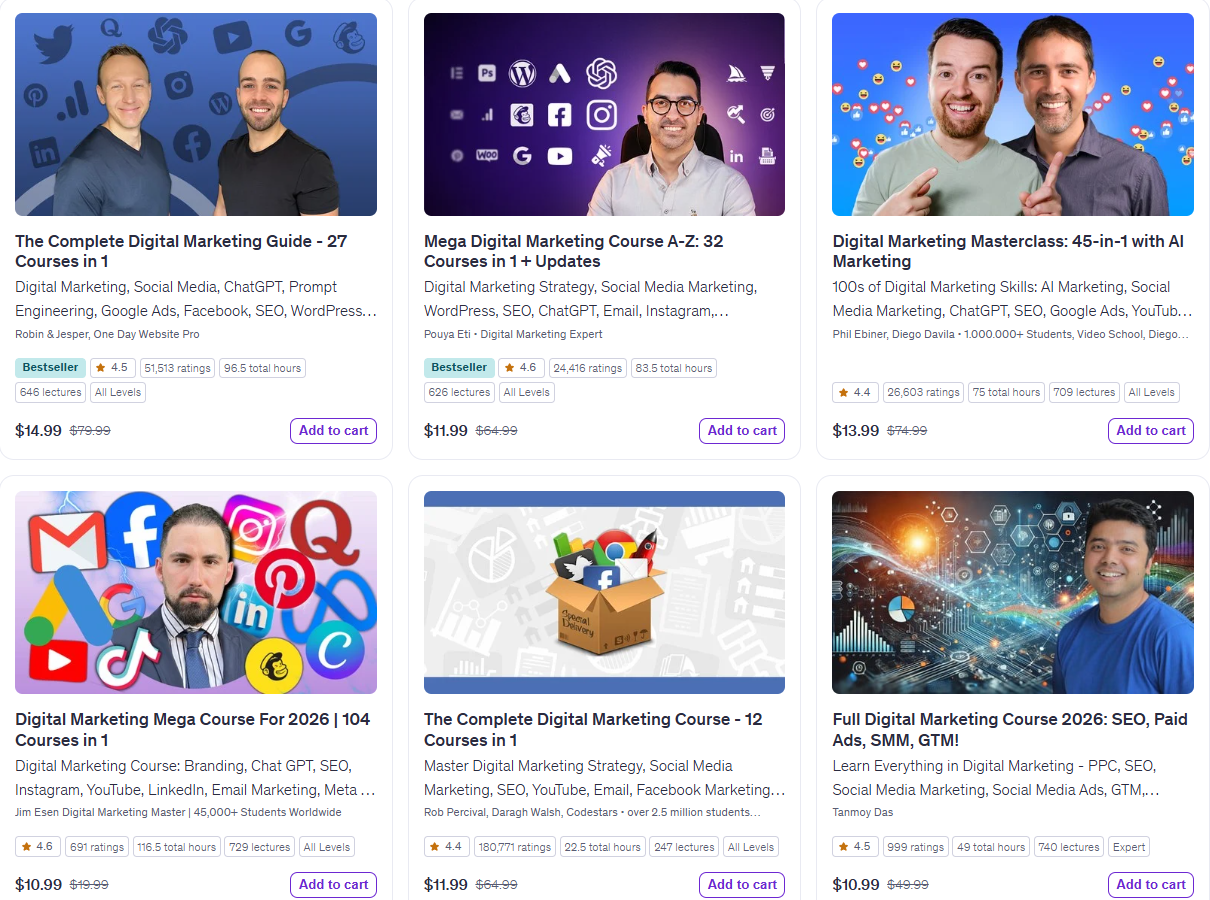
For creators building authority or expanding into multiple products, Thinkific offers significantly more brand control.
4. Audience Ownership
Another major distinction lies in who owns the customer relationship. With Thinkific, you collect and manage your own student data. You can build email lists, nurture relationships, launch new programs, and remarket to past students. This direct access allows you to create a long-term customer lifecycle strategy and upsell additional offerings.
On Udemy, customer data is primarily controlled by the platform. While instructors can communicate with students within Udemy’s messaging system, external marketing access is limited. This makes it more challenging to move students into other programs outside the marketplace.
If you plan to build a scalable education business, audience ownership is an important factor to consider.
5. Ease of Setup
Ease of use plays a significant role, especially for first-time course creators. Udemy offers one of the fastest launch processes available. You can upload videos, create quizzes, and publish without worrying about website hosting, payment processing, or design elements.
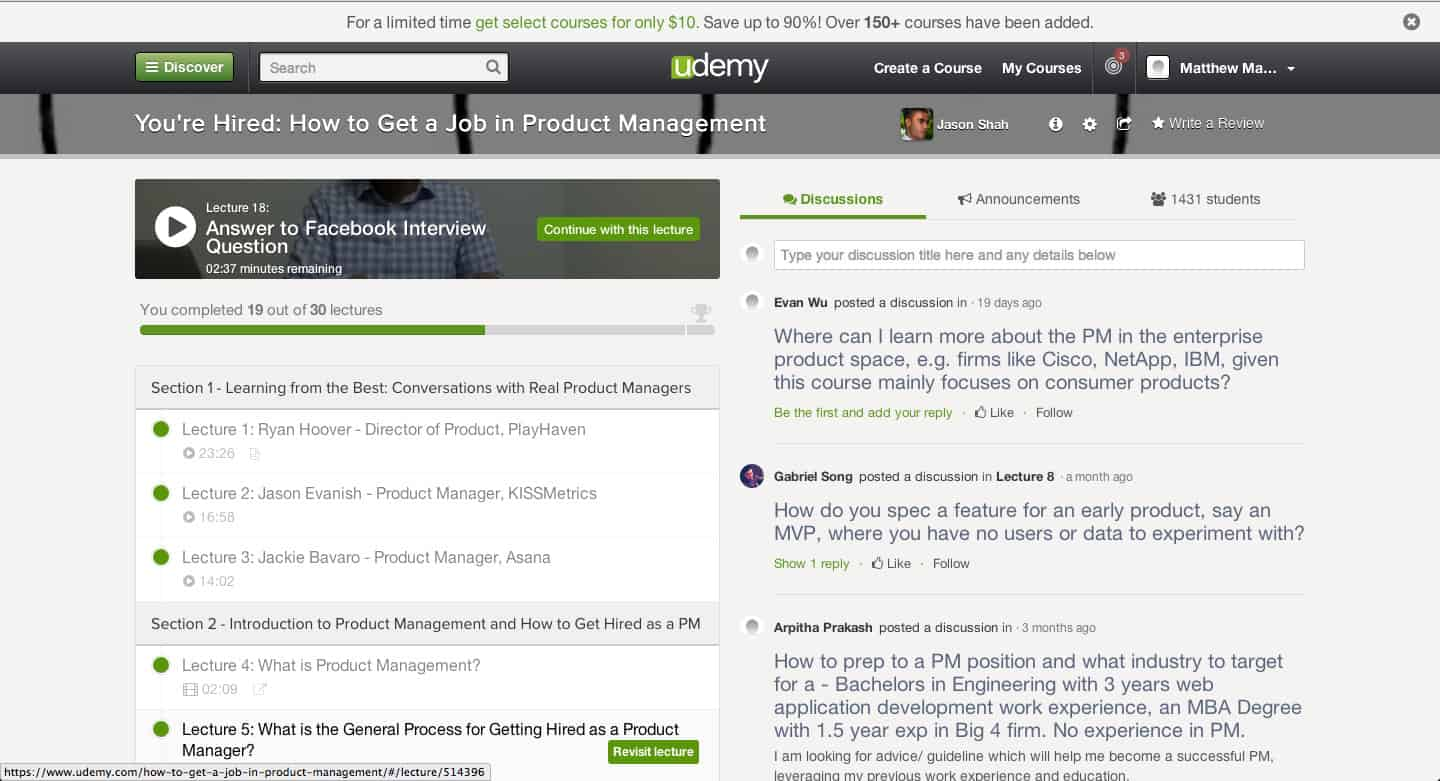
Thinkific requires more initial setup. You’ll configure branding, payment gateways, and sales pages before launching. While this takes more effort upfront, it creates a stronger foundation for long-term growth and customization.
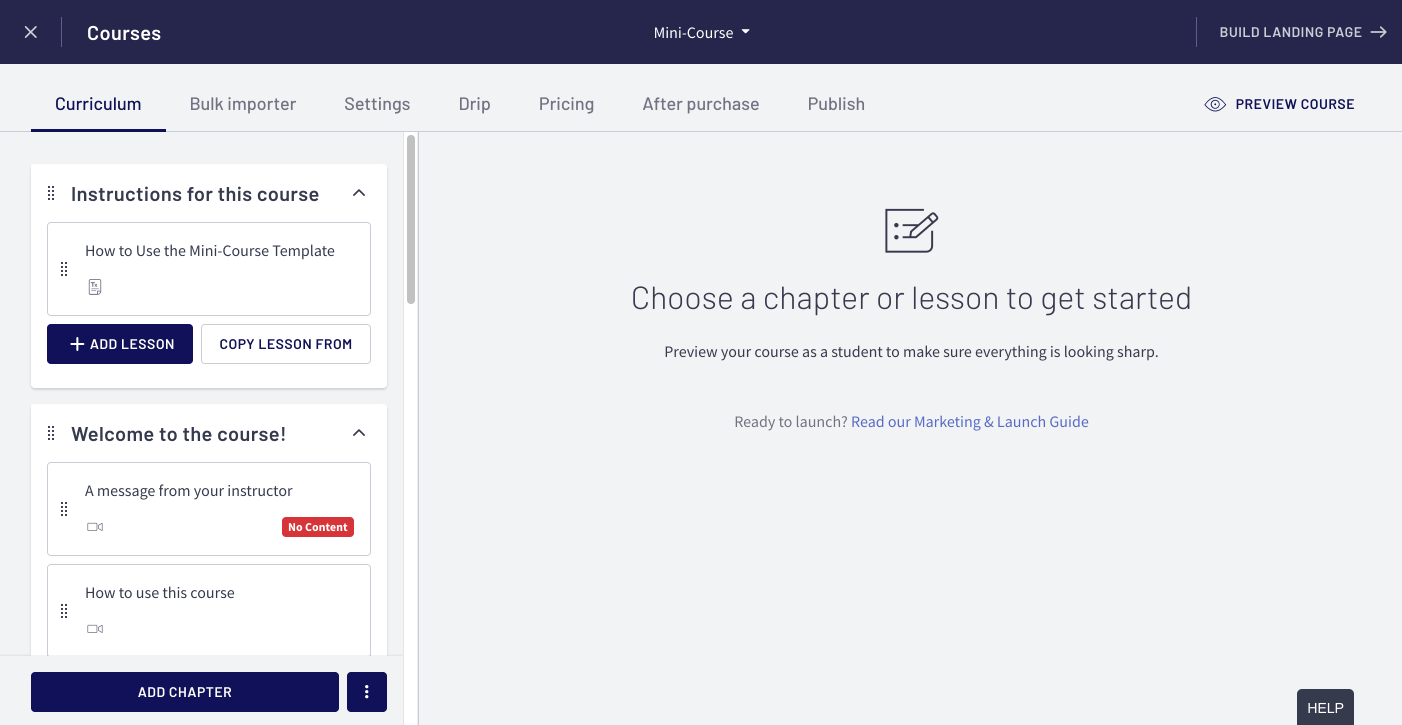
In short, Udemy prioritizes speed. Thinkific prioritizes structure and ownership.
6. Long-Term Scalability
Scalability is where the difference becomes even clearer. Thinkific supports memberships, bundled programs, subscription models, certification tracks, and community-driven learning. You can gradually expand your offerings and increase pricing tiers as your audience grows. This makes it well-suited for entrepreneurs planning multi-course businesses or premium coaching ecosystems.
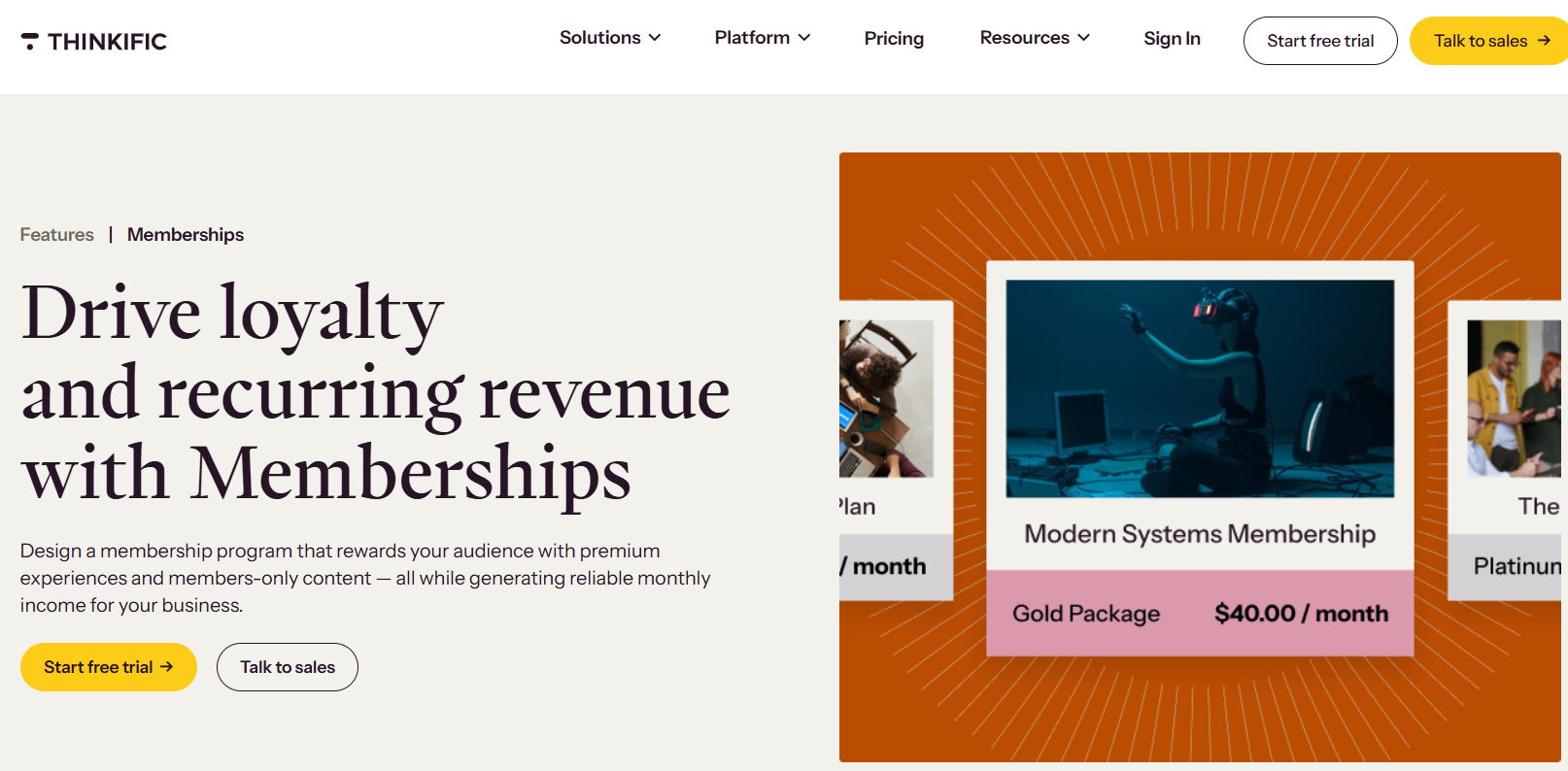
Udemy is effective for exposure and volume-based sales. However, scaling premium pricing models within a discount-driven marketplace can be challenging. While some instructors build strong followings on Udemy, long-term brand expansion is limited by marketplace dynamics.
If you envision building a full-fledged education brand, Thinkific offers more growth flexibility.
Thinkific vs Udemy: Which is Better?
Here is a quick overview of Thinkific vs Udemy for course creation and selling:
| Feature | Thinkific | Udemy |
|---|---|---|
| Business Model | Independent course platform | Marketplace |
| Revenue Control | High | Limited |
| Setup Time | Moderate | Fast |
| Branding | Full control | Limited |
| Audience Ownership | Yes | No |
| Long-Term Scalability | Strong | Limited |
- Choose Thinkific if you want to build a long-term course business, control pricing, and own your audience.
- Choose Udemy if you want marketplace exposure, minimal setup, and access to built-in traffic.
Where an AI Course Creator Fits In
Regardless of whether you choose Thinkific or Udemy, the biggest hurdle for many creators isn’t publishing, but building the course itself. An AI course creator like Coursebox can reduce development time by automatically generating structured outlines, lessons, quizzes, and learning paths.
With Coursebox, you don’t have to start from scratch. All you have to do is upload your documents, files, audios, or text, and the platform will transform them into organized training programs within minutes. This approach allows you to focus on refining content quality rather than getting stuck in planning stages.
Once your course is built, you can publish it on Thinkific for full brand control or upload it to Udemy to tap into marketplace traffic. Using AI-powered course creation before choosing a distribution platform ensures you’re optimizing the most important asset: your content.
Try Coursebox today to explore more!
FAQs About Thinkific vs Udemy
Is Thinkific better than Udemy for building a long-term business?
Thinkific is generally better suited for creators who want to build a branded course business with full control over pricing, audience relationships, and marketing strategy. Udemy can generate exposure quickly but offers less flexibility for long-term brand growth.
Can I sell high-ticket courses on Udemy?
While you can set higher prices, Udemy frequently discounts courses during promotions. This can make it difficult to maintain premium positioning compared to independent platforms like Thinkific.
Which platform is easier for beginners, Thinkific vs Udemy?
Udemy is typically easier to start with because it requires minimal setup and handles payments automatically. Thinkific requires more configuration but offers greater control.
Do I own my student list on Thinkific?
Yes. Thinkific gives you access to student data and allows you to communicate directly with learners, supporting long-term marketing strategies.
Should I create my course on Coursebox before choosing a platform to sell it?
Yes. Focusing on course structure and content quality first is often the smartest move. Many creators now use AI-powered tools like Coursebox to streamline course development before deciding where to host and sell their programs.
Alex Hey
Alex Hey is a technical marketer with 10 years of hands-on growth and digital marketing experience. He cofounded Coursebox together with Travis Clapp who he met online when looking for a cofounder to build a globally impactful software product. He works in the Perth, Western Australia office as the COO. He built the world's first automated funnel for patient recruitment before building Coursebox. After launching Coursebox in mid 2023, he drove +400k organic sign ups for Coursebox. Alex leads the marketing and digital growth of Coursebox and works with the product development team bringing a passion for data-driven product decision and exceptional user experience. Alex is determined to build the world's easiest way to build the perfect course.

