

10 Best Safety Training Software Tools in 2026: My Honest Review
Compare 10 safety training tools for content, delivery, assessment and records, with current pricing and practical checks for your programme.

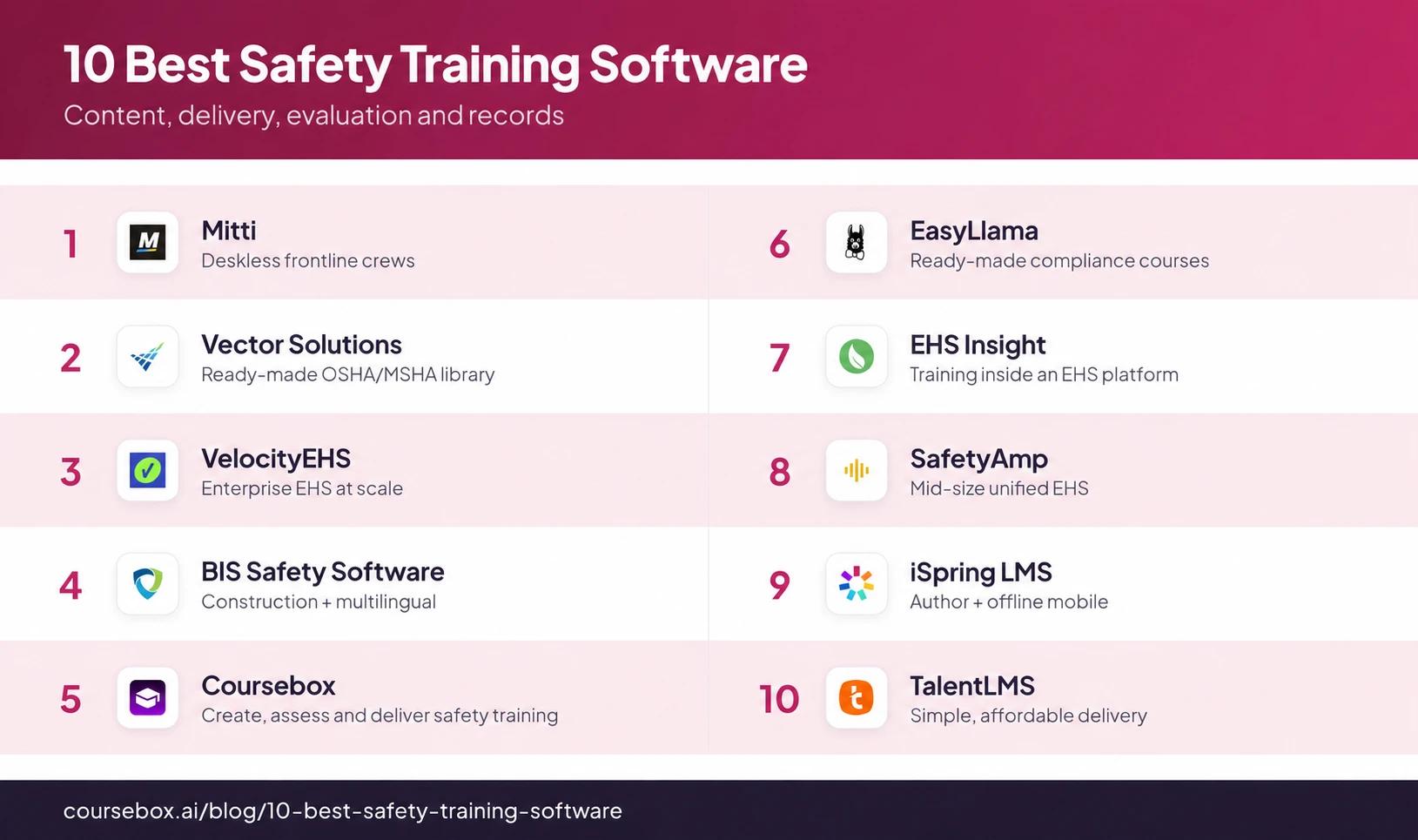
The 10 best safety training software tools in 2026 are Mitti, Vector Solutions, VelocityEHS, BIS Safety Software, Coursebox, EasyLlama, EHS Insight, SafetyAmp, iSpring LMS and TalentLMS. Compare delivery, practical evaluation and records against your safety programme.
- Compare course creation and delivery with the wider EHS work you need. Training, inspection and incident modules may have different licences and integration requirements.
- Coursebox combines learning built from your procedures with tutoring, written assessment, LMS delivery and reporting. Use a qualified person for any required practical evaluation.
- Choose access, languages, assessment, recordkeeping and renewal rules for the actual tasks. Offline support is one criterion, not the whole decision.
- US employers reported 2.5 million nonfatal private-industry workplace injuries and illnesses in 2024. Prioritise your own hazards and required training rather than treating software as a safety outcome.
Compare four options from this guide. Answer for your own learning needs; the full comparison covers the other tools.

Train teams faster and more effectively with AI
Safety training software should help you assign the right learning, assess understanding and find the records when a supervisor needs them. The choice also depends on whether you need a course library, training built from your own procedures or training connected to an EHS system.
I’d start with what happens after a safety issue is found. Do you need to connect an inspection or incident to retraining, or mainly assign a course and follow up on it? That helps separate a full EHS system from a learning platform before you pay for features your team may not use.
Disclosure: I work at Coursebox. Our compliance training software is included alongside the other options, with the relevant workflow, pricing and limitations explained below.
BLS recorded 2.5 million nonfatal private-industry injuries and illnesses in 2024. Start your training plan with the tasks and hazards at your own site, including practical checks where they are required.
The 10 best safety training software at a glance
| Tool | Best for | Safety strength | Type | Price |
|---|---|---|---|---|
| Mitti (formerly SafetyCulture) | Deskless frontline crews | Mobile toolbox talks + inspections | EHS platform | Per seat; free tier |
| Vector Solutions | Ready-made OSHA/MSHA library | Thousands of courses + EHS | LMS and separate EHS products | Quote |
| VelocityEHS | Enterprise EHS at scale | Training inside a full EHS suite | EHS platform | Quote |
| BIS Safety Software | Construction + multilingual | Training matrix and external records | LMS + EHS | Quote |
| Coursebox | Own procedures, assessment and delivery | Creation, tutor support, assessment and reports | Course creator + LMS | Free; usage-based paid plans |
| EasyLlama | Ready-made compliance courses | 450+ courses across compliance topics | Compliance LMS | Pay per course or subscription |
| EHS Insight | Training inside an EHS platform | Compliance, incidents, drills | EHS platform | Quote |
| SafetyAmp | Mid-size unified EHS | Training + audits + JSA | EHS platform | Quote |
| iSpring LMS | Author + offline mobile | Offline app, PPT authoring | General LMS | Per user/yr |
| TalentLMS | Simple, affordable delivery | Easy setup, mobile | General LMS | Free tier; per user |
Pricing and product documentation were checked in October 2026. Confirm library licences, learner-count rules, implementation and the records your safety programme requires.
The 10 best safety training software
1. Mitti (formerly SafetyCulture)
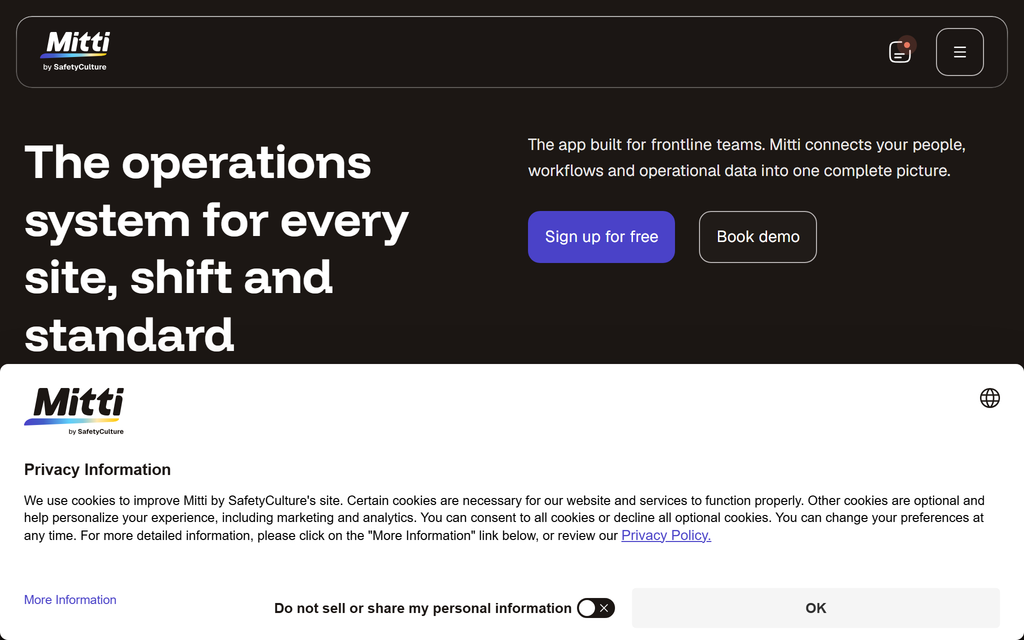
Mitti by SafetyCulture, formerly SafetyCulture, combines frontline training with inspections, issues and operational tasks. Its training product also incorporates the former SC Training offering. That makes it relevant when a safety manager wants short lessons and follow-up work available to the same crew.
Training can use an editable course library or material you create, with mobile delivery and completion records. Inspections and issue reporting serve a different job: recording what happened at a site and assigning the action that follows. Keeping both in the platform can help a supervisor find the lesson and the operational context without maintaining two separate lists.
Check how that connection works in the package you buy. Ask a vendor to demonstrate an inspection finding, the responsible person’s follow-up task and the relevant training record. The presence of an incident module does not prove that every incident automatically triggers a course, and offline behaviour can differ between inspections and learning.
My take: I would shortlist Mitti when the same supervisors manage both field checks and training. My deciding question is whether they can close the loop after a finding, including checking the task on site. For a programme focused on long courses or formal examinations, compare its learning workflow separately from the inspection features.
Cost and plans: Mitti publishes Free, Premium and Enterprise options. Pricing depends on seats, access level and contract arrangements; some customers use site-based pricing. Confirm training, course-library and offline entitlements in the actual offer rather than applying an old SC Training rate to the whole platform.
2. Vector Solutions
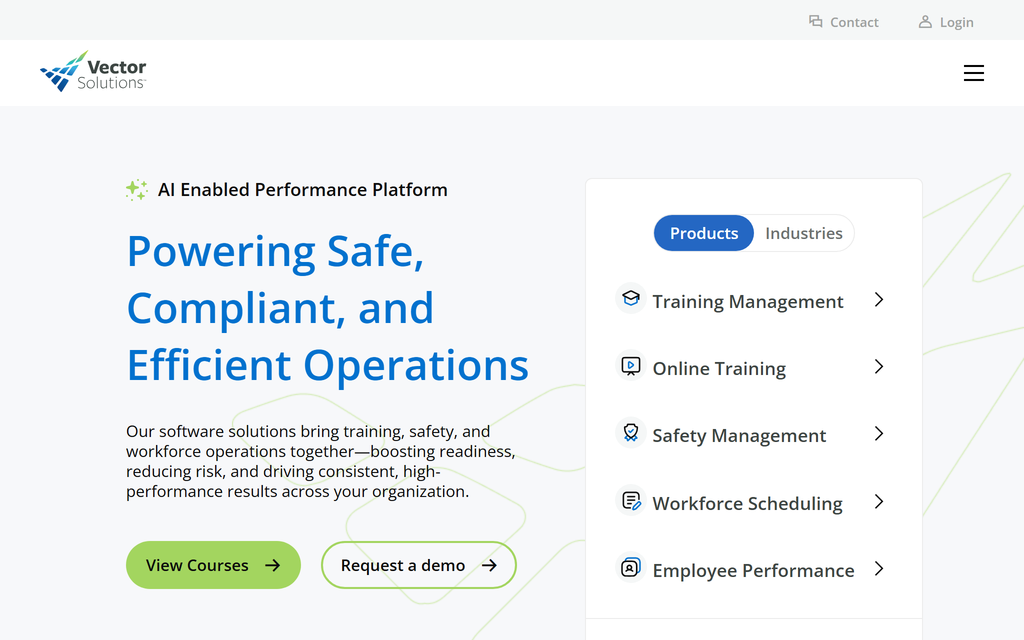
Vector Solutions combines an LMS with ready-made safety content and separate EHS products. Its health-and-safety library covers subjects such as hazard communication and fall protection, with multilingual material. It is relevant when a team needs purchased course content as well as a place to assign and record it.
The LMS supports assignments, reporting and records for online training, while the wider product family can connect learning to safety operations. An industrial team could assign common hazard-awareness courses centrally and supplement them with site-specific procedures. That is more useful than expecting a general library to explain the exact equipment and conditions at every location.
The course selection needs to match the workforce and jurisdiction. OSHA-aligned material and MSHA training address different requirements, and a course title alone does not establish the required practical assessment or instructor arrangements. Confirm the content edition and languages, then decide which local instruction remains the employer’s responsibility.
My take: Vector is on my shortlist when buying maintained safety content reduces the work of building every topic. I would inspect a representative course and its completion record before comparing library counts. The quality of the relevant modules and the site-specific training around them should drive the decision.
Cost and plans: Pricing is by quote. Ask for the LMS, selected course libraries, EHS modules and implementation separately, including how seasonal workers are counted. A quote for a content subscription is not automatically a quote for the incident-management products.
3. VelocityEHS

VelocityEHS Training & Learning is an LMS capability within the Accelerate platform. It combines a reviewed safety-course library, imported SCORM material, course creation, assignments and reporting with the wider EHS product family.
The Course Developer Tool can turn PowerPoint or PDF material into courses with quizzes, narration, captions and translations. Administrators manage learner profiles and training requirements across locations, receive completion information and export reports for further analysis. That supports both purchased safety courses and procedures written for the organisation.
The reason to compare the wider platform is the operating workflow around training: incident management, audits, job safety analysis and compliance. Those are separately scoped capabilities, so verify the connections you need. A demonstration should show which risk or action leads to which learning requirement and who approves that assignment.
My take: I would consider VelocityEHS when the safety team needs common administration across operational risk and learning. My preference would be to scope the training workflow before buying a broad set of modules. That keeps course maintenance, investigation follow-up and reporting responsibilities visible.
Cost and plans: Pricing is by quote. Include Training & Learning, course-library access, Course Developer, translations, relevant EHS modules and onboarding in the proposal. Confirm whether the quoted content and authoring allowances cover your languages and anticipated updates.
4. BIS Safety Software
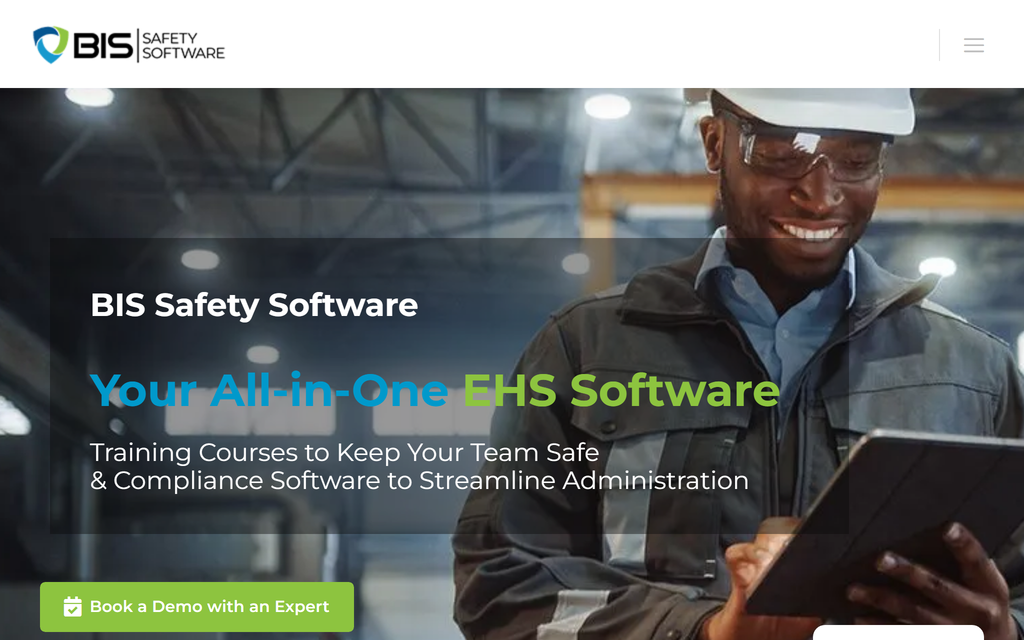
BIS Safety Software combines learning delivery, a training matrix and training-record management with digital forms and other safety tools. It is useful when online course completions must sit alongside external certificates and workplace records.
The matrix links training requirements to the employee’s role or work, while record management stores evidence and uses notifications for upcoming requirements. Its LMS includes an exam engine and access to course content. A contractor’s uploaded certificate and an internally completed induction can therefore be considered within the same training administration process.
The practical work is defining the matrix correctly. Decide which role requires each course, what evidence is acceptable and who approves an external record. A library with Canadian safety material may be useful for a Canadian operator, but it does not establish that every course meets requirements in another country or that software alone grants COR recognition.
My take: The combined matrix and external-record workflow is why I would compare BIS for a safety-heavy workforce. I’d ask a supervisor to retrieve one worker’s required, completed and expiring training in the same view. The system should help identify the missing evidence without making every supervisor maintain a separate spreadsheet.
Cost and plans: Pricing is by quote, with USD pricing identified on the vendor site. Scope the LMS, training-record management, matrix, purchased courses and digital forms. Course purchases and the software subscription may have different charging bases.
5. Coursebox
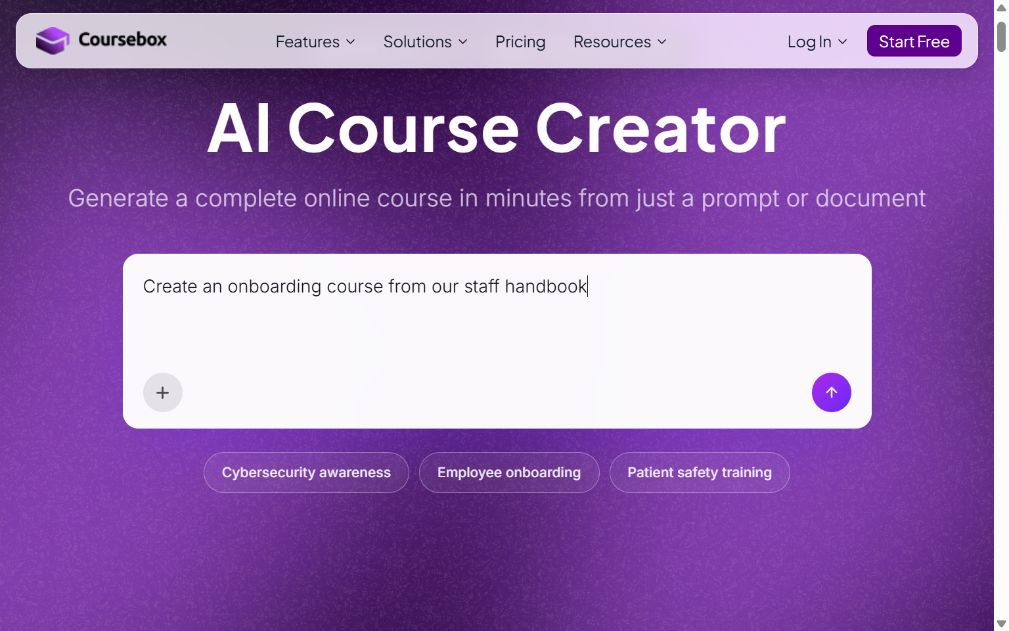
Coursebox combines course creation, tutoring, assessment and LMS delivery for teams teaching their own safety procedures. Approved documents can become lessons and questions that are reviewed before employees use them, with learner progress available to administrators.
A site-specific procedure needs more than a generic awareness course. The AI draft can organise the source into learning material; the course-grounded tutor helps learners ask about it, and written assessment can ask someone to explain what action a situation requires. Rubric-based grading provides feedback that an administrator can review and edit.
Groups, pathways and reporting support delivery and follow-up, while export options let the content be used in another learning system where the plan supports them. Practical demonstrations and competency sign-off still need their own process. Completing an online course does not authorise a person to operate equipment or replace the employer’s assessment duties.
My take: We build Coursebox, and the combination I value is keeping approved procedures, learner questions and assessment in the same programme. My first check would be the safety owner’s review of both the lessons and the grading criteria. Use it alongside operational incident records when those are managed in another system.
Cost and plans: All plans include unlimited learners, including Free, with course, AI and administrator allowances. Branded LMS features, advanced reporting, APIs and SSO depend on the selected plan or add-on. Price the authors, course updates and integrations your safety programme needs.
6. EasyLlama
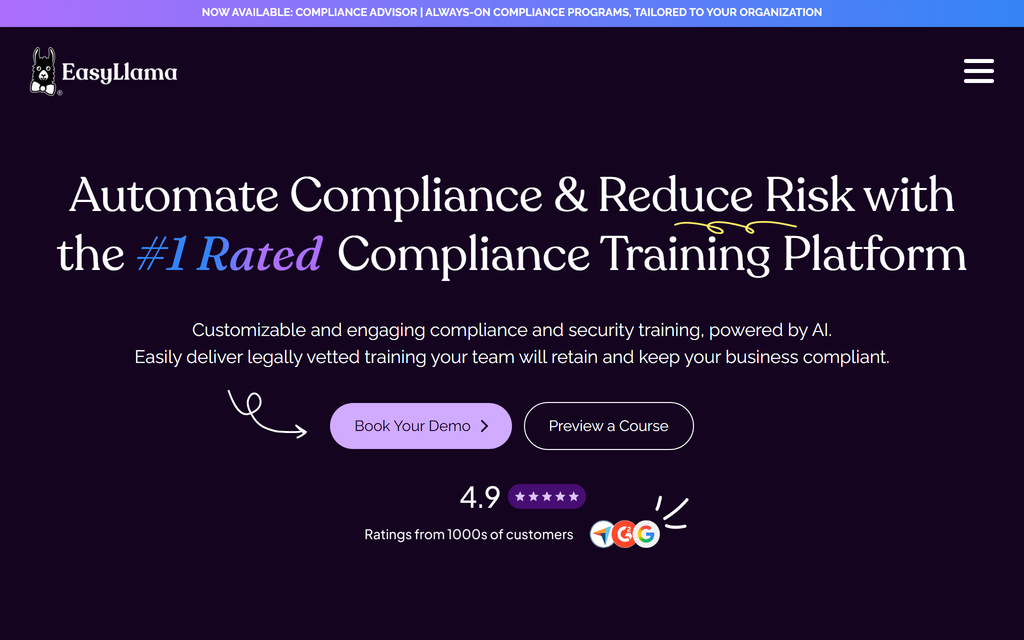
EasyLlama offers ready-made compliance and workplace-safety training alongside custom course creation. Its safety topics include fire safety, falls, materials handling, ergonomics and PPE, so it is useful when HR and safety share responsibility for assigning workplace courses.
Administrators select the required courses, distribute assignments and monitor completion. The current product also supports course customisation and AI translation. Those controls let a team add local context to a common topic rather than send the same generic course to every job role.
Inspect the exact course you intend to use. Coverage of forklift or bloodborne-pathogen awareness does not establish that a course supplies every practical, site-specific or refresher component of the applicable requirement. Keep a separate route for observations and any external qualifications that employees need.
My take: EasyLlama is on my shortlist when the main purchase is maintained workplace courses and their administration. I would compare the actual topics, languages and assignment model before choosing the package. A programme requiring frequent local procedure changes should also test the custom-authoring workflow.
Cost and plans: Current plans include Pay Per Course, Core and Ultimate. Pay Per Course counts one learner’s assignment to one course for one year, with a ten-course minimum and increments of five; unused assignments do not roll over. Compare that model with the platform plans rather than assuming all pricing is per employee.
7. EHS Insight
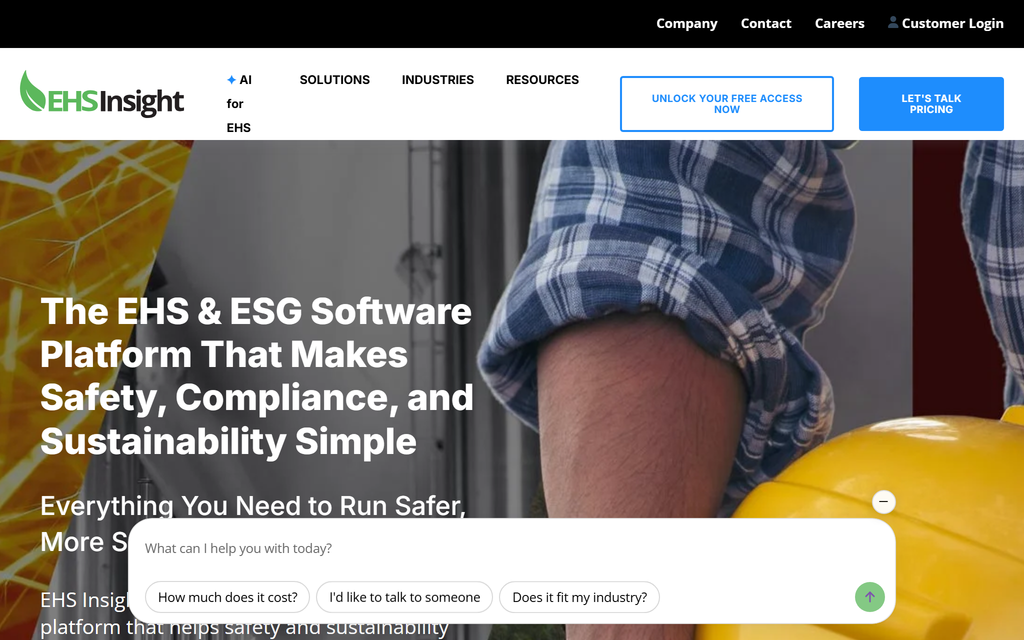
EHS Insight manages training within a modular EHS platform. Its training module covers tracking, configurable programmes and reporting, alongside modules for incidents, audits, inspections and compliance.
The benefit is central administration of requirements and evidence. A safety team can organise a training programme and use reporting to see outstanding work, while related EHS records remain in the wider platform. Its drill workflow also connects identified gaps with training assignments and corrective actions.
The implementation should identify what is recorded as learning and what is recorded as an operational action. A completed course, attendance at a drill and a supervisor’s follow-up are different evidence. Ask the supplier to demonstrate the records and permissions for each, including how the team retrieves them after a worker changes site.
My take: I would compare EHS Insight when training is part of a wider safety-administration problem. My pilot would follow one drill gap through an assigned course and a verified corrective action. That gives a more useful comparison than counting how many modules the platform offers.
Cost and plans: Pricing depends on the platform scope. Confirm the workforce basis, selected modules, content, implementation and support. Do not infer the course-library entitlement from the presence of the Training Management module.
8. SafetyAmp
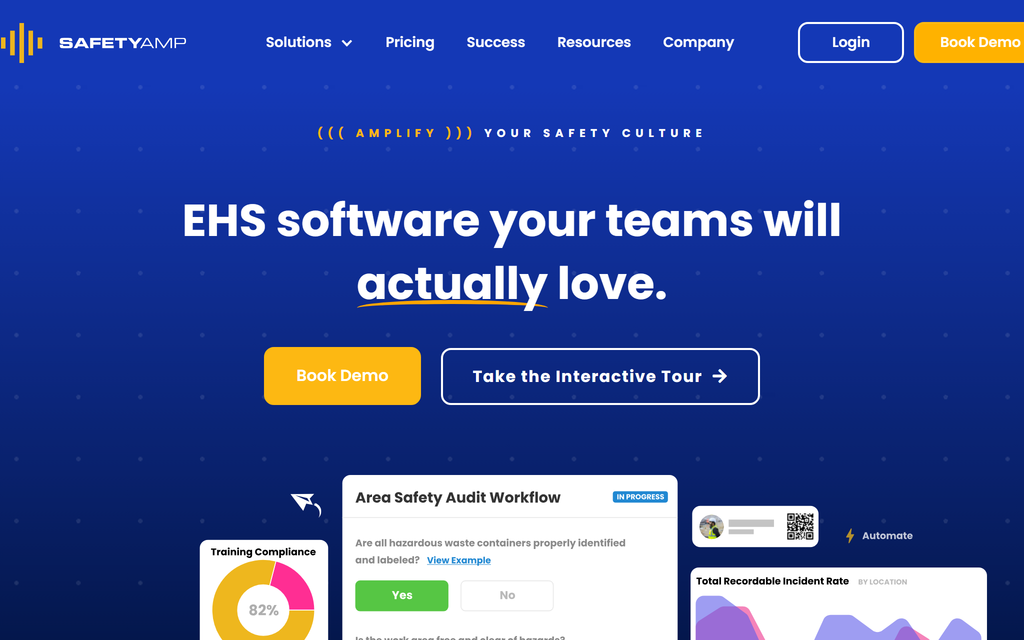
SafetyAmp combines EHS and quality workflows with learning management. It covers incidents, audits, risk assessments and contractor administration, so training can be managed beside the safety work that identifies a need for it.
Its available training library contains more than 400 courses across safety, hazards and other workplace topics in multiple languages. The library is an addition to the LMS, which is important when comparing an operational-platform proposal with a training-content purchase.
A useful programme links the required training to roles and follows outstanding actions. Check how an incident investigator requests learning, how a supervisor sees completion and how any practical verification is recorded. Keep the chain clear rather than assuming a course automatically resolves the incident.
My take: SafetyAmp would make my shortlist for an organisation that wants a configurable EHS workflow and training in one system. I’d test the everyday supervisor view as well as the administrator’s dashboard. A broad platform only helps if the people responsible for the follow-up can use the records and actions.
Cost and plans: Pricing is tailored to the organisation, and the vendor says it does not price by administrator or supervisor type. Include the LMS, course-library addition, implementation and any on-site services in the quote. Its plans serve small organisations through to enterprises, so size alone should not rule it out.
9. iSpring LMS
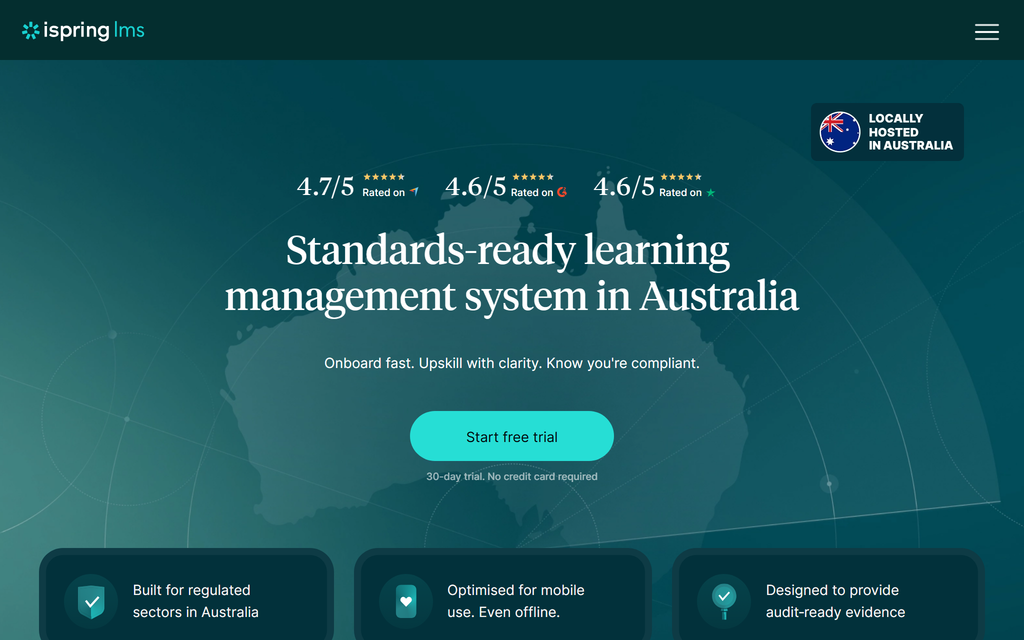
iSpring LMS, formerly iSpring Learn, combines learning delivery with authoring and practical-training workflows. It is relevant when a safety team already has PowerPoint material and needs courses, assignments, reporting and mobile access.
Learning tracks organise the courses, and enrolment rules can assign training through departments or groups. Supervisor reporting shows overdue or unsuccessful learning. On-the-job observation checklists can record how a worker performs a defined task, bringing a practical assessment into the programme alongside the online material.
Mobile and offline delivery need to be checked against the content type and device. Downloaded courses are useful at a remote site, but a course with externally hosted media or a live activity may require a connection. Test the actual package and how its records synchronise before planning a disconnected shift.
My take: The observation workflow is why I would compare iSpring for procedures that need demonstration as well as explanation. I’d evaluate an online lesson and its workplace checklist together, with the supervisor who will use them. Desktop Suite authoring also needs Windows and PowerPoint, so identify the course owner before rollout.
Cost and plans: LMS pricing uses monthly active users and annual billing. The Business package includes Suite AI authoring; headcount and currency affect the rate. Include the authoring environment and offline-content requirements in the comparison.
10. TalentLMS
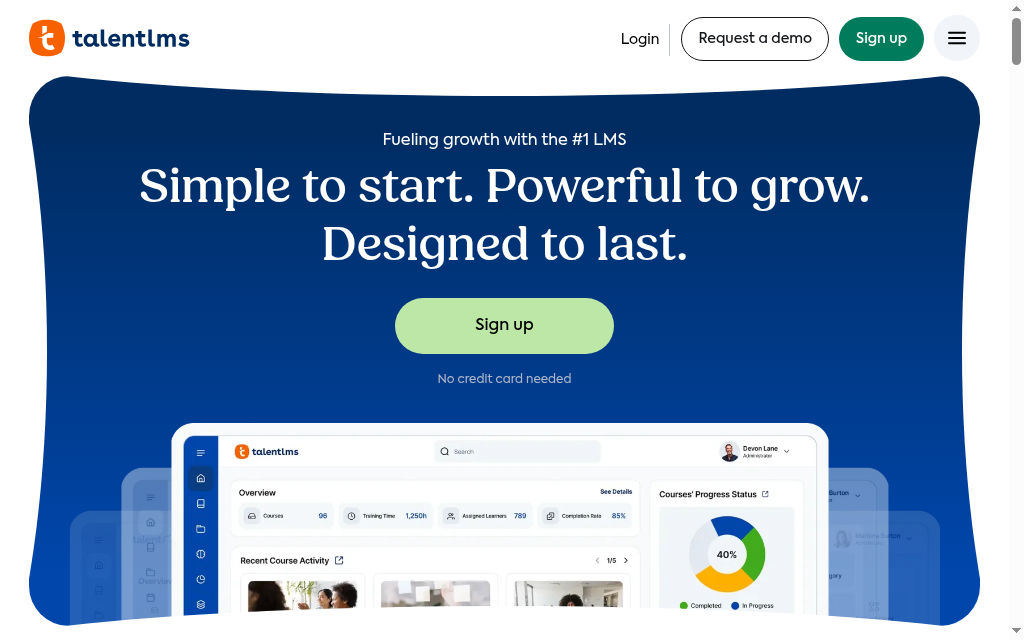
TalentLMS delivers and tracks courses without requiring the wider operational scope of an EHS platform. It is relevant when safety records and incident management already exist elsewhere, and the team needs straightforward learning administration.
Courses can use material built in the platform, imported learning packages or purchased content. Groups organise people who need the same training; branches provide separate environments where local administrators need their own audience and course controls. Reports and certificates support progress follow-up.
Its September 2026 release adds learning-path automation based on progress and separate notification controls. Configure the path and test it with the notification settings your team will use.
My take: TalentLMS would be on my shortlist when the safety team needs to run courses without replacing its existing EHS tools. My preference would be groups for ordinary role-based assignments, reserving branches for separately administered audiences. Bring the approved content and practical-verification process into the comparison, rather than expecting the LMS to supply them by default.
Cost and plans: Free allows five users and ten courses. Core starts at US$119/month billed annually for 1 to 40 users. Standard user bands and Flex monthly-login billing count people differently; automation and branch allowances also affect the plan.
A ready-made library can cover common awareness topics; site-specific procedures still need local review. Include practical evaluation where the task requires it, and compare the software’s actual assessment and recordkeeping workflow.
What your safety training programme needs to record
Start with the hazards and roles at your site. Assign the relevant learning, check understanding and record any practical evaluation the task requires. A short toolbox talk and a formal operator evaluation serve different purposes.
Training requirements depend on the hazard, task and applicable standard. For example, OSHA’s powered-industrial-truck standard combines formal instruction, practical training and workplace evaluation. Operator performance must be evaluated at least every three years; refresher training has additional triggers, including unsafe operation and changed workplace conditions. That is not a universal three-year expiry for every safety course.
- Content and evidence. Check the required learning, practical evaluation, assessor and records for each task. OSHA 300 incident logs are separate from training records.
- Due dates and renewal. Configure the schedule applicable to the task or credential. Do not apply one expiry rule to every course.
- Incident follow-up. Decide who reviews an incident, which learning or practical evaluation is needed and how it is assigned. Confirm any automatic connection in the proposed EHS or LMS configuration.
- Access on the job. Check the crew’s actual phones, languages, connectivity and time available. Test offline completion and synchronisation only where the chosen product supports them.
- Scope and ownership. An LMS can manage training; an EHS suite may also manage inspections and incidents. Buy the functions you need and name the person responsible for each record.
US Bureau of Labor Statistics provides context for the training decision. This figure describes workplace incidents. Use your own hazards and incident reviews to choose training priorities and practical evaluations.
Which safety training software should you choose
| Your priority | Compare | Check before buying |
|---|---|---|
| Site-specific procedures with assessment and delivery | Coursebox | Source approval, grading criteria, required practical checks |
| Mobile frontline learning alongside inspections | Mitti | Device access, training licence and record synchronisation |
| Licensed safety content | Vector Solutions, EasyLlama | Exact topics, languages and licence model |
| Training beside EHS operations | VelocityEHS, EHS Insight, SafetyAmp | Modules and configured incident-to-training workflow |
| Matrix and external training records | BIS Safety Software | Certificate uploads, renewal rules and assessor evidence |
| General learning administration | TalentLMS, iSpring LMS | Assignment, reporting and active-learner cost |
Safety is one of the heaviest training loads in industry, so if you are specifically in manufacturing, our guide to the best LMS for manufacturing covers the plant-floor side in more depth.
Run a pilot with one real safety task
- Choose a task with clear hazards, an approved procedure and the practical evaluation it requires.
- Assign the learning to a new worker and an existing worker, then check reminders and access.
- Record a failed assessment and an observed practical result. Confirm who can review and approve each.
- Export the record. Check the person, content version, result, assessor and applicable renewal date.
Frequently Asked Questions
Safety training software helps you create or license courses, assign learning, assess understanding and retain records. A wider EHS suite may also manage inspections and incidents. Confirm which modules and connections are included.
OSHA requirements depend on the task and hazard. For powered industrial trucks, formal instruction, practical training and workplace evaluation are required. Performance evaluation is required at least every three years, with separate refresher triggers. Do not treat that as one expiry rule for all safety training.
An EHS platform covers operational safety functions such as inspections and incidents. An LMS focuses on learning assignment, assessment and reporting. Integration between them depends on the product, licence and configuration.
Yes. Compare mobile access, languages and the format of a toolbox talk with your crews’ actual devices and work. If offline learning is required, demonstrate download, completion and record synchronisation in the specific product.
Coursebox and TalentLMS have free tiers. EasyLlama offers pay-per-course and subscription options; wider EHS suites are usually quoted by scope. Include the library, practical-evaluation process, implementation and integrations in your comparison.
Travis Clapp
Travis Clapp is the original founder and CEO of Coursebox. As an experienced instructional designer, he has lived through the process of building high quality courses. These experiences brought about his idea to upload all your documents and ideas into a virtual box that could convert those magically into a course. Prior to Coursebox, he successfully founded and built a social based LMS. Travis has 15+ years of experience designing courses and EdTech platforms from university MOOCs to enterprise LMS. Travis has built training for reputable companies like Johnson & Johnson, Electrolux, Michael Hill and SA Health. One of his courses reached 20,000+ learners which was a flagship edX course. He is based in the Adelaide, South Australia office and passionately works on customer support, sales and bringing the original product vision to life every day.

