

A Complete Guide to Types of Assessment in Education and Training
Wondering what are the different types of assessment in education and training? Explore formative, summative, diagnostic, and more with clear explanations.


Go from storyboard to an interactive course in minutes
In education and training, assessment is often seen as the final step, something that happens after teaching is complete. However, it is far more than a final checkpoint. It influences how learners study, how instructors teach, and how progress is measured.
This is why it’s important to understand the different types of assessment. Some of these are designed to guide learning, while others measure overall understanding at the end, and a few identify gaps before instruction even begins.
In this complete guide, you will explore the main types of assessment in education and training and how to apply them properly.
What are Assessments in Education and Training?
Assessment in education and training is a tool used to measure and support learning. They help educators, trainers, and organizations understand what learners know, what they can do, and where improvement is needed.
It includes quizzes, assignments, projects, practical demonstrations, discussions, observations, and performance tasks.
In education, assessments help teachers adjust their instruction. If many students struggle with a concept, the teacher knows to revisit it. This is especially important in fields such as healthcare, manufacturing, finance, and technology, where mistakes can have serious consequences.
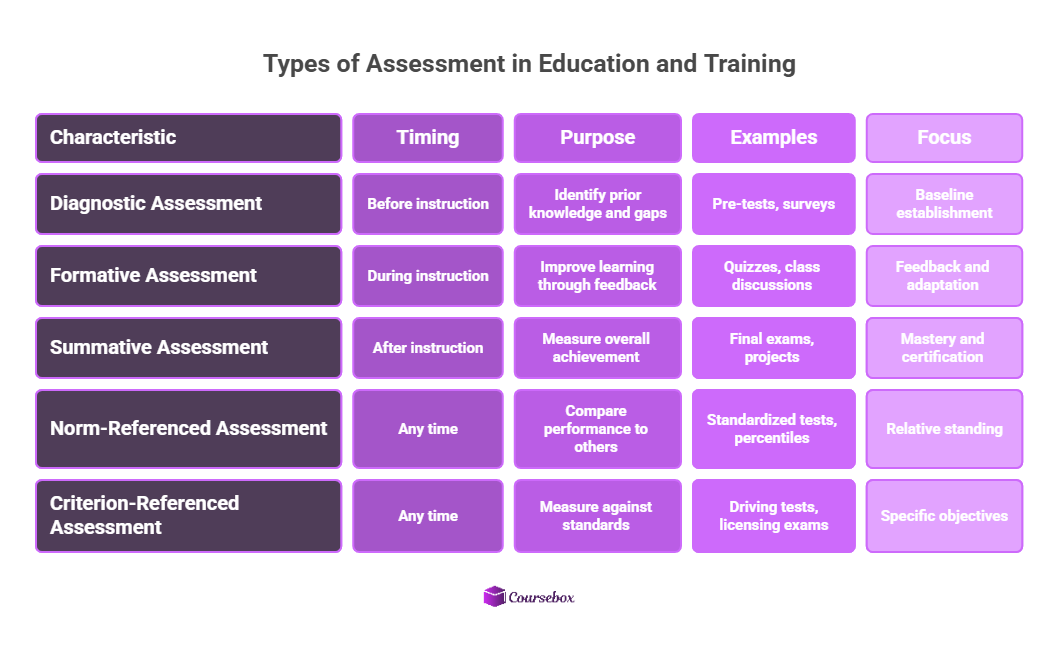
Five Types of Assessment in Education and Training
Each of the different types of assessment serves a different purpose. They are not interchangeable. If you confuse them, these assessments can become stressful and ineffective. Let’s break each one down clearly.
1. Diagnostic Assessment
Diagnostic assessment happens before instruction begins. Its purpose is to identify what learners already know and where skills gaps exist. Instead of grading students, it establishes a baseline.
Teachers use this information to adjust lesson plans, group students appropriately, or revisit foundational concepts. In corporate training, diagnostic checks determine whether employees need beginner or advanced instruction.
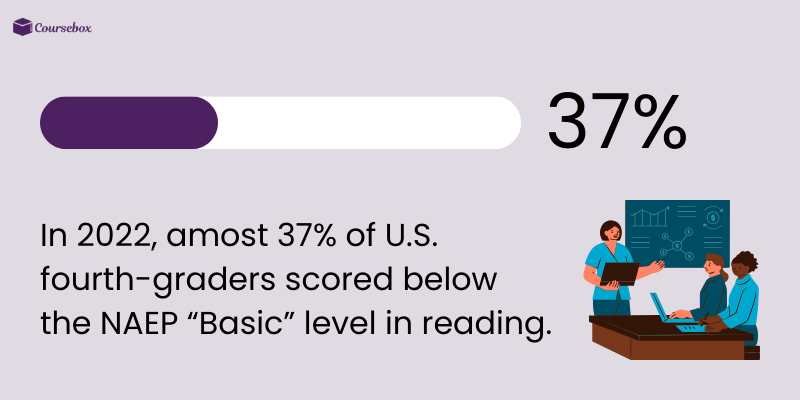
It matters because early diagnosis prevents wasted time and long-term gaps. For example, national reading assessments show a large gap in foundational skills. This was especially evident in 2022, when 37% of U.S. fourth-graders scored below the NAEP “Basic” level in reading.
Source: Nations Report Card
2. Formative Assessment
Formative assessment is an assessment for learning. It happens while learners are still learning. This assessment aims to give timely, useful feedback that helps learners correct mistakes and teachers adapt instruction.
When used consistently, formative approaches improve learning because they close the feedback loop while learning is active.
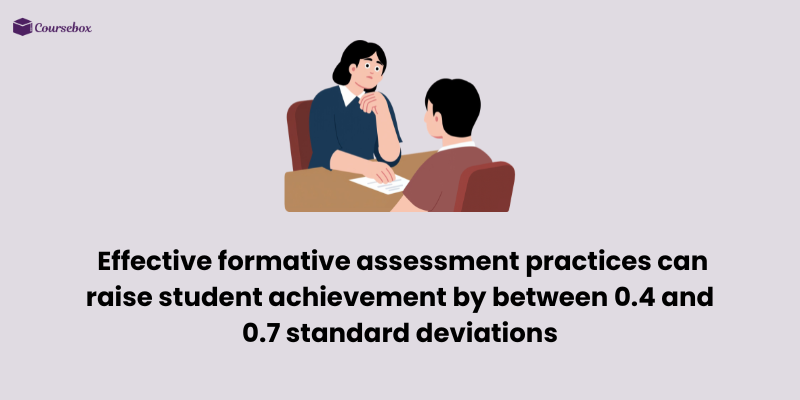
Even research backs this approach. Research has found that effective formative assessment practices can raise student achievement by between 0.4 and 0.7 standard deviations. This is considered a substantial improvement in educational research.
Source: Cambridge International
3. Summative Assessment
Summative assessment occurs at the end of a course or unit. Its purpose is to measure overall achievement. Common examples of this include final exams, certification tests, and end-of-term projects.
This type of assessment determines whether learners have met established learning objectives. It often influences grades, certifications, or advancement decisions.
Summative assessments provide a snapshot of overall performance and mastery. They help confirm whether learning objectives were met and can be used for certification, progression decisions, or program evaluation.
4. Norm-Referenced Assessment
Norm-referenced assessment compares a learner’s performance to others. Instead of measuring against a fixed standard, it ranks individuals within a group. For example, standardized college entrance exams often use percentiles.
If a student scores in the 85th percentile, it means they performed better than 85% of the comparison group.
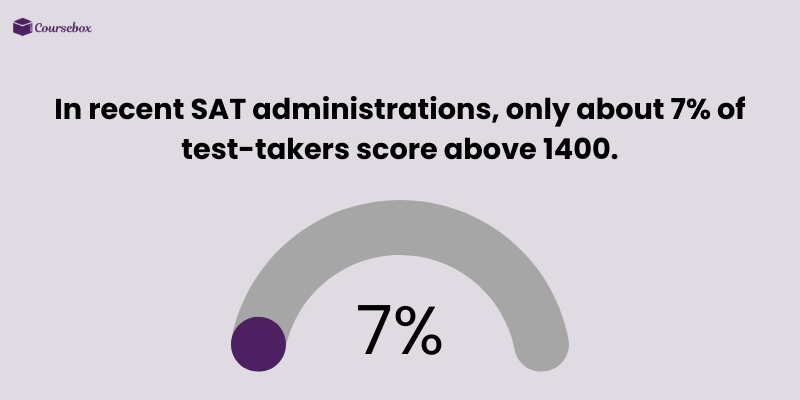
In fact, in recent SAT administrations, only about 7% of test-takers score above 1400. It places them among the highest-performing students nationally. This clearly shows how norm-referenced assessment identifies relative rank and standing within a population.
Source: Onto College
5. Criterion-Referenced Assessment
Criterion-referenced assessment measures performance against specific, pre-defined learning objectives or standards
It asks if a learner has met specific learning objectives, regardless of how others perform. Examples include driving tests, licensing exams, or skill demonstrations where clear benchmarks must be met.
This type is focused on mastery. It answers the question: Has the learner achieved the required level of performance or understanding? This makes it ideal for training programs, certifications, and competency-based assessments.
Formal vs Informal Assessment
Assessment in education and training can generally be grouped into two broad categories: formal and informal assessments. Both serve important purposes, but they differ in structure, timing, and how results are used.
Below is a clear comparison to help you understand how they differ.
| Aspect | Formal Assessment | Informal Assessment |
|---|---|---|
| Structure | Structured and pre-planned with a clear format | Flexible and often spontaneous |
| Purpose | Measures achievement or mastery | Monitors understanding during learning |
| Examples | Final exams, standardized tests, certification exams, and graded projects | Class discussions, quick quizzes, observations, and questioning |
| Grading | Usually graded and recorded | Often not graded or recorded formally |
| Timing | Occurs at specific points (end of unit, term, or program) | Happens continuously during instruction |
| Documentation | Results are formally documented | Results are usually used for immediate feedback |
| Use Case | Certification, promotion, compliance, and accountability | Adjusting teaching methods and supporting learning in real time |
In practice, effective education and training combine both. Informal assessment helps guide learning as it happens, while formal assessment confirms overall achievement at key milestones.
Assessment Methods Commonly Used by Educators and Trainers
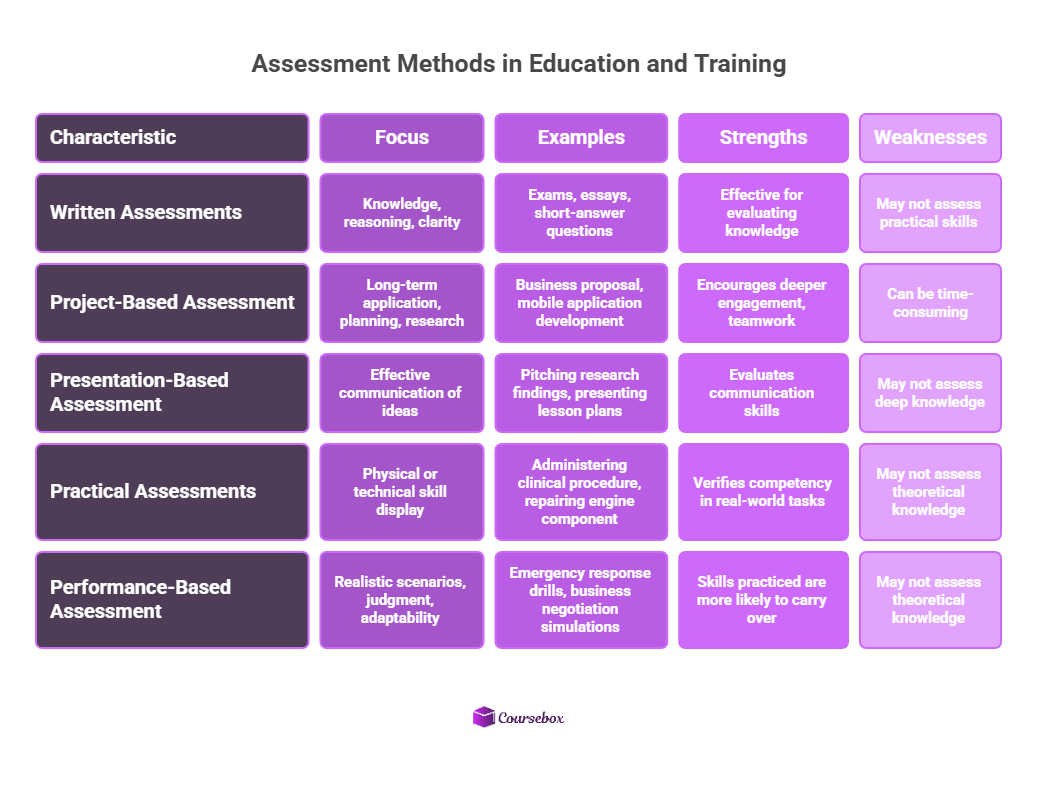
Educators and trainers rely on different assessment methods depending on what they want learners to demonstrate. Here are the most commonly used assessment methods, which you can try out too:
1. Written Assessments
Written assessments are one of the most traditional and widely used methods. They include exams, essays, short-answer questions, and structured quizzes. This format is effective when the goal is to evaluate knowledge, reasoning, and clarity of thought.
Within academic environments, written exams often test analytical thinking and structured argumentation. In workplace training programs, written assessments frequently verify knowledge of safety protocols or regulatory standards before practical tasks.
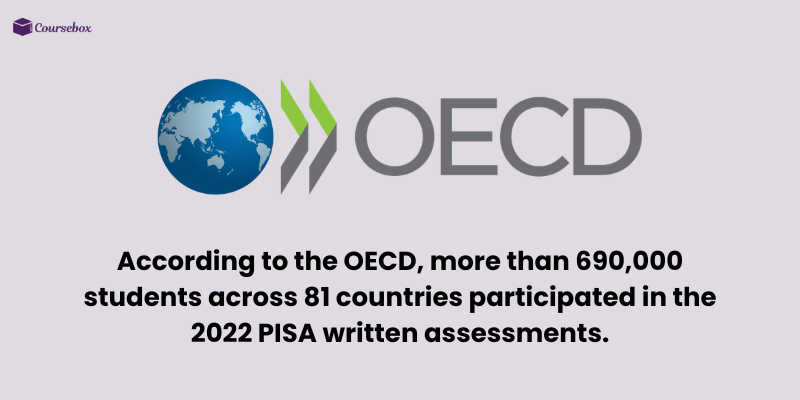
Large-scale written testing plays a major role globally. According to the OECD, more than 690,000 students across 81 countries participated in the 2022 PISA written assessments. These evaluations use standardized written tasks to compare literacy, mathematics, and science skills internationally.
Source: ACER News
2. Project-Based Assessment
Project-based assessment shifts the focus from short answers to long-term application. Learners work on extended tasks that require planning, research, creativity, and problem-solving over time.
Instead of answering isolated questions, students might design a business proposal or develop a mobile application. The process often involves multiple stages such as drafting, revising, and presenting findings.
This method encourages deeper engagement because learners must connect ideas. Collaboration is often built into project-based assessment, helping develop teamwork and communication skills alongside subject mastery.
3. Presentation-Based Assessment
Presentation-based assessment evaluates how effectively learners communicate ideas. In this, individuals are asked to explain concepts verbally in a structured format in place of submitting written responses.
This is frequently used for presentations in business programs for pitching or defending research findings. In teacher training, candidates may present lesson plans to show instructional competence.
Even leadership programs often require participants to present solutions, which shows how much they’ve learned. Some key evaluation factors here include clarity, structure, confidence, and audience engagement.
4. Practical Assessments
Practical assessments require learners to display their skills physically or technically. Here, the learners must perform their skills and not just describe the process.
One perfect example of this would be healthcare training. A nursing student may be evaluated while administering a clinical procedure under supervision. In technical education, a trainee mechanic might be assessed by repairing an engine component in real time.
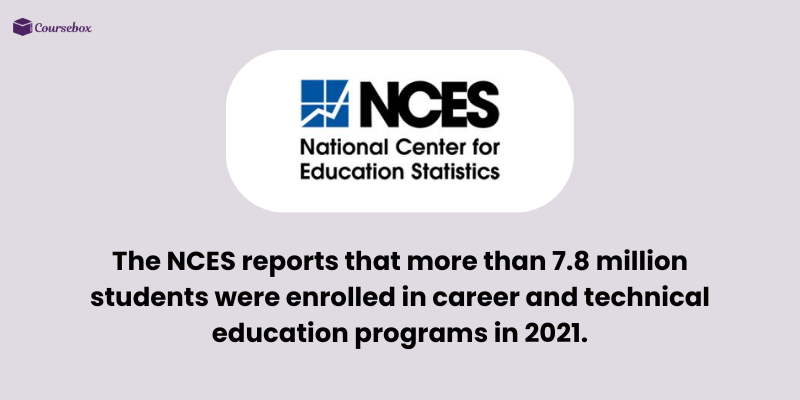
Career and technical programs frequently depend on this method. The NCES reports that more than 7.8 million students were enrolled in career and technical education programs in 2021. Many of these programs use hands-on, practical assessments to verify competency.
Source: NCES
5. Performance-Based Assessment
The last type of assessment that is used mostly is performance-based. It places learners in realistic scenarios that simulate real-life tasks. In this assessment, the participants must show how they would respond to a particular situation.
Examples include emergency response drills, business negotiation simulations, courtroom mock trials, or flight simulator exercises. These assessments measure judgment, adaptability, and practical execution under pressure.
This assessment is one of the best ones, as skills practiced in simulation are more likely to carry over into real environments.
Not sure how to manage all these assessments?
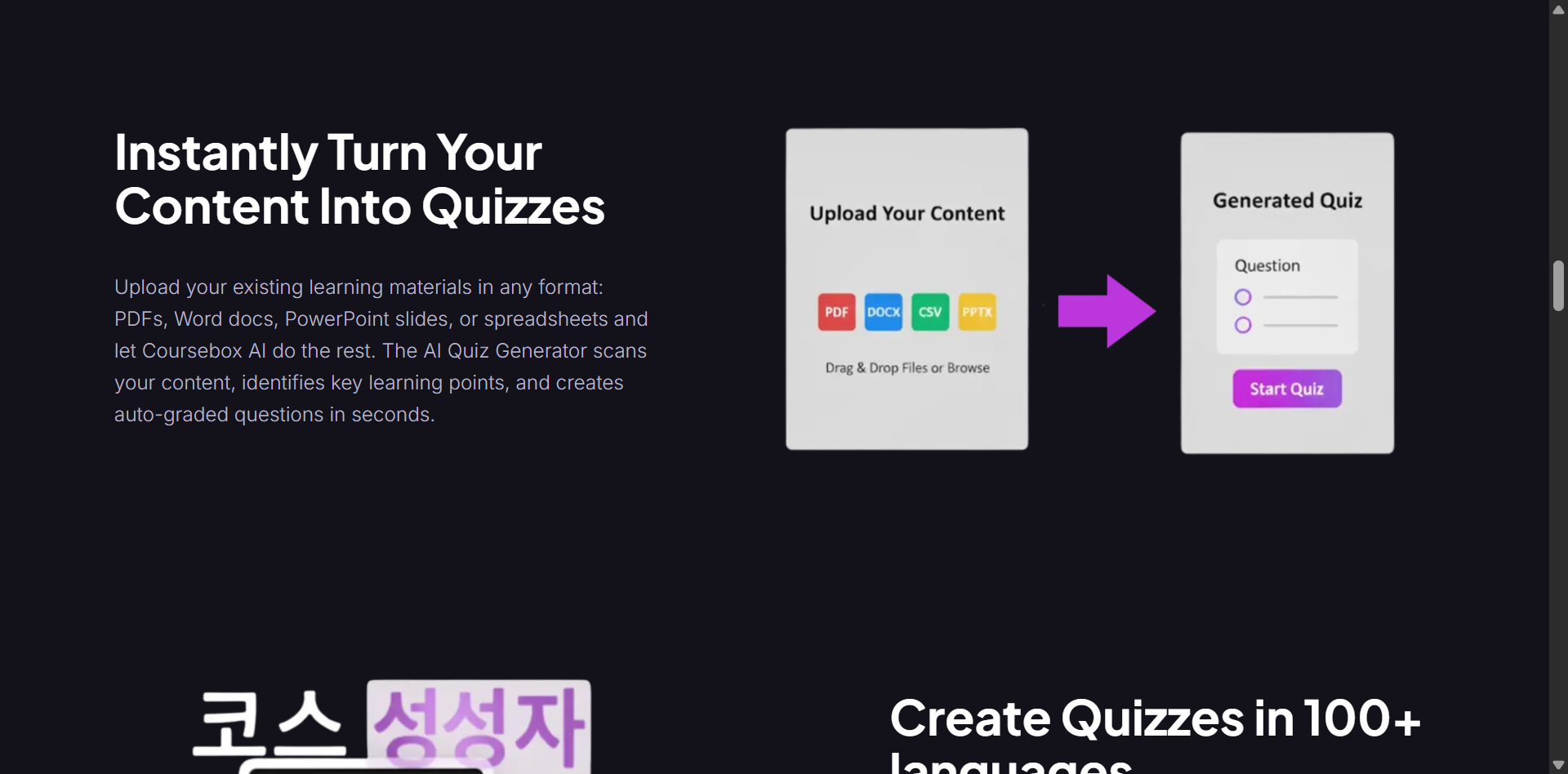
Coursebox has your back. It simplifies the entire process with AI-powered assessment tools. Educators and trainers can generate written quizzes, open-ended questions, and structured assessments within minutes.
Things to Look at While Choosing the Right Type of Assessment
Choosing the right type of assessment is not random. It should match what you want learners to show, do, and demonstrate. The following factors help you decide which assessment method will give you accurate, useful results.
1. Learning Outcomes
Start by being clear about what learners need to achieve.
Are you measuring understanding, skill application, critical thinking, or factual recall?
If the goal is deep understanding and transfer of knowledge, assessments that require explanation or problem-solving are best. For basic recall, short quizzes might be fine. Learning outcomes should always drive the choice of assessment.
2. Learner Level
The proficiency and experience of learners matter. Beginners may need simpler, supportive assessments that check basic knowledge, while advanced learners should be challenged with complex applications and problem-based assessments.
Assessments that are too hard early on can discourage learners, while too-easy assessments later fail to stretch them.
For example, novice nurses may be assessed on basic safety skills, while seasoned nurses may be evaluated on complex patient scenarios.
3. Class Size
How many learners are you assessing?
In large groups, quick and scalable assessment methods like multiple-choice tests or automated grading tools work best. For smaller classes or training, you have more flexibility for detailed written work, presentations, or performance assessments.
As for large online learning environments, automated assessment tools can increase efficiency without sacrificing insight.
4. Compliance Requirements
Certain fields require specific assessments because of legal or safety standards. Healthcare, aviation, finance, and technical trades often have mandatory competency assessments. These are usually criterion-referenced, where learners must meet predefined standards.
For instance, professionals in medical fields often must pass standardized assessments to maintain licenses or certifications.
5. Time and Resources Available
Assessment takes time to administer, grade, and interpret.
Some assessments, like performance portfolios or projects, require more instructor time and feedback. Meanwhile, assessments like online multiple-choice quizzes require minimal overhead.
By evaluating available time, you can choose methods that are practical and sustainable.
Make Assessment Creation More Effective
Choosing the right types of assessment is only the first step. Designing them, grading them consistently, and keeping everything organized is where many educators and trainers start to feel overwhelmed.
But not anymore. If you are struggling to create structured assessments, Coursebox can help you out.
It provides an AI Quiz Generator that creates open-ended questions in seconds. You also get an AI-powered grading system that evaluates responses based on your marking rubric and reduces manual workload.
FAQs
Frequently Asked Questions
Formative assessment happens during the learning process and is used to improve understanding while instruction is still ongoing. It focuses on feedback, correction, and growth. On the other hand, summative assessment happens at the end of a unit or course and measures overall achievement. It confirms whether learning objectives were met.
Start by asking what decision you need to make. If you need to understand learners’ starting levels, use a diagnostic assessment. However, if you want to improve learning during instruction, choose formative assessment. For certifying, grading, or confirming mastery at the end, use a summative assessment.
To measure real learning, assessments should focus on application, analysis, and problem-solving. Ask learners to apply concepts in new situations, explain reasoning, or complete practical tasks. Also, for the best measurement, use case studies, projects, simulations, presentations, or real-world scenarios.
Rubrics provide clear criteria for evaluating performance. They explain what is expected and describe different levels of quality. In formative assessment, rubrics guide feedback and show learners how to improve. Meanwhile, summative assessment rubrics ensure consistent and fair grading. In short, rubrics reduce subjectivity because they clarify what success looks like.
Alex Hey
Digital marketing manager and growth expert

