

Sociocultural Theory: Applying Vygotsky to Learning in 2026
Wondering how a learning theory from decades ago still explains how people learn today? Explore how sociocultural theory applies to modern, AI-driven learning.


Go from storyboard to an interactive course in minutes
Long before algorithms and adaptive systems entered education, Lev Vygotsky’s Sociocultural theory challenged a core assumption about how learning works.
He argued that knowledge does not develop in isolation inside the learner’s mind. Instead, it takes shape through social interaction, language, and shared activity. Learning, in this view, is fundamentally social.
However, with the rise of AI in education, people are asking how this sociocultural theory applies today. That’s exactly what we’ll explain in this article today, along with answering all the lingering questions.
What Is Sociocultural Theory?
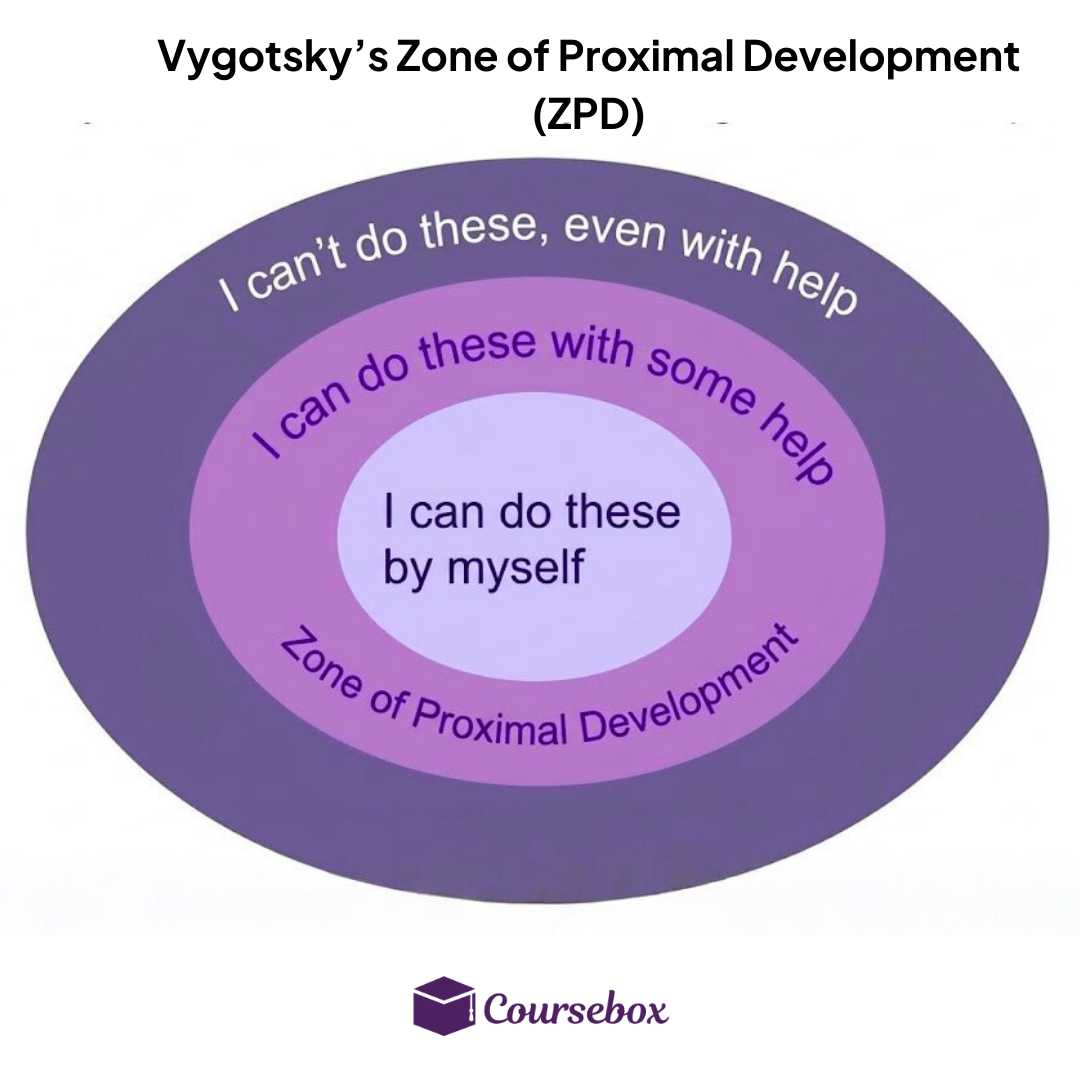
Sociocultural theory explains learning as a social process. It was developed by Lev Vygotsky, who believed that people do not learn solely through thinking. Understanding only grows through interaction with others, language, and the cultural environment.
At the center of this theory is a simple idea. Human thinking develops first between people, and only later inside the individual. In practical terms, this means learners make sense of the world by talking, asking questions, and participating in shared activities.
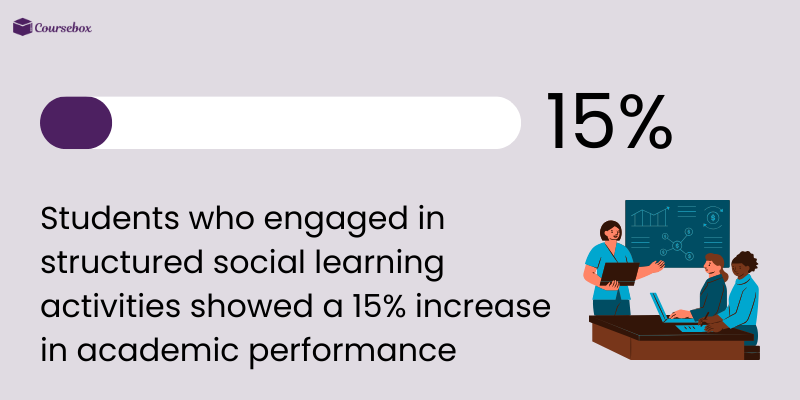
Research shows that students who engaged in structured social learning activities showed a 15% increase in academic performance. This shows how important social learning is for anyone.
Source: ResearchGate
The Core Ideas Behind Sociocultural Theory
Here are the core ideas behind sociocultural theory and how each explains a different part of the same process:
1. Zone of Proximal Development (ZPD)
Source: Educational Development
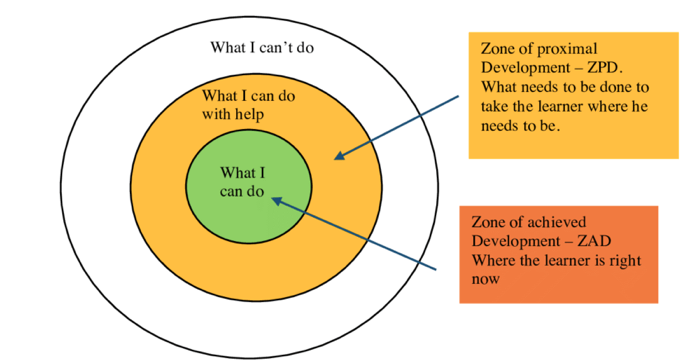
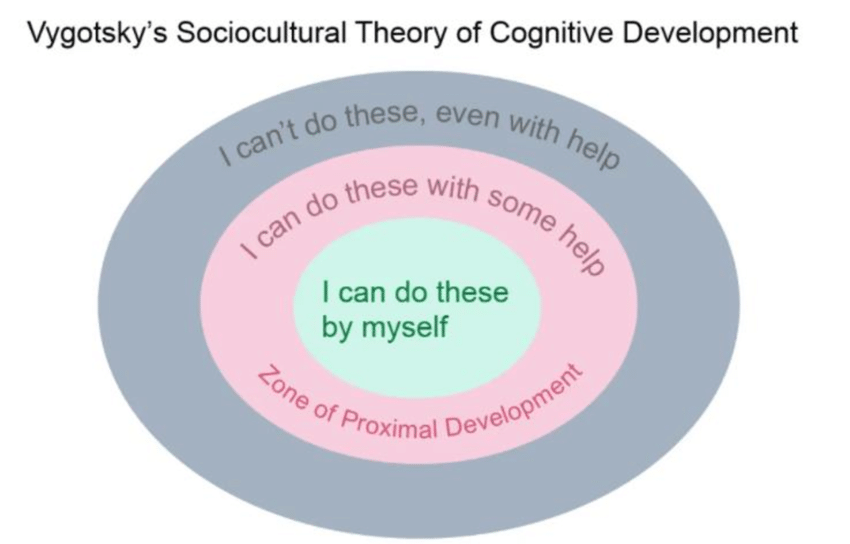
The Zone of Proximal Development explains where learning is most likely to happen. It refers to the space between what a learner can do on their own and what they can do with help. Tasks below this zone feel too easy and do not lead to growth.
Meanwhile, tasks far above it feel overwhelming and lead to frustration. Learning happens in the middle, where support makes progress possible.
Simply put, ZPD is about potential. A learner might not be able to solve a problem alone, but with guidance, questions, or examples, they can understand it. Over time, what once required help becomes something they can do independently.
2. More Knowledgeable Other (MKO)
The More Knowledgeable Other is the source within the learning process. Traditionally, a teacher, parent, or mentor fills this role. It can also be a peer with more experience, or even a structured system to guide learning.
What matters is knowledge. The MKO understands the task better than the learner and helps bridge the gap within the learner’s ZPD. This help can take many forms. It might be explanations, demonstrations, hints, or feedback.
Importantly, sociocultural theory does not assume the MKO always leads. As the learner gains understanding, the guidance becomes lighter and then gradually fades.
3. Scaffolding
Instructional Scaffolding describes how support is provided and then slowly removed as learning develops. Consider it a temporary structure. It exists only as long as it is needed.
At the beginning of learning something new, a learner may need clear instructions, examples, or step-by-step guidance. Eventually, the learner performs the task alone, without external help. This gradual removal is intentional and responsive to the learner’s progress.
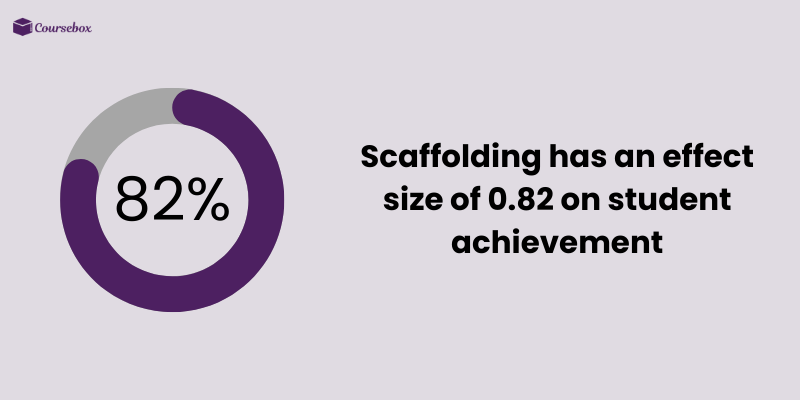
Studies also show that scaffolding has an effect size of 0.82 on student achievement. This means it is one of the most powerful learning strategies.
Source: Structural Learning
4. Language and Cultural Tools
Both explain how thinking itself is shaped. In sociocultural theory, tools are not just physical objects. They include language, symbols, writing systems, diagrams, technology, and shared practices.
Language is the most powerful tool. Through conversation, explanation, and dialogue, learners organize thoughts and make sense of ideas. At first, this thinking happens out loud. Over time, it becomes internal.
Culture also plays a central role. Every learning environment carries values, expectations, and a mindset. These influence what is taught, how it is taught, and how understanding is measured.
How Learning Works According to Sociocultural Theory
Sociocultural theory explains learning as a movement from the social world to the individual mind. If we have to divide the entire thing into steps, here’s how it will be:
Step 1: Participation Comes First
Learning starts with participation. A learner enters a learning situation that they cannot yet handle alone. They observe, listen, ask questions, and take part in shared tasks. At this stage, understanding is social.
This phase reflects Vygotsky’s core idea that human thinking is formed through activity and social interaction before it becomes personal.
Step 2: Guided Interaction
Once the learner is participating, guided interaction begins. Someone, like a teacher, peer, or another guide, helps the learner by explaining, demonstrating, asking questions, or providing feedback.
It is shaped by what the learner currently understands and where they need help. Real research also supports this. A meta-analysis found that when learners engage in guided learning, the overall effect was measured as 0.71 on a standardized scale.
Source: Nature
Step 3: Internalization
As learners receive guidance and practice through interaction, what was once external starts to become internal. Conversations that happen between people turn into inner thinking. The learner then starts to use the strategies as their own.
At this stage, learning moves from the social plane to the individual plane. The learner no longer needs help with tasks they once struggled with. Their understanding now lives inside their own thinking.
Step 4: Culture and Language Shape the Process
All this happens within a cultural and linguistic context. Language is not just communication; it shapes thought itself. Additionally, cultural tools, such as language, symbols, and shared practices, influence how learners make meaning and solve problems.
Learning is never culturally neutral. The environment, tools, norms, and language a learner grows up with shape what and how they learn.
How Sociocultural Theory Is Used in Education
In education, sociocultural theory focuses on interaction, guidance, and shared meaning. With that in mind, below is how it is commonly applied and how readers can use it in real learning environments.
1. Classroom Teaching and Group Learning
In sociocultural learning, classrooms are designed for interaction. Students learn through discussion, group tasks, peer explanation, and shared problem-solving. Working together allows learners to operate inside their ZPD.
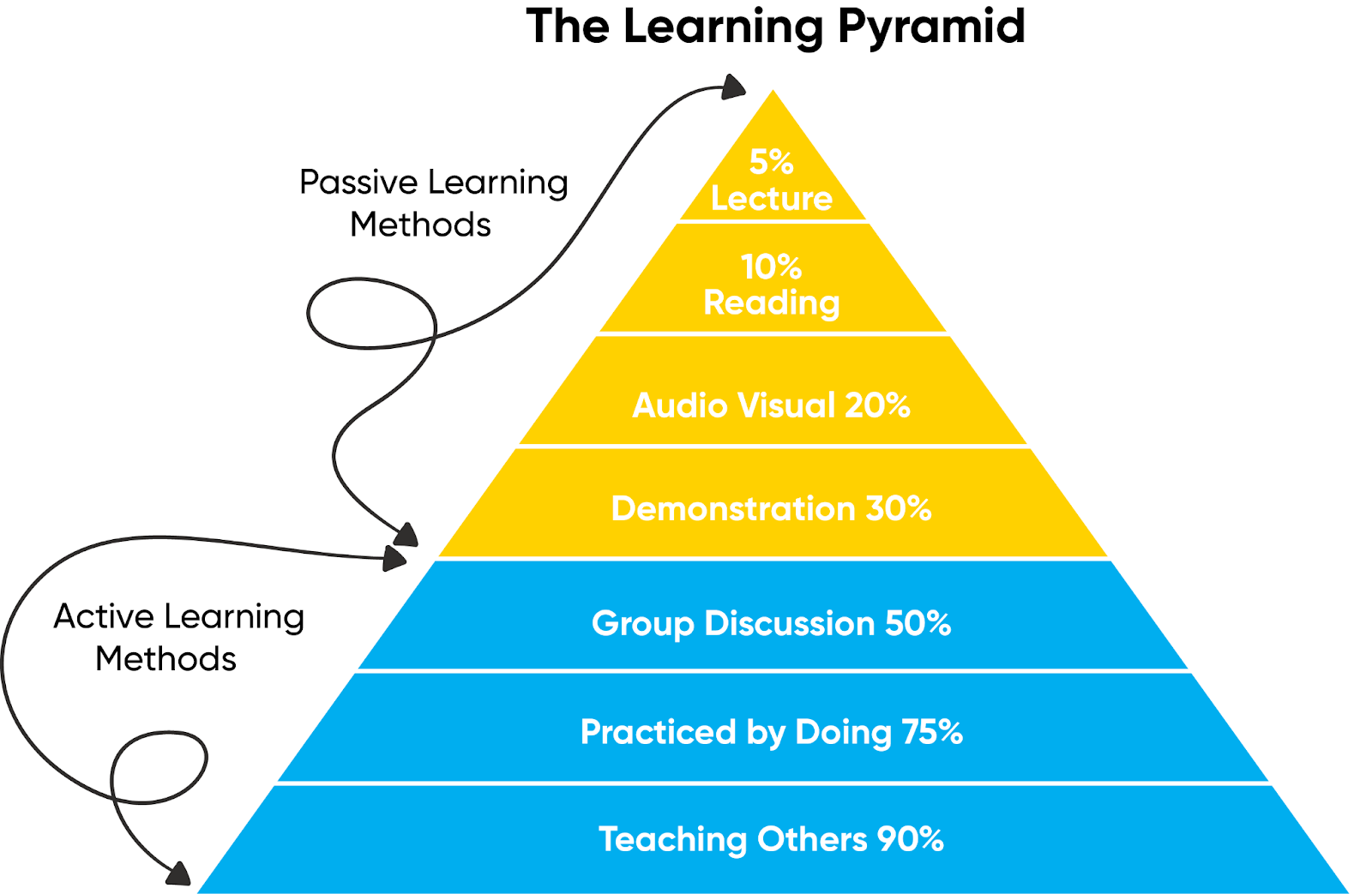
As for group learning, it works best when it is structured. Teachers assign clear roles, shared goals, and discussion prompts. In fact, the Learning Pyramid shows that learners retain 50% more information through group discussions.
Source: ARLO
To apply this, use small-group discussions instead of only lectures. Ask learners to explain the concepts to peers and design tasks that require cooperation.
2. Teacher’s Role in Sociocultural Theory
The teacher, in sociocultural theory, acts as a guide, facilitator, and More Knowledgeable Other (MKO). Their role is to support learning at the right moment and gradually reduce help as learners gain confidence.
Teachers observe where students struggle and provide prompts, examples, or guiding questions. As understanding improves, support is pulled back. This process is called scaffolding and helps learners become independent thinkers over time.
To best use this approach, ask guiding questions and do not just give solutions. Show the students how to think out loud and then ask them to do the same. Once they get the hang of it, reduce help gradually.
3. Assessment and Feedback
Assessment in sociocultural learning leans toward feedback and progress. They don’t see the final scores but rather how much someone has improved from their baseline.
Feedback here works wonders as it helps learners understand where they are, what needs improvement, and how to move forward. Instead of waiting until the end of learning, feedback is given during the process.
This keeps learners within their ZPD and prevents small misunderstandings from becoming bigger problems. Just make sure to offer feedback during tasks and focus more on encouraging dialogue.
Why Sociocultural Theory Still Matters Today
Sociocultural theory matters today because the core problem it addresses has not changed. People still struggle to learn in isolation. Understanding still develops through interaction, guidance, and meaningful use of language.
AI tools do not replace sociocultural learning. They often mirror its core ideas. Modern AI systems provide explanations, ask follow-up questions, adapt resources, and guide learners step by step.
When learners use AI to explore ideas, clarify confusion, or practice skills, learning still begins socially, even if the interaction is mediated by technology. This is why sociocultural theory is especially relevant today.
For instance, the AI LMS by Coursebox offers a one-stop platform for users to learn new things. It also has AI assessment features that help learners know how much they’re progressing, and an AI chatbot that offers real-time assistance.

Common Misunderstandings About Sociocultural Theory
Sociocultural theory is often misunderstood because its ideas are subtle and frequently simplified. Clearing up these misunderstandings helps readers apply the theory correctly and avoid using it in shallow or incorrect ways.
1. “It Only Applies to Children.”
One of the most common misunderstandings is that sociocultural theory applies only to children or early education. This belief likely comes from the fact that Lev Vygotsky studied children's development closely. However, the theory itself is not limited by age.
The core idea is that learning develops through interaction, guidance, and cultural tools. These processes continue throughout life. Adults still learn through discussion, mentorship, feedback, and shared problem-solving.
2. “Scaffolding Means Giving Answers.”
Another common misunderstanding is that scaffolding means telling learners exactly what to do or giving them the correct answers. However, that is not what sociocultural theory describes.
Scaffolding itself is about supporting thinking. Effective scaffolding helps learners move forward without removing the challenge. It might involve asking guiding questions, breaking tasks into manageable steps, or providing feedback.
3. “Culture Is Just Background.”
Many people assume culture is simply the setting in which learning happens, something passive and unimportant. Sociocultural theory argues the opposite. Culture actively shapes how learning works.
Language, values, tools, and social norms influence how people think, communicate, and solve problems. What counts as knowledge, how questions are asked, and how understanding is shown all depend on cultural context.
If someone ignores the culture, it can lead to misunderstandings about ability or engagement.
Applying Sociocultural Theory in Modern Learning Environments
Source: ResearchGate
To apply sociocultural theory today, stop designing learning around content delivery and start designing it around interaction moments. Every lesson, course, or tool should answer one question:
Where will the learner think with someone else before thinking alone?
Begin by planning learning tasks that cannot be completed silently. Require explanation, discussion, or shared problem-solving. If a learner can finish without talking, questioning, or responding, the task is not sociocultural.
Next, delay independence on purpose. Introduce concepts through guided examples, prompts, or modeled thinking before asking learners to work alone. Independence should be the outcome, not the starting point.
Finally, treat tools, including AI, as thinking partners. Use them to ask questions, test understanding, and reflect on reasoning. When learning is built around guided interaction first, understanding follows naturally.
Create Learning That Develops Through Guidance
Sociocultural theory reminds us that learning works best when it is guided, interactive, and progressive. In the age of AI learning, this distinction matters more than ever. Tools should help learners think, reflect, practice, and gradually become independent.
So, if you’re struggling to turn knowledge, documents, or expertise into learning, Coursebox can help with that.
You can use features like AI LMS, AI Assessment, and AI Chatbot, which can help you transform documents into AI-powered learning. Just start small, experiment freely, and see how sociocultural learning principles translate into real AI-designed courses.
FAQs
Frequently Asked Questions
Sociocultural theory focuses on how thinking itself develops through social interaction. While theories like social learning emphasize observation and limitation, sociocultural theory goes deeper. It explains how language, dialogue, and cultural tools shape reasoning over time. Other social theories often stop at behavior change.
Sociocultural theory applies to learners of all ages. Even though it is discussed in early education, its core ideas remain relevant throughout adulthood. Adults still learn through interaction, dialogue, mentorship, and cultural tools. Workplace training, peer learning, professional coaching, and collaborative problem-solving all reflect sociocultural principles.
Culture matters because it shapes how people think, communicate, and interpret knowledge. Sociocultural theory argues that learning is never neutral. The language people use, the values they hold, and the tools they rely on all influence how learning happens. So, what counts as “understanding” in one culture may look different in another.
Researchers study sociocultural theory by observing interaction, dialogue, and guided learning processes rather than relying only on test scores. Common methods include classroom observations, discourse analysis, case studies, and experimental comparisons between guided and unguided learning. These methods focus on learning as a process.
Alex Hey
Digital marketing manager and growth expert

