

10 Best Moodle Alternatives in 2026 (No Self-Hosting Required)
Moodle is free to license but costly to run. Here are the 10 best Moodle alternatives that take the self-hosting, upkeep and IT burden off your plate, ranked by fit.

Moodle is free to license but not free to run: you self-host it, patch it, manage plugins and security, and need technical staff to keep it alive. What you are really shopping for is the platform that removes the most work.
- For most teams the answer is a managed, cloud LMS: TalentLMS is the fastest, lowest-effort switch for SMBs; Docebo is the enterprise AI-first option; and Absorb is the polished mid-market pick that migrates your Moodle data for you.
- Coursebox goes furthest on the no-effort axis: a managed, white-label LMS that also builds the course from your documents with AI, so there is nothing to host and less to author. It is one of the only platforms here with a real free plan, and newer than the enterprise leaders.
- For authoring and content: iSpring pairs a managed LMS with PowerPoint-based SCORM authoring, and LearnWorlds is the pick for interactive, video-first courses in a polished school. LearnUpon suits multi-audience corporate training (100-user minimum).
- For schools, Canvas is the modern managed replacement and Google Classroom is the free, lightweight option. Open edX is the open-source pick, but it is self-hosted, so it keeps the very maintenance burden the others remove.
Answer three quick questions and I will point you to the right platform for how you run training.

Run your own branded LMS with unlimited learners
Teams end up on Moodle for one reason: it is free to download. What they find out later is that free to download is not the same as free to run. There is no license fee, but there is a bill, you host it yourself, you patch it, you wrangle plugins and security updates, and you need someone technical to keep it online. Building a course in it is slow, and the interface has aged.
Moodle has plenty of features, that is not the problem. The real question is which alternative takes the running burden off your team: a platform someone else hosts and maintains, that a non-developer can set up, that comes with support, and that will move your existing content across. That is the lens for all ten below.
I am Toni Arrebola. I have spent 25 years building SaaS platforms, and I am now CTO at Coursebox, which is one of the ten here, so you know exactly where I sit. In that time I have watched plenty of teams leave Moodle, and it is almost never about features. Most of the ten below are managed, cloud LMSs built for business and training, which is where the sharpest contrast with a Moodle you run yourself shows up. A couple are the education-grade options for schools and universities, and one is the honest open-source pick that, fair warning, keeps the very burden the rest remove.
What actually makes a good Moodle alternative (it is not features)
Moodle does not lose on capability. It loses on what it costs to run. So judge the alternatives on how much of that weight they lift.
- Managed and cloud, or self-hosted. Everything else is downstream of this: does someone else host, patch and secure it (TalentLMS, Docebo, Absorb, Coursebox and most here), or are you still running servers (Open edX, and Moodle itself)?
- No developer to set up. A non-technical admin should be able to stand it up and run it. The managed platforms here are built for that; Moodle usually needs technical help.
- Support and migration. Moodle gives you a community forum. The alternatives worth paying for give you a support line and, in Absorb’s case, a team that moves your data and courses across for you.
- Easy authoring. Building a course in Moodle is slow. Some tools fix this directly: iSpring lets you author in PowerPoint, Coursebox generates the course with AI.
So rank the alternatives by how much of that operational weight they take off you, which is what the list below does.
How I ranked these
I ranked these by the thing that actually drives teams off Moodle: how much of the running burden each one removes. For every platform I checked whether it is managed or self-hosted, whether a non-developer can run it, what support and migration help you get, and how hard it is to build a course, on the platform’s own site in the last week. I have led with the managed, business-focused LMSs where the contrast with Moodle is sharpest, noted the education picks for schools, and included one open-source option with a clear warning about what it does not solve.
The 10 alternatives at a glance
| Platform | Best for | What it is | Hosting | Watch out for | User rating |
|---|---|---|---|---|---|
| TalentLMS | SMBs wanting a fast, easy switch | Simple cloud LMS | Fully managed | Free plan is tiny (5 users) | 4.6 (806) |
| Docebo | Enterprise AI-first learning | Enterprise cloud LMS | Fully managed | Long setup; quote-only | 4.3 (748) |
| Absorb LMS | Polished mid-market/enterprise | Managed cloud LMS | Fully managed (migration help) | Quote-only pricing | 4.6 (973) |
| Coursebox | White-label LMS + AI courses | AI course builder + LMS | Fully managed, no-code | Newer; quiz engine basic | 4.7 (99)* |
| LearnWorlds | Interactive, video-first courses | Cloud course/academy platform | Fully managed | Starter has a per-sale fee | 4.7 (388) |
| iSpring Learn | SCORM + PowerPoint authoring | Cloud LMS + authoring | Fully managed | Authoring is Windows/PowerPoint | 4.6 (168) |
| LearnUpon | Multi-audience corporate training | Managed cloud LMS | Fully managed (24/7 support) | 100-user minimum | 4.5 (254) |
| Canvas LMS | Schools and universities | Education cloud LMS | Fully managed | Sales-led; free teacher tier closed | 4.5 (1,839) |
| Google Classroom | Free, simple, schools on Google | Coursework tool | Fully managed, free | Not a full LMS (no SCORM) | 4.5 (1,568) |
| Open edX | Staying open-source at scale | Open-source LMS | Self-hosted (unless managed) | You still run the servers | 4.8 (84)* |
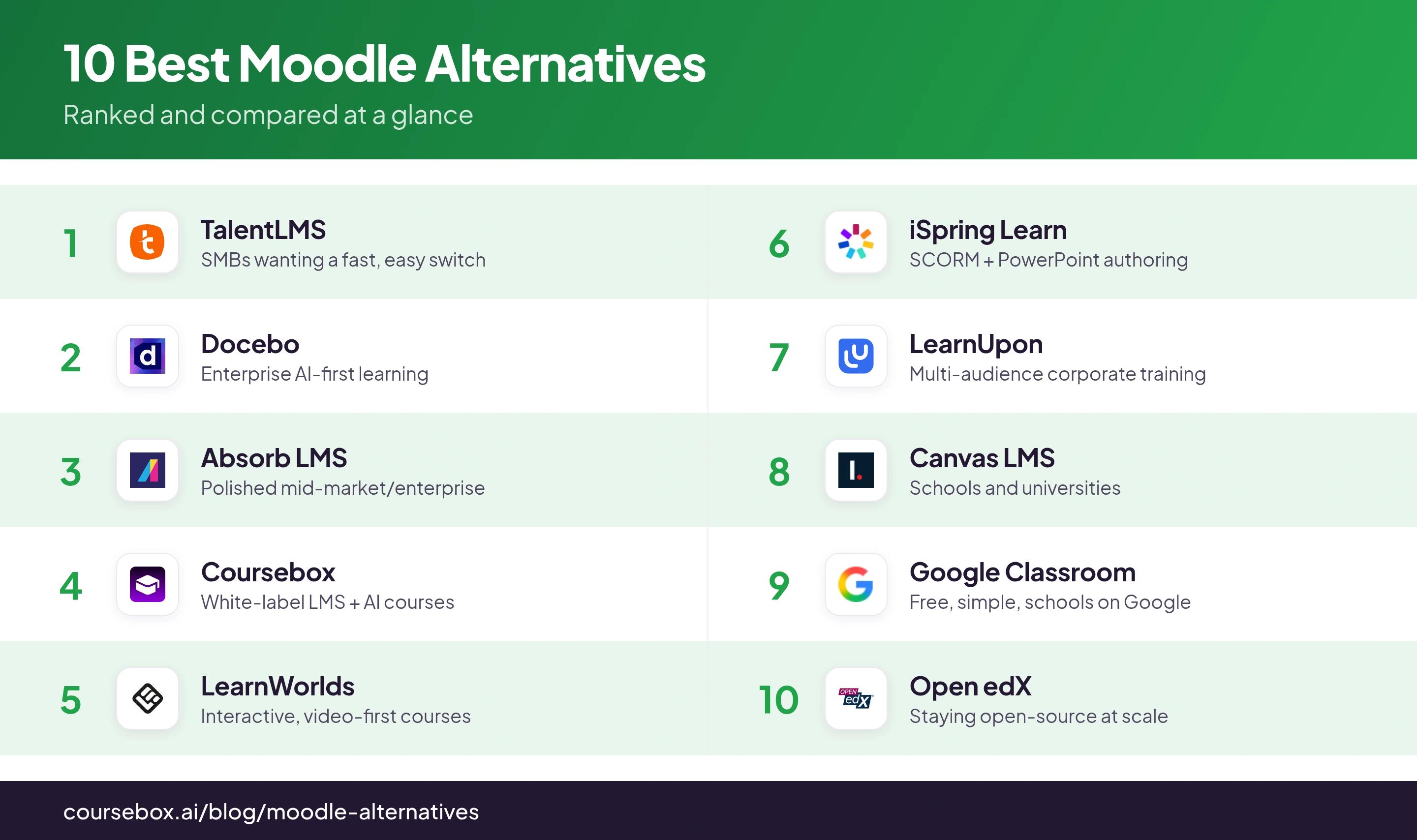
User ratings are out of 5 with review counts in brackets, from G2 as of September 2026, except those marked * which are from Capterra (Coursebox and Open edX are not yet rated on G2).
The 10 best Moodle alternatives
1. TalentLMS
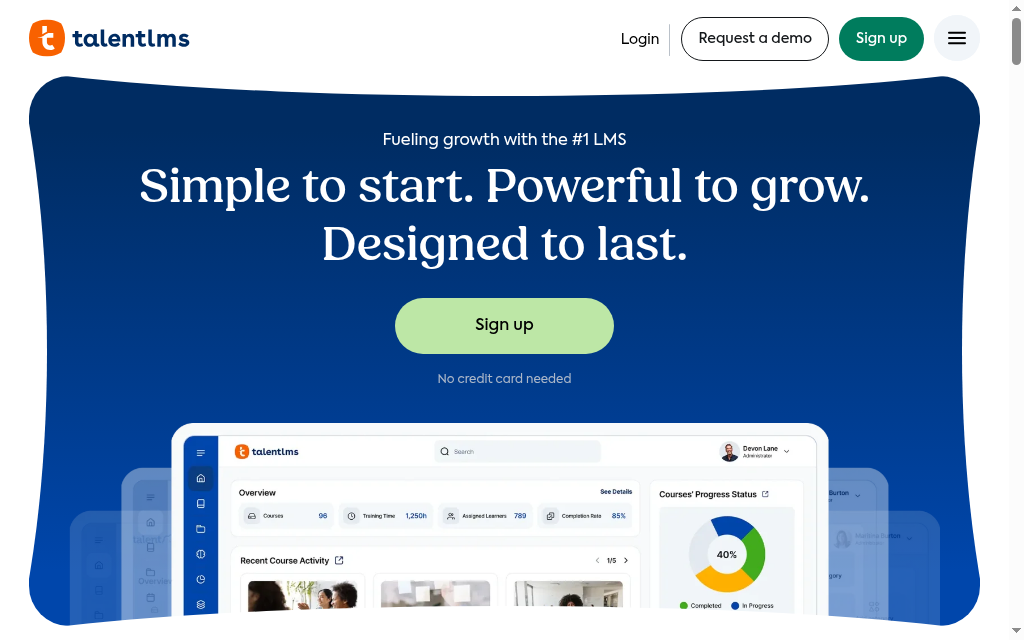
TalentLMS is the simplest way off Moodle for a growing team: a fully cloud-hosted LMS where you sign up, build courses in the browser and enrol people, with nothing to install or maintain. Course authoring, learner management and reporting sit in one tidy admin panel, and it is aimed at teams that want training live in days, not a server project. Its own claim is that you launch roughly twice as fast as a typical LMS, with no IT.
SMBs running onboarding, compliance and partner or customer training without a dedicated LMS admin are the natural fit. This is the sharpest contrast to Moodle: no server to host or patch, no developer to stand it up, and support included on every plan, the three things Moodle pushes onto your IT team. It has a small permanent free plan (up to 5 users and 10 courses); real teams outgrow it fast and move to a paid plan.
In practice: reviewers leaving Moodle keep saying the same thing, that creating a course is finally easy and there is an actual support line. The free plan is really a trial at 5 users, so budget for the paid tier once more than a handful of people need access.
Verdict: the fastest, lowest-effort escape from self-hosted Moodle for a small or mid-size team. Cheap to enter, and you will not need IT to keep it running.
2. Docebo
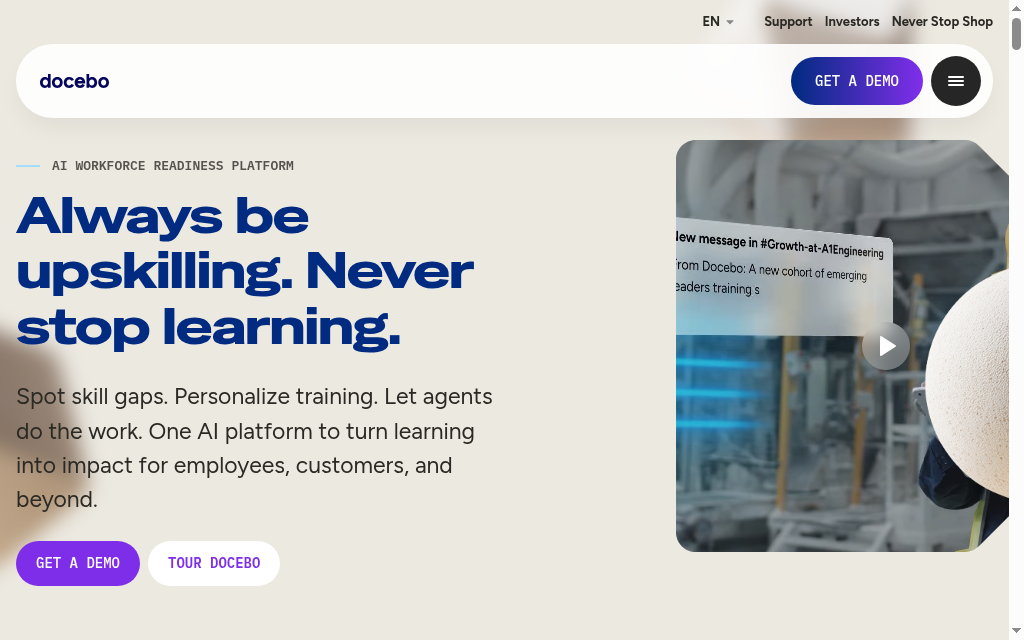
Docebo is the enterprise, AI-first end of the spectrum: a fully managed cloud LMS that leans hard on AI to spot skill gaps, personalize learning and automate admin across large, multi-audience programs. It is built to run employee, customer and partner training at scale, with the analytics and integrations big L&D teams expect. Where Moodle gives you raw building blocks, Docebo gives you an AI layer on top.
This one is aimed at medium-to-large enterprises with dedicated L&D administrators, not small teams. It removes self-hosting entirely, nothing to run or secure, and includes vendor support, but it trades Moodle’s server-and-plugin burden for a different kind of effort: a longer, consultant-led implementation rather than a same-day setup. Pricing is quote-based with a minimum contract, and there is no free plan or trial.
In practice: the recurring theme from admins is time-to-value, it is powerful once configured, but expect weeks of setup and a real learning curve, so it needs a dedicated owner. One reviewer flagged the admin menus as confusing at first.
Verdict: Choose it if you are a large organization that wants AI-driven learning at scale and has the team to run it. Overkill, and a real project, for anything smaller.
3. Absorb LMS
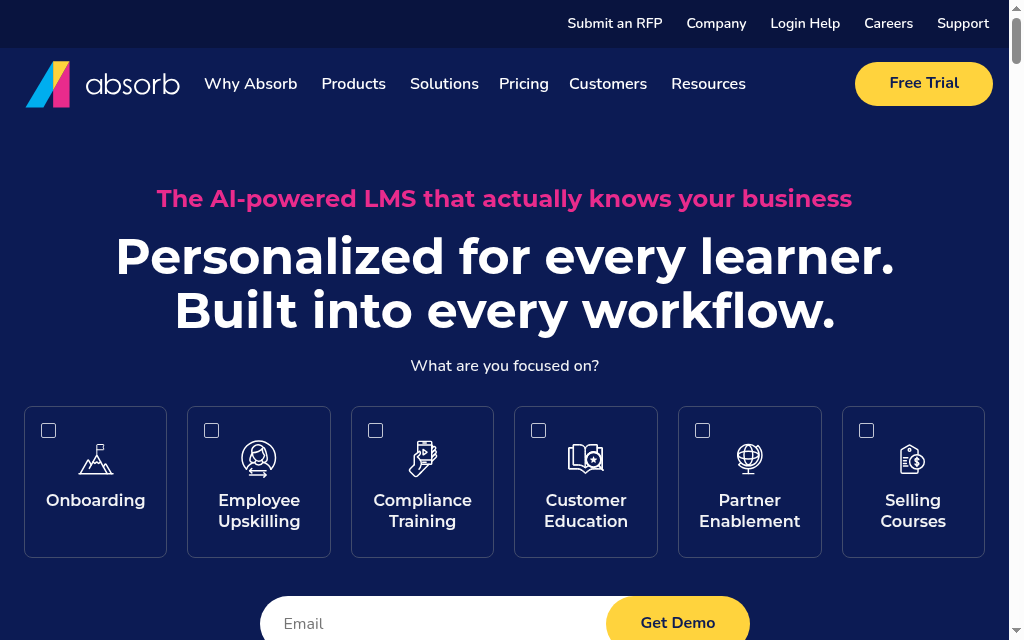
Absorb LMS is the polished managed option for mid-market and enterprise: a fully cloud-hosted platform companies use for onboarding, compliance, upskilling and customer or partner training, known for a clean admin interface and heavy support. Nothing is installed or maintained by you, Absorb runs the servers and its team handles the move. It was named a Leader in Forrester’s 2025 LMS Wave and ships AI course generation and thousands of ready-made courses.
Mid-market and enterprise L&D teams that want an established, well-supported platform with deep integrations (ADP, Workday, Salesforce) are the target. Where it beats Moodle hardest is migration: Absorb’s team will “transfer your data, course content and user information” for you, the part teams dread most about leaving a self-hosted LMS. The catch is pricing: it is quote-only, a lead form rather than a published price, so you cannot compare costs up front, and it is aimed at organizations, not solo creators.
In practice: the migration support is the real draw, the part teams dread about leaving a self-hosted LMS is handled with a plan and a timeline. You will have to book a demo to find out what it costs, which slows down a quick comparison.
Verdict: the safe enterprise pick if you want polish and a migration done for you off Moodle. Be ready to talk to sales to get a price.
4. Coursebox
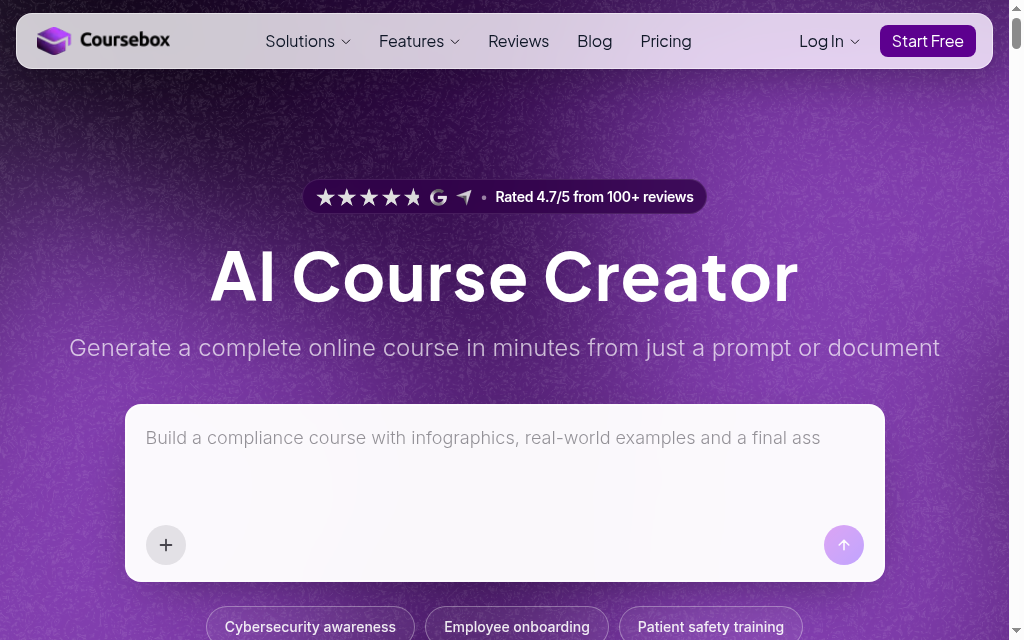
Coursebox, which is ours, is a fully managed, white-label LMS with an AI course builder inside. On the LMS side it does what Moodle does without the servers: it hosts and delivers your courses, manages unlimited learners with no per-seat fee, runs quizzes and a built-in AI tutor, tracks progress, and lets you brand the whole thing as your own, with no plugins to install or maintain. Then it goes further than Moodle: upload a PDF, a slide deck or a prompt and it generates a full course in minutes, so the platform builds the content too. It has a real free plan to start.
Best for training teams and creators leaving Moodle who want a modern, managed LMS they can white-label, plus AI to turn existing material into courses without the manual build. You get unlimited learners with no per-seat fee, full white-label branding so learners only ever see your brand, and a real free plan to start, which most platforms here no longer offer. Honest placement: it is newer than the established enterprise names, and the quiz engine is still basic. Paid plans start at about $42 a month.
In practice: for a Moodle team the double win is a managed, white-label LMS with nothing to host and an AI that turns your PDFs and decks into hosted courses, so you skip both the server upkeep and the slide-by-slide rebuild. Coursebox is ours, so weigh that: the AI draft still needs your editing.
Verdict: Go here if you want the whole job handled: no servers to run, your own branding, and AI that drafts the courses from files you already have. It is the cleanest break from Moodle on this list. Newer than the enterprise names, and the only one that also writes the course for you.
5. LearnWorlds
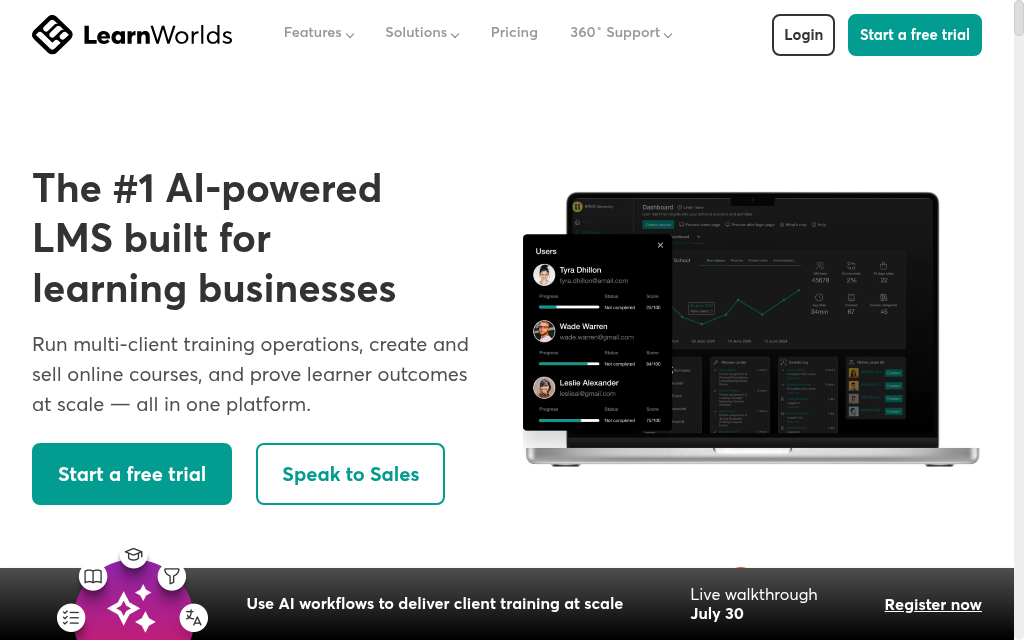
LearnWorlds is the managed, no-code way to run a branded academy: you build, brand and sell or deliver interactive courses without touching a server. Its calling card is interactive video, you can drop quizzes and clickable buttons straight into a video lesson, so watching becomes doing. It suits teams that want a polished, customer-facing school rather than an internal admin tool.
Training businesses, coaches and L&D teams that want a branded academy to sell from or deliver training through land here. Like the others here it is fully managed and cloud, so Moodle’s hosting, upgrades and plugin conflicts move to the vendor, you trade Moodle’s endless configurability for a maintained, ready-to-sell platform. There is no free plan (a 30-day trial), and the entry Starter plan adds a small per-sale fee that higher plans drop.
In practice: turning an ordinary video into a graded, clickable lesson without editing software is the thing to try first, it is a step beyond what a Moodle activity does. The design rewards effort: the more you customize the academy, the better it looks.
Verdict: Worth it if you want interactive, video-first courses in a polished school. More platform than a simple compliance rollout needs.
6. iSpring Learn
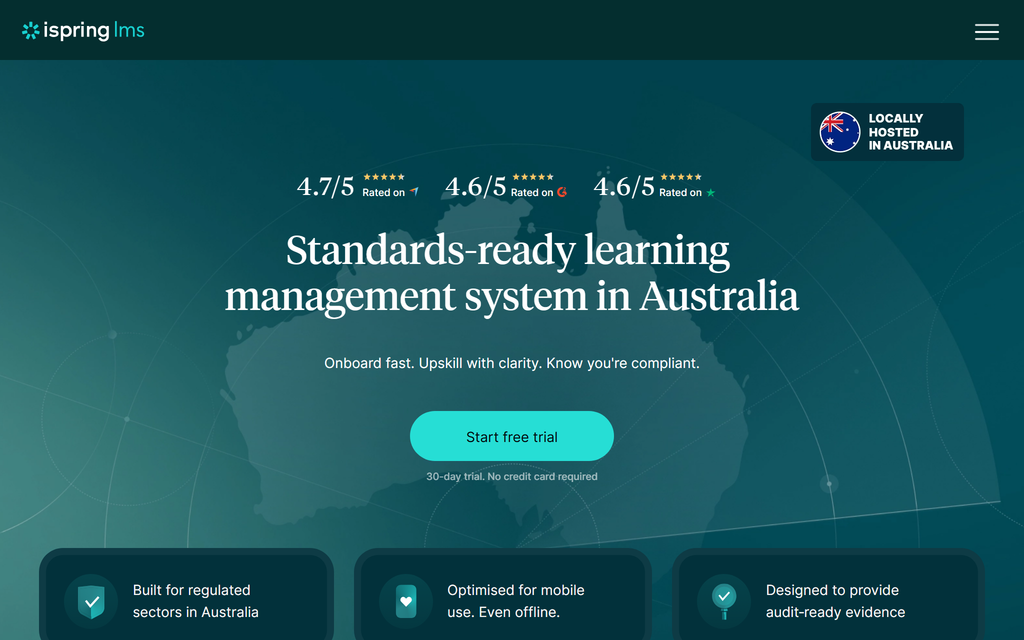
iSpring Learn (recently renamed iSpring LMS) solves the part of Moodle people complain about most, building the course, by pairing a cloud LMS with a PowerPoint-based authoring tool in one subscription. You deliver, assign and track training in the managed LMS, and you create courses inside PowerPoint, turning ordinary slide decks into SCORM courses. For anyone who already has SCORM packages or slide-based material, it is a natural landing spot.
Companies and compliance or L&D teams with existing PowerPoint or SCORM content, who want easy authoring plus a managed LMS, are the fit. Two things separate it from Moodle: it is cloud-hosted, so no servers to run, and the authoring feels like making a presentation, not wrestling Moodle’s clunky activity editor. The limit: the authoring half is PowerPoint- and Windows-bound, a real constraint for mixed-OS teams, and there is no free plan (a 30-day trial, then per-user pricing).
In practice: the win for a Moodle refugee is keeping your existing SCORM courses and authoring the way you already work, in PowerPoint, instead of rebuilding in a new editor. Just check the Windows requirement if your team is on Macs.
Verdict: the pick if your content lives in PowerPoint and SCORM and you want authoring plus a managed LMS in one buy. Less ideal for a Mac-based or non-slide team.
7. LearnUpon
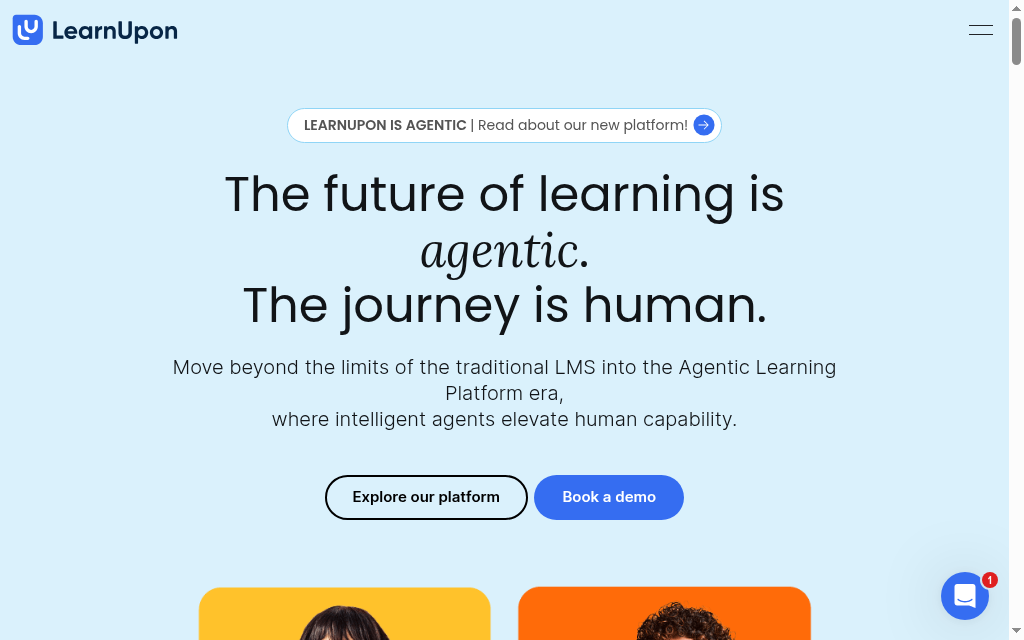
LearnUpon is a clean, managed cloud LMS for corporate, customer and partner training, built around ease of use and hands-on support. Its distinctive feature is multi-portal delivery: you can run several fully separate, branded training environments, employees, customers, partners, from one account, each with its own users, catalog and reporting. There are no servers to run and no version upgrades to manage.
This suits business and organizational training teams that serve more than one audience and want a supported, managed platform. Against a Moodle you run yourself, the burden simply moves: no infrastructure to maintain, plus a dedicated implementation consultant and 24/7 support to get you live. The catch is the floor: LearnUpon states minimums from 100 users and says it is not a fit for smaller teams or on-premise, and pricing is quote-based through a demo.
In practice: the multi-portal setup is what teams switch for, running employee, customer and partner training as separate branded spaces from one login is something Moodle makes painful. If you are under 100 users, this one is not for you.
Verdict: Well-supported, and a fit for mid-size and larger teams serving multiple audiences. Ruled out for small teams by the 100-user floor.
8. Canvas LMS
Canvas LMS, from Instructure, is the education pick here: the leading modern, cloud-hosted LMS for schools, colleges and universities, and the most common Moodle replacement in academia. Instructure runs and updates it, so institutions get Moodle-grade academic capability, a gradebook, assignments, SCORM, without owning the servers, wrapped in a markedly cleaner, more modern interface.
It is aimed at education, K-12 districts and higher education, rather than corporate training (Instructure sells to business too, but its center of gravity is academic). It is the managed-cloud answer to hosting Moodle in-house, for the same academic use case. Two things to flag: institutional Canvas is a sales-led, quote-based purchase with no self-service pricing, and its long-standing free option for individual teachers is now closed to new sign-ups, existing free teacher accounts keep working, but new users go through a demo. A Canvas open-source edition also exists, though most institutions take the managed cloud to avoid the very run-cost this list is about.
In practice: for a university weighing Moodle, Canvas is the like-for-like modern upgrade, the same academic depth, hosted and maintained for you. The free-teacher route many people remember is no longer open to new accounts, so plan on the institutional, sales-led path.
Verdict: the natural modern replacement for Moodle in a school or university that wants cloud and polish. Not aimed at corporate training, and you will go through sales.
9. Google Classroom
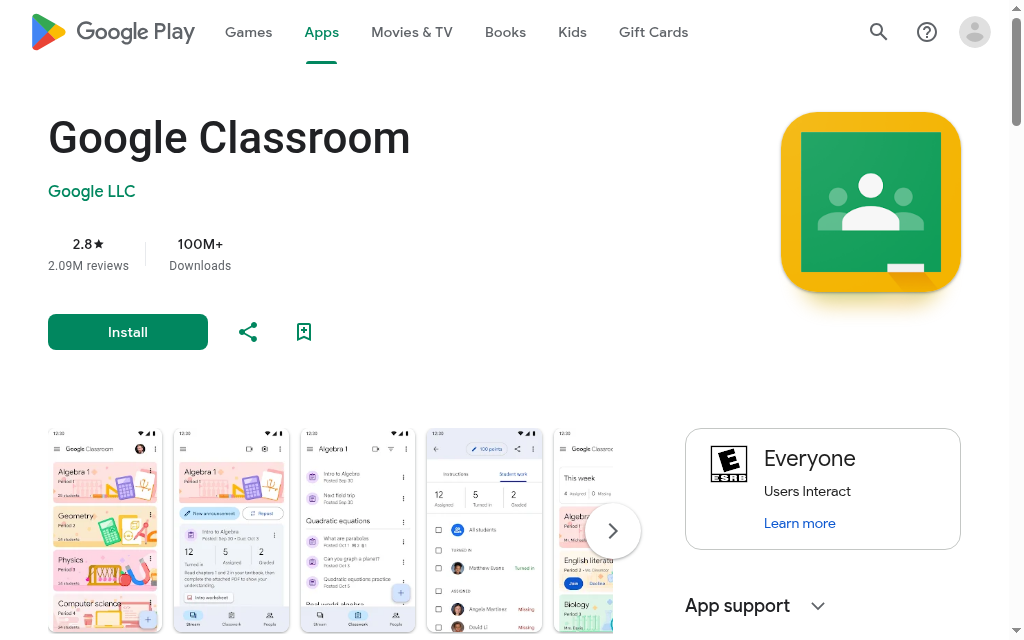
Google Classroom is the free, lightweight option for schools already living in Google: a cloud tool where a teacher sets up a class, hands out assignments, shares resources, collects submissions and grades them, all inside Google Workspace for Education. It is the coursework hub schools on Docs, Drive and Gmail reach for first, and it turns on the same day with no setup.
Best for schools and teachers already on Google Workspace for Education who want simple coursework management, not a full training platform. On effort the gap is stark, zero servers, nothing to install, free with a qualifying Education account, but the flip side is scope: it is lightweight. There is no SCORM support, no real course-authoring, and assessment and reporting are thin next to a proper LMS, so it complements an LMS more than it replaces one for serious training.
In practice: for a teacher, the appeal is that it just works with the Google tools you already use, no setup, no cost. For anything needing SCORM, structured assessment or real reporting, you will hit its limits fast.
Verdict: Right for a Google-based school that wants simple, free coursework management. Too light to be a full Moodle replacement for structured training.
10. Open edX
Open edX is the honest open-source option: the platform behind edX, created by Harvard and MIT, pairing a course-authoring studio with a learner-facing LMS, with no license fee and proven scale (it powers tens of thousands of courses and more than 140 million learners). If you want to stay open-source but need something more modern and scalable than Moodle for a big catalog, this is the natural move.
This is for organizations that want to keep an open-source stack rather than switch to a managed vendor. Here is the nuance, and it is the whole point of this list: like Moodle, Open edX is self-hosted, so switching to it does not lift the hosting-and-maintenance burden, its own docs say “hosting, infrastructure, maintenance and support are your responsibility.” What you gain is a more modern, scale-oriented platform, not freedom from running servers. Managed Open edX providers exist as the escape hatch if you want the platform without the upkeep.
In practice: if the reason you are leaving Moodle is the maintenance, plain self-hosted Open edX will not save you, you are still running the servers. It makes sense when you specifically want an open-source platform at scale, or when you pair it with a managed host.
Verdict: the pick only if staying open-source counts for more than escaping the upkeep. To actually shed the running burden, use a managed host or one of the managed platforms above.
Every real difference between these and Moodle comes down to one thing, who keeps the software alive. With Moodle, it is you: your servers, your updates, your plugins, your IT time. With the managed platforms here, it is the vendor. Before you compare features, decide whether you ever want to run an LMS server again. If the answer is no, cross Open edX and Moodle off and pick from the managed options above.
Moving your courses off Moodle
The move is less painful than most teams fear, but plan for it. Moodle gives you real exports to work with: each course backs up to a portable file, courses can go out as IMS Common Cartridge, your question bank exports to standard formats (Moodle XML, GIFT), any SCORM packages you loaded in stay reusable, and user and enrolment data comes out as CSV. How much of it lands cleanly depends on what your new platform imports, but the pattern holds: structured content and questions travel, while the Moodle-specific material does not, forum threads, workshop and glossary activities, gradebook history and the detailed quiz-attempt logs. The sensible approach is to port what travels, export your question bank, and treat the dated parts as a rebuild rather than a lift-and-shift. A vendor worth choosing will help here, Absorb and LearnUpon put a person on the migration for you.
Our full LMS migration guide walks through shifting courses and users across without losing anything.
Which should you use
Match it to your team. For the fastest, lowest-effort switch for a small or mid-size team, TalentLMS. For enterprise scale with AI, Docebo; for a polished mid-market platform with hands-held migration, Absorb. For a managed, white-label LMS with AI that builds the courses, Coursebox. For interactive, video-first courses in a polished school, LearnWorlds; for PowerPoint and SCORM authoring in one buy, iSpring. For multi-audience corporate training, LearnUpon. If you are a school or university, Canvas, or Google Classroom for simple, free coursework. And if you must stay open-source, Open edX, knowing you still run the servers.
If you are weighing Moodle against the education options specifically, our Moodle vs Canvas comparison goes deeper.
Whichever you pick, the real switch is the same one: you stop running an LMS and let someone else keep it alive.
Not everyone should leave. If you have IT staff who can host and patch it, you want full control of your data and your code, or you rely on the deep customization and plugin ecosystem that only an open-source platform gives you, Moodle earns its keep, and the licence price is hard to beat. The case for switching is strongest when the running burden lands on people who never signed up to be system administrators. If that is not your situation, staying on Moodle is a perfectly good answer.
Frequently Asked Questions
It depends on your team, but the honest answer for most is a managed, cloud LMS so you stop running servers. TalentLMS is the easiest, lowest-effort switch for a small or mid-size team; Docebo and Absorb are the enterprise picks; Coursebox goes furthest on no-code and AI course-building. For schools, Canvas. There is no single best, only the right kind for how you want to run training.
Not features, upkeep. Moodle is free to license, but you host it yourself, patch it, manage plugins and security, and need technical staff to keep it running, and building courses in it is slow with a dated interface. Teams switch to managed, cloud platforms to move that running burden to a vendor and get support and an easier build.
A few, with caveats. Google Classroom is free with a Google Workspace for Education account, though it is lightweight, not a full LMS. Coursebox and TalentLMS have real free plans to start, though both are capped. Open edX is free to license like Moodle, but you still pay to host and maintain it. Most business LMSs (Docebo, Absorb, LearnUpon) are quote-based with no free tier.
Yes. Most alternatives import your existing content, and several will do the move for you, Absorb, for instance, has a migration team that transfers your data, courses and users. If you have SCORM packages, tools like iSpring and most managed LMSs take them directly, so you rarely rebuild from scratch.
TalentLMS for a fast, easy start, Docebo for enterprise AI and scale, Absorb for a polished mid-market platform, LearnUpon for multi-audience training, and Coursebox if you want AI to build the courses. All are managed and cloud, so unlike Moodle there is nothing for your IT team to host or maintain.
Canvas is the most common modern replacement in education, the same academic depth as Moodle but hosted and maintained by Instructure with a cleaner interface. Google Classroom is the free, simple option for schools already on Google Workspace, though it is lighter and lacks SCORM. Both remove the self-hosting that makes Moodle a burden for IT.
Toni Arrebola
Software engineer and SaaS product builder

