

What Is Internal Training and Why It Matters for Companies
Boost employee skills and productivity with internal training. Discover types, tools, and strategies to close skill gaps and build stronger teams.


Train teams faster and more effectively with AI
Internal training is when a company teaches and develops its employees using in-house resources. This type of training has become increasingly essential for all organizations due to the rapid technological advancements and shifting market trends.
According to the World Economic Forum, by 2027, 44% of core skills will be disrupted. That means almost half of what employees know today could become outdated in just a few years. Companies that fail to invest in training risk falling behind competitors, losing top talent, and struggling to meet business goals.
Internal training bridges this gap by providing targeted, company-specific learning that prepares employees for the challenges of tomorrow. Let's understand why internal training is so important and how it can transform your workforce.
Key Takeaways: Internal Training
- What is Internal Training: Internal training created and delivered within an organization using in-house expertise. It's a cost-effective option that helps reduce knowledge gaps and build a stronger workforce.
- How to Build Internal Training Content: Designing an internal training program requires identifying real skill gaps. The training content should be clear and include examples from the organization. Use different formats to enhance engagement and polish the content based on feedback.
- Best Practices for Effective Training: To make training practical and effective, encourage continuous learning and keep the sessions short. Peer learning and regular content updates make learning feel relevant.
What Is Internal Training?
Internal training refers to employee training programs that are designed, delivered, and managed within an organization. These programs rely on internal resources and in-house subject-matter experts (SMEs).
The training is usually targeted at bridging the skill gaps and equipping the employees with relevant skills. This shortens the ramp-up time for new hires, supports the transition of employees to senior positions, and improves performance quality and consistency.
Internal trainers possess firsthand knowledge of company policies, tools, and day-to-day workflows that allow them to provide practical answers. Unlike external trainers who rely on information provided by the employer, internal experts draw from real experience. This yields better training outcomes.
Why Internal Training Matters More Than Ever
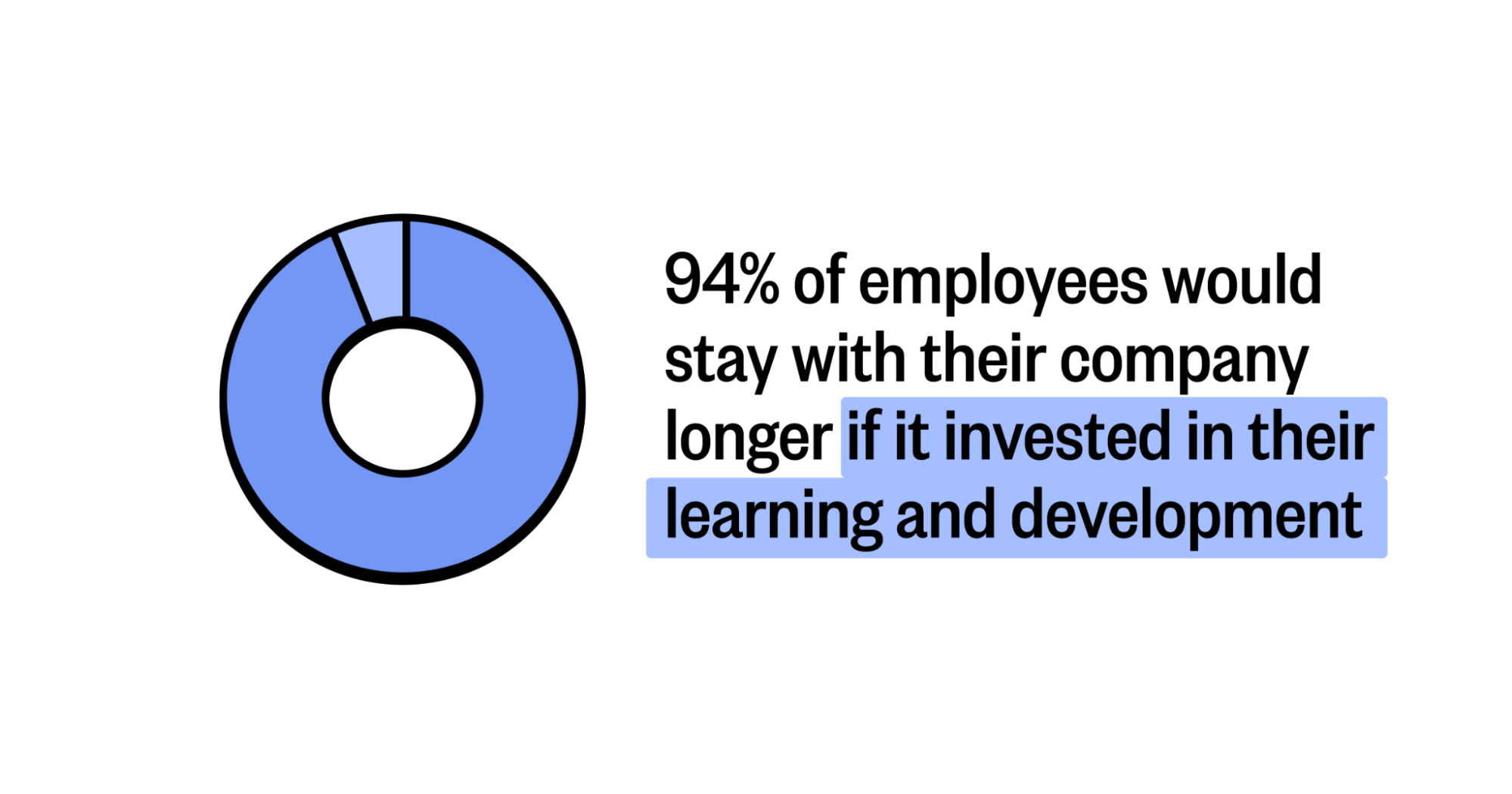
External training can be costly and sometimes even fail to connect with the employees. This is why most organizations prefer internal training. It offers a more practical alternative that is tailored to your team's actual needs.
1. Improves Productivity
Employees who understand the company’s workflow and internal system work faster and with greater accuracy. They spend less time figuring things out and make fewer costly mistakes. A study by the Association for Talent Development found that companies with comprehensive training programs generate 218% higher income per employee.
2. Reduces Knowledge Gaps
When employees are left to learn on their own, learning becomes inconsistent. As a result, some progress quickly, while others fall behind. This creates knowledge gaps that impact the overall performance. Internal training fixes this problem by providing consistent, structured learning for everyone.
Every employee receives the same guidance, tools, and resources, which ensures that teams are on the same page and ready to perform at their best.
3. Helps Build Stronger Teams
Learning together helps employees develop a shared understanding of the organizational goals and objectives. This strengthens collaboration, especially in hybrid and remote environments. Internal trainers understand where employees struggle most. They focus training on the skills that truly need improvement.
Types of Internal Training
Internal training can be delivered in several formats, including traditional in-person programs, on-the-job training, and digital content. Companies may choose any format based on their employee preferences. However, the most effective internal training programs use a mix of training formats rather than relying on one approach.
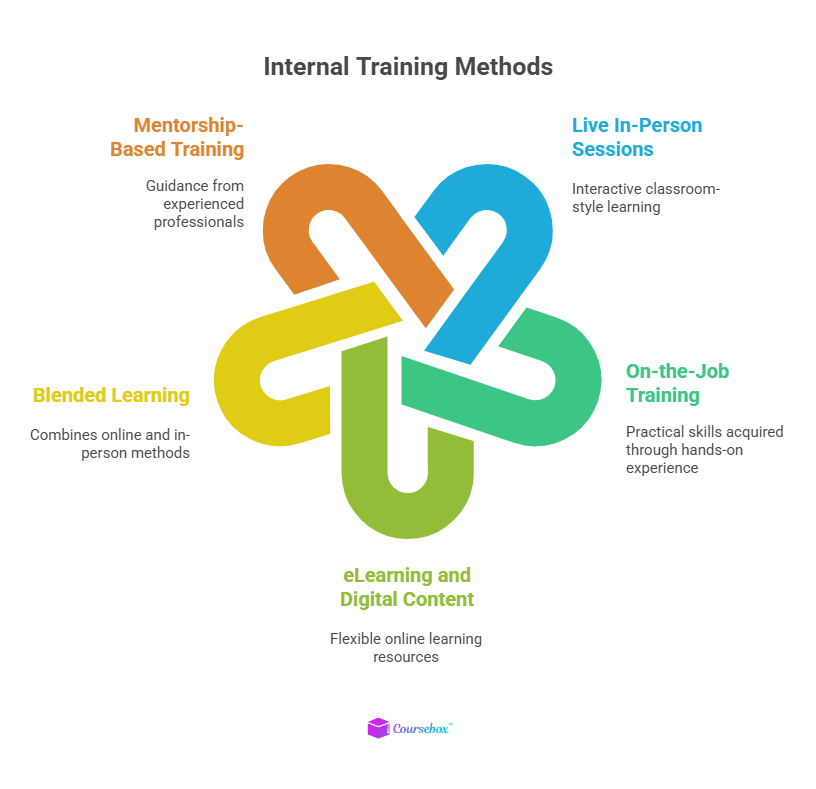
1. Live In-Person Sessions
Live in-person training programs are one of the most popular formats for internal training. Employees can ask questions in real time, share their experiences, and receive immediate feedback, which helps clarify complex topics. Although in-person sessions require scheduling and coordination, they result in a better understanding of complex topics.
2. On-the-Job Training
As the name suggests, on-the-job training refers to learning while performing the actual tasks. This allows learners to gain real-world experience while applying new skills under the guidance of experienced employees. The 70-20-10 model for learning and development further reinforces the fact that 70% of workplace learning occurs on the job.
3. eLearning and Digital Content
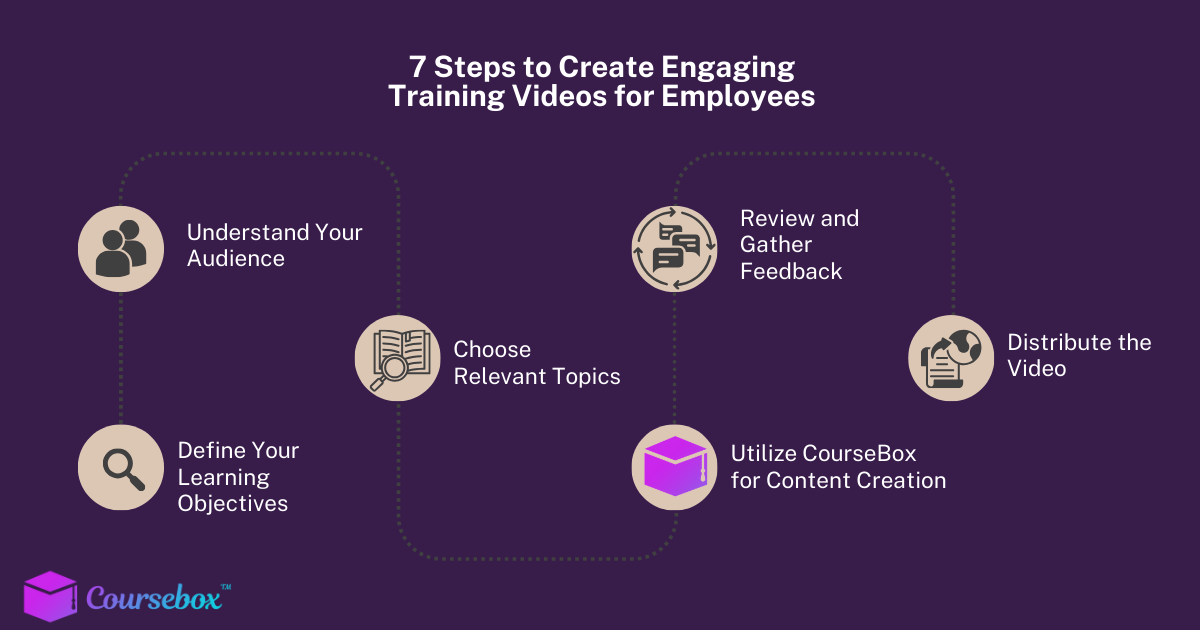
Large organizations or those with a hybrid or remote work culture prefer eLearning. It allows employees to access training materials at their own pace and manage L&D with their job responsibilities.
Digital content, such as video tutorials, microlearning modules, internal knowledge libraries, and assessments, offers flexibility to the employees and helps track their learning.
4. Blended Learning
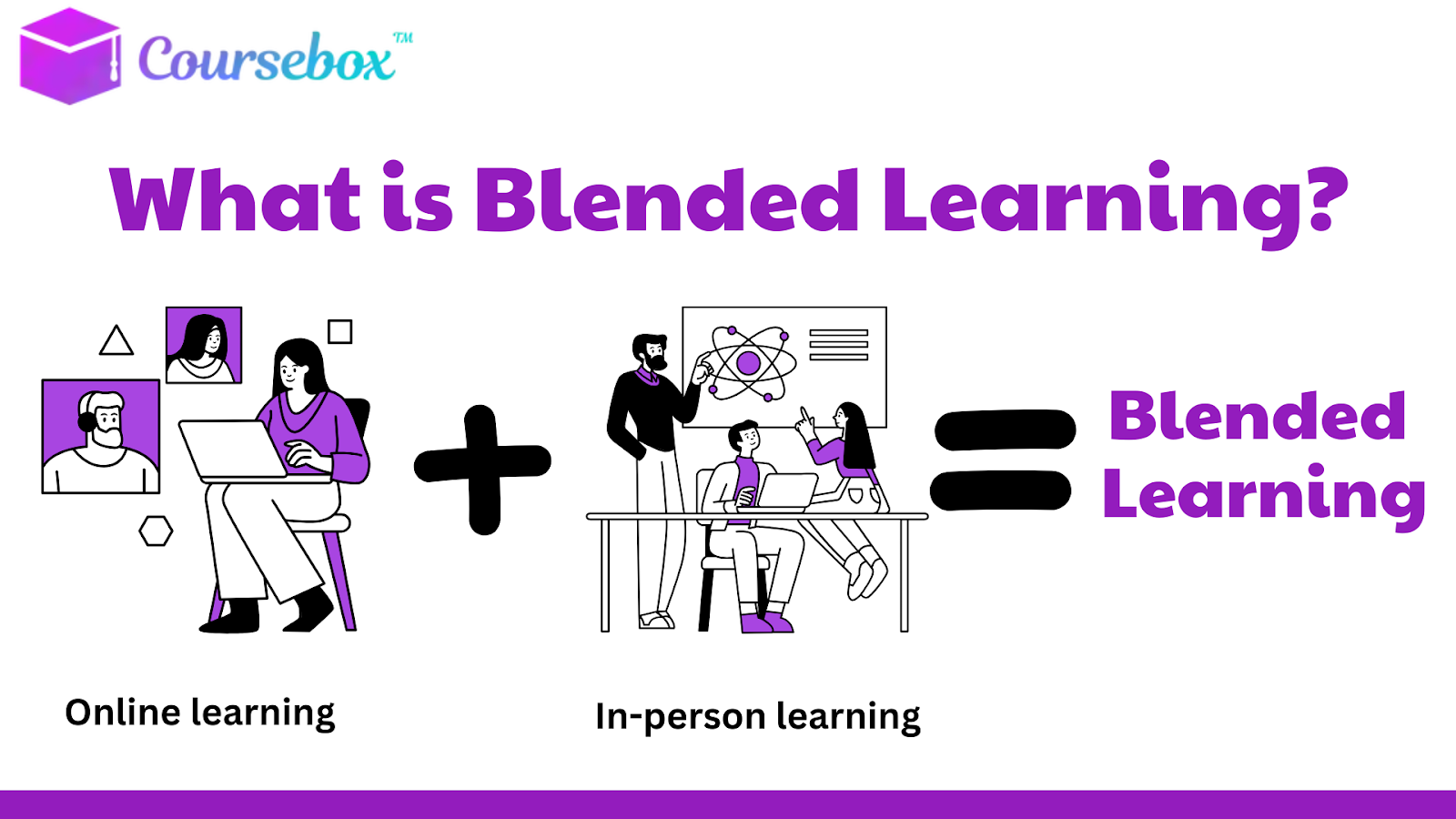
Blended learning, also known as hybrid or multipurpose learning, offers the best of both worlds by combining in-person training and eLearning. For instance, employees can attend live sessions, then complete online modules and assessments to revisit the material and evaluate their knowledge.
5. Mentorship-Based Training
This training format leverages internal expertise by pairing employees with experienced colleagues. It supports knowledge sharing and offers new hires or less-experienced employees the opportunity to learn from the best. Companies with established mentorship programs report 18% higher profits.
How to Build Effective Internal Training Content
Corporate training fails when the training content is either generic or not engaging enough. To build an effective internal training program, your content must be relevant and aimed at the specific needs of your employees.
Step 1: Start With the Real Skill Gaps
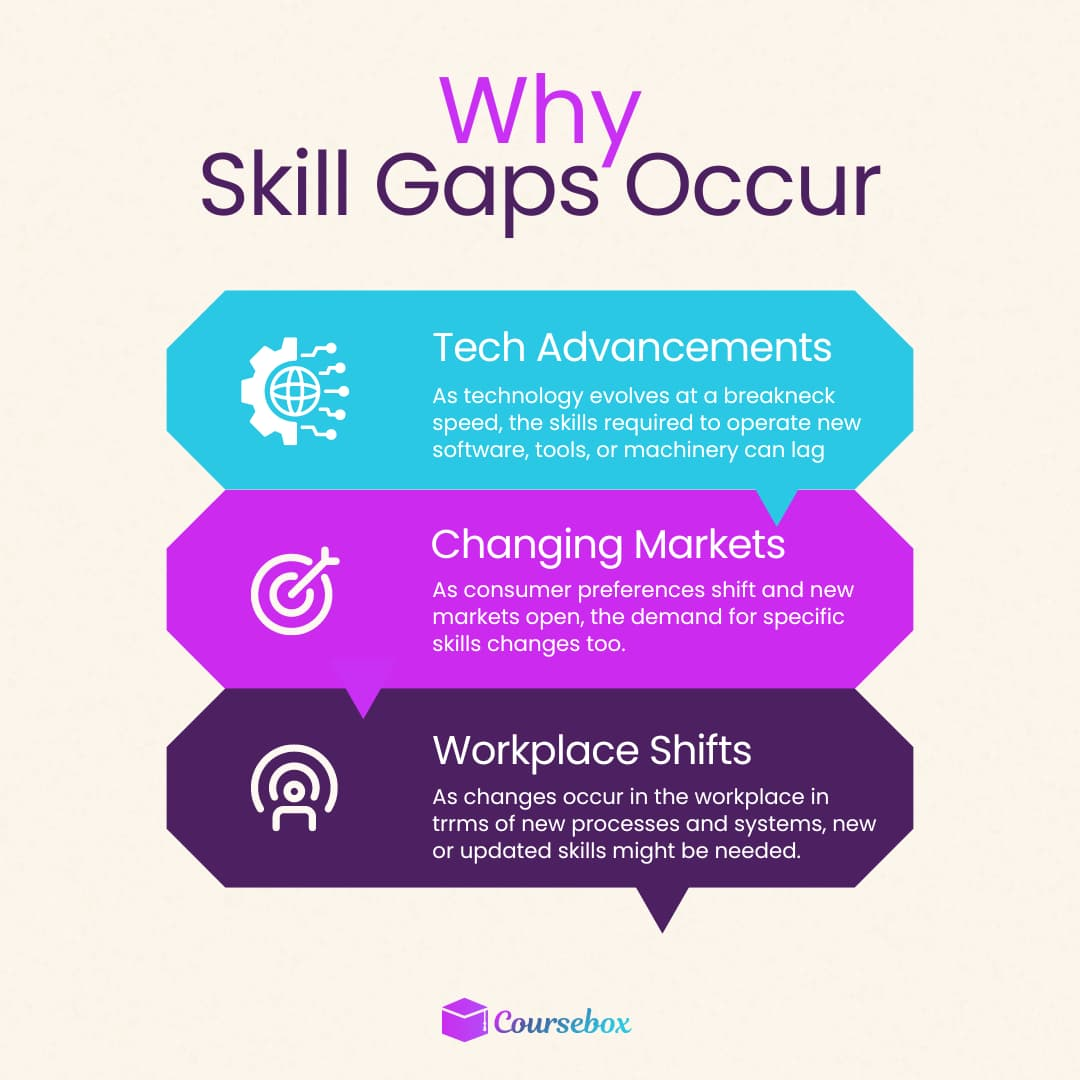
When designing an internal training program, start by identifying where your employees struggle. Irrelevant training that fails to address actual performance issues is only a waste of time and resources.
By identifying the real skill gaps, internal training can be narrowed down. It focuses on workflow challenges that reduce employees’ productivity and equips them with skills to bridge these skill gaps.
Step 2: Keep Information Clear and Actionable
Employees rarely have the time or attention span for long training. Therefore, when designing training content, only add relevant information that is easy to understand and apply.
Training should ideally focus on what employees need to do, how to do it correctly, and what common mistakes to avoid. The key is to observe what already works, identify what doesn’t, and make it teachable.
Keep the learning modules short and focused on a single topic. When paired with clear instructions and real-world examples, these bite-sized modules enable employees to easily grasp key points.
Step 3: Use Real Examples From the Organization
Training that reflects company workflows and customer scenarios feels relevant. When employees observe familiar systems and situations in training materials, they can connect with the training on a personal level. This contextual learning improves confidence and reduces the learning curve.
For instance, an internal training program for a sales team can include recordings of real customer interactions to demonstrate how to handle challenging customers. Compared to generic case studies, a real example resonates with the employees better.
Step 4: Mix Formats to Keep Engagement High
Relying solely on videos can limit active participation, while in-person discussions alone may leave gaps in understanding. A blended approach that combines videos, quizzes, simulations, and interactive discussions keeps learners engaged and reduces learning fatigue.
This diversity in delivery increases participation and helps sustain attention throughout the training process. It also allows employees to rewatch the content and test their knowledge, which makes training more accessible.
Step 5: Test Content and Improve Based on Feedback
After adding all the current information, test the content and request feedback from the employees. Course completion rates, assessment scores, survey forms, and employee feedback are some ways to gain feedback.
Once this data is collected, refine the training content. This may involve simplifying the content, breaking it into shorter modules, or updating the material according to recent trends.
Four Tools That Support Internal Training
Choosing the right tools makes all the difference. They help in organizing knowledge, tracking progress, personalizing learning experiences, and ensuring that training aligns with business goals. Here are some must-have tools for internal training.
1. Learning Management Systems (LMS)
An LMS centralizes the training content in one place, so employees can access learning materials whenever they need them. In addition to storing content, it also allows companies to track employee progress.
Organizations can monitor completion rates, assessment results, and participation trends to understand how employees are engaging with training. You can easily integrate it with HR software and CRM to reduce the administrative load.
Coursebox LMS: If you're looking for an LMS platform that helps create and deliver internal training without complicated steps, look no further than Coursebox AI LMS. This AI-powered platform generates professional training content in minutes and tracks employee progress through an AI quiz generator and an AI tutor chatbot.
2. Video and Screen Recording Platforms
With the increasing popularity of eLearning and digital content, videos and screen recording platforms have become important. These are especially crucial for demonstrations and walkthroughs, so employees can learn by watching tasks being performed step by step.
Research reveals that people retain 95% more information when watching a video, which makes it important to invest in video platforms like Camtasia, ScreenRec, and Loom. It reduces the need for repeated live sessions because people can rewatch anytime.
3. Interactive Learning Tools
Companies need to invest in interactive learning tools to keep training engaging and maximize learning retention. Quizzes, simulations, and scenario-based exercises help reinforce learning by encouraging active participation rather than passive consumption.
Employees get more involved when they have to think instead of skimming through content. It also offers them a safe environment to test their knowledge and practice skills before handling real-world challenges.
4. Collaboration Tools
Internal training is a continuous learning process that requires constant collaboration among employees. Tools such as internal messaging platforms, discussion boards, and shared workspaces extend learning beyond formal sessions. These tools support peer-to-peer learning by allowing employees to ask questions, share their insights, and engage in constructive discussions.
This is especially important in remote workplaces, where there's no other way to keep employees connected. Some popular options include Microsoft Teams, Slack, Trello, and Google Workspace. You can choose any tool according to your business needs and size.
Best Practices for Effective Internal Training
Successful internal training programs are not built overnight. It requires time and effort to polish and tailor the training for your employees’ and business needs. Here are four best practices to create training programs that support continuous growth.
1. Make Learning Continuous
Research by LinkedIn Learning shows that 91% of L&D professionals stress on continuous learning for career growth. Internal training should be an ongoing process rather than an annual responsibility. Organizations that promote continuous learning are better equipped to respond to changing trends and technologies.
2. Keep Sessions Short
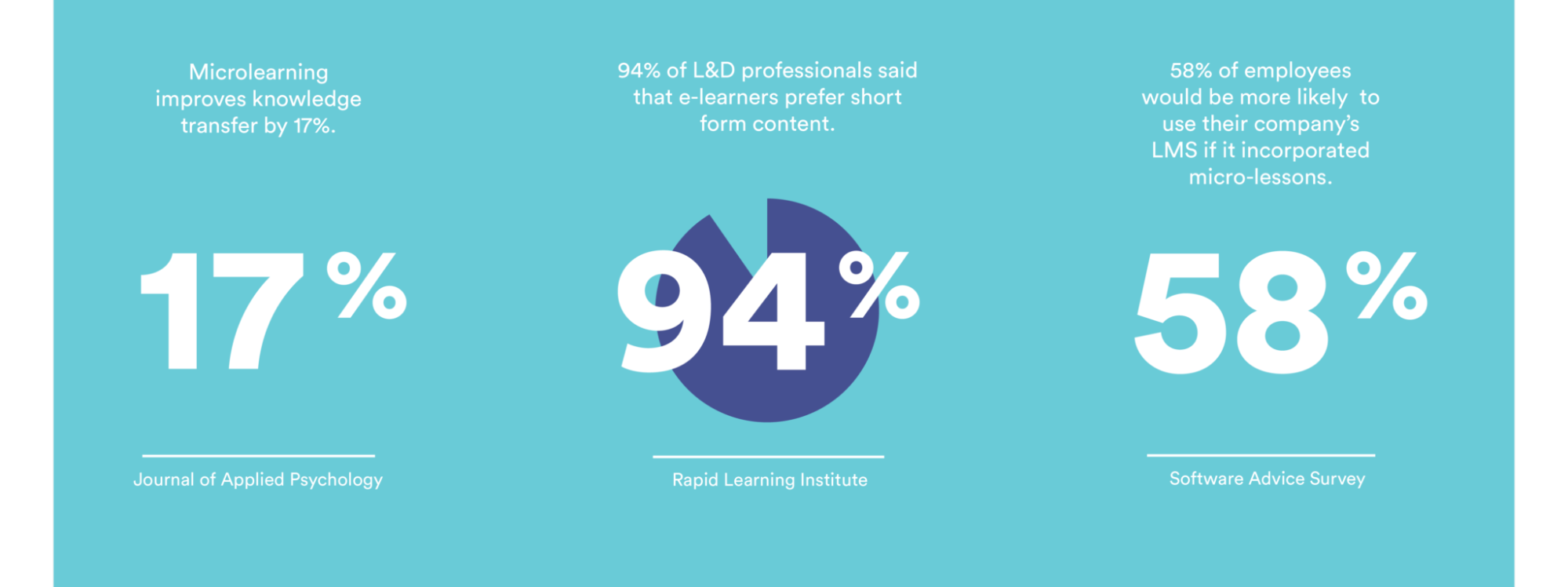
Short sessions, focused on a single topic, are far more effective at delivering key information without overwhelming learners. This approach, commonly known as microlearning, allows employees to absorb and retain 18% more content.
3. Encourage Peer Collaboration
Encouraging collaboration within internal training programs builds understanding and accountability. Each employee picks up the concepts differently. When they come together to share their perspectives, learning becomes more personal. Peer learning also helps employees gain insight into how different departments operate and gain from their experience.
4. Update Content Frequently
No matter how comprehensive your training program is, you need to frequently update the content to prevent delivering outdated information. It also provides an opportunity to incorporate feedback from learners and managers into your program. By adjusting the internal training program to address the current skill gaps, training remains relevant and practical.
Internal vs. External Training
Internal and external training both aim at educating employees about the company’s workflow and objectives. However, they differ in how they achieve it. This table summarizes key differences between external and internal training.
| Internal Training | External Training |
|---|---|
| Designed and delivered by company employees. | Designed and delivered by third-party experts or trainers. |
| Cost-effective. | Expensive. |
| Easier to implement. | Requires scheduling. |
| The trainer knows the company processes and objectives better. | The trainer only knows what has been briefed to them. |
| Training content includes real-life examples and case studies from the company’s experience. | Training content includes case studies and examples that aren't directly related to the company. |
| Improves team collaboration. | Employees don't have a personal connection with the trainer. |
Design a Tailored Internal Training Program for Your Employees
You don't always need extensive resources and long training programs for employee L&D. A comprehensive internal training program, designed by in-house SMEs, is as effective as expensive external training.
The key is to personalize training and connect it to company objectives. Using analytics to identify skill gaps, track employee progress, and refine the content is a foolproof way to implement training at your workplace.
However, it's important to implement training in a way that doesn't disturb the workflow. This is where AI-powered platforms like Coursebox make a difference.
Coursebox enables organizations to design and scale internal training programs using AI. With advanced features like AI course designer, AI assessment, and quiz generator, Coursebox has helped create more than 50,000 courses.
FAQs
1. What topics are usually covered in internal training?
Topics covered in internal training depend on the skill gaps within your organization. Internal training utilizes in-house SMEs for topics such as onboarding, skill-based, compliance, and soft-skill training. Depending on company needs, it may also include diversity, equity, and inclusion (DEI) training, cybersecurity awareness, and leadership development.
2. How do organizations measure whether internal training works?
Organizations use employee surveys and feedback, post-training questionnaires, and assessments to measure the effectiveness of internal training. Using Key Performance Indicators (KPIs) like completion rates, trainee satisfaction rates, engagement rates, and ROI also helps in measuring training success.
3. Which tools support internal training most effectively?
Learning Management Systems (LMS), collaboration, video, and interactive tools are all essential for internal training. However, an all-rounder LMS like Coursebox is non-negotiable when implementing internal training. This AI-powered LMS helps generate and centralize tailored content that is easily accessible to all employees.
4. What challenges come with internal training?
The most common struggle when implementing internal training is finding a subject matter expert within the organization. The SMEs should also know how to deliver the knowledge while keeping employees engaged and focused. Additionally, it can also be challenging for the trainee and participants to manage training with their job responsibilities.
Travis Clapp
Educational technologist and instructional designer

