

What Is External Training: Types, Examples, and How to Implement
Learn what external training is, its types, and examples to help employees gain new skills and knowledge from outside the organization.


Set up your branded LMS and deliver training with AI
Companies now invest around $98 billion on employee training globally, with $1,300 being spent on each individual. Much of this training comes from external sources, such as professional trainers or educational institutes.
External training simply means that employees are learning from somewhere outside their organization. It could be through workshops, seminars, conferences, online courses, or certification programs.
Employees also meet people from other organizations, which can broaden perspectives and encourage different ways of thinking. While external training requires time and resources, employees often return with useful techniques and insights that affect how they work and solve problems.
Let’s discuss this approach to training in detail, along with its types and examples.
What Is External Training?
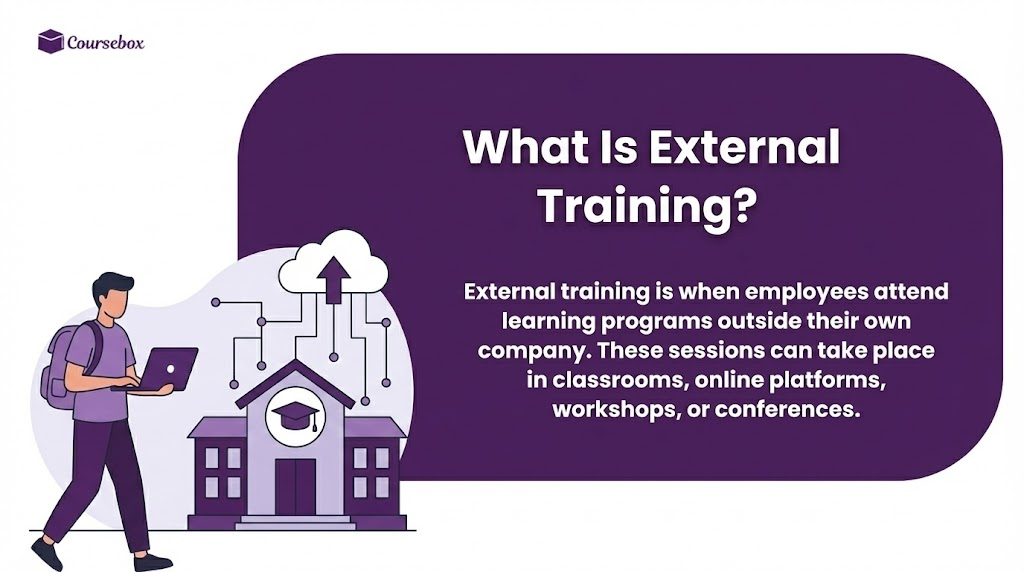
External training is when employees attend learning programs outside their own company. These sessions can take place in classrooms, online platforms, workshops, or conferences. As covered above, they may be taken by other professionals or specialized companies.
The focus is on honing skills and knowledge that the organization does not provide internally. Employees also meet peers from other companies, which can introduce fresh ideas and approaches.
External training is quite different from on-the-job or internal training. The latter is often led by senior staff or managers, and happens within the company.
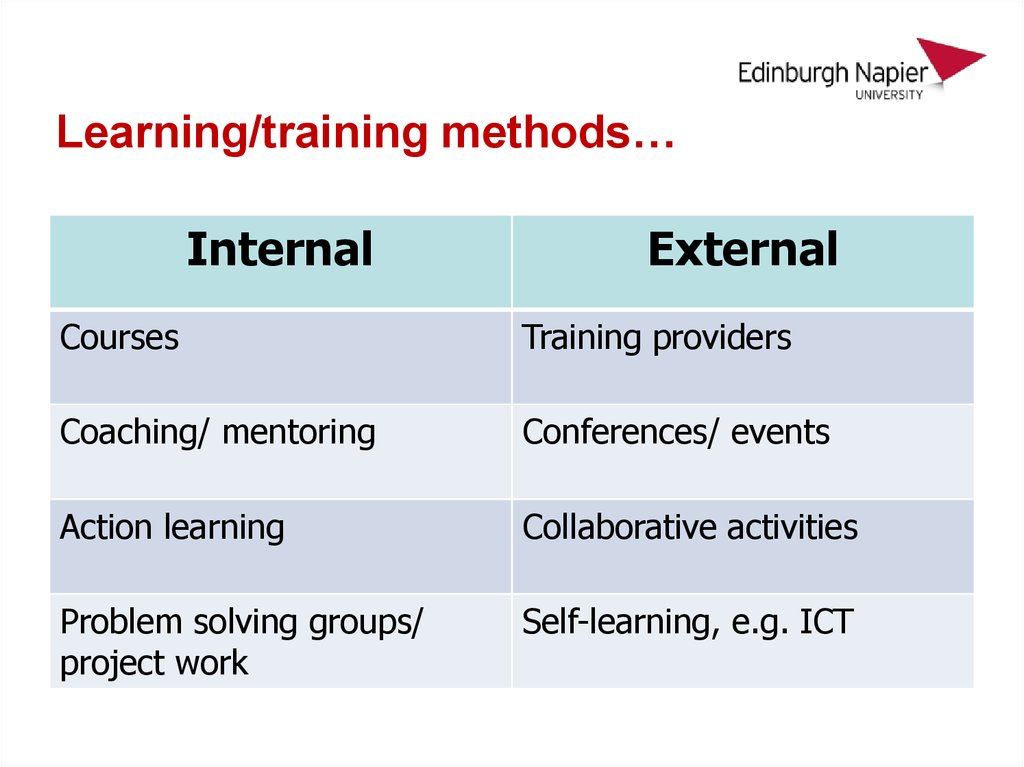
For example, on-the-job learning takes place during daily work tasks, with employees learning as they perform their roles. But when employees undergo external training, they spend dedicated time on it. They also receive professional guidance, and there may be structured content involved. In many cases, recognized credentials follow the learning program.
5 Types of External Training Programs
Organizations are spoilt for choice when it comes to external training. However, you shouldn’t just pick one on a whim.
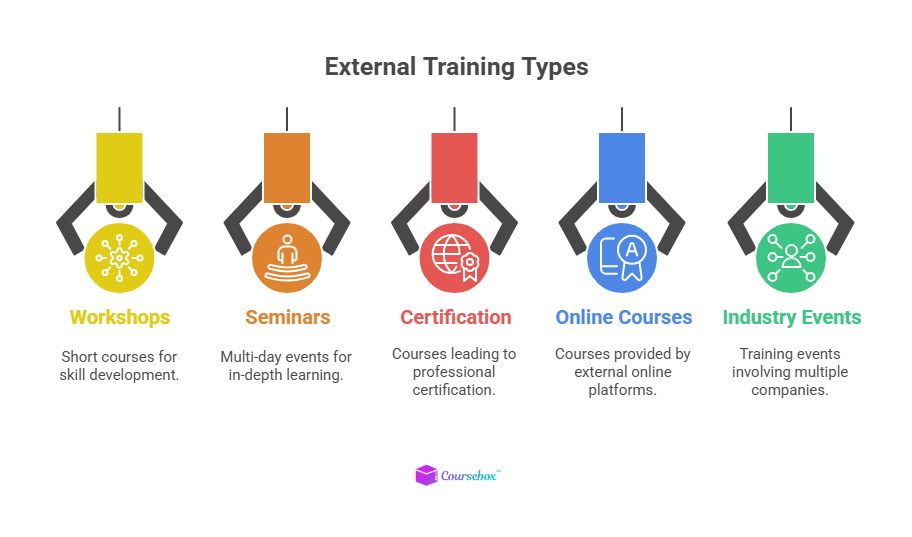
Here’s what each type offers and when to choose it.
1. Workshops and Short Courses (In-Person or Virtual)
Workshops and short courses are focused sessions that last from a few hours to a couple of days. They usually include hands-on exercises, interactive discussions, scenario-based learning, and real-life examples.
These sessions can be held in person or online. They are usually targeted at specific skills or topics such as project management or software tools.
When to Use: These programs work well for teams that need quick skill updates or practical techniques. Use them when a small group of employees requires focused guidance without committing to longer programs.
2. Multi-Day Seminars and Conferences
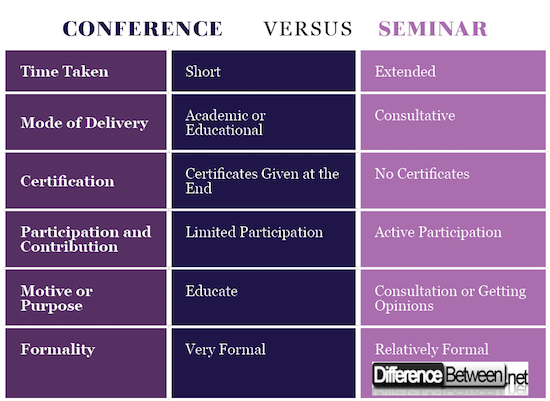
Seminars and conferences are quite common in industries like tech and marketing. They span multiple days and bring together larger groups of participants. Most of them feature expert speakers, panel discussions, breakout sessions, and networking opportunities.
The participants aren’t there for a single skill. Typically, these conferences are meant to cover recent trends and best practices. They may also share industry developments.
When to Use: Organizations use these events to expose employees to wider industry knowledge and current trends. They are suitable when the goal is to inspire new thinking, expand professional networks, keep up with trends, or provide exposure to multiple topics in a short period.
3. Certification Courses
Certification courses provide formal recognition in a specific field. They can cover compliance, technical skills, project management, or specialized industry standards.
Many programs offer exams or assessments that validate employees’ expertise and demonstrate proficiency to clients or regulators.
When to Use: These courses are useful when employees must meet professional standards or legal requirements. Organizations often choose certification courses to standardize skills across teams.
4. Online Courses Offered by Third-Party Providers
Online courses from external providers allow employees to learn at their own pace. They include video lectures, quizzes, peer grading, discussion boards, and sometimes live sessions with instructors.
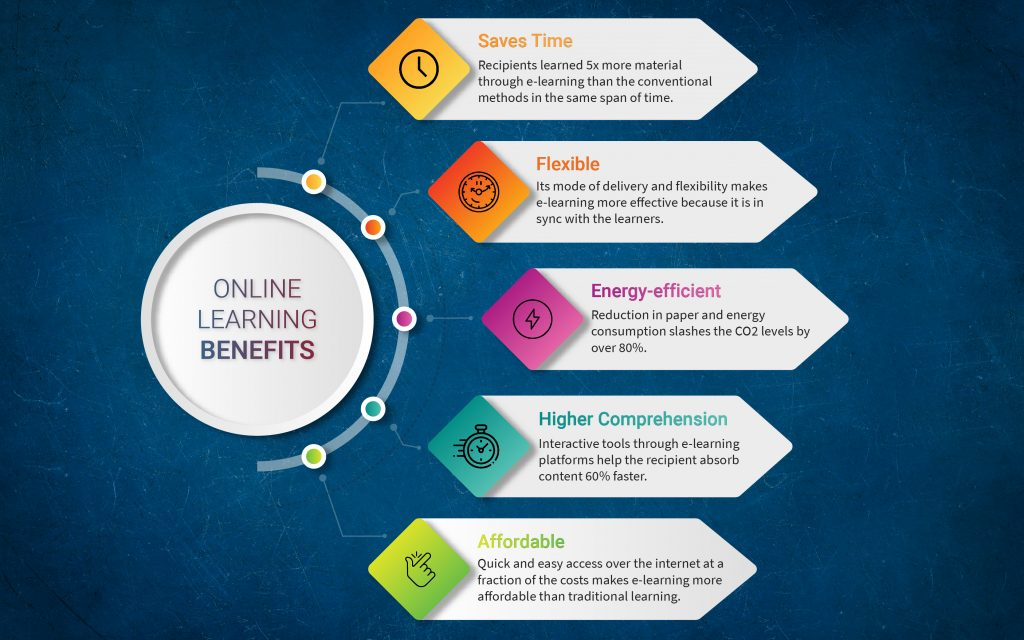
Organizations can decide which courses they want to offer. For example, they may provide employees access to courses related to soft skills like leadership and communication. Similarly, they may choose more technical topics like AI or data analysis. The choice depends on the skill you’re missing in your team.
When to Use: Online programs are best for organizations with dispersed teams or employees who need flexible schedules. They work when ongoing skill development is important or when travel for in-person sessions is not possible.
5. Cross-Company Training or Industry-Wide Training Events
Cross-company programs bring employees from different organizations together. Employees usually learn about shared challenges and industry practices. Participants can share their experiences and learn from peers outside their organization.
These events also encourage networking, which is helpful for both the company and the employee. They may spark new ideas that employees can bring back to their teams.
When to Use: If you want to broaden perspectives and encourage innovation through external collaboration, this type of training can do the job.
Examples of External Training
Different organizations select external training programs that match their objectives. Here are a few examples.
- Tech Companies: They may send employees to coding bootcamps, cybersecurity workshops, cloud computing certification courses, or software vendor training sessions.
- Healthcare Organizations: Hospitals may provide external training on patient safety, HIPAA compliance, medical coding certifications, new clinical procedures, or industry advancements.
- Financial Firms: They can enroll staff in risk management seminars and conferences. Similarly, they may provide access to third-party accounting standards courses or sign employees up for compliance workshops.
- Retail and Service Companies: Their employees may undergo sales training programs or leadership workshops. They may also attend customer service seminars and cross-industry networking events.
How to Offer External Training to Employees
While external training is a game-changer for most teams, it’s only effective when done strategically. Here’s how to do it right.
Identify Skills Gaps First
It all starts with identifying which skills your team actually needs. Conduct a skills gap analysis to find gaps that internal training cannot fill. For example, a marketing team might need advanced SEO strategies. Similarly, a compliance team might require updated regulatory certification.
When you know which skills gaps are present in your team, you can plan training accordingly.
Choose the Right Training Programs
Once you know the gaps, match the programs to your goals. For example, if you need a certification, choose a respected provider. However, for upskilling, you can send your employees to a workshop or enroll them in an online course.
If you need to improve team development, opt for leadership programs or collaborative workshops. They can improve communication and decision-making. The rule of thumb is to select programs that fit the employees’ current responsibilities and future growth potential.
Plan Logistics Carefully
Make sure you plan logistics carefully when you’re providing external training to employees. Schedule training so it does not disrupt key operations. More importantly, provide clear instructions and expectations so employees can prepare in advance.
Remote teams can take advantage of online courses that allow flexible timing. In-person workshops or multi-day conferences might require travel, so coordinate early and provide clear instructions.
Support Learning During the Program
Encourage employees to apply new knowledge in real time. Managers can set aside small projects for practice or pair participants with mentors or teammates for guidance. Ask employees to share key takeaways with the team so that they can revise what they’ve learned.
Measure the Impact
While you’re at it, measure the impact of training, too. Track performance improvements, such as skill gains. You can also gather feedback on the program’s relevance from the employees.
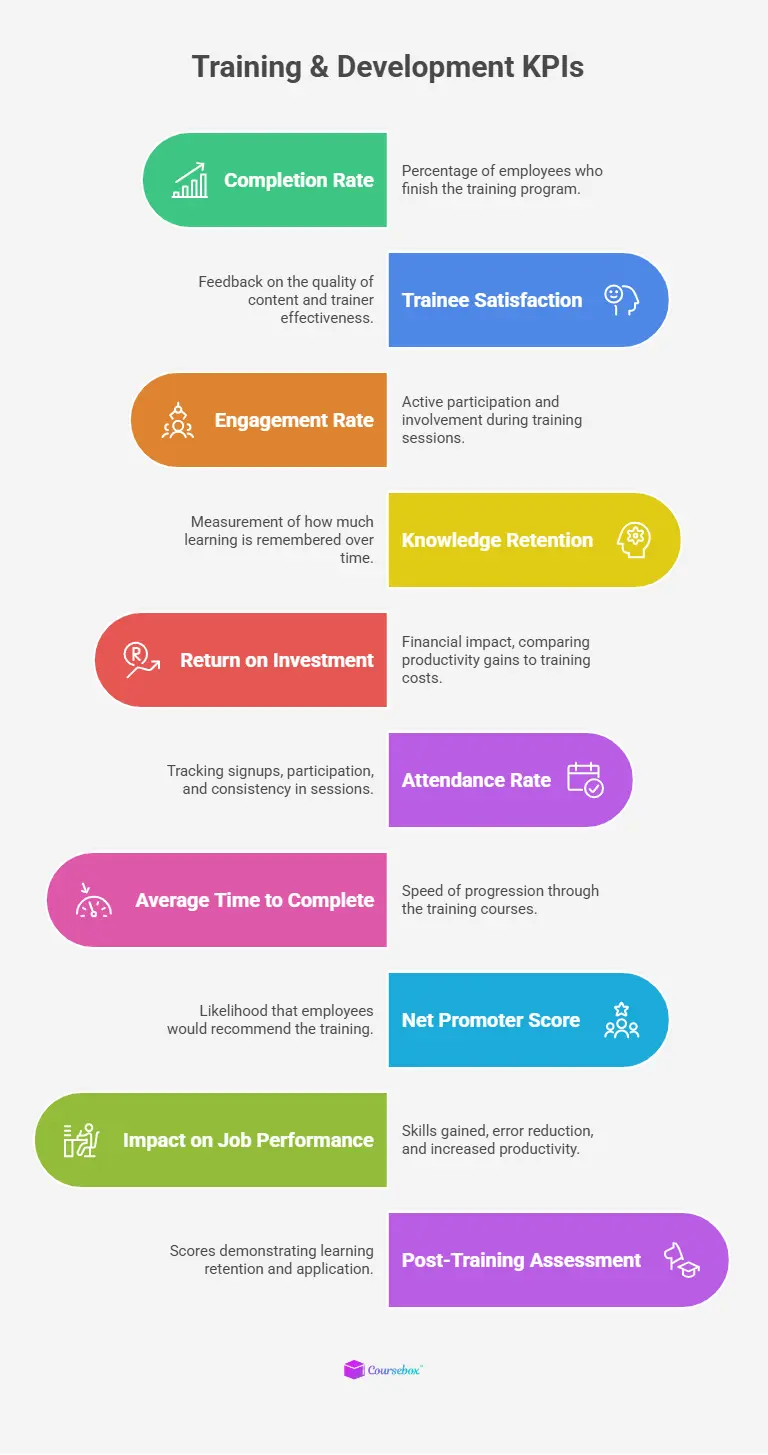
Suppose you send your team to a leadership conference. Once they return, ask them if they found it helpful. Then, a month later, managers can report on the difference they have noticed in team collaboration or decision-making.
Promote Continuous Development
External training should be a part of the learning culture in your organization. Encourage employees to share insights with the team and apply new skills in real projects. You can also suggest future programs that address ongoing needs.
This approach turns one-off training into long-term growth for both individuals and the organization. It’s a win-win for both parties.
How Coursebox Simplifies External Training Programs
Coursebox makes external training easier for two main types of organizations: those who want to sell online courses to companies and those who want to provide structured training to employees without building programs from scratch.
You no longer have to spend weeks producing training materials. The AI-powered platform only needs videos or any existing content, which it can then turn into a full-fledged course. It also supports interactive elements like quizzes, flashcards, discussions, and embedded content to keep learners engaged.
There are plenty of other AI features, too. For example, the AI quiz generator creates assessments instantly, while the AI grader marks them using your rubric. An AI chatbot can answer your employees’ queries in real time, without waiting for a trainer to be available.
Organizations can also align courses with competency standards, which makes it easier to meet certification requirements or skill benchmarks. More importantly, white-label options let you deliver a branded experience.
Sign up for free now to create your first course.
FAQs About External Training and Its Types
What are the most popular types of external training?
Organizations commonly use workshops, multi-day conferences, certification programs, online courses, and cross-company sessions. The type of external training program an organization chooses will depend on its objectives and existing employee skills.
What are the benefits of external training?
Employees gain exposure to new ideas, best practices, current trends, technological advancements, and industry knowledge. These programs can improve confidence, teamwork, problem-solving, and communication. Employees can also learn from their peers and apply these new insights in the workplace.
How long are external training programs?
Program length varies. Workshops may last a few hours, short courses a few days or weeks, multi-day conferences several days, and certification courses weeks or months. Industry events often go on for a week or a weekend.
Can you customize external training for specific company needs?
While some programs are generic, many providers allow customization to focus on company-relevant topics. With tools like Coursebox, it becomes time and cost-effective to personalize learning paths and course material for internal competencies, workflows, needs, and standards.
Can external training be combined with internal learning programs?
Organizations may pair external programs with internal follow-ups or mentoring. For example, after finishing a course or certification, employees can apply lessons immediately at work. They may share experiences with colleagues or mentor peers.
Alex Hey
Digital marketing manager and growth expert

