

8 Best Easygenerator Alternatives in 2026: What I Found
My review of 8 Easygenerator alternatives, with authoring workflows, review needs, LMS output and licence trade-offs.

The best Easygenerator alternatives in 2026 include Coursebox, Articulate 360, Adobe Captivate and iSpring Suite. Choose by the workflow you need to improve.
- AI is available in the original tool too. Compare editing, interaction control, review and delivery before switching.
- Coursebox combines editable AI courses with learner support and delivery. Custom branching, software simulations and slide preservation can favour a specialist tool.
- ActivePresenter’s commercial licence is paid. 360Learning’s learner delivery is different from exporting authored courses to another LMS.
- Test the finished lesson, its update process and the learning record before committing to a new workflow.
Answer three questions to compare the four tools below. The result balances your preferences; the entries explain the features, limits and costs to check.

Build high quality courses that actually sell
Easygenerator lets subject-matter experts build training in the browser, with AI creation, templates and review options. An alternative is useful when your team needs a different authoring workflow, more interaction control, another delivery setup or a licence that better fits the number of contributors.
I’m Carolina, an instructional designer. I’d want the person who knows the subject to be able to improve a lesson without handing every small change back to L&D. For more complex activities, I’d accept extra authoring work when it produces the practice the learner needs.
I work at Coursebox, whose AI eLearning authoring tool is included here. The alternatives cover different ways to draft, review and publish courses, including specialist simulation and recording tools.
How I picked these Easygenerator alternatives
I compared the tools against four practical checks:
- Authoring workflow: Source documents, slides, responsive lessons, branching or software recording.
- Review and updates: Who edits, who approves and how changes reach live courses.
- Output and access: LMS standards, source-file portability, accessibility and author operating systems.
- Licence scope: Author seats, learner delivery, commercial use, AI credits and add-ons.
Before switching, choose one representative course and identify what is difficult today: creating it, reviewing it, delivering it or updating it. Compare that whole task in the replacement tool, including the plan needed for the output.
The best Easygenerator alternatives compared
| Tool | Authoring approach | Best for | Price and scope |
|---|---|---|---|
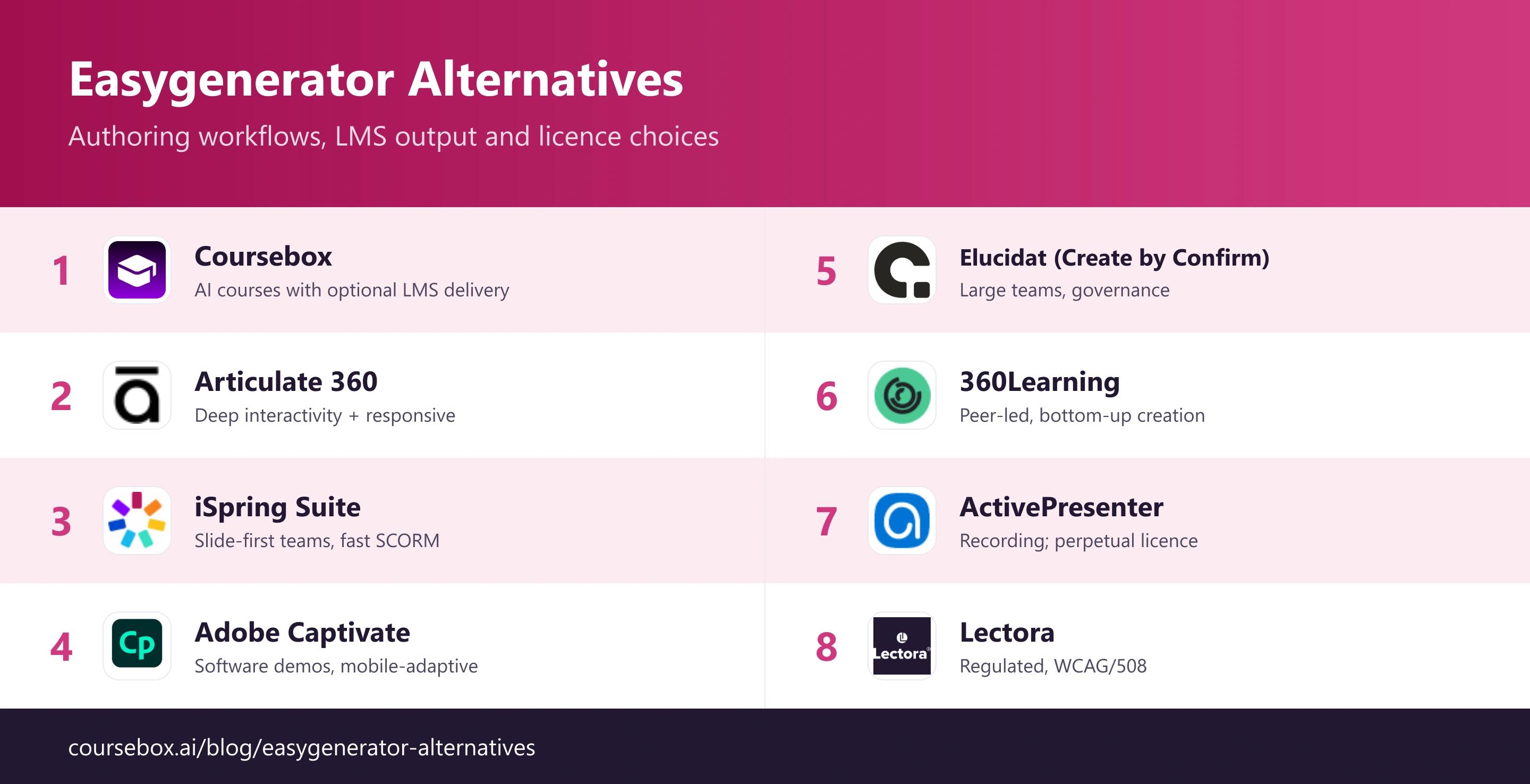
| Coursebox | AI generates the course (cloud) | AI-assisted courses with optional LMS delivery | Free; Creator AU$500/yr; Pro + LMS AU$4,200/yr |
| Articulate 360 | Rise (blocks) + Storyline (slides) | Deep interactivity + responsive | US$1,449 Personal / US$1,749 Teams per author/yr |
| iSpring Suite | PowerPoint-based (desktop) | Slide-first teams, fast SCORM | US$970/author/yr; Suite AI US$1,290 |
| Adobe Captivate | Responsive + simulations | Software demos, mobile-adaptive | US$39.99/mo individual subscription |
| Elucidat (Create by Confirm) | Cloud authoring, review and language governance | Large teams, governance | Quote; confirm modules and user model |
| 360Learning | Collaborative authoring + LMS | Peer-led, bottom-up creation | Team US$8/user/mo, up to 100 users |
| ActivePresenter | Desktop record + author | Software recording; perpetual licence | US$249 Standard / US$499 Pro, one-time |
| Lectora | Custom layouts and accessibility controls | Regulated, WCAG/508 | Quote for Lectora / Studio Gold |
Prices checked in October 2026. US$ and AU$ are shown explicitly; compare the stated licence scope and billing term, not just the headline amount.
The 8 best Easygenerator alternatives
1. Coursebox
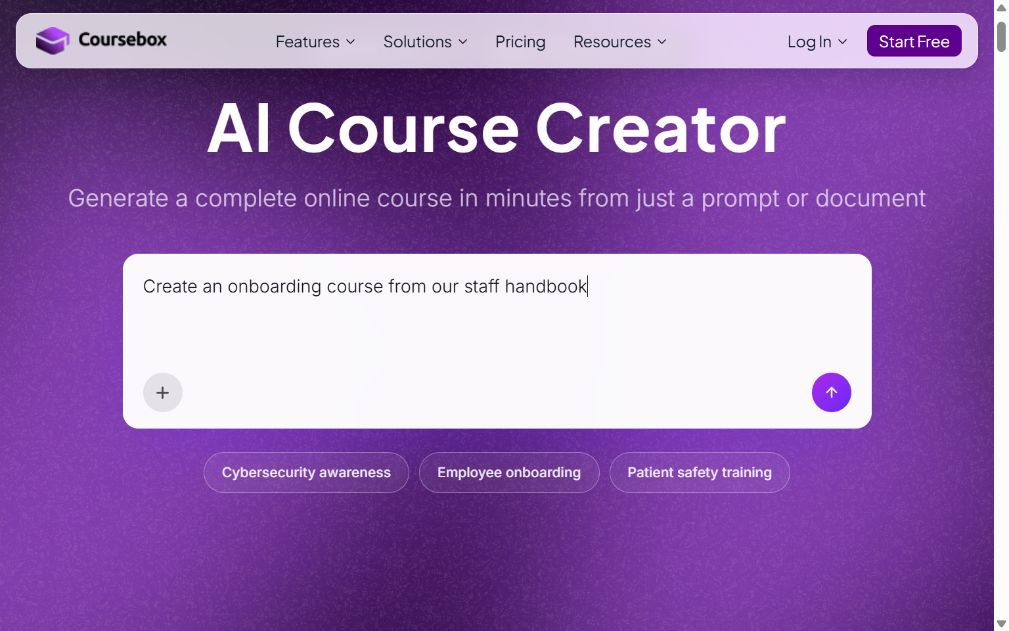
Coursebox is a browser-based Easygenerator alternative for teams turning source material into a structured course. Its AI generates lessons, quizzes and assessments from documents, prompts and other supported sources; authors can edit the result and deliver it in Coursebox or export it for an existing LMS.
The broader workflow includes course delivery, learner support and reporting, not just text generation. Plan choice depends on whether you need an authoring seat or a branded LMS with groups and learning pathways. It is also important to distinguish connected SCORM delivery from a standalone package: connected AI functions do not all travel into an offline export.
From my review: What stood out in my comparison was the whole handoff from source document to learner. Generating an outline is only the beginning; the team still needs to check examples, assessment and delivery. I would compare the finished lesson and its update process, not just the first generation screen.
My take: Choose Coursebox for AI-assisted course production with an option to keep delivery in the same platform. For complex hand-built branching or precise slide-level interaction control, compare Storyline, Captivate or Lectora.
Pricing: Free includes three mini courses and unlimited learners. The Australian pricing page lists Creator at AU$500/year and Pro + LMS at AU$4,200/year, with one admin included; extra Pro + LMS admins are AU$125/month. Dynamic SCORM needs an active subscription. Standalone exports omit connected features such as the AI tutor; Enterprise and SSO have separate commercial terms.
2. Articulate 360
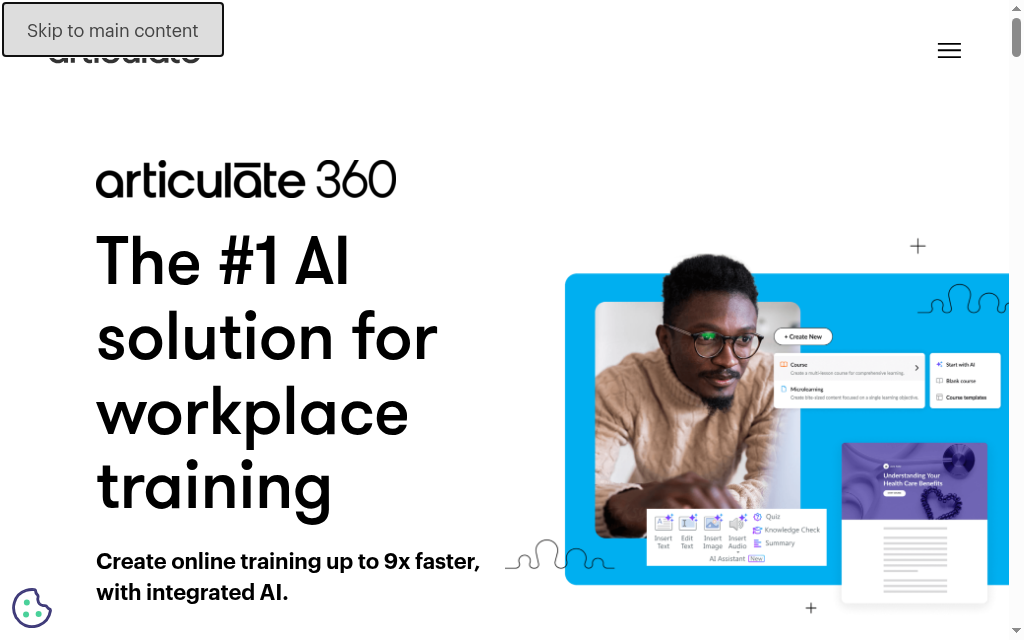
Articulate 360 combines two authoring workflows. Rise builds responsive lessons in the browser; Storyline gives you slide-level control over interactions, variables and branching. That lets an L&D team produce routine policy courses and more involved decision scenarios within one subscription.
For a customer complaint exercise, Storyline can make the next scene depend on a learner’s choice. A straightforward induction is a better candidate for Rise. Review provides a shared place for stakeholder feedback, and the suite exports SCORM, xAPI and cmi5. Storyline still requires Windows, so choosing Articulate does not by itself solve a Mac-only authoring requirement.
From my review: In my comparison, the useful upgrade was control over the learning interaction. I would keep routine lessons in Rise and reserve Storyline for exercises where the learner’s choices change what happens. Otherwise, the team takes on extra production work without improving the exercise.
My take: Choose it for a mix of quick responsive courses and custom scenarios. A team that mainly needs to turn existing documents into training should compare the editing effort and licence cost with a simpler browser tool.
Pricing: US$1,449 per author/year for Personal or US$1,749 for Teams. Translation and AI avatar workflows use separately purchased credits; a 14-day trial is available.
3. iSpring Suite
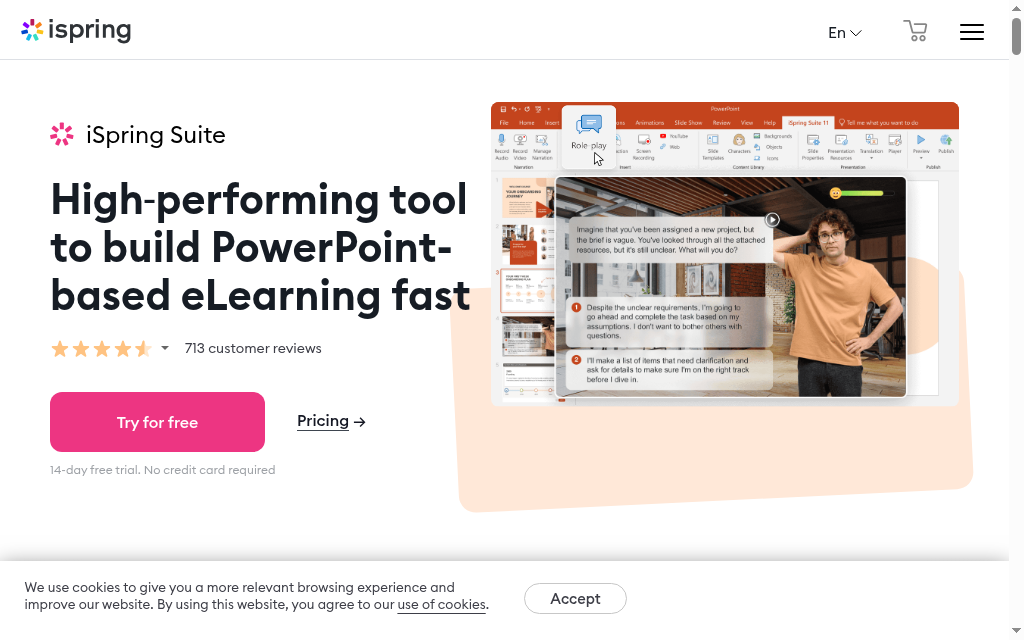
iSpring Suite suits teams whose training already lives in PowerPoint. Authors keep the familiar slide workflow, then add narration, quizzes and dialogue exercises before publishing a course for their LMS. It saves a redesign when a deck’s layout and sequence are already useful.
The product is not limited to manual authoring. Suite AI adds course generation and an AI assistant; iSpring also sells Cloud AI as a separate browser-based option. The desktop Suite remains tied to Windows and PowerPoint. That is convenient for a slide-heavy team, but less convenient when contributors need to work from different operating systems.
From my review: What stood out in my review was the starting material. With a well-designed slide deck, preserving the presentation can be more useful than generating a new structure. With a long handbook, I would compare an AI-generated lesson outline instead. Those are different tasks, even if both end as SCORM.
My take: Keep it on your shortlist when PowerPoint fidelity and quiz-driven training are priorities. Choose a browser tool when shared editing and avoiding desktop installations are the larger need.
Pricing: Suite is US$970 per author/year; Suite AI is US$1,290. The separate Cloud AI product is US$720 per author/year. LMS delivery is a separate purchase.
4. Adobe Captivate
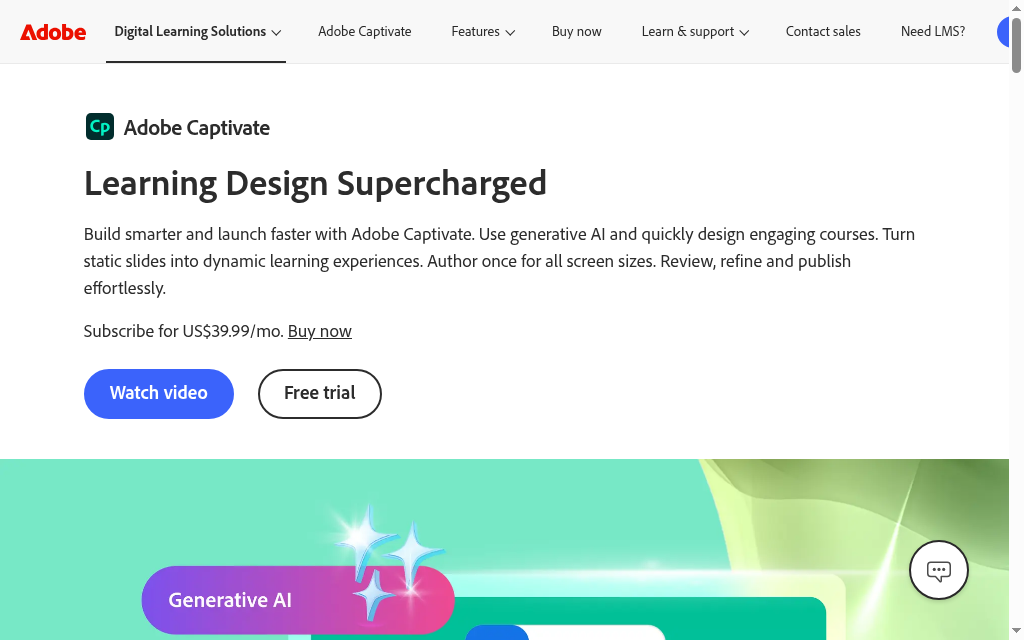
Adobe Captivate is a useful option when training needs to show a software task and then let learners practise it. It combines responsive course building with software simulations, rather than relying only on slides or reading blocks.
An application walkthrough can introduce the steps, ask the learner to complete them and report the assessment through an LMS. The subscription includes the newer Captivate and Captivate Classic. Treat them as separate authoring applications when checking an existing project: a feature or editable source file available in one should not be assumed to work in the other.
From my review: My first evaluation question is which application the team will actually use. A polished demo is less helpful than seeing a representative software task recorded, edited and published in that version. The re-recording work after an application update belongs in the comparison too.
My take: Pick Captivate when practising a software process or controlling responsive layouts justifies a more involved authoring workflow. For simple document-based courses, that extra control may add work you do not need.
Pricing: The individual subscription is US$39.99/month and includes Captivate, Captivate Classic, storage and generative credits. Check the checkout commitment and regional terms before comparing annual costs.
5. Elucidat (Create by Confirm)
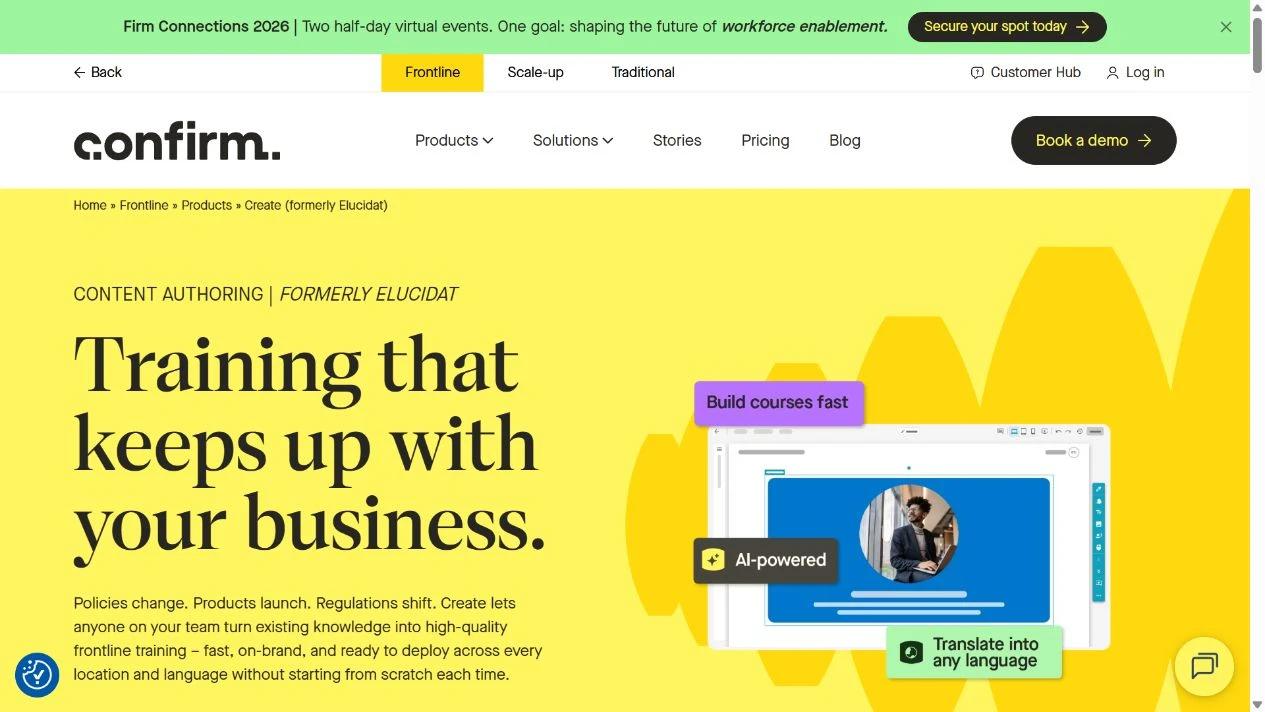
Elucidat now directs buyers to Create within Confirm’s Frontline suite. It is a cloud authoring option for teams that need many contributors to produce consistent training, particularly when the same course must be maintained across locations and languages.
Create combines templates, brand locking, collaboration and review with AI outlines and source-PDF upload. Its current product page also includes PowerPoint import and translation with glossary controls. That gives a central L&D team a way to set the design while local experts contribute and adapt the content.
From my review: The maintenance workflow stood out in my comparison. For a policy change, I want the team to know who owns the master, who approves local wording and how an update reaches each version. Brand locking helps with design consistency; it does not replace a named content owner.
My take: Shortlist Create for distributed production and multilingual governance. A solo author may prefer a smaller tool. Because the offering now sits within Confirm, get the exact authoring, publishing and learner-delivery scope written into the quote.
Pricing: Current pricing is by enquiry. Confirm author seats, reviewer access, language support and export rights together; an authoring-only budget should not assume the whole Frontline suite is included.
6. 360Learning
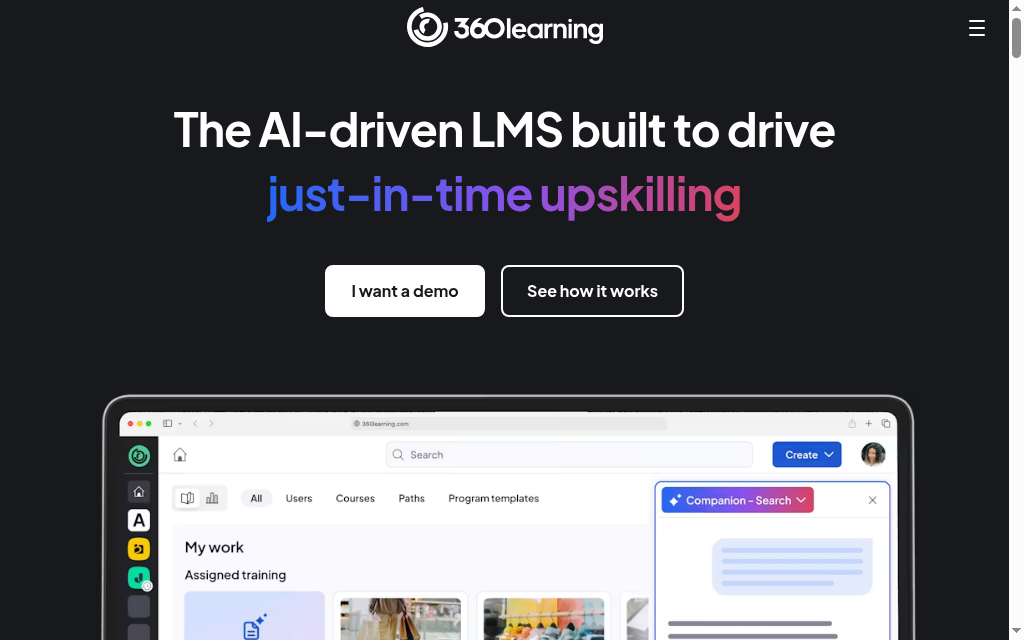
360Learning brings course authoring and learner delivery into an LMS built around subject-matter expert contributions. It suits teams that want colleagues to share operational knowledge and keep training current, rather than sending every change through one central designer.
AI-assisted creation helps turn source material into courses, while collaborative feedback helps authors refine it. The buying change is broader than replacing an editor: learners, assignments and course records also move into the platform. Importing a SCORM course for delivery is a different capability from exporting a natively authored course to another LMS.
From my review: The practical question in my comparison was ownership after launch. A product specialist may know the process, but someone still needs to approve the lesson and revisit it when the process changes. I would assign those responsibilities before inviting a large group of authors.
My take: Choose it when expert contributions and delivery belong in one learning platform. If your existing LMS must remain the system of record, verify the exact portability of the courses you plan to build before treating it as a standalone authoring replacement.
Pricing: Team is US$8 per user/month for up to 100 users. This is a user-based LMS price, not an author-seat price. Larger deployments require a quote; confirm the required AI and integration scope.
7. ActivePresenter
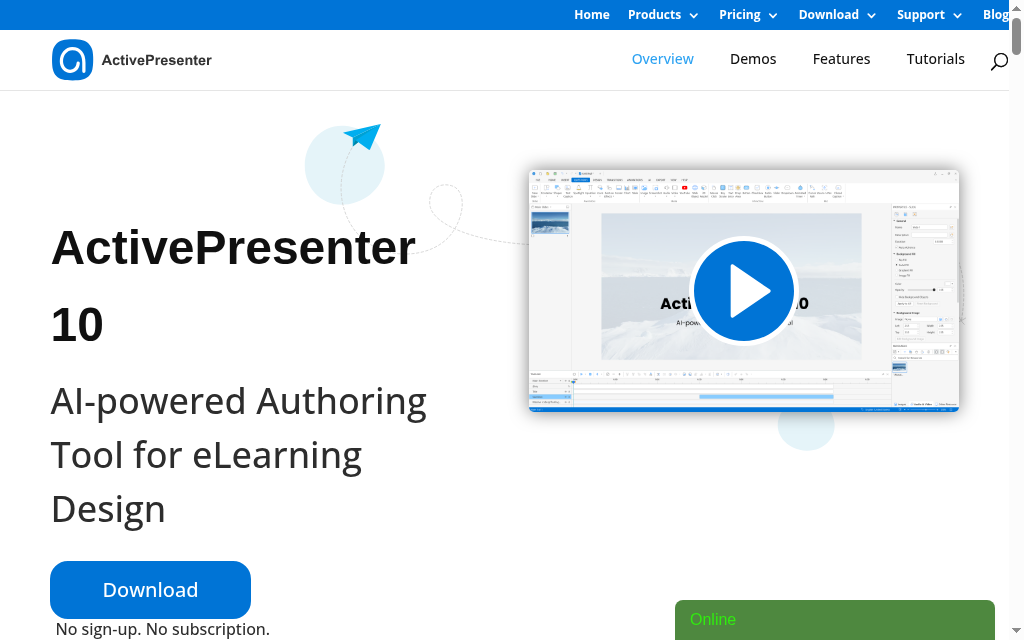
ActivePresenter combines screen recording with slide-based authoring on a desktop. It is a useful option for software training: record a process, edit the recording and build exercises around the actions learners need to perform.
The tool supports PowerPoint import and LMS-ready output, including SCORM and xAPI. The important qualification is the edition. The free download lets you explore the workflow, but non-free outputs carry a watermark and commercial use needs a paid licence.
From my review: What caught my attention was the licence model. A perpetual licence can suit an author who creates occasional system walkthroughs and wants to keep editing without an annual subscription. I would also budget for later major-version upgrades and any extra AI credits, rather than equating one purchase with unlimited future costs.
My take: Choose it for recording-led interactive training and a one-time licence. A distributed team that depends on browser co-authoring should compare the collaboration work involved in maintaining desktop project files.
Pricing: Standard is US$249 and Pro is US$499 per machine, as one-time purchases. The purchased version is perpetual, with one year of major-version upgrades included; AI tools consume credits.
8. Lectora
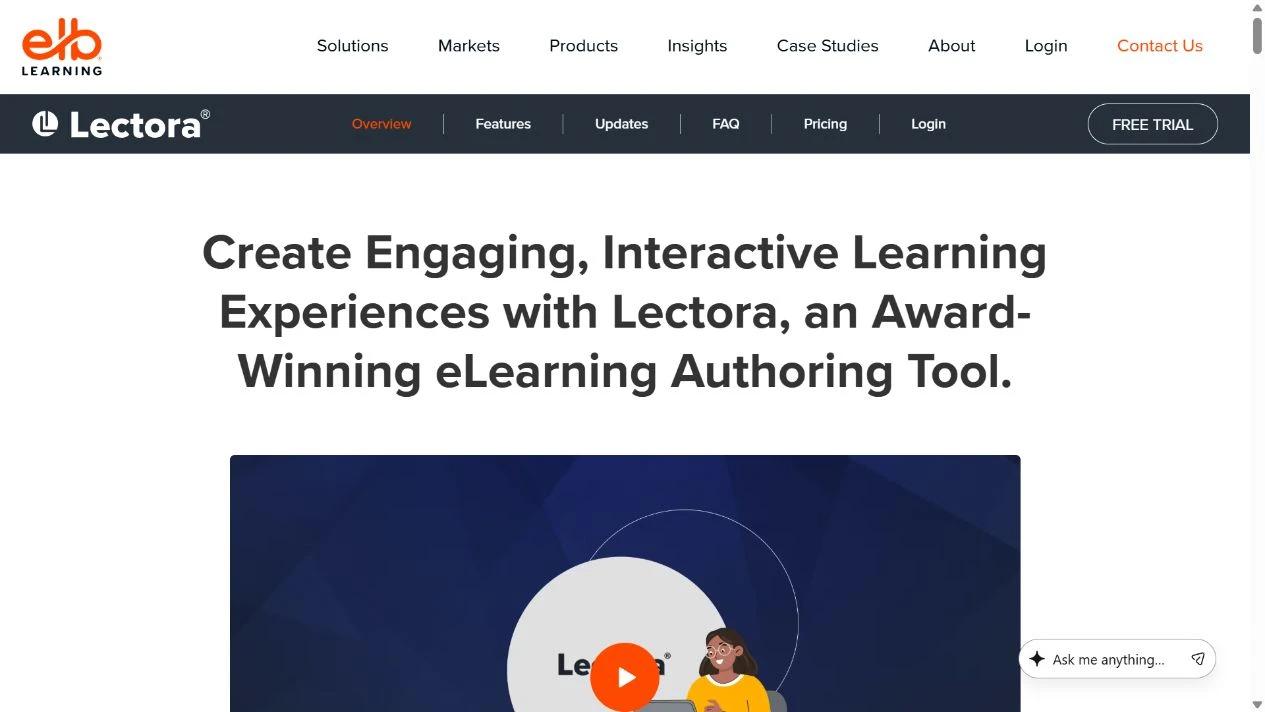
Lectora gives experienced authors control over course layouts, branching and accessibility settings. It is useful when the lesson needs more custom behaviour than a fixed block editor allows, especially for organisations with defined accessibility requirements.
It supports PowerPoint import, an AI Course Wizard, review workflows and LMS publishing. Lectora Online works in a browser on Mac or PC; the desktop application runs on Windows. The Studio Gold offering includes both versions with ReviewLink, MicroBuilder and the asset library, so check which working environment your authors will use.
From my review: My accessibility review starts with the finished exercise. Reading order, keyboard navigation, focus behaviour and alternative text still need an author’s attention. The ability to build accessible content is useful; it is not a guarantee that every course created with the tool meets your requirements.
My take: Choose Lectora when custom interactions and accessibility control justify the authoring effort. A team producing straightforward reading-and-quiz courses may not need that level of design freedom.
Pricing: Request current Lectora or Studio Gold pricing and confirm whether the quote covers Online, Desktop and review access. A free trial is offered. Include author training and accessibility QA in the project budget.
What changes when you leave Easygenerator?
| Moving to | What you gain | What to plan for |
|---|---|---|
| AI-assisted browser authoring | Source-to-course drafting and shared access | Review structure and rewrite examples for your learners |
| Custom slide or scenario authoring | More control over learner choices | Author training and longer production work |
| Recording-led authoring | Clear software demonstrations and practice | Re-recording after interface changes |
| Authoring plus an LMS | Creation, learner support and delivery together | Transfer accounts and learning records separately |
In Thinkific’s 2026 survey of 1,039 learning-programme professionals, 44% used AI to generate educational content. That is a reason to compare the editing and approval workflow as well as generation: the draft still needs to become a lesson your team can stand behind.
The World Economic Forum’s 2025 employer survey estimated that 59 in every 100 workers would need training by 2030. A reusable course and a workable update process are therefore more useful than a one-off production shortcut.
A SCORM ZIP is a delivery package, not a universal editable project. Keep your source documents, images, captions and original project files. Test any proposed importer on a real course before promising that the library will migrate automatically.
My migration checklist
- Build one representative course in the replacement tool, including its hardest interaction.
- Publish to the destination LMS and check score, completion, resume and learner access.
- Make a small content change and confirm how it reaches existing learners.
- Price all authors, review access, AI usage and delivery before moving the rest of the library.
Which Easygenerator alternative should you choose?
Eight tools, matched to the reason you are leaving Easygenerator:
| If your priority is | Go with |
|---|---|
| AI course creation with optional delivery | Coursebox |
| Deep interactivity and responsive courses | Articulate 360 |
| A PowerPoint-first workflow | iSpring Suite |
| Software simulations and mobile-adaptive output | Adobe Captivate |
| Large-team cloud authoring with governance | Elucidat (Create by Confirm) |
| Collaborative, peer-led course creation | 360Learning |
| A paid perpetual licence | ActivePresenter |
| Accessible course design with author QA | Lectora |
Keep the source files for your current library and move one course first. The replacement should improve the difficult part of your workflow while preserving the learner experience and LMS records you need.
Frequently Asked Questions
Coursebox suits AI-assisted course creation and delivery; Articulate combines responsive authoring with custom scenarios; Captivate and ActivePresenter suit recording and simulations. iSpring Suite preserves a PowerPoint workflow; 360Learning combines expert contributions with an LMS.
Coursebox offers a limited free plan for trying course creation and delivery. ActivePresenter’s free edition has output and usage restrictions, so business training should be budgeted against its paid commercial licences. Compare the usable output, not just whether a download is free.
Not necessarily. An LMS can import a SCORM delivery package without giving an author editable source. Keep the original project and source material, then test the replacement tool with one representative course.
Confirm the exact SCORM version or other standard your LMS needs, and test completion, score and resume. Also establish whether the exported content needs an active subscription and which connected features remain available.
Yes. Easygenerator’s current offering includes AI course building and editing. Compare the workflow, interaction control, contribution model and delivery scope when assessing a replacement.
Carolina Martin
Carolina is a highly experienced learning designer with tech start-up experience. She is based in Sydney and previously designed courses alongside Coursebox founder Travis in a previous job. She is passionate about delivering engaging learning experiences and brings the same perspective to customer experience too. She manages our customer support documentation and product testing processes.

