

Blackboard vs Brightspace: What’s the Difference and Which One Should You Choose?
Looking to speed up your training and learning process? Check out this Blackboard vs Brightspace comparison to find the AI LMS that best suits your needs.


Run your own branded LMS with unlimited learners
When rethinking your organization’s learning technology, your team might be deciding between the two popular AI LMS platforms: Blackboard and Brightspace. Both power universities, colleges, and large organizations worldwide.
Blackboard and Brightspace both offer scalability, analytics, and modern digital learning experiences. However, once you look past the marketing language, their philosophies, user experience, and implementation approaches start to differ in meaningful ways.
If you're evaluating Blackboard vs Brightspace, this breakdown will help you understand the features and the strategic impact of choosing one over the other.
What Is Blackboard?
Blackboard Learn by Anthology is a long-established LMS used by universities and enterprise institutions. It offers course management tools, grading systems, assessments, discussion forums, accessibility features, and analytics dashboards. Blackboard is typically delivered as a cloud-hosted solution, meaning the vendor manages the infrastructure and updates.
Over the years, Blackboard has evolved to focus more on user experience, mobile responsiveness, and analytics. It supports structured course design, integration with third-party educational tools, and large-scale deployments across institutions.
Because of its history and enterprise focus, Blackboard is seen as a comprehensive, governance-friendly LMS built for institutional complexity.
What Is Brightspace?
Brightspace by D2L is a cloud-based LMS designed with an emphasis on personalization and analytics. It is widely used in higher education, corporate learning, and K-12 environments.
Brightspace is known for its adaptive learning features, competency-based education tools, and data-driven insights. It offers structured course creation, assessment management, learning paths, and integration with various educational technologies.
One of Brightspace’s core differentiators is its focus on learner engagement and performance tracking through predictive analytics and progress dashboards.
Blackboard vs Brightspace: 6 Key Differences Explained
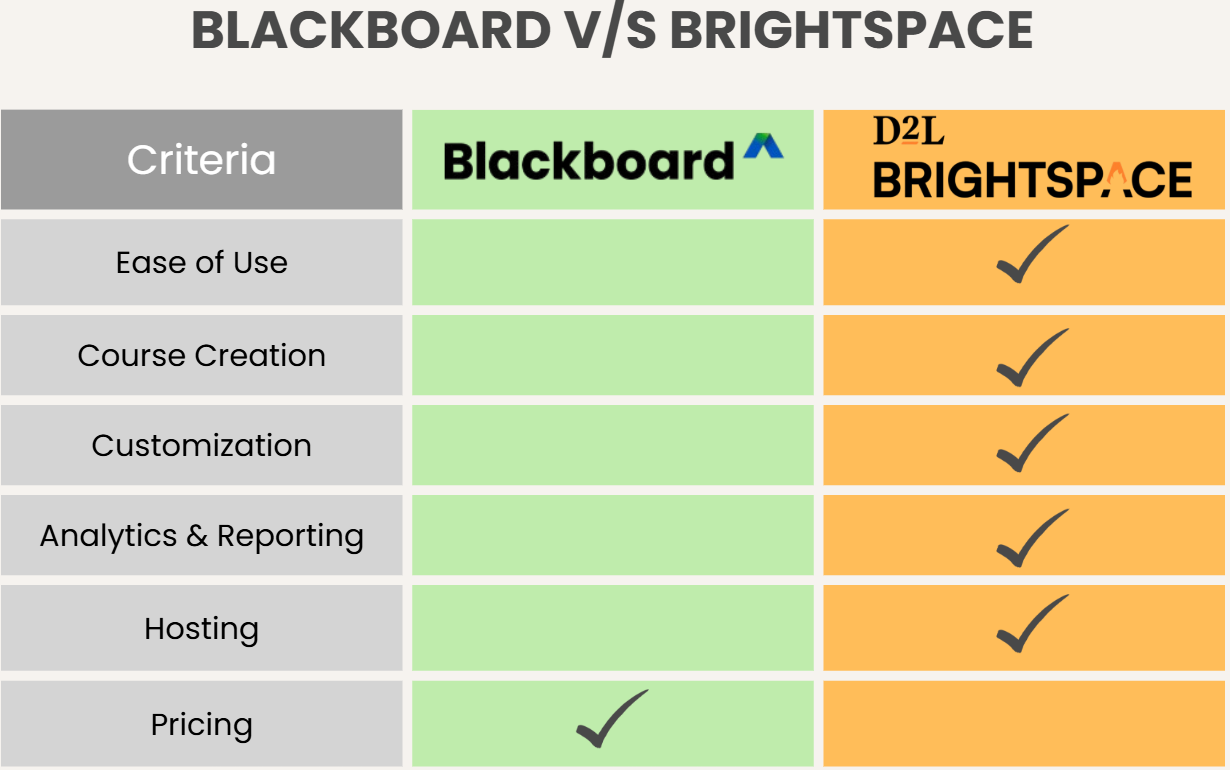
Now, let’s explore the areas where Blackboard and Brightspace truly differ. Here is a detailed overview of six differences between the two platforms.
1. Ease of Use & Interface
User experience is usually the first noticeable difference between Blackboard and Brightspace.
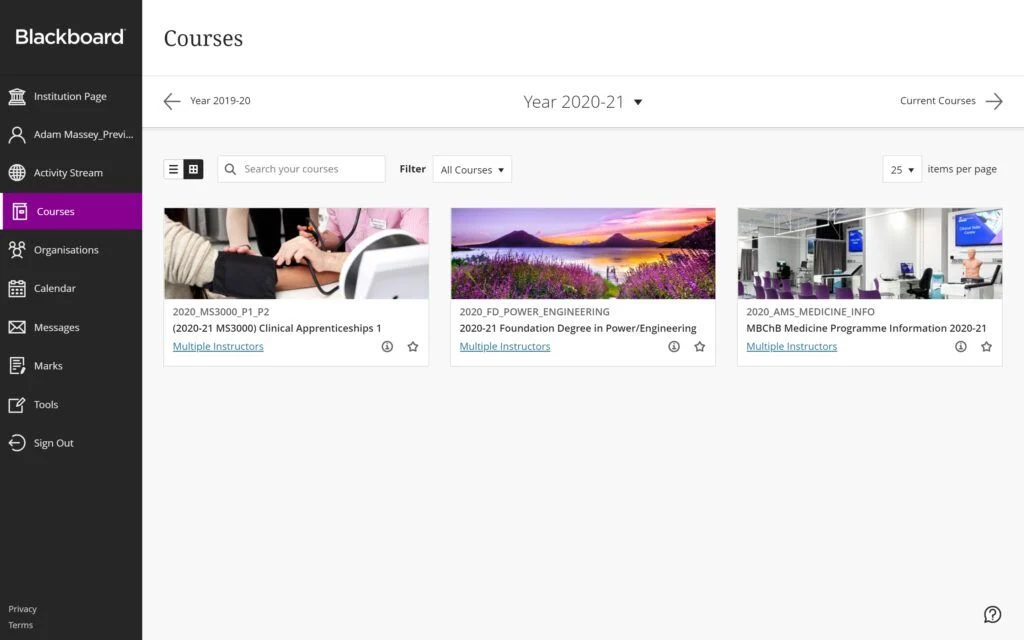
Blackboard provides a structured and standardized interface. Institutions appreciate its consistency across courses and departments. However, depending on configuration and legacy elements, some users find the interface layered and occasionally complex, especially for first-time instructors.
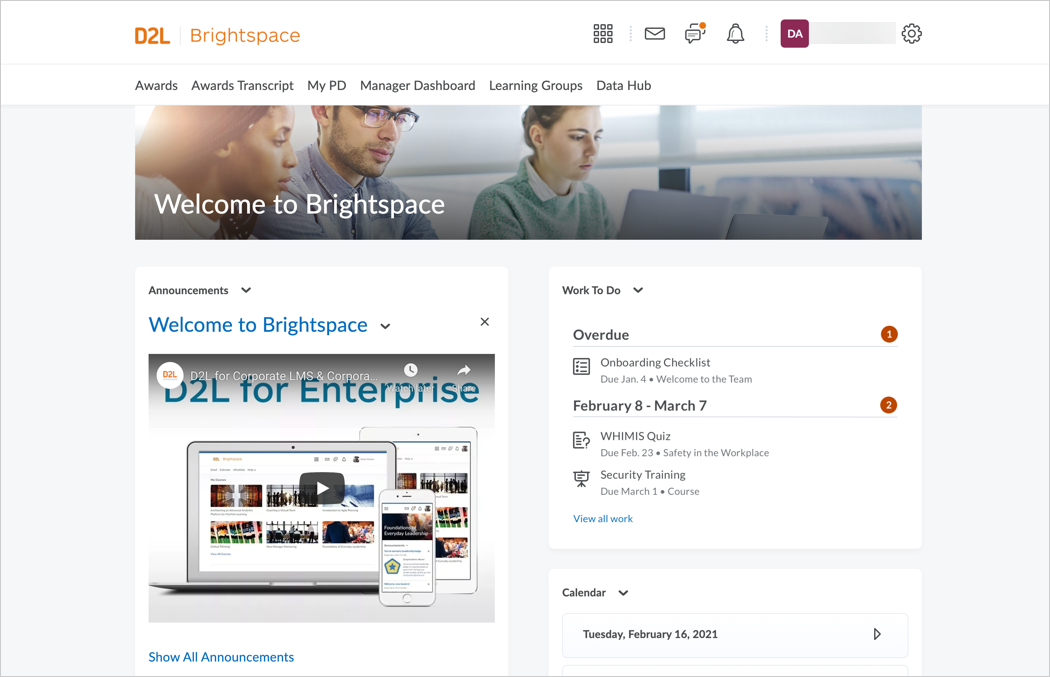
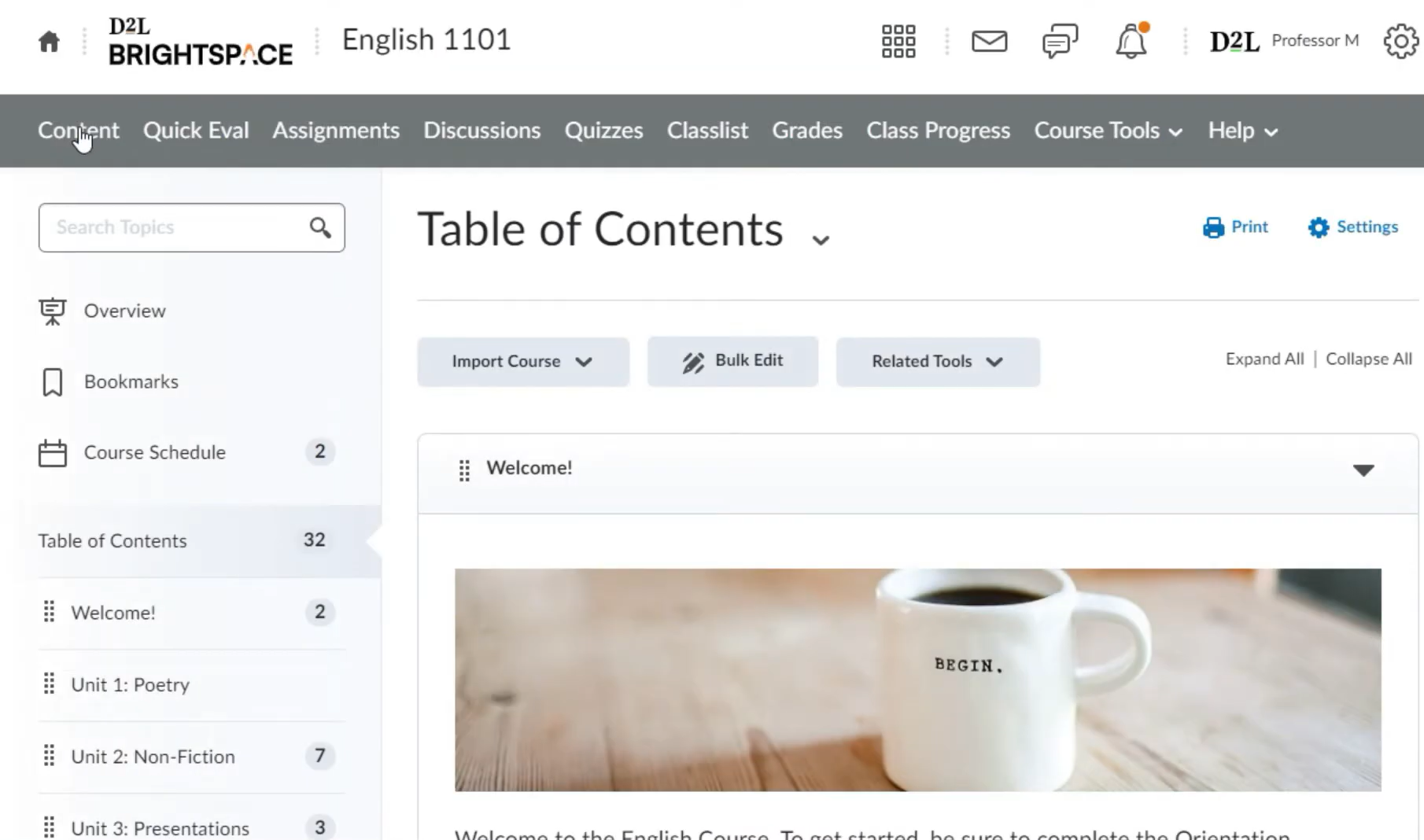
Brightspace, on the other hand, is praised for its clean and modern interface. Navigation feels intuitive, and dashboards provide visual indicators of progress and activity. Many instructors report that course setup and grading workflows feel more streamlined than in more traditional LMS layouts.
Source: D2L Brightspace Community
While both systems are powerful, Brightspace feels more contemporary. At the same time, Blackboard emphasizes structured control and institutional stability.
2. Course Creation & Content Structure
Both platforms support robust course development, but their approach differs slightly in emphasis.
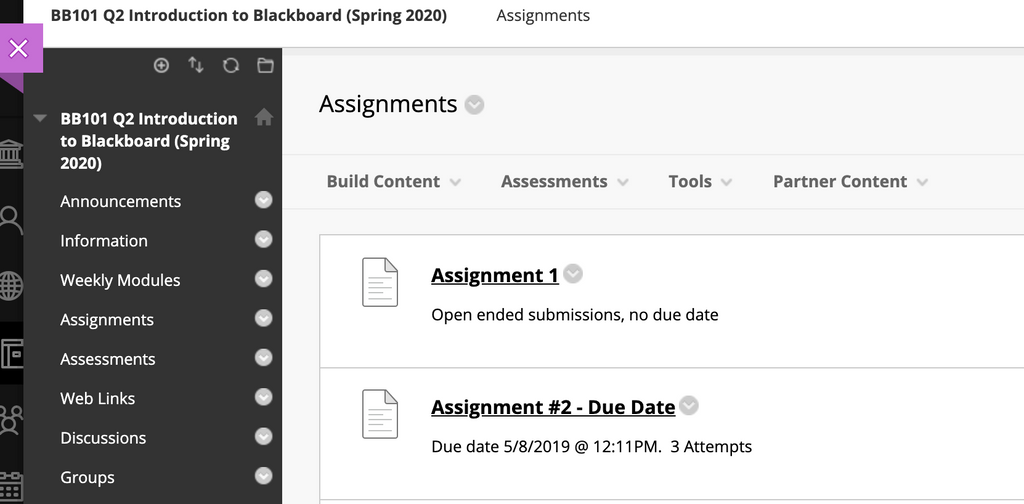
Blackboard allows instructors to create modular course structures with folders, learning modules, assignments, quizzes, rubrics, and discussion boards. It supports detailed grading workflows and integrates assessment tools directly into course pages. Institutions can standardize course templates for consistency across departments.
Source: Boston University
Brightspace also supports structured modules, assessments, rubrics, and multimedia content. However, it places stronger emphasis on adaptive release conditions, competency frameworks, and mastery tracking. Instructors can design courses that adjust based on learner progress, supporting personalized learning pathways.
Source: Brightspace YouTube Tutorial
In essence, Blackboard focuses on structured academic delivery. Meanwhile, Brightspace integrates personalization and competency tracking more deeply into its course design philosophy.
3. Customization & Flexibility
Customization matters for institutions with unique governance or pedagogical models.
Blackboard supports administrative configuration and institutional branding, but customization largely occurs within vendor-defined parameters. Institutions operate within Blackboard’s ecosystem, which prioritizes stability and centralized control.
Brightspace also operates as a managed cloud platform, but offers flexible configuration for competency frameworks, learning outcomes tracking, and course design rules. While not open source, it provides strong configurability within its system.
Neither platform offers open-source-level customization like Moodle, but both provide enterprise-grade configuration tools suited for institutional requirements.
4. Analytics & Reporting
This is where strategic differences become more visible.
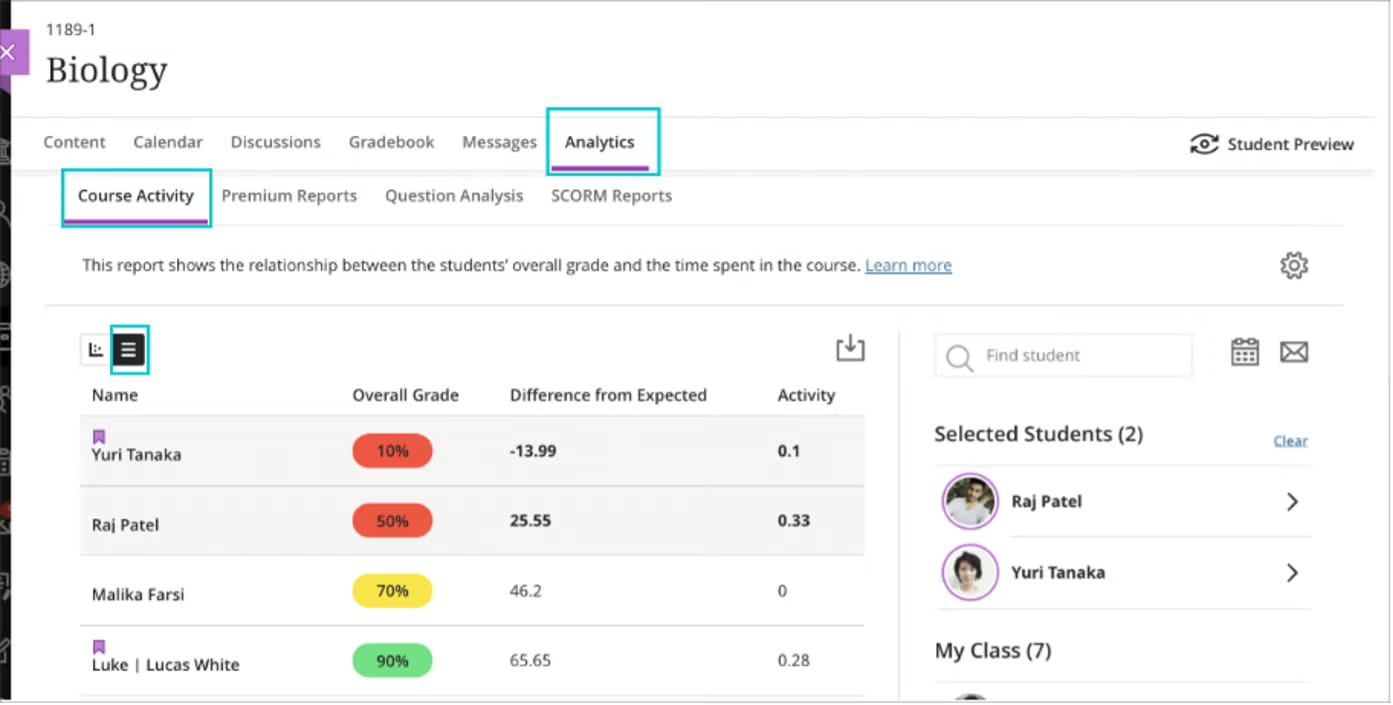
Blackboard includes analytics dashboards that allow instructors and administrators to monitor learner engagement, performance trends, and course activity. These reporting tools are built into the platform and support institutional data needs.
Source: Anthology
Brightspace is widely recognized for its advanced analytics capabilities. It provides visual performance tracking, early alert systems, and predictive insights designed to improve learner outcomes. Its dashboards are cited as a strong differentiator in performance-driven environments.
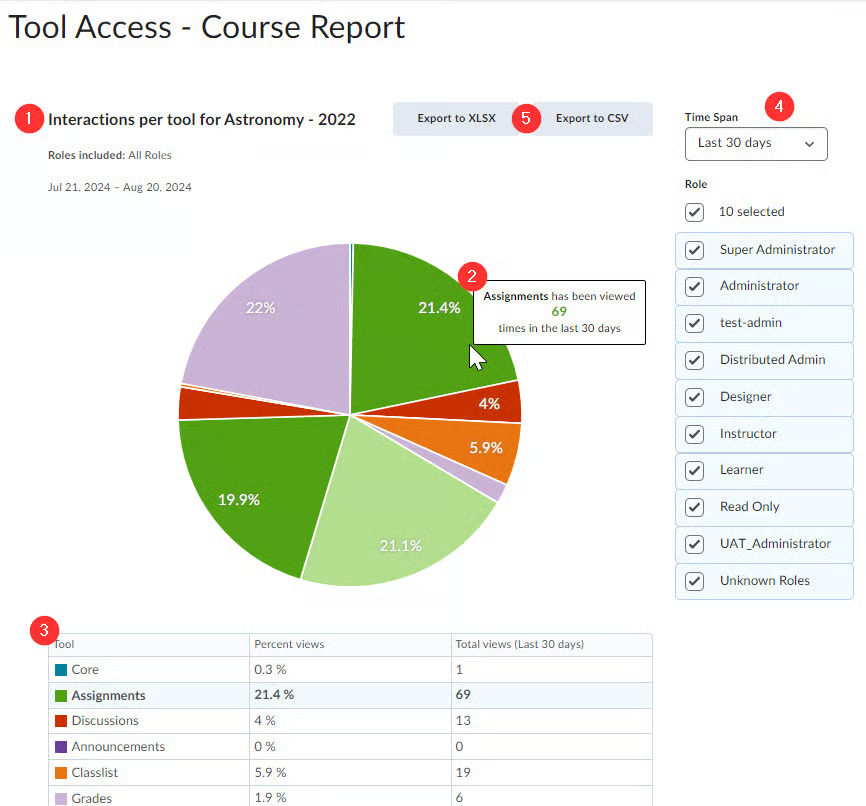
Source: D2L Brightspace Community
If deep, learner-centric analytics is a top priority, Brightspace may have a slight edge. Blackboard, however, provides solid institutional reporting frameworks that support academic oversight.
5. Hosting & Maintenance
Both Blackboard and Brightspace operate as cloud-hosted LMS platforms. This means infrastructure management, security updates, and system performance are handled by the vendor.
Institutions do not need to manage servers directly, which reduces internal IT burden compared to self-hosted solutions. Maintenance and support are typically bundled into licensing agreements.
From an operational perspective, both systems offer similar managed hosting benefits. However, Brightspace is generally preferred for its modern, user-friendly, and flexible hosting.
6. Pricing
Both Blackboard and Brightspace use enterprise licensing models. Pricing is typically based on institutional size, number of users, and feature requirements. Exact pricing usually requires direct consultation with the vendor.
Because both platforms are positioned for institutional deployment, costs are generally higher than those of lightweight LMS solutions. However, pricing includes hosting, maintenance, security, and support services.
Institutions often evaluate pricing in the context of long-term scalability and governance needs rather than simple feature comparison.
Blackboard vs Brightspace: Which Is Better?
The right choice between Blackboard vs Brightspace depends on institutional priorities and learning strategy. Here is a quick breakdown of both platforms:
| Feature | Blackboard | Brightspace |
|---|---|---|
| Best For | Structured institutional control | Personalized, data-driven learning |
| Ease of Use | Stable and standardized | Modern and intuitive |
| Course Design | Modular and structured | Adaptive and competency-focused |
| Hosting | Cloud-based | Cloud-based |
| Analytics | Strong institutional reporting | Advanced predictive analytics |
| Pricing | Enterprise licensing | Enterprise licensing |
- Choose Blackboard if your institution prioritizes governance, standardized course structures, and long-established enterprise stability.
- Choose Brightspace if your organization values personalized learning, predictive analytics, and a modern user experience focused on learner performance.
Where an AI LMS Like Coursebox Fits In
No matter which LMS or course creation platform you choose, you can’t skip the fact that course creation takes time. An AI LMS like Coursebox helps individuals and businesses reduce the effort required to develop courses.
With Coursebox, you don’t have to manually build modules, assessments, or structured learning paths. The platform allows you to generate AI-supported course outlines and quizzes in minutes.
Coursebox can work alongside enterprise LMS platforms by accelerating the content creation process before deployment. This approach allows institutions to keep their chosen LMS while improving efficiency and scalability.
If your team wants to modernize learning workflows without replacing existing infrastructure, layering AI into your LMS strategy can make a measurable difference. Try Coursebox today to transform your learning and training efforts!
FAQs About Blackboard vs Brightspace
Frequently Asked Questions
Brightspace is considered stronger in adaptive learning and predictive analytics. Blackboard, however, offers structured governance and institutional consistency that many universities value. The better platform depends on whether personalization or administrative control is the priority.
Many instructors find Brightspace slightly more intuitive due to its modern interface and streamlined workflows. Blackboard provides structured consistency but may feel more layered for new users. Training and institutional configuration also influence ease of use.
Both Blackboard and Brightspace are designed for enterprise-level and university-scale deployments. They support thousands of users, advanced reporting, and compliance requirements. Institutions often choose based on strategic direction rather than scale limitations.
Both platforms integrate with video conferencing tools, plagiarism detection systems, content libraries, and third-party educational apps. Integration depth may vary depending on licensing tiers. Enterprise customers typically receive extensive integration capabilities.
Brightspace is recognized for its predictive analytics and learner performance dashboards. Blackboard also offers strong institutional reporting tools and engagement tracking. The choice depends on whether your institution prioritizes learner insights or administrative oversight.
Yes, an AI LMS like Coursebox can complement either platform. Institutions can use AI to generate course structures, quizzes, and learning materials before publishing them into Blackboard or Brightspace. This reduces course development time while maintaining enterprise-level delivery systems.
Travis Clapp
Educational technologist and instructional designer

