

10 Best Udemy Alternatives to Sell Your Own Course (2026)
The 10 best Udemy alternatives for creators who want to sell their own courses: keep far more of the revenue (Udemy leaves you 37% on a marketplace sale), own your students, and brand the school as your own.

On Udemy you keep just 37% of a marketplace sale, and Udemy caps your price and owns your students. Every platform here fixes what Udemy takes: you price it yourself and own the customer, and keep far more of the revenue (platform fees vary, and are listed below).
- For a self-owned storefront: Teachable is the mature all-in-one (watch the 7.5% entry-plan fee), and Thinkific is the focused, course-first tool (marketing is lighter). Both dropped their free plans for trials.
- Coursebox is the pick to build and sell a course fast: it drafts the whole course from a document or prompt with AI, white-labels from a real free plan, and gives you unlimited learners with no per-seat fee.
- To run courses plus marketing in one place: Kajabi at the premium end, or Systeme.io for a free all-in-one. For an interactive branded academy, LearnWorlds; for a simple home base, Podia.
- If your course is really a community, Skool (gamified and simple) or Mighty Networks (deeply branded, even your own app). And if you already have an audience, Gumroad is the lightest way to just sell.
Answer three quick questions and I will point you to the right platform for how you want to sell.

Build, launch and sell quality courses in minutes
Udemy is the easiest place to put a course in front of a lot of people. It is also, once you read the fine print, one of the worst places to build a business. On a normal marketplace sale, the instructor keeps 37% of the money. Udemy caps your pricing to its tiers, runs the sitewide discounts, and keeps the student relationship. You never even get their email.
That trade, reach in exchange for your margin, your pricing and your audience, is why creators leave. The platforms below fix the three things Udemy takes: you keep the money instead of handing over 63% of it, you own the student relationship, and the school is branded as yours, not a marketplace’s. So this list ranks platforms by what each one is and how you want to sell, not by sticker price.
I have grouped them by what they really are, an AI course builder, a dedicated course platform, an all-in-one business suite, a community-first tool, or a simple checkout, because “Udemy alternative” means something different depending on whether you want to spin up a course fast, run a whole business, or drop a buy button next to an audience you already have.
One disclosure before the list: we build Coursebox, an AI course builder you can sell your own course from, so it is one of the ten below. For a plain marketplace swap, several of the others fit better.
What a Udemy alternative really means (five kinds of platform)
These are not interchangeable, and picking the wrong kind is the usual regret. There are five things you might be shopping for.
- AI course builders (Coursebox). Generate a full course, the written lessons, quizzes and a tutor, from a document or a prompt, then host and sell it. This is the kind that writes the actual course, not just an outline you fill in yourself, so it is the fast path from raw material to something sellable.
- Dedicated course platforms (Teachable, Thinkific). Focused tools to build, host and sell courses on your own branded site. The straightforward middle.
- All-in-one business suites (Kajabi, Podia, Systeme.io). Courses plus the marketing around them, website, email, funnels, checkout, in one login. For running the whole business in one place. Their AI, where they have it, drafts an outline or marketing copy, not the course itself, so you still write the lessons.
- Community-first platforms (Skool, Mighty Networks). The course lives inside an active paid community. Best when engagement and belonging are the product.
- Simple checkouts (Gumroad). A buy button for a course or download, sell to an audience you already have, with almost no setup.
Whichever kind you pick, all of them clear the bar Udemy does not: you keep the bulk of the revenue, own the student, and sell under your own name. That is what you are leaving Udemy for.
How I picked these
I looked for platforms that let you do the thing Udemy will not: sell your own course, keep what you earn, and own the customer. Then I judged each on what it is and who it suits, not on a fee spreadsheet, because the right Udemy alternative depends on whether you want speed, an all-in-one, a community, or just a checkout. I checked each platform’s features, free-tier status and starting price on its own site in the last week, and flagged the honest catch on every one.
The 10 alternatives at a glance
| Platform | Best for | What it is | Free to start? | Watch out for | User rating |
|---|---|---|---|---|---|
| Teachable | A mature, own-branded storefront | All-in-one course platform | Trial only (7-day) | 7.5% fee on the entry plan | 4.2 (185) |
| Thinkific | A focused course-building tool | Dedicated course platform | Trial only (30-day) | Marketing tools are lighter | 4.4 (207) |
| Coursebox | Building + selling a course fast with AI | AI course builder + LMS | Yes, real free plan | Quiz engine is basic | 4.7 (99) |
| Kajabi | Running the whole business in one place | Premium all-in-one | Trial only | Premium price; no free plan | 4.4 (230) |
| LearnWorlds | A polished, interactive academy | Branded academy platform | Trial only (30-day) | Starter has a per-sale fee | 4.7 (388)* |
| Podia | Selling fast without a tech stack | Simple all-in-one | Trial only (30-day) | Entry plan has a 5% fee | 4.6 (125) |
| Skool | A community-led course | Community + courses | Trial only (14-day) | Course tools are simple | Not listed |
| Mighty Networks | A branded community, even an app | Community + courses | Trial only (14-day) | Community-first; pricier entry | 4.5 (94) |
| Gumroad | The lightest way to just sell | Checkout / digital store | Yes, per-sale fee only | Not a full course platform | Not listed |
| Systeme.io | An all-in-one on a budget | Free all-in-one | Yes, real free plan | Less polished than premium | 4.8 (2129) |
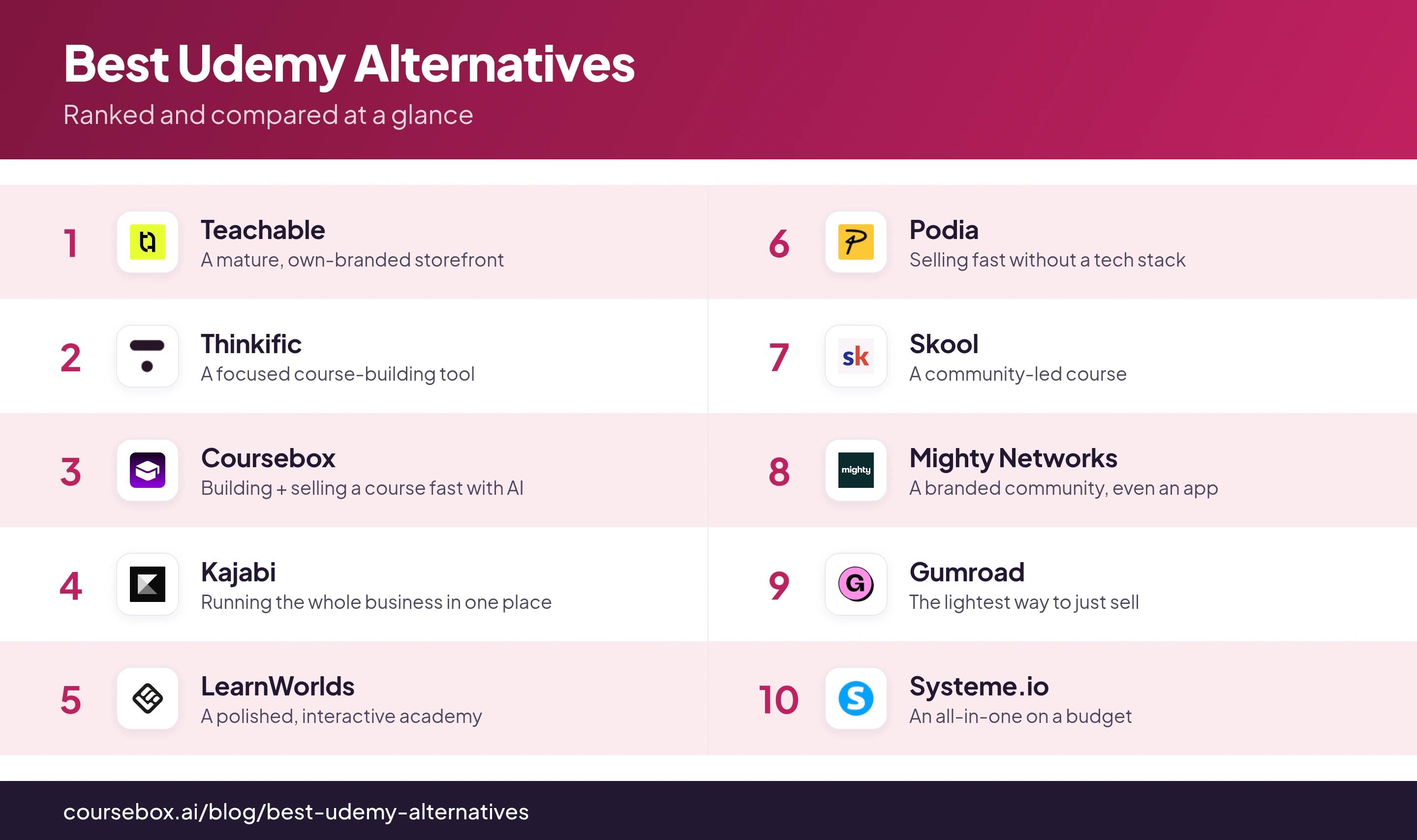
User ratings are out of 5 with review counts in brackets, from Capterra as of September 2026 (* LearnWorlds from G2). "Not listed" marks a platform absent from both G2 and Capterra.
The 10 best Udemy alternatives for creators
1. Teachable
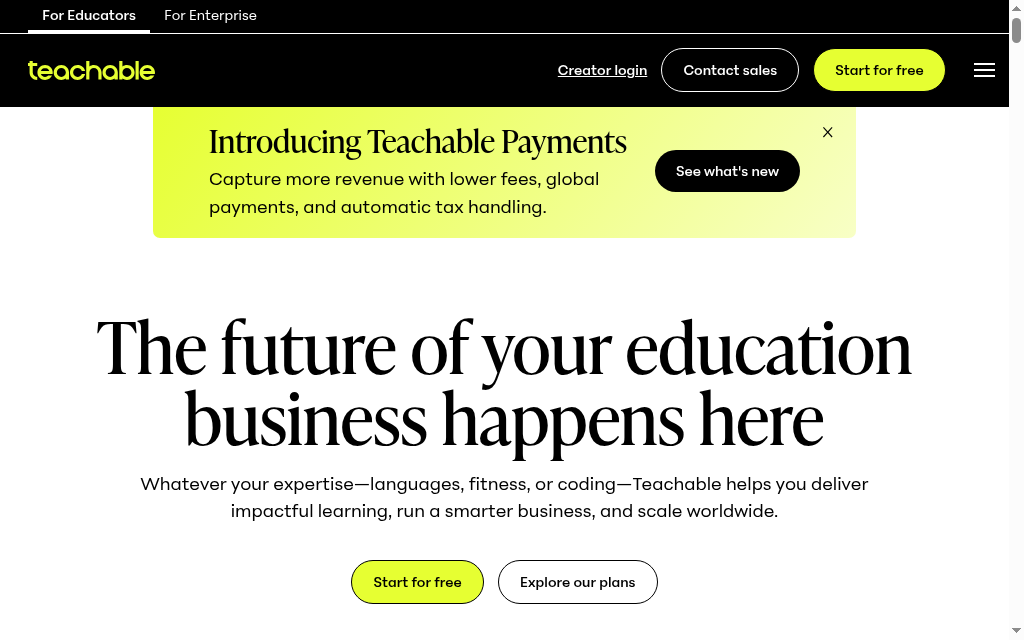
Teachable is the mature, own-branded storefront: a hosted platform where you build courses, coaching and digital products, then sell them from your own site with payments handled for you. It has been doing this for years, so the site builder, checkout and coaching tools are polished and there is little you cannot set up. Your school lives at your own address, not inside a marketplace.
This is the pick for an established creator or coach who wants a professional, self-owned storefront and is happy to bring their own audience. You keep your revenue and own the customer, with two things to know: the entry Starter plan skims a 7.5% transaction fee (gone on higher plans), and removing Teachable’s own branding is a higher-tier feature, so the cheapest plan still shows some. There is no free plan, just a 7-day trial.
My testing experience: I had a curriculum outlined and a first module standing within about ten minutes of signing up, and the AI quiz generator wrote questions straight from my lesson text rather than me typing them out. The thing I kept clocking was the entry-plan transaction fee (7.5% on the cheapest tier), sell any real volume and it pushes you up a tier.
Verdict: Choose it for a mature, polished storefront you fully control and will grow into a higher plan. Watch the entry-tier fee and branding limits.
2. Thinkific
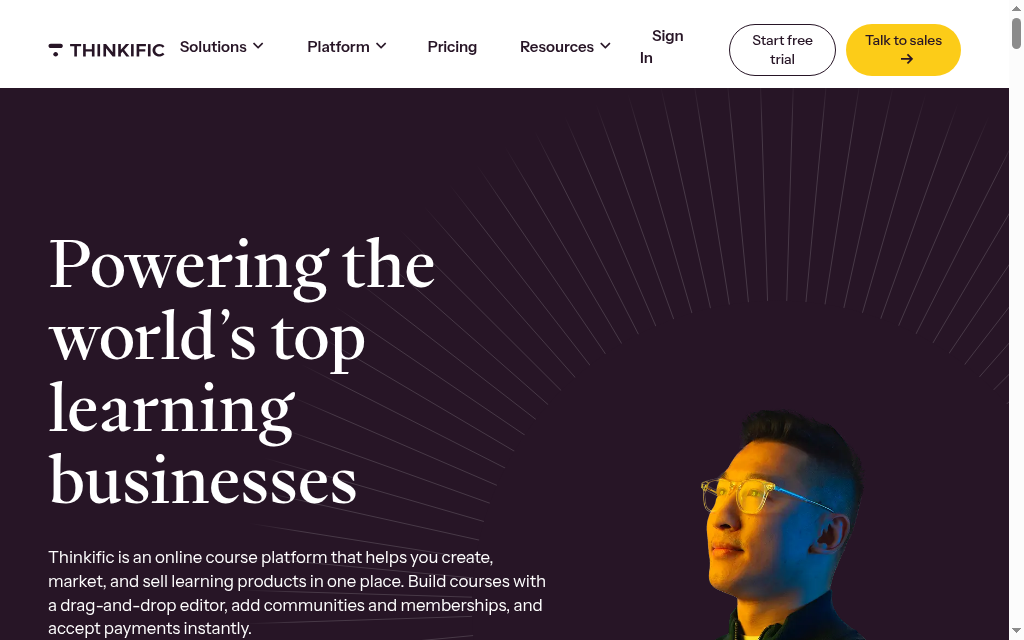
Thinkific is a dedicated course platform, more focused than an all-in-one: it does the teaching-and-selling core, build, host and sell courses, communities and memberships on your own branded site, without trying to be your whole marketing stack. It pairs a drag-and-drop course builder with quizzes and certificates, plus an AI outline generator that drafts the module-and-lesson structure for you to fill in. So framing a course is quick, but the AI stops at the outline, you still write the lessons yourself.
Subject experts and small course businesses who want a straightforward, course-first tool rather than a sprawling suite land here. You sell on your own site and keep the customer, and the build is low-friction. Two things to weigh: its marketing tools are lighter than an all-in-one like Kajabi, and the old free plan is gone, it is a 30-day trial now, then a paid plan.
My testing experience: I asked its AI for a course on my topic and got a clean module-and-lesson outline in seconds, but that is where the AI stops, I still wrote every lesson myself. What I liked is that Thinkific takes no platform cut of my sales even on paid plans; the gap I hit later was marketing, when I wanted funnels and email and had to bolt on a separate tool.
Verdict: Go here for a focused, no-nonsense course platform if you will handle your own marketing. Less suited if you want everything in one login.
3. Coursebox
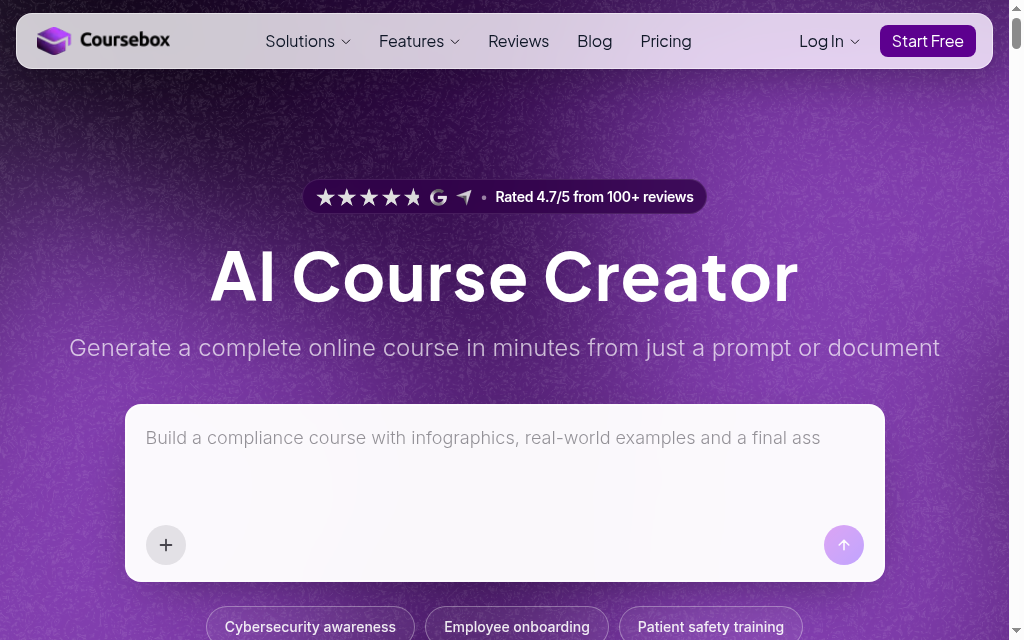
Coursebox, which is ours, is an AI course builder with an LMS attached (the system that hosts your lessons, learners and progress): you upload a document or type a prompt and it generates a full course, structured lessons, quizzes, videos and a built-in AI tutor, in minutes, which you then edit in a drag-and-drop builder or by chatting with the AI. You host it here, brand it as your own, set a price and sell it, so the same tool that writes the course also runs the school. It runs on a real free plan, and it white-labels from that free tier up, which most of the premium alternatives here no longer do.
Best for the creator leaving Udemy who wants speed and ownership at once, especially if you have material (a PDF, a slide deck, a body of expertise) and would rather have AI draft the course than build every module by hand. You keep the revenue, own your learners (unlimited, with no per-seat fee), and, in Coursebox’s own words, your learners “only ever see your brand, never ours.” The weak spot is the quiz and assessment engine, still basic, one reviewer notes you cannot change a question type once it is created.
My testing experience: I dropped in a slide deck and had a full course drafted in minutes, not just an outline but written lessons, quizzes and a tutor, so I spent my time refining rather than writing from scratch. Coursebox is ours, so weigh that: the draft still needs your editing, the quiz engine is basic (one reviewer notes you cannot change a question type once it is created), and AI generation runs on credits you top up by moving to a higher tier.
Verdict: one of the fastest ways from raw material to a sellable course, with a real free plan to start on. Newer and less established than Teachable or Thinkific, so pick it for the AI speed and the free start, not for a mature track record.
4. Kajabi
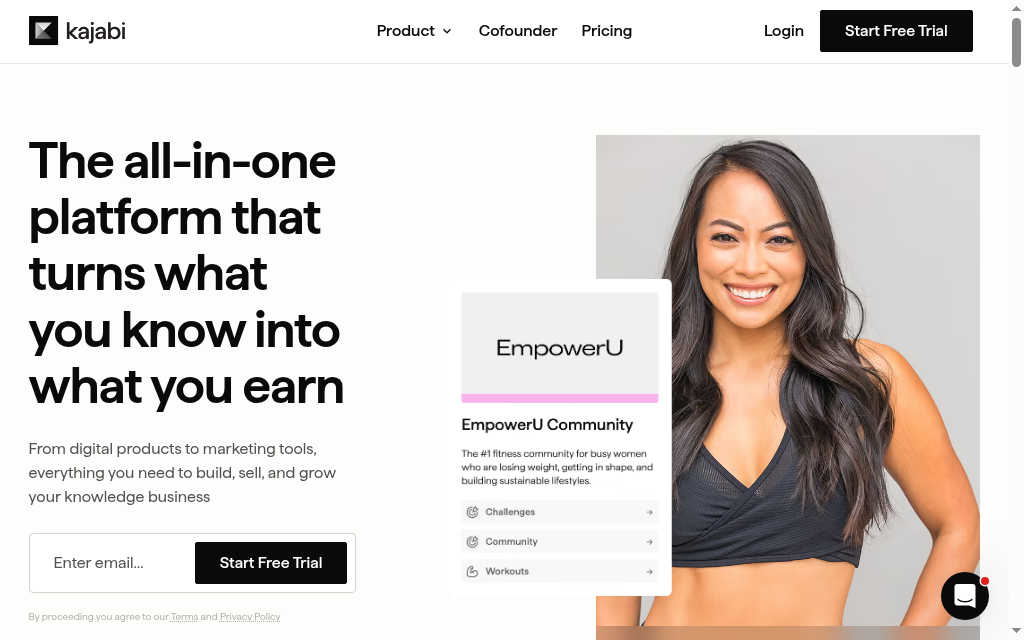
Kajabi is the premium all-in-one, it calls itself “the operating system for human expertise.” It bundles your courses with the entire business around them: website, landing pages, email, checkout, automation and analytics, all in one system, so you run the whole thing from a single login instead of stitching five tools together. It is built for selling, not just hosting.
Best for the established expert who wants everything connected and will pay for it. You own the audience, the marketing and the payments end to end, which is the reason most people leave Udemy in the first place. The cost of that positioning is literal: there is no free plan, only a trial, and the entry price is a real commitment (around $179 a month), so it is a lot for someone still finding their footing after Udemy.
My testing experience: The one-system payoff showed immediately, launching a course meant my pages, email and checkout were already wired together, not three separate integrations. Its AI framed a course outline with lesson descriptions, but I still wrote the lesson content myself, and the tool I did not expect to like was Creator Studio turning one course video into social posts and emails. The barrier is price, you commit to the whole suite (around $179 a month) before you have sold anything.
Verdict: Worth it if you want your entire course business in one place and can justify the price. Overkill, and overpriced, if you only need to host and sell a course.
5. LearnWorlds
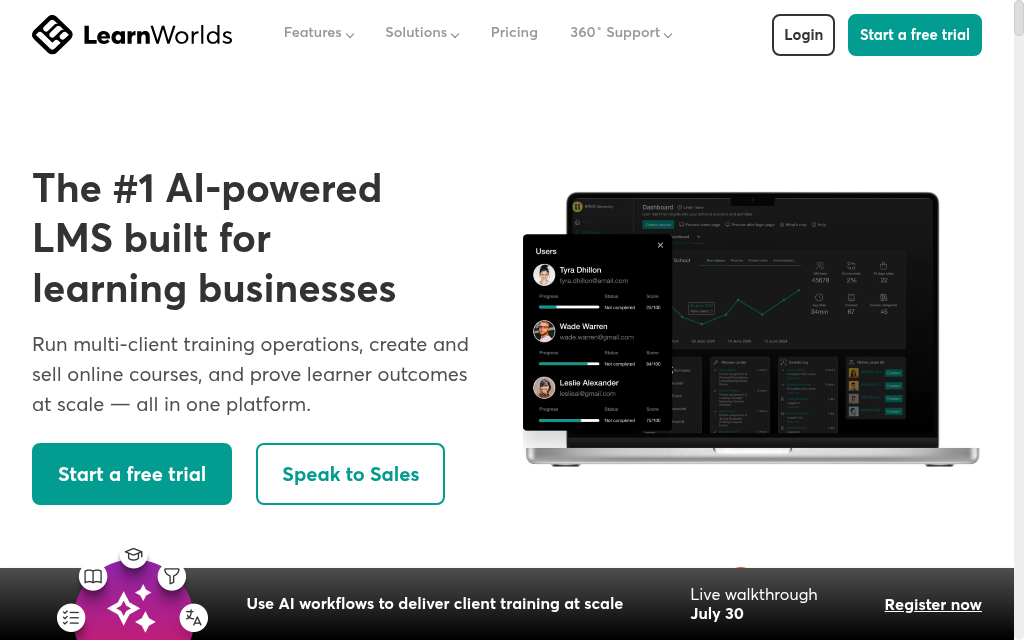
LearnWorlds is for building a polished, deeply branded online academy, and its calling card is interactive video: you can drop a quiz, a transcript or a clickable table of contents straight into a video lesson, so watching becomes doing. You launch your own branded school, design it in detail, set your prices and sell from it, which suits creators who care about how the learning feels, not just hosting a video behind a paywall.
This suits the creator or training business that wants a professional, highly customizable academy and cares about course design and engagement. You own the school, the brand and the student, though it is more builder-minded than plug-and-play, so expect to invest time in the design. There is no free plan (a 30-day trial), and the entry Starter plan carries a small per-enrollment fee that higher plans drop.
My testing experience: The first thing I tried was dropping a quiz straight into the video timeline, so a learner answers inside the lesson instead of leaving it, that is the feature you come here for. Its AI also built quizzes and exams from content I imported, which saved real time. The trade is hours, the more I customized the school the better it looked, and the AI tools sit on the pricier tier.
Verdict: Reach for it if you want an interactive, professional-grade academy and will put in the design time. More than you need for a simple course.
6. Podia
Podia is the simple all-in-one home base: courses, digital downloads, coaching, community, plus the email and website around them, run from one dashboard. The pitch is that everything is connected from day one, so you are not wiring separate tools together, and setup is deliberately easy, you can be selling quickly without a tech stack. In its own words, it replaces “courses, community, coaching, events, email, and your site.”
Podia suits a creator who wants to start selling fast and values one simple login over deep customization. It is your own site, your own audience and email list, so you keep the relationship and set your prices. Two caveats: Podia recently dropped its free plan for a 30-day trial, and the entry Mover plan takes a 5% cut of sales (gone on higher tiers).
My testing experience: Running the whole small business from one screen was the draw, the course, the email that markets it and the checkout, without wiring outside tools together. There is no AI building the course for you here, you set it up by hand, and I hit the depth limit fast: content drips by section rather than by lesson and quizzes are thin. It is web-only too, no app for you or your members.
Verdict: A good fit if you want an easy, all-in-one home base and a fast start. Look higher up if you need serious customization or a free plan.
7. Skool
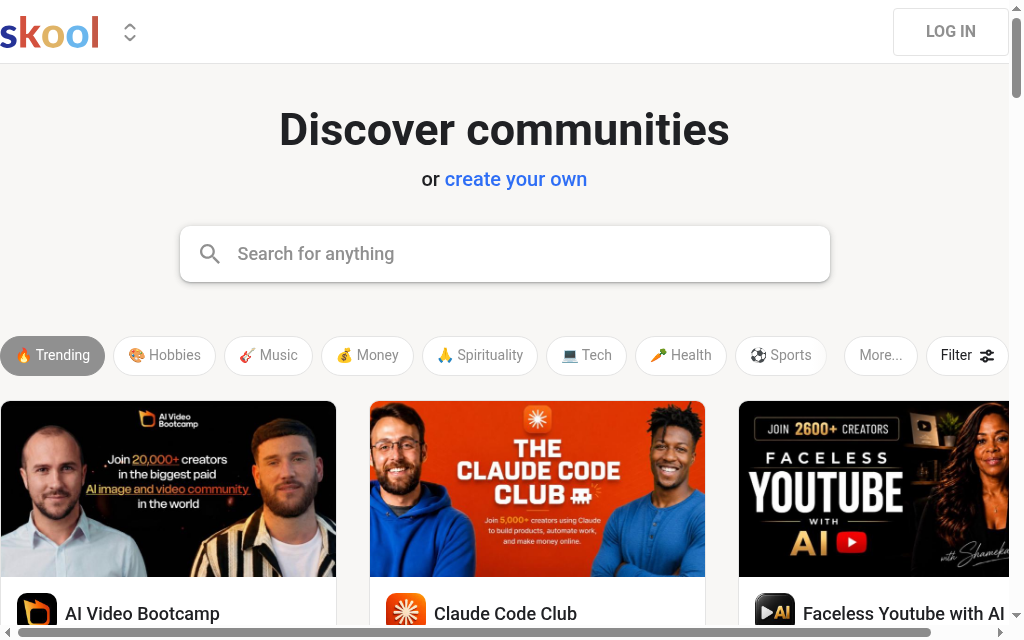
Skool flips the usual order: the course lives inside an active paid community, not the other way round. You run a group where members discuss, learn and level up together, with your courses sitting in the same simple interface, so people learn alongside others instead of watching lessons alone. Its signature is gamification, members earn points, level up and appear on a leaderboard, and you can gate lessons behind levels so content opens up as people take part.
Best for creators running cohort- or community-led education, coaches and membership operators, where engagement and belonging are the product, not just the videos. You own the member relationship and collect payments yourself, and the Pro tier is fully white-label with your own URL. The tradeoff: the course tooling is intentionally simple (the community is the main event), and the cheap Hobby tier is limited, one admin, a Skool badge and a higher transaction fee.
My testing experience: The lever Udemy never gave me was progression, I set a lesson to open only when a member hits a level, and finishing the course becomes a game people actually play. The course layer is bare on purpose though, no quizzes, no certificates, no drip scheduling, so it cannot run structured or compliance training, and there is no AI, you build every lesson yourself.
Verdict: Best if your course is really a community and you want engagement built in. Not the choice for a deep, standalone course.
8. Mighty Networks
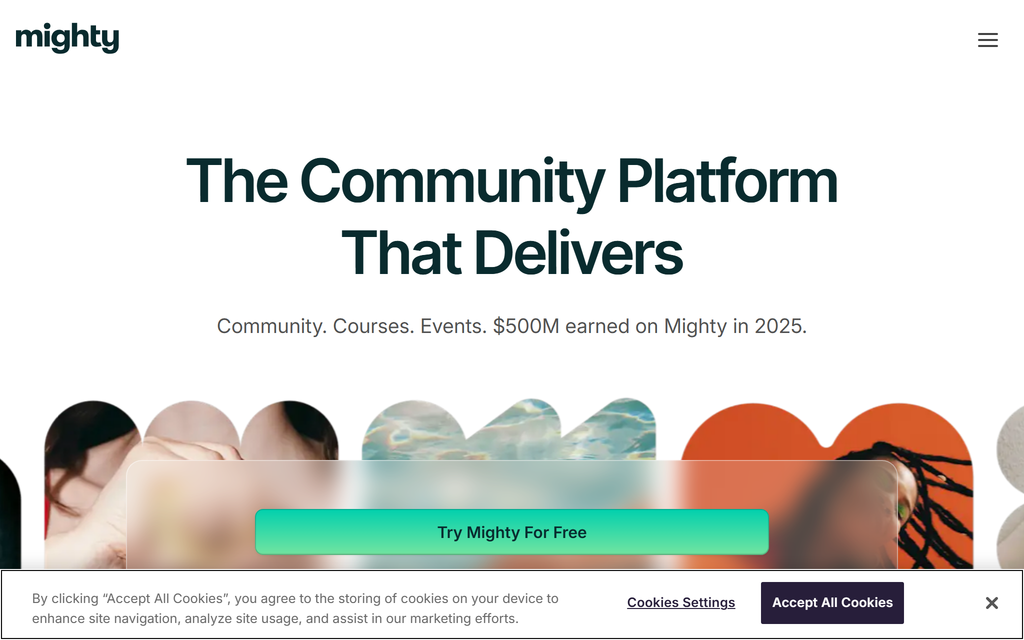
Mighty Networks is the more configurable community platform: build your own branded space that combines courses, events, memberships and discussion under your own name and design, with the option, on higher tiers, of your own app in the App Store. It is more flexible than Skool, with design tooling and an AI cohost, so it suits creators who want real control over how their community and courses look and feel.
This is for the creator who wants a flexible, fully branded home for a paid community with courses attached, and who cares about design and a native-app presence. You own your members and the direct relationship, and can brand the whole thing right down to an app under your name, ownership taken about as far as it goes. Two things to weigh: like Skool it is community-first, so the course builder is one part of a broad suite, and the entry price is higher (around $79 a month).
My testing experience: What stood out is that on higher tiers you can ship your community and courses as your own branded app members download under your name, not Udemy’s. Its AI generated a course outline instantly once I set the lesson count and level, but it stops there, I wrote the lessons, and that AI sits behind the paid Launch plan. It is a lot of platform, and the course side is thinner than a dedicated LMS.
Verdict: For a deeply branded community with courses, and maybe your own app, this is it. More platform, and more cost, than a simple course needs.
9. Gumroad
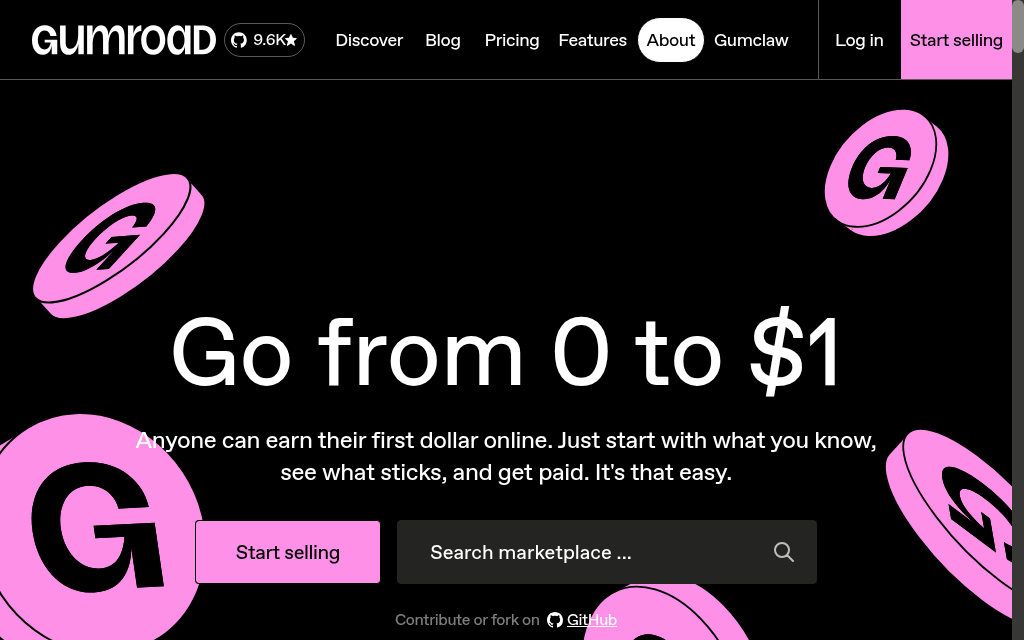
Gumroad is the lightest option here: a checkout you can put behind a course or any digital product in minutes and start selling to your own audience. You paste a link, people pay, the money comes to you, there is no course platform to build first and no monthly fee (Gumroad takes a flat cut per sale instead, around 10%). Since 2025 it also handles your worldwide sales tax as the merchant of record, meaning Gumroad is the legal seller for tax and collects and remits it for you.
Already have an audience, an email list, a YouTube channel, a following? This is the least-friction way to charge it. The customer is yours and you keep the revenue minus a per-sale fee, without any of the setup. The real limit, though: it is a store, not a course platform, structured lessons, quizzes, progress tracking and drip content are minimal, so it fits a simple download or a light course, not a rich multi-module program.
My testing experience: There was no course to build, I pasted a link and could sell in minutes, which pays off fastest when you send your own audience to it since there is no monthly fee. Two things to know: the per-sale cut is a flat 10% plus 50 cents, not tiny, and sales through Gumroad’s own Discover marketplace are charged 30%. Structured lessons, quizzes and progress tracking are minimal, so it fits a download or a light course, not a rich program.
Verdict: Ideal if you already have an audience and want the simplest possible way to sell. Not the choice if you need real course-delivery features.
10. Systeme.io
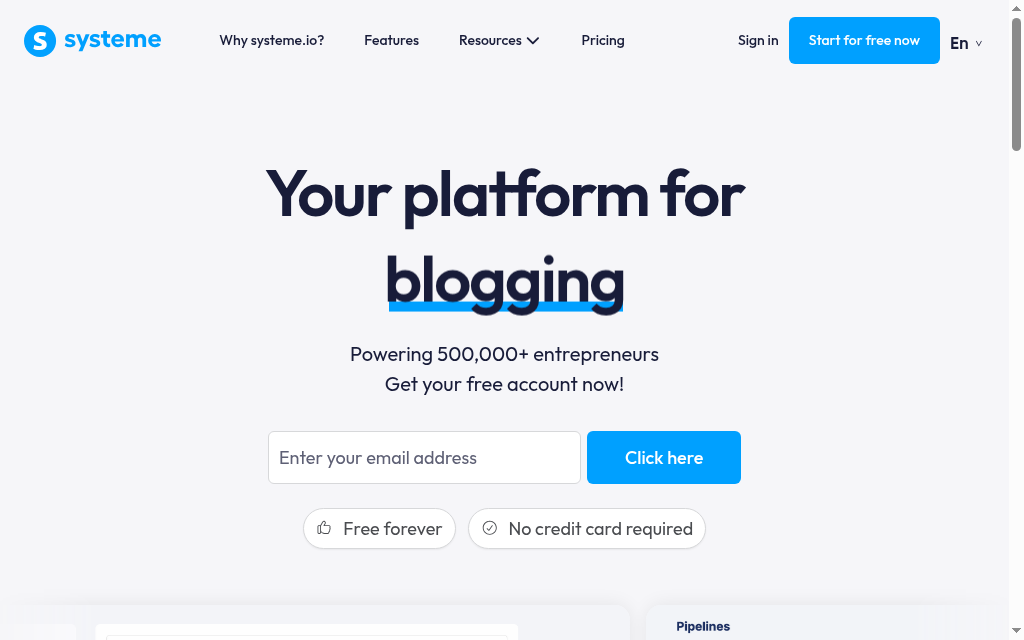
Systeme.io is the all-in-one for people on a budget: courses, sales funnels, email marketing and a website in one login, with a real free plan that never expires. Instead of paying for a stack of separate tools, you run the whole business, landing page to checkout to course delivery, in one place, and it charges no transaction fees on your sales.
Systeme.io fits a creator who wants everything under one roof without paying for it up front, and who can live with less polish for the price. You host your own courses, funnels and list, keep the customer and pay no cut on sales, and the free plan alone covers a course, funnels, email and a custom domain. The tradeoff: the interface and templates feel less refined than premium single-purpose tools, you trade design polish for breadth and price.
My testing experience: The free plan is the reason to look, it bundled what would otherwise be several paid subscriptions and let me build and sell a course at zero cost, with module locking and drip built in. There is no AI doing the work though, I built every module and lesson by hand, and the templates are where the free shows: functional, not beautiful.
Verdict: The value choice if you want an all-in-one at the lowest possible cost and can accept a rougher finish. Move to a premium tool when design and depth start to matter.
Every platform here clears the same bar: on your own platform you keep far more of the revenue (not 37% of it), you set your own price (Udemy runs the discounts), and the student is yours, their email, their next purchase, your brand on the screen. Pick for how you want to sell, an AI builder, a course platform, an all-in-one, a community, or a checkout, because on the three that count, revenue, pricing and ownership, all ten already beat Udemy.
Which should you use
Start from what you are building. For most creators leaving Udemy who have material to work from, Coursebox drafts a course with AI in minutes, while a dedicated platform like Teachable suits a mature, self-owned storefront. And if your course is really a community, look at Skool or Mighty Networks instead, where the group is the product and the course sits inside it.
If you are weighing two of these head to head, our Thinkific vs Teachable comparison goes deeper on the two most popular course platforms.
And if the goal is not just picking a platform but making sales, our guide on how to create and sell online courses is the next step. Whichever you choose, the move off Udemy is the same one: you stop renting an audience and start owning one.
Frequently Asked Questions
It depends on how you want to sell. For a mature, self-owned storefront, Teachable or Thinkific, the most established picks. To build and sell a course fast with AI, Coursebox. For an all-in-one business, Kajabi (premium) or Systeme.io (free). For a community-led course, Skool or Mighty Networks. All of them let you keep your revenue and own your students, which Udemy does not.
Yes. Your course content is yours, you can re-upload your videos and materials to any platform here and sell them on your own terms. What does not transfer is Udemy’s audience and reviews, so leaving means you bring or build your own audience, in exchange for keeping the revenue and owning the students you win.
Two here have a real free plan: Coursebox (build and sell a course free, with white-label and unlimited learners) and Systeme.io (a free all-in-one with courses, funnels and email). Gumroad has no monthly fee at all (it takes a small cut per sale). Most of the others, Teachable, Thinkific, Kajabi, Podia and LearnWorlds, dropped free plans and offer a trial.
Almost always. Udemy leaves you 37% of a marketplace sale. On your own platform you keep the full price minus a payment-processing fee and, on some entry plans, a small platform cut (for example Teachable’s 7.5% or Podia’s 5%, both of which disappear on higher tiers, while Coursebox and Systeme.io take no sales cut). You also set the price, so you are not discounted to the floor.
Skool and Mighty Networks. Skool puts your course inside a gamified community with points, levels and leaderboards and is simple to run; Mighty Networks is more customizable and can even ship your community and courses as your own branded app. Both are community-first, so the course tools are lighter than a dedicated platform like Coursebox or Thinkific.
Alex Hey
Digital marketing manager and growth expert

