

8 Best Tools for Sales Training in 2026: My Candid Review
My review of eight sales training tools, comparing course creation, practice, live-call coaching, manager follow-up and the working cost.

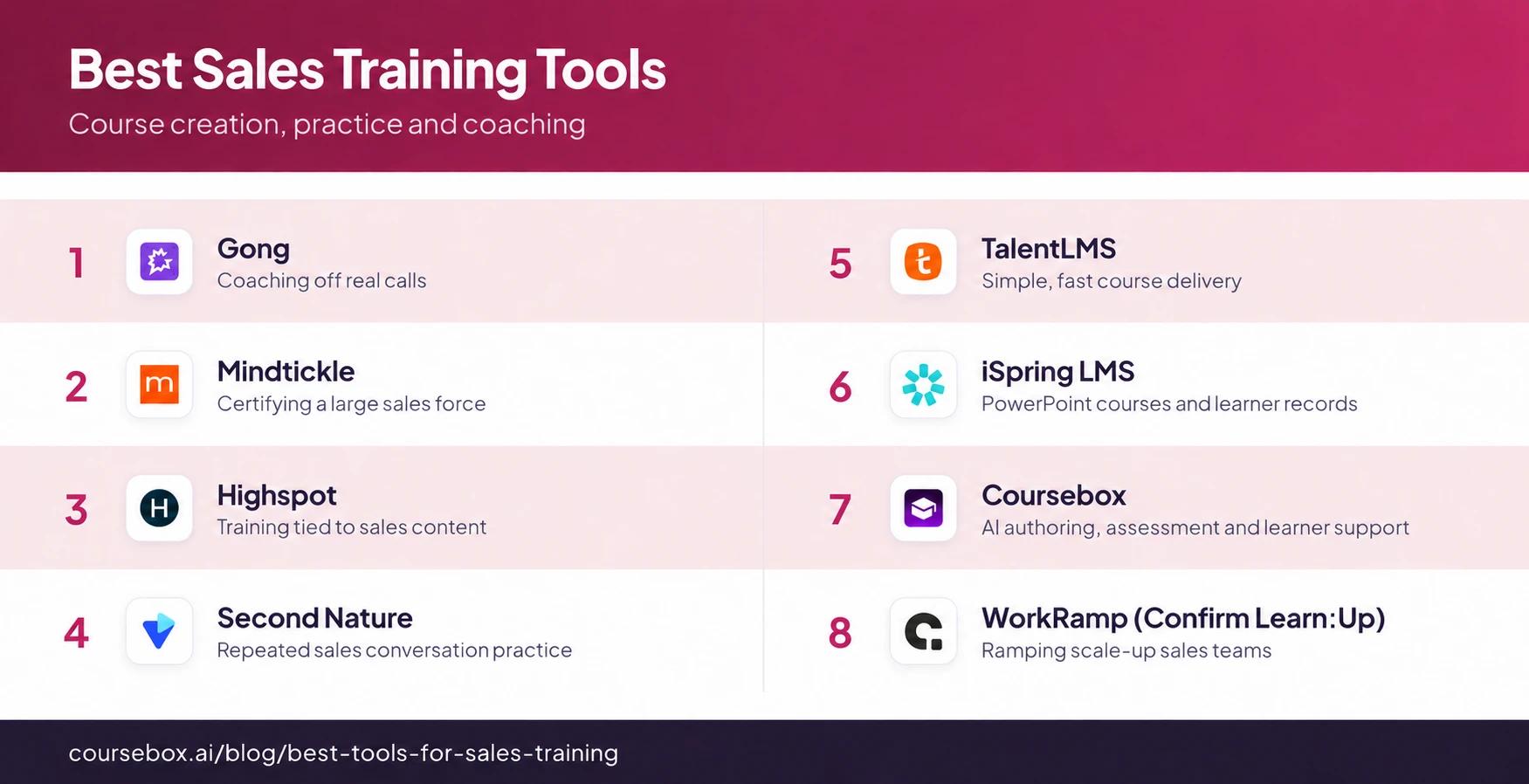
The best tools for sales training in 2026 include Gong, Mindtickle, Highspot, Second Nature, TalentLMS, iSpring LMS, Coursebox and Learn:Up (formerly WorkRamp). Compare learning, practice and coaching against the gaps in your current stack.
- Coaching off real calls is Gong’s lane; certifying a large force is Mindtickle; training tied to your content is Highspot (now part of Seismic); endless AI practice is Second Nature.
- To build your own sales training, Coursebox drafts courses from your playbook and docs with AI (unlimited learners), TalentLMS is the simple generalist, and iSpring turns slides into courses.
- The enablement platforms are all quote-only; the LMS tools are cheaper and often publicly priced, which helps when you are comparing budgets.
- Some platforms cover learning and practice together. A course LMS and a call-intelligence tool can complement each other, but buying one of each is not automatically necessary.
Answer three questions to compare four sales-training options. The result balances your preferences; use the entries to compare courses, call coaching and readiness programmes.

Train teams faster and more effectively with AI
A rep can finish the product course and still need help explaining it to a customer. Sales training software can support the lesson, the practice conversation or feedback on a real call. I’d choose around the part your reps and managers need help with, rather than add another tool for work already covered.
The feedback is what I’d look at closely. Can a manager point to the question or response that needs work, and can the rep practise it again? That makes the difference between knowing someone completed training and knowing what to coach next.
I’m Travis, Coursebox’s founder. Our sales training software is included for course creation, assessments, learner support and delivery. It does not record live sales calls; the comparison includes tools for that separate job.
How I picked these sales training tools
The first cut is easy to skip, so I made it the structure:
- Coach or build: Does the tool sharpen reps on live calls and practice, or is it where you create and deliver courses? That splits the whole list.
- Fit to the gap: Real-call coaching, certification at scale, AI practice, or building your own onboarding and product training.
- Setup and specialisation: A sales-specific platform versus a general LMS you shape yourself.
- Cost model: Quote-only enterprise versus public per-user or per-plan pricing, because that decides what you can actually compare.
Learning, practice and coaching overlap. Mindtickle and Highspot provide learning capabilities, while some LMS products include simulations. Decide which jobs your existing stack covers before adding another platform.
The best sales training tools compared
| Tool | Type | Best for | Starting price |
|---|---|---|---|
| Gong | Enablement (call intelligence) | Coaching off real calls | Quote-only |
| Mindtickle | Enablement (readiness) | Certifying a large sales force | Quote-only |
| Highspot | Enablement (content + training) | Training tied to sales content | Quote-only |
| Second Nature | Enablement (AI role-play) | Repeated rep practice | Quote-only |
| TalentLMS | LMS / course builder | Simple, fast course delivery | Free; from $119/mo |
| iSpring LMS | LMS / course builder | PowerPoint-to-course | US$8,286/year at 100 users; authoring separate |
| Coursebox | LMS / course builder (AI) | Building sales training from your docs | Free; branded Pro LMS from US$3,000/year |
| WorkRamp (Confirm Learn:Up) | LMS / course builder | Ramping scale-up sales teams | From $9/user/mo |
Sales enablement and coaching platforms
These platforms focus on calls, practice or sales readiness. Mindtickle and Highspot also provide learning capabilities, so check the overlap before adding a separate LMS.
1. Gong
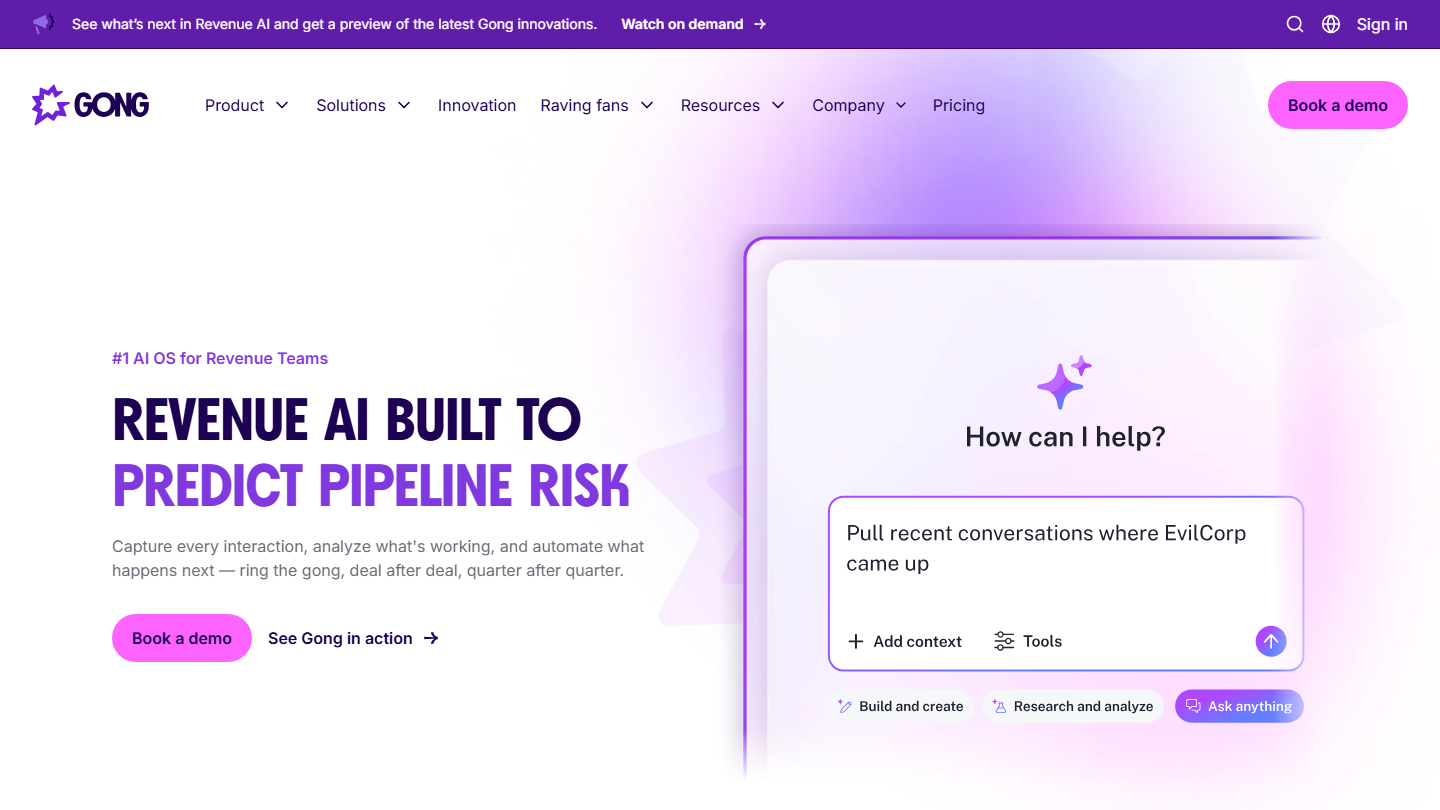
Gong is the conversation-intelligence leader: it records, transcribes and AI-analyses real sales calls, so coaching comes off what reps actually said, not a role-play.
It captures calls across your stack, flags deal risk and surfaces coaching moments, turning live conversations into a feedback loop for managers. It is a revenue-intelligence platform first; structured course-building is not its job.
What I tell clients: If your problem is "my reps sound fine in practice but fumble live", Gong is the fix, because it coaches off real calls; it will not build your onboarding curriculum.
For a manager, the useful workflow is to review a real conversation, identify a specific coaching point and bring that example into the next coaching session. Call capture, connected meeting systems and permission settings have to be configured first. I would use Gong to find the moment a discovery question or objection response goes wrong, then assign practice or learning around that moment. It supplies evidence for coaching; the manager still decides what feedback to give.
What it costs: Quote-only, priced per user plus a platform fee, via a custom proposal.
2. Mindtickle
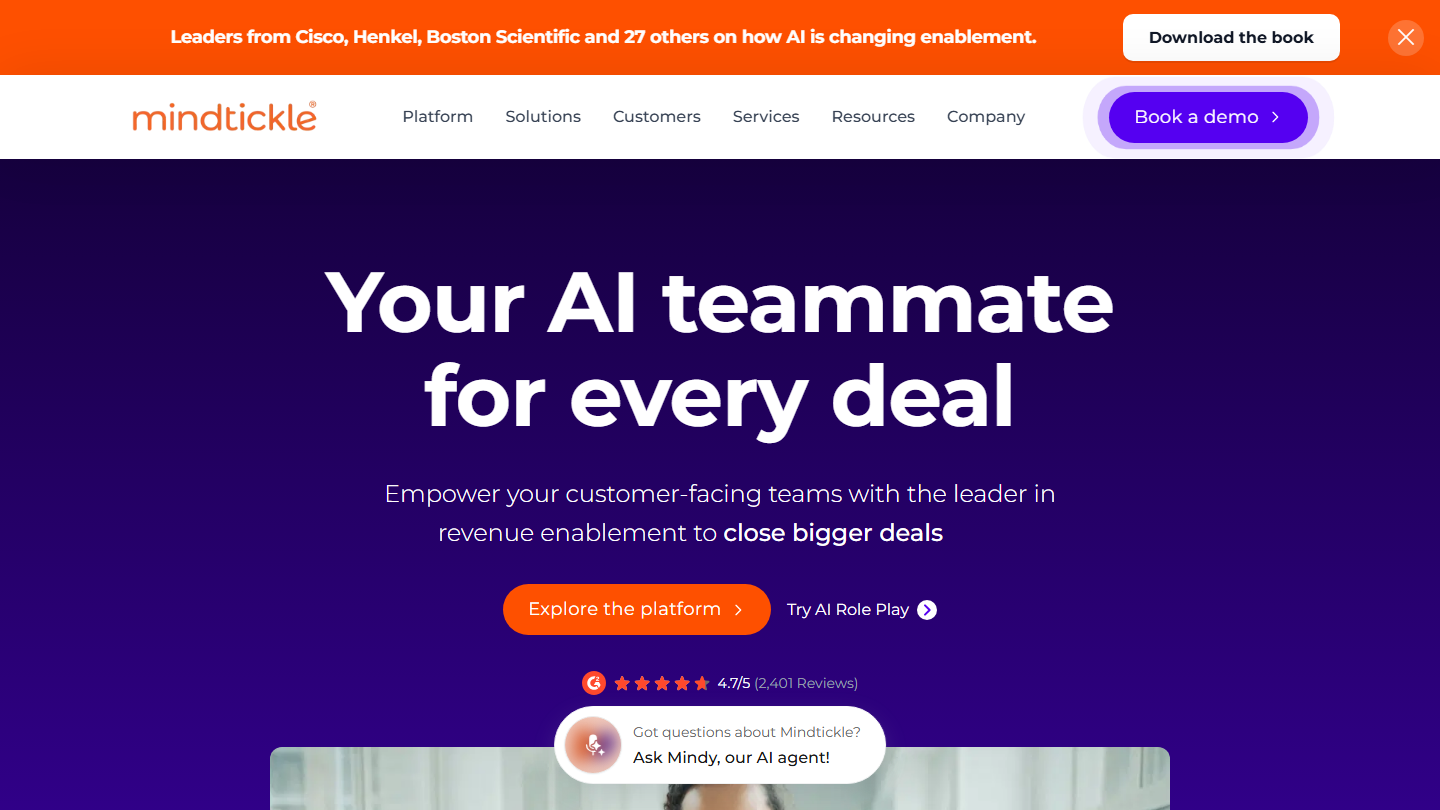
Mindtickle combines structured learning, assessments, sales practice and coaching. It is a sales-readiness platform rather than just a course catalogue or call recorder.
Its roleplay offering uses signals from calls, earlier practice and assessment scores to identify gaps and personalise practice. An enablement team still needs to define the skill standard and approve the content and scenarios.
My take: My preference is this broader readiness workflow when the programme needs knowledge checks and applied practice. I would avoid calling a completion certificate proof of readiness without reviewing the assessment behind it.
Its learning, practice and coaching capabilities overlap both groups in this comparison. An enablement team can organise a ramp programme, check knowledge, collect practice evidence and use readiness data to target coaching. I would distinguish a course completion from a readiness decision: the second needs a defined skill standard and an assessment that tests it. This is a broader operating programme than buying a course player, with content and assessment design still required from your team.
What it costs: Quote-only; no public pricing.
3. Highspot
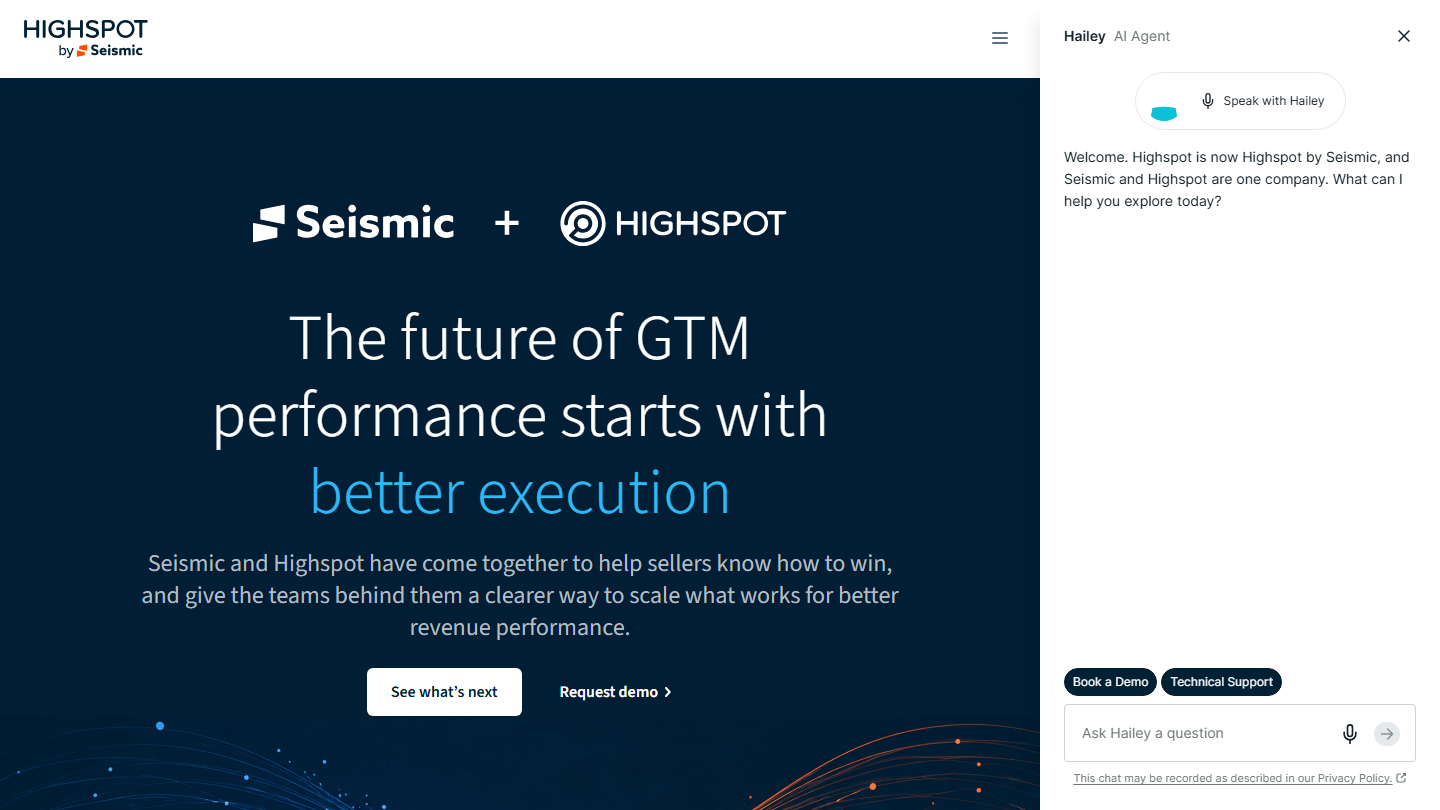
Highspot’s sales enablement platform connects content, training and coaching. Its merger with Seismic completed in August 2026, with the combined company operating under the Seismic name.
The useful purchase is the connection between the learning programme and the content sellers use in deals. Check the proposed Highspot product configuration, available training features and the roadmap offered in your agreement.
What I tell clients: I would choose this route when approved sales content and training need to be maintained together. The learning capabilities overlap an LMS, so I would assess that overlap before buying a second platform.
Highspot includes training and coaching, so it is inaccurate to treat it only as a content shelf. Its appeal is the connection between learning and the approved material sellers use: a product launch can bring the play, supporting content and practice into the same enablement programme. In my review, I would judge how easily a rep moves from the lesson to the material they need for a deal, rather than assume a second LMS is always necessary.
What it costs: Quote-only. The proposal needs to identify the Highspot configuration, training and coaching scope and any migration or implementation costs.
4. Second Nature
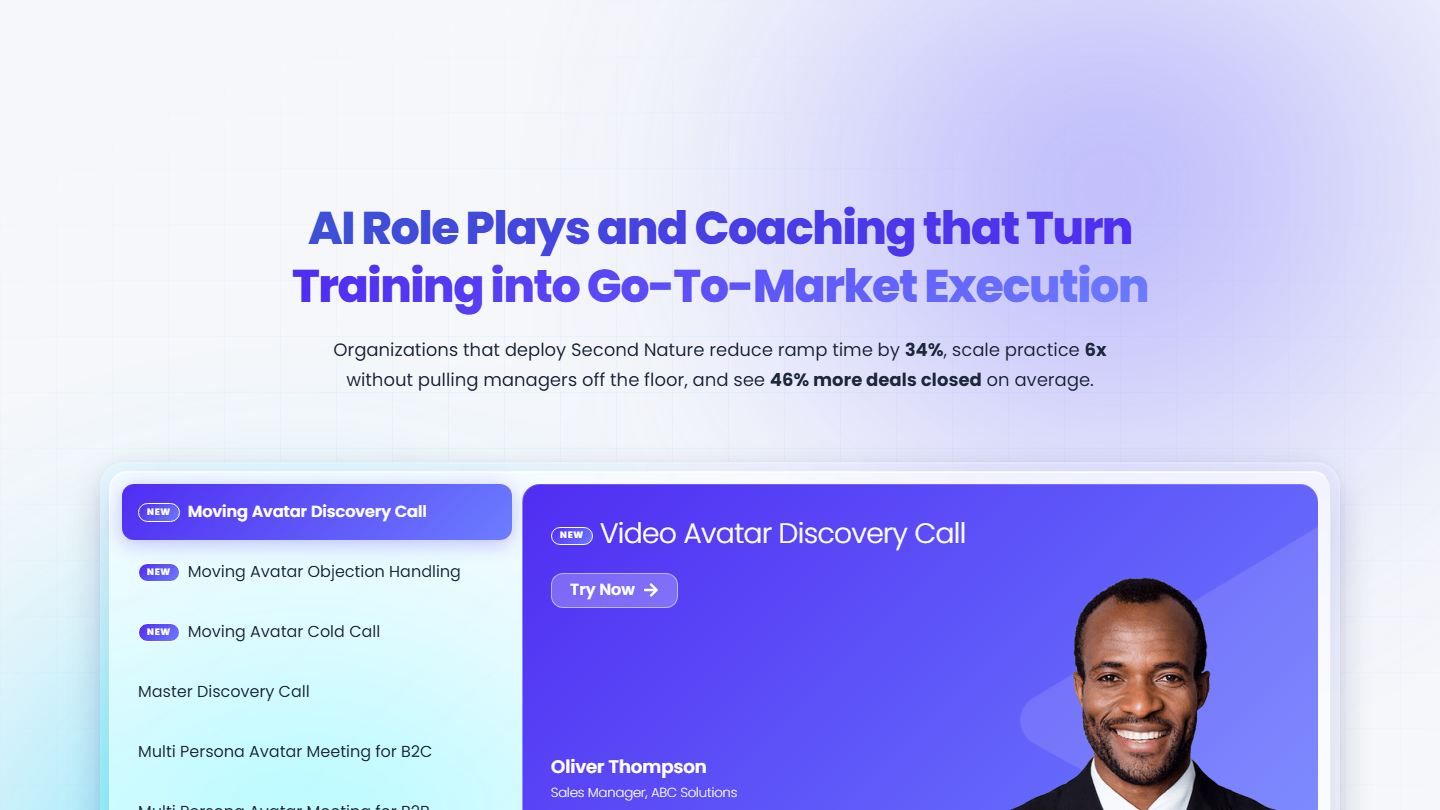
Second Nature provides AI sales roleplay. Reps rehearse against a virtual buyer and receive scores and feedback on their configured conversation.
Reps practise against a conversational virtual buyer and receive feedback on the configured scenario. Match the practice allowance, scenario-building support and manager access to the programme you need.
My take: I would use it for repeated pitch and objection practice when manager availability is the bottleneck. Give the team a relevant buyer brief and scoring standard, then have managers review consequential feedback.
The team supplies the scenario and the standard for a good response; reps then practise the conversation and review feedback. That preparation is the part I would spend time on. A realistic buyer brief, relevant objections and a usable scoring rubric make practice useful. Repeated attempts give a manager material for follow-up, but an AI score should not be presented as proof that the rep will handle every live buyer successfully.
What it costs: Quote-only. Include scenario setup, practice allowances and manager access in the requested configuration.
LMS and course builders for sales training
These are where you create and deliver your own sales training (onboarding, product, playbooks) as courses you own and track.
5. TalentLMS
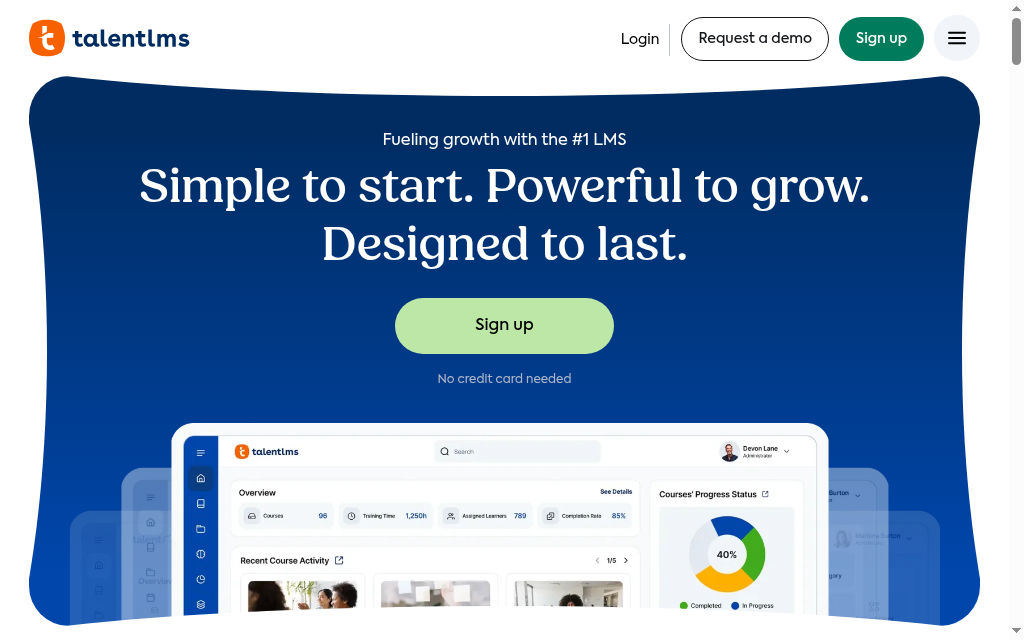
TalentLMS is the easy generalist LMS for building and assigning your own sales courses without a heavy setup.
You create or import courses, assign them by team, and track completion, with a usable free tier to start. It is simple and fast rather than sales-specialised.
What I tell clients: For a smaller programme, I would shortlist TalentLMS for course creation, assignments and learner records. Its advertised roleplay simulator needs a separate availability and scope check before comparing it with a specialist coaching purchase.
You can build courses, import supported packages, group learners and track their progress. For a sales rollout, I would organise product knowledge and process training into a repeatable path before adding specialist practice. TalentLMS also advertises a roleplay simulator through TalentLMS Labs, so the draft’s blanket claim that it has no roleplay is too broad. Check the availability and scope of that capability against the structured practice you need.
Pricing and plans: Free for up to five users. The published starting Core price is US$119/month for the 1-to-40-user band; higher bands and the billing period change the total. TalentLibrary content is an additional buying choice.
6. iSpring LMS
iSpring LMS pairs an LMS with PowerPoint-based authoring, so sales decks and product slides become trackable courses fast.
You build in iSpring Suite and deliver through iSpring LMS with quizzes and completion reporting; the authoring needs Windows and PowerPoint.
My take: The fit when your sales content already lives in slides and you want it turned into courses quickly; not a coaching or role-play tool.
The LMS and the authoring product are separate buying decisions. iSpring Suite converts PowerPoint material into courses and is licensed per author; iSpring LMS handles assignment, delivery and progress. The Windows and PowerPoint dependency applies to Suite, not to every way of creating or importing LMS content. I would keep this route when existing slides contain useful approved material, then budget for both the course producer and the learner platform.
Pricing and plans: The published US plan at 100 users is US$8,286/year (US$6.91 per user/month). Larger bands have lower unit rates. iSpring Suite is a separate author licence, published at US$970/year; compare the selected LMS and authoring configuration. Enterprise is quoted.
7. Coursebox
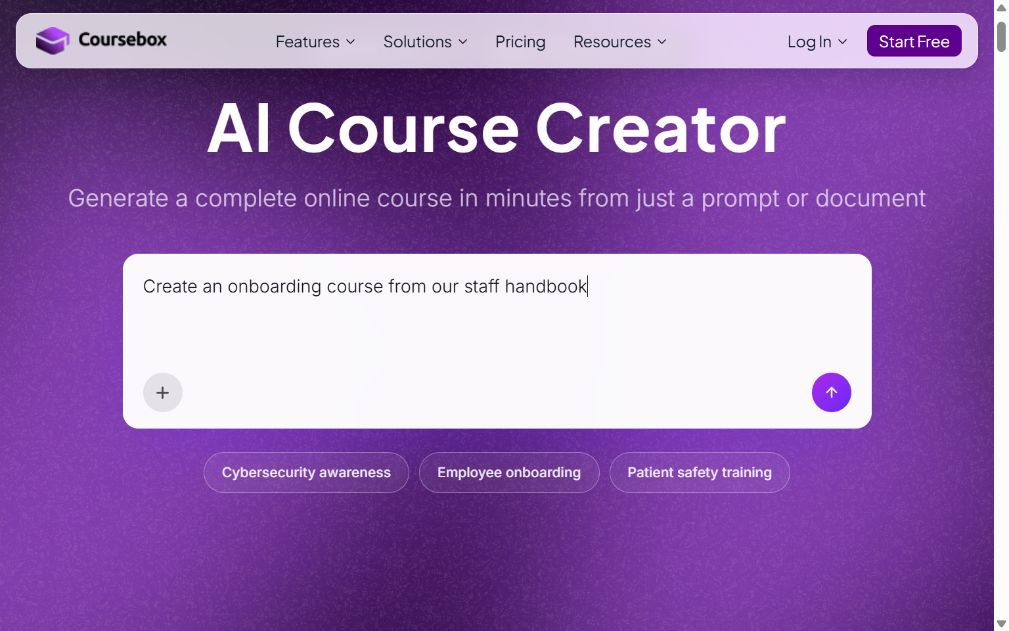
Coursebox combines AI course production with assessment, tutor support and delivery. Supply your approved sales playbook and product material, review the draft, then assign the programme in its LMS or export it to the system you already use.
Coursebox generates lessons, quizzes and AI video from approved material, then delivers the programme with assessment records and AI tutor support. Unlimited learners keep the delivery cost separate from headcount. Branded delivery depends on the plan; live call recording and conversation intelligence remain separate capabilities.
What I tell clients: My preference is this connected workflow when the team needs to maintain the training as well as deliver it. Coursebox does not supply live conversation intelligence, so I would add a call-review product only if that is an unmet need.
The workflow continues after the first draft. A subject expert reviews the generated lessons and questions, learners work through the course with AI tutor support, and the administrator follows progress and assessment records. You can deliver in Coursebox or export a SCORM package to an existing LMS. That is useful when course production, learner support and delivery all need an owner; an AI draft still needs your subject expert’s approval.
Pricing and plans: Free to start with unlimited learners. A branded Pro LMS starts at US$3,000/year; Enterprise starts at US$30,000/year with a two-year minimum. AI credits, administrators and portal requirements affect the plan. Enterprise SAML for administrators is a US$3,000/year add-on; learner SSO is scoped separately.
8. WorkRamp
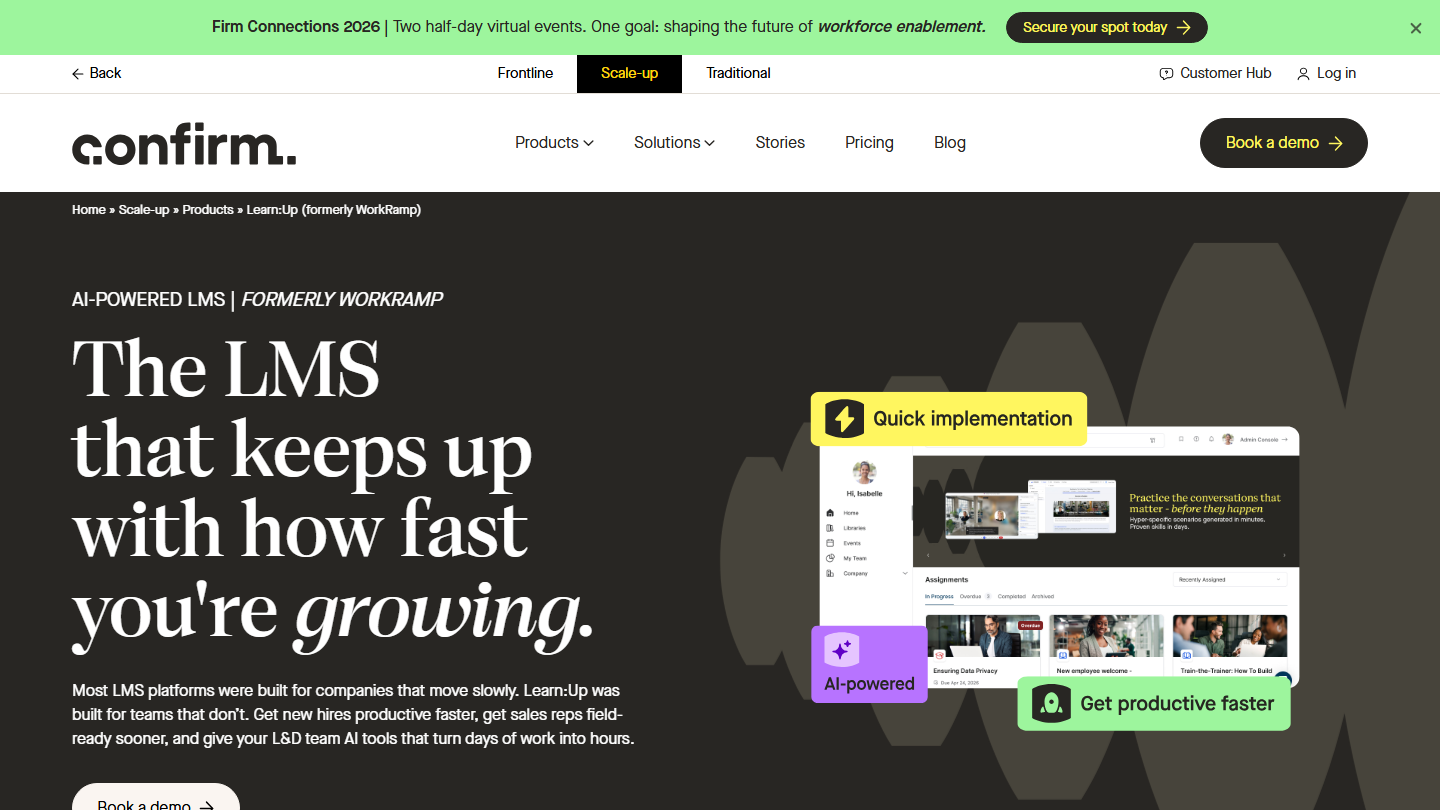
WorkRamp (now Confirm’s Learn:Up, after WorkRamp became part of Confirm) is an LMS built to onboard and ramp fast-growing sales and customer teams.
Confirm markets Learn:Up, formerly WorkRamp, for employee learning and lists AI simulations, a skills engine, personalised learning and reporting. Academy is the customer and partner learning product, with a separate quote.
My take: I would compare the learning and simulation scope in the actual Learn:Up proposal before adding another practice product. The name change is useful context, but the programme’s access, learning paths and manager records decide the fit.
The current Learn:Up offering lists AI simulations, personalised learning, a skills engine and reporting, which makes the boundary with coaching tools less absolute. My buying question is whether the included learning and practice cover the ramp programme, or whether a separate Practice product is needed. Customer academies and the Create authoring product have separate quotes. Compare the employee-learning configuration you will run rather than treat every Confirm product as part of the starting licence.
What it costs: Learn:Up from about $9/user/month billed annually (on a 200-person basis); Academy, Create and Library modules are quote-only.
Connect the lesson, practice and manager feedback
Salesforce’s 2024 State of Sales research found reps reported spending 70% of their time on non-selling tasks. I would keep training focused and build it into the rep’s working tools, with a named manager responsible for follow-up.
Gartner’s June 2025 release reported that 61% of surveyed B2B buyers preferred an overall rep-free buying experience. Training should therefore help a rep add useful judgement when a buyer does want a conversation, rather than repeat information the buyer can already find.
| Job | Evidence to look for | Follow-up |
|---|---|---|
| Product knowledge | Accurate explanation or course assessment | Product owner updates the material |
| Objection handling | Practice against a defined rubric | Manager reviews feedback |
| Live discovery | Relevant call example | Agree a specific coaching action |
| Ramp readiness | Knowledge and applied skill evidence | Manager approves the next responsibility |
Which sales training tool should you choose?
Eight tools, matched to the job you are actually solving for:
| If your priority is | Go with |
|---|---|
| Coaching reps off their real calls | Gong |
| Certifying a large sales force | Mindtickle |
| Training tied to your sales content | Highspot |
| Endless AI role-play practice | Second Nature |
| Building your own sales training with AI | Coursebox |
| A simple LMS to deliver courses | TalentLMS |
| Turning sales decks into courses | iSpring LMS |
| Ramping a scale-up sales team | WorkRamp (Confirm Learn:Up) |
For related programme guidance, see our sales training strategies.
Frequently Asked Questions
An LMS organises course creation or import, assignments and learner records. Sales enablement can add content, practice and coaching, and several products here cover both. Compare the actual capabilities before buying separate platforms.
Second Nature for AI-driven practice against a virtual buyer; Mindtickle also includes AI role-play as part of a broader sales-readiness platform.
Coursebox if you want AI to draft courses from your playbook and docs with unlimited learners, TalentLMS for a simple general LMS, or iSpring if your content already lives in PowerPoint.
The enablement platforms (Gong, Mindtickle, Highspot, Second Nature) are quote-only. The LMS tools are cheaper and often public: TalentLMS from $119/month, iSpring per user, WorkRamp from about $9/user/month, and Coursebox free to start with unlimited learners.
Often yes, as you scale: the LMS builds and tracks the structured training, while an enablement or coaching tool sharpens live performance. A small team can usually start with just one, most often the LMS.
Travis Clapp
Travis Clapp is the original founder and CEO of Coursebox. As an experienced instructional designer, he has lived through the process of building high quality courses. These experiences brought about his idea to upload all your documents and ideas into a virtual box that could convert those magically into a course. Prior to Coursebox, he successfully founded and built a social based LMS. Travis has 15+ years of experience designing courses and EdTech platforms from university MOOCs to enterprise LMS. Travis has built training for reputable companies like Johnson & Johnson, Electrolux, Michael Hill and SA Health. One of his courses reached 20,000+ learners which was a flagship edX course. He is based in the Adelaide, South Australia office and passionately works on customer support, sales and bringing the original product vision to life every day.

