

10 Best Compliance Training Software in 2026
The best compliance training software in 2026: course providers like EasyLlama, platforms like TalentLMS, and which actually prove training to an auditor.

Compliance training software is two purchases sold as one: the courses (harassment, data privacy, safety) and the platform that proves to an auditor everyone took them. Decide which you need first.
- Content specialists like EasyLlama and Traliant sell ready-made regulatory courses; platforms like TalentLMS, iSpring and Coursebox deliver and track your own; NAVEX does both at enterprise scale.
- The feature that actually matters is proof: a dated, per-person completion record, a certificate, and automatic reassignment when a policy changes or a certificate expires.
- For frontline and deskless staff, SC Training's mobile microlearning fits; for company-specific rules, Coursebox builds the course from your own policies with AI.
- Most enterprise compliance tools (NAVEX, Docebo, Traliant, Absorb, LearnUpon) are quote-only; TalentLMS, iSpring and SC Training publish prices and Coursebox is free to start.
Answer three quick questions about what you actually need and we will point you to the closest fit.

Scale training programs and cut development time using AI
Compliance training software is really two purchases sold as one: the courses your people have to sit through, and the system that proves to an auditor they actually did. Some vendors sell the content, the ready-made harassment, data-privacy and safety courses, like EasyLlama and Traliant. Others sell the platform that delivers and tracks it, like TalentLMS or Docebo. A few, like Coursebox and NAVEX, do both. Working out which you need is the first job, because buying a course library when you needed a tracking system, or the other way round, is the most common way a compliance budget gets wasted.
I am Carolina, and I have run compliance programs where the training itself was the easy part and proving it was the nightmare. So I judge these tools on the thing a regulator actually asks for: can it show that every required person finished the right training on time, reassign it when a policy changes or a certificate expires, and hand you the records without a scramble. One of the tools below, Coursebox's compliance training software, is ours, so I have been upfront about where it fits and where it does not.
So the list is grouped by that first decision: whether you need the courses, the platform to run them, or both. Work that out and half the options rule themselves out before you compare a single feature.
How I compared these compliance training tools
I judged every tool on the same five things, in the order they matter to whoever has to answer to an auditor:
Content or platform. Whether it comes with ready-made regulatory courses, is a system for delivering your own, or does both. This decides whether it is even the right kind of tool for you.
Proof for auditors. Completion records, certificates, and reports you can hand over when someone asks you to show that training happened.
Automation. Whether it auto-assigns training to new hires, reassigns it when a policy changes, chases people who are overdue, and handles certificates that expire.
Coverage. Which topics it covers: harassment, data privacy, safety, anti-bribery, and any industry-specific rules you answer to.
Ease and price. Whether a normal team can run it, and whether the pricing is public or a sales call.
Compliance training software at a glance
The whole list in one view. Prices are in USD as of August 2026; verify before you buy.
| Tool | Type | Best for | Proof and automation | Price |
|---|---|---|---|---|
| TalentLMS | Platform | The easiest place to run compliance, free to start | Strong, with a compliance-focused setup | Free (5 users); $119 to $449/mo |
| EasyLlama | Content | Ready-made, modern harassment and privacy courses | Automated tracking built in | ~$10 to $15/employee/yr per course |
| Coursebox | Platform | Turning your own policies into courses with AI | Certificates and completion tracking | Free; $40 to $750/mo |
| NAVEX | Both | Enterprise risk and compliance (GRC) at scale | Deep, audit-grade | Quote-only |
| SC Training | Platform | Frontline and deskless staff on a phone | Good, mobile-first | Free (up to 10); ~$3/user/mo |
| iSpring Learn | Platform | Authoring your own courses and tracking them | Strong reporting and certificates | ~$3.58/user/mo (active users) |
| Docebo | Platform | Large enterprises with a dedicated team | Deep, enterprise-grade | Quote-only |
| Traliant | Content | Award-winning harassment and ethics courses | Automated tracking | Quote-only |
| Absorb LMS | Platform | Polished mid-market reporting | Strong, admin-friendly | Quote-only |
| LearnUpon | Platform | Compliance across staff, partners and customers | Strong, multi-audience | Quote-only (from ~$15,000/yr) |
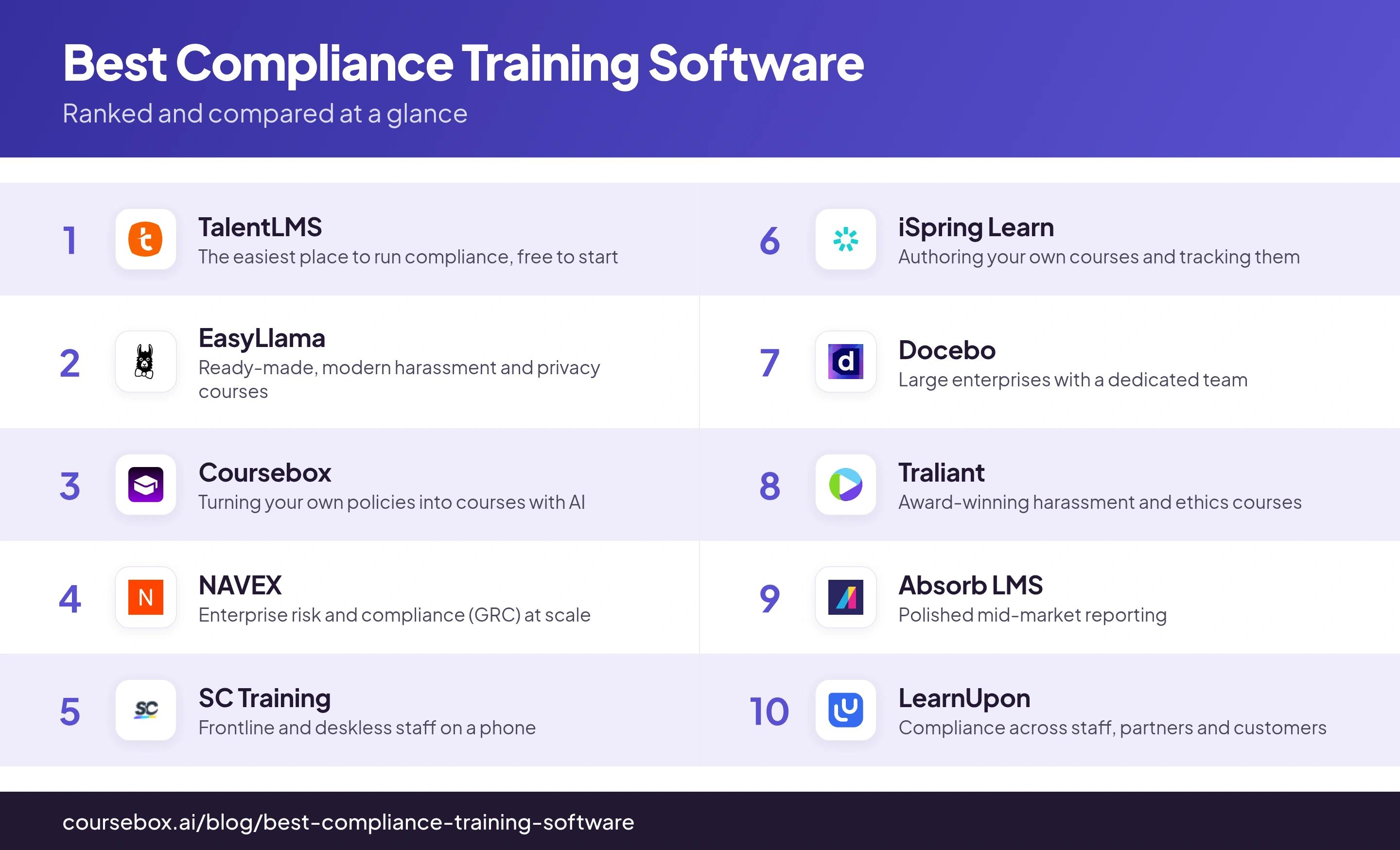
Ranked below, grouped by the job they do best.
Before you compare features, picture this moment: an auditor emails and asks you to show that every required person completed the right training, on time. The tool worth paying for is the one that produces that dated, per-person record and certificate in minutes, and reassigns the training automatically when a policy changes or a certificate expires. Most compliance tools sell you courses. The good ones prove the courses were taken.
The 10 best compliance training software
1. TalentLMS
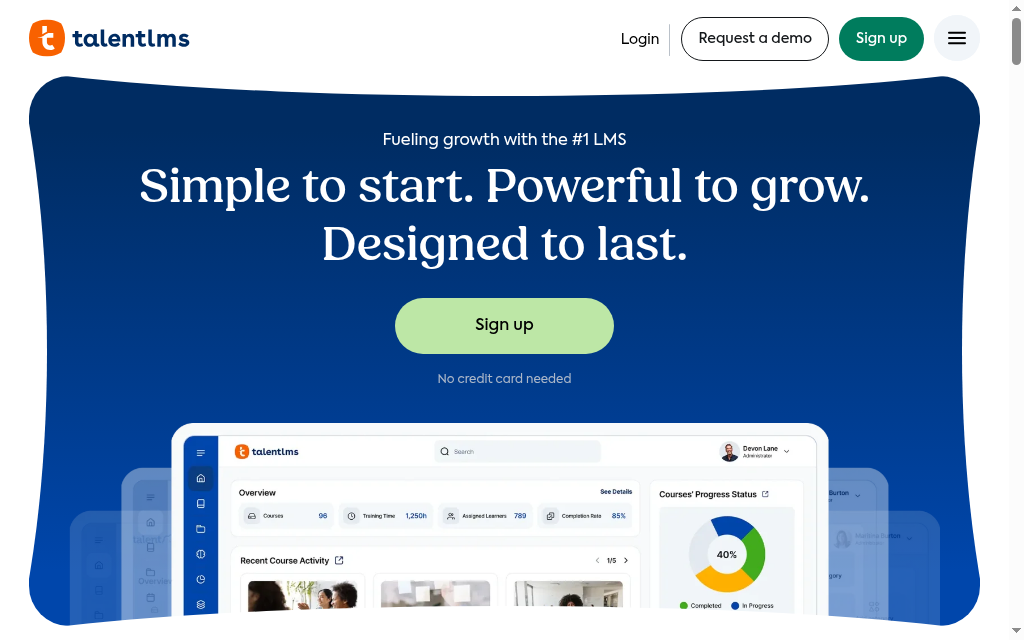
TalentLMS is the friendly, no-fuss platform I point most small and mid-sized teams to first. You bring or build the courses and it delivers and tracks them, though it will also sell you access to a ready-made library if you want. For compliance it does the essentials properly: it auto-assigns mandatory courses, sets deadlines, chases the stragglers, issues certificates, and reports on who is actually compliant.
There is a real free plan for up to 5 users and 10 courses, then paid plans run $119, $229 and $449 a month, with Enterprise by quote. The limit is that it is a general LMS with compliance features rather than a dedicated compliance suite, so a heavily regulated industry may eventually outgrow its reporting.
Notes from testing: Switch off email notifications and you break the automated learning paths, because TalentLMS uses those emails to trigger the next course. I learned this the hard way without any warning.
My take: I have set up a mandatory course, a deadline and an auto-reminder here in an afternoon, no consultant, and the free tier let me prove it worked before spending a cent. For most teams that is the whole job, so start here unless you specifically need ready-made courses or enterprise-grade GRC.
2. EasyLlama
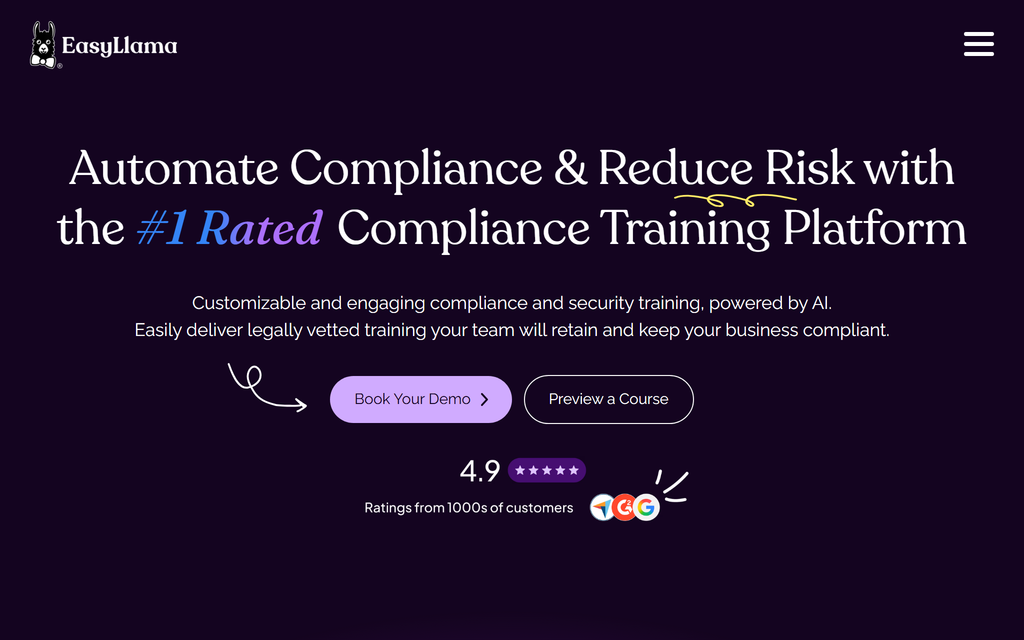
EasyLlama sells the content, not a platform to fill. You get short, mobile, legally vetted courses on harassment, discrimination, security and safety, with the tracking and certificates that go with them. It is strong on exactly the HR compliance topics most companies have to cover, and the courses are kept current with the law.
Pricing is per employee, reported from around $10 to $15 a year per course and more for bundles, so it scales with headcount and how many modules you take. Because it is built around its own catalogue, it is the wrong choice if your real need is delivering your own custom training.
My take: The courses are short and watchable, instead of the hour-long slideshows people swiftly click through without reading. If your problem is that you need good compliance training people will properly finish, this solves it directly, no platform-building required.
3. Coursebox
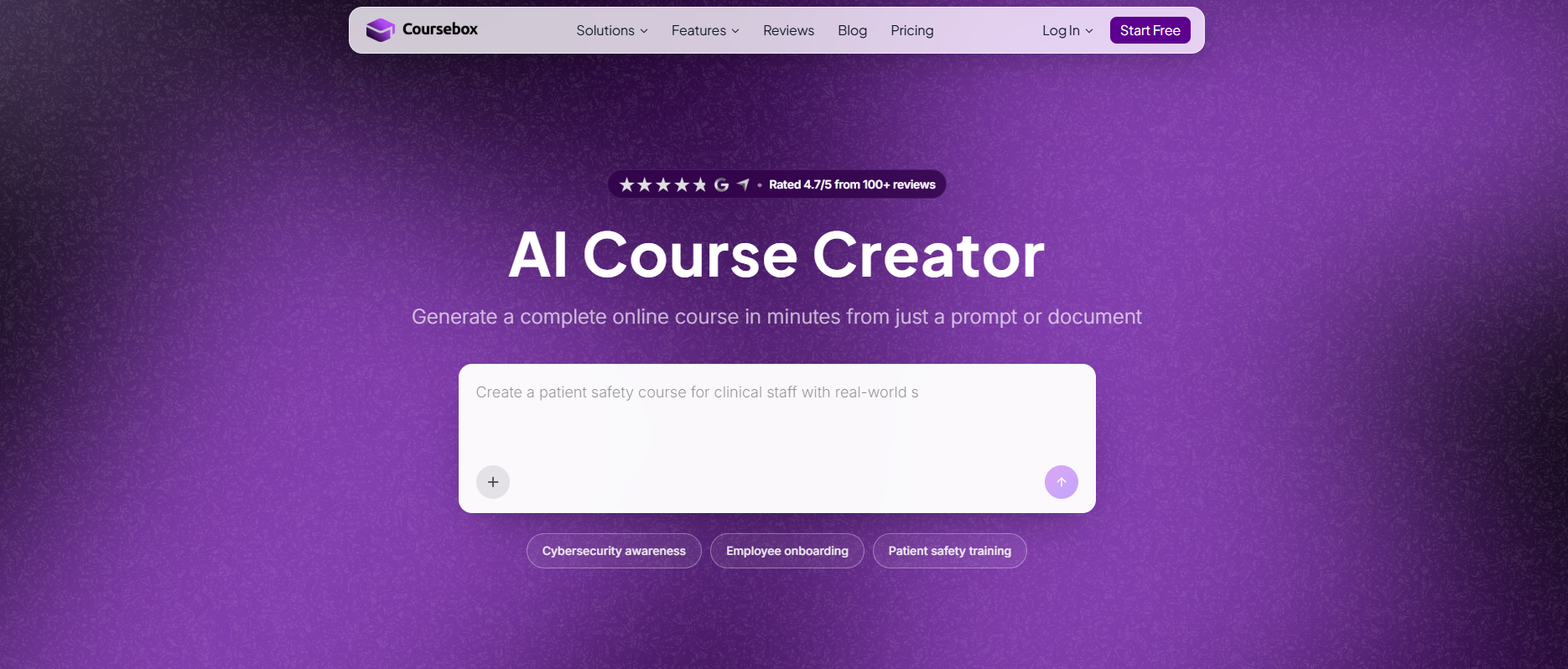
Coursebox is the platform I work for, so weigh this accordingly. It is the one on this list that builds the content for you: hand it a policy document or a prompt and it drafts a compliance course with a quiz, then hosts it, tracks completion and issues certificates in its own LMS. That makes it a fit for the company-specific rules no off-the-shelf catalogue sells, rather than the standard harassment or ethics training.
It is free to start, then Creator, Pro and Business run $40, $300 and $750 per user per month billed yearly, with learners always unlimited and free. The honest gap is that it does not ship a library of pre-written, lawyer-vetted courses the way EasyLlama or Traliant do, so for standard regulatory topics a content provider may get you there faster.
My take: Where it earns its place for me is turning a policy PDF we already had into a course and a quiz in minutes, instead of writing one from scratch or waiting on a vendor. Reach for it when your compliance training is specific to how you work, and skip it if you just need standard, off-the-shelf courses.
4. NAVEX
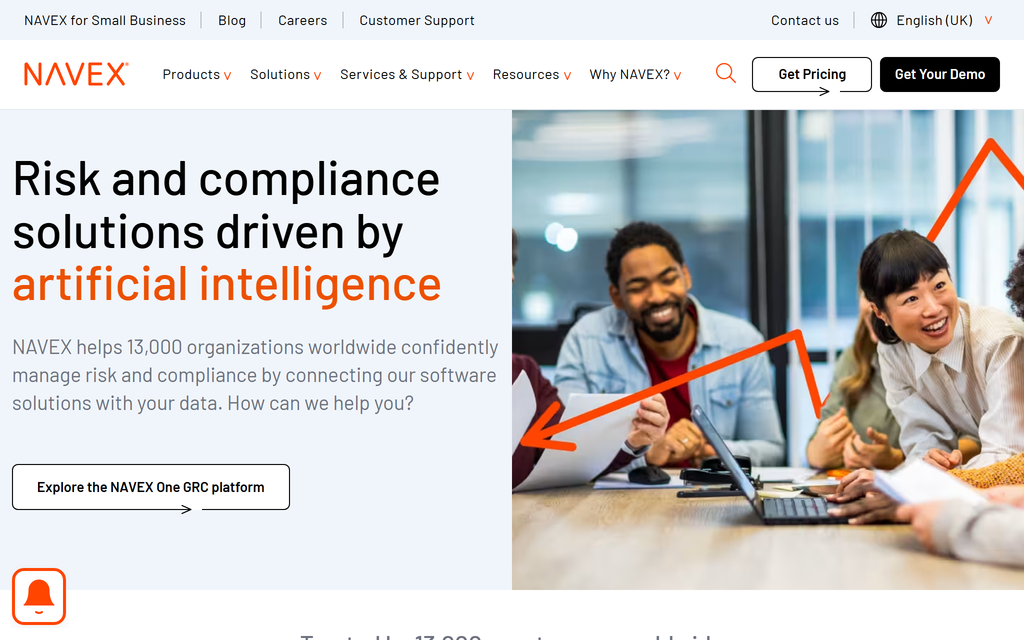
NAVEX is the enterprise heavyweight, and it does both content and platform, plus a lot more. Its NAVEX One suite connects training with risk, policy management and a whistleblower hotline, and around 13,000 organizations run their compliance programs on it. Training here is one module inside a wider governance, risk and compliance system, built for organizations that get formally audited.
Pricing is quote-only and firmly enterprise, so expect a procurement process. The scope and cost only make sense if you have a dedicated compliance function; for a small team it is far more than you need.
Notes from testing: The bit I flag in case management: a branch reviewer can move a case to In Process but not close it. Only head-office directors can, so even urgent cases route upward first. this is real friciton not suitable for all orgs.
My take: This is not a tool you pick to make a harassment course, it is what a compliance officer at a regulated enterprise runs their whole program on. If that is not you, it will feel like using a freight train for the groceries.
5. SC Training
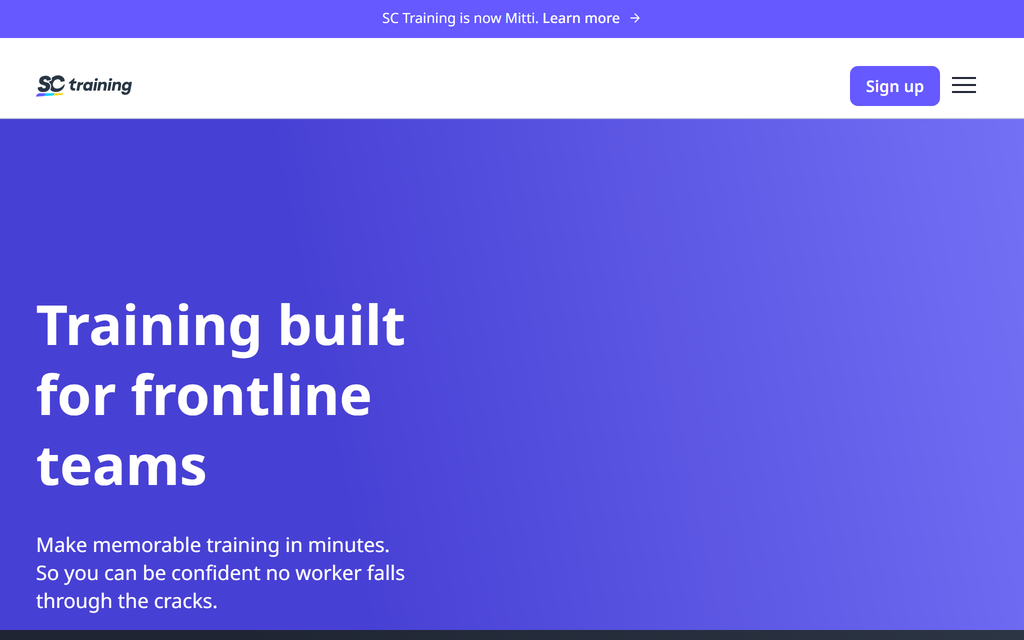
SC Training, formerly EdApp, is built for the people most compliance tools forget: frontline and deskless staff who do their training on a phone. It is a platform with a big library of editable courses, and its short, mobile-first lessons are designed to be finished in a spare few minutes rather than endured at a desk. It tracks completion and reports in a way that suits distributed teams, and it is especially strong on safety and frontline compliance.
It is free for up to 10 users, then reported around $3 per user per month. The trade-off is that microlearning is the whole model, so it is the wrong tool for a long, formal certification course.
Notes from testing: The go-live-in-minutes pitch only holds for very basic lessons. Push past that and the AI course generator turns generic, and I would expect a real learning curve to formatting slides or setting up live sessions.
My take: For staff who are not at a desk, this is the only format I have seen actually get finished. Short lessons on a phone beat an hour-long module nobody opens, and you can still see exactly who has done them.
6. iSpring Learn
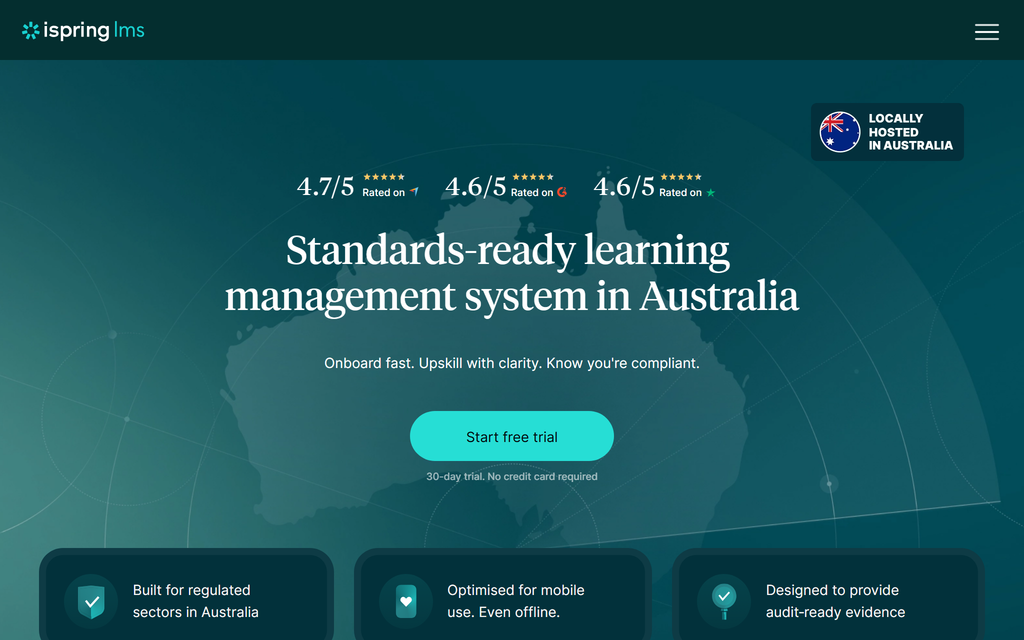
iSpring Learn is the LMS half of iSpring, and it shines for teams that build their own courses, especially in PowerPoint through iSpring’s authoring tool. As a compliance platform it has strong reporting, certificates and, crucially, the re-enrollment that recurring annual training needs. Coverage is whatever you build, and the slide-based workflow is an easy on-ramp for teams that already live in PowerPoint.
Pricing is reported around $3.58 per active user per month, billed by monthly active users rather than total headcount. The main caveat is that its natural authoring path is Windows and PowerPoint, so it suits that workflow best and feels awkward outside it.
Notes from testing: I would watch the chat box: it overlaps the course navigation, so you end up resizing your window just to move between sections. A small but real friction.
My take: If your team already makes everything in slides, turning those into tracked, certified compliance courses is almost no extra work, and the automatic re-enrollment for annual training is a valuable feature that saves you time every year.
7. Docebo
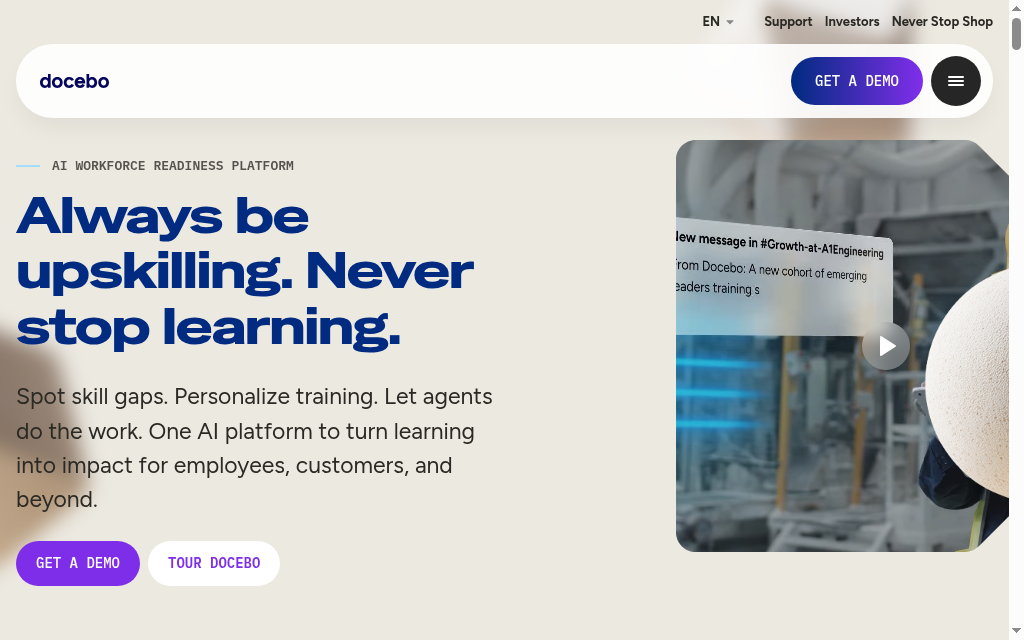
Docebo is the deep, configurable enterprise LMS, with serious compliance features: automated enrollment, recertification and detailed, audit-ready reporting, all driven by AI. It is a platform first, with content available through its marketplace, and it is built to handle complex recertification across a large, varied workforce.
Pricing is quote-only and enterprise, and the depth comes with an implementation and a cost that only pay off at scale.
Notes from testing: My read: it rewards a plan. Configure it before you start and it runs smoothly; leave it ad-hoc and you will wrestle it during onboarding.
My take: Every team I have seen run Docebo well had someone whose job included running Docebo. It is genuinely powerful, and it is a real commitment, which together tell you exactly who it is for: large organizations with a dedicated team, and nobody smaller.
8. Traliant
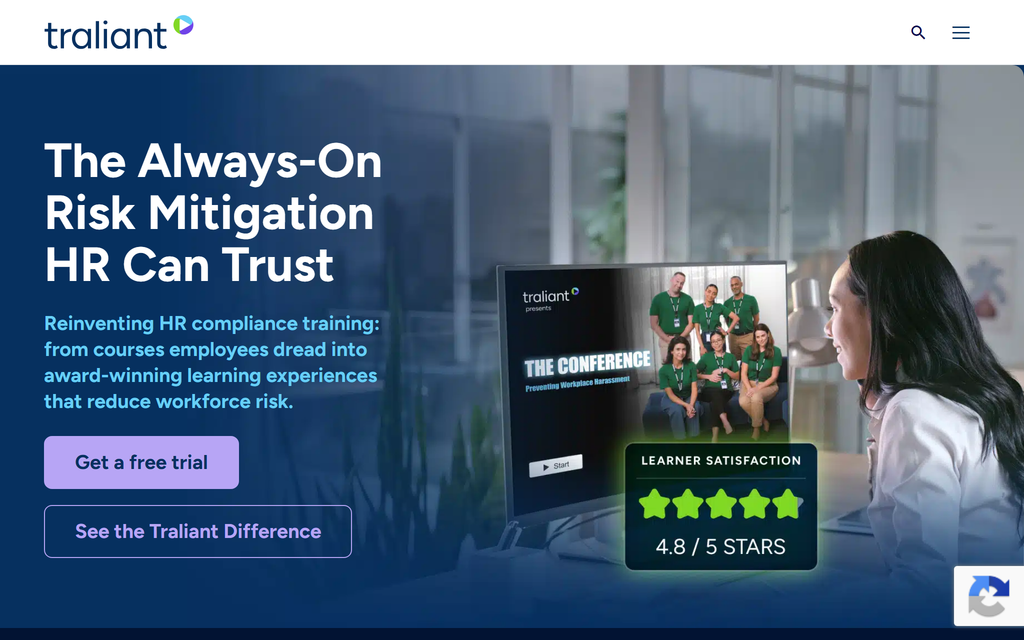
Traliant is a content specialist, and its edge is course quality: modern, cinematic harassment, ethics and DEI training that employees actually watch rather than click through. The tracking and completion records come with the content, and the courses are kept current with the law, but this is about the courses themselves, not a platform to host your own.
Pricing is quote-only, based on employees and the courses you choose. As a content provider, it is the wrong fit if you need to deliver training you built yourself.
My take: The production quality really is the differentiator, the courses feel like something people finish rather than survive, which is half the battle in compliance. Go here when course quality matters most and you are buying content, not a platform.
9. Absorb LMS
Absorb LMS is the polished mid-market platform, known for a clean interface and, more importantly for compliance, genuinely clear reporting and recertification. It is a platform with an optional content library, and its dashboards make it easy to see who is compliant and pull the report when someone asks.
Pricing is quote-only and positioned for mid-market and up, so it is a heavier commitment than the SMB tools here.
Notes from testing: What I like is that the reporting is smart about workflow: it surfaces your next action as you click through the fields, so you drive most of the admin without hopping between screens.
My take: The reporting is the part that is critical for compliance, and Absorb’s is genuinely clear, which counts for a lot when you are the one pulling the audit report at short notice. You pay for that polish, so it is overkill for a small team but a strong pick once reporting is your headache.
10. LearnUpon
LearnUpon earns its place when compliance is not just for employees. It is a platform built to train several audiences, staff, partners and customers, from one place, with strong automation, recertification and multi-audience reporting. Content comes through integrations, and coverage is whatever you load across your internal and external learners.
Pricing is quote-only, reported to start around $15,000 a year and billed by registered users, so every learner account counts whether or not they log in that month. That makes it a bigger commitment than per-active-user tools.
Notes from testing: The separate portals keep each audience fully walled off while you license the same content centrally, though I would keep an eye on the seat management; it is strict.
My take: The reason to pick it is if you train more than your own staff. When partners or customers also need compliance training, running it all from one platform saves real headaches. For internal-only training, cheaper tools do the same job.
How to choose compliance training software
Work backwards from the audit, not the feature list.
Decide if you need content, a platform, or both
If your problem is "we need good harassment and privacy courses," buy content (EasyLlama, Traliant). If it is "we have the material and need to deliver and prove it," buy a platform (TalentLMS, Coursebox, iSpring). If your training is specific to how you work, Coursebox builds it from your policies. Naming which of the three you need rules out most of this list.
Match the training to your regulations
Compliance is not one subject, and no single tool covers every rule well. Work out which topics you are on the hook for, from harassment and data privacy to safety and code of conduct, then see where each is best sourced. A rough map:
| Compliance topic | Who needs it | Where to get the training |
|---|---|---|
| Harassment and discrimination | Nearly every employer, worldwide | Ready-made courses (EasyLlama, Traliant), though most are written for US law, so check they fit your country; or build your own |
| Data privacy (GDPR, CCPA and local laws) | Anyone handling personal or health data | Ready-made courses, or built from your own policy (Coursebox) |
| Workplace safety (OSHA, HSE, WHS) | Frontline, warehouse and industrial teams | Safety-focused content delivered on mobile (SC Training) |
| Anti-bribery, ethics and code of conduct | Companies doing international business (US FCPA, UK Bribery Act) | Content and GRC specialists (NAVEX, Traliant) |
| Industry and country-specific rules | Regulated sectors, and anyone operating across borders | A local or vertical specialist such as Relias in healthcare, run through your LMS |
| Company-specific procedures | Every company has some | Built from your own policies with AI (Coursebox); no catalogue sells these |
If you operate in more than one country
Off-the-shelf compliance courses are usually written for one country’s law, most often the United States, so a harassment course bought for a New York office may not satisfy one in London or Sydney. If you operate across borders, either use a content provider with courses localized for each jurisdiction, or build your training from your own policies so it reflects the rules you actually answer to, which is where an AI builder like Coursebox helps. Either way, check the platform supports the languages your teams speak and the data-residency rules, like GDPR, your regions require.
Judge it on proof, not polish
The question an auditor asks is simple: show me that every required person completed the right training on time. Before you fall for a nice interface, check that the tool produces a dated, per-person completion record and a certificate, and that you can pull it in minutes.
Check the automation you will actually lean on
Compliance is recurring. The features that save you are the boring ones: auto-assigning training to new hires, reassigning it when a policy changes, chasing overdue people, and handling certificates that expire. A tool without those turns every renewal into a manual chase.
Treat quote-only as an enterprise signal
NAVEX, Docebo, Traliant, Absorb and LearnUpon all price behind a call, which usually means enterprise commitment. If you want to start without a sales conversation, TalentLMS, SC Training and Coursebox all let you begin for free.
Which compliance training software should you pick?
Name the job first. If you need the courses, buy content from EasyLlama or Traliant. If you need to deliver and prove your own training, TalentLMS is the easy default and Coursebox builds it from your policies with AI. For frontline staff, SC Training meets them on their phones. And if you are a regulated enterprise running a whole compliance program, NAVEX is built for that. The one thing not to do is buy an enterprise GRC suite for a job a free platform and a good harassment course would have covered.
Frequently Asked Questions
It depends on whether you need courses or a platform. For ready-made harassment and privacy courses, EasyLlama or Traliant. For an easy, affordable platform to deliver and track your own training, TalentLMS, or Coursebox if you want AI to build the courses from your policies. For a regulated enterprise, NAVEX.
Content is the courses themselves, the ready-made harassment, data-privacy and safety training you assign (EasyLlama, Traliant). A platform is the system that delivers those courses, tracks who completed them, and produces the records (TalentLMS, Docebo, Coursebox). Some tools do both, but most specialize, and buying the wrong one is the usual mistake.
Generally a dated, per-person record showing who completed which course and when, plus a certificate, and ideally a version history showing they took the current version after a policy changed. Any tool on this list should produce this, but check you can pull it quickly, because that is the moment it matters.
TalentLMS has a genuine free plan for up to 5 users, SC Training is free for up to 10, and Coursebox is free to start. The content specialists (EasyLlama, Traliant) and enterprise platforms (NAVEX, Docebo, Absorb, LearnUpon) are paid, and most are quote-only.
It varies widely. Content is priced per employee, roughly $10 to $15 a year per course for EasyLlama. Platforms range from free (TalentLMS, SC Training) to per-user (iSpring around $3.58 per active user). Enterprise suites (NAVEX, Docebo, Absorb, LearnUpon) are quote-only, often well into five figures a year.
It comes down to your regulatory complexity. If you cover the standard topics every employer has, harassment, data privacy and basic safety, a general LMS with compliance features like TalentLMS, or ready-made courses from EasyLlama, is plenty. If you are in a heavily regulated industry with recertification, detailed audit requirements and industry-specific rules, a dedicated compliance suite like NAVEX or a vertical specialist pays for itself. The dividing line is how much a failed audit would actually cost you.
Carolina Martin
Customer success lead and learning designer at Coursebox AI

