

10 Best AI Grading Tools for Assessment and Feedback in 2026
Compare 10 AI grading tools for essays, shared marking, rubric feedback, review controls and learning-system workflows.

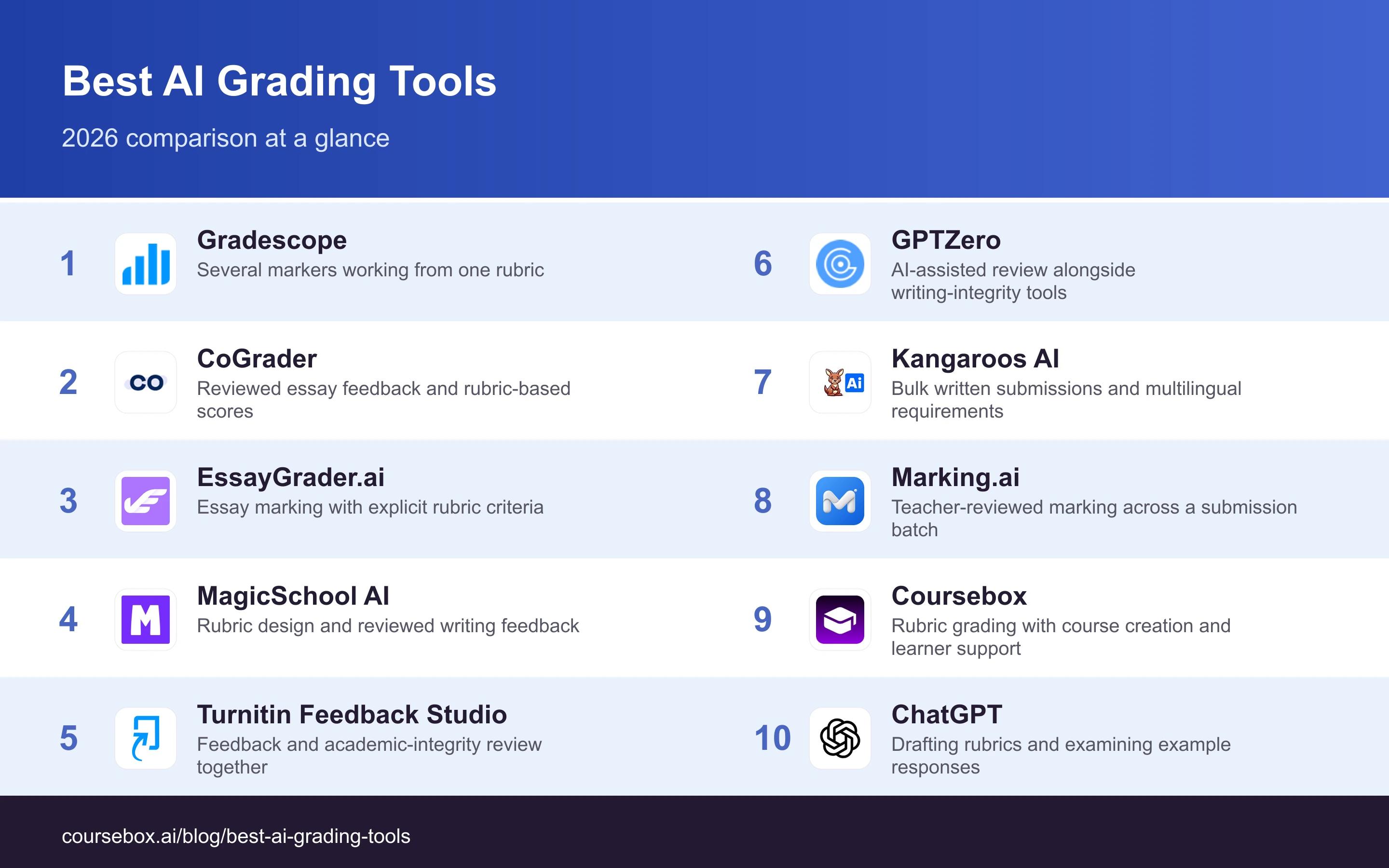
The best AI grading tools in 2026 include Gradescope for shared marking, CoGrader and EssayGrader.ai for reviewed essay feedback, and Coursebox for grading alongside course creation and delivery.
- Match the tool to the submissions, rubric, reviewer and result-return process. A school essay workflow and a corporate assessment may require different controls.
- AI answer grouping, rubric feedback, rubric drafting and integrity detection are different functions. Compare the function you actually need.
- Keep teacher or assessor review before releasing consequential marks. Inspect criterion-level evidence and disagreements on representative work.
- Assess the complete marking workflow, including review and returning the result.
Answer three questions to compare the four tools below. The result balances your preferences; the entries explain the features, limits and costs to check.

Mark assessments in seconds with fast, accurate AI grading
The last time I graded 40 short-answer submissions by hand, I did not notice what had happened until I reached submission 34: my scores had drifted.
I had started the batch with a tight rubric, four criteria on a 0 to 3 scale with explicit language for each level. By submission 34 I was rewarding effort in ways I had not been at the start. I went back to re-grade the first twelve. It took another ninety minutes, and I was still not confident the corrected scores were more consistent than the originals.
I care about AI grading because I want scores and feedback to follow the same criteria across a batch. Teachers, university departments and L&D teams share that need, but their submissions, review processes and learning systems differ. This comparison covers those contexts rather than assuming a school essay tool is a corporate certification system.
I work at Coursebox, which is included below. Its AI grading tool supports rubric-based feedback alongside course creation and delivery. I compared that connected workflow with specialist marking products and broader teacher assistants.
How I compared these AI grading tools
I looked at four parts of the marking job:
- Assessment fit. The supported submissions, subject rubric and type of result the tool produces.
- Review and correction. How the marker inspects evidence, changes a suggested score and approves feedback.
- Consistency. How the criteria, answer groups or teacher-marked examples are applied across the work.
- The full workflow. Submission limits, integrations, result return and the plan needed to use them.
AI grading tools compared at a glance
| Tool | Main use | Plan or workflow detail |
|---|---|---|
| Gradescope | Several markers working from one rubric | Free Basic; Institutional quote |
| CoGrader | Reviewed essay feedback and rubric-based scores | Individual US$15/month, billed annually |
| EssayGrader.ai | Essay marking with explicit rubric criteria | Free 100 essays/month, up to 1,000 words |
| MagicSchool AI | Rubric design and reviewed writing feedback | Free; Plus US$12.99/month |
| Turnitin Feedback Studio | Feedback and academic-integrity review together | Institutional quote |
| GPTZero | AI-assisted review alongside writing-integrity tools | Confirm AI Grader subscription and allowance |
| Kangaroos AI | Bulk written submissions and multilingual requirements | Confirm bulk-grading and school plan |
| Marking.ai | Teacher-reviewed marking across a submission batch | Confirm current school pricing |
| Coursebox | Rubric grading with course creation and learner support | Free mini-courses; paid creation and LMS tiers |
| ChatGPT | Drafting rubrics and examining example responses | Free; Plus US$20/month |
The 10 best AI grading tools
1. Gradescope
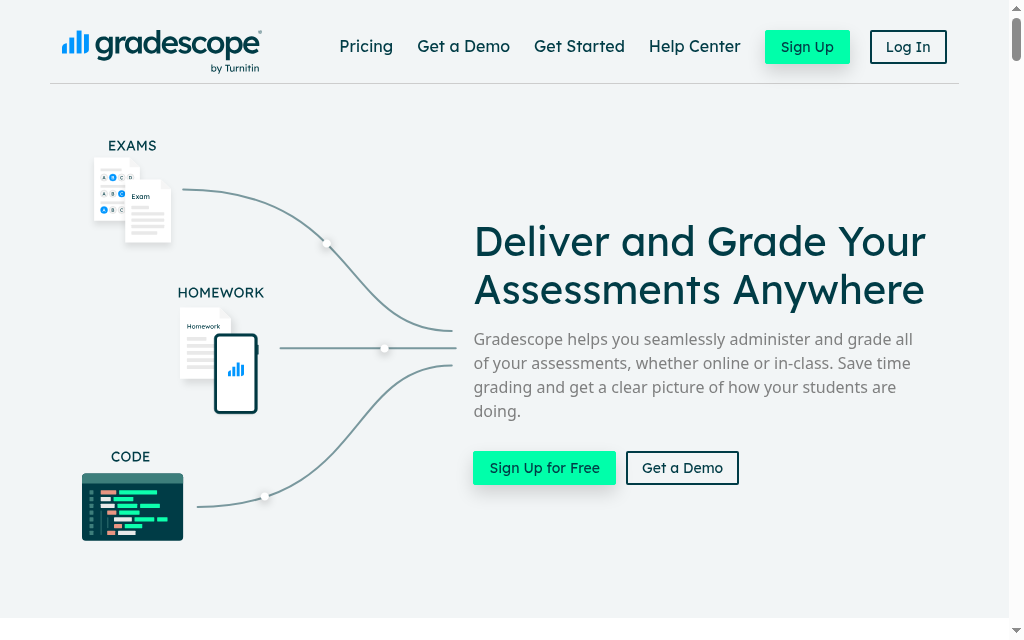
Gradescope supports question-by-question marking with dynamic rubrics. Change a rubric item and it can update marks already assigned under that criterion. AI-assisted answer grouping lets instructors review similar responses together rather than repeat the same action for every submission.
Answer grouping assists the marker; it is not proof that an AI independently judges every essay reliably. The current Basic and Institutional plans also separate ordinary rubric use from collaboration, AI-powered grading and other institutional features.
Where I land: The useful workflow is to review a suggested answer group, apply the appropriate rubric item and split out a response that only looked similar. I would test the rubric-change history and the marker’s override on a representative question. That shows how a department can keep decisions consistent without assuming grouped answers are identical. A strong candidate for institutions managing shared marking and rubric changes. Check the assignment type and institutional entitlement.
Pricing: Basic can remain free after an institutional trial. Institutional access is quoted; AI-powered grading, collaborative marking and LMS integrations are listed there. Compare the institutional entitlement with the marking workflow you need.
2. CoGrader
CoGrader drafts essay scores and feedback against a selected or custom rubric. Its standards-oriented tools and handwriting workflow suit teachers marking written work who want to inspect the rationale before returning it. The teacher remains responsible for editing and releasing the result.
Built-in standards can save setup, but a supported rubric does not establish accuracy on every subject. Canvas and Schoology extensions and institutional integration options can connect this work to the learning system; check the selected tier.
Where I land: In the rubric-led workflow, I would inspect a strong answer, a borderline answer and an answer with a subject-specific error. Check whether the comment cites the work and the score follows the actual descriptor. Clear explanations make review easier, but other tools also provide criterion-level feedback. A useful shortlist option for written school assignments and reviewed feedback. Test the rubric and return path against the subject and learning system.
Pricing: Starter and institutional options are available. Individual is displayed at US$15/month billed annually for 350 student submissions per month. Schools and Enterprise change integrations, administration and support.
3. EssayGrader.ai
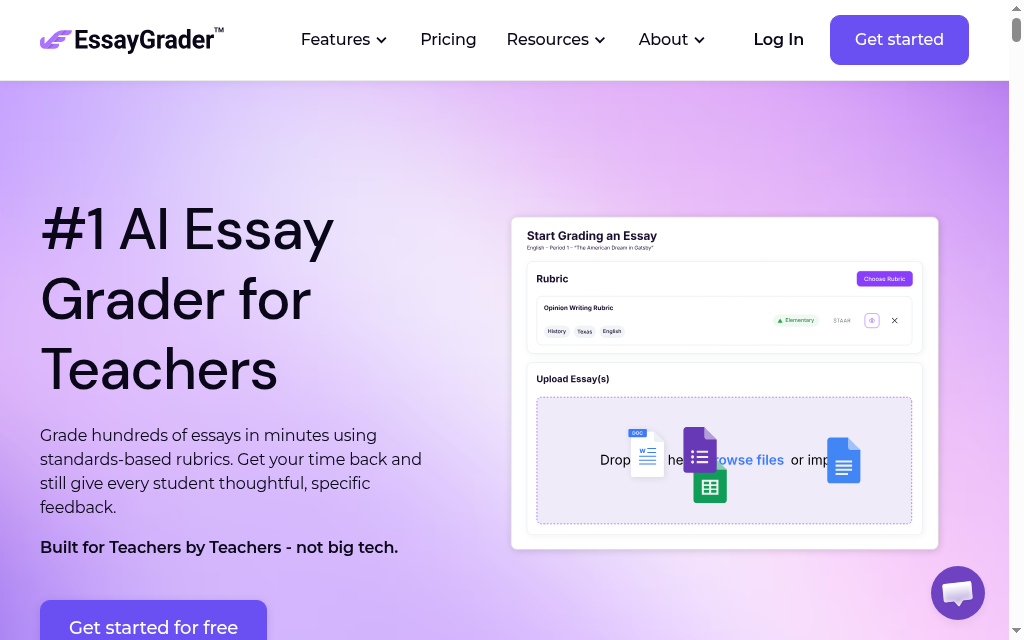
EssayGrader.ai drafts feedback on writing and applies assessment criteria to uploaded essays. Its rubric and standards options can support a teacher who wants to review strengths and gaps at criterion level rather than receive only a single score. The relevant subject rubric still needs checking.
The current service lists native Google Classroom, Canvas and Schoology integrations. Check the workflow and tier rather than assume every standalone grader needs CSV re-entry. Input length, monthly essay allowance and institutional controls can change the practical plan required.
Where I land: In an advanced rubric, each criterion has a point scale and performance descriptors. I would compare the proposed result with those descriptors and the passage cited in the submission. A useful comment identifies a revision the learner can make; a generic compliment adds little even when the score looks plausible. Consider it for rubric-led essay feedback with a teacher review step. Match standards, file limits and integration to the actual assignment.
Pricing: The current free plan lists 100 essays per month with a 1,000-word limit per essay. Paid plans raise the word and submission allowances and add features.
4. MagicSchool AI
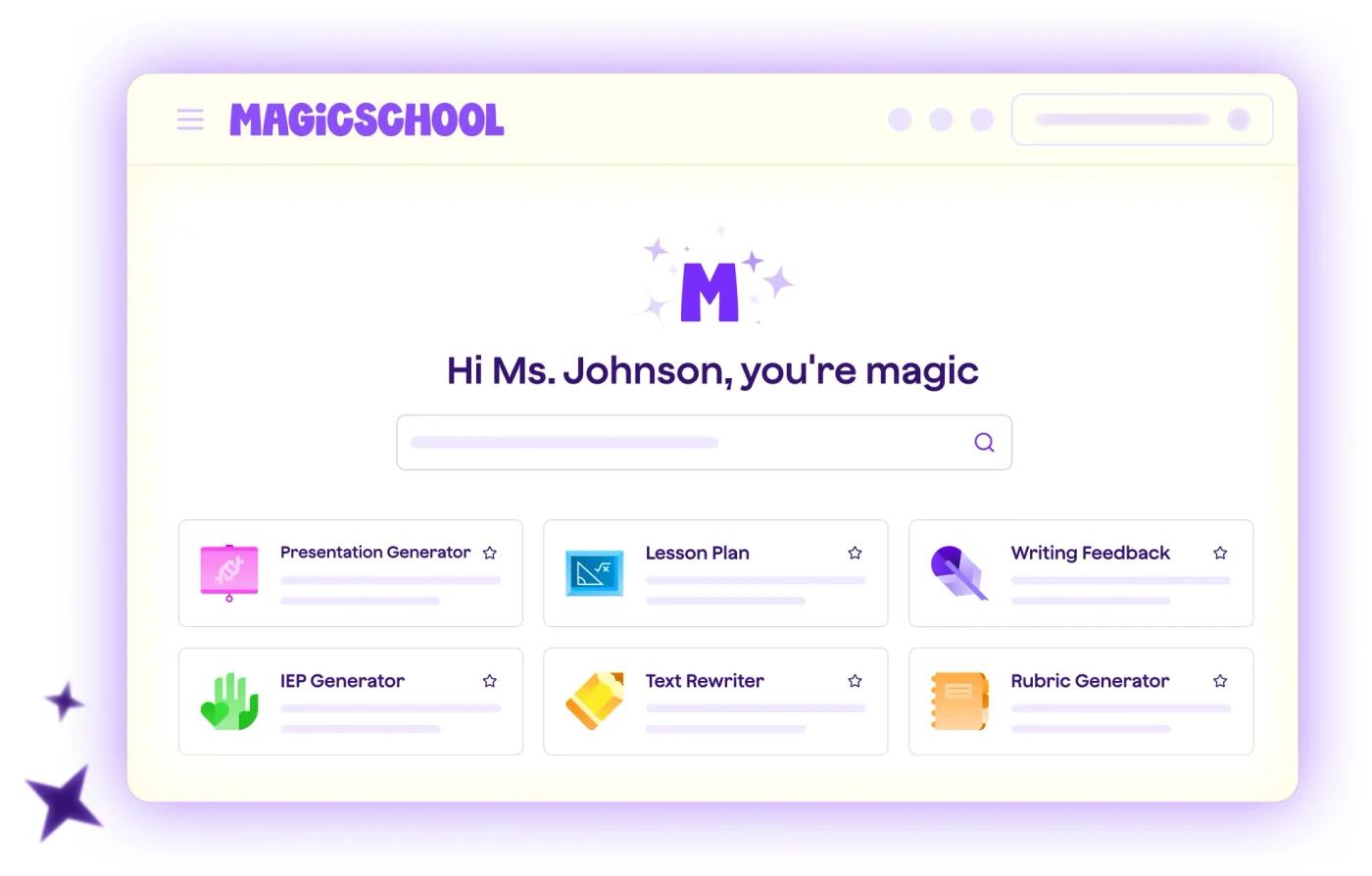
MagicSchool combines teacher tools, including rubric generation and writing feedback. It is useful when the assessment criteria still need drafting or a teacher wants feedback assistance in the same wider workspace used to prepare lessons and materials.
Writing feedback and an automatically awarded final grade are different outputs. Inspect what the chosen tool returns and how it reaches the learner. Provide the current subject material and inspect whether the feedback uses the criteria you supplied.
Where I land: The useful sequence is to establish the criteria first, then inspect the feedback against the learner’s text. I would check that the suggested comment reflects the rubric and gives an actionable next step. A generated rubric still needs the teacher’s subject knowledge before it is used across a class. A practical choice for teachers who need rubric and feedback support alongside lesson preparation. Select a dedicated grading workflow if batch marks and gradebook records are essential.
Pricing: Free is available. Plus is US$12.99/month or US$8.33/month billed annually. Enterprise is quoted for school and district administration. Verify integrations and usage limits on the proposed tier.
5. Turnitin Feedback Studio
Turnitin Feedback Studio combines submission review with tools such as QuickMark comments and rubric-based marking. Similarity information can sit beside the teacher’s assessment work, so an institution can examine the source matches and the feedback in one submission workflow.
Similarity, suspected AI writing and the quality of an answer are different judgements. AI-writing detection depends on the licensed product and its scope. Turnitin’s guidance recognises false positives and says the detection result should not be the sole basis for adverse action.
Where I land: I would ask how a marker views the matched source, records a rubric judgement and returns feedback. Then check the appeal or review process if a learner disputes the result. A detector percentage should never be turned into a deduction from an otherwise assessed answer. A candidate for institutions that need marking and integrity review in a coordinated submission process. Confirm the licensed features and local review policy.
Pricing: Institutional quote. Feedback Studio, Originality or other AI-writing features and LMS integration need explicit scope; do not assume every Turnitin contract includes the same functions.
6. GPTZero
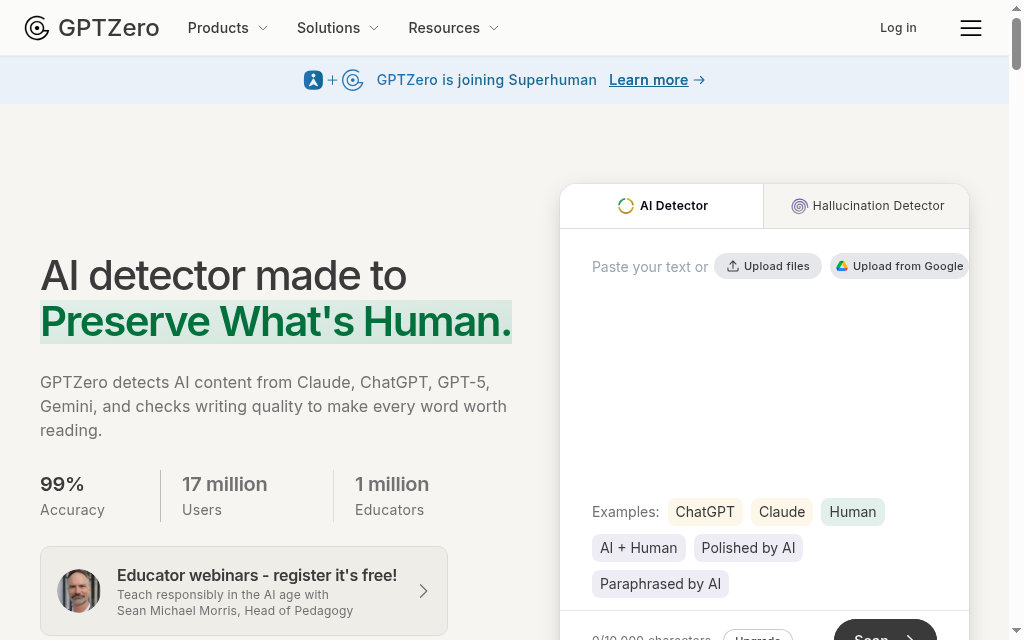
GPTZero provides AI-detection and writing-review tools, including an AI Grader workflow. Its vendor walkthrough describes using a rubric and teacher-marked examples to help align the suggested feedback with the intended criteria. Compare that workflow with the task you need rather than choose on a detector headline.
A writing-integrity signal does not establish the quality of the submission or prove misconduct. The grader and detector also have different limits and commercial access. Check which product and allowance the subscription actually includes.
Where I land: I would inspect the teacher-scored examples used for calibration, then reserve different examples for checking the result. Reusing the same work for both hides whether the rubric is being applied usefully. Review a suggested mark and its evidence before returning it. An option when writing review and integrity tools belong in the same evaluation. Validate the grading workflow separately from detection claims.
Pricing: A detector free tier is not necessarily a free grading subscription. The vendor advertises paid grading access and a demo; confirm the current AI Grader allowance, billing basis and institutional options.
7. Kangaroos AI
Kangaroos AI offers essay grading and other teacher tools. Its bulk-upload workflow can accept written submissions with a rubric, organise them by class and return suggested results. For a multilingual class, include the required input and feedback languages in the comparison.
Language support and subject-rubric fit are separate checks. Check the actual supported input languages, response language and rubric behaviour for the subject you teach. A feature label alone does not answer those questions.
Where I land: I would include a well-written response, a partially correct one and a response where language fluency differs from subject knowledge. See whether the feedback follows the rubric without rewarding polished wording in place of understanding. That makes the multilingual comparison specific. Consider a trial for bulk written work and the language combination you require. Inspect the review and result-export path before adopting it for a class.
Pricing: Confirm the current trial, grading allowance and school pricing directly. Public information reviewed did not establish a single dependable price for the complete bulk-grading workflow.
8. Marking.ai
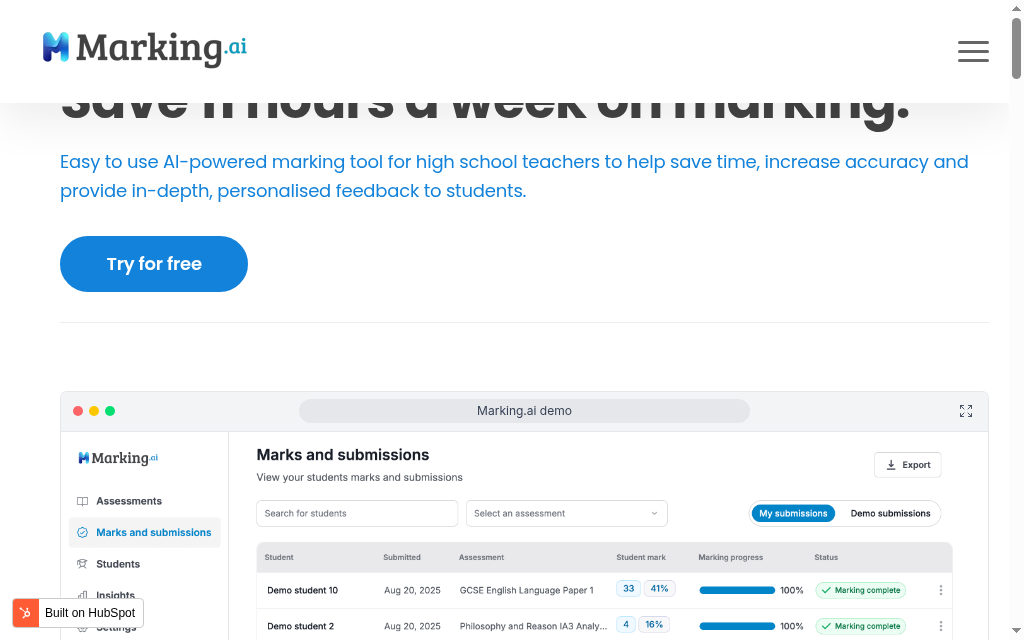
Marking.ai provides an AI-assisted marking workflow for schools, with submissions, marks and progress visible in the product interface. That can help a teacher manage a batch and identify which pieces still need review rather than move between unrelated documents.
The useful question is what the feedback and marks mean for your subject, not an advertised number of hours saved. Check the supported assignment, rubric setup and result export. Public product screens do not establish a measured grading-accuracy ranking against other tools.
Where I land: Take a paper with a plausible but incorrect explanation and compare the proposed mark with the teacher’s rubric. Then amend the result and follow what is returned to the learner. The batch view saves work only if the review and correction steps remain clear. A candidate for school marking workflows with a visible teacher review step. Use a representative paper and confirm the result-return process.
Pricing: Request current access and pricing for the school and subject workflow. Include the submission allowance, supported files, staff access and integration requirements in the comparison.
9. Coursebox
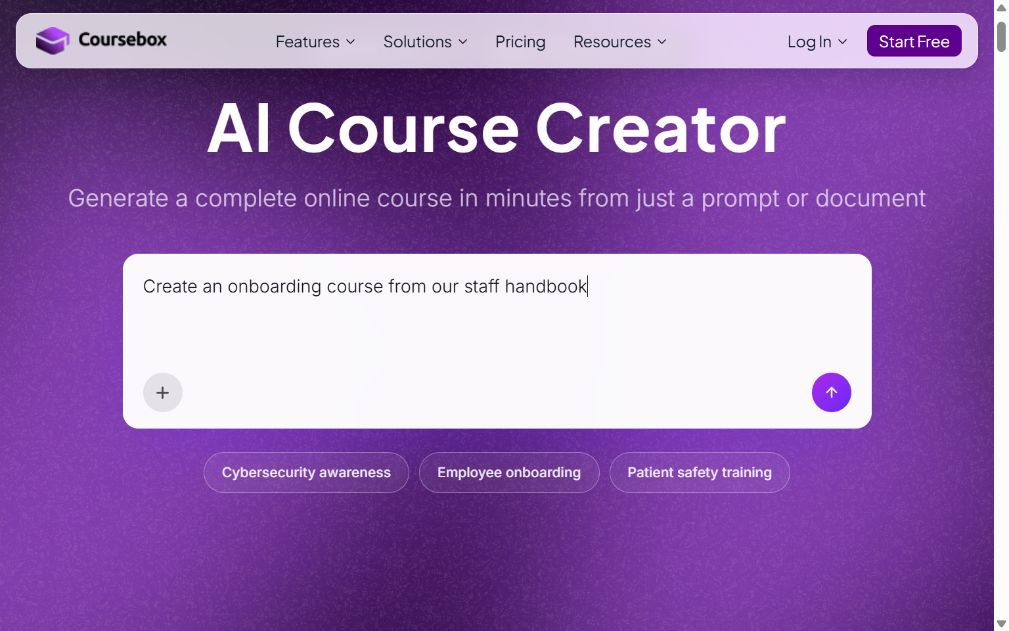
Coursebox grades written submissions and open answers against a rubric, with feedback and an option for manual review before final marks are published. Its file-upload workflow supports longer assignments as well as short answers.
It also combines grading with course creation, learner support and delivery. An instructor can keep the lesson and assessment together instead of managing another isolated score file. Compare the required language, file type, review controls and LMS connection.
Where I land: The useful check is the link between a rubric descriptor, the learner’s answer and the returned feedback. I would review a borderline response before release and confirm how an amended grade is recorded. If using LTI or SCORM elsewhere, test that exact integration: not every export retains the same AI assessment functions. A strong candidate for teams that want grading together with training creation and delivery. For an existing institutional gradebook, evaluate the exact result-return route alongside the grading quality.
Pricing: Free includes three mini-courses of up to five pages and unlimited learners. Confirm the assessment allowance, manual-review workflow and integration entitlement on the selected paid tier; broader organisational requirements are quoted.
10. ChatGPT
ChatGPT can draft a rubric, analyse supplied work against criteria and suggest feedback. It is useful for discussing what a descriptor means or improving the wording before a teacher applies it. File uploads allow you to work with supplied submissions as well as pasted text.
A chat is different from a dedicated assignment and gradebook system. You need a deliberate process for identifying submissions, reviewing suggested marks, retaining the criteria and returning results. A confident explanation does not establish scoring consistency.
Where I land: I would give it two contrasting examples and ask which evidence supports each criterion. Then test the revised rubric on different work. Keep the teacher-approved version fixed during a batch so a conversational rewrite does not silently change the scoring rule halfway through. Useful as a rubric and feedback assistant, particularly before deployment. A dedicated grading system may reduce the administration around a real cohort.
Pricing: Free is available. Plus is US$20/month; Business is US$20/user/month annually or US$25 monthly with a two-user minimum. Use an institution-approved workspace and data process for learner submissions.
Which parts of grading can AI help with?
| Workflow | What the tool assists | What the marker still checks |
|---|---|---|
| Objective questions | Apply a defined answer or scoring rule | The answer key and any acceptable alternatives |
| Answer grouping | Bring similar responses together | Whether an individual response belongs in the group |
| Rubric-based feedback | Suggest criterion-level marks and comments | The descriptor, evidence and final decision |
| Assessment preparation | Draft rubrics or model feedback | Subject accuracy and the approved scoring rule |
| Integrity review | Highlight source matches or a writing signal | The evidence and the institution’s review process |
In Gallup’s 2025 survey of 2,232 US public K-12 teachers, 60% reported using AI for their work during the 2024 to 2025 school year. That describes adoption across teaching tasks, not the accuracy of automated marks.
Similarity and AI-writing signals answer different questions from whether a learner met the rubric. Inspect the evidence through the institution’s review process. Turnitin itself warns that AI detection can produce false positives and should not be the sole basis for adverse action.
How would I trial an AI grader?
- Fix the rubric first. Keep the teacher-approved criteria and descriptors stable during the comparison.
- Use different types of work. Include strong, borderline and incorrect answers, plus a relevant language or accessibility case.
- Compare the proposed marks. Check the evidence for each criterion against human-marked examples. Record disagreements instead of hiding them in an average.
- Review the return path. Amend a result, approve feedback and follow the record into the learner’s actual system.
Weekly AI users in the Gallup teacher study estimated saving 5.9 hours per week across nine work tasks. For a grading pilot, measure the full batch, including checking, correcting and returning the results. A first-pass generation time leaves out much of the work.
Which AI grading tool would I shortlist?
| Your main need | Starting shortlist | What should decide it |
|---|---|---|
| Shared institutional marking | Gradescope | Answer grouping, rubric changes and the institutional integration |
| Teacher-reviewed essays | CoGrader or EssayGrader.ai | Subject rubric, feedback evidence and the grade-return route |
| Rubric and lesson preparation | MagicSchool AI or ChatGPT | Teacher control of the criteria and manageable review |
| Marking alongside integrity review | Turnitin or GPTZero | The licensed grading workflow and evidence-review policy |
| Bulk school marking | Kangaroos AI or Marking.ai | Supported submissions, languages and review controls |
| Grading with course creation and delivery | Coursebox | Rubric feedback, manual review and the selected LMS connection |
If the task is to create questions before marking begins, compare the AI quiz generators separately from the tools that review submitted work.
Disclosure: I work at Coursebox. Product and pricing information was checked in October 2026. The recommendations describe workflow fit, not a measured accuracy league table.
Frequently Asked Questions
A tool can suggest scores and feedback, but performance depends on the rubric, subject and submissions. Compare representative work with human-marked examples, inspect disagreements and keep a review process before releasing marks.
No. Grading assesses work against criteria. Similarity and AI-writing signals support a separate integrity review and should not automatically change an academic mark.
Some offer direct integrations or institutional connections; others require a separate return process. Test the actual assignment, reviewed result and gradebook route on the plan you intend to buy.
Gradescope Basic, EssayGrader.ai, MagicSchool, Coursebox and ChatGPT have free options with different functions or limits. A free detector or writing assistant is not automatically a complete free batch-grading workflow.
Carolina Martin
Carolina is a highly experienced learning designer with tech start-up experience. She is based in Sydney and previously designed courses alongside Coursebox founder Travis in a previous job. She is passionate about delivering engaging learning experiences and brings the same perspective to customer experience too. She manages our customer support documentation and product testing processes.

