

10 Best Aviation LMS Platforms in 2026: My Review of the Practical Trade-offs
Compare 10 aviation training and record systems for courseware, recurrent learning, assessment and maintenance authorisations, with buying advice.

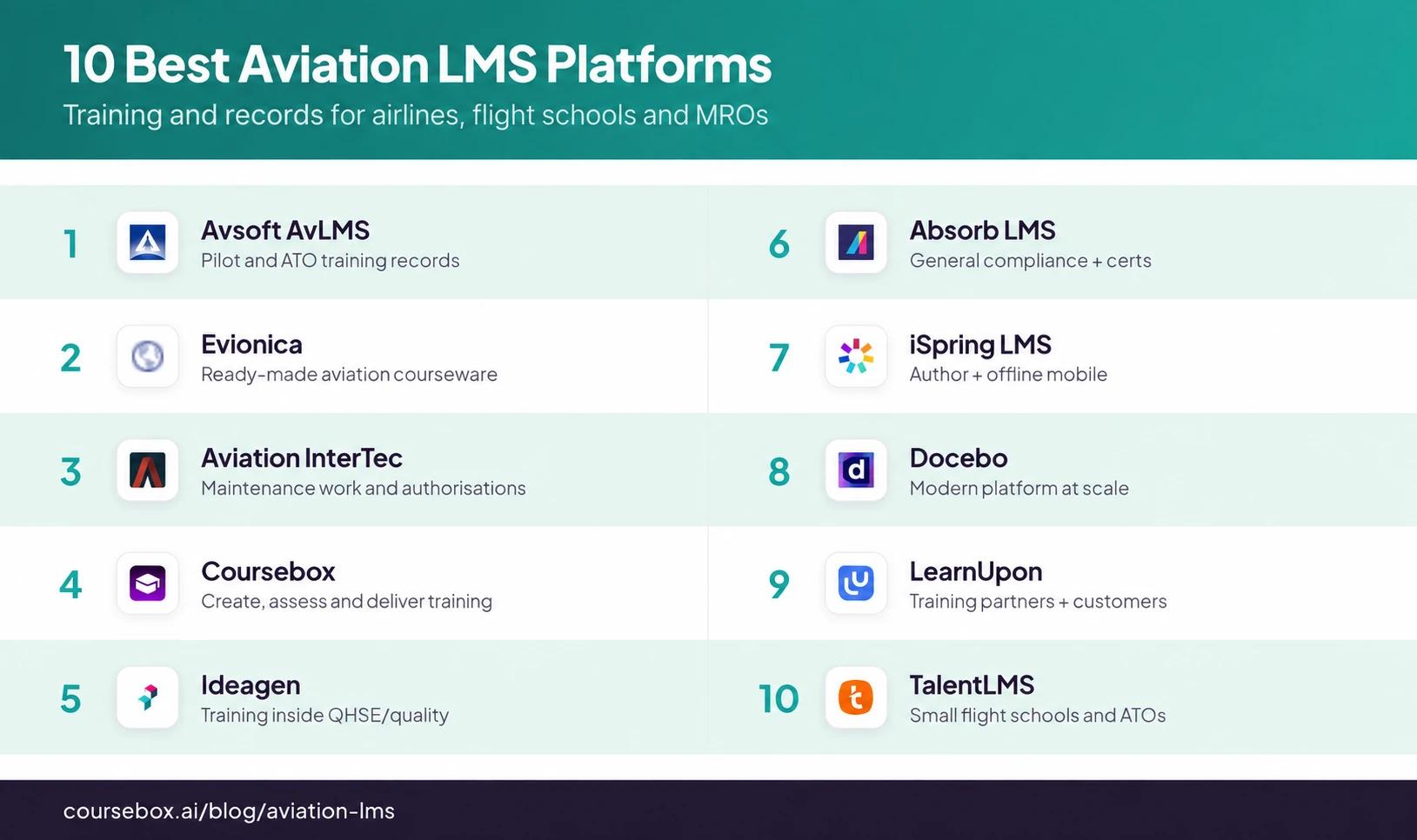
The 10 best aviation LMS and related training platforms in 2026 include Avsoft AvLMS, Evionica, Aviation InterTec RAAS, Coursebox, Ideagen, Absorb LMS, iSpring LMS, Docebo, LearnUpon and TalentLMS. RAAS is an adjacent maintenance system, so compare its authorisation records separately from LMS course delivery.
- Avsoft and Evionica specialise in aviation learning. RAAS supports maintenance work and authorisations; Ideagen connects training with quality management. Their scopes are different.
- Coursebox combines creation from your manuals with learner support, written assessment, delivery and reporting. Confirm any connection to your operational qualification system separately.
- Compare the required records, role assignments, recurrent dates, content licences and integrations before deciding between a specialist and a configurable general LMS.
- Boeing’s 2026 outlook forecasts more than 2.4 million new aviation professionals through 2045. Use your own workforce and recurrent schedule to estimate learning capacity.
Compare four options from this guide. Answer for your own learning needs; the full comparison covers the other tools.

Run your own branded LMS with unlimited learners
An aviation training team may be buying pilot courseware, maintaining recurrent-training records or teaching procedures from its own manuals. I’d want to know which of those jobs the platform will own, and which records still belong in another system.
My interest is in how the training stays usable after the initial rollout. When a manual changes or a qualification needs renewing, can the team find the affected learning and follow up with the right people? That is where I’d compare the aviation specialists with a general LMS.
Disclosure: I work at Coursebox. Our enterprise LMS is included alongside the other options, with the relevant workflow, pricing and limitations explained below.
Boeing’s 2026 outlook puts the workforce forecast at more than 2.4 million new professionals through 2045. For a training buyer, the useful calculation is your own intake and recurrent workload, including the instructors and administration needed.
The 10 best aviation LMS platforms at a glance
| Tool | Best for | Aviation strength | Built for aviation | Price |
|---|---|---|---|---|
| Avsoft AvLMS | Pilot and ATO training records | Pilot CBT, recurrent dates and qualifications | Yes (flight ops) | Quote |
| Evionica | Ready-made aviation courseware | Aviation theory and aircraft courseware | Yes (training content) | Quote |
| Aviation InterTec | Maintenance authorisations | Maintenance work and sign-off permissions | Yes (maintenance) | Quote |
| Coursebox | Own manuals, assessment and delivery | Course creation, tutoring, assessment and LMS delivery | No (generalist) | Free to start |
| Ideagen | Training inside QHSE/quality | Quality-linked training and competency records | Yes (compliance/QMS) | Quote |
| Absorb LMS | General compliance + certs | Cert tracking, audit reports | No (general) | Quote |
| iSpring LMS | Author + offline mobile | Offline app, PPT authoring | No (general) | Per user/yr |
| Docebo | Modern platform at scale | AI paths, strong reporting | No (general) | Quote |
| LearnUpon | Training partners + customers | Multi-portal separation | No (general) | Quote |
| TalentLMS | Small flight schools and ATOs | Affordable, simple, mobile | No (general) | Free tier; per user |
Pricing and product documentation were checked in October 2026. Aviation approval, retention rules and required records depend on your operation; confirm them with the responsible training and compliance owners.
The 10 best aviation LMS platforms
1. Avsoft AvLMS
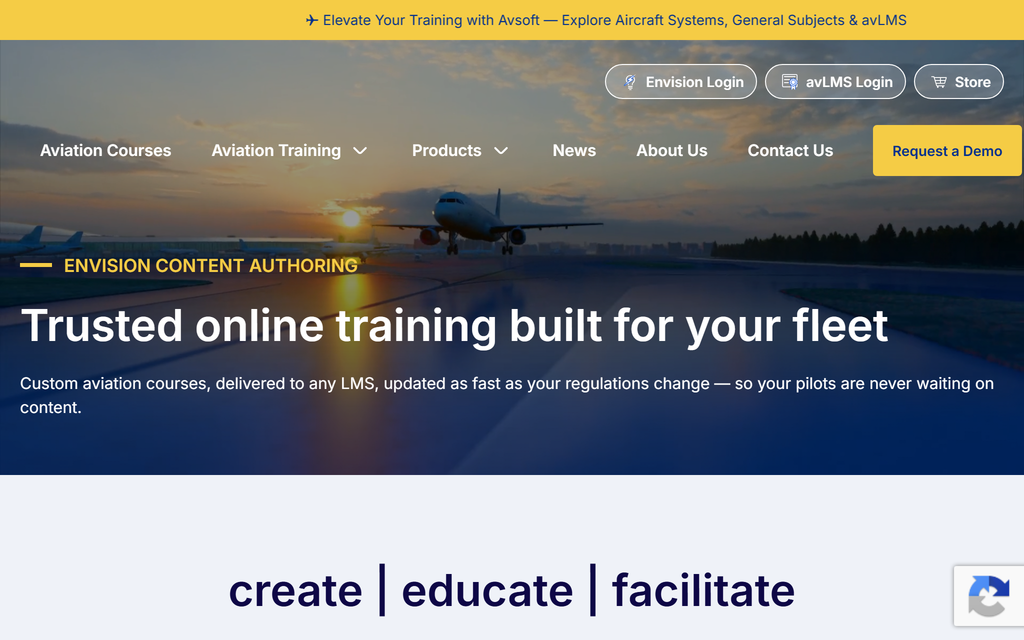
Avsoft avLMS is designed for airline and approved training organisation pilot-training departments. Its relevant strength is managing recurrent course delivery, qualification-based assignments and the evidence produced by examinations, rather than simply hosting a collection of aircraft videos.
Individual due dates can follow a recurrent schedule and advance after completion. Group dates handle a one-time training event, while remedial assignments target a particular learner. Administrators can deliver material according to whether someone is qualified on an aircraft, and exams can use Avsoft questions, the organisation’s questions or both.
Its records include unsuccessful module attempts and the questions delivered. Historical training remains available, and deleted users’ records move to an archive. Portable Classroom supports online or offline learning on supported tablets, then synchronises records when connected. Demonstrate the actual course revision and offline-sync workflow before using it across bases.
My call: The recurrent-date and examination controls put avLMS on my shortlist for pilot CBT administration. I would bring the training department’s actual recurrent cycle into the demonstration, including a failed attempt and remedial assignment. Software records support the approved programme; course completion alone does not grant a licence, type rating or operational authorisation.
Plans and pricing: Pricing is by quote. Specify the LMS, aircraft and general-subject courseware, Envision authoring, Portable Classroom and any migration or integration work. A course-content licence and the complete training-management deployment may have different terms.
2. Evionica

Evionica combines aviation eLearning with an LMS. Its portfolio includes theoretical training, aircraft systems, familiarisation, differences training and general subjects, making it relevant when an airline or flight school wants specialist courseware as well as delivery.
The LMS provides course management, student access and learning records. A training lead selects the material appropriate to the programme rather than building every aircraft explanation from scratch. Evionica also offers a mobile application for its eLearning courses, so learner access can extend beyond the classroom computer.
The content licence needs to match the training organisation’s syllabus, aircraft variant and regulator. A commercially available CBT course is not automatically an approved training programme. Ask how local material, instructor-led sessions, examination results and course updates are represented in the proposed deployment.
My call: I would compare Evionica when the specialist content is a substantial part of the purchase. My review would start with one relevant aircraft or theory module and its learner record, then the administration of a revised course. The catalogue should reduce content-development work without obscuring the school’s responsibility for the actual programme.
Plans and pricing: Organisational deployments are quote-based, with course selection and licence scope affecting the offer. Price the relevant CBT subjects, LMS access, mobile delivery and support together. Confirm whether a public course-store price covers individual study or the organisation’s intended use.
3. Aviation InterTec
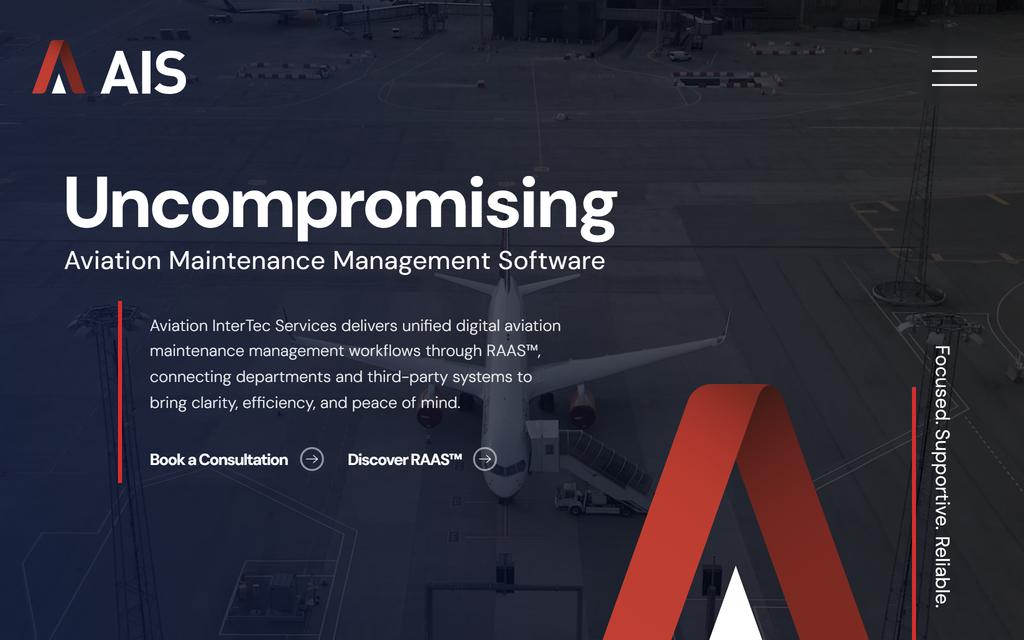
Aviation InterTec’s RAAS is a maintenance and materials-management system, not a conventional course-delivery LMS. It belongs in this comparison as an adjacent option for engineering teams whose main issue is controlling maintenance personnel and sign-off permissions within their operational system.
Its Employee Information records are required for maintenance personnel releasing aircraft. Administrators can configure the signature requirements an employee may use and the aircraft types they can sign for. Those controls relate a person’s authorised work to the maintenance process.
That is a different purchase from assigning a ground-school course or running an ATPL examination. The public documentation inspected here does not establish a complete Part-147 training-school record system or learner-facing course delivery. Ask the engineering team to demonstrate any training-record integration it needs, rather than treating the RAAS employee record as evidence of a full LMS.
My call: I would evaluate RAAS with maintenance operations when the decision is about work authorisation and engineering records. For a training department choosing how to teach and assess staff, I would compare a dedicated LMS alongside it. That separates the course record from the permission to sign off a maintenance task.
Plans and pricing: Pricing is by quote for the maintenance-system scope. Include migration, required modules, permissions and any connection to a learning platform. Do not compare its full operational-system price with the cost of a standalone course portal.
4. Coursebox
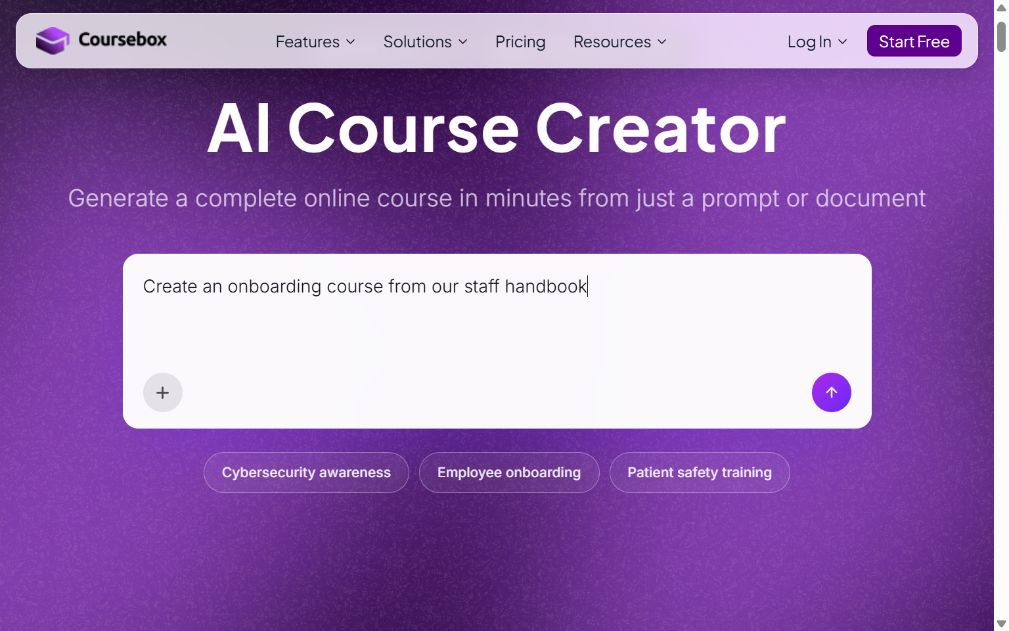
Coursebox combines course creation, learner support, assessment and delivery for organisations maintaining their own training material. An aviation team can use approved manuals and procedures as the source for lessons, questions and a programme it can update and track.
The AI course draft is reviewed before launch. A course-grounded tutor lets learners ask about the material, while written assessment can require an explanation of a procedure rather than recognition of a term. Rubric-based grading produces feedback that administrators can review and change. Groups, pathways and progress reporting support assignment and follow-up.
This is useful for ground procedures, onboarding and internal learning, and export options can place content in another LMS where the plan supports them. Regulated qualification and operational sign-off require the organisation’s approved process. Course completion and an internal certificate should remain clearly separate from a pilot licence, type rating or maintenance authorisation.
My call: We build Coursebox, and my preference is to judge it on the full create, support, assess and deliver workflow. The content owner should approve the lessons and grading criteria against the current manual. I would also check how a revision reaches learners and how the required qualification record is retained in the organisation’s chosen system.
Plans and pricing: All plans include unlimited learners, including Free, with course, AI and administrator allowances. Branded LMS administration, reporting, APIs and SSO vary by plan or add-on. Include integrations and course-update volume in the cost comparison.
5. Ideagen
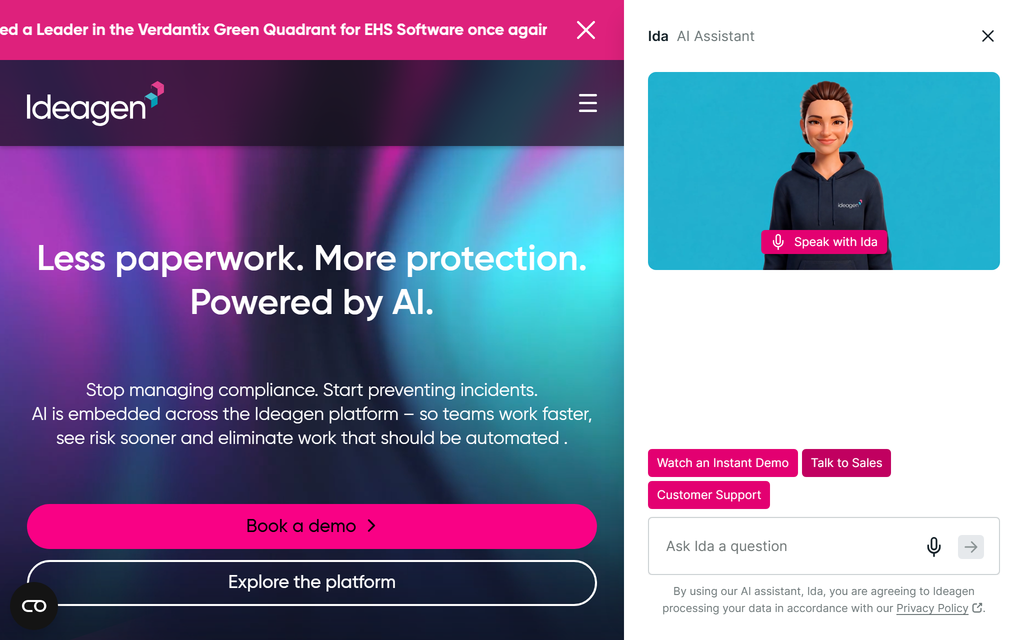
Ideagen offers training and competency management within its quality-product family, alongside separate aviation safety tools. The relevant purchase is the exact product and module, rather than the company name alone.
Its training-management capabilities link learning requirements to quality processes and employee competency. For an aerospace team, that can make a revised procedure and the training required for it part of the same quality-management workflow. Ideagen lists support for standards including AS 9100, but support for a standard is not a certification granted by the software.
Its aviation safety products address another set of operational requirements. Do not assume that purchasing a quality module includes every SMS, crew-scheduling or training capability described elsewhere on the vendor site. Ask the supplier to identify which product holds course completion, which holds competency approval and which connects the record to a controlled document.
My call: I would compare Ideagen when training ownership already sits with quality and procedure control. My test would follow a document revision through the relevant training and approval record. For pilot CBT and examinations, I would still compare the learner-facing course workflow against a dedicated aviation LMS.
Plans and pricing: Pricing is by quote for the selected products and scope. Specify training, competency, quality-document control, aviation safety and integration requirements separately. The buying risk is treating several products’ capabilities as one included package.
6. Absorb LMS
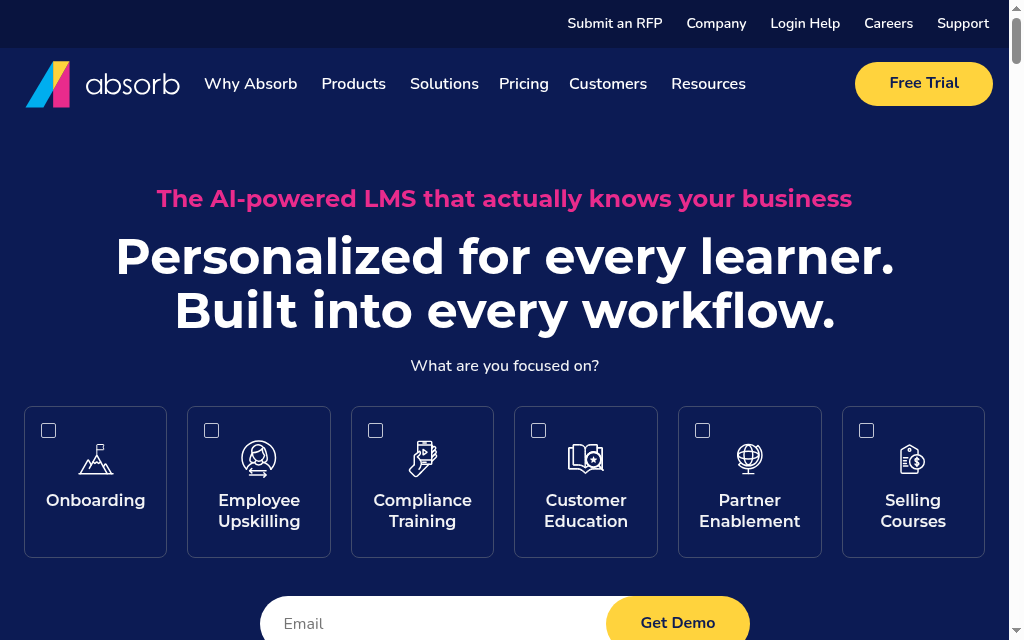
Absorb LMS offers configurable course delivery, enrolment controls, administrator permissions and reporting. It is relevant to an aviation organisation running onboarding and recurring learning across departments or audiences, with aviation content supplied by the organisation or licensed separately.
Enrolment rules distinguish automatically assigned training from courses learners choose or managers assign. A course can use prerequisites or approval, while permissions control the learners and activities a local administrator can manage. The department structure also shapes progress reports, so base and role organisation should follow the reporting need.
Aviation-specific qualification rules must be demonstrated in the configured programme. A generic certificate or recurring course does not establish the complete record required for a particular approval. Bring examples of an aircraft-specific requirement, a procedure revision and a worker changing role into the pilot.
My call: I would shortlist Absorb when broad learning administration and defined local responsibility are the main needs. My starting point would be the record a training manager must retrieve after an incomplete or unsuccessful course, then the action they can take. That is more useful than accepting an “audit-ready” label without seeing the evidence.
Plans and pricing: Pricing is by quote. Specify the learner-count basis, reporting, authoring, branded environments, integrations and support. Courseware licences and the tools used to create courses should be visible in the scope rather than assumed to accompany LMS delivery.
7. iSpring LMS
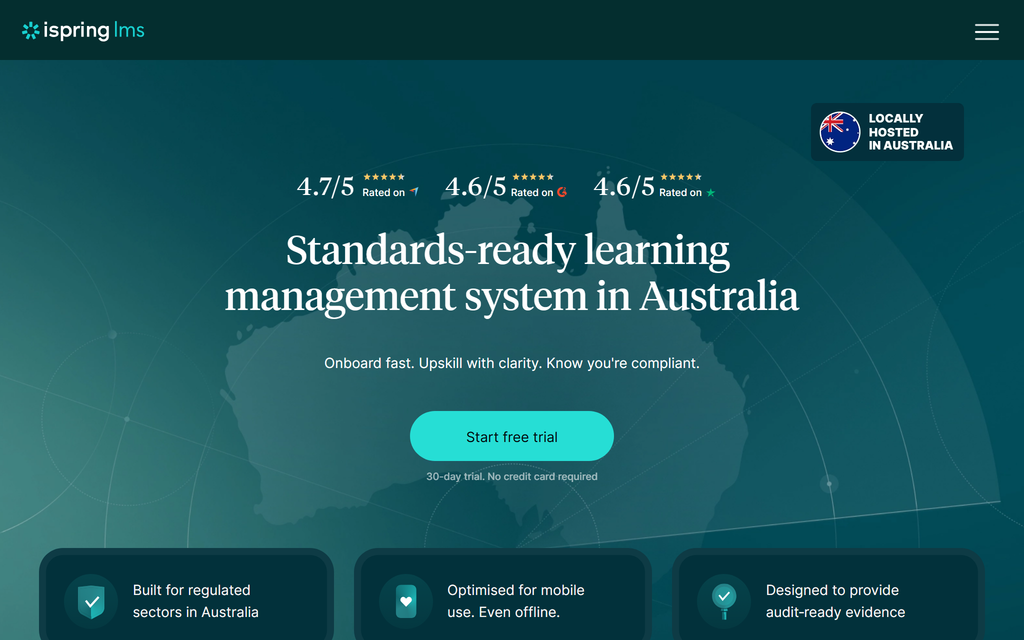
iSpring LMS, formerly iSpring Learn, supports online courses, learning tracks, supervisor follow-up and practical-training activities. It is useful when an organisation already creates briefings in PowerPoint and wants to develop them into assessments and assigned learning.
Learning tracks organise courses into a sequence; enrolment rules assign them through departments or groups. Supervisor reporting highlights overdue or failed learning. Observation checklists record performance against defined criteria, so a programme can include a practical task as well as its explanatory course.
Its mobile app supports downloaded learning, but the actual content must be checked for offline suitability and record synchronisation. Test a representative package, any external video and the learner’s reconnect process. Desktop Suite authoring requires Windows and PowerPoint; the course-maintenance owner needs that environment.
My call: For ground or support procedures, the combined course and observation workflow is the part I would evaluate first. My pilot would include a supervisor recording a task and retrieving the learner’s progress afterwards. Specialist flight or maintenance authorisation still needs to be mapped to the organisation’s approved records and sign-off process.
Plans and pricing: Pricing uses monthly active learners with annual billing; headcount and displayed currency affect the rate. The Business package includes Suite AI authoring. Confirm mobile, observation and content requirements in the proposed configuration.
8. Docebo
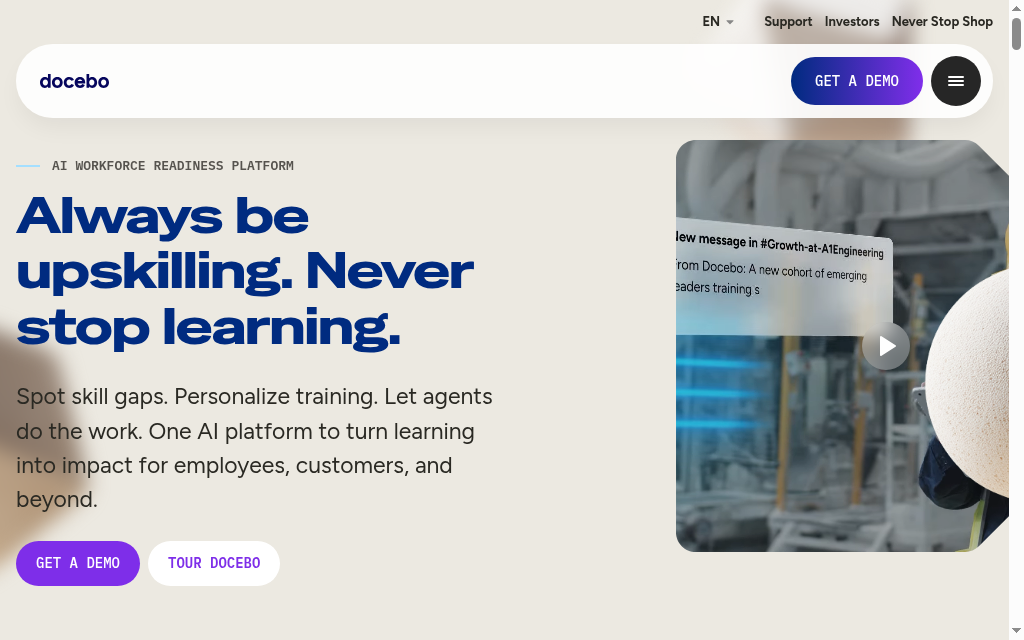
Docebo manages learning across multiple departments, countries and audiences, including employee and external training. It combines course delivery, learning plans, instructor-led learning and reporting with optional content and AI products.
Automatic groups can use profile attributes such as location, role and hire date, and enrolment rules attach the relevant learning plan. Power Users give local administrators defined responsibilities through permissions and assigned resources. That can support a base training lead without giving them control of the entire organisation.
The employee-data connection and permissions need deliberate setup. Existing group members are not automatically enrolled just because a new enrolment rule is added, so rollout includes a separate existing-user assignment step. The programme must also distinguish general employee learning from regulated qualification records.
My call: I would compare Docebo when one team must coordinate several audiences and local administrators. The organisation needs an owner for the rules and integrations as people move between roles or bases. My pilot would include an existing employee, a new starter and a local administrator retrieving the right records.
Plans and pricing: Pricing is by quote, with monthly, yearly or registered active-user models. Selected content, analytics, a branded app and services affect the package. The public pricing page does not establish a universal learner minimum, so obtain the relevant terms in the offer.
9. LearnUpon

LearnUpon supports learning across employees, customers and partners through multiple portals. It is relevant when an operator teaches its own staff and separate contractors or customers, with different administrators and reporting requirements.
A portal provides an audience’s learning environment, while course delivery, assignments and reports support the programme within it. Separate portals can keep an external audience’s access and branding distinct from staff training. Confirm the management of shared courses and updates when the same procedure applies to several audiences.
The portal separation is useful administration, not a substitute for an approved aviation training programme. Map the regulatory records, assessment and retention requirements separately. A demonstration should show which local administrator sees which learners and what happens when a contractor leaves or returns.
My call: LearnUpon would be on my shortlist when audience separation is a real requirement. My comparison would include a shared course updated across the relevant portals and an external administrator retrieving a report. A single internal audience may not need the additional portal structure.
Plans and pricing: Pricing is by quote, based on the programme and audience scope. Confirm learner minimums, included portals, integrations, SSO, support and implementation for the actual offer. Do not infer unlimited branded audiences from the phrase “multiple portals.” The published employee plan starts at 100 users; LearnUpon says it is not a fit below that size. Customer education starts at 300 users.
10. TalentLMS
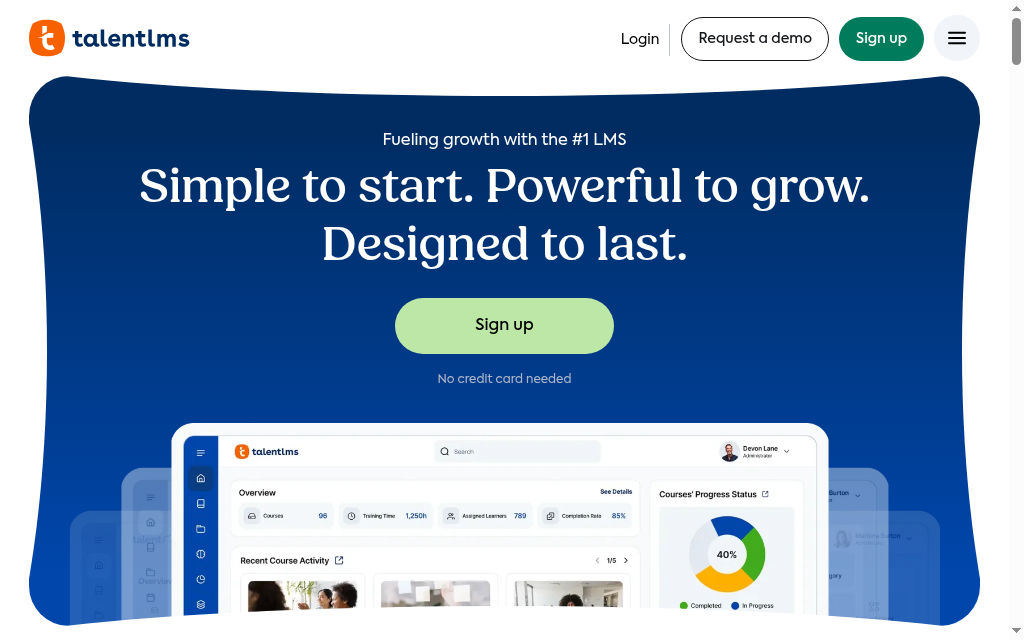
TalentLMS delivers theory courses, refresher learning and internal procedures without requiring an enterprise training suite. It supports material built in the platform, imported packages and purchased content, with reporting and certificates for course progress.
Groups organise learners who need the same assignments. Branches provide separately administered environments for different departments or audiences. Learning paths create a sequence, and the September 2026 release adds progress-based path automation alongside branch notification controls.
A flight school should bring its approved courseware and record requirements to the pilot. Test the relevant assessment, failed attempt, refresher assignment and retained report. A completion certificate is an internal course record unless the wider approved programme gives it another role.
My call: I would compare TalentLMS when a small training team mainly needs to deliver and follow up its own courses. My starting point would be a simple group and learning path before creating separate branches. The scope is course administration; aircraft-specific qualification and practical sign-off should be evaluated explicitly.
Plans and pricing: Free supports five users and ten courses. Core starts at US$119/month billed annually for 1 to 40 users. Branches, automation requirements and the difference between standard user bands and Flex monthly-login billing can change the plan.
Use a pilot programme to check both learning delivery and the required evidence. For an operational authorisation or specialised recurrent record, include the responsible training or engineering owner in the demonstration.
How to evaluate aviation training and records
Define the records your operation must produce: course completion, assessments, instructor sign-offs, recurrent due dates or maintenance authorisations. A course certificate and an authorisation to release maintenance work are different records.
Airlines, flight schools and maintenance organisations have different approvals and training obligations. Confirm the applicable rules, retention period and required evidence with the responsible owner. Software can support that process; buying a platform does not grant an approval or establish that every required record is present.
- Records and retention. Request a sample export showing the learner, course version, result, date and any required assessor sign-off. Set retention against the rules applying to your operation.
- Recurrent schedules. Demonstrate one individual due date, one group assignment and a failed assessment. Check what is reassigned, what remains in the history and who sees the exception.
- Role and aircraft scope. Match assignments to the person’s role and relevant aircraft or procedure. Confirm how a role change affects existing records.
- Content ownership. Compare licensed aviation courseware with learning built from your own approved manuals. Include review, version control and content updates in the cost.
- System boundaries. Separate learner-facing training from operational qualifications, maintenance authorisations and safety reporting. Confirm which records stay in which system and how they are connected.
IATA full-year 2025 passenger results provides context for the training decision. This figure describes passenger traffic, not staffing requirements. Plan learning capacity against your actual operation and recurrent-training schedule.
Which aviation LMS should you choose
| Your priority | Compare | Check before buying |
|---|---|---|
| Pilot CBT and recurrent administration | Avsoft AvLMS | Courseware scope, dates, failed attempts and retained history |
| Aviation courseware and theory learning | Evionica | Aircraft and syllabus coverage, examinations and licences |
| Maintenance work authorisations | Aviation InterTec RAAS | Permitted signatures and aircraft scope; separate LMS needs |
| Training within quality management | Ideagen | Required documents, competency evidence and audit exports |
| Own manuals with tutoring, assessment and delivery | Coursebox | Approved content and connection to qualification records |
| Broader learning administration | Absorb, Docebo, LearnUpon, iSpring LMS, TalentLMS | Role assignments, records, integration and total cost |
Most aviation training starts with getting new crew and technicians productive, so our guide to the best LMS for staff training covers the onboarding side in more depth.
Demonstrate one complete training record
- Select one approved course and a learner whose role and aircraft scope are known.
- Assign an initial and recurrent requirement. Check the due-date calculation and what happens after failure.
- Update the source material and verify which version the learner completed.
- Export the history with the required assessment and sign-offs. Confirm retention and migration separately.
Frequently Asked Questions
An aviation LMS delivers learning and records completion and assessment. Specialist platforms can support aviation courseware and recurrent-training workflows. Maintenance authorisations and operational qualifications may remain in separate systems.
Aviation programmes may require role-specific courseware, recurrent due dates, approved content and specific records. Check the exact requirements for your operation. A general LMS may cover some of them through configuration; other records need a specialist system.
Avsoft documents recurrent scheduling, qualifications and assessment controls. Verify the required aircraft and courseware scope in a demonstration. An LMS completion does not itself grant a pilot type rating, and RAAS maintenance authorisations are a separate workflow.
Platforms in this guide cover different airline needs: Avsoft for aviation training, Evionica for aviation courseware, RAAS for maintenance work and authorisations, and LMS products for broader workforce learning. Compare your actual requirement rather than assuming every airline uses the same system.
Specialist and enterprise systems are usually quoted. Coursebox and TalentLMS offer free tiers; iSpring LMS is priced on the published learner model. Include content licences, implementation, integrations, record migration and ongoing administration.
Travis Clapp
Travis Clapp is the original founder and CEO of Coursebox. As an experienced instructional designer, he has lived through the process of building high quality courses. These experiences brought about his idea to upload all your documents and ideas into a virtual box that could convert those magically into a course. Prior to Coursebox, he successfully founded and built a social based LMS. Travis has 15+ years of experience designing courses and EdTech platforms from university MOOCs to enterprise LMS. Travis has built training for reputable companies like Johnson & Johnson, Electrolux, Michael Hill and SA Health. One of his courses reached 20,000+ learners which was a flagship edX course. He is based in the Adelaide, South Australia office and passionately works on customer support, sales and bringing the original product vision to life every day.

