

What Is Reskilling and How to Do It In Your Organization
Learn what is reskilling, why companies rely on it, and how teams can start building new abilities for changing roles and workplace needs.


Learn faster with AI powered courses, quizzes, and flashcards
The World Economic Forum forecasts that 22% of the current jobs will undergo some sort of change due to technology in the next few years. How will employees cope with this change? They will have to reskill.
Reskilling seems like a workplace buzzword, but it’s one of the most important initiatives you can take in your organization. PwC research shows that investment in upskilling and reskilling can improve the global GDP by $6.5 trillion by 2030.
However, it all starts at the organizational level. Teams and departments invest in reskilling their workers, which eventually leads to better organizational outcomes and ROI. Below, we explain what is reskilling and how you can implement it.
What Is Reskilling?
Reskilling means learning new abilities so that a person can move into a different role when their current work shifts, expands, changes direction, or becomes less relevant. It keeps individuals ready for new opportunities while giving companies a way to grow talent from within.
Organizations rely on reskilling because it helps them do the following:
- Keep valuable employees
- Fill emerging roles
- Reducing hiring delays
- Manage talent shortages
Many companies make this a priority since the cost of retraining often stays lower than the cost of replacing entire teams. Large employers highlight this in their public commitments. Amazon invests in wide training programs that support career mobility across departments. The company has already invested $2.5 billion in skills training.
Similarly, PwC offers digital upskilling initiatives tied to transformation efforts. Their “New World, New Skills” initiative comes with an investment of $3 billion and aims to develop skills that support their clients and communities.
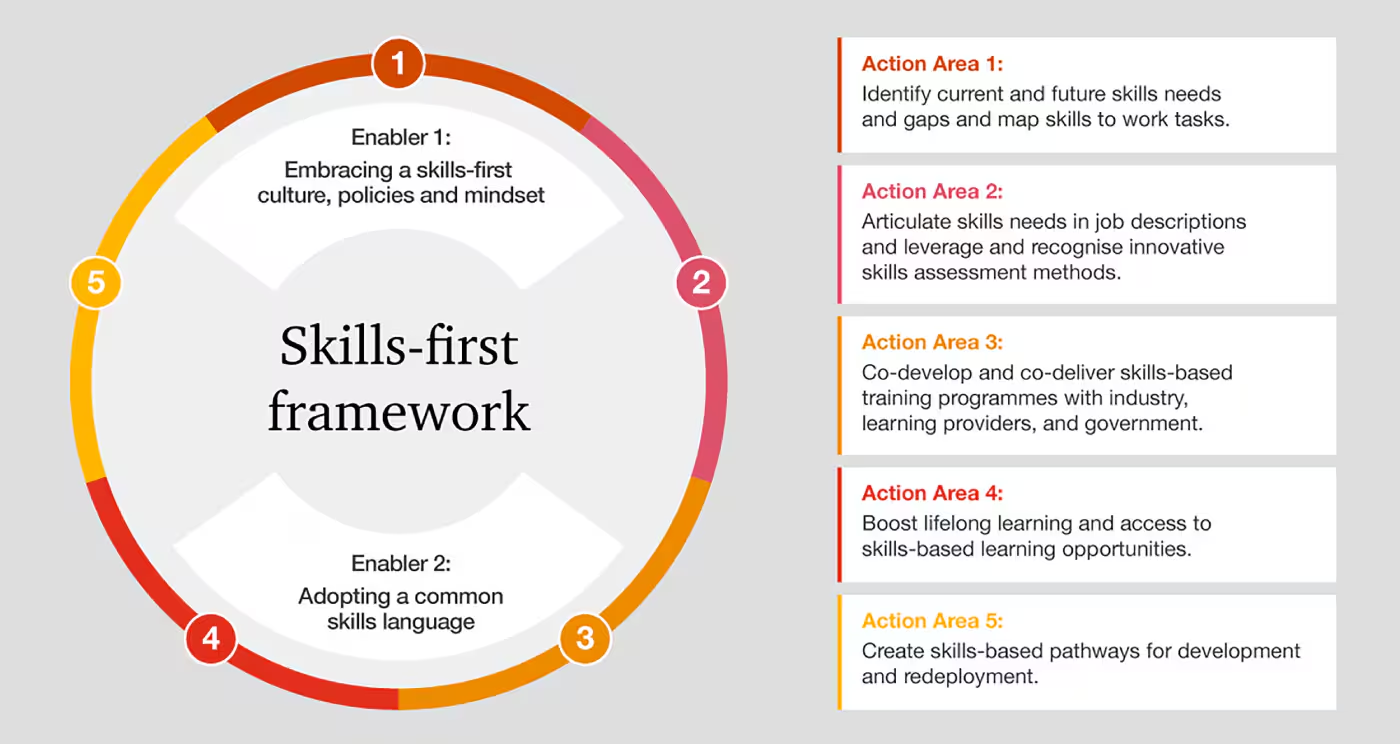
Reskilling vs. Upskilling: What’s the Difference?
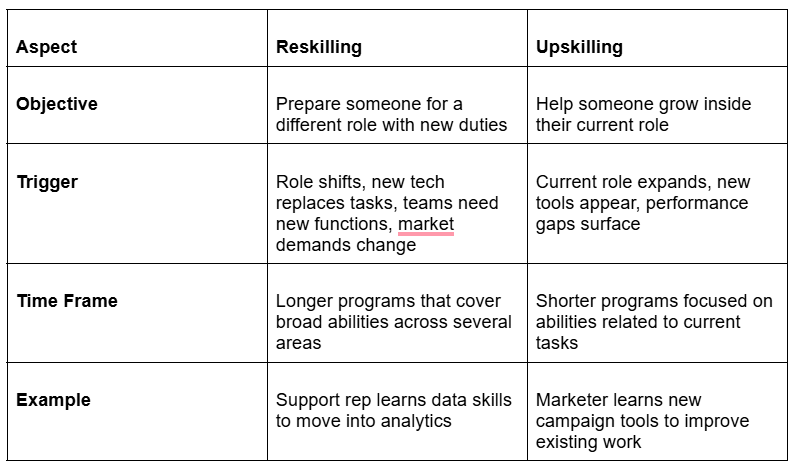
The terms reskilling and upskilling are often used together because both initiatives are often taken simultaneously. However, they have different purposes and triggers.
The following table shows how they compare.
When Should You Consider Reskilling?
Reskilling can be a costly process, so it makes sense that teams would want to be certain about its effectiveness before taking the leap. So, when should you reskill? Here are some signs it might be time.
- Frequent task automation across everyday work
- Hiring freezes that push teams to absorb additional duties
- Internal job posts listing abilities no one currently holds
- Company updates announcing new software or technical standards
- Performance reviews calling attention to new requirements across several roles
Ideally, you should reskill when you feel that your current skillset is not at par with the industry standard. Similarly, if you’ve brought in new tools or policies, it may be time to reskill.
How to Reskill Your Employees
Reskilling is a long-term effort, and its effectiveness depends on how focused your plan is. The following outline breaks down the process into four phases. As for the amount of time needed for each phase, particularly the learning sprints, that will depend on the skill you’re aiming to instill in your employees.
Let’s get into it.
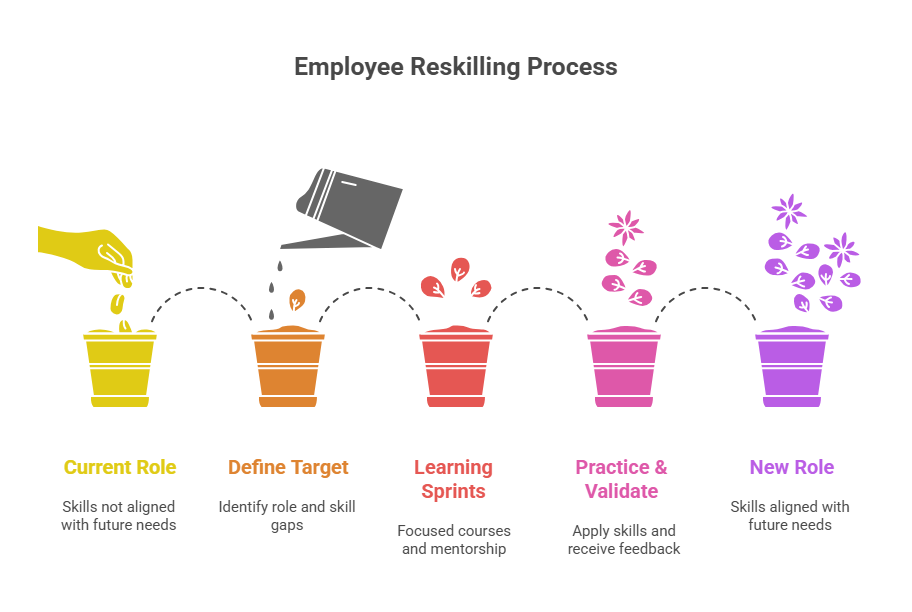
Phase 1: Define the Target Role and Map Gaps
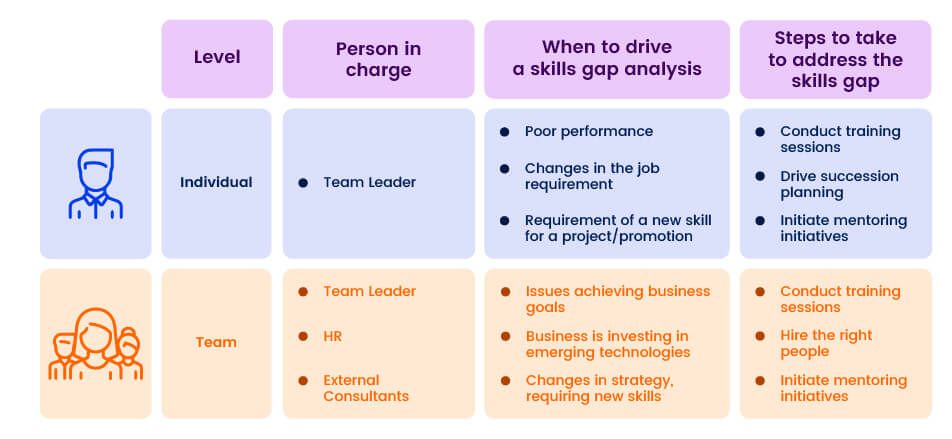
Managers and HR leads start by choosing the role the employee will move toward. Each participant completes a simple review of their current abilities, compares them with several job descriptions, and selects at least three priority abilities to develop.
At this point, you’re not really spending a lot of money. The time for this phase is also anywhere from a few hours to a couple of days.
You can use a free skills gap template to find what’s missing in your team at the moment.
Phase 2: Conduct Learning Sprints
Once the target skills are identified, employees enter an intensive learning phase. Companies support this by providing access to online courses, workshops, mentorship, peer-based learning, or internal training sessions.
Employees should complete at least two courses relevant to their skills. Make sure you incorporate scenario-based learning so that they know how to implement the learned skills as well. Plus, encourage your employees to join a professional forum or internal community for peer support.
Managers monitor engagement and provide guidance when needed. Deliverables at the end of this phase include a tangible project sample and certificates for the courses completed.
Phase 3: Practice and Validate
Practical application is a must for long-term retention. Employees can take on internal stretch assignments or volunteer for short-term initiatives that match their target role. Again, mentors and managers provide feedback on their performance.
The key outcome here should be documented project results and written feedback from mentors or team leads. In this phase, you’re essentially focusing on real-world applications rather than additional courses.
Phase 4: Transition Into the New Role
The final phase prepares employees to move fully into the new role. They can update their resumes or internal profiles with the new skills they’ve acquired. If there’s an opening in the organization, they can interview for the target role. Alternatively, they may request a formal internal move.
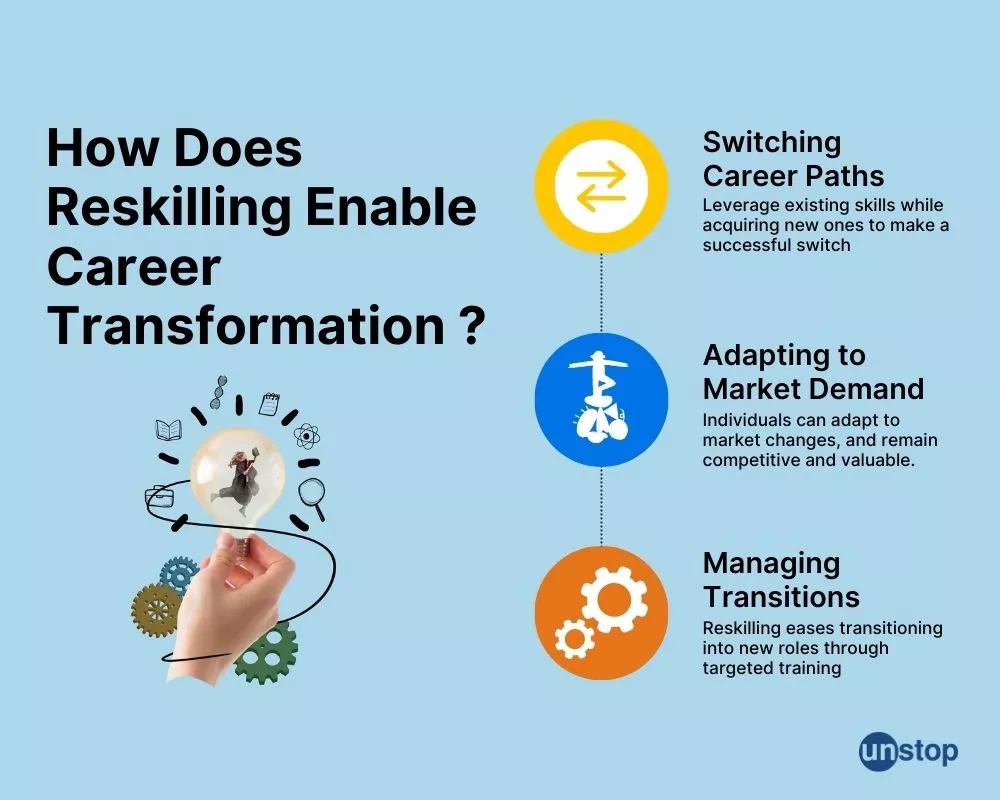
Managers are also important in this phase. They confirm readiness and provide support for onboarding into the new responsibilities.
Even if employees are not immediately moving into a new role, they should have a clear next step plan. Meanwhile, the company should know where to invest next for ongoing development.
Real-Life Examples and Case Studies of Companies Reskilling Their Workforces
We all learn from the best in the game. Here’s how the companies at the top of the ladder are reskilling their employees.
AT&T’s Multi-Year Workforce Initiative

AT&T studied its workforce carefully and found that only about half of its 250,000 employees had the science, technology, engineering, and math skills needed for future roles. Around 100,000 workers were performing hardware-related work likely to become obsolete in the next decade.
Did they go ahead and hire a new workforce? Nope.
The company invested $1 billion in a multi-year program. This initiative includes a career center, online courses, and partnerships with Coursera, Udacity, and top universities. Employees access tailored learning paths to build the skills the company predicts will be in demand, which keeps existing talent in roles aligned with future growth.
Walmart’s Targeted Training Academies

Walmart runs 2 to 6-week academies focused on advanced retail skills. With a $1 billion investment, these academies are meant to help employees prepare for new roles within the company. The programs are designed to be fast and directly applicable to their work.
Recently, Walmart launched a new effort to reskill employees for healthcare positions as the company opens primary care clinics nationwide. These short but focused training sessions help the company cultivate exactly the skills it needs in its employees.
How Coursebox Supports Organizational Reskilling
Phase 2 of the reskilling program involves courses and learning materials for employees. For this, you need a course builder that keeps your employees engaged.
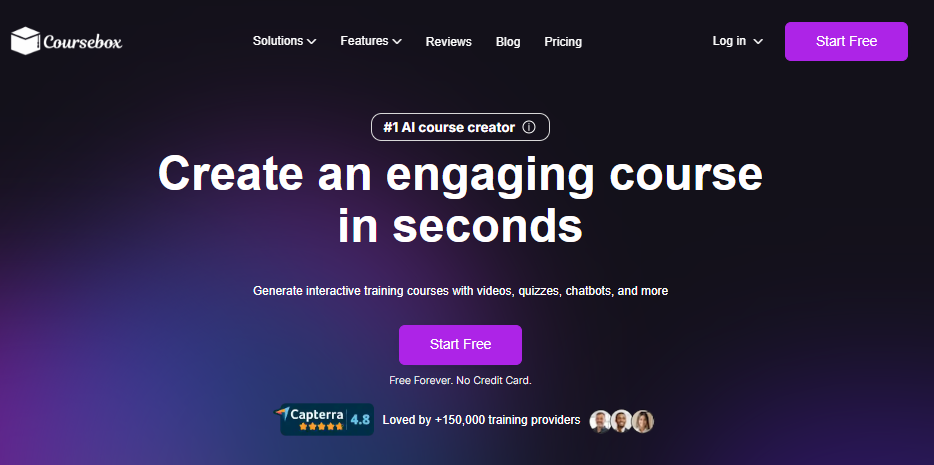
Coursebox does exactly that. The AI-powered platform turns existing content, such as videos or documents, into interactive courses aligned with the skills your organization needs. You don’t have to start from scratch.
AI tools speed up the process. You can generate training videos in minutes. Coursebox also lets you create quizzes instantly and set up an AI chatbot that answers learners’ questions in real time.
Employees get immediate feedback on assessments, which keeps learning engaging. The AI course designer also helps structure courses efficiently, so your team isn’t wasting hours figuring out the layout or flow.
Sign up for free now to kickstart your reskilling program with Coursebox.
FAQs About What Is Reskilling
Why should companies invest in reskilling programs?
Companies can invest in reskilling to retain talent, reduce hiring costs, address skill gaps, and prepare employees for future roles. Structured programs also improve employee engagement and create internal mobility pathways across departments.
How long does a reskilling program take?
Reskilling programs often range from a few weeks to a few months, depending on the role and skills targeted. Shorter programs focus on specific abilities, while longer plans combine learning and validation through real projects.
How can Coursebox help organizations reskill employees?
Coursebox allows companies to create interactive training courses. Its features include a quiz generator, assessment grader, AI chatbot, interactive elements, mobile access, and more. These capabilities allow employees to learn efficiently and help managers track their progress in real time.
How can you make reskilling more engaging?
Interactive elements like quizzes, assessments, branching scenarios, flashcards, and chatbots can make reskilling programs more engaging. Coursebox offers all these features in addition to personalized learning paths and immediate feedback to keep training effective.
What types of skills are usually targeted in reskilling?
Most companies focus on technical skills like data analysis, AI proficiency, software tools, and digital literacy. However, soft skills like problem-solving and project management may also be targeted. The exact skills a company emphasizes will depend on the results of its skills gap analysis.
Travis Clapp
Educational technologist and instructional designer

