

Kajabi vs Podia: What’s the Difference and Which One Should You Choose?
Kajabi and Podia are two amazing platforms for building and selling online courses, but which is the best? Let’s find out in this Kajabi vs Podia one-on-one.


Build high quality courses that actually sell
Creators comparing Kajabi vs Podia usually aren’t just choosing a platform. They’re deciding how complex or simple they want their course business to be. Both platforms let you build, sell, and manage digital courses, but they’re designed for very different workflows.
Kajabi leans toward all-in-one marketing and automation, while Podia focuses on simplicity and quick publishing. Before even picking between the two, many creators now start with an AI course creator to outline lessons, structure modules, and build content faster. Once the course foundation is ready, Kajabi or Podia becomes the place where that content is hosted, marketed, and sold.
In this guide, we’ll compare Kajabi vs Podia across course creation, selling tools, customization, and long-term maintenance, so you can choose based on how you actually want to run your course business.
What is Kajabi?

Kajabi is an all-in-one platform designed for creators who want to build a full digital business around their courses. It combines course hosting, website building, email marketing, funnels, and automation into one ecosystem. Instead of relying on multiple tools, creators can manage everything inside Kajabi.
Course creation in Kajabi is structured and professional. You can organize lessons into categories, add videos, downloads, and assessments, and create structured learning paths. Kajabi also supports memberships, coaching programs, and premium course experiences, which makes it popular among established creators and educators building scalable online businesses.
Where Kajabi stands out most is in marketing automation. Built-in email sequences, pipelines, and analytics allow creators to automate onboarding, upsells, and promotions without external software.
What is Podia?
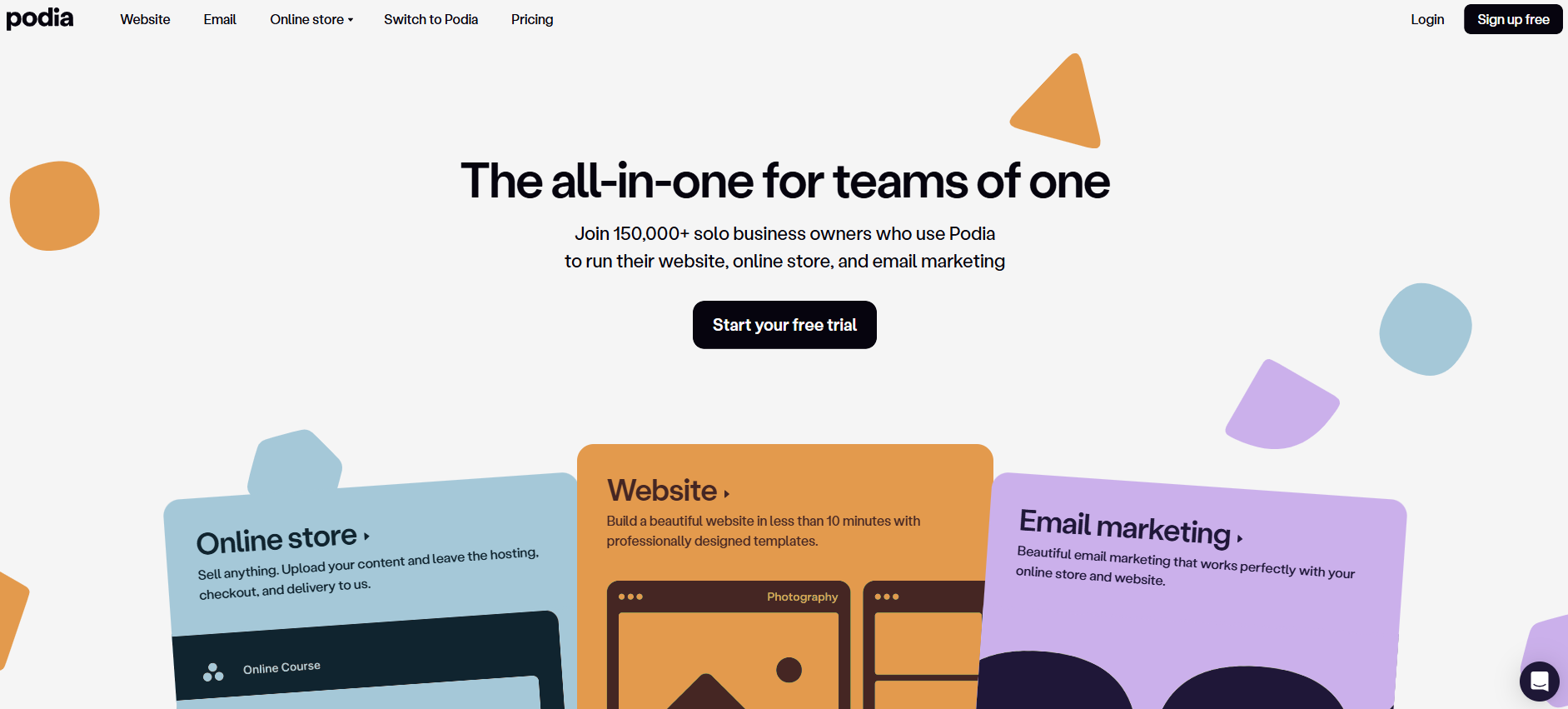
Podia is a creator-friendly platform that focuses on simplicity and ease of use. It allows users to sell courses, memberships, downloads, and digital products with minimal setup. Instead of offering a wide range of advanced tools, Podia keeps features streamlined so creators can launch quickly without technical overwhelm.
Course creation in Podia is straightforward. Lessons are organized into sections, and creators can upload videos, files, and text content with minimal configuration. The platform also includes email marketing, checkout, and customer messaging features built directly into the system.
Podia works particularly well for solo creators, beginners, and small teams who want to focus more on content creation than business automation. It’s designed to reduce complexity rather than provide deep customization.
Kajabi vs Podia: 6 Key Differences Explained
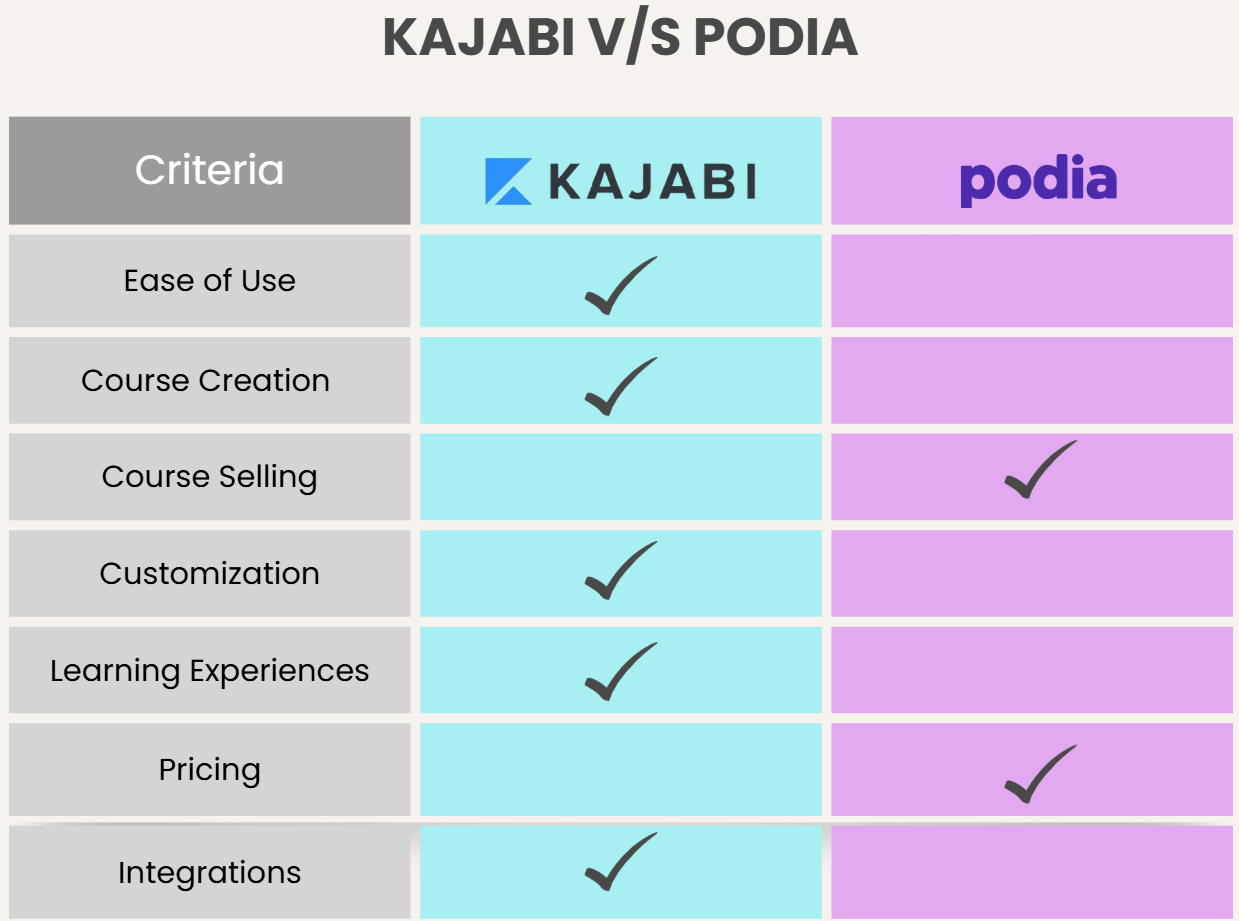
While both platforms help creators sell courses, the real differences appear once you look at workflow, automation, and long-term growth potential.
Ease of Use & Creator Experience
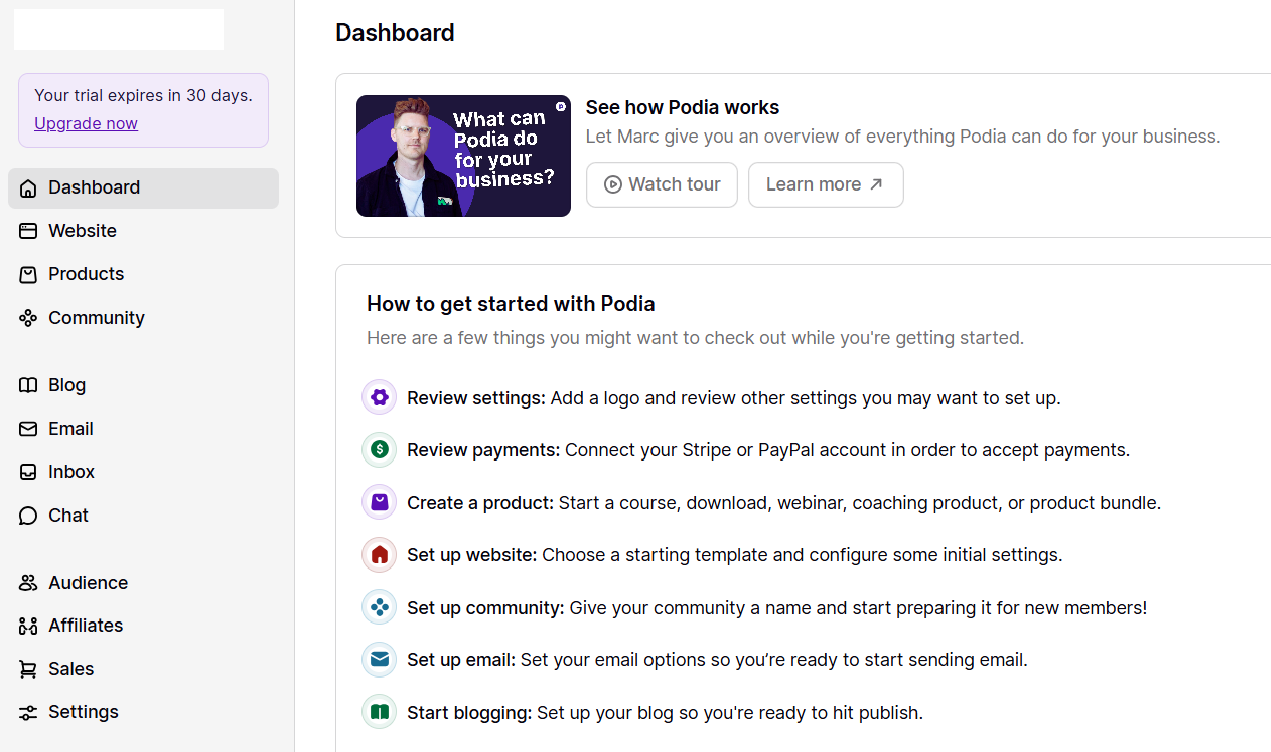
Podia is intentionally simple. The dashboard is clean, navigation is straightforward, and there are very few technical decisions required during setup. Creators can upload content and start selling quickly, which makes it especially appealing for first-time course creators.
Kajabi, on the other hand, has a steeper learning curve because it combines many tools into one platform. Users need to understand funnels, automation, and marketing workflows to unlock its full potential. While it takes longer to learn, it offers far more control once you become familiar with the system.
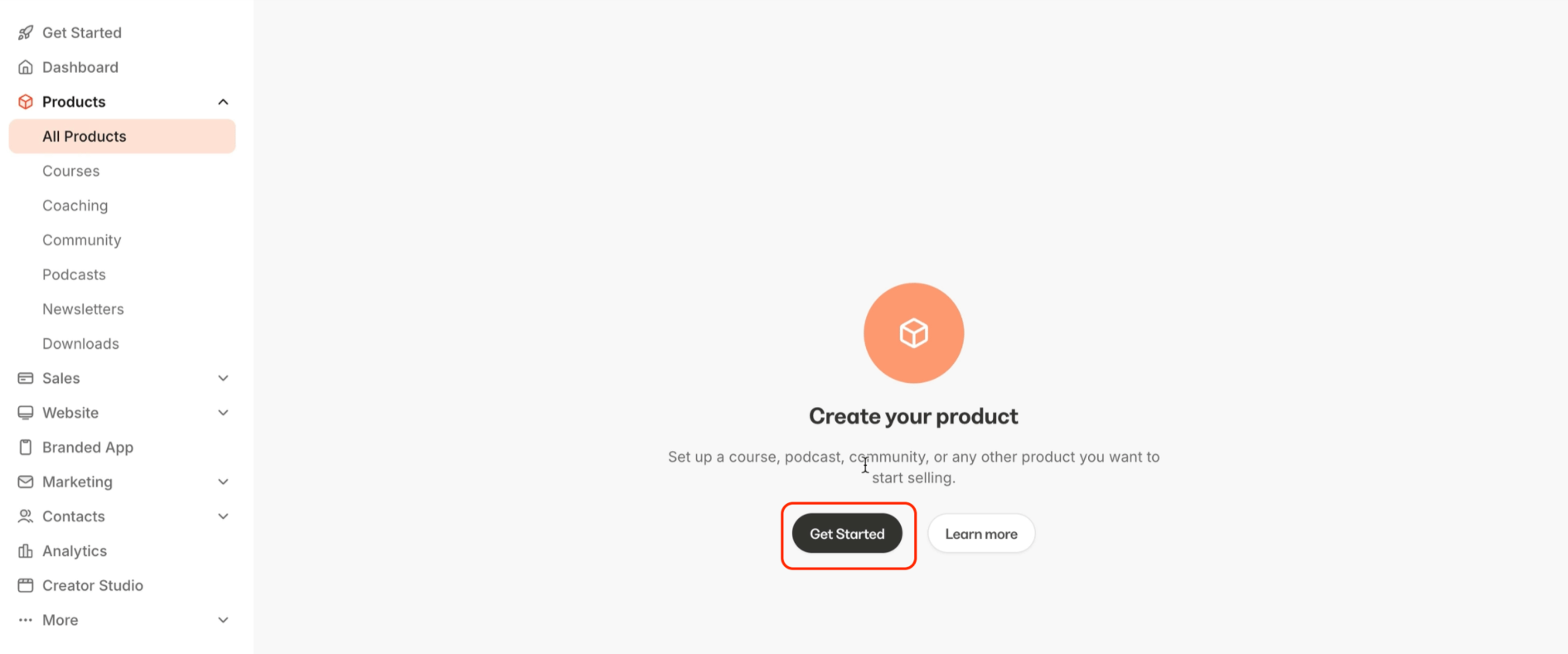
Creators find Kajabi easier to manage after mapping their course structure in an AI course creator.
Course Creation & Monetization
As a course creator, you’d be more interested in knowing how Kajabi vs Podia compare in terms of course creation and monetization.
Course Creation & Structure
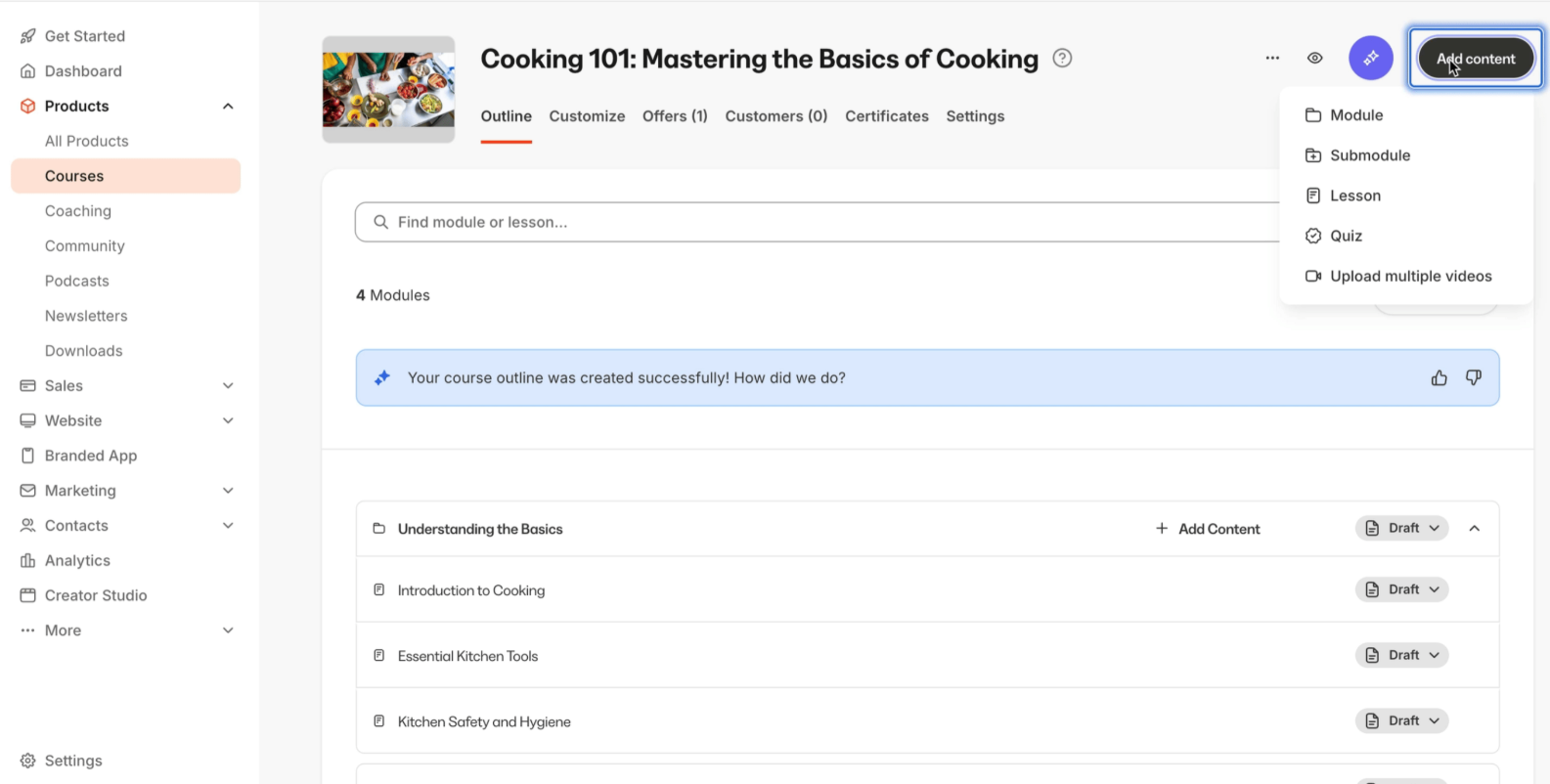
Kajabi supports structured learning experiences with categories, modules, and progression-based design. You can add assessments, organize premium programs, and build structured training pathways. This makes Kajabi ideal for professional education programs, coaching frameworks, and long-form courses.
Source: MariaCristal
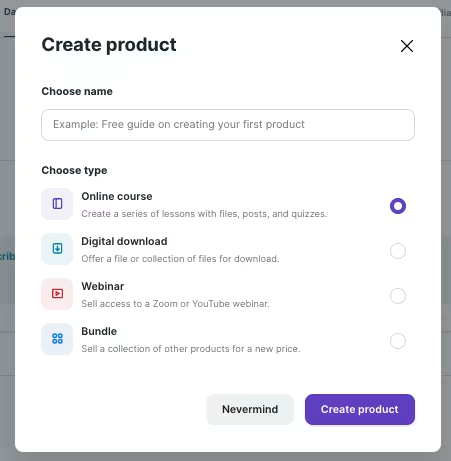
Podia focuses on accessibility rather than structured learning paths. Lessons are easy to upload and organize, but there are fewer advanced tools for progression tracking or assessments. This works well for evergreen tutorials, creative courses, and simple content delivery.
Course Selling & Monetization
Kajabi offers powerful selling tools, including advanced funnels, automated email campaigns, upsells, bundles, subscriptions, and tiered pricing. These features allow creators to build sophisticated marketing strategies without leaving the platform.
Podia simplifies course selling by integrating checkout, digital downloads, and email marketing into one easy workflow. While it lacks Kajabi’s deep automation features, it allows creators to start selling quickly with fewer moving parts.
Customization & Branding
Kajabi offers more flexibility in design and branding. Creators can customize websites, landing pages, course layouts, and marketing funnels to create a consistent brand experience. This makes Kajabi suitable for creators building a full online business with a strong visual identity.
Podia uses standardized templates that prioritize speed over customization. While branding elements like logos and colors can be added, the overall design flexibility is limited compared to Kajabi. This approach helps beginners avoid design overwhelm but may feel restrictive for growing brands.
Learning Experience & Engagement
Kajabi focuses heavily on learner engagement through structured modules, drip content, community spaces, and automated communication. Learners often experience a guided learning path that encourages completion and progress.
Podia offers a clean, distraction-free learning experience that makes it easy for students to access content quickly. However, engagement tools are simpler, with fewer features focused on tracking learner progress or structured outcomes.
Integrations & Ecosystem
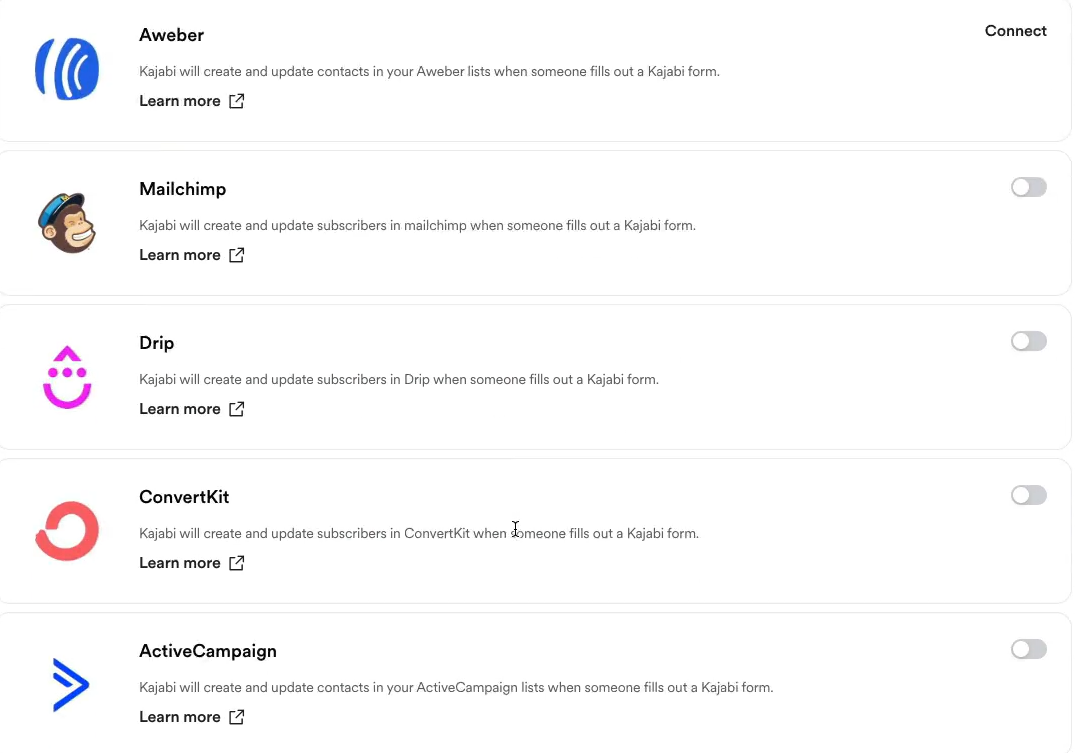
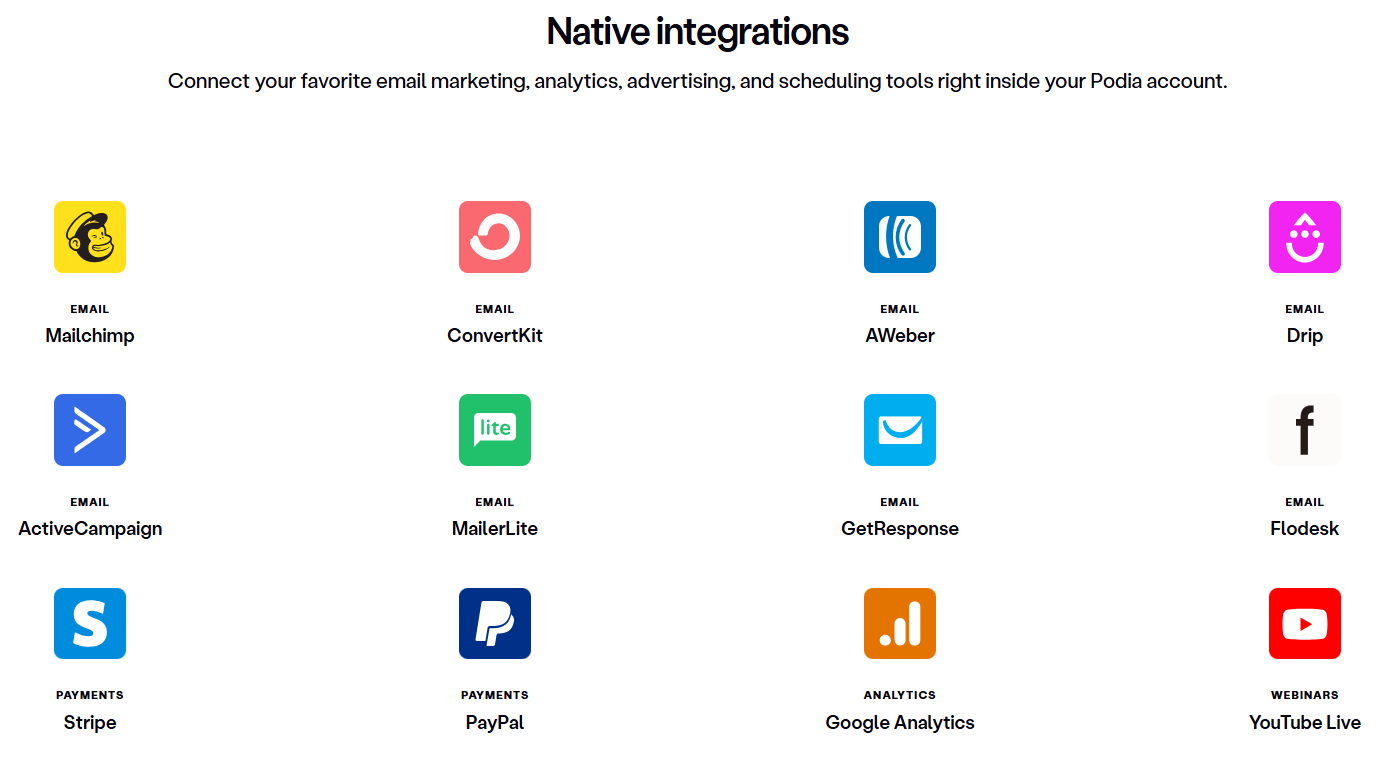
Kajabi integrates with marketing tools, analytics platforms, and automation software, making it suitable for creators who want a connected business ecosystem. Its built-in funnel and automation tools reduce the need for external apps, but integrations still expand capabilities.
Podia relies more on built-in features rather than integrations. Email marketing and checkout are included, which simplifies workflows but limits advanced automation and the use of external tools.
Pricing
When it comes to pricing, here is how Kajabi vs Podia stands out:
Kajabi Pricing
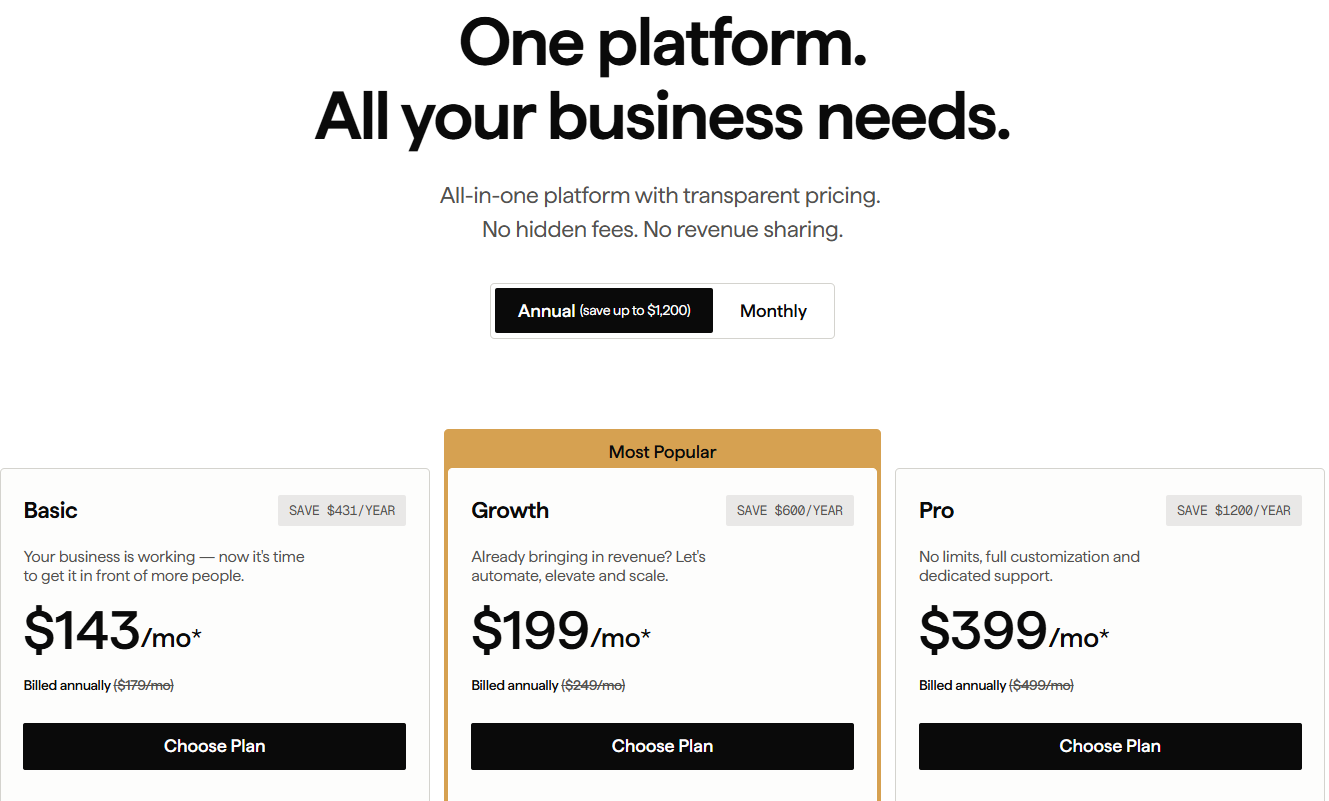
Kajabi is typically more expensive because it replaces multiple tools, including a website builder, email marketing platform, funnel software, and course hosting system. The higher cost reflects its all-in-one nature and advanced automation features.
On annual billing, Kajabi’s pricing looks like this:
- Basic: $143/month
- Growth: $199/month
- Pro: $399/month
Podia Pricing
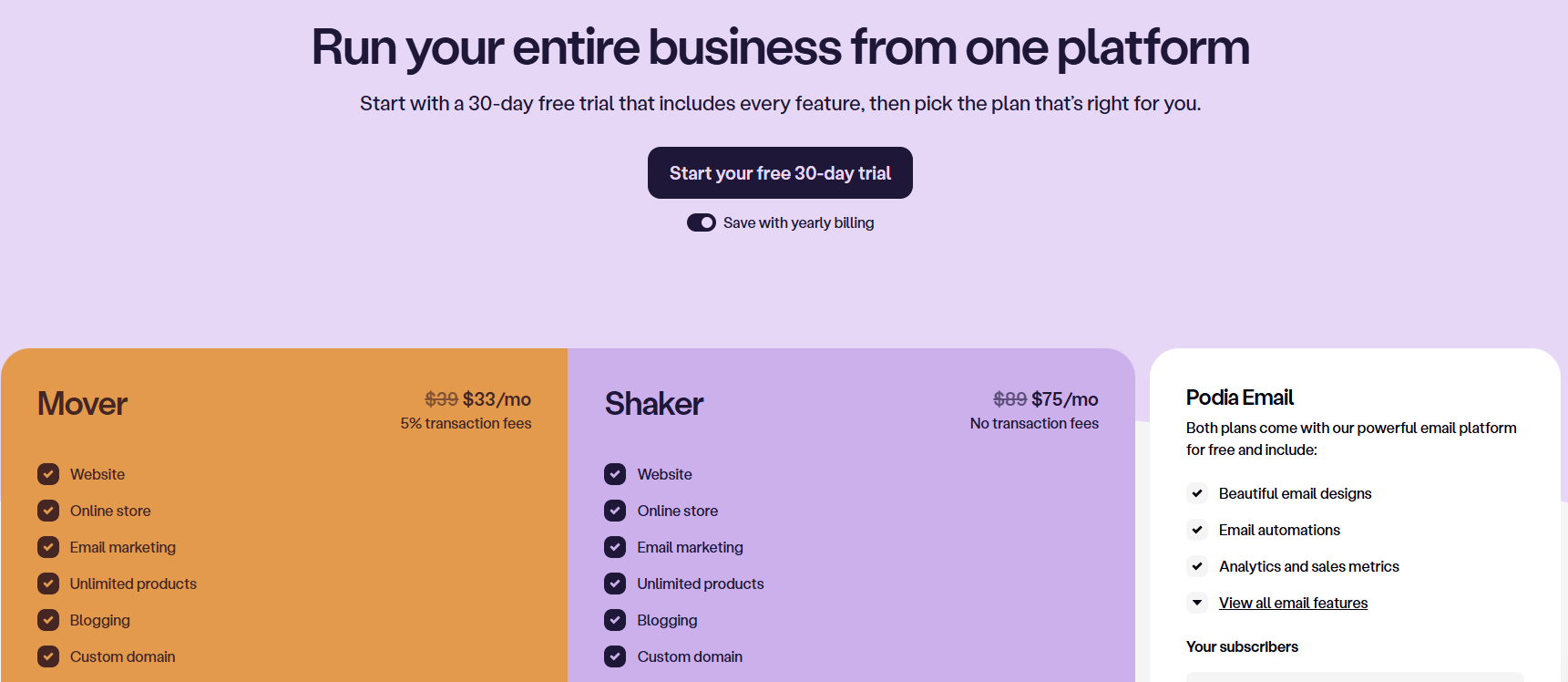
Podia offers simpler pricing and fewer ongoing maintenance requirements. Because there are fewer technical features to manage, creators spend less time configuring systems and more time focusing on content and community.
With Podia, you get three subscription plans:
- Mover: $33/mo with 5% transaction fees (billed annually)
- Shaker: $75/mo with no transaction fees (billed annually)
- Podia Email: Custom pricing
Using an AI course creator can reduce ongoing maintenance on either platform by helping creators update and expand courses faster without rebuilding content manually.
Kajabi vs Podia: Which Is Better?
| Feature | Kajabi | Podia |
|---|---|---|
| Best For | Scalable course businesses & automation | Beginner creators & simple course selling |
| Ease of Use | Moderate learning curve | Very beginner-friendly |
| Setup Time | Longer due to automation & funnels | Quick setup & launch |
| Customization | Strong branding & design options | Limited but simple templates |
| Maintenance | Higher due to automation features | Low ongoing maintenance |
| Pricing | Higher, all-in-one platform | More affordable & predictable |
- Choose Kajabi if you want advanced automation, strong marketing tools, and a platform capable of scaling a full online business. It works best for creators running premium programs, complex funnels, or multi-course academies.
- Choose Podia if you prefer simplicity, quick setup, and a streamlined workflow without complex technical features. Podia is ideal for solo creators and smaller course businesses focused on straightforward content delivery.
Where an AI Course Creator Like Coursebox Fits In
Kajabi and Podia help you host and sell courses, but they don’t always solve the biggest challenge: creating the course itself. Structuring lessons, designing modules, and organizing learning paths can be time-consuming before you even upload content.
Coursebox’s AI course creator helps build course outlines, lesson plans, and structured learning content before you move into Kajabi or Podia. You can generate organized course frameworks and then choose the platform that best fits your selling and hosting needs.
Coursebox also helps maintain consistency across multiple courses. Whether you’re building a structured certification program for Kajabi or a streamlined content library for Podia, having your course architecture prepared in advance reduces setup stress and prevents constant revisions later. It allows you to focus on teaching and selling rather than struggling with organization and structure.
Are you ready to build your course faster? Try Coursebox today to generate structured lessons, course outlines, and training content in minutes.
FAQs About Kajabi vs Podia
Is Kajabi better than Podia for beginners?
Podia is generally easier for beginners because its interface is simpler and requires fewer setup decisions. Kajabi includes more advanced tools, which can feel overwhelming at first. However, creators planning to scale quickly may still prefer Kajabi once they become comfortable with its workflow.
Can you sell memberships on Kajabi and Podia?
Yes, both Kajabi and Podia support memberships and subscription-based content. Kajabi offers more advanced automation for managing member journeys and engagement. Podia provides a simpler membership setup with integrated communication tools for creators who want minimal configuration.
Kajabi vs Podia: Which platform is better for marketing automation?
Kajabi is significantly stronger in marketing automation. It includes funnels, automated email campaigns, and behavioral triggers built directly into the platform. Podia offers basic email marketing features but focuses more on simplicity than advanced automation workflows.
Do Kajabi and Podia support multiple courses?
Yes, both platforms allow creators to host multiple courses within one account. Kajabi is better suited for large course libraries with structured programs and advanced organization. Podia works well for smaller course collections or creators focused on a few core offerings.
Which platform is more cost-effective long-term?
Podia is usually more affordable because it includes fewer advanced features and automation tools. Kajabi may be more cost-effective for creators who would otherwise need separate marketing, website, and funnel software. The better choice depends on whether you value simplicity or an all-in-one system.
Alex Hey
Digital marketing manager and growth expert

