

Why Game-Based Learning Matters: Tips to Boost Learning Through Interactive Games
Can games really improve learning outcomes and engagement? Discover why game-based learning matters and explore practical tips to boost knowledge retention.


Turn boring content into gamified learning instantly
Traditional learning methods often struggle to keep attention for long. Long lectures, static slides, and passive reading make it difficult for learners to stay engaged. This is where game-based learning changes the experience.
Game-based learning uses interactive challenges, rewards, feedback, and problem-solving to make education more engaging. Instead of simply receiving information, learners actively participate. They make decisions, solve tasks, and see immediate results.
In this article, we’ll explore why game-based learning matters and share practical tips to boost learning through interactive games.
What Is Game-Based Learning?
Game-based learning is an educational approach that uses games or gaming elements to support learning objectives. In this way, learners don’t need to rely on lectures. They can integrate challenges and interactive problem-solving into the learning process.
The purpose of this approach is to reinforce knowledge, improve employee retention, and increase engagement.
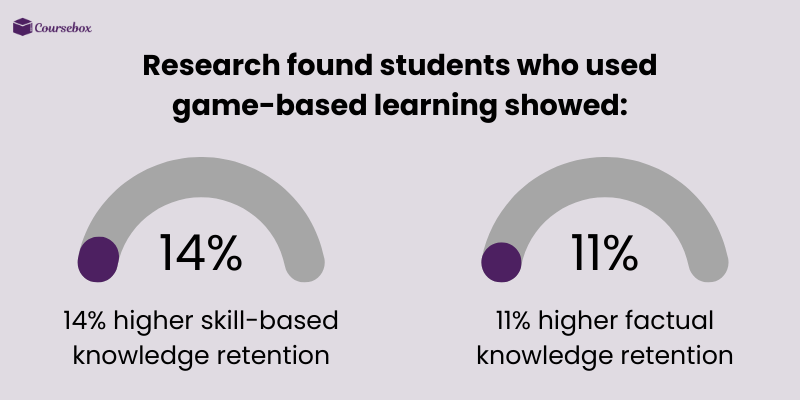
Research also supports this approach. Students who used game-based learning showed 14% higher skill-based knowledge retention and 11% higher factual knowledge retention.
Source: eLearning Industry
Why Game-Based Learning Matters
Game-based learning matters because it significantly increases learner engagement and motivation compared to traditional methods.
When learners interact with challenges, progress indicators, and instant feedback, they become active participants rather than passive listeners. That shift from passive to active learning often leads to better focus, deeper understanding, and longer retention.
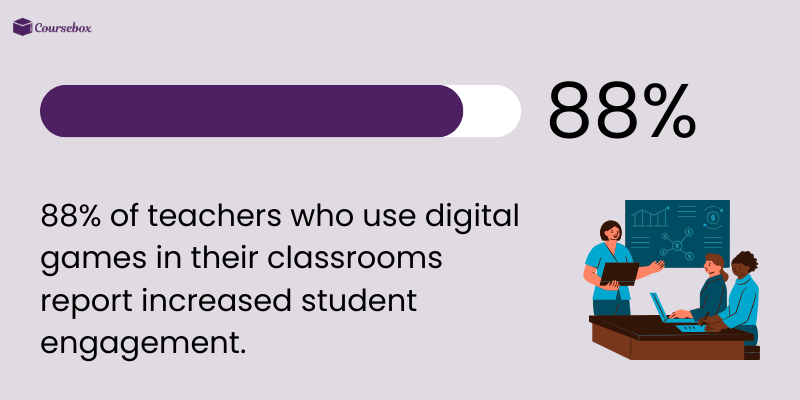
In fact, 88% of teachers who use digital games in their classrooms report increased student engagement. This matters because the learners who are more involved tend to absorb information more thoroughly.
Source: Axon Park
Beyond engagement, game-based learning encourages perseverance. Mistakes in game scenarios feel like part of the journey, reducing fear of failure and encouraging repeated attempts until mastery is achieved.
9 Tips to Gamify Learning
Game-based learning only works when it is designed with intention. A fun activity alone is not enough. With that said, below are practical tips that will help you design interactive learning experiences that are effective and easy to implement.
1. Align Games with Clear Learning Objectives
The biggest mistake in game-based learning is starting with the game instead of the goal. Before creating any activity, clearly define what learners should know, understand, and be able to do by the end. Without this clarity, even the most exciting game can miss its purpose.
You can start by writing one measurable objective. For instance, instead of saying “Understand cybersecurity,” say “Identify three common phishing red flags.” This makes the outcome specific and testable.
Once the objective is clear, design every question, scenario, or challenge to directly support it. If a game element does not reinforce the objective, remove it. At the end of the session, include a short reflection or discussion.
2. Keep Rules Simple and Easy to Understand
If learners spend more time trying to understand the rules than engaging with the content, the learning impact decreases. Complex instructions create confusion, slow momentum, and reduce confidence. Simple rules allow learners to focus on the concept rather than the mechanics.
Limit the rules to three or four clear steps. Explain them using plain language. Here, you shouldn't describe every possible scenario; instead, demonstrate one short practice round before the real activity begins. This removes uncertainty and gives learners a chance to adjust.
You can also display the rules visually on a slide or board so learners can quickly refer back to them without interrupting the session. If participants repeatedly ask the same clarification questions, treat that as feedback and simplify the structure next time.
3. Use Games to Reinforce Key Concepts
Begin by clearly explaining the concept. Once the learners have the foundation, design a focused activity that requires them to apply what they learned. For example, after teaching customer service principles, create real-life scenarios where learners must choose the best response.
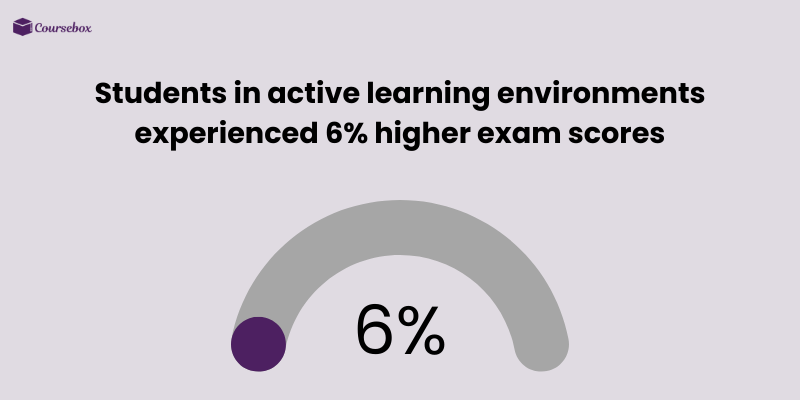
A published study also found that students in active learning environments experienced 6% higher exam scores. While this research focuses on active learning broadly, game-based learning fits within this model because it requires participation.
Make sure to keep the activity centered on one main idea. Also, avoid mixing too many objectives into a single game. After the activity, conduct a short review discussion. Ask learners why certain answers were correct and what they noticed.
Source: PNAS
4. Encourage Active Participation from All Learners
Game-based learning only works when everyone is involved. In many learning environments, a small group participates actively while others remain quiet. A well-structured game can change that pattern.
For this tip, break learners into small teams to create shared responsibility. Assign clear roles such as facilitator, recorder, or presenter. Rotate these roles during the session so each learner contributes at some point.
Set simple participation expectations at the beginning so everyone understands that involvement is part of the activity. You can also include discussion time before teams submit answers.
This encourages collaboration and ensures quieter participants have space to share their thoughts with everyone.
5. Provide Immediate and Meaningful Feedback
One of the biggest advantages of game-based learning is immediate feedback. When learners know right away whether they made the correct decision, their understanding improves quickly. Delayed feedback weakens the impact because the connection between action and outcome becomes less clear.
Design your games so results are visible instantly. This could mean showing correct answers after each question, displaying scores in real time, or explaining why a particular choice works better in a scenario. Avoid simply marking answers as right or wrong.
There is a meta-analysis published on the NIH that shows that feedback can improve learning outcomes by an average of 0.70 effect size. This translates into significant performance gains when implemented properly.
Source: NIH
6. Balance Challenge and Skill Level
Games work best when they are challenging (not overwhelming). If the activity is too easy, learners may lose interest. Similarly, if it is too difficult, frustration replaces motivation. Your goal should be a balanced approach.
Start by understanding your audience. Are they beginners, intermediate learners, or experienced professionals?
Based on that, adjust the complexity of scenarios and questions to match their level. You can also introduce difficulty gradually. Begin with simple tasks and increase complexity as confidence grows.
Another practical approach is to offer an optional bonus challenge. This allows advanced learners to stay engaged while others focus on mastering the basics.
7. Promote Collaboration Through Team-Based Games
Team-based games increase engagement by requiring discussion, shared reasoning, and joint decision-making. As learners walk through problems together, they clarify ideas, correct misunderstandings, and build confidence.
To implement this effectively, divide learners into small groups of three to five. Then, assign clear roles such as facilitator, recorder, and presenter so participation is balanced. Rotate roles during different rounds to make sure everyone contributes. To maintain focus, give teams a specific goal and a time limit.
You must design activities that require agreement before submitting an answer. For instance, present a real-world scenario and ask teams to select the best solution collectively. Afterward, ask each group to briefly explain their reasoning.
8. Allow Safe Failure and Multiple Attempts
Game-based learning becomes powerful when learners feel safe making mistakes. Fear of failure often blocks participation and reduces experimentation. A well-designed game removes that fear by allowing retries and improvement.
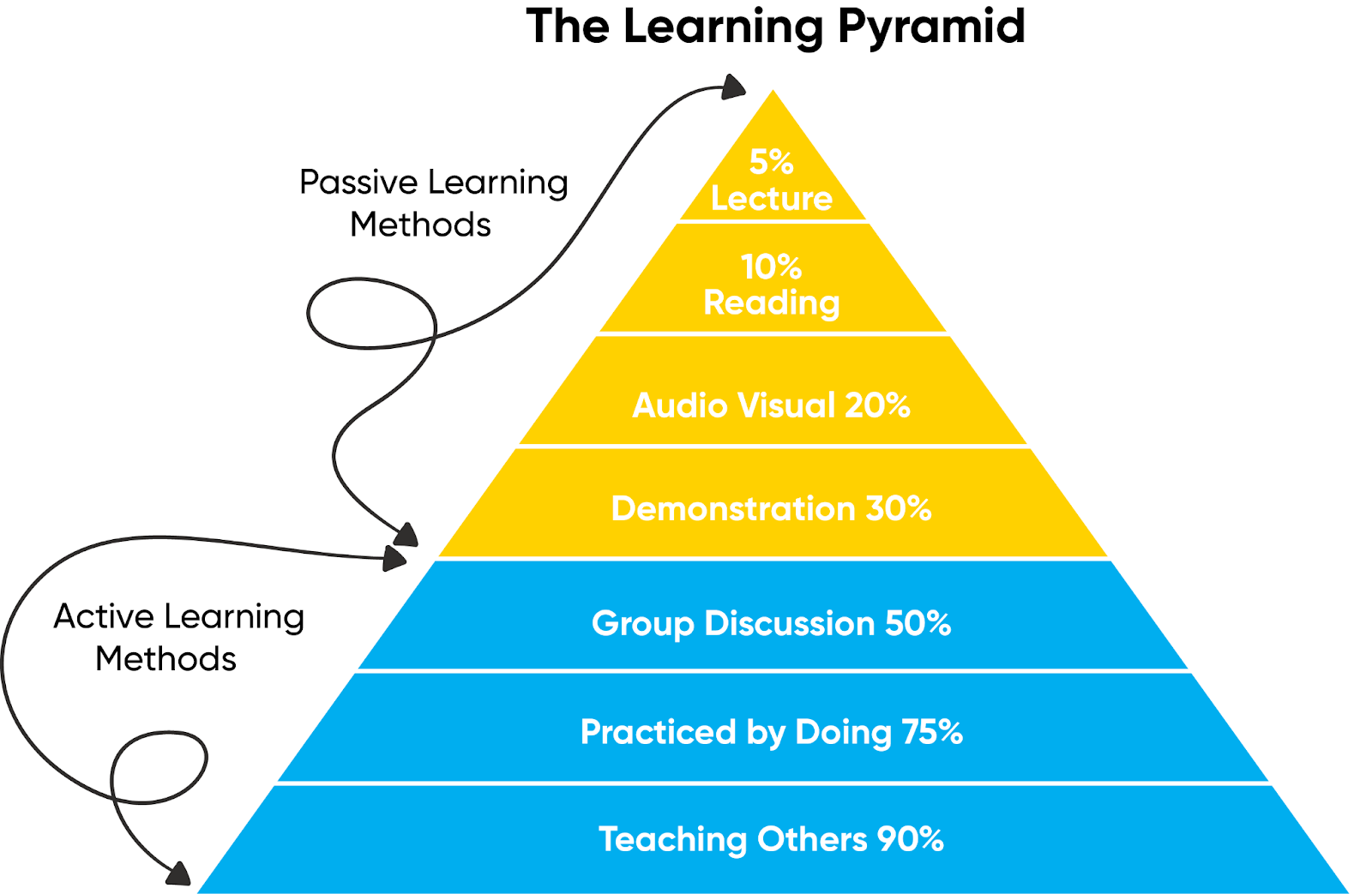
Research also suggests that learning retention rates increase significantly through active practice. The widely cited learning pyramid model indicates that learners retain up to 75% of information when they practice by doing.
To apply this principle, design games that allow multiple attempts. Avoid single-elimination formats. After incorrect answers, provide explanations and allow learners to try again. Moreover, include improvement rounds where teams can earn additional points through corrected responses.
Source: Arlo
9. Test and Adjust Games Based on Learner Feedback
Even a well-designed learning game can be improved over time. What works for one group may not work the same way for another. That is why you need to test and adjust the gamification elements you’re using.
After running a game, always collect feedback immediately. Ask simple questions such as:
What helped you understand the concept better? What felt confusing? What could be improved?
Just keep the feedback short and focused so learners respond with honesty. Some methods you can use here include a quick survey, a show-of-hands poll, or a short decision. Paying attention to patterns also works best here.
If you think minor adjustments don’t make a big difference, you are wrong. Even the smallest adjustment can be valuable. When you make games better through feedback, they become more effective and better aligned with learning goals.
Three Common Challenges with Game-Based Learning
Game-based learning offers strong benefits, but it is not without challenges. Like any teaching method, it requires planning, structure, and the right environment to work effectively. Understanding common obstacles makes it easier to prepare for them.
1. Time Constraints
One of the biggest concerns is time. Designing games, setting up activities, and managing participation can feel time-consuming, especially in tight academic schedules or corporate training sessions.
The solution here is not to replace the lesson, but to integrate games strategically. Short interactive quizzes, quick simulations, or five-minute problem-solving challenges can reinforce key points without extending session length.
When planned properly, game-based activities often improve understanding faster than repeated explanations.
2. Resource Limitations
Another challenge is limited resources. Some educators assume that effective game-based learning requires expensive software or advanced technology. This belief can discourage implementation.
In reality, games do not have to be digital or complex. Simple role-play scenarios, group competitions, printed cards, or discussion-based challenges can be just as effective. The focus, however, should remain on learning objectives.
3. Learner Resistance
Not all learners immediately accept game-based activities. Some may see games as childish or unrelated to serious learning. Others may feel uncomfortable participating in competitive settings.
Addressing this starts with clear communication. When learners understand the purpose and how the activity connects to real-world skills, resistance usually decreases. It also helps to design inclusive activities that encourage collaboration.
Most resistance fades when learners experience the benefits firsthand. Once they see improved understanding, their perception often shifts naturally.
When Game-Based Learning Works Best
Game-based learning delivers the strongest results when it is tied to clear learning objectives and real-world applications. It works best when learners are not just playing, but practicing decision-making and receiving immediate feedback.
It is especially effective in environments where engagement tends to drop, such as corporate training or large classrooms. Interactive challenges encourage participation and reduce mental fatigue.
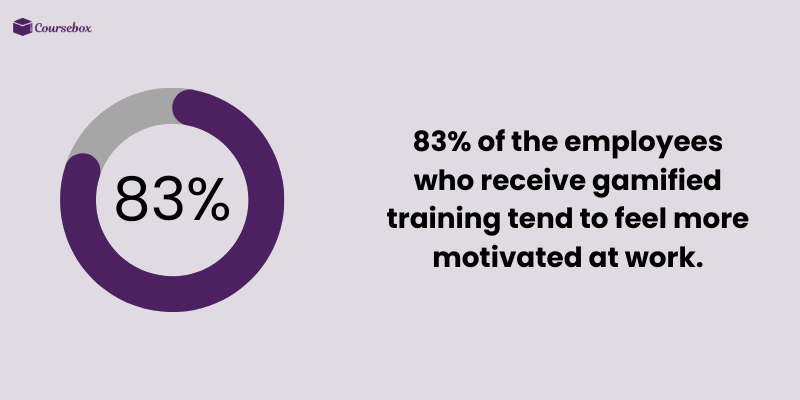
Studies also show that 83% of employees who receive gamified training tend to feel more motivated at work. This shows that structured game elements can directly improve both engagement and outcomes.
Just remember that game-based learning works best when it is intentional, measurable, and connected to real goals.
Source: ScienceDirect
Turn Interactive Learning into Real Results
Game-based learning is about making learning active, practical, and memorable. However, one common challenge remains: designing interactive games, quizzes, simulations, and feedback systems.
This is where Coursebox offers a practical solution.
It allows trainers and organizations to convert documents, videos, or anything into interactive AI-generated training videos. With built-in interactivity, white-label branding, and multilingual support, it simplifies the entire process.
Sign up for Coursebox today to learn more about how we can help!
FAQs
Frequently Asked Questions
Games only become distractions when they are not clearly connected to learning goals. So, before you start, explain what learners are expected to gain and how the activity connects to real outcomes. Most importantly, follow the activity with a short discussion that reinforces the lesson.
If learners treat games casually, it often means the value has not been clearly communicated. Begin by explaining why the activity matters and how it supports performance, assessments, or real-world skills. Setting expectations early helps to design challenges that require meaningful effort and not just participation.
Yes, but structure becomes more important as group size increases. Breaking participants into smaller teams creates accountability and keeps energy focused. Digital tools can also help manage participation. With the right structure, large groups can benefit from collaboration, competition, and shared problem-solving.
The better option depends on the learning goal. Digital games are useful for quick feedback, scalability, and tracking progress, especially in larger groups. On the other hand, physical or role-play activities strengthen communication, leadership, and interpersonal skills. The most effective approach often combines both formats.
Alex Hey
Digital marketing manager and growth expert

