

10 Best AI Tools for Teachers in 2026 (Tested)
The 10 best AI tools for teachers, tested on real classroom jobs: what each one nails, where it slips, and the honest free-tier limits before you commit.

AI writes a good first draft of a lesson, worksheet, quiz or batch of feedback, never a final one. Every tool here still needs you to check and edit it before it reaches a student.
- For most teachers, one broad suite like MagicSchool AI plus two or three sharp tools covers the work better than ten separate logins.
- Always check the answer keys on AI-generated quizzes and the reading levels on AI-leveled texts. Both are wrong often enough to catch you out.
- The strongest free tiers for teachers are Canva for Education, Khanmigo and MagicSchool AI, though most tools cap free use as you scale.
- Keep identifiable student data out of general AI chatbots, and favour tools with a clear school privacy commitment.
Answer three quick questions and I will point you to the right starting tool from this list.

Turn lecture material into interactive courses in minutes
I spent a week testing these AI tools for the jobs a teacher usually does: planning a Grade 7 lesson, leveling a reading passage, grading a stack of short answers and even building a quiz. They were all fast. that is unquestionable.
However, every one still needed editing before I could use it in class.
That is the honest frame for this whole list. An AI tool writes you a good first draft of a lesson, a worksheet, a quiz or a batch of feedback. The final version is still yours to write.
The useful question is which draft lands closest to something I would put in front of my class, and how much I have to fix before I trust it.
I am a learning designer, I build courses and assessments for a living, and what I care about is whether a tool helps in a real classroom, not how good it looks in a demo.
What AI actually does for teachers (and what it doesn’t)
If you are new to this, the tools sort into a handful of jobs. Here is what the AI actually does for each one, and where it stops.
- Planning and differentiation. Drafts a lesson plan from a topic, or rewrites a text at several reading levels. The draft is generic until you feed it your class, your examples and your standards.
- Grading and feedback. Drafts comments, groups similar answers, applies a rubric you set. It speeds up the first pass. You keep the final grade.
- Worksheets and quizzes. Generates questions and an answer key from a topic or a text. Check the key. It will hand you confident, wrong answers.
- Slides and visuals. Turns rough notes into designed slides and worksheets. The design is the strong part. The AI-written text is generic.
- Student tutoring. Gives students a tutor that nudges them toward an answer instead of handing it over. Strongest in maths. Supervise the rest.
- Live engagement. Builds interactive activities students join with a code, from one prompt. It gives you engagement, but not depth.
- Turning your own material into study aids. Takes your curriculum, slides or PDFs and makes summaries, study guides, even an audio recap, grounded in what you uploaded. It will not go beyond your sources, which is the point.
- Building a full self-paced course. Goes past a worksheet to lessons, a quiz and an AI tutor students work through on their own. More setup than a worksheet, for when a worksheet is not enough.
Two kinds of tool here. Broad suites like MagicSchool AI give you one login and a tool for almost everything, but the output is generic. Sharp single-job tools like Diffit, Brisk and Conker each beat any suite at one job. Most teachers land on one suite plus two or three sharp tools, not ten logins.
Everything below is judged on how close its first draft gets, and what you still have to fix.
How I tested these
I tried doing some real teaching jobs for every tool: plan a lesson, level a reading passage, grade a set of short answers, build a quiz, or make a set of slides, depending on the tool features. I used the free plan wherever one existed, so what you read here is what you get without paying. I checked every price and free-tier limit on the tool’s own page in the last week. Where a tool’s own marketing claims (hours saved, results) come from its own surveys rather than independent measurement, I have said so. And where a tool got something wrong, generic output, a bad answer key, a flattened reading level, I have said that too.
The tools at a glance
| Tool | Best for | Free tier | Price | The catch |
|---|---|---|---|---|
| MagicSchool AI | One free all-in-one suite | Free forever, generation caps | Plus $8.33/mo yearly | Broad but shallow; runs outside Google Docs |
| Diffit | Leveled reading passages | Free, last 90 days only | $14.99/mo | Reading levels run about a grade off |
| Brisk Teaching | Feedback inside Google Docs | Free, 20+ tools, capped | Quote-based | Google/Chrome only; hidden pricing |
| Gradescope | Bulk exam and STEM grading | Free Basic, no AI grouping | Institutional quote | AI grouping is institutional-tier only |
| Curipod | Live interactive lessons | Free for every teacher | School/district quote | AI lessons need editing before you run them |
| Conker | Fast standards-aligned quizzes | 5 quizzes, 50 responses | Pro $5.99/mo | Answer keys can be wrong; check every one |
| Canva Magic Studio | Slides and classroom visuals | Free for K-12 teachers | Free for K-12; Pro ~$15/mo | Great design, generic AI text |
| Khanmigo | Maths tutor and planning | Free for teachers | Free; learners $4/mo | Best in maths; student tutor is paid |
| NotebookLM | Study aids from your material | Generous free tier | Free; paid via Google AI | Only as good as the sources you upload |
| Coursebox | A full AI course + grading | 3 courses, unlimited learners | Creator $25/mo | Course-building; AI grading needs a rubric |
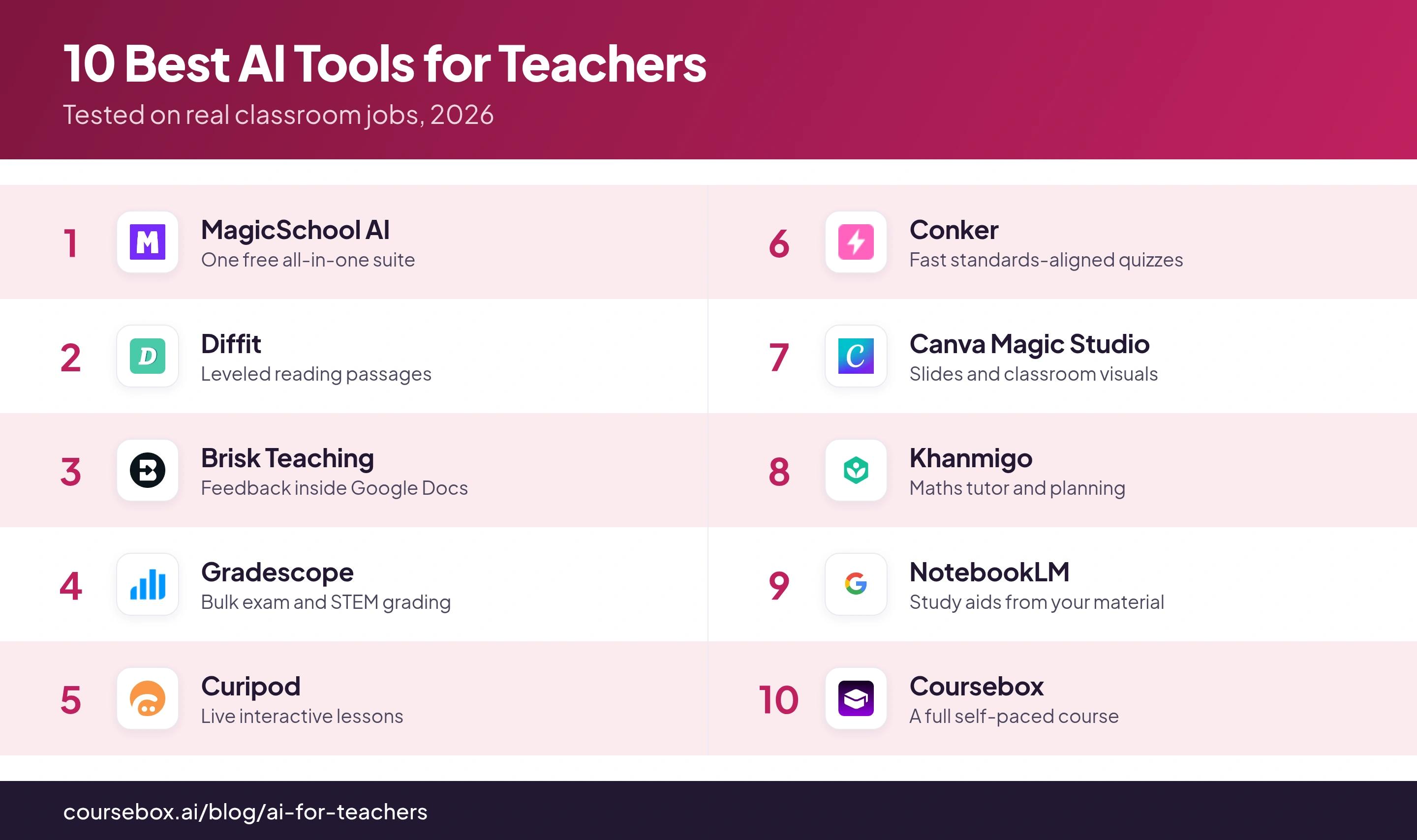
The 10 best AI tools for teachers
1. MagicSchool AI
If you are new to AI and want one place to start, MagicSchool AI is the broadest all-in-one option here: more than 80 tools in one dashboard for lesson plans, rubrics, quizzes, IEPs, report-card comments and parent emails.
Its strength is breadth, whatever the task, there is probably a tool for it, and it holds district-grade privacy (FERPA and COPPA), which is why so many schools start here. The free forever plan includes the full set of teacher tools. You will notice the generation caps you only when you are using it daily; lifting them means Plus, at $8.33 a month billed yearly ($99.96) or $12.99 month to month.
The trade-off is depth. No single tool goes as far as a dedicated specialist, and because MagicSchool runs on its own site rather than inside your documents, giving writing feedback means copying text in and back out of Google Docs.
Testing notes: I ran my Grade 7 topic through the lesson planner and got a clean skeleton in seconds. It was generic until I spent about ten minutes swapping in my own texts and examples. Treat it as a starting frame, not a finished plan.
Verdict: the best first stop if you are new to AI. Start on the free plan and pay only once the generation caps get in your way.
2. Diffit
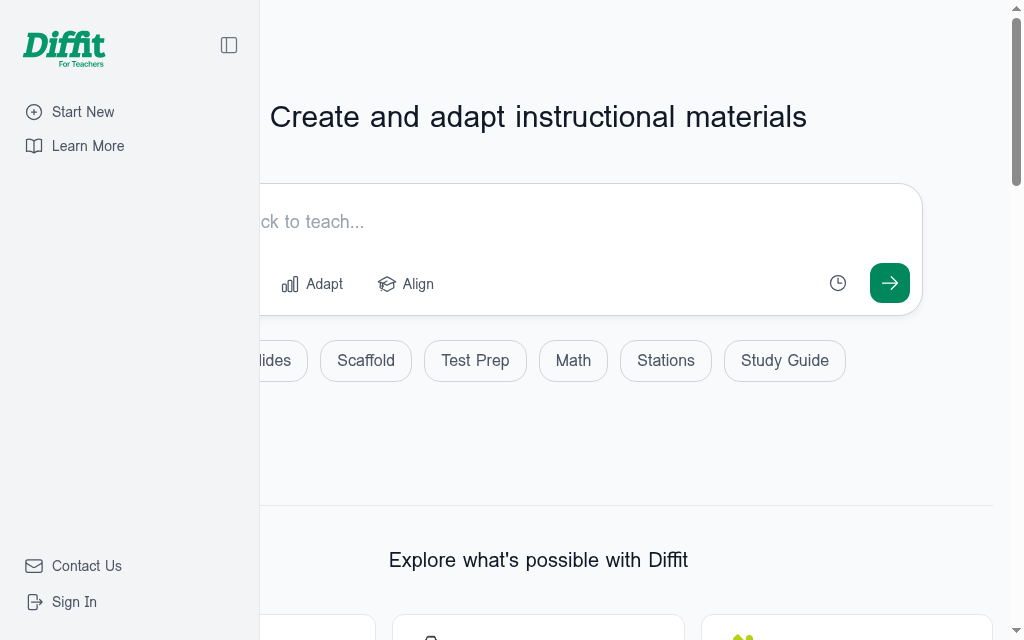
In most classes some students read well ahead of grade level and others are still catching up. Diffit is the fastest way to give them all the same material at a level each one can read. Give it any topic, article, URL or video and it rewrites the text into a reading passage at the level and language you choose, with a summary, vocabulary and comprehension questions already attached.
What it does best is producing one source text at several reading levels at once, each with its own questions, in seconds. The free plan is usable but narrow: it only opens work you made in the last 90 days, and older passages lock unless you move to the individual plan at $14.99 a month or $149.99 a year.
The one thing to watch is the levels themselves. They are approximate and tend to land about a grade off what you asked for, so read the passage before you hand it out rather than trusting the label.
Testing notes: I generated the same passage at second, fifth and ninth grade, then ran each through a readability checker. Every one came back about a grade off what I asked for. The content and questions were sound, but I re-pitched the level myself.
Verdict: the fastest way to differentiate a text, as long as you treat the grade labels as a starting point and check them.
3. Brisk Teaching
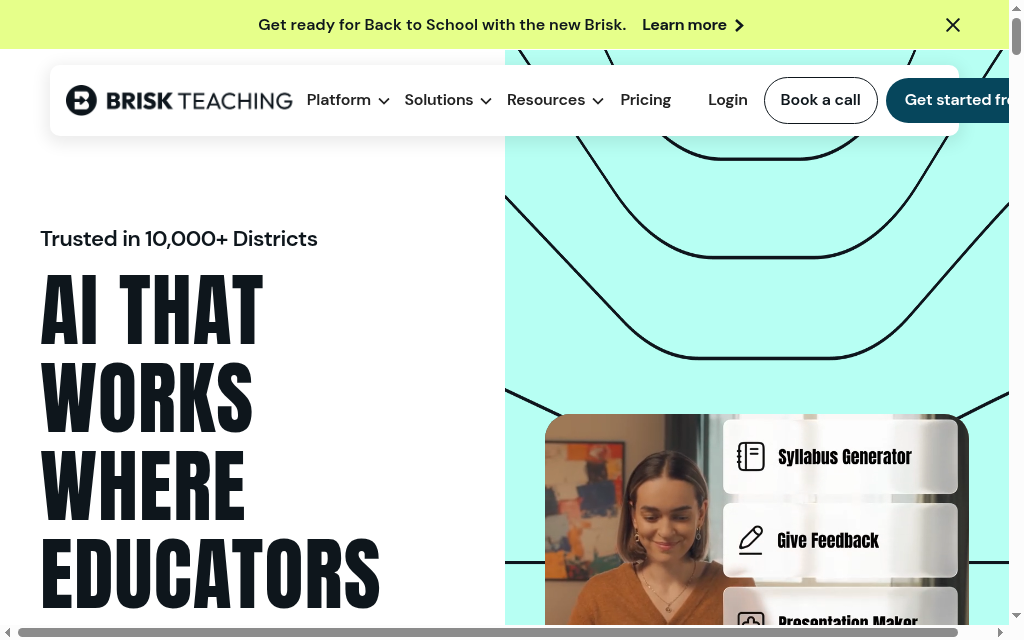
If your marking already happens in Google Docs, Brisk Teaching meets you there. It is a Chrome extension that layers AI feedback, grading, quiz and slide generation and reading-level tools straight onto the Google apps you already have open, so you never leave the document.
It is strongest at giving specific, rubric-aligned feedback inside the student’s own Doc, and its Inspect Writing feature replays exactly how a document was written. The free plan comes with 20 or more tools on standard AI models, though the usage caps are not published anywhere.
Two things for you to consider before you try this.
Because it is an extension rather than a standalone platform, it only works inside supported web apps, mainly Google Docs, Slides and Classroom in Chrome or Edge, with no mobile app. And Brisk does not publish its paid pricing at all, which makes it hard to plan around, so lean on the free plan before you commit.
Testing notes: I ran Inspect Writing on a student draft and watched a keystroke-by-keystroke replay. A large paste from another source appears as one block all at once, so you can see exactly what was typed within the doc and what was pasted from somewhere else.
Verdict: reach for it if your feedback and grading already happen in Google Docs. The hidden pricing is the catch, so pressure-test the free plan first.
4. Gradescope
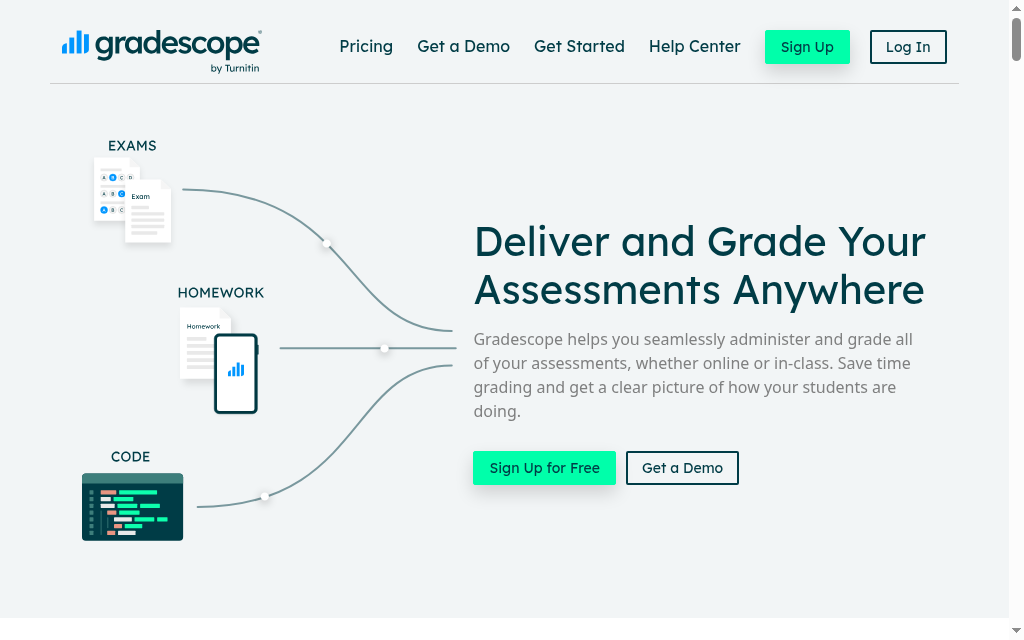
For grading at volume, Gradescope, now part of Turnitin, is built for the job. You grade paper, digital and code assignments against a reusable rubric, and it groups similar answers so a single piece of feedback lands on every student who made the same mistake.
That bulk-grading of handwritten STEM work is what it does best, especially across large sections. There is a free Basic plan with rubrics, question-by-question grading, PDF assignments and regrade requests, while institutional plans are quote-based with no public per-teacher price.
The catch is that the AI grouping sits in the institutional tier rather than the free plan, and it only clusters structured answers like multiple choice and short fill-in, not open essays. Setting up your first rubric also takes a while, though every one after it is quicker.
Testing notes: on short, structured answers, the grouping saved real time once it was set up, but my first assignment took about twice as long to configure as the ones after it. Essays did not auto-group, so I still marked those by hand.
Verdict: worth it for big exam and problem-set loads, mostly at the department level. A solo teacher with small classes will not get the AI part on the free plan.
5. Curipod
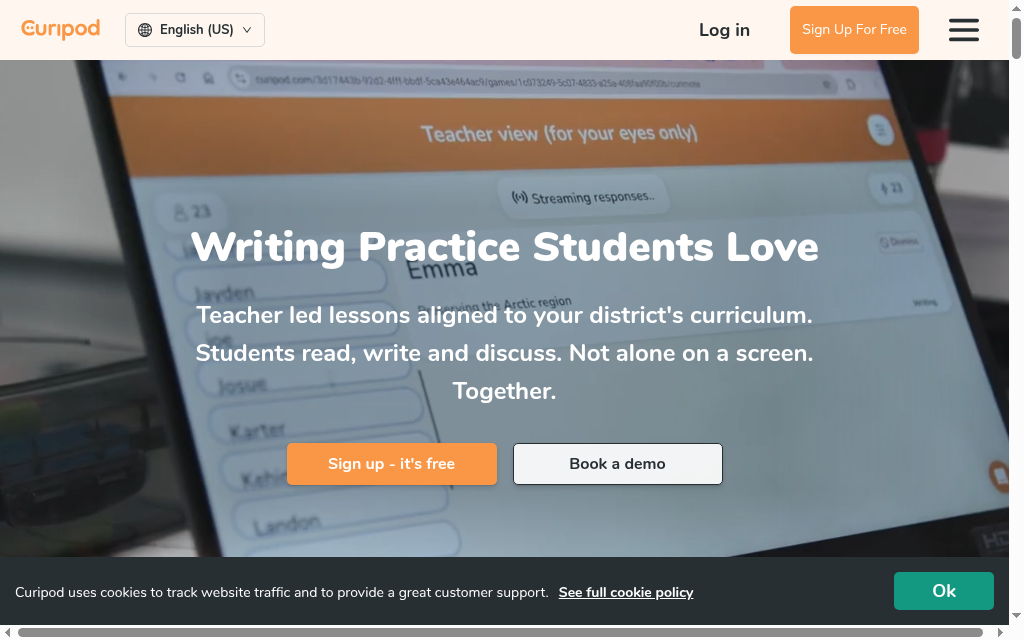
Curipod turns a single plain-English prompt into a full, student-facing interactive lesson in seconds, which students then join live on their own devices, no logins required.
It has recently pivoted to lead with writing practice aligned to your curriculum, though the older polls and activities are still in there. It is free for every teacher, with weekly writing sessions, unlimited student writers and a cap of 1,000 characters per student response; the paid plans are school and district quotes rather than a public per-teacher price.
As with any generated lesson, the first draft oversimplifies in places and slips in the odd thing that needs correcting, so read it through and edit before you run it with a class.
Testing notes: the part I liked was watching responses land in real time. Instead of guessing who understood, I could see the class answer and reteach on the spot rather than after the bell.
Verdict: a strong pick for live engagement and quick formative checks, especially for writing. Generate the lesson, then read it through before the students do their work live.
6. Conker
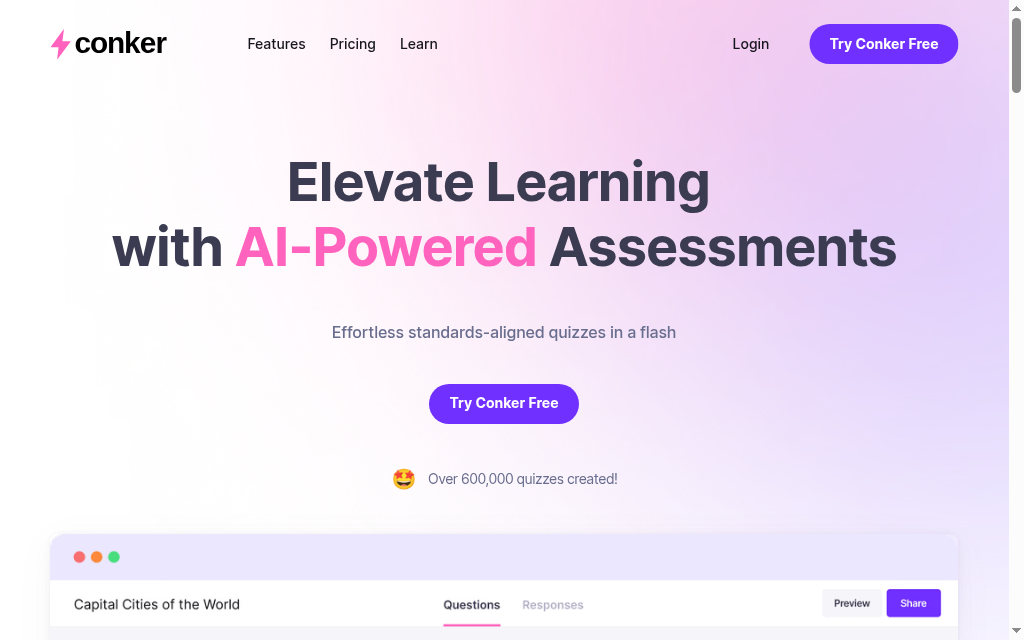
Conker is the most focused tool on this list: an AI quiz maker and little else. Feed it a topic, a standard or a reading passage of up to 1,200 words and it drafts a multi-format quiz in a couple of minutes, with accessibility features built in and export to Canvas and Google Forms.
The free plan lets you share 5 quizzes, collect 50 responses and use every question type, with a 10-question limit; Pro lifts those caps at $5.99 a month, with 16% off annually and custom pricing for schools.
The rule for any AI quiz generator applies here too: the answer keys can be confidently wrong, so check every one before you assign it. On the free tier, a single class set of results can also use up your 50 responses quickly.
Testing notes: I pasted a reading passage and had a full multi-format quiz in about two minutes. Two of the answer keys were wrong though, so the couple of minutes I spent proofing were the important part (and unavoidable).
Verdict: the most focused quiz tool here and cheap to upgrade. Never assign one of its quizzes without reading the answer key first.
7. Canva Magic Studio
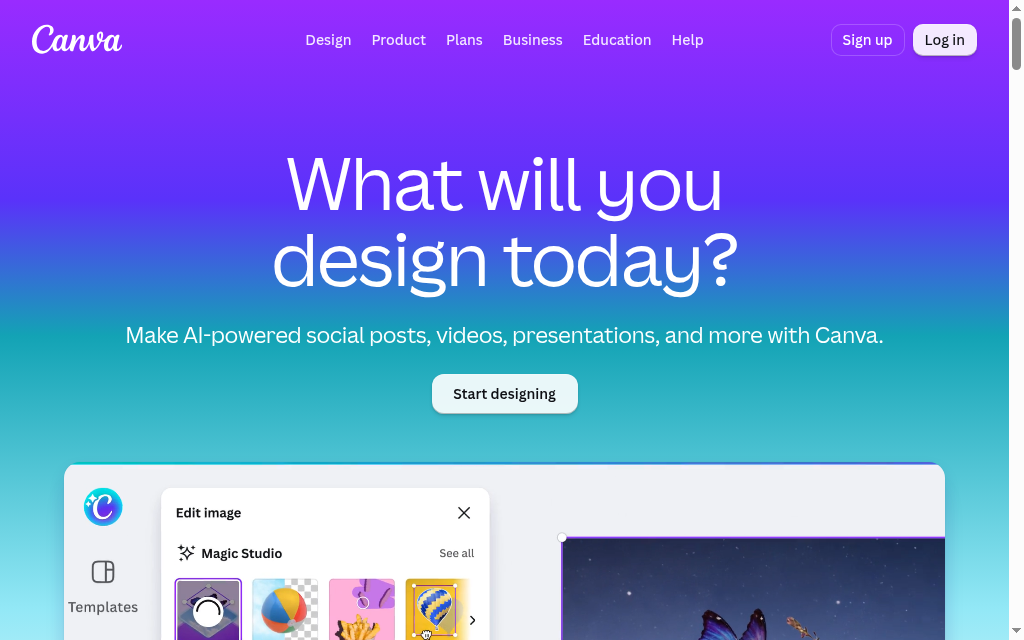
Canva Magic Studio is the set of AI tools built into Canva: Magic Write for text, Magic Media for images and Magic Design for turning a prompt into a slide deck or worksheet you can edit.
For a teacher who wants polished, on-brand visuals without any design skill, it is hard to beat, and Canva for Education is 100 percent free for verified K-12 teachers, Magic Studio included. Anyone who does not qualify pays about $15 a month for Canva Pro, or $180 a year.
The design is strong. The AI-written text is generic first-draft quality, so treat the words on each slide as a placeholder and rewrite them in your own voice.
Testing notes: Magic Design gave me a clean deck in seconds, but the writing on every slide read like a template. I kept the layout and replaced the words. The visuals were the useful part. The AI copy was not really good and needed very heavy editing from my end.
Verdict: hard to beat for classroom visuals, and free if you teach K-12. Lean on it for design, not for the words.
8. Khanmigo
Khanmigo, Khan Academy’s AI assistant, has two sides. For teachers it drafts lesson plans, rubrics and exit tickets, and that side is free after a quick teacher verification.
For students it is a tutor that nudges them toward an answer instead of handing it over, which is good teaching but sits behind a paid subscription at $4 a month or $44 a year for learners and parents. It is at its strongest inside Khan Academy’s own maths and science content.
Set expectations before you roll the tutor out to students. Because it refuses to simply give the answer, a student who wants a quick solution can find it frustrating, and responses can lag, so it works best when everyone knows it is there to coach, not to answer.
Testing notes: the Socratic tutor is good teaching, but a student who just wants the answer finds it frustrating, and I hit response lags long enough to sit and wait. Roll it out expecting that friction, not instant help.
Verdict: an easy yes for maths teachers on the free plan. Set student expectations first, because it will not simply give them the answer.
9. NotebookLM
NotebookLM, Google’s research tool now folding into its Gemini apps, works the opposite way to a general chatbot. You upload your own curriculum, PDFs and slides, and it builds summaries, study guides, timelines and even podcast-style audio recaps grounded only in what you gave it, with citations back to the source.
That grounding is the point, since it draws only on what you uploaded rather than the open internet. The free tier is generous enough for most teachers: up to 100 notebooks, 50 sources each, and daily limits of 50 questions and 3 audio recaps, with a higher-limit paid tier through Google’s AI plans.
The flip side of grounding is that it will not go beyond the sources you give it, and it does not fact-check them, so the output is only ever as good as what you upload.
Testing notes: when I uploaded my own lecture PDFs, every answer came back with a citation that jumped to the exact passage, so grounding a claim took seconds. Clean text PDFs gave sharp answers, and my blurry scanned handouts gave vague ones, so upload quality decides the output.
Verdict: the one to use for revision material and accessibility. Feed it clean sources and the audio recap alone is worth the setup.
10. Coursebox
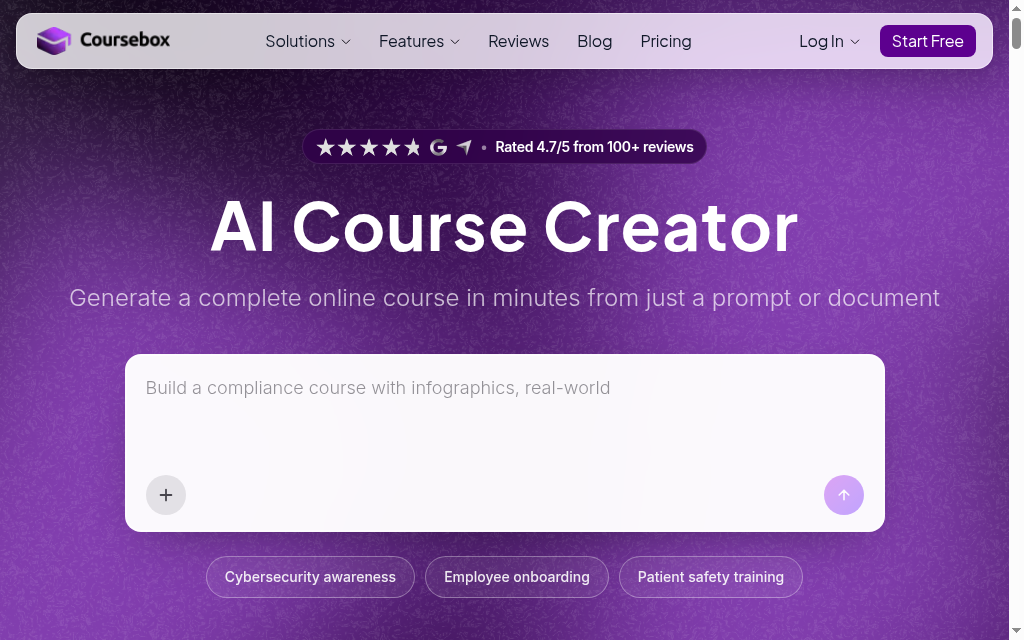
Coursebox is the one tool here that builds the whole thing. It is ours, so I will be straight about where it fits: from your existing material it generates a complete self-paced course, lessons, quizzes, assignments, flashcards, even AI video with avatars and audio narration, and gives every course an AI tutor students can ask questions of around the clock. The free plan covers 3 courses with unlimited learners, with a Coursebox watermark and limited AI credits; paid plans run from $25 a month for Creator up to $250 a month for a fully branded platform on Pro.
It also marks for you. Coursebox grades assignments against a rubric, on a percentage or a competency scale, and writes the feedback, with a moderation step so you review and edit before anything reaches a student, the same first-draft rule as the rest of this list. The honest limit is that this is course-building, not classroom admin, so it is more setup than a quick worksheet tool. Reach for it when you want students working through a real course, not a printable.
Testing notes: It drafts an entire course, lessons, quizzes, flashcards, video and a tutor, from one upload, which is fast to get a full draft in front of you. The AI grading is the part to watch: it needs a rubric set up first, and I would keep moderation on so you approve the marks before students see them.
Verdict: the pick when the goal is a real course students complete, with quizzes and a tutor built in and the marking half done for you. If all you need is a one-off worksheet, one of the sharper tools above is less work.
Which should you use
Whatever tool you use, read its first draft yourself. Check every AI-generated answer key and every AI-leveled reading passage, because both are wrong often enough to catch you out. And keep names and identifiable student data out of general chatbots, stick to tools with a clear school privacy commitment.
Start with the job that eats your week. If you are new to all of this and want one place, begin with MagicSchool AI and add sharp tools as you find the gaps. If you spend your evenings leveling texts, Diffit is the fastest fix. If you grade in Google Docs, Brisk; if you grade big exam stacks, Gradescope. For live engagement and writing, Curipod; for quick quizzes, Conker. For slides and visuals, Canva; for a maths tutor your students can lean on, Khanmigo. To turn your own materials into revision aids, NotebookLM; to put students through a full self-paced course, Coursebox.
Most teachers end up with one broad suite and two or three sharp tools, not ten logins. If one job dominates your week, we go deeper in our guide to AI grading tools. Whichever you pick, the rule is the same: read the first draft yourself before your students do.
Frequently Asked Questions
It depends on the job, but three stand out for free use: MagicSchool AI for planning breadth, Canva for Education for design (free for verified K-12 teachers), and Khanmigo for teacher tools. Conker, Curipod and NotebookLM also have real free tiers. Most free plans cap how much you can generate or store, so expect to hit a ceiling as you scale.
Stick to tools with clear school privacy commitments, such as MagicSchool (FERPA and COPPA), Google and Canva for Education. Do not paste names or identifiable student data into a general chatbot, and check your school or district policy before you upload anything with student information in it.
It can speed up the first pass, not replace your judgement. Gradescope groups similar answers and Brisk drafts feedback, but you keep the final grade and you check the answer key. On anything open-ended, treat the AI as a first reader, not the marker.
AI-detection scores are unreliable and should not decide a grade on their own. A tool like Brisk’s Inspect Writing is more useful: it replays how a document was written, so a large paste from a chatbot shows up as one block appearing at once. Focus on the writing process, not a detection percentage.
It saves real time on first drafts: a lesson skeleton, a quiz, a batch of feedback. You spend some of that back editing and checking. The specific hours-saved figures tools advertise usually come from their own surveys, so treat them as marketing, not measurement.
Not to start. Almost every tool here has a real free tier, and you hit the caps as your use grows. The sensible path is to run the free plans, see which one or two you reach for every week, and pay only for those.
Carolina Martin
Customer success lead and learning designer at Coursebox AI

