

8 Best LMS for Banking in 2026: Compliance and Staff Training
Eight banking LMS platforms reviewed for course creation, recurring training, learner records and total costs. Compare the workflow before buying.

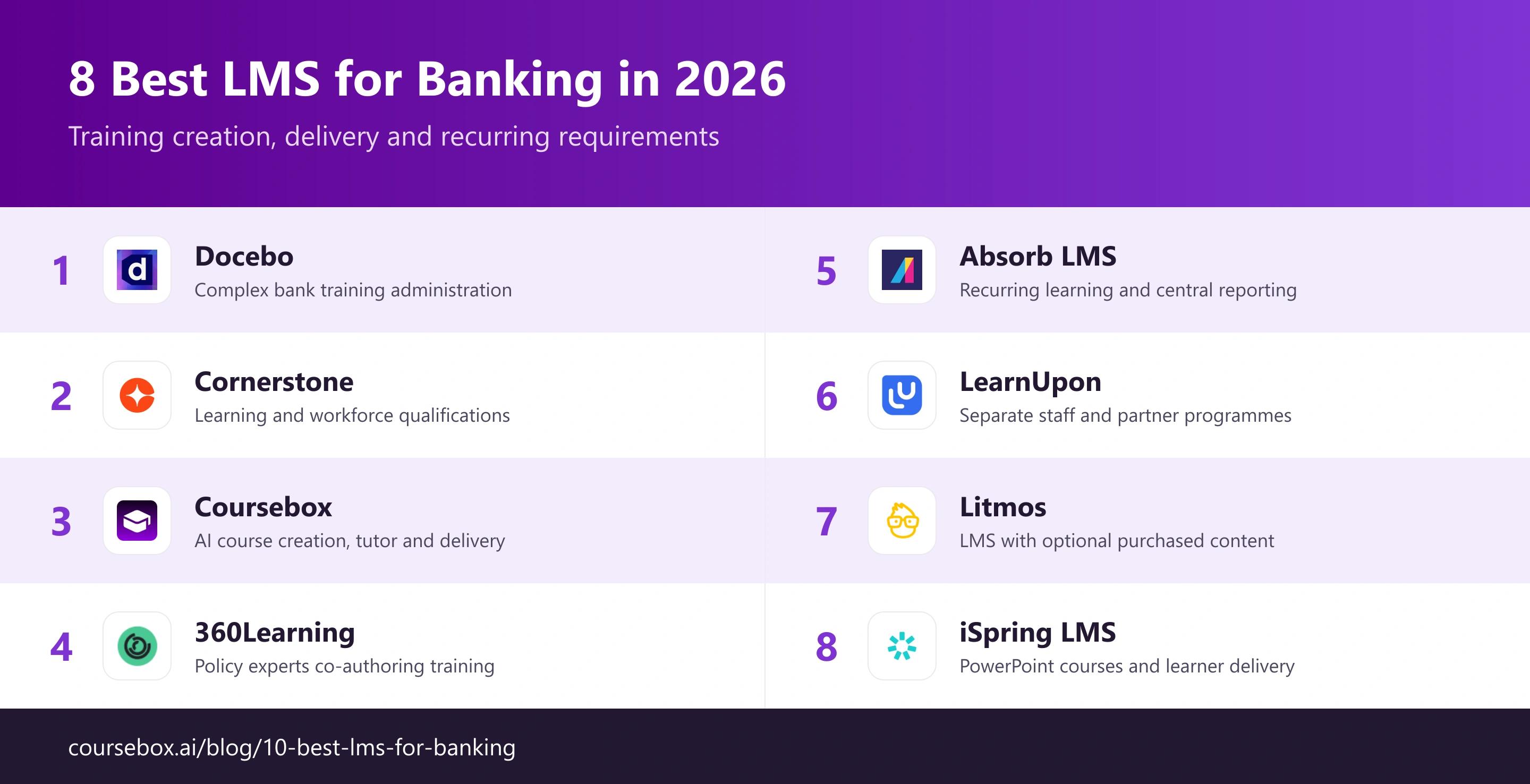
The best LMS for banking in 2026 include Docebo and Cornerstone for complex administration, Coursebox for creating and delivering bank-specific training, and Litmos for combining the LMS with purchased content.
- Compare assignments, assessment, recurring requirements and the records you need. A completion certificate, a staff qualification and regulatory approval are separate checks.
- Coursebox offers AI course creation, assessment, tutor support and delivery, with an export route for an existing LMS. Your compliance team approves the curriculum and procurement requirements.
- For supplied US banking content, also evaluate specialist providers such as OnCourse Learning against your jurisdiction and curriculum. A general LMS subscription does not establish what banking courses are included.
- Compare the full annual cost: software, authoring, content, integrations and rollout. Public starting rates do not include every service.
Answer three questions to compare the four tools below. The result balances your preferences; the entries explain the features, limits and costs to check.

Run your own branded LMS with unlimited learners
Banking training has two jobs: help staff make the right decisions, and keep reliable evidence of what they learned. I would shortlist an LMS that can handle role-based assignments, assessments and recurring requirements, then compare how easily the team can update training when a policy changes.
A bank’s policy can change while employees are still taking the old course. I’d want the training team to update the lesson, assign it to the right roles and see who needs to complete it again. That is the sort of everyday work I look for behind the compliance features.
I’m Alex from Coursebox. Our AI LMS is included alongside enterprise learning platforms, with the course-creation, administration and security requirements explained separately.
How I picked these banking LMS platforms
I compared the learning and administration workflow using four criteria:
- Assignments and renewals: Role-based assignments, the planned refresher cycle and the records required by the bank.
- Security and data: Access controls, processing locations and security evidence for the proposed deployment.
- Buy or build content: Ready-made compliance courseware, or building and maintaining your own bank-specific training.
- Scale and fit: Enterprise bank versus a credit union or fintech, because that decides how much platform you need.
The best LMS platforms for banking compared
| Tool | Banking strength | Best for | Starting price |
|---|---|---|---|
| Docebo | Groups, learning plans and certification renewals | Large banks | Quote-only |
| Cornerstone | Role-based learning and workforce qualifications | Enterprise banks | Quote-only |
| Coursebox | AI course creation, tutor, assessment and delivery | Your own bank-specific programme | Free; Creator from US$25/mo annually |
| 360Learning | SME co-authoring keeps rules current | SME-driven compliance content | From $8/user/mo |
| Absorb LMS | Recurring enrolment and course reporting | Large banks and fintech | Quote-only |
| LearnUpon | Multi-portal (staff/partners/customers) | Multi-audience compliance | Quote-only |
| Litmos | Off-the-shelf compliance library + speed | Turnkey mandatory training | From $8K/yr |
| iSpring LMS | PowerPoint policy decks + certification | Slide-based compliance content | US$6.91/user/mo at 100, annual billing |
Prices were checked on 8 October 2026. Published rates are starting points for the stated plan and billing basis; compare implementation, content and optional services in the total.
UK Finance’s 2026 report records £1.28 billion lost to payment fraud in the UK in 2025. That makes fraud escalation and customer conversations useful training scenarios alongside AML and policy knowledge.
The 8 best LMS platforms for banking
1. Docebo
Docebo suits a bank coordinating training across branches, roles and business units. Groups, learning plans and its Certifications & Retraining app provide the structure for assigned learning and recurring qualifications.
An administrator can connect employee records, use group membership to trigger course enrolment, and attach a certification with an expiry period. The renewal process can archive the previous certification and issue a new one. The training cycle therefore depends on the employee records and configured renewal settings.
My review notes: One detail I found in the enrolment documentation changes the rollout plan: rules do not automatically cover existing group members. New hires and existing staff need separate checks when a rule or course is introduced. I would include both populations in the acceptance test so nobody disappears between the HR feed and the learning plan.
My verdict: Shortlist it for complex assignment and renewal rules across a large bank. Allow time for configuration and migration; the depth is useful when someone owns those processes.
Pricing and plans: Quote-only. Price the LMS tier, integrations, implementation and any content subscription together; a licence quote alone does not describe the full rollout cost.
2. Cornerstone
Cornerstone connects mandatory learning with a wider workforce and talent programme. It suits a bank that needs training requirements to follow job roles, locations and qualification records across a large organisation.
Its Training Models organise required learning, validity periods, grace periods and recertification rules. Administrators can assign training based on role, location and policy, while managers follow deadlines and qualifications. The benefit is consistent administration when people move between teams, rather than another isolated course catalogue.
The practical check: In my comparison, the buying question is whether you need that wider workforce connection. A branch manager should be able to see overdue learning without editing corporate rules, while central compliance retains control of the requirement. I would map those responsibilities before accepting a demonstration built around a single administrator account.
Where I’d use it: A bank integrating learning, qualifications and workforce development. A small team buying only course delivery may carry more implementation work than it needs.
Pricing and plans: Custom quote. Ask which learning, content and talent modules are included, plus implementation and integration charges. The platform and the regulatory course library are separate parts of the buying decision.
3. Coursebox
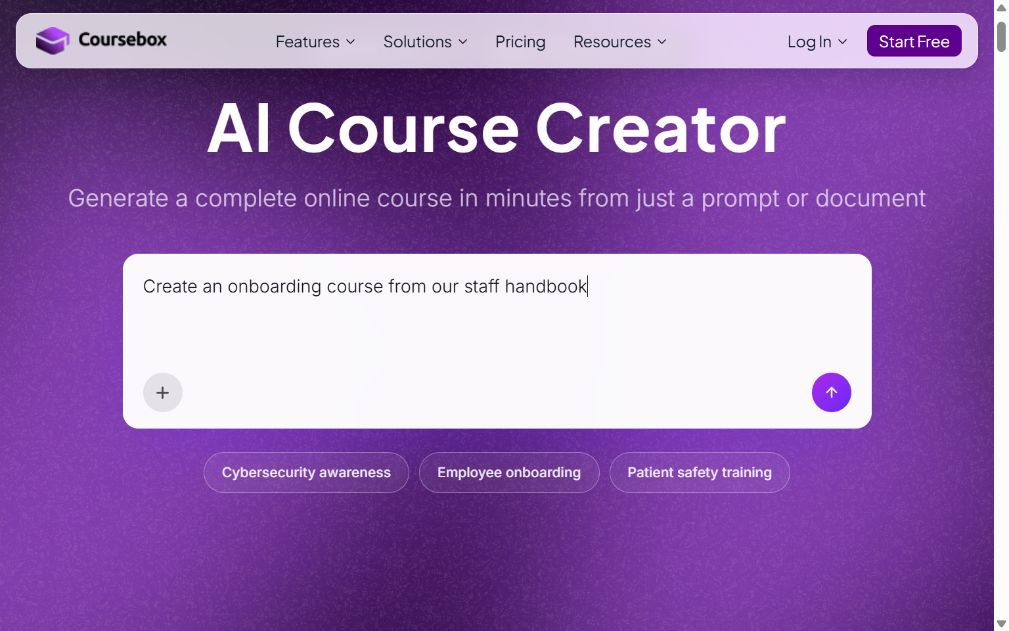
Coursebox is useful when your bank needs training built around its own policies, products and customer situations. It combines AI course creation with learner delivery, assessment, an AI tutor, completion tracking and certificates.
Start with approved material, review the generated lessons and questions, and turn the policy into situations staff can recognise: an unusual payment request, missing identification or an escalation to a supervisor. You can deliver the programme in Coursebox or use its export and integration options alongside an existing LMS.
What I found: My preference is to keep the compliance owner involved at the editing stage. The speed advantage is in producing and revising the learning, while the bank still approves the content and its evidence requirements. For a bank with a settled HR and compliance system, adding Coursebox for course creation can be a better decision than replacing the whole system.
My verdict: A strong option for creating and delivering bank-specific training, including teams that already have an enterprise LMS. Check renewal and evidence requirements in the intended deployment, and obtain the security review through Enterprise procurement.
Pricing and plans: Free to try with unlimited learners. Creator starts at US$25/month billed annually; branding, exports and AI allowances depend on the plan. Enterprise covers signed agreements and security review, with a minimum two-year term.
4. 360Learning
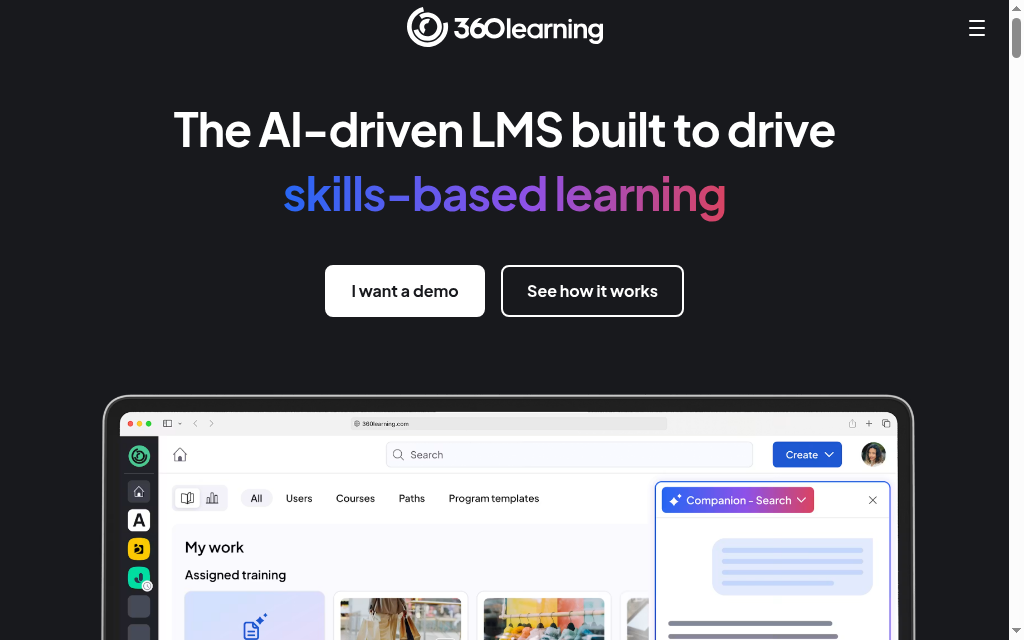
360Learning suits a bank whose policy specialists need to help write and maintain courses. Co-authoring and learner feedback keep content work connected to the people who understand the procedures.
A risk specialist can contribute the explanation, an instructional designer can improve the assessment, and learners can flag a confusing question after release. The platform combines authoring with assignment and tracking, so feedback can lead back into the course rather than remaining in a separate email thread.
My review notes: What I look for here is a workable review process. Collaboration does not establish that a regulatory interpretation is correct. I would nominate an approver for each policy area, agree when a change requires retraining, and give contributors time to respond to feedback. Otherwise, the authoring tools arrive before anyone has responsibility for using them.
My take: Useful where internal experts are available and keeping courses current is the bottleneck. Compare the assignment and renewal workflow as closely as the authoring experience.
Pricing and plans: Team is US$8/user/month for up to 100 users. Its definition of active includes accounts until deleted or deactivated, rather than only learners who logged in that month. Business and Enterprise are custom; add-ons change the total.
5. Absorb LMS
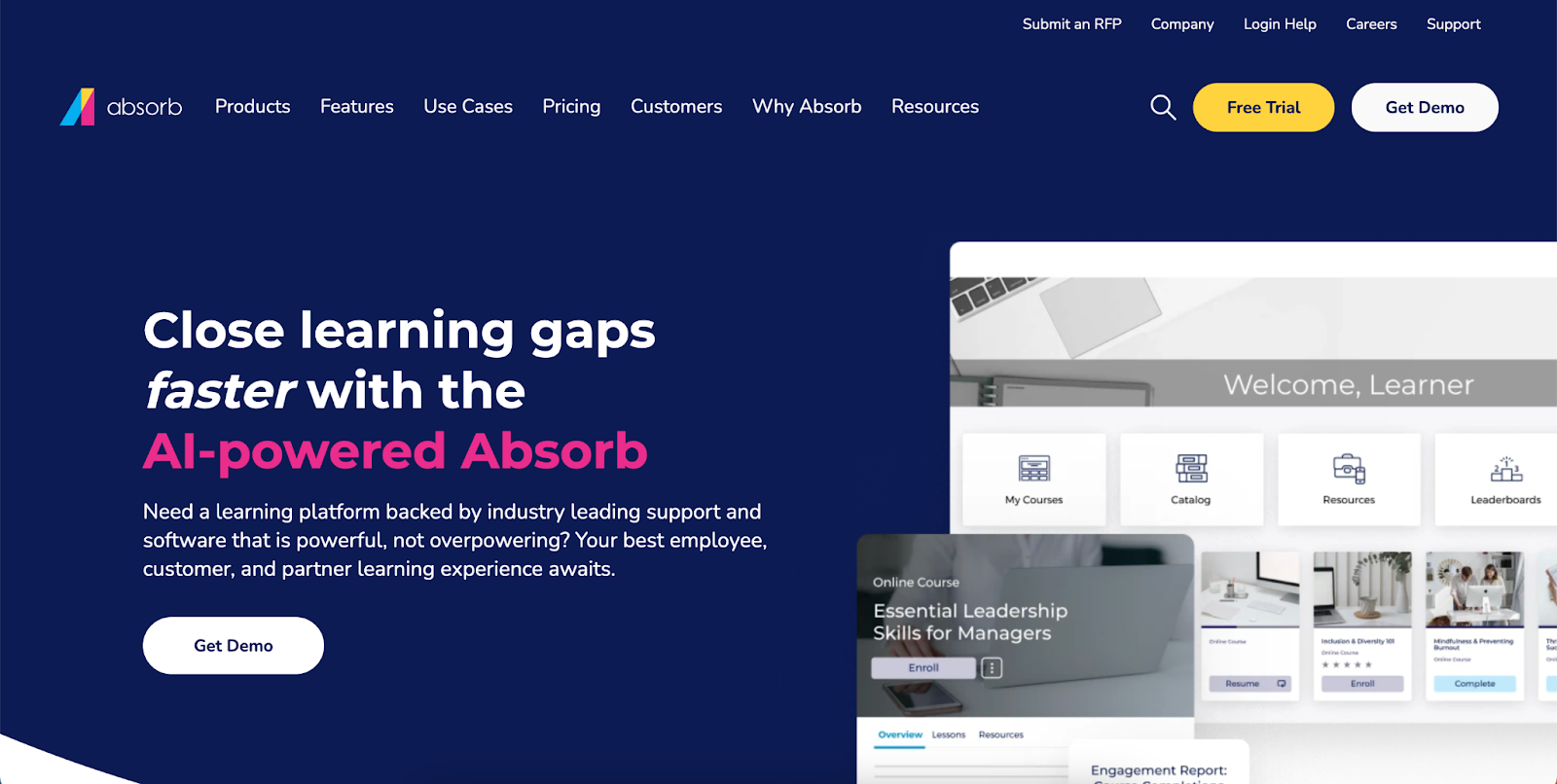
Absorb LMS is a candidate for banks running recurring learning across a large workforce. Its enrolment rules, course reporting and certificate settings support ongoing administration, while Absorb Create is a separate authoring product.
For a recurring course, administrators combine automatic enrolment rules with Allow Re-Enrollment. The cycle can run annually or at another interval. Certificate expiry and re-enrolment timing need to be configured together, so the learner receives the next requirement at the intended point.
The practical check: The detail that caught my attention is how easy it is to create the wrong cycle with the right features. A short certificate duration and an early re-enrolment trigger can reopen a course immediately after completion. I would review those settings against the bank’s actual refresher policy and check the report from a manager’s account, not just the course editor.
My verdict: A sensible shortlist for recurring training and central reporting. Evaluate authoring and reporting scope in the quoted package rather than assuming every Absorb product is included.
Pricing and plans: Quote-only. Include the learner model, implementation, integrations and any Absorb Create or reporting add-ons in the annual total.
6. LearnUpon
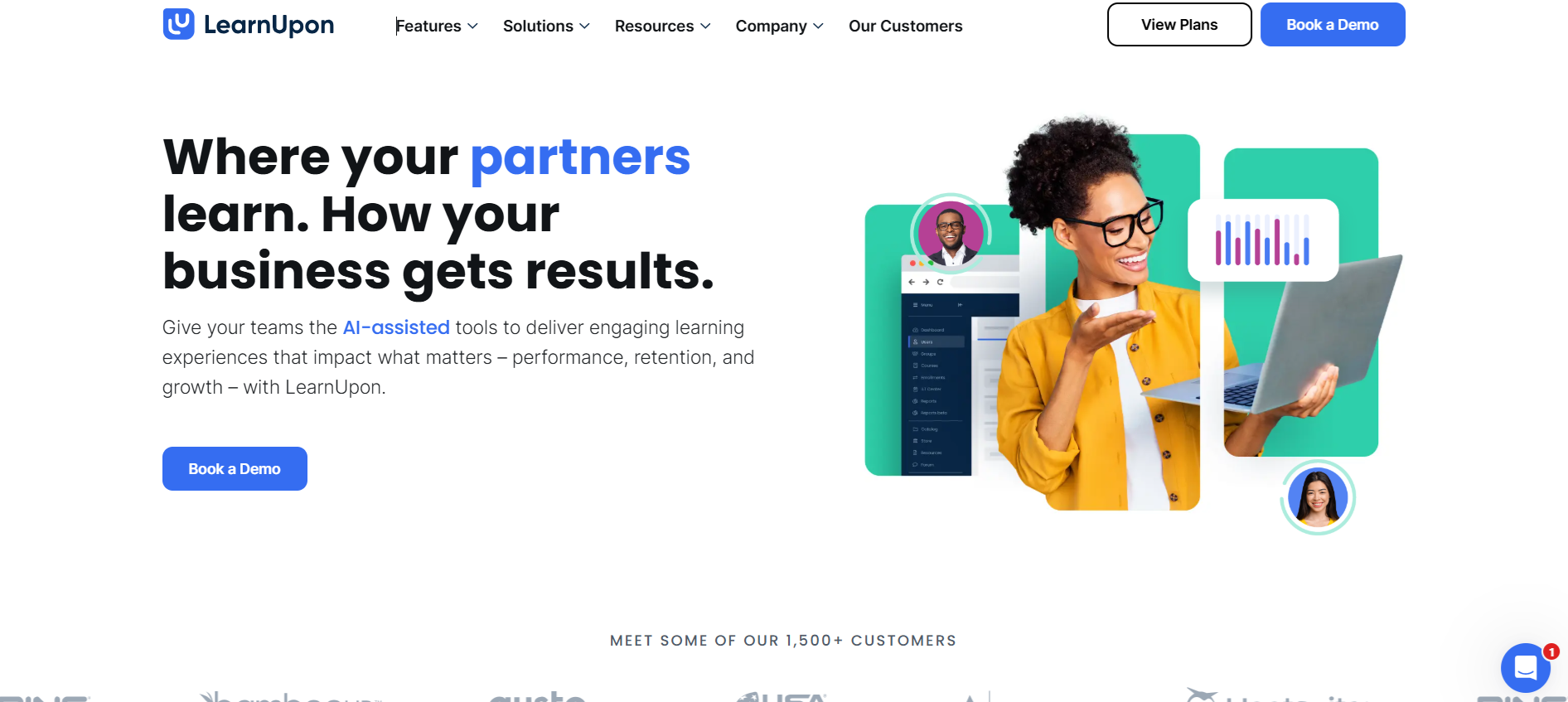
LearnUpon suits a bank delivering different programmes to employees, partners or other external audiences. Separate portals let the organisation manage the learner experience and administration for each audience.
The platform supports SCORM and xAPI, live learning, assignments, exams, certification and recertification. A staff programme can therefore combine a policy module with a workshop and an assessment, while a partner programme has its own branding and enrolment process.
What I found: My buying check would focus on what crosses the portal boundary. Central compliance may need a consolidated view, but a partner administrator should see only their own population. I would also price the content and integrations needed for each audience. Multiple portals are useful when they solve a real access problem; they add little to a programme with one audience and one administrator.
Where it fits: Banks needing clear separation between internal and external learning programmes, with support for a managed implementation.
Pricing and plans: Custom annual quote. Employee learning starts at 100 users, Associations at 150 and Customer Education at 300. Match the product, portal and integration scope to the audience you actually intend to train.
7. Litmos
Litmos combines LMS delivery with optional ready-made training libraries. It is useful when the bank wants to license part of its learning programme while adding courses on its own products and procedures.
The platform accepts existing SCORM, xAPI and other learning material, and supports learning paths, instructor-led sessions and compliance administration. Native authoring is available, while AI authoring belongs to Platinum AI. Content libraries are additional purchases, so the LMS tier and the course catalogue need to be assessed together.
My review notes: For my shortlist, the library has to be checked at course level. A general compliance subscription does not tell you whether a module covers your jurisdiction, the latest policy or the role you are training. I would sample the relevant banking lessons and compare their update process with the internal material the bank will continue to maintain.
My take: A practical choice for combining purchased content with your own programme. Establish which banking topics the library covers before treating it as a complete curriculum.
Pricing and plans: Foundation starts at US$8,000/year and Platinum at US$15,000/year. Platinum AI is quoted. Premium and partner content libraries are add-ons; include them and any additional tenants in the total.
8. iSpring LMS
iSpring LMS, previously iSpring Learn, is useful when a banking L&D team has established slide-based material and wants to deliver it as tracked learning. iSpring Suite handles PowerPoint authoring; the LMS handles the learner programme.
That route lets the team preserve approved explanations while adding questions and interactive practice, then assign the resulting course and follow completion. PowerPoint-based Suite authoring requires Windows and PowerPoint. Treat authoring access and LMS administration as separate working roles.
The practical check: The practical point in my review is that uploading a policy deck does not finish the learning design. A branch employee should practise the decision the policy supports, then receive a clear assessment and follow-up. I would start with one existing course and compare the effort of updating it, assigning it and retrieving the records with the team’s current process.
My verdict: A good fit for a team maintaining established PowerPoint courses. Compare the assignment, renewal and reporting workflow before choosing it for a complex enterprise compliance programme.
Pricing and plans: Business pricing is US$6.91 per user/month at 100 users, shown as US$8,286 annually; the rate falls at larger bands. Enterprise and smaller-user requirements are quoted. Check the authoring licence in the package.
How to build a banking training programme
An LMS is one part of the programme. The content owner decides what staff must learn, the administrator sets the assignments, and managers follow up gaps. I would build those responsibilities into the buying exercise so the team can compare more than a polished learner screen.
| Training requirement | Content and assessment | Evidence to retain |
|---|---|---|
| AML and customer identification | Role-specific situations using approved procedures | Assigned population, assessed answers and completion history |
| Fraud escalation | Recognise a suspicious request and practise the escalation | Assessment result and any required follow-up |
| Product and service training | Explain the product and handle a customer situation | Learning progress plus a practical check where needed |
| Recurring policy updates | Teach what changed and who needs the update | Policy version, assignment date and retraining record |
When a specialist banking course provider belongs on the shortlist
For supplied US banking curricula, OnCourse Learning is a useful additional comparison. Its OnCourse Direct LMS assigns by role and location, connects employee data through HRIS integration and offers reporting templates. Its catalogue includes banking and credit-union topics such as BSA and AML case studies, lending and deposit compliance. Compare that curriculum with your jurisdiction and your own procedures before buying.
My preference is to separate a platform purchase from a curriculum purchase. A bank may retain its existing LMS and source specialist courses, create internal training with Coursebox, or combine both. A specialist US library should not be assumed to cover UK, Australian or other local rules; a general authoring platform should not be assumed to include the library.
The American Bankers Association says more than 1,500 banks use its Frontline Compliance Training, offered at no additional cost to ABA member banks. For an eligible US bank, checking that existing membership benefit is a practical first step before purchasing duplicate courseware.
Use one new employee, one existing employee and one person changing roles. Assign the programme, complete and fail an assessment, run the planned refresher process, then retrieve the manager and compliance records. Use synthetic employee and customer data for the vendor demonstration.
What to check in the banking LMS quote
Put implementation, HR and identity connections, the content licence, author access and recurring training requirements beside the subscription price. I would also agree who updates the content, who resolves a failed data feed and how records are exported at the end of the contract. Security evidence applies to the specific service and deployment, while the bank remains responsible for approving its training policy.
Which banking LMS should you choose?
Eight platforms, matched to the compliance job you are solving for:
| If your priority is | Go with |
|---|---|
| Compliance automation at enterprise scale | Docebo |
| Compliance plus talent management | Cornerstone |
| Building your own bank-specific training fast | Coursebox |
| Keeping regulatory content current via SMEs | 360Learning |
| Enterprise compliance with strong reporting | Absorb LMS |
| Separate portals for staff, partners, customers | LearnUpon |
| Turnkey off-the-shelf compliance courseware | Litmos |
| Slide-based policy training with renewals | iSpring LMS |
Whichever you pick, test the certification and audit trail on real data before you sign, because that is what a regulator will ask for. For the wider sector view beyond banking, our best LMS for financial services guide covers insurance, investment and fintech too.
Disclosure: I work at Coursebox. Product details and pricing were reviewed on 8 October 2026. The Coursebox usage figure is first-party PostHog data for 11 March to 19 July 2026.
Frequently Asked Questions
Docebo and Cornerstone are candidates for complex administration, Coursebox for creating and delivering your own bank-specific learning, and Litmos for combining delivery with purchased content. Also compare specialist banking course providers when a supplied curriculum is central to the purchase.
Support the bank’s assigned learning, assessments, refresher cycle and evidence requirements. Check the new-hire and existing-staff workflow, manager follow-up, course versions and exportable records. The training policy and curriculum still need approval by the bank’s compliance team.
An LMS records and administers learning. Your compliance team still approves the curriculum, jurisdiction, recurrence and evidence requirements, while procurement reviews the service’s security and data handling. Check the applicable scheme or rule rather than assuming a universal banking-compliance certification.
Yes. Coursebox can turn approved policies into editable courses with assessments and tutor support, then deliver them or connect them with an existing LMS. Your compliance specialists should review the content and the training evidence before release.
Coursebox is free to start, while 360Learning publishes US$8/user/month for up to 100 users. iSpring publishes user-band pricing. Compare the complete programme, including purchased content, implementation and the learner billing model, before choosing on price.
Alex Hey
Alex Hey is a technical marketer with 10 years of hands-on growth and digital marketing experience. He cofounded Coursebox together with Travis Clapp who he met online when looking for a cofounder to build a globally impactful software product. He works in the Perth, Western Australia office as the COO. He built the world's first automated funnel for patient recruitment before building Coursebox. After launching Coursebox in mid 2023, he drove +400k organic sign ups for Coursebox. Alex leads the marketing and digital growth of Coursebox and works with the product development team bringing a passion for data-driven product decision and exceptional user experience. Alex is determined to build the world's easiest way to build the perfect course.

