

Top 6 Professional Training Examples Every Company Should Adopt
Discover the best professional training examples in 2026 that boost employee skills, engagement, and performance. Learn strategies, formats, and real-world examples to design impactful training programs.


Train teams faster and more effectively with AI
Investing in professional training directly impacts how long employees stay and how well organizations grow.
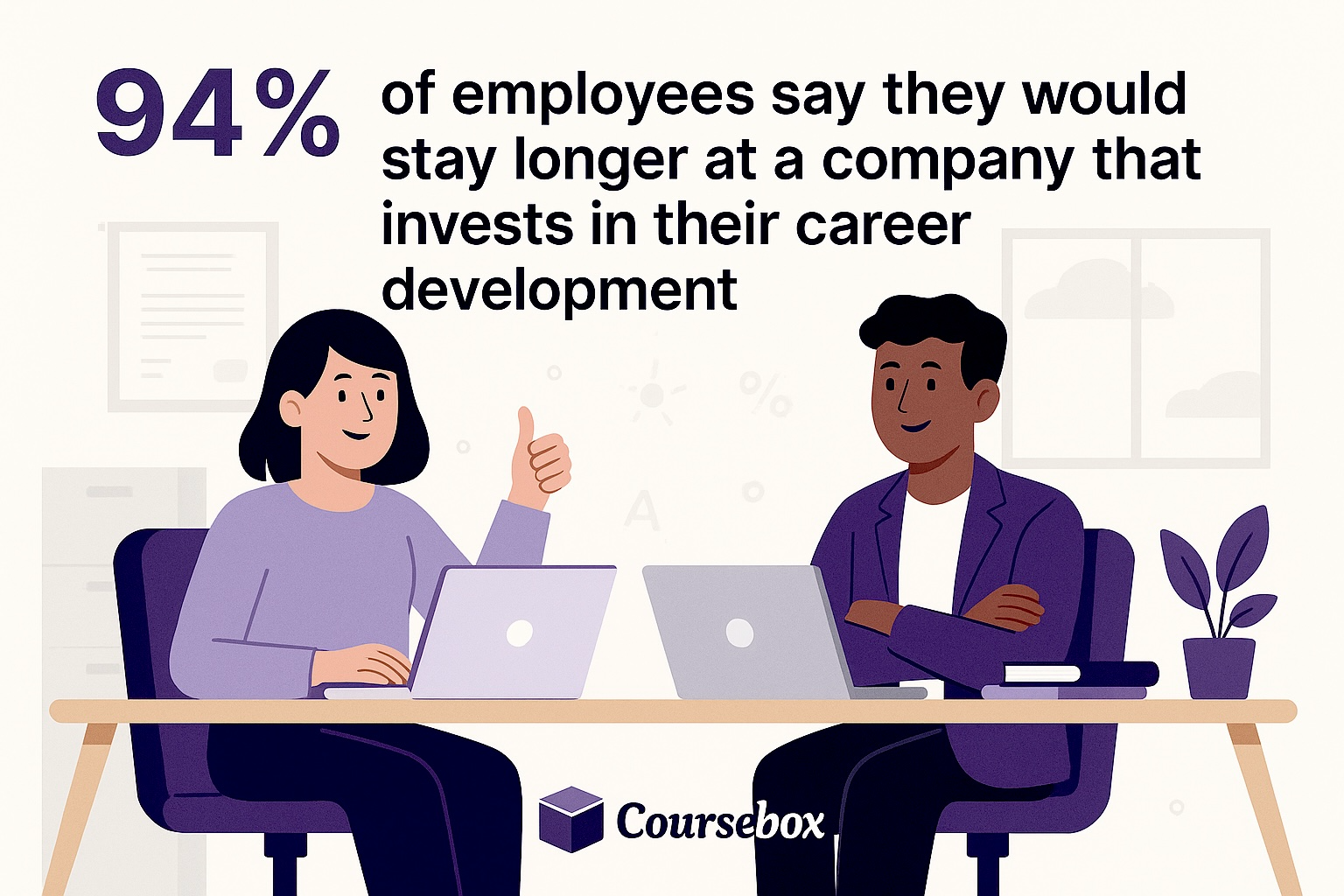
A Deel Report found that 94% of employees are more likely to remain with a company that supports their career development. Even more striking, the study also revealed that organizations fostering a culture of continuous learning see retention rates that are twice as high as those that do not.
Why is this so important?
Work is changing fast, and people want more than just a salary. They’re looking for chances to grow, develop new skills, and build meaningful careers. Companies that support this not only keep their best talent but also spark innovation and set themselves up for long-term success.
In this article, I’ll walk you through the most impactful professional training examples you can apply right now in 2025.
What Is Professional Training?
Professional training in the workplace refers to structured programs that are:
- Designed to help employees gain or enhance knowledge, skills, and behaviors.
- Planned and measurable, unlike informal or ad-hoc learning.
- Aligned with organizational goals to drive both individual and company success.
- Delivered through various formats such as classroom workshops, online courses, mentorship, or hands-on simulations.
Difference between professional training, upskilling, and reskilling.
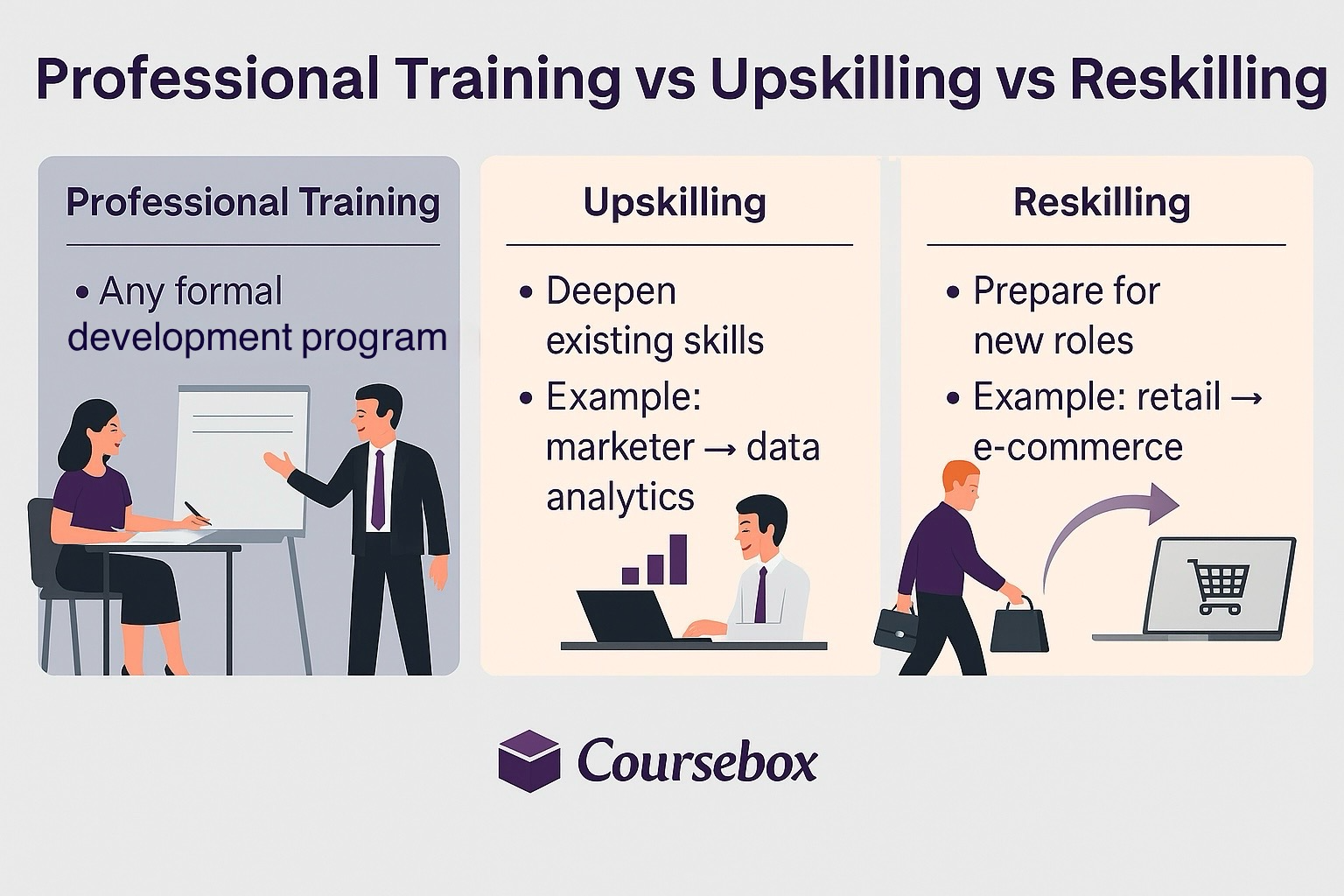
- Professional Training A broad term covering any formal development program that equips employees to perform better in their current or future roles.
- Upskilling Focuses on helping employees deepen or expand their existing skills (e.g., a marketer learning advanced data analytics).
- Reskilling Prepares employees to take on entirely new roles or adapt to changing business needs (e.g., a retail worker being trained to manage e-commerce platforms).
Why training is essential in 2025
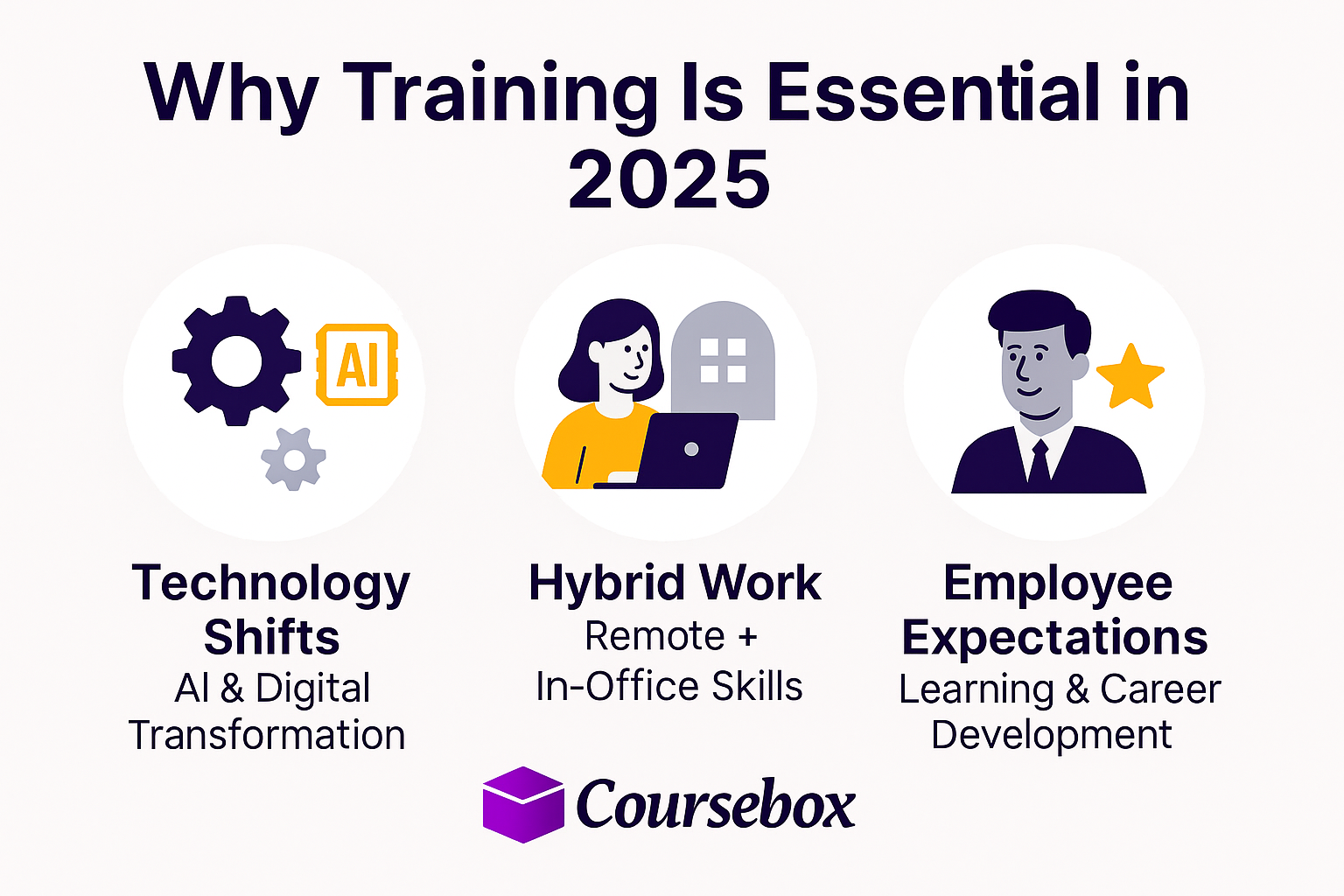
- Technology Shifts With AI, automation, and digital transformation accelerating, employees must continually update their technical and soft skills to stay relevant.
- Hybrid Work The rise of remote and hybrid workplaces requires new competencies in digital communication, collaboration, and self-management.
- Employee Expectations Modern employees prioritize learning and growth opportunities when choosing or staying with an employer. According to LinkedIn’s 2024 Workplace Learning Report, career development is one of the top three reasons employees remain at their companies.
Benefits of Professional Training Programs
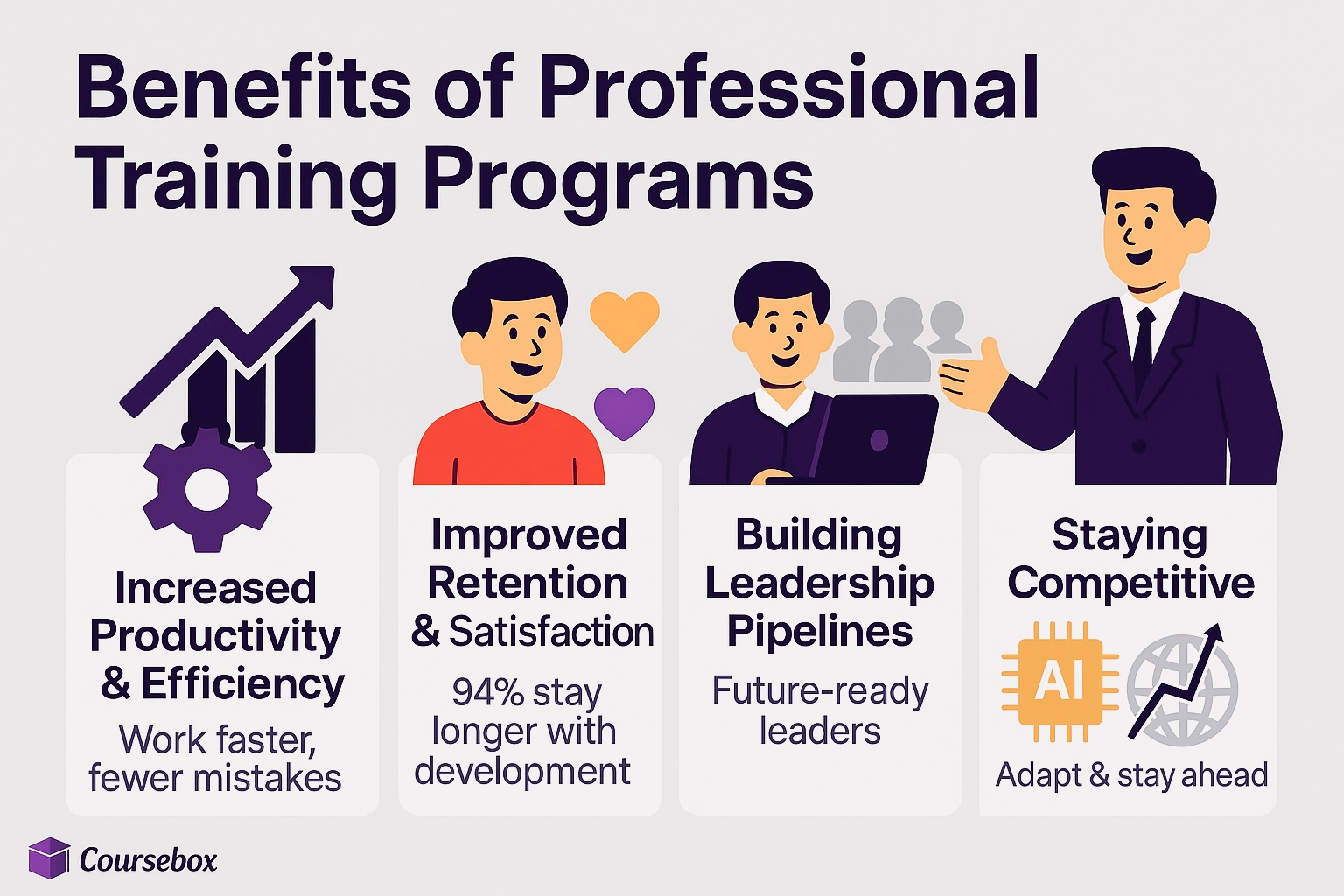
- Increased productivity and efficiencyTraining gives employees the skills to work faster and with fewer mistakes, directly boosting output and quality.
- Improved retention and satisfaction 94% of employees say they would stay longer at a company that invests in their development (LinkedIn, 2024). Training makes staff feel valued and engaged.
- Building leadership pipelines Leadership training develops internal talent, ensuring future leaders are ready and aligned with company culture.
- Staying competitive Continuous learning helps organizations adapt to AI, automation, and industry changes, keeping them ahead of competitors.
Types of Professional Training Programs
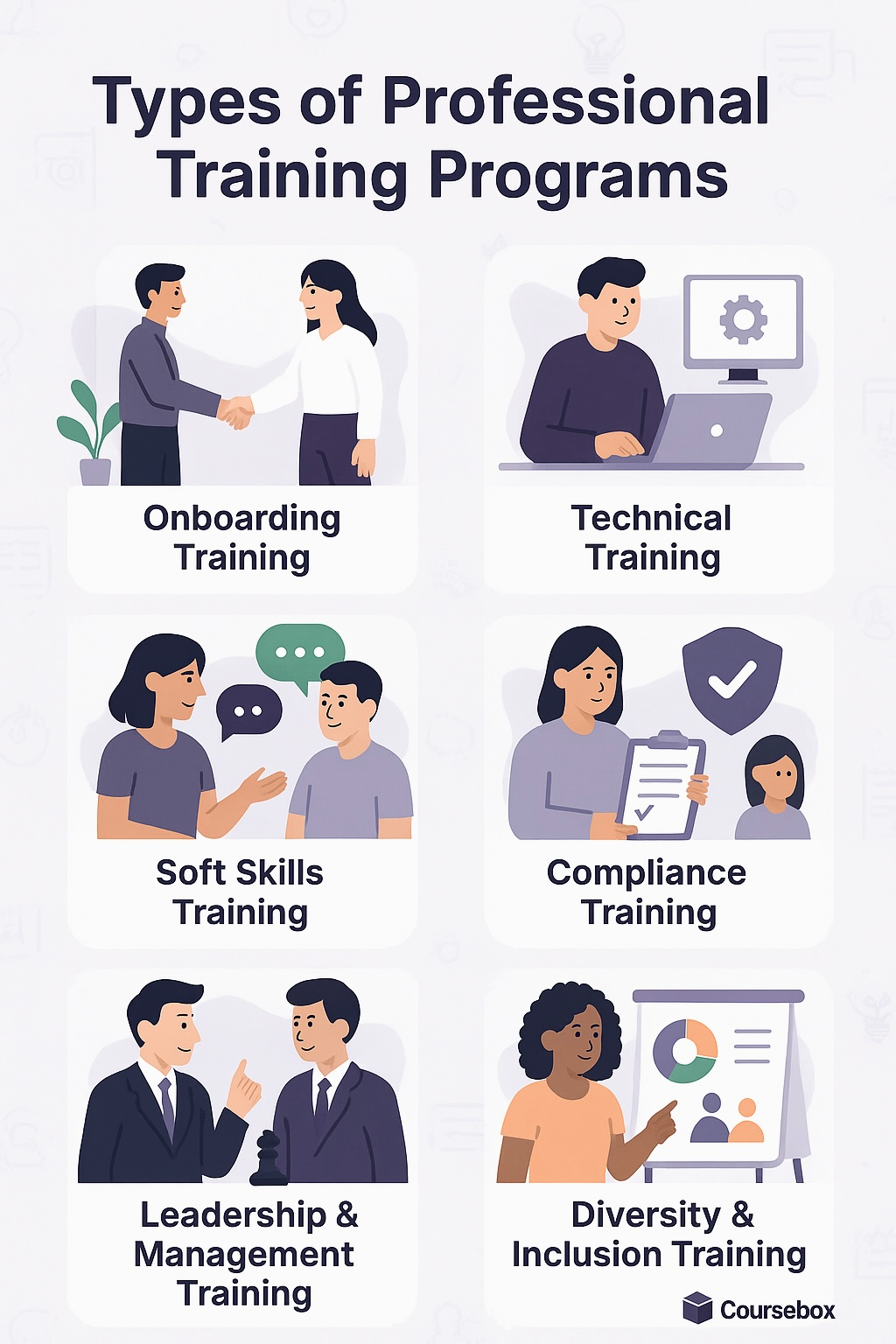
- Onboarding Training: Onboarding traininghelps new hires quickly integrate into the company’s culture, systems, and workflows.
- Technical Training: Builds role-specific expertise, from essential software proficiency to advanced technical knowledge.
- Soft Skills Training: Improves communication, teamwork, problem-solving, and emotional intelligence.
- Compliance Training: Compliance training Ensures employees adhere to safety standards, legal rules, and industry regulations.
- Leadership & Management Training: Develops strategic thinking, decision-making, and people management skills.
- Diversity & Inclusion Training: Promotes awareness, equity, and inclusive workplace practices.
Real-world Case Study Examples: 6 Professional Training Programs That Work
1. Deloitte – Leadership Academy
Format/Method:
Gamified Training Modules
Leadership development often struggles with low engagement, especially at the executive level. Deloitte addressed this challenge by rethinking how learning is delivered.
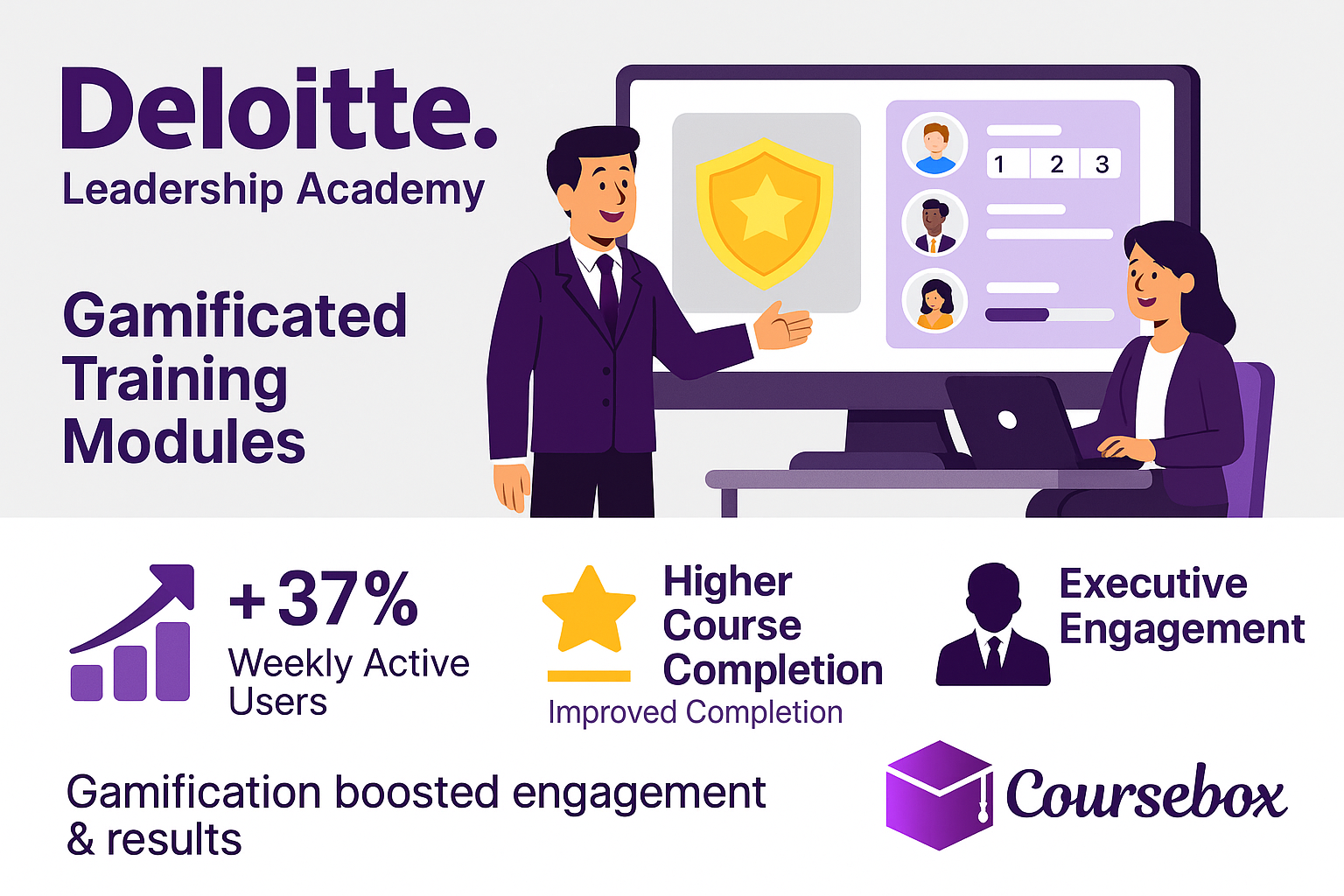
The company launched its Leadership Academy as a global platform for managers and executives. To increase participation, Deloitte introduced gamification features including badges, leaderboards, and progress tracking.
The impact was immediate: weekly active users rose by 37% and course completion rates improved significantly ( Chief Learning Officer, 2012).
Key Outcome:
The initiative showed that gamification can strengthen a professional training program, as leaders gained new skills with higher engagement and the organization achieved stronger results.
2. Microsoft – Blended Learning Models
Format/Method:
Online Platforms + Instructor-Led Training (Hybrid)
For global companies, professional training often demands both reach and relevance. Programs must deliver the same high standard to thousands of employees while still adapting to individual needs, and Microsoft answered this challenge with blended learning.
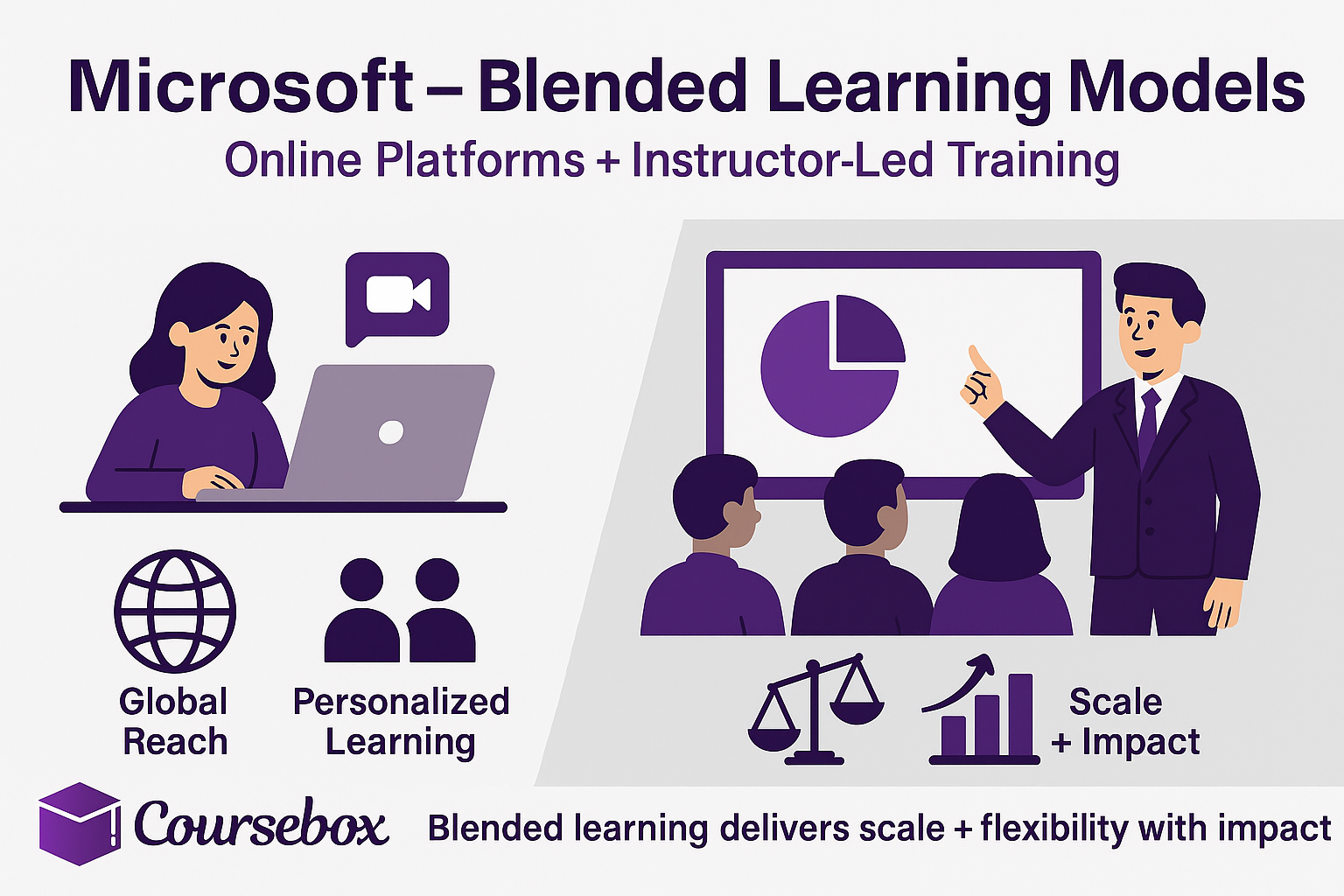
The company paired digital modules with instructor-led sessions, building programs that reached employees worldwide yet still felt personal. In its Blended Learning eBook, Microsoft showed how this model placed learners at the center and delivered efficiency on a global scale ( Microsoft Education, 2021).
Key Outcome:
The model shows how a professional training program can achieve both scale and impact, offering flexibility for learners while equipping organizations with a unified, future-ready workforce.
3. IBM – Apprenticeship Program (“No Degree? No Problem!”)
Format/Method:
Blended Learning (Online Modules + Mentorship + Work Experience)
As the demand for digital skills grows, IBM questioned the traditional assumption that tech careers require a four-year degree. Its apprenticeship initiative reflects a new way to develop talent.
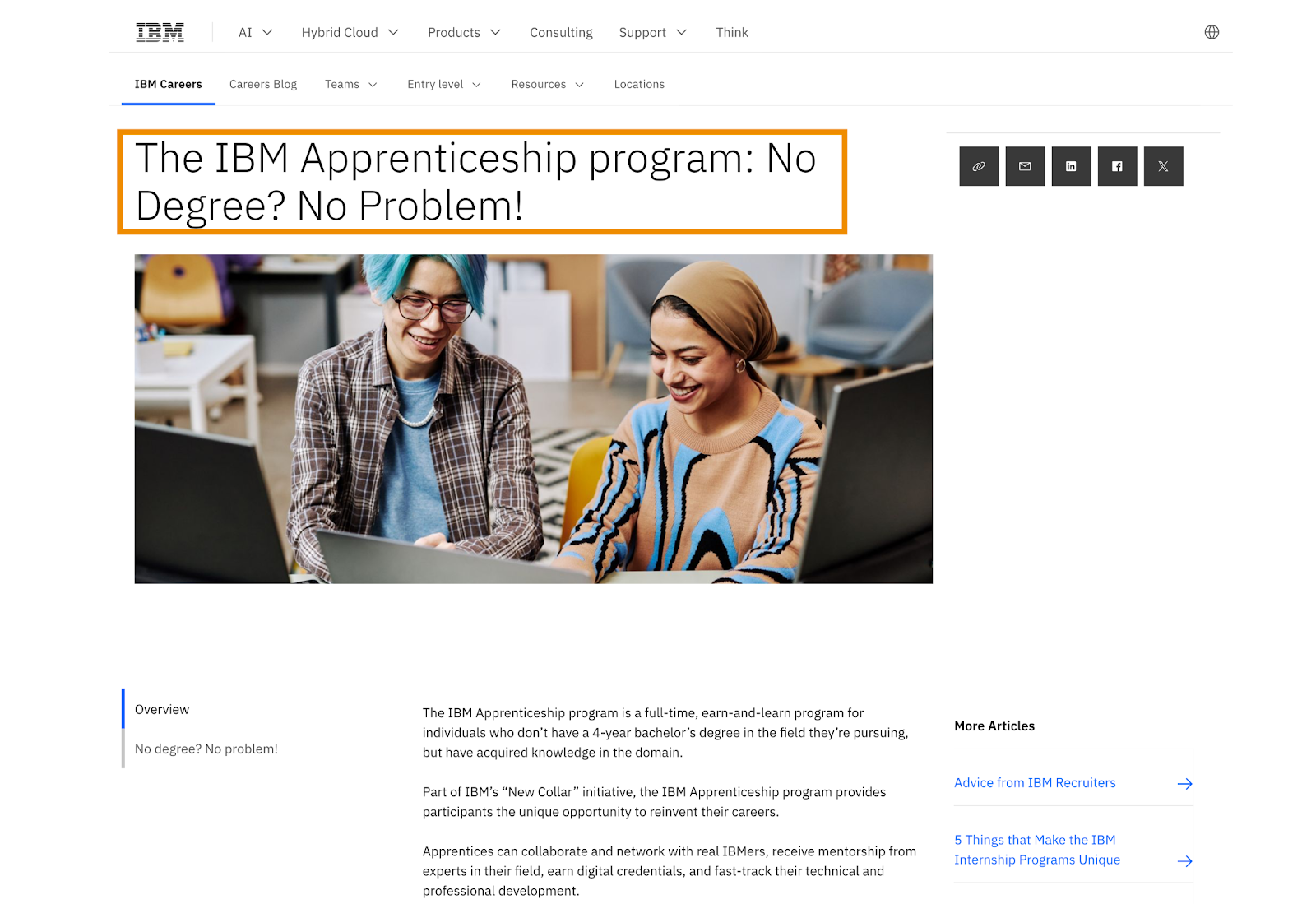
The program combines self-paced digital learning, mentor-led guidance, and paid, hands-on work experience. Participants earn digital badges and credentials that are valued both within IBM and in the wider job market ( IBM Careers Blog, 2024).
By blending formats, IBM delivers flexibility for learners while ensuring rigorous outcomes. Apprentices contribute to real projects as they learn, gaining both skills and experience.
Key Outcome:
The initiative broadens access to professional development, addresses digital skills shortages, and links career growth to credentials recognized by employers.
4. Siemens Healthineers – VR Surgical Training
Format/Method:
Virtual Reality (VR) & Augmented Reality (AR) Simulations

In healthcare, training must balance precision with safety. Siemens Healthineers addressed this challenge by adopting immersive technologies for medical education.
In partnership with PrecisionOS, the company developed VR modules that let surgical teams simulate complex procedures using advanced imaging systems in controlled environments.
Instead of relying only on cadavers or supervised surgeries, staff can practice repeatedly in virtual operating rooms, lowering both costs and risks ( XR Today, 2023). This approach builds confidence and technical skill before a real patient is involved.
Key Outcome:
VR training enhances surgical accuracy, improves patient safety, and turns high-risk training into scalable, low-cost practice.
5. Google – Googler-to-Googler (G2G)
Format/Method:
Instructor-Led Workshops & Peer-to-Peer Learning
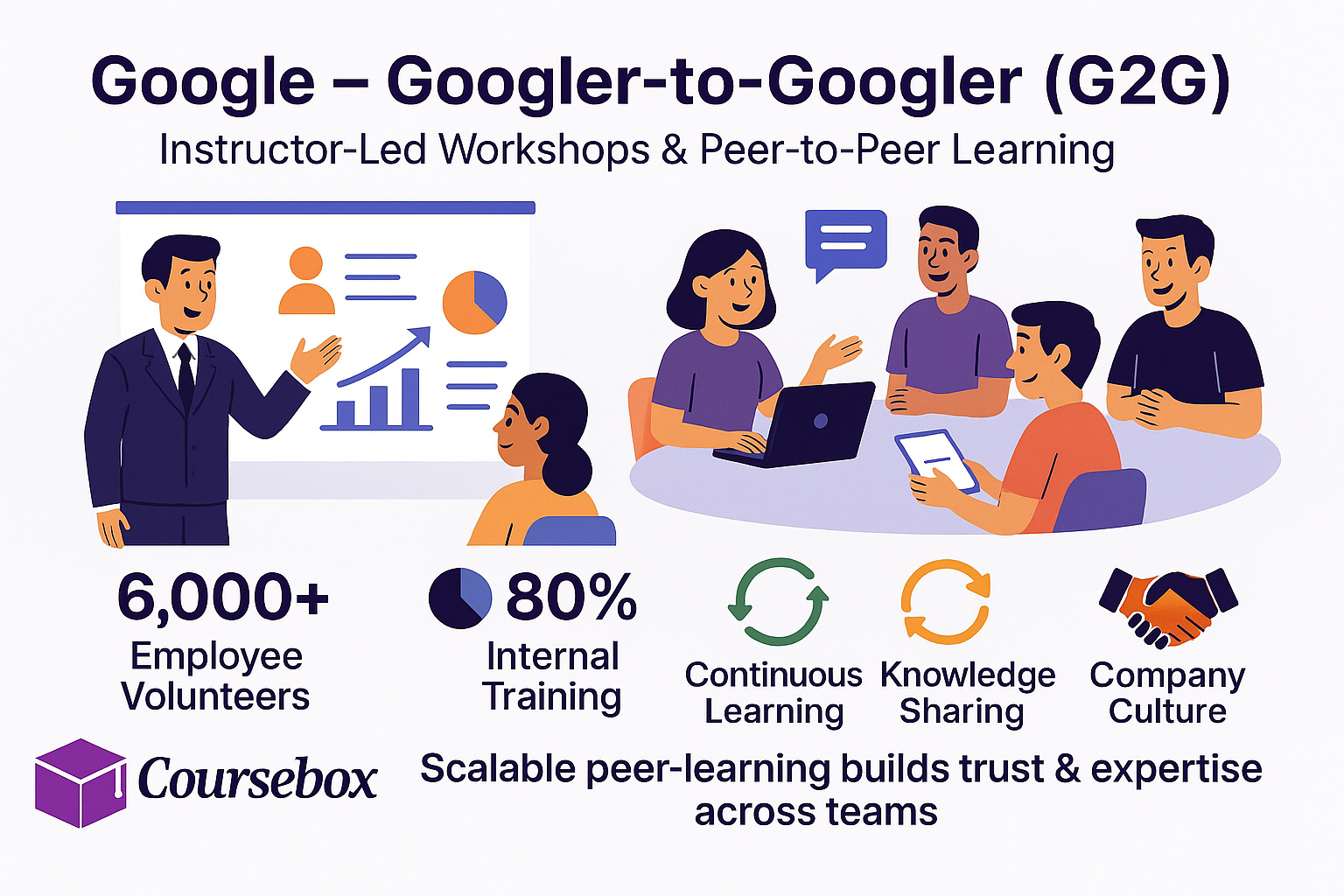
In fast-moving industries, knowledge often changes faster than traditional training can keep up. Google tackled this challenge by turning employees into both teachers and learners.
The Googler-to-Googler (G2G) program is one of the world’s largest peer-learning initiatives. More than 6,000 employees volunteer to lead workshops, mentor colleagues, and design training materials. Today, about 80% of Google’s internal training is delivered through this network ( HCI, 2023).
Unlike HR-led or consultant-driven programs, G2G spreads expertise horizontally across the company, ensuring knowledge moves as quickly as the business evolves.
Key Outcome:
G2G offers a scalable model of continuous learning that builds trust, reinforces expertise, and strengthens company culture by embedding knowledge-sharing into daily work.
6. Amazon – Technical Apprenticeships
Format/Method:
Mentorship & Coaching + On-the-Job Training
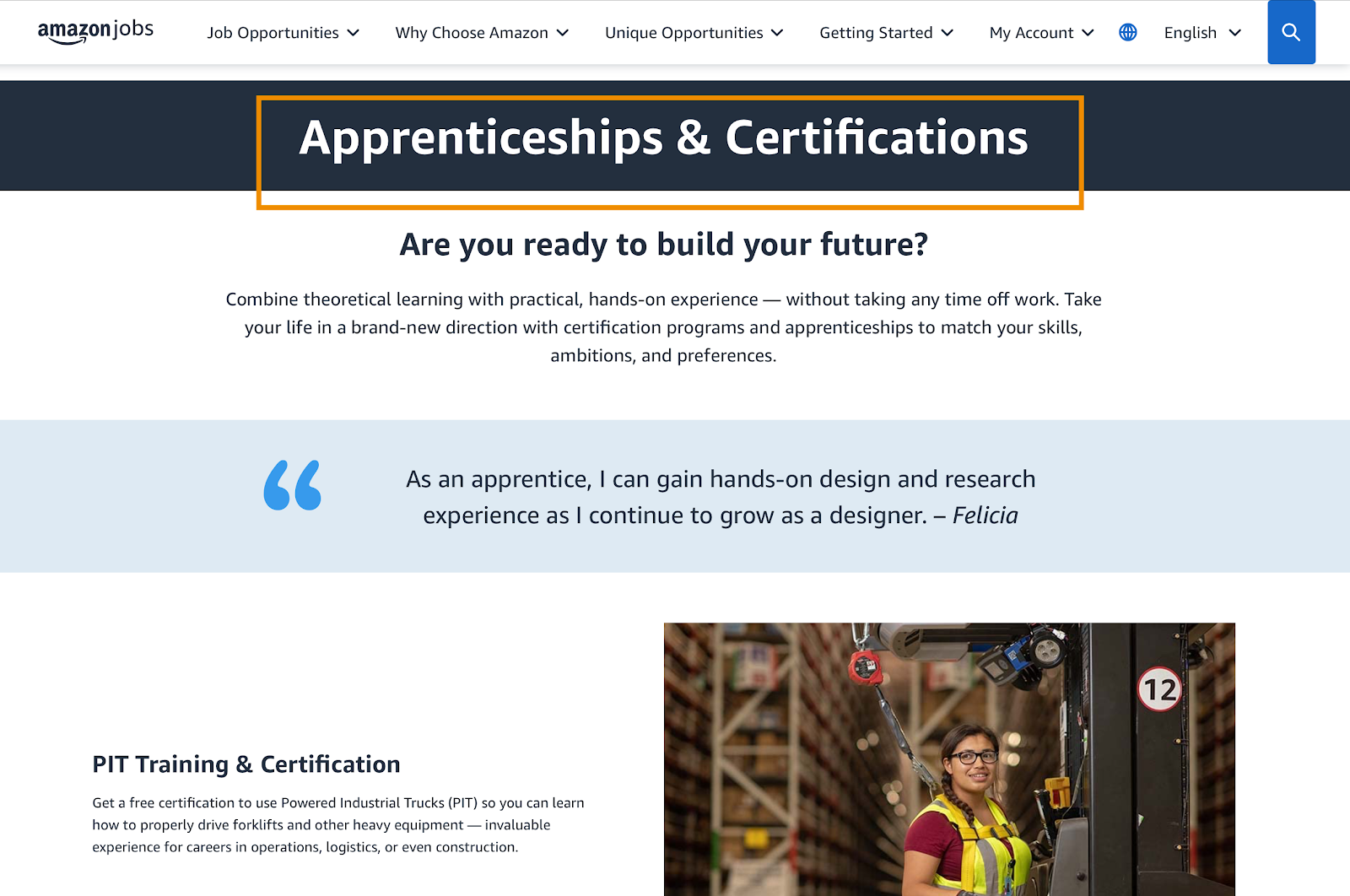
High-demand technical roles often feel out of reach for nontraditional candidates. Amazon addressed this gap by creating apprenticeship programs that combine access, mentoring, and career opportunity.
Each program begins with structured courses and then moves into guided on-the-job training. These full-time, paid opportunities have already supported more than 3,500 individuals in building careers as Cloud Support Associates and Software Development Engineers ( Amazon Jobs; About Amazon).
The program focuses on communities that are frequently left behind in technology, giving veterans, military spouses, and those without formal credentials a straightforward path into meaningful careers. Professional training in this form becomes a channel for inclusion and a foundation for sustainable career development.
Key Outcome:
The program delivers professional training that opens new career paths and equips Amazon with a diverse workforce prepared to meet future demands.
Which Training Formats Should Companies Use?
The six case studies above show that no single method can address every training need. Instead, leading organizations adopt a portfolio approach: selecting formats based on goals, workforce profiles, and industry context.
- Peer-to-Peer Workshops (Google, G2G): Excellent for spreading internal expertise and strengthening collaboration.
- Mentorship & Apprenticeships (Amazon, IBM): Best for reskilling, workforce diversity, and long-term talent development.
- Blended Learning (Microsoft, IBM): A highly adaptable model that balances flexibility with human interaction, recommended as a foundation for most companies.
- Gamified Modules (Deloitte): Ideal for boosting engagement and ensuring completion in leadership or compliance training.
- Immersive VR/AR Simulations (Siemens Healthineers): Essential for high-risk industries where safe, hands-on practice is critical.
Recommendation
The most effective strategy is not choosing one method, but combining formats: digital platforms for scale, gamification for motivation, mentorship for personalization, and VR/AR for immersive skill-building.
Companies that embrace this hybrid approach are more likely to achieve measurable improvements in performance, retention, and innovation.
How to Design an Effective Professional Training Program
Effective training is the result of thoughtful design, not coincidence. The strongest programs are built with both strategy and execution in mind, ensuring learning directly supports workplace performance.
To achieve this, a program should include:
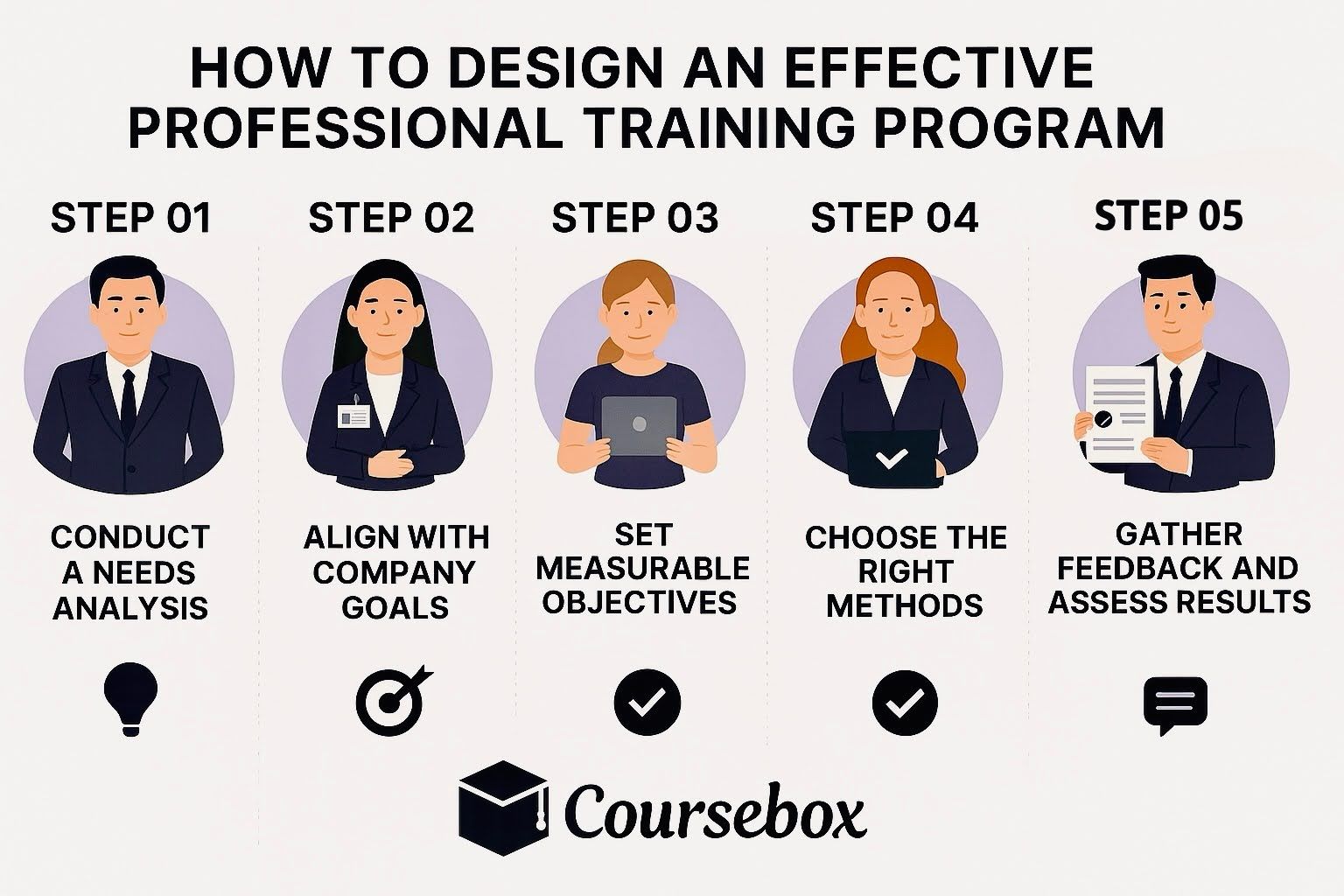
Step 1: Conduct a Needs Analysis
Find out where the gaps are. Use surveys, performance data, or feedback from managers to see what skills employees need most.
Step 2: Align with Company Goals
Training should support business priorities. Whether it’s improving customer service, preparing leaders, or speeding up onboarding, link the program directly to company objectives.
Step 3: Set Measurable Objectives
Be specific. Instead of “improve sales skills,” aim for “increase sales conversions by 10% in six months.” Clear goals make success easier to track.
Step 4: Choose the Right Methods
Pick methods that match your goals and workforce:
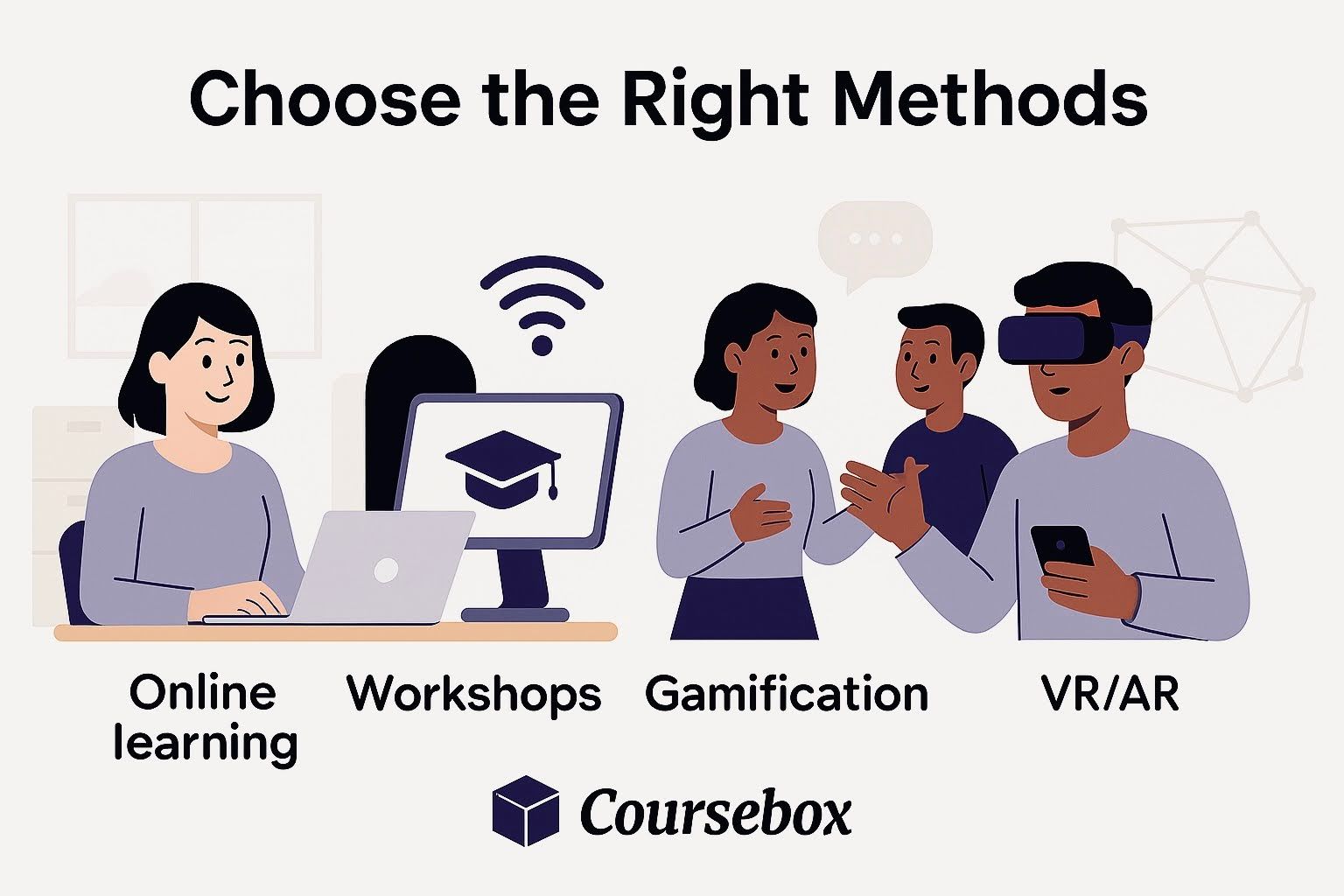
- Online learning for scale and flexibility
- Workshops for interaction
- Gamification for motivation
- VR/AR for high-risk or complex tasks. Often, a blended mix works best.
Step 5: Gather Feedback and Assess Results
Use quizzes, surveys, and performance metrics to check if training works. Adjust and improve programs regularly based on what you learn.
Measuring the Impact of Professional Training
Measuring impact is not a single step but a set of complementary methods. The most effective programs use all of the following approaches together:
1. Track Key Metric
Measure outcomes that matter:
- Knowledge retention (tests, certifications)
- Employee engagement (participation, completion rates)
- Performance KPIs (sales growth, error reduction, productivity gains)
2. Use Surveys and Feedback Loops
Gather employee opinions on training relevance and quality. Feedback adds context to hard numbers and highlights areas for improvement.
3. Link Training to ROI
Show business leaders the value: faster onboarding, improved customer satisfaction, stronger leadership pipelines.
4. Apply Continuous Improvement
Review data regularly, update content, and adapt methods as business needs evolve. Training impact grows when it’s treated as an ongoing cycle.
The Coursebox Advantage in Professional Training
Training only delivers real value when employees can connect with the material, apply it quickly, and managers can measure its impact. Coursebox makes this possible through the following key features:
1. AI Course Creator
AI Course Creator enables Coursebox to transform manuals, PDFs, and slide decks into complete courses within minutes. Content that once sat in static files becomes structured, interactive, and ready for immediate use. Employees learn from clear and organized lessons, while organizations can refresh material quickly as needs evolve.
2. AI Quizzes and Automated Assessments
With AI Quiz Generator and AI Assessment & Grading, Coursebox changes how knowledge is tested. Quizzes are created directly from course content and grading is handled instantly.
Learners receive feedback the moment they finish, while managers gain dependable data to evaluate skills and track progress across teams.
3. AI Tutor Chatbot
AI Tutor Chatbot adds a personal touch to Coursebox. Learners can ask questions, explore complex topics, and receive guidance on demand.
This constant support reduces frustration, builds confidence, and keeps engagement levels high, all without increasing the workload for trainers or HR teams.
Conclusion
Professional training plays a vital role in engaging employees, strengthening their skills, and ensuring consistent performance across the organization. Programs that cover areas such as onboarding, compliance, leadership, and technical development provide structure and motivation, creating impact that informal learning cannot deliver.
Technology makes this process even more effective. With Coursebox.ai, organizations can design, personalize, and scale training in minutes. This enables teams to adapt quickly to change, keep skills up to date, and maintain a culture of continuous growth.
FAQs on Professional Training Examples
1. Which training format is the most effective?
No single format works for everyone. The most impact comes from combining methods: online platforms for scale, mentorship for personalization, gamification for engagement, and VR for hands-on practice.
2. Can small businesses use these professional training examples?
Absolutely. Smaller companies can start with cost-effective tools like online courses and mentorship, and scale later into gamified or VR-based training. Platforms like Coursebox.ai are designed to grow with you.
3. How often should training programs be updated?
At least once a year—or sooner if technology, regulations, or business goals change. Continuous updates keep programs relevant and effective.
4. What role does technology play in modern training?
Technology makes training more flexible, engaging, and measurable. Tools like AI-powered platforms, gamified modules, and VR simulations are transforming how companies deliver learning.
5. How long should a professional training program last?
Short, focused modules work best. Microlearning (5–10 minutes each) improves retention, while longer programs should be broken into manageable sessions spread over weeks.
6. How can companies get started quickly?
The fastest way is to use an AI-powered LMS like Coursebox.ai. It helps you design courses, add interactive elements, and launch training in minutes without needing a big L&D team.
Travis Clapp
Travis Clapp is the original founder and CEO of Coursebox. As an experienced instructional designer, he has lived through the process of building high quality courses. These experiences brought about his idea to upload all your documents and ideas into a virtual box that could convert those magically into a course. Prior to Coursebox, he successfully founded and built a social based LMS. Travis has 15+ years of experience designing courses and EdTech platforms from university MOOCs to enterprise LMS. Travis has built training for reputable companies like Johnson & Johnson, Electrolux, Michael Hill and SA Health. One of his courses reached 20,000+ learners which was a flagship edX course. He is based in the Adelaide, South Australia office and passionately works on customer support, sales and bringing the original product vision to life every day.

