

Different Types of Communication Skills Every Professional Should Know
Wondering what communication skills every professional needs at work? Discover the key types of communication skills that help employees grow in their careers.


Learn faster with AI powered courses, quizzes, and flashcards.
Have you ever left a meeting thinking everyone agreed, only to realize later that people understood things differently?
Situations like this happen in many workplaces, and most of the time, the problem is not a lack of effort or expertise. Many professionals work hard, share ideas, and try to contribute, yet their message does not always land the way they expect.
Remember, communication in the workplace is not just about speaking well. It includes several different abilities such as listening carefully, expressing ideas clearly, and understanding how others interpret information.
So, for employees, let’s discuss the types of communication skills they need to excel in their workplace.
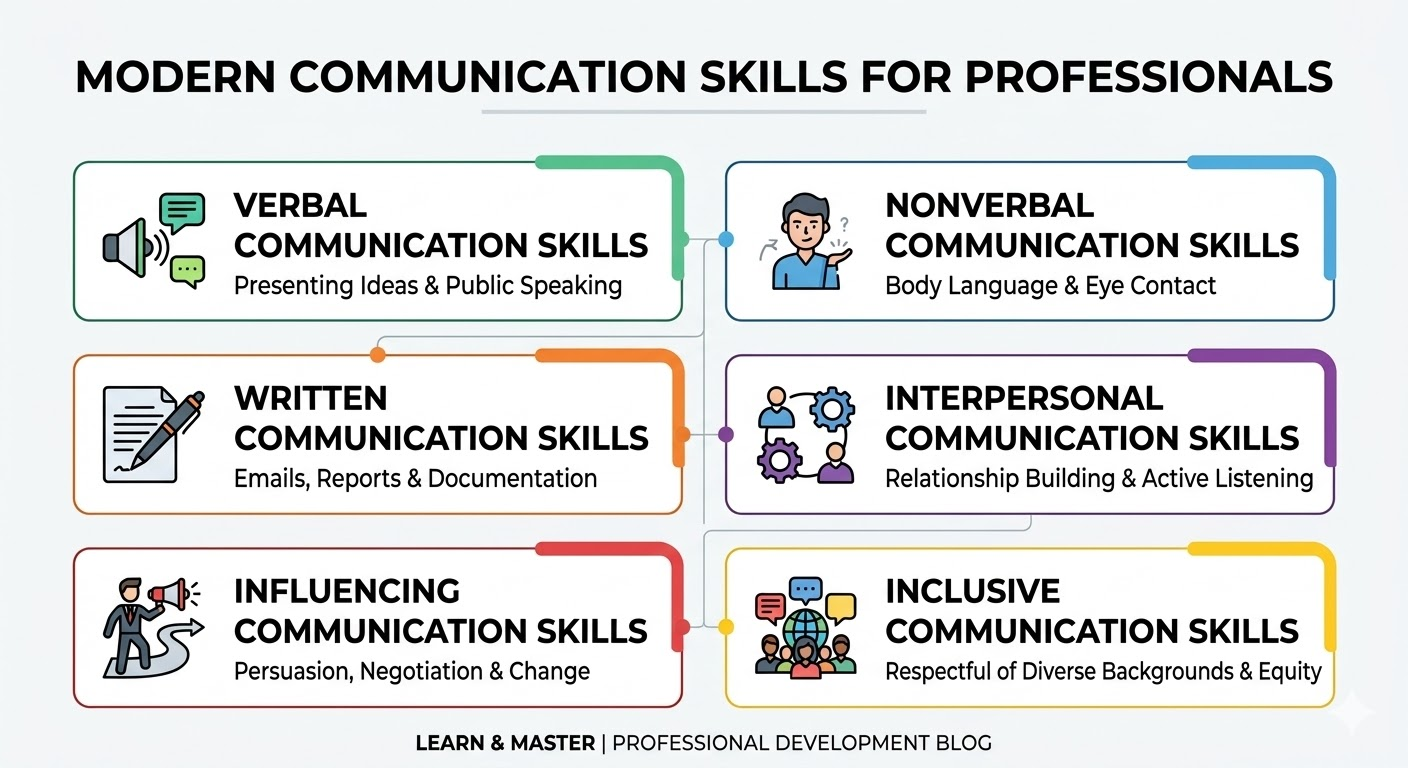
Verbal Communication Skills
Verbal communication is one of the most important types of communication skills. Professionals use it to express ideas through spoken language. In the workplace, people constantly share information through conversations, meetings, presentations, and discussions.
Some verbal communication skills that employees should have include:
1. Clear Speaking
Clear speaking means expressing ideas in a way that others can easily understand. Effective speakers organize their thoughts before speaking. They present one idea at a time and avoid unnecessary jargon when talking to mixed audiences.
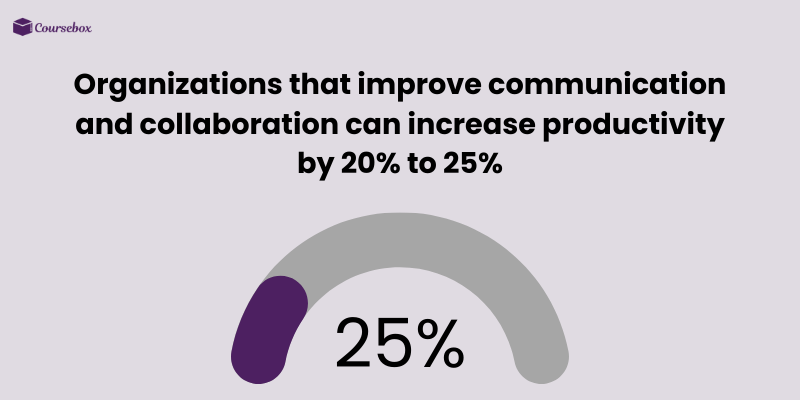
Research also shows that organizations that improve communication and collaboration can increase productivity by 25%. This improvement often comes from clearer conversations and fewer misunderstandings.
Source: Kroolo
2. Adjusting Tone
Tone refers to the attitude or emotion behind spoken words. Even when the message is correct, tone can completely change how the message is received.
For instance, feedback delivered in a calm, supportive tone encourages improvement. The same message delivered harshly may create defensiveness or tension within a team. Because of this, successful professionals learn to adjust their tone depending on the situation.
3. Asking Questions
Questions play a powerful role in communication because they help clarify understanding and encourage deeper discussion. Instead of assuming something is clear, effective professionals ask questions to confirm expectations and uncover details.
Asking “Can you walk me through the next step?” or “What results are we aiming for?” helps prevent confusion later on.
4. Explaining Ideas Simply
One of the most valuable verbal communication skills is the ability to simplify complex ideas. Professionals often work with technical concepts or detailed processes that others may not fully understand.
You can use examples and analogies to make explanations easier to grasp. Start with the main point, explain the concept, and then provide additional details if needed.
5. Participating in Meetings
Meetings are one of the most common environments where verbal communication matters. Participation does not mean speaking the most. It means contributing in ways that move the discussion forward.
Prepared professionals often review the meeting agenda beforehand so they can contribute relevant insights.
Nonverbal Communication Skills
A large portion of communication happens through nonverbal signals such as gestures, posture, eye contact, and facial expressions. Among the different types of communication skills, nonverbal communication often influences how messages are interpreted.
Examples of these communication skills include:
1. Body Language
Body language refers to the movements and gestures people use while communicating. Simple actions such as nodding, leaning forward, or using hand gestures can signal engagement and understanding.
When someone faces the speaker, nods occasionally, and keeps their arms relaxed, it usually communicates attentiveness.
2. Facial Expressions
Facial expressions communicate emotions instantly. A smile can signal openness and approachability, while a frown or raised eyebrows may show confusion or concern.
In professional environments, facial expressions help reinforce verbal messages. When someone shares good news, a genuine smile strengthens the positive tone of the conversation. During serious discussions, attentive expression shows respect.
3. Eye Contact
Eye contact plays an important role in showing attention and sincerity. Maintaining appropriate eye contact during conversations signals that a person is actively listening and engaged in the discussion.
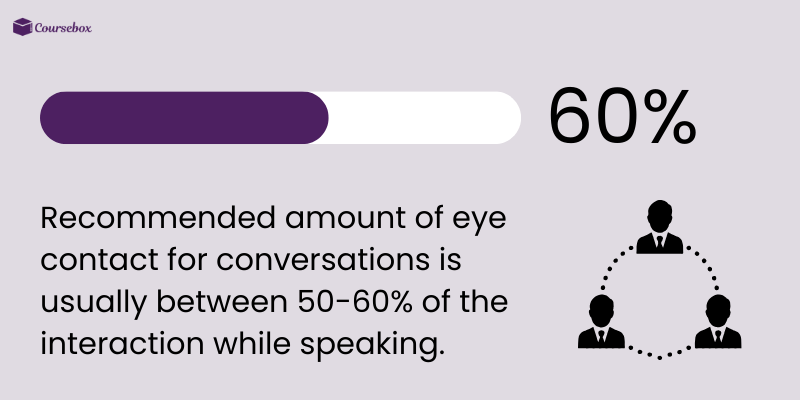
The recommended amount of eye contact for face-to-face conversations is usually between 50-60% of the interaction while speaking. This balance helps build trust and connection during conversations.
Source: MSU
4. Posture
Posture reflects confidence, attentiveness, and professionalism. Standing or sitting upright signals engagement and readiness to participate. Meanwhile, slouched or closed postures may unintentionally communicate boredom, fatigue, or lack of interest.
During meetings, posture often influences how others perceive someone’s authority and credibility. A professional who sits upright and faces the group appears more involved in the discussion.
5. Physical Presence
Physical appearance refers to the overall impression a person creates when they enter a room or interact with others in the workplace. It combines body language, posture, movement, and general demeanor.
Developing this skill involves awareness of how movements, gestures, and positioning influence the way others perceive you. Over time, professionals who manage their presence effectively tend to communicate with greater clarity.
Written Communication Skills
Written communication plays a critical role in professional environments. Many workplace decisions, instructions, and updates are shared through written formats rather than conversations.
Because written messages cannot rely on tone of voice or facial expressions, clarity and structure become extremely important. Its types include the following:
1. Emails
Email remains one of the most common forms of workplace communication. Professionals use emails to share updates, ask questions, confirm decisions, and coordinate tasks across teams.
Professionals who write clear emails help teams work faster and reduce communication delays. Clear emails are concise and well-structured.
A good email typically begins with a clear purpose, followed by the necessary details, and a simple action request if needed.
2. Reports
Reports are used to present information in a structured and organized format. Businesses, organizations, and academic institutions rely on reports to analyze data, document progress, and support decision-making.
A strong report explains information logically. It usually begins with an overview of the issue, followed by analysis, findings, and conclusions.
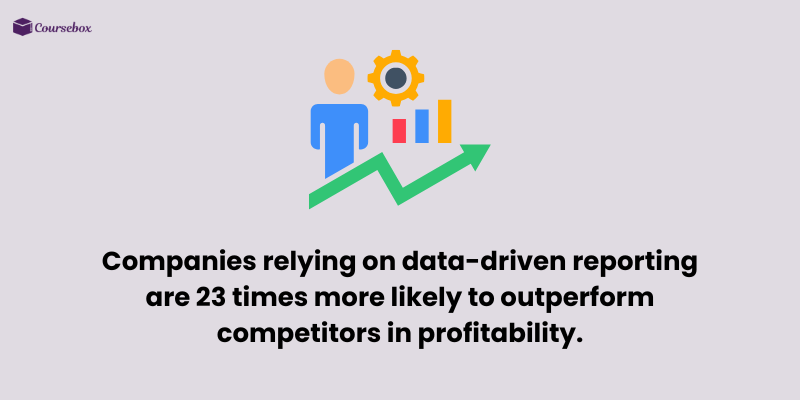
Research also shows that companies relying on data-driven reporting are 23 times more likely to outperform competitors in profitability. This highlights how well-structured reports help leaders make informed decisions.
Source: Data Ideology
3. Proposals
Proposals are written documents designed to present an idea, plan, or solution. Organizations commonly use proposals when suggesting new projects, requesting resources, or pitching services to clients.
A strong proposal clearly explains the problem, the proposed solution, and the expected results. Readers should quickly understand why the idea matters and how it will benefit the organization.
Successful proposals often focus on persuasion as well as clarity. The writer must present information logically while demonstrating value to the reader.
4. Documentation
Documentation refers to written records that explain processes, procedures, or technical information. In many workplaces, documentation ensures that knowledge is preserved and accessible for future use.
Examples include training manuals, process guides, technical instructions, and operational policies. Clear documentation allows teams to perform tasks consistently and helps new employees learn systems more quickly.
Apart from this, accuracy and organization are especially important in documentation. When instructions are unclear or incomplete, mistakes become more likely.
Interpersonal Communication Skills
Interpersonal communication focuses on how people interact with others in professional settings. It represents one of the most relationship-driven types of communication skills professionals develop.
Professionals who develop these skills are often better at handling feedback and maintaining long-term working relationships. The examples for this are:
1. Empathy
Empathy is the ability to understand and acknowledge how another person feels or thinks during a conversation. In professional environments, empathy helps individuals respond in ways that show awareness of other perspectives.
For instance, when a colleague struggles with a deadline, an empathetic response focuses on understanding the challenge before the solution.
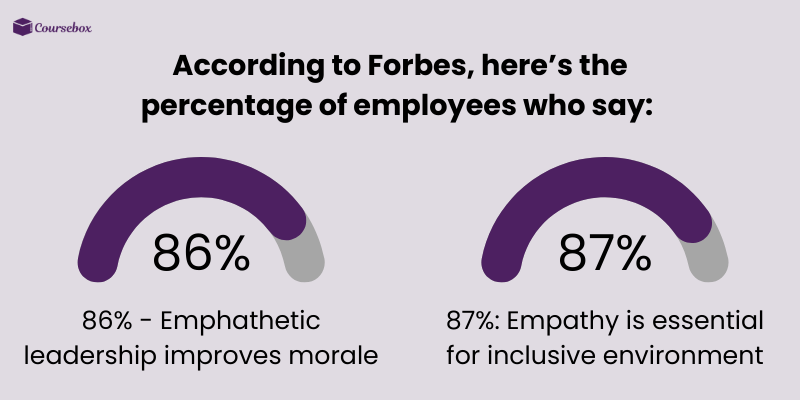
According to Forbes, 86% of employees say empathetic leadership improves morale, and 87% believe empathy is essential for creating an inclusive work environment.
Source: Forbes
2. Rapport Building
Rapport means the sense of connection and mutual understanding between people. In professional settings, a strong rapport makes communication smoother and more comfortable.
Professionals build rapport by showing genuine interest in others and remembering small details from previous conversations. It also includes them maintaining a positive attitude during interactions.
When rapport is strong, conversations become more open, and collaboration becomes easier. Colleagues are also more likely to share ideas and concerns honestly when they feel respected and comfortable.
3. Respectful Dialogue
Respectful dialogue means communicating with consideration, even when opinions differ. If we talk about a workplace, disagreements are normal because people bring different experiences and perspectives to discussions.
Healthy dialogues focus on ideas rather than personal criticism. Instead of dismissing another person’s opinion, effective communicators ask clarifying questions and explain their viewpoint calmly.
Listening plays a major role here. If professionals genuinely listen before responding, conversations become more constructive.
4. Relationship Management
Relationship management involves maintaining positive and productive interactions over time. It goes beyond a single conversation and focuses on long-term professional connections.
Managing relationships effectively requires awareness of communication styles, expectations, and boundaries. Professionals often adapt their approach depending on who they are working with.
Moreover, conflict resolution is part of relationship management. When misunderstandings occur, addressing them calmly and respectfully helps preserve trust.
Influencing Communication Skills
The major focus of influencing communication skills is guiding conversations toward productive outcomes. This type of communication skills helps professionals present ideas clearly while maintaining respect and collaboration. This includes:
1. Persuasion
Persuasion involves presenting ideas in a way that encourages others to support a proposal, decision, or solution. Effective persuasion is not about pressure. It focuses on clarity, evidence, and understanding the concerns of the audience.
Professionals often persuade through logical arguments, data, and clear explanations of benefits. For example, a manager proposing a new workflow might explain how the change improves efficiency, reduces errors, and saves time for the team.
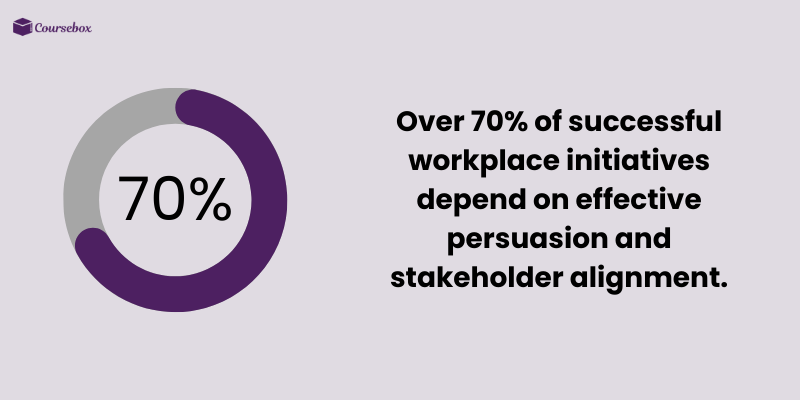
A study also found that over 70% of successful workplace initiatives depend on effective persuasion and stakeholder alignment. This means ideas succeed because they are communicated convincingly.
Source: ResearchGate
2. Negotiation
Negotiation occurs when two or more parties work toward a mutually acceptable agreement. It is common in business discussions, project planning, salary conversations, and partnerships.
Successful negotiation focuses on understanding interests rather than arguing positions. Skilled negotiators ask questions, listen carefully, and identify areas where both sides can benefit.
Preparation also plays a major role. Professionals often enter negotiations with clear goals, alternative options, and an understanding of the other party’s priorities.
3. Handling Objections
Handling objections is a communication skill that involves responding thoughtfully when someone raises concerns or disagrees with a proposal. Employees don’t have to react defensively; they need to understand the underlying reason behind the objection.
A common approach is to acknowledge the concern first. After that, the communicator clarifies the issue and provides relevant information or alternative solutions. This method shows respect while keeping the conversation constructive.
Inclusive Communication Skills
Inclusive communication makes sure that messages are respectful, accessible, and considerate of different backgrounds and perspectives. It helps create environments where everyone feels comfortable contributing ideas and participating in discussions.
1. Cultural Awareness
Cultural awareness signifies the understanding that people from different cultural backgrounds may communicate differently. Communication styles, expectations around hierarchy, and interpretations of gestures can vary significantly across cultures.
Professionals who develop cultural awareness pay attention to these differences. They remain open to learning how colleagues from different backgrounds interpret communication.
There is also research reporting that organizations with inclusive cultures are twice as likely to meet or exceed financial targets. These outcomes are strongly influenced by communication practices that support diverse perspectives.
Source: Deloitte
2. Avoiding Assumptions
Assumptions often create misunderstandings in communication. When people assume what others know, believe, or intend, conversations can quickly become confusing or unproductive.
Inclusive communication encourages professionals to clarify information and not rely on assumptions. Asking open-ended questions helps ensure that expectations and ideas are clearly understood.
3. Inclusive Language
Inclusive language focuses on choosing words that respect different identities, backgrounds, and experiences. Language that acknowledges diversity helps create professional environments where everyone feels valued.
Inclusive language avoids stereotypes, biased expressions, or terms that unintentionally exclude certain groups. In place, it focuses on neutral and respectful wording.
Make Your Communication Skills Work for You
Many professionals struggle because their message does not always come across clearly. So, a helpful starting point for them is understanding the types of communication skills that shape everyday workplace interactions.
The issue they mostly face is finding the right things to learn. Here’s where organizations can use Coursebox to turn documents into AI-generated training videos.

Just remember, improving communication does not happen overnight. However, with the right guidance and tools like Coursebox, professionals can develop more confident ways to share ideas and collaborate.
So, stop worrying and sign up for Coursebox for free!
FAQs
Frequently Asked Questions
The most important workplace communication skills include clear speaking, active listening, and effective writing. Professionals also benefit from empathy and the ability to explain ideas simply. These skills help teams avoid misunderstandings, share information clearly, and collaborate better.
Technical skills help professionals perform tasks, while communication skills help them share ideas and work with others. Even though both are important, communication is the one that determines how well technical knowledge is used. Professionals who can clearly explain their work and discuss problems usually contribute more successfully.
Improving communication starts with listening carefully and organizing thoughts before speaking. Focus on explaining ideas clearly rather than speaking more. Asking simple questions, summarizing key points, and practicing concise explanations help conversations feel natural.
Yes, communication skills improve with consistent practice. Professionals develop stronger communication by participating in discussions, asking for feedback, and observing how effective communicators share ideas. Reading, writing, and presenting regularly also help.
Travis Clapp
Educational technologist and instructional designer

