

How to Scale a Coaching Business Without Losing Quality or Focus
Wondering how to scale a coaching business without losing quality or client focus? Discover practical strategies to grow your coaching practice.


Set up your branded LMS and deliver training with AI.
Have you ever felt like the more your coaching business grows, the harder it becomes to manage everything?
New clients keep coming in, but the calendar fills up faster than expected. Sessions increase, messages pile up, and the time that once went into thoughtful coaching starts disappearing into scheduling, admin work, and constant follow-ups.
This is a common stage many coaches experience while growing their practice. At some point, simply working harder stops being the solution.
However, the good news is that learning how to scale a coaching business doesn’t mean sacrificing quality or losing focus. With the right systems, processes, and structure in place, you can grow your client base while maintaining a high level of support. Let’s understand how you can make it happen.
Why Many Coaching Businesses Hit a Growth Ceiling
Many coaches reach a point where growth slows down or stops completely. Even though the demand exists, the business struggles to expand further.
One major reason is the time-for-money model. Most coaching businesses rely heavily on this. But since there are only so many hours in a week, income and impact become limited by personal availability.
Another factor is market competition. According to the International Coaching Federation, the number of professional coaches worldwide has surpassed 122,000. This shows a significant growth in the profession.
More coaches entering the market means more competition for coaching clients. It makes it harder for individual practices to grow without a stronger positioning.
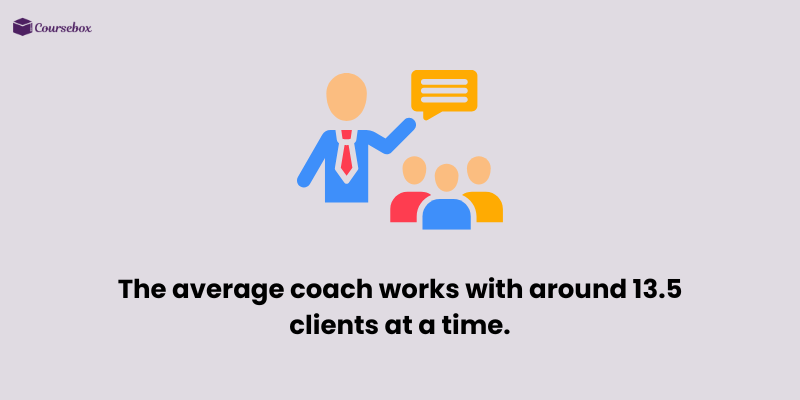
Research also shows that the average coach works with around 13.5 clients at a time. This naturally limits the revenue when the business depends on hourly sessions.
Source: IACC
Foundations You Need Before You Scale Your Coaching Business
Before expanding reach or increasing volume, the following three core elements need to be in place.
1. A Clear Coaching Framework
A coaching framework is the structured process used to guide clients from their starting point to their desired outcome. Without a clear framework, each session may feel different, and results become inconsistent.
For instance, the process might include assessment, goal setting, strategy development, implementation, and progress tracking.
2. A Defined Ideal Client
Growth becomes far easier when the right audience is clearly defined. Many coaches initially try to help everyone, which makes marketing messages too broad. A well-defined ideal client allows messaging, content, and offers to become more focused.
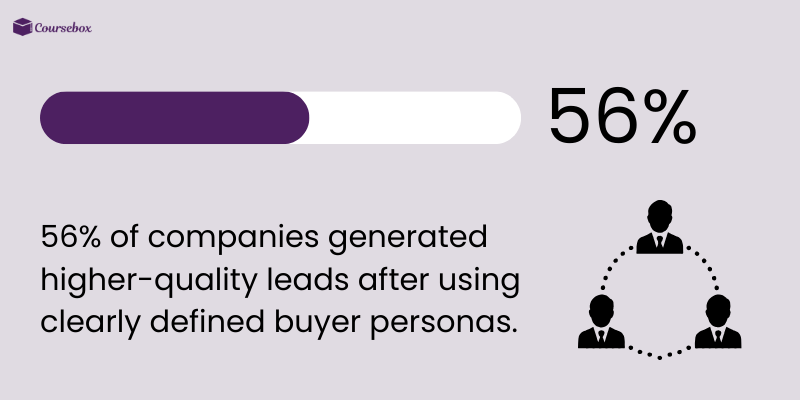
Studies show that 56% of companies generated higher-quality leads after using clearly defined buyer personas.
Source: Marketing Insider Group
3. Basic Systems in Place
Before scaling, the business should run smoothly on a daily level. Without systems, growth quickly creates operational stress. Tasks such as scheduling a session, managing payments, or tracking client progress can become overwhelming when handled manually.
Start by identifying repetitive tasks and organizing them into simple workflows. Basic automation reduces the mental load of managing multiple clients.
How to Scale a Coaching Business: 9 Practical Ways
Scaling a coaching business does not happen by simply adding more clients. That’s why you need to know how to scale a coaching business the right way. Let’s begin with the ways you can scale your coaching business.
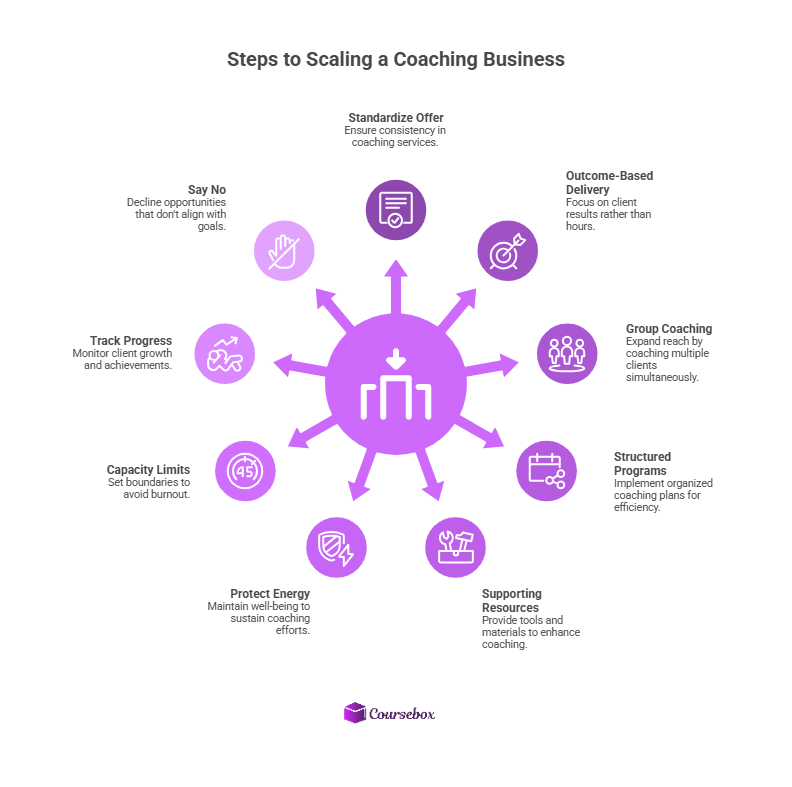
1. Standardize Your Core Offer
Many coaches unintentionally customize training sessions for every client. While personalization feels helpful, it becomes difficult to scale because each engagement requires new preparation and decision-making.
You can create consistency and save time by standardizing your core offer. To do that, start by identifying the transformation you help the client achieve. Then, write down the exact steps you normally guide people through.
For instance, your process might include assessment, goal clarity, strategy planning, implementation support, and progress reviews.
Once the process is clear, create a simple structure for sessions. Decide how long the program lasts, how many sessions it includes, and what happens in each phase.
Next, document templates you use repeatedly. This might include onboarding questionnaires, session agendas, goal tracking sheets, or reflection exercises.
2. Shift to Outcome-Based Delivery
Most coaching businesses begin by selling time. Clients pay for hourly sessions, which means revenue grows only when more hours are added. Scaling simply becomes easier when the focus shifts from time to outcomes.
Instead of selling individual sessions, package your coaching around a clear result. In place of offering “six coaching calls,” present a structured program designed to achieve a specific outcome, such as improving leadership confidence.
Begin by defining the result clients want. Then design a program that helps them move step by step toward that outcome. This might include coaching calls, exercises, progress reviews, and structured learning resources.
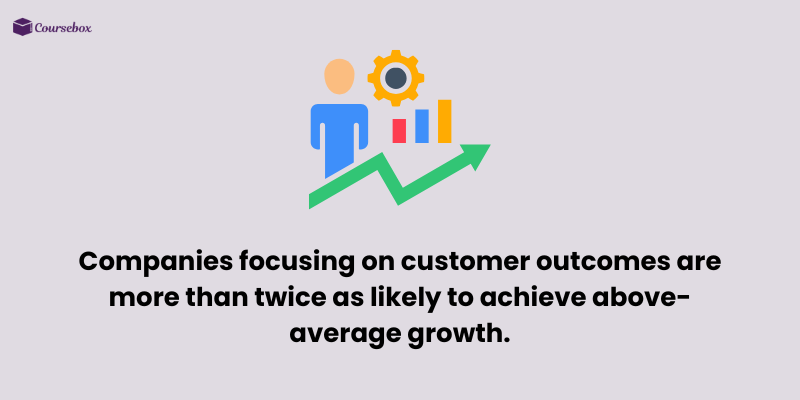
Research also shows that companies focusing on customer outcomes are more than twice as likely to achieve above-average growth. The same principle applies to coaching. When the offer is built around results, the value becomes easier to scale.
Source: McKinsey
3. Introduce Group Coaching Gradually
Group coaching is one of the most effective ways to scale while maintaining quality. Rather than repeating the same guidance individually, a coach can support several participants at the same time. However, the transition should be gradual.
Start by identifying common challenges your clients face. If many clients struggle with similar issues, those topics are ideal for group sessions.
Begin with a small group of three to five participants. This size keeps the discussion manageable while allowing participants to learn from each other. Schedule structured sessions where everyone works through the same topic.
You should have a clear agenda for each meeting. To do that, start a short teaching segment, followed by discussion or coaching exercises. End with action steps participants can apply before the next session.
4. Use Structured Programs
A structured program turns your coaching knowledge into a clear journey that your clients can follow from start to finish. Without structure, sessions often depend on what comes up in conversation.
While that can be helpful in the early stages, it becomes difficult to maintain consistency as your coaching business grows.
For this, you can start by mapping the full transformation your coaching provides. Write down the stages your clients normally move through. An example could be a leadership coaching program that may include mindset work, communication strategies, and accountability practices.
Next, organize these stages into a timeline. A program might run for eight weeks, twelve weeks, or three months. Assign a theme or goal to each stage so clients know exactly what they will work on.
5. Create Supporting Resources
Supporting resources allow clients to continue learning and progressing between coaching sessions. These materials reduce the pressure on live sessions because important concepts are already explained through guides or lessons.
At the start, you need to identify questions that appear frequently in your coaching conversations. Those recurring topics can become simple resources such as worksheets, short video explanations, checklists, or reflection prompts.
If your clients often struggle with goal setting, create a goal-planning worksheet that walks them through the process step by step. Moreover, if communication skills are a common challenge, record a short training explaining the framework you use.
Organize these materials in a shared space where clients can access them easily. This might be an AI LMS, a private resource library, or a course platform.
Make Your Coaching Resources Work for You
Creating worksheets, videos, and training resources can take time. Platforms like Coursebox help coaches turn their knowledge into structured courses and training modules in minutes.
6. Protect Your Coaching Energy
Scaling a coaching business is not about systems. Energy management is just as important. Coaching requires focus, emotional presence, and thoughtful listening. When schedules become overloaded, quality naturally begins to drop.
To protect your coaching energy, start with intentional scheduling. Group similar activities together during the week. For example, dedicate certain days to coaching sessions and other days to planning, content creation, or administrative work.
You also need to limit the number of sessions per day so each conversation receives full attention. Many experienced coaches schedule no more than four to five sessions daily to maintain high-quality engagement.
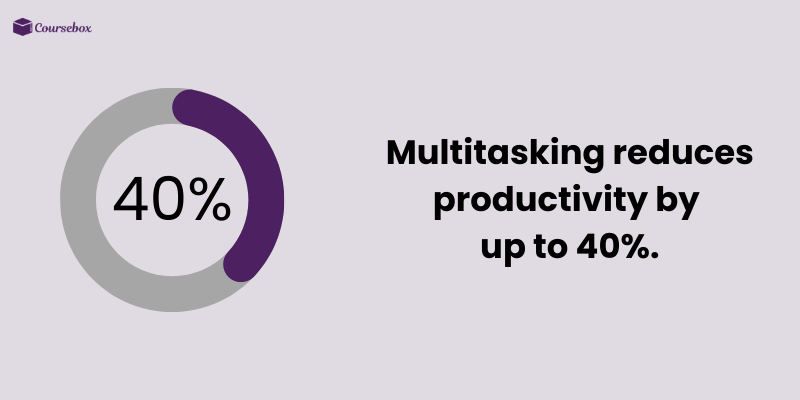
One of the major reasons to do so is that studies clearly report that multitasking reduces productivity by up to 40%. So if you frequently switch between coaching sessions, emails, and administrative tasks, you’ll drain your mental energy much quicker.
Source: APA
7. Set Capacity Limits
Growth becomes difficult to manage when clear limits do not exist. Many coaches accept new clients who reach out, especially in the early stages of business. Over time, this habit can lead to overloaded calendars and rushed sessions.
You can protect quality and focus by setting capacity limits. Start by deciding how many active clients you can realistically support at one time. Consider preparation time, follow-ups, and administrative work when calculating this number.
Next, define the number of coaching sessions you will hold each week. Block those time slots in your calendar and keep the rest of your schedule reserved for planning, program development, or rest.
If you reach your limit, you can introduce a waitlist or guide potential clients toward group programs.
8. Track Client Progress
Tracking progress helps both the coach and the client understand whether the coaching process is actually working. Without measurable checkpoints, it becomes harder to see improvements or identify where support is needed.
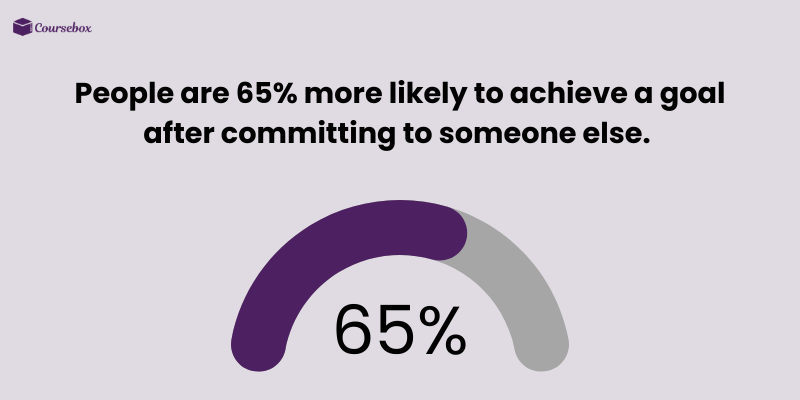
One thing that works like a charm here is accountability. According to research, people are 65% more likely to achieve a goal after committing to someone else.
To use this to scale your coaching business, you can start by defining a few indicators that reflect progress. These could include goal completion, skill development, behavior changes, or measurable outcomes connected to the client’s objectives.
Review these indicators regularly during coaching sessions. Ask clients what changes they have noticed and what actions they completed since the last session. Recording these updates helps maintain accountability.
Source: The Guardian
9. Say No More Often as You Grow
When you start to grow, you start to find more opportunities. New clients reach out, collaboration offers appear, and requests for extra sessions increase. While these opportunities can feel exciting, accepting everything can slowly pull your coaching business away from its focus.
Learning to say no becomes an important scaling skill. Initially, define what types of clients and programs fit your coaching framework best. If a request falls outside that focus, it is better to decline or redirect the person to another resource.
You can also set boundaries around custom requests. For example, if a potential client asks for a completely personalized program outside your structured offer, guide them toward the existing program that already delivers strong results.
Common Scaling Mistakes Coaches Make
As a first-time coach, making mistakes is part of the learning process. However, it’s not always easy to recognize a mistake until it has already happened. One of the best ways to avoid common pitfalls is to understand the mistakes many coaches make while scaling their business and learn from them before they impact your growth.
1. Growing Offers Instead of Results
One common mistake is creating too many offers too quickly. Some coaches launch multiple programs, workshops, or packages in hopes of reaching more people. While this may seem like a growth strategy, it often creates confusion.
Focusing on one clear outcome usually produces stronger results. A refined coaching framework makes marketing simple and client outcomes easier to replicate.
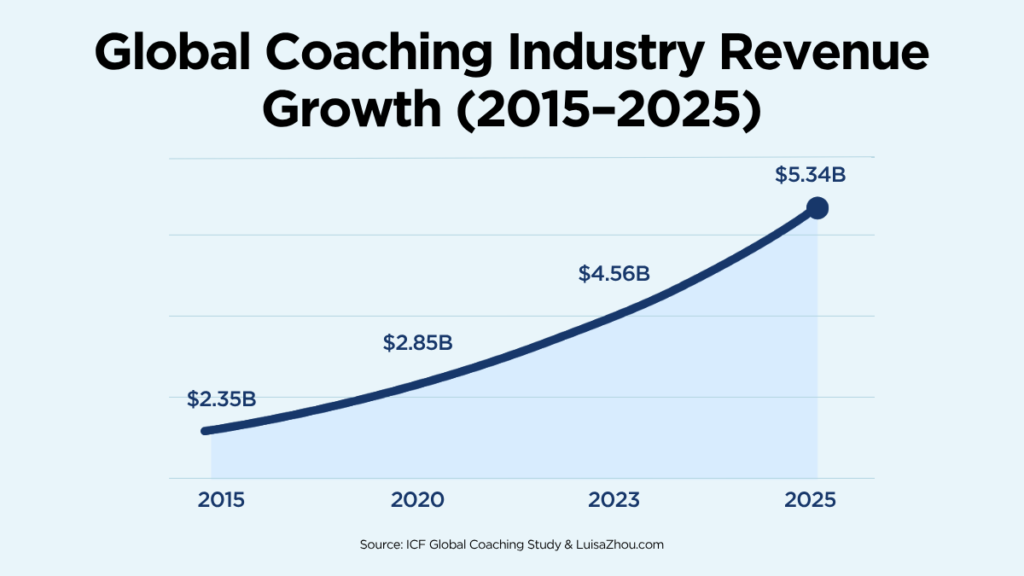
Clear results also help coaches stand out in a rapidly growing industry that generated over $5.34 billion over the past year.
Source: Luisa Zhou
2. Overbooking to Maximize Revenue
Another mistake is trying to scale revenue simply by adding more one-to-one coaching sessions. Early growth happens this way, but it quickly creates a capacity ceiling because every client requires direct time and attention.
As schedules become overloaded, preparation quality often declines. Sessions may still happen, but the depth of insight and energy behind them can weaken. Over time, this approach increases the risk of burnout.
3. Ignoring Systems Until It’s Too Late
A coaching business may run smoothly with a few clients without formal systems. As the client base grows, manual processes quickly become difficult to manage. Scheduling, onboarding, and communication can take a large amount of time.
Without systems, small operational issues multiply. Missed emails, delayed responses, and disorganized scheduling can affect the client experience. Simple systems prevent these problems early.
Start Scaling Your Coaching Business
Learning how to scale a coaching business is about building a smarter system that allows your impact to grow. But one issue that most coaches face is turning coaching knowledge into scalable content.
A solution for this comes from Coursebox.
With our platform, you can convert your existing content, such as documents, into AI-generated training videos, along with assessments. This makes it easier to transform coaching expertise into scalable programs.
Scale your coaching business today with Coursebox!
FAQs
Frequently Asked Questions
The right time usually comes when demand increases, and the same problems appear across many clients. Group coaching works best when your process is structured and repeatable. Start with small groups to test the format. This allows more people to benefit from your guidance without increasing your weekly workload.
Most coaches can manage between 10 and 20 active one-to-one clients effectively, depending on session length and preparation time. The key factor is the quality of attention. If sessions begin feeling rushed or preparation becomes difficult, it is usually a signal that capacity has been reached.
Burnout often comes from handling everything manually. Protect your time by setting clear working hours, limiting the number of weekly sessions, and creating systems for scheduling, onboarding, and communication. Introducing group programs or digital resources also helps reduce pressure while allowing you to support more clients.
A common mistake is trying to grow revenue without changing the business model. Adding more one-to-one clients eventually leads to exhaustion and inconsistent results. Sustainable growth usually requires structured programs, scalable delivery methods, and systems that maintain quality as reach expands.
Alex Hey
Digital marketing manager and growth expert

