

14 Best AI Tools for University Students in 2026 (That Help You Learn, Not Just Answer)
The best AI tools for university students in 2026, split by the job (understand, research, write, revise, solve) and honest about what helps you learn.

The AI worth using at university helps you understand and cite, not just gives an answer you cannot defend. Match the tool to the job: understand, research, write, revise, solve.
- For understanding your own notes and readings, NotebookLM (now Gemini Notebook) leads; ChatGPT, Claude, Gemini and ChatPDF are the flexible all-rounders for explaining and reading.
- For research you can cite, use tools built on real papers: Perplexity to explore, Consensus and Elicit for the evidence, and Scite to check whether a study has been disputed.
- For the rest of student life: Wolfram Alpha for STEM problems, Knowt for flashcards and spaced repetition, Otter for lectures, Grammarly and QuillBot for polishing your own writing.
- Two hard rules: never paste an AI citation without finding it yourself (18% of GPT-4's are fake), and never reword AI text to beat a detector, it does not work and it is still not your writing.
Answer three quick questions and I will point you to the right one for what you actually need.

Build high quality courses that actually sell
The fastest way to get in trouble at university right now is to let an AI do the work for you. On the flipside, the fastest way to actually get better at uni is to let it help you understand the work. For both usecases, It is usually the same tool. What changes is how you use it.
I have watched an AI hand over a citation that looked perfect, with journal, authors, a DOI link and all, and the paper simply did not exist. That is the thing to understand before you install anything. The tools that write for you will lie to you with total confidence, and it is your name on the submission, not theirs.
I am Parshad, and I never really stopped being a student: I test these tools constantly. I even used some of these during my Master's degree, when it was explicitly allowed. So I have split this list by the jobs you actually need doing at university. This can be understanding a topic, finding and checking real research, writing without breaking the rules, revising to remember, and solving problems. And I have been honest about where each tool helps you learn and where it just hands you an answer you cannot defend.
How I judged these AI tools
Same five questions for every tool, in the order that decides your marks and your record.
Does it help you learn, or just answer? This is the whole point. A tool that helps you understand is worth ten that spit out a paragraph you could not explain in a tutorial. I weighted it heaviest.
Can you trust it, and cite it? Do the answers come from real sources you can check, or is the tool just making things up with confidence? This is where most AI trouble at university starts.
The job it is best at. Understanding, researching, writing, revising or solving. The list spans all of these, because the wrong tool for the job just wastes your time.
Free for students? Most students are broke. A real free tier that does the job beats a long feature list.
Does it fit how you work? Does it work with your own notes, lectures and documents, or make you copy everything into a chat box first?
AI tools for university students at a glance
Prices are in USD as of August 2026 and change often, so check before you pay. Several offer student discounts or free access, ask.
| Tool | Best for | Sources you can cite? | Free tier | Price |
|---|---|---|---|---|
| ChatGPT | Explaining ideas, drafting | No, verify all | Free text chat; limits on uploads | Plus ~$20/mo |
| NotebookLM | Studying your own materials | Yes, your own | 50 sources/notebook, 50 chats/day | Free; AI Plus ~$20/mo |
| Perplexity | Exploring with sources | Sometimes, check each | Unlimited basic; few Pro searches/day | Pro ~$20/mo |
| Claude | Long PDFs, careful writing | Only your upload | Free, capped usage | Pro ~$20/mo |
| ChatPDF | Getting through one dense paper | Your PDF only | 2 documents/day | Plus ~$20/mo |
| Consensus | What studies actually say | Yes, real papers | 15 AI answers/mo, 3 deep reviews | Pro $12/mo (annual) |
| Grammarly | Grammar in your own writing | n/a | Core checks; 100 AI prompts/mo | Pro $12/mo |
| Elicit | Literature reviews | Yes, sentence-level | Limited reports; unlimited search | Pro $49/mo |
| QuillBot | Tightening your own writing | n/a | Paraphrase 125 words at a time | Premium ~$10/mo |
| Wolfram Alpha | STEM problems | n/a | Answers, but no step-by-step | Pro Student $5/mo |
| Scite | If a study has been disputed | Yes, smart citations | No free tier, 7-day trial | From $12/mo (annual) |
| Knowt | Flashcards, spaced repetition | n/a | Unlimited flashcards, free | Ultra $12.49/mo |
| Otter.ai | Transcribing lectures | Your recording | 300 min/mo, 30 min/lecture | Pro from ~$8/mo |
| Gemini | Working in Google Docs | No, verify all | Free with a Google account | Pro ~$20/mo |
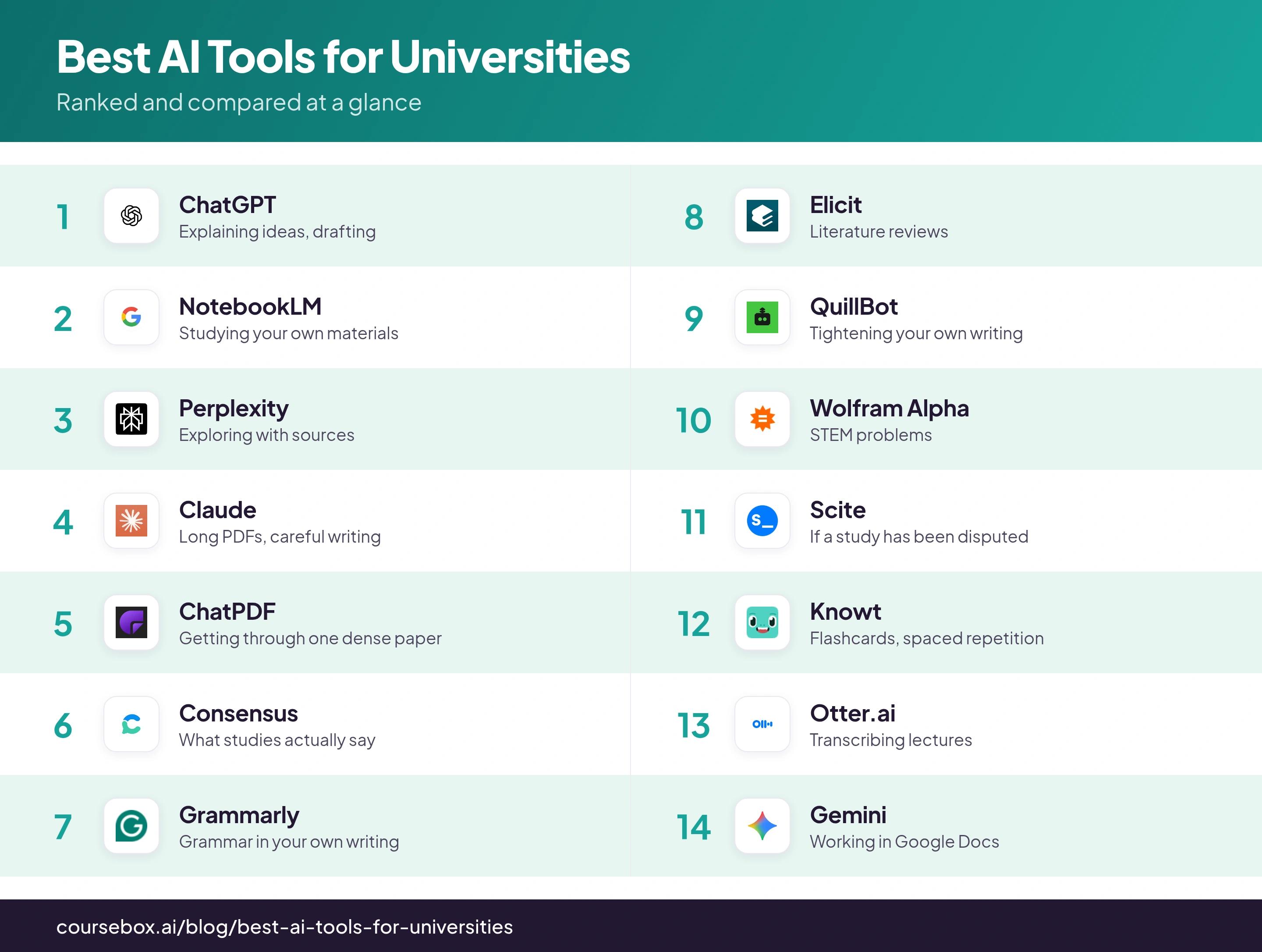
Ranked below. I have spread the list across the jobs, so similar tools are not all bunched together.
The 14 best AI tools for university students
1. ChatGPT
Best for: Explaining a hard idea, and drafting you then rewrite.
ChatGPT is the all-rounder. Ask it to explain a hard idea a few different ways, quiz you before an exam, or draft an outline you then fill in yourself. Use it as a study partner and it really helps you understand. Use it to write the essay for you, and you are handing in work you cannot defend.
Trust: Low, until you check. It says everything with the same confidence, whether it is true or made up, sources included.
Free for students: Yes. The free plan gives unlimited text chat on the base model; uploads, images and voice are capped.
Price: Free; Plus reported around $20/month.
How to use it well: Ask it to explain, quiz you, or plan the structure, never to hand you a final fact or citation to paste in.
Notes from testing: The one that has burned people is citations. I have had ChatGPT produce a reference complete with a DOI link, and the DOI went nowhere because the paper never existed. The titles are plausible enough that the only way to catch it is to open every single one. Treat anything it cites as a lead to find in your library database, never a citation to paste.
Verdict: The best all-rounder for understanding, as long as you always double-check its facts and sources yourself.
2. NotebookLM
Best for: Studying from your own lecture notes, slides and set readings.
NotebookLM, which Google renamed Gemini Notebook in July 2026, is its study tool that only answers from the sources you upload. Drop in your lecture PDFs and readings, and it summarises them, explains them, and can even make an audio overview. Every answer points back to your own material, not the open web. Same product, and your old links still work.
Trust: High, for what you give it. Every answer links straight to the exact spot in your source, so you can check it in seconds.
Free for students: Yes. The free plan covers 100 notebooks, 50 sources per notebook and 50 chats a day.
Price: Free with a Google account; a paid Google AI plan lifts the limits.
How to use it well: Upload clean text PDFs of your lectures and readings, not blurry scans, and ask it to explain the hard parts back to you.
Notes from testing: Of everything here, this is what made me actually learn, because it makes you engage with your own material instead of the whole web. The catch I hit: the output is only as good as what you upload. Feed it a blurry scanned handout and the answers go vague and hedged; feed it clean text and it is sharp.
Verdict: The standout for revising your own course. It is the first thing I would install if the goal is to actually learn the material, not just finish the assignment.
3. Perplexity
Best for: Exploring a question and seeing where the answers come from.
Perplexity answers your question and shows the sources next to each point, so it is a better place to start than a plain chatbot. Switch on academic mode and it sticks to scholarly databases.
Trust: Medium. It shows sources, but even in academic mode it cannot always tell a good blog from a real study.
Free for students: Yes. Basic search is unlimited; the deeper Pro searches are capped at a few a day.
Price: Free; Pro reported around $20/month ($17 billed annually).
How to use it well: Turn on academic focus, then click every source before you trust it, some will be blog posts, not studies.
Notes from testing: The inline citations feel reassuring, and that is the trap. When I clicked through, some "sources" were blog posts, not studies. So I click every citation number and confirm the claim is actually in a source I would be happy to put in a bibliography.
Verdict: A strong way to explore a topic and find leads, not a substitute for reading the papers it points at.
4. Claude

Best for: Reading long PDFs and getting careful, well-written help.
Claude is good with long documents and writes carefully. That makes it handy for working through a dense paper, or tidying up an argument you have already worked out.
Trust: Fine when it sticks to what you upload, but it will still guess beyond the document, so keep it to the text.
Free for students: Yes, with usage caps (the free plan gets about half of what Pro does).
Price: Free; Pro reported around $20/month ($17 billed annually).
How to use it well: Paste the long PDF or your draft in, and start a fresh chat every fifteen or twenty messages so you do not burn the usage cap.
Notes from testing: Long study chats hit the usage cap fast, because it re-reads the whole conversation every turn. What worked for me was starting a fresh chat every fifteen or twenty messages, pasting in a short summary so I did not lose the thread. Annoying once, cheap once you know it.
Verdict: The pick when the task is reading and reasoning over long text, not quick lookups.
5. ChatPDF

Best for: Getting through one dense paper or textbook chapter fast.
ChatPDF lets you upload a PDF and ask it questions, with answers that link back to the page. It is lighter than NotebookLM: one document, in and out, good for reading a paper from your reading list.
Trust: Good on clean text PDFs, shaky on scans. It answers only from the file you give it.
Free for students: Yes, but small: the free plan lets you analyse 2 documents a day.
Price: Free; Plus reported around $20/month.
How to use it well: Upload a text-based PDF, not a photo or scan, and ask it for the argument, the method and the limitations.
Notes from testing: I fed it a clean journal PDF and it was sharp, but a scanned textbook page gave vague, hedged answers, because it reads the text, not the image. Run a scan through OCR first, or expect guesswork.
Verdict: A fast way to get the gist of a paper, as long as it is real text and not a scan.
6. Consensus
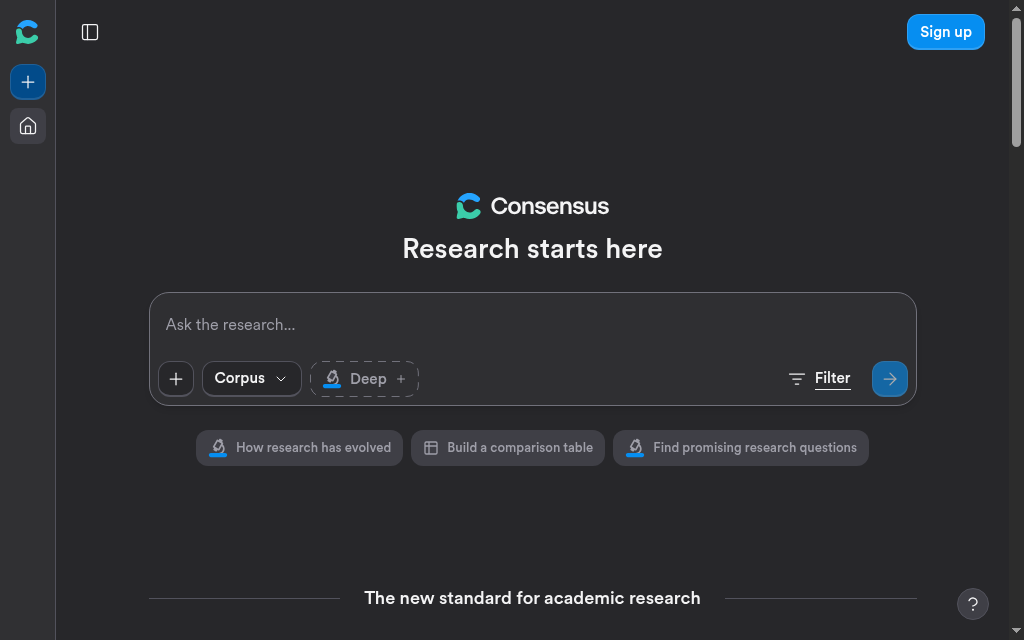
Best for: Finding what published studies actually say on a question.
Consensus searches real research papers and shows a "consensus meter": a quick summary of what the studies say on a yes-or-no question. It is built for evidence, not chat.
Trust: High: the results are real papers. But the consensus meter is only a summary of a few papers, not the final word.
Free for students: Yes. The free plan gives basic search plus 15 AI answers and 3 deep reviews a month.
Price: Free tier; Pro reported around $12/month (billed annually).
How to use it well: Ask a clear yes-or-no research question, then open a couple of the actual papers before you cite the meter.
Notes from testing: Consensus shows a bar that sums up whether studies answer your question yes or no. What I learned is that the bar is built from only the top few papers it finds for your exact wording, not all the research, and it will not even appear unless it finds at least five. So I treat it as a starting point to check, not proof, and I open a few of the actual papers before I cite anything.
Verdict: Excellent for a fast, honest read on the evidence, as long as you still read the studies.
7. Grammarly
Best for: Catching grammar, spelling and clarity problems in your own writing.
Grammarly checks your writing for mistakes and clumsy phrasing as you type. For proofreading work you wrote yourself, it is a solid safety net.
Trust: Fine for grammar. The thing to watch here is not accuracy, it is academic integrity, see below.
Free for students: Yes. The free plan covers core spelling and grammar plus tone, with generative AI capped at 100 prompts a month.
Price: Free; Pro reported around $12/month annually.
How to use it well: Use it to fix your own writing, and check your course's AI policy before you run a whole essay through it.
Notes from testing: What makes me most careful with Grammarly is not accuracy, it is integrity. I will not put a finished essay through it without first checking what my course uses to mark work, because AI detectors are a coin toss. A US student, Marley Stevens, used only free Grammarly for spelling on an essay she wrote herself, and Turnitin still flagged it as AI: she took a zero and went on academic probation. So my rule is simple: know your submission platform and its AI policy before you run your work through anything.
Verdict: A good proofreader for work you wrote, with a real integrity caveat you have to respect.
8. Elicit

Best for: Literature reviews that compare many papers at once.
Elicit pulls the key details from dozens of papers into one table: methods, sample sizes, findings, side by side. For a lit review or a dissertation chapter, it saves hours of clicking between tabs.
Trust: High, because it shows its working. Each box in the table shows the exact sentence it took the answer from.
Free for students: Yes, with limits: unlimited search and summaries, but the Research Agent and reports are capped on the free plan.
Price: Free tier; Pro reported around $49/month (its entry paid plan, there is no cheaper tier).
How to use it well: Give it a clear research question, let it build the table, then check each row against the sentence it cites.
Notes from testing: Every answer in that table shows me the exact sentence it came from, so I can check each one against the paper and catch the times Elicit did not match what the study said. I found it leans on structured empirical studies, so it is weaker on theory-heavy humanities.
Verdict: The tool to reach for when you are comparing a stack of studies, not reading one closely. Just note the paid plan is dear.
9. QuillBot
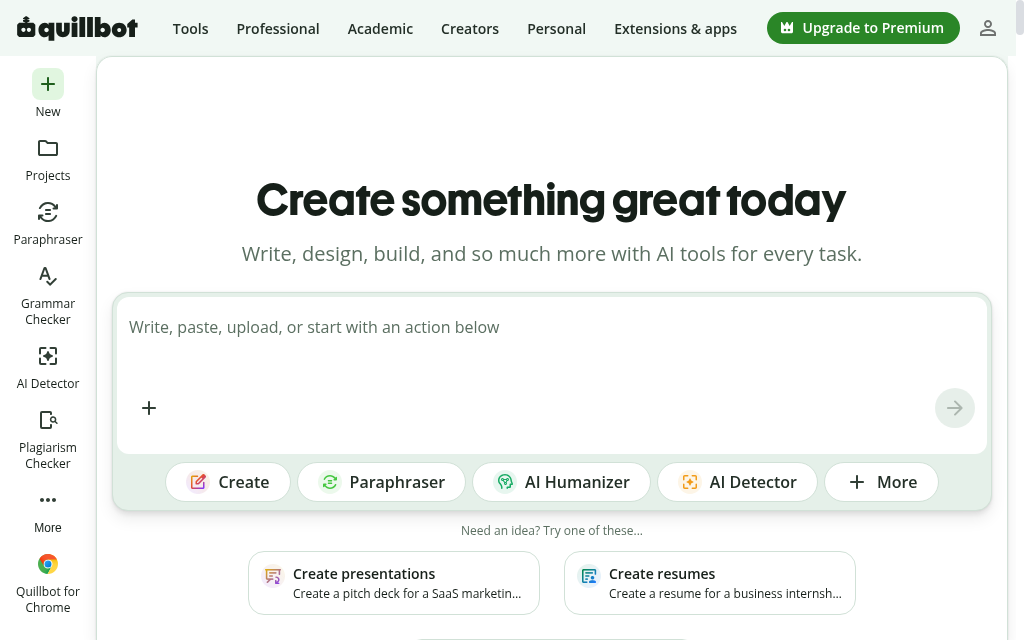
Best for: Tightening your own writing, with a real integrity caveat.
QuillBot rewrites and rephrases text, and adds a grammar checker, summariser and citation generator. Used on your own sentences to make them clearer, it is handy. Used to launder AI text past a detector, it is a trap, see the note.
Trust: For rewording your own words, fine. As an integrity move, it does not work.
Free for students: Yes, but limited: the free plan paraphrases 125 words at a time in two modes.
Price: Free; Premium reported around $10/month annually.
How to use it well: Use it to sharpen sentences you wrote, never to reword AI text so a detector misses it, that does not work and it is still not your writing.
Notes from testing: I tried the classic trick of running AI text through it to beat a detector, and it does not hold. The same paragraph got called human one minute and AI the next, and Turnitin still caught it. Use it to tidy your own writing, not to launder someone else's.
Verdict: Fine for polishing your own words, pointless and risky for beating a detector.
10. Wolfram Alpha

Best for: STEM problems, the maths and physics you actually have to solve.
Wolfram Alpha is a computation engine, not a chatbot. Type a maths, physics or chemistry problem in plain words and it works out the answer, with none of the made-up confidence a chatbot brings.
Trust: High. It computes the answer rather than guessing at it.
Free for students: Yes, but the catch is real: the free version gives you the answer, not the step-by-step working.
Price: Free; Pro Student reported around $5/month billed annually.
How to use it well: Type the problem in plain language, but expect to pay for Pro if you want the step-by-step working, not just the answer.
Notes from testing: It solves the maths instantly, but the moment I wanted the steps, the part that actually teaches you, it was behind Pro. For homework you need the working, so budget for the cheap student plan or you are just copying an answer you cannot reproduce in an exam.
Verdict: The STEM workhorse, and worth the cheap Pro plan if you need to see the working.
11. Scite

Best for: Checking whether a study has been backed up or disputed.
Scite shows you, for any paper, how many later studies backed it up and how many pushed back. It answers a question your reading list never does: has this been challenged?
Trust: High and specific, though it sometimes mislabels whether a study agreed or disagreed, so spot-check.
Free for students: No real free tier, only a 7-day trial, but many universities have a subscription, so ask your library first.
Price: Reported from around $12/month annually; often free through your institution.
How to use it well: Before you build an argument on a study, look it up here and see whether later work supported or disputed it.
Notes from testing: For any paper, Scite showed me how many later studies backed it up and how many pushed back, so at a glance I could tell whether something I was about to lean on had already been challenged. On niche or cross-disciplinary topics the coverage thinned out, so it is strongest in well-studied fields.
Verdict: Worth it, usually through your library, when you need to stand behind the studies you cite.
12. Knowt
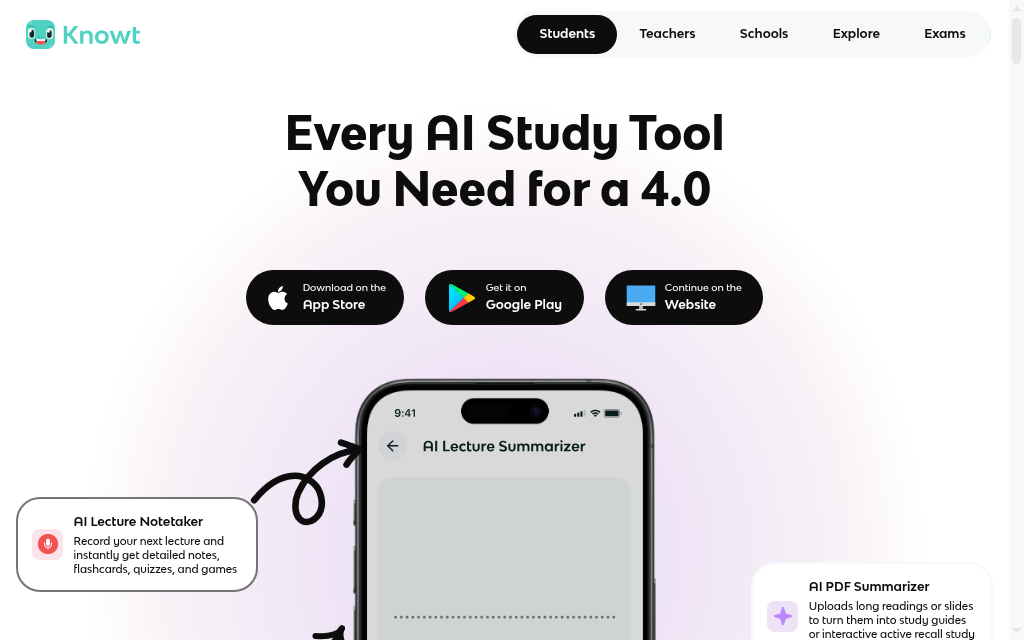
Best for: Making flashcards and revising with spaced repetition, free.
Knowt turns your notes, PDFs or a lecture video into flashcards and practice tests, then drills you on them with spaced repetition. It is a free Quizlet alternative, and the spaced repetition is the part that makes facts stick. If you want the wider set of flashcard apps, our guide to sites like Quizlet covers them.
Trust: Fine, but check the AI-made cards against your notes before you trust them.
Free for students: Yes, and generously: unlimited flashcards, notes and study modes including spaced repetition. Only the AI features are metered.
Price: Free; Ultra reported around $12.49/month annually.
How to use it well: Paste your notes, a PDF or a lecture video, let it make the cards, then use spaced repetition to actually remember them, not just reread.
Notes from testing: The trick I kept seeing, and it works: build your sets in Quizlet, then import them into Knowt to study free, spaced repetition and all, without hitting Quizlet's paywall. The AI-made cards are decent, but worth a quick check against your own notes.
Verdict: The free way to turn notes into flashcards and actually remember them.
13. Otter.ai
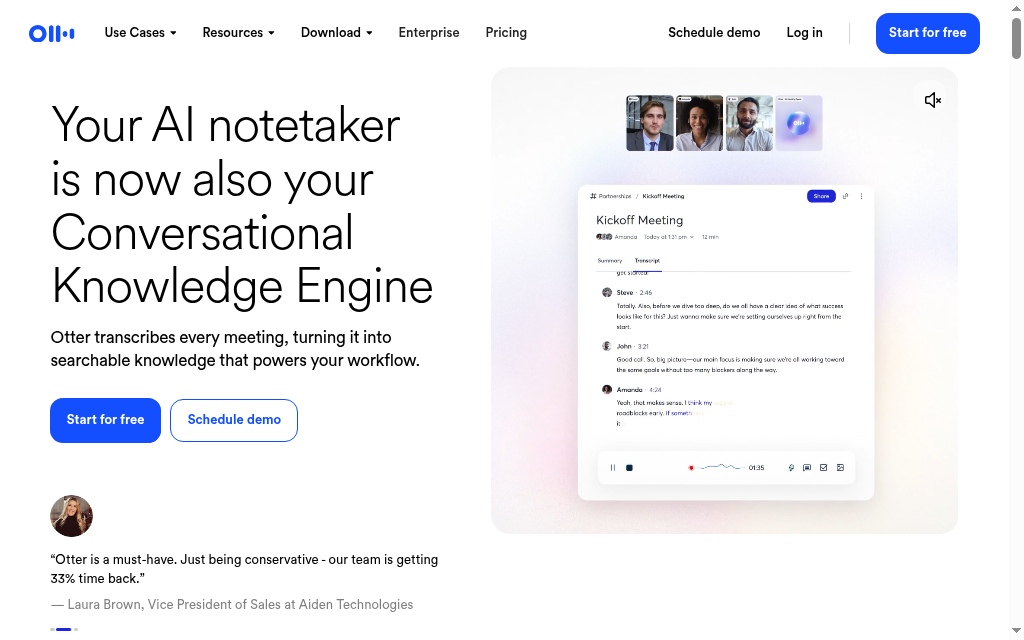
Best for: Turning lectures into searchable notes.
Otter.ai writes down what it hears in real time. Record a lecture and you get a text version to search and revise from, instead of scrambling to write everything down.
Trust: It only writes down your own recordings, so the risk is accuracy, not made-up facts. Check your university's rules on recording lectures first.
Free for students: Yes, but with real limits, see below.
Price: Free (300 minutes a month); Pro reported from around $8/month annually.
How to use it well: Record the lecture and search the transcript later, but mind the 30-minute-per-recording cap on the free plan for long classes.
Notes from testing: The free plan caught me out: it keeps recording through a full lecture but only transcribes the first thirty minutes, so I lost the back half of every hour-long class until I noticed. The 300-minute monthly cap also burns out fast around midterms. Accuracy also dips on strong accents and technical terms, so I hand-clean the key words.
Verdict: Really useful for lecture-heavy courses, if you budget for a paid plan or ration the free minutes.
14. Gemini
Best for: Students who already live in Google Docs and Drive.
Gemini is Google's assistant. Its big plus for students is that it can read your Google Docs and Drive directly, so you are not copying and pasting into a separate chat box.
Trust: Low, until you check, like any general chatbot. It is so convenient you forget to.
Free for students: Yes, and Google has offered students free access to its paid tier in several regions, worth checking.
Price: Free; Pro reported around $20/month.
How to use it well: Let it work across your Google Docs and Drive, but fact-check every number before it reaches a draft.
Notes from testing: The no-copy-paste workflow inside Docs is the draw, and it is a real time-saver. But it hallucinated statistics for a paper that were not even close to accurate, delivered with a straight face. Any number it gives you is a claim to verify, not a fact to cite.
Verdict: Convenient if your work already lives in Google, as long as you fact-check every figure before it reaches a draft.
Making the study material, not just studying it?
Some of you are on the other side of the desk: a tutor, a teaching assistant, or a student running a study group. Your job is different. You are turning notes and readings into practice quizzes and short lessons for other people. That is course-building, not studying, and Coursebox is built for it: it turns a document or a prompt into a course with quizzes and an AI tutor. It is ours, so weigh that as you like, but it is the honest fit for making the material, not revising from it.
Where AI can cost you marks
Used the wrong way, these tools do not just fail to help. They can get you a zero. The traps to avoid:
Handing in AI writing as your own. This is the quick route to a misconduct case, and you cannot defend work you did not write.
Copying answers to problem sets. You learn nothing, and you cannot show your working when it counts.
Pasting AI citations without checking. They are often fake. Find every source yourself first.
Rewording AI text to beat a detector. It is still not your work, and as QuillBot shows, the detectors are a coin toss anyway.
Leaning on it so hard you cannot explain your own answer. If you cannot say it out loud in a tutorial, you do not really have it.
Turnitin and similar detectors are probabilistic, and research has shown they wrongly flag genuine human writing, especially from students who write English as a second language (Liang et al., 2023). That is a double warning: leaning on AI is risky, but so is running even your own work through a tool without knowing what your course uses. Know the policy and the submission platform before you submit, not after.
How to choose the right AI tool for university
Name the job first
Understanding your own course means NotebookLM, or ChatGPT and Claude as tutors. Reading one dense paper means ChatPDF. Finding and checking research means Perplexity to explore, then Consensus, Elicit and Scite for the evidence. Solving STEM problems means Wolfram Alpha. Revising means Knowt. Capturing lectures means Otter. Polishing your own writing means Grammarly or QuillBot. Reaching for a general chatbot to do all of it is how the citation disasters happen.
Treat every AI source as guilty until proven real
The single habit that keeps you safe: never paste an AI-provided citation into a bibliography. Find it yourself in your library database first. If it is not there, it probably does not exist, no matter how real the DOI looked.
Check the integrity line before you submit, not after
Every university sets its own rules, and they differ a lot. Some allow AI for study and research; others treat using it in marked work as cheating. AI detectors are unreliable and flag innocent work, so learn your course's policy and what it runs your work through before you submit.
Do not pay before you have to
Almost everything here has a free tier that covers normal study, and several give students a discount or free access. Make a tool prove itself before you pay, and check your library first, it may already cover the research tools.
Which AI tool should you pick?
If you take one thing from this, make it the difference between a tool that helps you learn and one that just answers. For understanding your own course, start with NotebookLM. For explaining hard ideas and drafting, ChatGPT or Claude. For research you can actually cite, Perplexity to explore and Consensus, Elicit and Scite to stand behind it. For STEM, Wolfram Alpha; for revising, Knowt; for lectures, Otter; for your own writing, Grammarly, and QuillBot with care. Whatever you use, remember the only work that counts is the work you can explain out loud when someone asks.
Frequently Asked Questions
There is no single winner, it depends on the job. For studying your own notes and readings, NotebookLM is the standout because it ties every answer to your sources. For explaining concepts and drafting, ChatGPT or Claude. For research you can cite, Consensus, Elicit and Scite. For STEM problems, Wolfram Alpha; for revision, Knowt. Pick by the task in front of you, not by hype.
It depends entirely on your institution and the assignment. Many universities allow AI for study, revision and research, while treating unauthorised use in assessed work as misconduct. The rules differ sharply between universities and even between courses, so check the specific policy and ask your tutor if it is unclear. Using AI to understand a topic is usually fine; using it to produce work you present as your own is where people get caught.
Most tools here have a genuine free tier: ChatGPT, NotebookLM, Claude, Gemini, Perplexity, Consensus, ChatPDF, QuillBot, Wolfram Alpha, Knowt and Otter.ai all offer free access with some limits. Knowt is the most generous, with unlimited flashcards free. Scite is the main paid-only exception, though your university library may already subscribe. Several tools also run student discounts or free upgrades, so it is worth asking.
It can produce text, but that is exactly the trap. AI invents citations that look real, gets facts and figures wrong with total confidence, and writes work you cannot defend in a viva or a tutorial. Beyond the integrity risk, you learn nothing. Use it to understand, plan and check your own writing, not to replace it.
AI detectors are probabilistic and known to be unreliable, including flagging genuinely human work as AI. That cuts both ways: relying on AI is risky, but so is running even innocent tools like a paraphraser or grammar checker without knowing your submission platform. There are documented cases of students penalised after a detector flagged their own writing. Know your course's policy and what it runs your work through before you submit.
For finding and checking evidence, use tools built on real papers rather than a general chatbot: Consensus to see what studies find, Elicit to compare many papers in a table, and Scite to check whether a study has been supported or disputed. Use Perplexity to explore and find leads, and ChatPDF to read a single paper closely, then always read the actual papers before you cite them.
Parshad Desai
Driving growth and marketing strategy at Coursebox AI

