
How Lloyds Metals built safety training from scratch in 3 languages for a new iron ore plant with Coursebox
- Sector
- Mining
- Location
- Mumbai, India
- Languages
- English, Hindi, Marathi


- Organisation
- Lloyds Metals & Energy Ltd
- Website
- lloyds.in
- Location
- Mumbai, Maharashtra, India
- Sector
- Mining and heavy industry
- Use case
- Multilingual safety and operations training for a new processing plant
- Plan
- Business
Customer Story · Mining and heavy industry · Safety training
Lloyds Metals & Energy is commissioning one of India's largest iron ore crushing, screening and beneficiation plants, in a district with no industrial workforce to hire from. Getting its new operators safe around the equipment fell to a production manager who is not a trainer, and it had to happen in English, Hindi and Marathi.

It's really been probably the best tool I've ever found in order to do this kind of thing, especially in doing all the stuff in 3 languages, being able to create a training package for people that have no idea on this process.
Mark Jones, AVP Production, Lloyds Metals & Energy
Challenge
Taking a workforce from zero to safe on heavy equipment, in 3 languages
2 years ago the people now being hired to run the plant were farming rice in the villages around it, in a district with no electricity and no running water. None of them had worked around heavy equipment. Getting them safe around crushers, conveyors and ball mills, in English, Hindi and Marathi, was the job.
That work went to Mark Jones, AVP Production at Lloyds Metals & Energy, who came to the site after 20 years in iron ore in the Pilbara, in Western Australia, to help bring a new crushing, screening and beneficiation plant into operation. He is not a trainer and not an instructional designer, and the nearest city is 300 kilometres and 7 hours of road away.
"Lots of processes, procedures, safety standards need to be raised in order for us to be able to operate this equipment efficiently and safely," he says. Part of his brief was to develop and implement all of it.
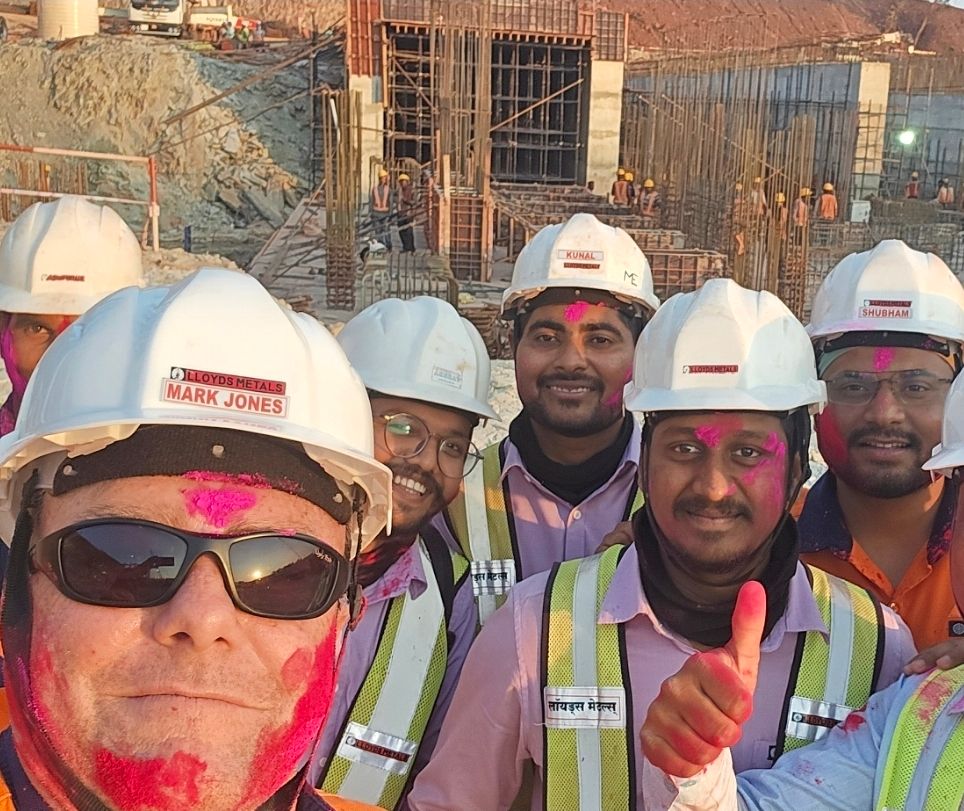
Hiring experience was limited. Iron ore extraction and processing is a smaller field in India than steel making and pelletisation, so there were fewer people to recruit who had run this kind of plant, and the company is committed, by its managing director and by the Indian government, to employing as many local people as it can. The workforce speaks Hindi and the local language, Marathi. Mark speaks English.
He had already written 4 or 5 procedures, isolation and tagging and permit to work among them, drafted against Indian regulations and tailored to how this plant would run. Writing them was the straightforward half. There wasn't a process on site to turn a procedure into training, and the company's existing e-learning platform could host a course but could not help him build one for a specific department, area or piece of equipment. What he needed was narrow:
- Something that could turn a procedure he had written into a course without an instructional designer on site
- Hindi and Marathi produced to the same standard as the English
- Content pitched at an audience with no industry background, with nothing taken out of the safety message
He found it by brute force. After a few days stuck on the problem, he came back from lunch and started typing into Google. "I literally started googling a hundred different sentences I put in just to try and find something," he says. Coursebox came up. He watched the YouTube videos, read the reviews, looked at the LinkedIn page, started the free trial and built a course. Then he found the language list.
How am I going to train these people? How am I going to get this information across to people, get them to understand it in 3 languages, let alone develop a training package in English?
Solution
How a written procedure becomes training in 3 languages
The work starts where his expertise already is. Mark goes through the Indian regulations, establishes why a control exists, then writes the procedure to suit both the rules and the way this plant will run. That part has not changed.
What changed is everything after it. He drops the finished procedure into Coursebox as a PDF. His first attempt came back thorough and far too big for the people he had to reach, until he started setting the audience and the skill level, at which point a 25-section course came down to 15, or to 8. Now he builds 2 or 3 smaller courses off a single procedure and releases them in order.
The Hindi and Marathi versions are generated in the platform and checked by members of his team who read them. Across 21 courses the corrections have come to a word or 2.
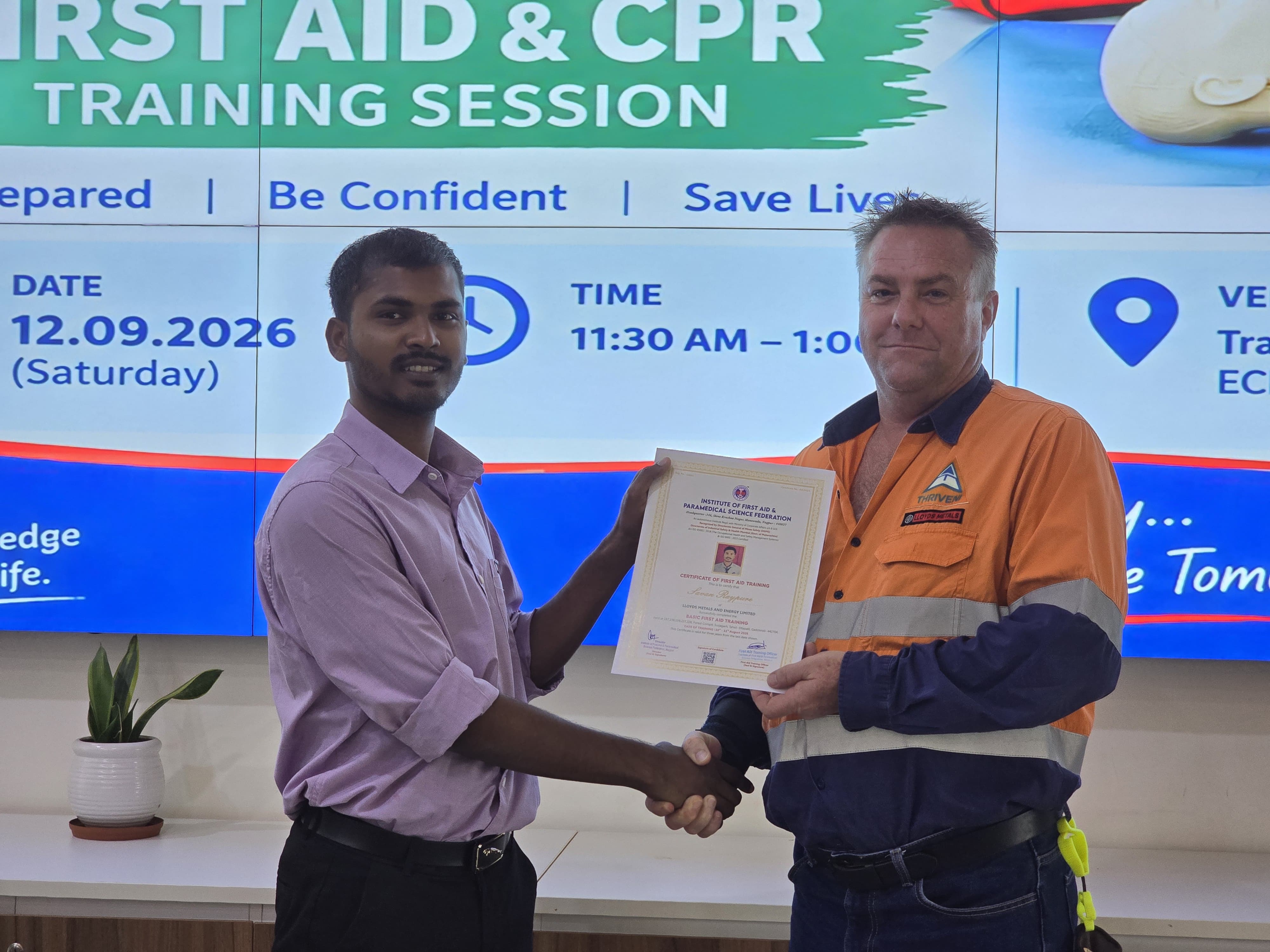
What the operator opens is a long way from the slide deck Mark grew up with: flip cards, video, photographs, quizzes and an assignment the platform marks. "It's making sure that we don't just create a training course and let them get on with it," he says. "We need to assess them at the end, we need to coach them and mentor them through the training so they understand." His own engineers check each course for clarity before it reaches the floor.
Finished courses are exported as SCORM and loaded into the company's e-learning platform, so the training sits inside the systems Lloyds already runs, alongside the 45 days every new recruit spends at a college near Nagpur and the 3 days of behavioural safety training on site. The courses are either delivered individually or delivered in a class room setting, but all are available to everyone to revisit at any time.
That whole sequence belongs to one person who is not a trainer. "That's where Coursebox comes in," Mark says. "It's pretty much saved my life here."
You can split a procedure into 4 or 5 different training packages and deliver them at certain times. Let's get stage 1 delivered. The team understands it. We talk about it. They fully get it. Now they're ready for the next part.
Results
Operators stopping unsafe work, and a platform the whole business is taking on
When in the plant, Mark watches new operators stop a job because something is unsafe, or because they need different equipment before they carry on. "That really puts a smile on my face, because that's the work we've done with them in the last 3 months," he says.
It had Hindi and Marathi, which are the local languages, and that was it for me. I was sold after that.
It shows up in quieter ways too. Walking through the office, he sees Coursebox open on people's screens as they recap a process before going out to do it. The crushing and screening operation alone needs around 350 people, roughly 100 per shift, and about 120 freshers have come through so far. The beneficiation plant will need a further 900. Each person takes around 3 months on site after college before they are ready. 8 of the recent intake are young women hired as welders and boiler makers, in roles the business had not filled that way before.
His directors saw the courses and the response was positive enough to start a formal process. In late September the company secured the Coursebox business package for Lloyds. Mark also moved onto Business and now runs a branded academy for his own team. Support was part of the argument he made internally, with replies arriving within hours, and he was pleased to find Coursebox is based in Perth.
I wouldn't even give you a ballpark number. It could potentially be massive.
What's next
Roughly 10,000 people across the business, and more courses to come
What the business takes on next is considerable. Roughly 10,000 people across mining, pelletisation, steel making and construction, with the mining department alone needing training on dump trucks, excavators, water carts, and drill and blast, before the electrical, instrumentation and communications teams are counted. The hospital and the school the company built for the district come too.
All these people 12 months ago had no real career prospects, no opportunities at all. Just to see them now earning a decent wage, to give them the opportunities to do things now, is amazing. I can put my hand on my heart and say I've been a part of that.